Process of manufacturing artificial leather
US20160130749A1
2016-05-12
14/997,571
2016-01-18
✅ Patent granted
US 9,945,070 B2
2018-04-17
-
-
Nina Bhat
2036-09-16
Abstract:
A process of manufacturing an artificial leather in one embodiment includes adhering a substrate onto a release cloth; flocking the substrate to form fur thereon; applying a synthetic resin to the substrate and drying same to form a half-finished artificial leather; foaming the half-finished artificial leather to fill interstices of the fur with the synthetic resin; sanding the half-finished artificial leather to remove excessive synthetic resin from the half-finished artificial leather; coloring the half-finished artificial leather to form a velvet-like surface; and removing the release cloth from the half-finished artificial leather to produce a finished artificial leather.
Inventors:
- Mao-Yen Wang 2 🇹🇼 Changhua, Taiwan
- Tzu-Te Liu 1 🇹🇼 New Taipei City, Taiwan
- Tzu-Te Liu 1 🇹🇼 New Taipei, Taiwan
Applicant:
Interested in similar patents?
Get notified when new applications in this technology area are published.
Classification:
B32B37/06 » CPC further
Methods or apparatus for laminating, e.g. by curing or by ultrasonic bonding characterised by the heating method
D06N3/04 IPC
Artificial leather, oilcloth or other material obtained by covering fibrous webs with macromolecular material, e.g. resins, rubber or derivatives thereof with macromolecular compounds obtained by reactions only involving carbon-to-carbon unsaturated bonds
D06N3/004 » CPC further
Artificial leather, oilcloth or other material obtained by covering fibrous webs with macromolecular material, e.g. resins, rubber or derivatives thereof characterised by the substrate using flocked webs or pile fabrics upon which a resin is applied; Teasing, raising web before resin application
D06N3/0075 » CPC further
Artificial leather, oilcloth or other material obtained by covering fibrous webs with macromolecular material, e.g. resins, rubber or derivatives thereof characterised by mechanical or physical treatments Napping, teasing, raising or abrading of the resin coating
D06N3/0097 » CPC further
Artificial leather, oilcloth or other material obtained by covering fibrous webs with macromolecular material, e.g. resins, rubber or derivatives thereof characterised by the application technique by inversion technique; by transfer processes Release surface, e.g. separation sheets; Silicone papers
D06N3/042 » CPC further
Artificial leather, oilcloth or other material obtained by covering fibrous webs with macromolecular material, e.g. resins, rubber or derivatives thereof with macromolecular compounds obtained by reactions only involving carbon-to-carbon unsaturated bonds Acrylic polymers
D06N3/14 » CPC main
Artificial leather, oilcloth or other material obtained by covering fibrous webs with macromolecular material, e.g. resins, rubber or derivatives thereof with macromolecular compounds obtained otherwise than by reactions only involving carbon-to-carbon unsaturated bonds, e.g. gelatine proteins with polyurethanes
D06N3/00 IPC
Artificial leather, oilcloth or other material obtained by covering fibrous webs with macromolecular material, e.g. resins, rubber or derivatives thereof
B32B33/00 IPC
Layered products characterised by particular properties or particular surface features, e.g. particular surface coatings; Layered products designed for particular purposes not covered by another single class
D06N3/0043 » CPC further
Artificial leather, oilcloth or other material obtained by covering fibrous webs with macromolecular material, e.g. resins, rubber or derivatives thereof characterised by their foraminous structure; Characteristics of the foamed layer or of cellular layers
D06N7/0097 » CPC further
Flexible sheet materials not otherwise provided for, e.g. textile threads, filaments, yarns or tow, glued on macromolecular material Web coated with fibres, e.g. flocked
D06N7/00 IPC
Flexible sheet materials not otherwise provided for, e.g. textile threads, filaments, yarns or tow, glued on macromolecular material
B32B38/10 » CPC further
Ancillary operations in connection with laminating processes Removing layers, or parts of layers, mechanically or chemically
Description
BACKGROUND OF THE INVENTION
1. Field of the Invention
The invention relates to the production of synthetic leather materials and more particularly to a process of manufacturing artificial leather having a velvet-like surface.
2. Description of Related Art
It is known to produce synthetic polymeric sheet materials simulating the appearance of natural leather. Such synthetic leather materials often are formed by coating or laminating a reinforcing substrate, such as woven, nonwoven, or knit textile fabric, with synthetic resinous polymers. Conventional art is replete with disclosures of various combinations of such polymeric components to provide particular characteristics for a desired end use of the products.
While the conventional art enjoys its success in the market, continuing improvements in the exploitation of process of manufacturing artificial leather are constantly sought.
SUMMARY OF THE INVENTION
It is therefore one object of the invention to provide a process of manufacturing an artificial leather comprising adhering a substrate onto a release cloth; flocking the substrate to form fur thereon; applying a synthetic resin to the substrate and drying same to form a half-finished artificial leather; foaming the half-finished artificial leather to fill interstices of the fur with the synthetic resin; sanding the half-finished artificial leather to remove excessive synthetic resin from the half-finished artificial leather; coloring the half-finished artificial leather to form a velvet-like surface; and removing the release cloth from the half-finished artificial leather to produce a finished artificial leather.
The above and other objects, features and advantages of the invention will become apparent from the following detailed description taken with the accompanying drawings.
BRIEF DESCRIPTION OF THE DRAWINGS
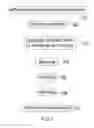
FIG. 1 is a flow chart illustrating a process of manufacturing artificial leather according to a first preferred embodiment of the invention;
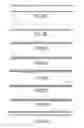
FIG. 2A schematically depicts action corresponding to step S1;
FIG. 2B and 2C schematically depict actions corresponding to step S2;
FIG. 2D schematically depicts action corresponding to step S3;
FIG. 2E schematically depicts action corresponding to step S4;
FIG. 2F schematically depicts action corresponding to step S5;
FIG. 2G schematically depicts action corresponding to step S6;
FIG. 2H schematically depicts actions corresponding to step S7;
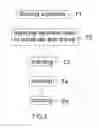
FIG. 3 is a flow chart illustrating a process of manufacturing artificial leather according to a second preferred embodiment of the invention;
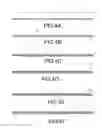
FIG. 4A schematically depicts action corresponding to step T1;
FIG. 4B and FIG. 4C schematically depict actions corresponding to step T2;
FIG. 4D schematically depicts action corresponding to step T3;
FIG. 4E schematically depicts action corresponding to step T4;
FIG. 4F schematically depicts action corresponding to step T5;
FIG. 5 is a perspective of a handbag having a vamp made of the artificial leather of the invention;
FIG. 6 is a perspective of a purse having a vamp made of the artificial leather of the invention;
FIG. 7 is a perspective of a pair of high-heeled shoes having a vamp made of the artificial leather of the invention; and
FIG. 8 is a perspective of a pair of sneakers having a vamp made of the artificial leather of the invention.
DETAILED DESCRIPTION OF THE INVENTION
Referring to FIG. 1, a process of manufacturing artificial leather in accordance with a first preferred embodiment of the invention comprises step S1 of adhering a substrate (e.g., polyurethane (PU) foam film) onto a release cloth 1A, step S2 of covering the substrate 1 with fur 2 by flocking the substrate 1 with microfiber powder, step S3 of applying a synthetic resin (e.g., PU resin or acrylic resin) 3 to the substrate 1 and drying same to form a half-finished artificial leather having the fur 2, step S4 of foaming the half-finished artificial leather to fill interstices of the fur 2 with the synthetic resin 3, step S5 of sanding the fur 2 to remove excessive synthetic resin 3 from the half-finished artificial leather, step S6 of coloring the half-finished artificial leather to produce a velvet-like top surface, and step S7 of removing the release cloth 1A from the half-finished artificial leather. As a result, an artificial leather having a nubuck-like leather appearance is produced.
The step S4 of foaming can be done by heating or not.
Referring to FIG. 2A, it schematically depicts action corresponding to step S1.
Referring to FIG. 2B and FIG. 2C, they schematically depict actions corresponding to step S2.
Referring to FIG. 2D, it schematically depicts action corresponding to step S3.
Referring to FIG. 2E, it schematically depicts action corresponding to step S4.
Referring to FIG. 2F, it schematically depicts action corresponding to step S5.
Referring to FIG. 2G, it schematically depicts action corresponding to step S6.
Referring to FIG. 2H, it schematically depicts action corresponding to step S7.
Referring to FIG. 3, a process of manufacturing artificial leather in accordance with a second preferred embodiment of the invention comprises step T1 of covering a substrate 1 with fur 2 by flocking the substrate 1 with microfiber powder, step T2 of applying a synthetic resin (e.g., PU resin or acrylic resin) 3 to the substrate 1 and drying same to form a half-finished artificial leather having the fur 2, step T3 of foaming the half-finished artificial leather to fill interstices of the fur 2 with the synthetic resin 3, step T4 of sanding the fur 2 to remove excessive synthetic resin 3 from the half-finished artificial leather, and step T5 of coloring the half-finished artificial leather to produce a velvet-like top surface. As a result, an artificial leather having a nubuck-like leather appearance is produced.
The step T3 of foaming can be done by heating or not.
Preferably, the substrate 1 is non-woven fabric with PU resin.
Preferably, the substrate 1 is woven fabric with polyvinyl chloride (PVC) resin.
Preferably, the substrate 1 is microfiber non-woven fabric with PU resin.
Referring to FIG. 4A and FIG. 4B, they schematically depict actions corresponding
to step T1.
Referring to FIG. 4C, it schematically depicts action corresponding to step T2.
Referring to FIG. 4D, it schematically depicts action corresponding to step T3.
Referring to FIG. 4E, it schematically depicts action corresponding to step T4.
Referring to FIG. 4F, it schematically depicts action corresponding to step T5.
Referring to FIG. 5, a handbag having a vamp made of the artificial leather of the invention is shown.
Referring to FIG. 6, a purse having a vamp made of the artificial leather of the invention is shown.
Referring to FIG. 7, a pair of high-heeled shoes each having a vamp made of the artificial leather of the invention is shown.
Referring to FIG. 8, a pair of sneakers each having a vamp made of the artificial leather of the invention is shown.
While the invention has been described in terms of preferred embodiments, those skilled in the art will recognize that the invention can be practiced with modifications within the spirit and scope of the appended claims.
Claims
What is claimed is:1. A process of manufacturing an artificial leather comprising the steps of:
adhering a substrate onto a release cloth;
flocking the substrate to form fur thereon;
applying a synthetic resin to the substrate and drying same to form a half-finished artificial leather;
foaming the half-finished artificial leather to fill interstices of the fur with the synthetic resin;
sanding the half-finished artificial leather to remove excessive synthetic resin from the half-finished artificial leather;
coloring the half-finished artificial leather to form a velvet-like surface; and
removing the release cloth from the half-finished artificial leather to produce a finished artificial leather.
2. The process of manufacturing an artificial leather of claim 1, wherein foaming step is done by heating.
3. The process of manufacturing an artificial leather of claim 1, wherein the substrate is polyurethane (PU) foam film.
4. The process of manufacturing an artificial leather of claim 1, wherein the synthetic resin is PU resin or acrylic resin.
5. A process of manufacturing an artificial leather comprising the steps of:
flocking a substrate to form fur thereon;
applying a synthetic resin to the substrate and drying same to form a half-finished artificial leather;
foaming the half-finished artificial leather to fill interstices of the fur with the synthetic resin;
sanding the half-finished artificial leather to remove excessive synthetic resin from the half-finished artificial leather; and
coloring the half-finished artificial leather to produce a finished artificial leather having a velvet-like surface.
6. The process of manufacturing an artificial leather of claim 5, wherein foaming step is done by heating.
7. The process of manufacturing an artificial leather of claim 5, wherein the substrate is non-woven fabric with PU resin.
8. The process of manufacturing an artificial leather of claim 5, wherein the substrate is woven fabric with polyvinyl chloride (PVC) resin.
9. The process of manufacturing an artificial leather of claim 5, wherein the substrate is microfiber non-woven fabric with PU resin.
10. The process of manufacturing an artificial leather of claim 5, wherein the synthetic resin is PU resin or acrylic resin.
Images & Drawings included:

Sources:
- United States Patent and Trademark Office - verify current appl. status at the USPTO↗
Recent applications in this class:
- » 20250012008 2025-01-09
URETHANE RESIN COMPOSITION, SYNTHETIC LEATHER, AND METHOD FOR PRODUCING SYNTHETIC LEATHER - » 20240426049 2024-12-26
FIRE RESISTANT GLOVE AND METHODS OF MANUFACTURE - » 20240191427 2024-06-13
HYDROPHOBIC FABRIC - » 20240102234 2024-03-28
Foam sheet and synthetic leather - » 20240084504 2024-03-14
Polyester fabric for a boat traction structure - » 20230366147 2023-11-16
Coated lightweight fabric, in particular for a spinnaker - » 20230340724 2023-10-26
Grain-finished leather-like sheet - » 20230167602 2023-06-01
Method for the Production of a Microporous Polymer Coated Fabric - » 20230002966 2023-01-05
STABILIZER COATING FOR MACHINE EMBROIDERING - » 20220372698 2022-11-24
Artificial Leather and Production Method Therefor