Delayed fluorescence compound, and organic light emitting diode and display device using the same
US20160133856A1
2016-05-12
14/938,723
2015-11-11
✅ Patent granted
US 9,954,186 B2
2018-04-24
-
-
Jayne Mershon
Fenwick & West LLP
2036-05-27
Abstract:
Embodiments relate to a delayed fluorescence compound of Formula 1:
or Formula 2:
The excitons in the triplet state are engaged in emission such that the emitting efficiency of the delayed fluorescent compound is increased. Embodiments also relate to a display device with an organic light emitting diode (OLED) that includes the delayed fluorescence compound.
Inventors:
- Joong-Hwan YANG 14 🇰🇷 Gwangmyeong-si, South Korea
- Hyo-Jin NOH 19 🇰🇷 Paju-si, South Korea
- Kyung-Jin YOON 11 🇰🇷 Goyang-si, South Korea
- Dae-Wi YOON 36 🇰🇷 Paju-si, South Korea
- In-Ae SHIN 28 🇰🇷 Paju-si, South Korea
- Jun-Yun KIM 14 🇰🇷 Goyang-si, South Korea
Assignee:
- LG DISPLAY CO., LTD. 13,812 🇰🇷 Seoul, South Korea
Applicant:
Interested in similar patents?
Get notified when new applications in this technology area are published.
Classification:
H01L51/0072 » CPC main
Solid state devices using organic materials as the active part, or using a combination of organic materials with other materials as the active part; Processes or apparatus specially adapted for the manufacture or treatment of such devices, or of parts thereof; Selection of organic semiconducting materials, e.g. organic light sensitive or organic light emitting materials; Macromolecular systems with low molecular weight, e.g. cyanine dyes, coumarine dyes, tetrathiafulvalene aromatic compounds comprising a hetero atom, e.g.: N,P,S; Polycyclic condensed heteroaromatic hydrocarbons comprising only nitrogen in the heteroaromatic polycondensed ringsystem, e.g. phenanthroline, carbazole
C09K11/025 » CPC further
Luminescent, e.g. electroluminescent, chemiluminescent materials; Use of particular materials as binders, particle coatings or suspension media therefor non-luminescent particle coatings or suspension media
H01L27/3244 » CPC further
Devices consisting of a plurality of semiconductor or other solid-state components formed in or on a common substrate including components using organic materials as the active part, or using a combination of organic materials with other materials as the active part with components specially adapted for light emission, e.g. flat-panel displays using organic light-emitting diodes [OLED]; Matrix-type displays Active matrix displays
H01L51/005 » CPC further
Solid state devices using organic materials as the active part, or using a combination of organic materials with other materials as the active part; Processes or apparatus specially adapted for the manufacture or treatment of such devices, or of parts thereof; Selection of organic semiconducting materials, e.g. organic light sensitive or organic light emitting materials Macromolecular systems with low molecular weight, e.g. cyanine dyes, coumarine dyes, tetrathiafulvalene
H01L51/0067 » CPC further
Solid state devices using organic materials as the active part, or using a combination of organic materials with other materials as the active part; Processes or apparatus specially adapted for the manufacture or treatment of such devices, or of parts thereof; Selection of organic semiconducting materials, e.g. organic light sensitive or organic light emitting materials; Macromolecular systems with low molecular weight, e.g. cyanine dyes, coumarine dyes, tetrathiafulvalene aromatic compounds comprising a hetero atom, e.g.: N,P,S comprising only nitrogen as heteroatom
H01L51/0071 » CPC further
Solid state devices using organic materials as the active part, or using a combination of organic materials with other materials as the active part; Processes or apparatus specially adapted for the manufacture or treatment of such devices, or of parts thereof; Selection of organic semiconducting materials, e.g. organic light sensitive or organic light emitting materials; Macromolecular systems with low molecular weight, e.g. cyanine dyes, coumarine dyes, tetrathiafulvalene aromatic compounds comprising a hetero atom, e.g.: N,P,S Polycyclic condensed heteroaromatic hydrocarbons
H01L51/0074 » CPC further
Solid state devices using organic materials as the active part, or using a combination of organic materials with other materials as the active part; Processes or apparatus specially adapted for the manufacture or treatment of such devices, or of parts thereof; Selection of organic semiconducting materials, e.g. organic light sensitive or organic light emitting materials; Macromolecular systems with low molecular weight, e.g. cyanine dyes, coumarine dyes, tetrathiafulvalene aromatic compounds comprising a hetero atom, e.g.: N,P,S; Polycyclic condensed heteroaromatic hydrocarbons comprising only sulfur in the heteroaromatic polycondensed ringsystem, e.g. benzothiophene
H01L51/0094 » CPC further
Solid state devices using organic materials as the active part, or using a combination of organic materials with other materials as the active part; Processes or apparatus specially adapted for the manufacture or treatment of such devices, or of parts thereof; Selection of organic semiconducting materials, e.g. organic light sensitive or organic light emitting materials Silicon-containing organic semiconductors
C09K2211/1014 » CPC further
Chemical nature of organic luminescent or tenebrescent compounds; Non-macromolecular compounds; Carbocyclic compounds bridged by heteroatoms, e.g. N, P, Si or B
C09K2211/1029 » CPC further
Chemical nature of organic luminescent or tenebrescent compounds; Non-macromolecular compounds; Heterocyclic compounds characterised by ligands containing one nitrogen atom as the heteroatom
C09K2211/1044 » CPC further
Chemical nature of organic luminescent or tenebrescent compounds; Non-macromolecular compounds; Heterocyclic compounds characterised by ligands containing two nitrogen atoms as heteroatoms
C09K2211/1059 » CPC further
Chemical nature of organic luminescent or tenebrescent compounds; Non-macromolecular compounds; Heterocyclic compounds characterised by ligands containing three nitrogen atoms as heteroatoms
C09K2211/1092 » CPC further
Chemical nature of organic luminescent or tenebrescent compounds; Non-macromolecular compounds; Heterocyclic compounds characterised by ligands containing sulfur as the only heteroatom
H01L51/0097 » CPC further
Solid state devices using organic materials as the active part, or using a combination of organic materials with other materials as the active part; Processes or apparatus specially adapted for the manufacture or treatment of such devices, or of parts thereof; Substrates flexible substrates
H01L51/5004 » CPC further
Solid state devices using organic materials as the active part, or using a combination of organic materials with other materials as the active part; Processes or apparatus specially adapted for the manufacture or treatment of such devices, or of parts thereof specially adapted for light emission, e.g. organic light emitting diodes [OLED] or polymer light emitting devices [PLED] characterised by the interrelation between parameters of constituting active layers, e.g. HOMO-LUMO relation
H01L51/5016 » CPC further
Solid state devices using organic materials as the active part, or using a combination of organic materials with other materials as the active part; Processes or apparatus specially adapted for the manufacture or treatment of such devices, or of parts thereof specially adapted for light emission, e.g. organic light emitting diodes [OLED] or polymer light emitting devices [PLED]; Electroluminescent [EL] layer Triplet emission
H01L51/5253 » CPC further
Solid state devices using organic materials as the active part, or using a combination of organic materials with other materials as the active part; Processes or apparatus specially adapted for the manufacture or treatment of such devices, or of parts thereof specially adapted for light emission, e.g. organic light emitting diodes [OLED] or polymer light emitting devices [PLED]; Details of devices; Passivation; Containers; Encapsulation, e.g. against humidity Protective coatings
H01L2251/301 » CPC further
Indexing scheme relating to organic semiconductor devices covered by group; Materials Inorganic materials
H01L2251/308 » CPC further
Indexing scheme relating to organic semiconductor devices covered by group; Materials; Inorganic materials; Oxides, e.g. metal oxides; Transparent conductive oxides [TCO] composed of indium oxides, e.g. ITO
H01L2251/552 » CPC further
Indexing scheme relating to organic semiconductor devices covered by group; Organic light emitting devices characterised by parameters HOMO-LUMO-EF
H01L51/00 IPC
Solid state devices using organic materials as the active part, or using a combination of organic materials with other materials as the active part; Processes or apparatus specially adapted for the manufacture or treatment of such devices, or of parts thereof
H01L27/32 IPC
Devices consisting of a plurality of semiconductor or other solid-state components formed in or on a common substrate including components using organic materials as the active part, or using a combination of organic materials with other materials as the active part with components specially adapted for light emission, e.g. flat-panel displays using organic light-emitting diodes [OLED]
C07D219/02 » CPC further
Heterocyclic compounds containing acridine or hydrogenated acridine ring systems with only hydrogen, hydrocarbon or substituted hydrocarbon radicals, directly attached to carbon atoms of the ring system
C09K11/06 » CPC further
Luminescent, e.g. electroluminescent, chemiluminescent materials containing organic luminescent materials
C09K11/02 IPC
Luminescent, e.g. electroluminescent, chemiluminescent materials Use of particular materials as binders, particle coatings or suspension media therefor
C07D401/10 » CPC further
Heterocyclic compounds containing two or more hetero rings, having nitrogen atoms as the only ring hetero atoms, at least one ring being a six-membered ring with only one nitrogen atom containing two hetero rings linked by a carbon chain containing aromatic rings
C07D409/14 » CPC further
Heterocyclic compounds containing two or more hetero rings, at least one ring having sulfur atoms as the only ring hetero atoms containing three or more hetero rings
C07D401/14 » CPC further
Heterocyclic compounds containing two or more hetero rings, having nitrogen atoms as the only ring hetero atoms, at least one ring being a six-membered ring with only one nitrogen atom containing three or more hetero rings
C07D495/04 » CPC further
Heterocyclic compounds containing in the condensed system at least one hetero ring having sulfur atoms as the only ring hetero atoms in which the condensed system contains two hetero rings Ortho-condensed systems
H01L51/50 IPC
Solid state devices using organic materials as the active part, or using a combination of organic materials with other materials as the active part; Processes or apparatus specially adapted for the manufacture or treatment of such devices, or of parts thereof specially adapted for light emission, e.g. organic light emitting diodes [OLED] or polymer light emitting devices [PLED]
H01L51/52 IPC
Solid state devices using organic materials as the active part, or using a combination of organic materials with other materials as the active part; Processes or apparatus specially adapted for the manufacture or treatment of such devices, or of parts thereof specially adapted for light emission, e.g. organic light emitting diodes [OLED] or polymer light emitting devices [PLED] Details of devices
C09K2211/1007 » CPC further
Chemical nature of organic luminescent or tenebrescent compounds; Non-macromolecular compounds; Carbocyclic compounds Non-condensed systems
C07D471/04 » CPC further
Heterocyclic compounds containing nitrogen atoms as the only ring hetero atoms in the condensed system, at least one ring being a six-membered ring with one nitrogen atom, not provided for by groups - in which the condensed system contains two hetero rings Ortho-condensed systems
Description
CROSS-REFERENCE TO RELATED APPLICATIONS
This application claims priority to and the benefit of Republic of Korea Patent Application No. 10-2014-0156946 filed on Nov. 12, 2014, Republic of Korea Patent Application No. 10-2014-0169004 filed on Nov. 28, 2014, Republic of Korea Patent Application No. 10-2014-0169077 filed on Nov. 28, 2014, Republic of Korea Patent Application No. 10-2015-0141568 filed on Oct. 8, 2015, Republic of Korea Patent Application No. 10-2015-0141569 filed on Oct. 8, 2015, and Republic of Korea Patent Application No. 10-2015-0141570 filed on Oct. 8, 2015, all of which are hereby incorporated by reference in their entirety.
BACKGROUND OF THE INVENTION
1. Field of the Invention
Embodiments of the invention relate to an organic light emitting diode (OLED) and more particularly to a delayed fluorescence compound having excellent emitting efficiency and an OLED and a display device using the delayed fluorescence compound.
2. Discussion of the Related Art
The requirements of large-size display devices have led to developments in flat panel display devices as an image displaying device. Among the flat panel display devices, the OLED has rapidly developed.
In the OLED, when the electron from a cathode, which serves as an electron-injecting electrode, and a hole from an anode, which serves as a hole-injecting electrode, are injected into an emitting material layer, the electron and the hole are combined and become extinct such that the light is emitted from the OLED. A flexible substrate, for example, a plastic substrate, can be used as a base substrate for the OLED, and the OLED has excellent characteristics of driving voltage, power consumption, and color purity.
The OLED includes a first electrode as an anode on a substrate, a second electrode as a cathode facing the first electrode, and an organic emitting layer therebetween.
To improve the emitting efficiency, the organic emitting layer may include a hole injection layer (HIL), a hole transporting layer (HTL), an emitting material layer (EML), an electron transporting layer (HTL), and an electron injection layer (EIL) sequentially stacked on the first electrode.
The hole is transferred into the EML from the first electrode through the HIL and the HTL, and the electron is transferred into the EML from the second electrode through the EIL and the ETL.
The electron and the hole are combined in the EML to generated excitons, and the excitons are transited from an excited state to a ground state such that light is emitted.
The external quantum efficiency of the emitting material for the EML can be expressed by:
ηext=ηint×Γ×Φ×ηout-coupling
In the above equation, “int” is the internal quantum efficiency, “r” is the charge balance factor, “Φ” is the radiative quantum efficiency, and “ηout-coupling” is the out-coupling efficiency.
The charge balance factor “Γ” means a balance between the hole and the electron when generating the exciton. Generally, assuming 1:1 matching of the hole and the electrode, the charge balance factor has a value of “1”. The radiative quantum efficiency “Φ” is a value regarding an effective emitting efficiency of the emitting material. In the host-dopant system, the radiative quantum efficiency depends on a fluorescent quantum efficiency of the dopant.
The internal quantum efficiency “ηint” is a ratio of the excitons generating the light to the excitons generated by the combination of holes and electrons. In the fluorescent compound, a maximum value of the internal quantum efficiency is 0.25. When the hole and the electron are combined to generate the exciton, a ratio of singlet excitons to triplet excitons is 1:3 according to the spin structure. However, in the fluorescent compound, only the singlet excitons, excluding the triplet excitons, are engaged in the emission.
The out-coupling efficiency “ηout-coupling” is a ratio of the light emitted from the display device to the light emitted from the EML. When the isotropic compounds are deposited in a thermal evaporation method to form a thin film, the emitting materials are randomly oriented. In this instance, the out-coupling efficiency of the display device may be assumed to be 0.2.
Accordingly, the maximum emitting efficiency of the OLED, including the fluorescent compound as the emitting material, is less than approximately 5%.
To overcome the disadvantage of the emitting efficiency of the fluorescent compound, the phosphorescent compound, in which both singlet excitons and triplet excitons are engaged in emission, has been developed for the OLED.
The red and green phosphorescent compound having a relatively high efficiency are introduced and developed. However, there is no blue phosphorescent compound meeting the requirements in emitting efficiency and reliability.
SUMMARY OF THE INVENTION
Accordingly, the embodiment of the invention is directed to a delayed fluorescence compound and an OLED and a display device using the same that substantially obviate one or more of the problems due to limitations and disadvantages of the related art.
An objective of the embodiment of the invention is to provide a delayed fluorescence compound having high emitting efficiency.
Another objective of the embodiment of the invention is to provide an OLED and a display device having an improved emission efficiency.
Additional features and advantages of the invention will be set forth in the description which follows, and in part will be apparent from the description, or may be learned by practice of the invention. The objectives and other advantages of the invention will be realized and attained by the structure particularly pointed out in the written description and claims hereof as well as the appended drawings.
To achieve these and other advantages and in accordance with the purpose of the embodiments of the invention, as embodied and broadly described herein, an aspect of an embodiment of the invention provides a delayed fluorescence compound of Formula 1 or Formula 2, an encapsulation film on the organic light emitting diode, and a cover window on the encapsulation film. Formulas 1 and 2 are given by:
wherein each of m and n is 1 or 0, and X1 is selected from Formula 3, wherein each of L1 and L2 is independently selected from Formula 4, and X2 and Y are respectively selected from Formulas 5 and 6. Formulas 3-6 are given by:
wherein each of R1 to R4 in the Formula 3 is independently selected from substituted or non-substituted aryl, and each of R5 and R6 in the Formula 4 is independently selected from hydrogen or C1 alkyl through C10 alkyl, and wherein R7 in the Formula 5 is selected from hydrogen or phenyl.
In another aspect of the embodiment of the invention provided is an organic light emitting diode including a first electrode, a second electrode facing the first electrode, and an organic emitting layer between the first and second electrodes and including a delayed fluorescence compound of Formula 1 or Formula 2, an encapsulation film on the organic light emitting diode, and a cover window on the encapsulation film. Formulas 1 and 2 are given by:
wherein each of m and n is 1 or 0, and X1 is selected from Formula 3, wherein each of L1 and L2 is independently selected from Formula 4, and X2 and Y are respectively selected from Formulas 5 and 6. Formulas 3-6 are given by:
wherein each of R1 to R4 in the Formula 3 is independently selected from substituted or non-substituted aryl, and each of R5 and R6 in the Formula 4 is independently selected from hydrogen or C1 alkyl through C10 alkyl, and wherein R7 in the Formula 5 is selected from hydrogen or phenyl.
In another aspect of the embodiment of the invention provided is a display device including a substrate; an organic light emitting diode on the substrate and including a first electrode, a second electrode facing the first electrode and an organic emitting layer between the first electrode and the second electrode, the organic emitting layer including a delayed fluorescence compound of Formula 1 or Formula 2, an encapsulation film on the organic light emitting diode, and a cover window on the encapsulation film. Formulas 1 and 2 are given by:
wherein each of m and n is 1 or 0, and X1 is selected from Formula 3, wherein each of L1 and L2 is independently selected from Formula 4, and X2 and Y are respectively selected from Formulas 5 and 6. Formulas 3-6 are given by:
wherein each of R1 to R4 in the Formula 3 is independently selected from substituted or non-substituted aryl, and each of R5 and R6 in the Formula 4 is independently selected from hydrogen or C1 alkyl through C10 alkyl, and wherein R7 in the Formula 5 is selected from hydrogen or phenyl.
It is to be understood that both the foregoing general description and the following detailed description are by example and explanatory and are intended to provide further explanation of the invention as claimed.
BRIEF DESCRIPTION OF THE DRAWINGS
The accompanying drawings, which are included to provide a further understanding of the invention and are incorporated in and constitute a part of this specification, illustrate embodiments of the invention and together with the description serve to explain the principles of the invention.
FIG. 1 is a view illustrating an emission mechanism of a delayed fluorescence compound according to the present disclosure.
FIGS. 2A to 2F are views respectively illustrating a molecular structure of a compound having a carbazole electron donor moiety.
FIGS. 3A to 3F are views respectively illustrating a molecular structure of a compound having an acridine electron donor moiety.
FIGS. 4A to 4J are graphs showing a delayed fluorescent property of a delayed fluorescence compound according to the present disclosure.
FIG. 5 is a schematic cross-sectional view of an OLED according to the present disclosure.
DETAILED DESCRIPTION OF THE EMBODIMENTS
The meanings of terms described in the present specification should be understood as follows.
The singular forms should be understood as including the plural forms as well unless the context clearly indicates otherwise. The terms “first”, “second”, and the like are used to discriminate any one element from other elements and the scope of the present invention is not intended to be limited by these terms. The terms “comprises” “includes” and the like should be understood as not precluding the presence or addition of one or more other features, integers, steps, operations, elements, components, or combinations thereof. The term “at least one” should be understood as including all combinations that may be suggested from one or more associated items. For example, the meanings of “at least one selected from a first item, a second item, and a third item” includes not only each of the first item, the second item, and the third item, but also all combinations of these items that may be suggested from two or more ones of the first item, the second item, and the third item. In addition, when any one element is referred to as being “on” another element, it can be directly on the upper surface of the other element or a third intervening element may also be present.
Reference will now be made in detail to example embodiments, examples of which are illustrated in the accompanying drawings.
A delayed fluorescence compound of the present disclosure has Formula 1-1 or Formula 1-2 of the followings.
where each of “m” and “n” is 0 (zero) or 1.
Namely, as shown in Formula 2-1, the delayed fluorescence compound has a structure in which an electron donor moiety of acridine is combined or linked to an electron acceptor moiety X1 with a linker L1 therebetween. Alternatively, as shown in Formula 2-2, the delayed fluorescence compound has a structure in which an electron donor moiety of acridine is directly combined or linked to an electron acceptor moiety X1 without a linker.
Alternatively, as shown in Formula 2-3, the delayed fluorescence compound has a structure in which a first electron donor moiety of acridine and a second electron donor moiety Y, which is equal to or different from the first electron donor moiety, are combined or linked to an electron acceptor moiety X2 with a linker L2 therebetween. Alternatively, as shown in Formula 2-4, the delayed fluorescence compound has a structure in which a first electron donor moiety of acridine and a second electron donor moiety Y, which is equal to or different from the first electron donor moiety, are directly combined or linked to an electron acceptor moiety X2 without a linker.
In the Formulas 2-1 and 2-2, the electron acceptor moiety X1 is selected from substituted or non-substituted triazine, substituted or non-substituted dibenzothiophene, substituted or non-substituted 4-azabenzimidazole, or substituted or non-substituted benzimidazole. For example, the electron acceptor moiety X1 may be selected from materials in Formula 3 of the following.
In the Formula 3, each of R1 to R4 is independently selected from hydrogen or substituted or non-substituted aryl. For example, each of R1 to R4 may be selected from hydrogen or non-substituted phenyl.
In the Formulas 1-1, 1-2, 2-1, and 2-3, each of L1 and L2 as the linker is substituted or non-substituted benzene. For example, each of L1 and L2 may be a material in Formula 4 of following.
In Formula 4, each of R5 and R6 is independently selected from hydrogen or C1 to C10 alkyl. For example, each of R5 and R6 may be hydrogen or methyl.
In the Formulas 1-2, 2-3, and 2-4, the electron acceptor moiety X2 is selected from substituted or non-substituted phenyltriazine, dibenzothiophenesulfone, diphenylsulfone, quinoxaline, thieno pyrazine, or their derivatives. For example, the electron acceptor moiety X2 may be selected from materials in Formula 5 of the following.
In the Formula 5, R7 is selected from hydrogen or phenyl.
In the Formulas 1-2, 2-3, and 2-4, the second electron donor moiety Y is selected from materials, which is capable of injecting a hole, such as carbazole, triphenyl amine, acridine, or their derivatives. Namely, the second electron donor moiety Y is selected from substituted or non-substituted carbazole, substituted or non-substituted triphenyl amine, or substituted or non-substituted acridine. For example, the second electron donor moiety Y may be selected from materials in Formula 6 of the following.
Since the delayed fluorescence compound includes the electron donor moiety and the electron acceptor moiety with or without another electron donor moiety, the charge transfer is easily generated in the molecule and the emitting efficiency is improved. In addition, the dipole from the first and second electron donor moieties to the electron acceptor moiety is generated such that the dipole moment in the molecule is increased. As a result, the emitting efficiency is further improved.
Moreover, in the delayed fluorescent compound of the present disclosure, the excitons in the triplet state are engaged in the emission such that the emitting efficiency of the delayed fluorescent compound is increased.
Further, since acridine, which has a hexagonal structure, is used as the electron donor moiety, a steric hindrance between the electron donor moiety and the electron acceptor moiety is increased, and a dihedral angle between the acridine electron donor moiety and the electron acceptor moiety is also increased. Accordingly, the generation of conjugation between the electron donor moiety and the electron acceptor moiety is limited, and the highest occupied molecular orbital (HOMO) and the lowest unoccupied molecular orbital (LUMO) is easily separated. As a result, the emitting efficiency of the delayed fluorescent compound is further increased.
In the delayed fluorescence compound of the present disclosure, the electron donor moiety and the electron acceptor moiety are combined or linked in the molecule such that an overlap between HOMO and LUMO is reduced. As a result, a field activated complex is generated, and the emitting efficiency of the delayed fluorescence compound is improved.
Since a gap or a distance between the electron donor moiety and the electron acceptor moiety is increased due to the linker, an overlap between HOMO and LUMO is reduced such that a gap (ΔEST) between the triple energy and the singlet energy is reduced.
In addition, due to the steric hindrance of the linker, the red shift problem in the light emitted from the emitting layer including the delayed fluorescence compound is decreased or minimized Namely, the emitting layer with the delayed fluorescence compound of the present disclosure provides deep blue emission.
Referring to FIG. 1, which is a view illustrating an emission mechanism of a delayed fluorescence compound according to the present disclosure, in the delayed fluorescence compound of the present disclosure, the triplet excitons as well as the singlet excitons are engaged in the emission such that the emitting efficiency is improved.
Namely, the triplet exciton is activated by a field, and the triplet exciton and the singlet exciton are transferred into an intermediated state “I1” and transited into a ground state “So” to emit light. In other words, the singlet state “S1” and the triplet state “T1” are transited into the intermediated state “I1” (S1->I1<-T1), and the singlet exciton and the triplet exciton in the intermediated state “I1” are engaged in the emission such that the emitting efficiency is improved. The compound having the above emission mechanism may be referred to as a field activated delayed fluorescence (FADF) compound.
In the related art fluorescence compound, since the HOMO and the LUMO are dispersed throughout an entirety of the molecule, the interconversion of the HOMO and the LUMO is impossible. (Selection Rule)
However, in the FADF compound, since the overlap between the HOMO and the LUMO in the molecule is relatively small, the interaction between the HOMO and the LUMO is small. Accordingly, changes of the spin state of one electron do not affect other electrons, and a new charge transfer band, which does not comply with the Selection Rule, is generated.
Moreover, since the electron donor moiety and the electron acceptor moiety are spatially spaced apart from each other in the molecule, the dipole moment is generated in a polarized state. In the polarized state dipole moment, the interaction between the HOMO and the LUMO is further reduced such that the emission mechanism does not comply with the Selection Rule. Accordingly, in the FADF compound, the transition from the triplet state “T1” and the singlet state “S1” into the intermediated state “I1” can be generated such that the triplet exciton can be engaged in the emission.
When the OLED is driven, the intersystem transition (intersystem crossing) from 25% singlet state “S1” excitons and 75% triplet state “T1” excitons to the intermediated state “I1” is generated, and the singlet and triplet excitons in the intermediated state “I1” are transited into the ground state to emit light. As a result, the FADF compound has a theoretic quantum efficiency of 100%.
For example, the delayed fluorescence compound of the present invention may be one of compounds in Formula 7.
As mentioned above, the delayed fluorescence compound of the present invention includes an acridine electron donor moiety such that a steric hindrance between the electron donor moiety and the electron acceptor moiety is increased, and a dihedral angle between the acridine electron donor moiety and the electron acceptor moiety is also increased.
FIGS. 2A to 2F are views respectively illustrating a molecular structure of a compound having a carbazole electron donor moiety and dibenzothiophenesulfone as an electron acceptor moiety, and FIGS. 3A to 3F are views respectively illustrating a molecular structure of a compound having an acridine electron donor moiety and dibenzothiophenesulfone as an electron acceptor moiety.
Referring to FIGS. 2A to 2F, in the compound including carbazole as the electron donor moiety, the dihedral angle between the electron donor moiety and the electron acceptor moiety (or the linker) is about 44 degrees.
On the other hand, referring to FIGS. 3A to 3F, in the compound including acridine as the electron donor moiety, the dihedral angle between the electron donor moiety and the electron acceptor moiety (or the linker) is about 90 degrees.
Namely, when acridine is used as the electron donor moiety, the dihedral angle between the acridine electron donor moiety and the electron acceptor moiety is increased, and the generation of conjugation between the electron donor moiety and the electron acceptor moiety (or the linker) is limited. As a result, in comparison to the compound including the carbazole electron donor moiety, the HOMO and the LUMO in the compound including the acridine electron donor moiety is easily separated such that the emitting efficiency is further improved.
Synthesis
1. Synthesis of Compound 1
(1) Compound “a”
In the N2 gas purging system, 2,8-dibromodibenzothiophene (14.6 mmol) and acetic acid solvent were mixed and stirred. Hydrogen peroxide (64.8 mmol) was added and stirred in the room temperature for about 30 minutes, and the mixture was refluxed and stirred for 12 hours or more. After completion of the reaction, distilled water (50 ml) was added and stirred to wash. After filtering the mixture, the solids was mixed with excess hydrogen peroxide and stirred to wash for 30 to 60 minutes. The solids was washed by distilled water and filtered and dried such that compound “a” in white solid was obtained. (yield: 90%)
(2) Compound “b”
In the N2 gas purging system, N-phenylanthraniliic acid (46.9 mmol) and methanol solvent were mixed and stirred. The mixture was additionally stirred for 10 minutes under a temperature of 0° C., and thionyl chloride (21.2 mmol) was slowly dropped. The mixed solution was stirred for 12 hours or more under a temperature of 90° C. After completion of the reaction, the solvent was removed, and the mixed solution was extracted by distilled water and ethylacetate. Moisture was removed from the extracted organic layer by using magnesium sulfate, and the solvent was removed. The resultant was wet-refined by column-chromatography using hexane and ethylacetate such that compound “b” of dark yellow liquid was obtained. (yield: 81%)
(3) Compound “c”
In the N2 gas purging system, compound “b” (38.1 mmol) and tetrahydrofuran solvent was stirred. Methyl magnesium bromide (4.6 equivalent) was slowly dropped in the solution, and the solution was stirred and reacted for 12 hours or more under the room temperature. After completion of the reaction, distilled water was slowly added, and the solution was extracted by ethylacetate. Moisture was removed from the extracted organic layer by using magnesium sulfate, and the solvent was removed. The resultant was wet-refined by column-chromatography using hexane and ethylacetate such that compound “c” of yellow liquid was obtained. (yield: 87%)
(4) Compound “d”
In the N2 gas purging system, compound “c” (33.1 mmol) was put into excess phosphoric acid solvent (160 ml), and the solution was stirred under the room temperature. The solution was additionally stirred for 16 hours or more, and distilled water (200 to 250 ml) was slowly added. The solution was stirred for 0.5 to 1 hour, and the precipitated solid was filtered. The filtered solid was extracted by using sodium hydroxide aqueous solution and dichloromethane solvent. Moisture was removed from the extracted organic layer by using magnesium sulfate, and the organic solvent was removed such that compound “d” of white solid was obtained. (yield: 69%)
(5) Compound “e”
In the N2 gas purging system, compound “a” (1.0 equivalent) was dissolved in toluene solvent, and phenylboronic acid (0.9 equivalent) was added. K2CO3 (4 equivalent) was dissolved in distilled water and added into the mixed solution. Tetrahydrofuran solvent was added, and palladium (0.05 equivalent) was added. The mixture was refluxed and stirred under a temperature of 80° C. After completion of the reaction, the mixture was extracted by using ethylacetate solvent and distilled water, and moisture was removed from the extracted organic layer by using magnesium sulfate. Remained organic solvent was removed, and the resultant was wet-refined by column-chromatography using ethylacetate and hexane such that compound “e” of solid was obtained. (yield: 68%)
(6) Compound 1
In the N2 gas purging system, compound “e” (1.0 equivalent), compound “d” (1.1 equivalent), Pd(OAc)2 (0.019 equivalent), P(t-Bu)3 (50 wt %, 0.046 equivalent), and sodium tert-butoxide (1.9 equivalent) were added into toluene solvent and stirred. The solution was refluxed and stirred for 12 hours under a temperature of 120° C. After completion of the reaction, the solution was cooled in room temperature and extracted by water and ethylacetate. Moisture was removed from the extracted organic layer by using magnesium sulfate, and the solvent was removed. The resultant was wet-refined by column-chromatography using hexane and ethylacetate such that compound 1 was obtained. (yield: 55%)
2. Synthesis of Compound 2
(1) Compound “f”
In the N2 gas purging system, compound “d” (23.9 mmol), 1,4-dibromobenzene (35.8 mmol), palladium(II)acetate (2 mol %), tri-tert-butylphosphate (5 mol %), and sodium-tert-butoxide (2.03 equivalent) was added into toluene solvent and stirred. The mixed solution was refluxed and stirred for 12 hours. After completion of the reaction, the solution was extracted by using distilled water and ethylacetate. Moisture was removed from the extracted organic layer by using magnesium sulfate, and the solvent was removed. The resultant was wet-refined by column-chromatography using hexane and ethylacetate such that compound “f” of dark yellow liquid was obtained. (yield: 81%)
(2) Compound “g”
In the N2 gas purging system, compound “f” (1.0 equivalent), bis(pinacolate)diboron (1.2 equivalent), [1,1-bis(diphenylphosphineo)ferrocene]palladium(II), dichloride dichloromethane, 1,1-bis(diphenylphosphino)ferrocene, and potassium acetate were added into 1,4-dioxane/toluene (1:1) solvent in the light-shielded flask and stirred. After bubbles disappeared, the solution was stirred for 17 hours under a temperature of 120° C. After completion of the reaction, the solution was cooled in room temperature, and the solvent was removed. The resultant was washed by toluene and refined such that compound “g” was obtained. (yield: 90%)
(3) Compound 2
In the N2 gas purging system, compound “e” (1.0 equivalent) was dissolved in toluene solvent, and compound “g” (1.2 equivalent) was added. K2CO3 (8.8 equivalent) was dissolved in distilled water and added into the solution. Tetrahydrofuran solvent was added, and palladium (0.1 equivalent) was added. The mixture was refluxed and stirred under a temperature of 80° C. After completion of the reaction, the mixture was extracted by using sodium hydroxide aqueous solution and toluene. Moisture was removed from the extracted organic layer by using magnesium sulfate, and the remaining organic solvent was removed. The resultant was wet-refined by column-chromatography using hexane and re-crystallized such that compound 2 was obtained. (yield: 56%)
3. Synthesis of Compound 3
(1) Compound “h”
In the N2 gas purging system, 4-phenylbromosulfone (1.0 equivalent) was dissolved in toluene solvent, and phenylboronic acid (0.9 equivalent) was added. K2CO3 (4 equivalent) was dissolved in distilled water and added into the solution. Tetrahydrofuran solvent was added, and palladium (0.05 equivalent) was added. The mixture was refluxed and stirred under a temperature of 80° C. After completion of the reaction, the mixture was extracted by using ethylacetate and distilled water. Moisture was removed from the extracted organic layer by using magnesium sulfate, and remaining organic solvent was removed. The resultant was wet-refined by column-chromatography using ethylacetate and hexane such that compound “h” of solid was obtained. (yield: 75%)
(2) Compound 3
In the N2 gas purging system, compound “h” (1.0 equivalent), compound “d” (1.1 equivalent), Pd(OAc)2 (0.019 equivalent), P(t-Bu)3 (50 wt %, 0.046 equivalent), and sodium tert-butoxide (1.9 equivalent) were added into toluene solvent and stirred. The solution was refluxed and stirred for 12 hours under a temperature of 120° C. After completion of the reaction, the solution was cooled in room temperature and extracted by water and ethylacetate. Moisture was removed from the extracted organic layer by using magnesium sulfate, and the solvent was removed. The resultant was wet-refined by column-chromatography using hexane and ethylacetate such that compound 3 was obtained. (yield: 65%)
4. Synthesis of Compound 4
In the N2 gas purging system, compound “h” (1.0 equivalent) was dissolved in toluene solvent, and compound “g” (1.2 equivalent) was added. K2CO3 (8.8 equivalent) was dissolved in distilled water and added into the solution. Tetrahydrofuran solvent was added, and palladium (0.1 equivalent) was added. The mixture was refluxed and stirred under a temperature of 80° C. After completion of the reaction, the mixture was extracted by using sodium hydroxide aqueous solution and toluene. Moisture was removed from the extracted organic layer by using magnesium sulfate, and remained organic solvent was removed. The resultant was wet-refined by column-chromatography using hexane and re-crystallized such that compound 4 was obtained. (yield: 60%)
5. Synthesis of Compound 5
In the N2 gas purging system, Pd(dba)2 (5 mol %) as catalyst and P(t-Bu)3 (4 mol %) was added into toluene solvent and stirred for about 15 minutes. 2-chloro-4,6-diphenyl-1,3,5-triazine (33.8 mmol), compound “d” (33.8 mmol), and NaOt-Bu (60.6 mmol) were additionally added, and the mixture was stirred for 5 hours under a temperature of 90° C. After completion of the reaction, the mixture was filtered by celite, and the solvent was removed. The filtered solid was refined by column-chromatography using hexane and dichloromethane and re-crystallized using hexane such that compound 5 was obtained. (yield: 59%)
6. Synthesis of Compound 6
In the N2 gas purging system, 2-chloro-4,6-diphenyl-1,3,5-triazine (1.0 equivalent), compound “g” (1.1 equivalent), Na2CO3 (5 equivalent), and NH4Cl were added into toluene/distilled water (1:1) solvent and stirred. In the N2 gas condition, the solution was stirred for 30 minutes, and tetrakis(triphenylphosphine)Pd(0) (0.05 equivalent) was added. The solution was stirred for 10 minutes and was additionally stirred for 16 hours under a temperature of 100° C. After completion of the reaction, the solution was cooled in room temperature and extracted by dichloromethane. Moisture was removed from the extracted organic layer by using magnesium sulfate, and remaining organic solvent was removed. The resultant was wet-refined by column-chromatography using dichloromethane and hexane and re-crystallized by chloroform such that compound 6 of solid was obtained. (yield: 70%)
7. Synthesis of Compound 7
(1) Compound “i”
In the N2 gas purging system, copper iodide (0.1 equivalent) and 1,10-phenanthroline (0.2 equivalent) were added into dimethylformamide (DMF) solvent, and 4-azabenzimidazole, 1-bromo-4-iodobenzene (1.2 equivalent), and cesium carbonate (2 equivalent) were additionally added. The solution was refluxed and stirred for 16 hours under a temperature of 110° C. After completion of the reaction, DMF solvent was removed, and the resultant was extracted by dichloromethane. Moisture was removed from the extracted organic layer by using magnesium sulfate, and the solvent was removed. The resultant was wet-refined by column-chromatography using hexane and ethylacetate and re-crystallization using dichloromethane such that compound “i” was obtained. (yield: 78%)
(2) Compound 7
In the N2 gas purging system, compound “i” (1.0 equivalent), compound “d” (1.1 equivalent), Pd(OAc)2 (0.019 equivalent), P(t-Bu)3 (50 wt %, 0.046 equivalent) and sodium tert-butoxide (1.9 equivalent) were added into toluene solvent and stirred. The solution was refluxed and stirred for 12 hours under a temperature of 120° C. After completion of the reaction, the solution was cooled in room temperature and extracted by water and ethylacetate. Moisture was removed from the extracted organic layer by using magnesium sulfate, and the solvent was removed. The resultant was wet-refined by column-chromatography using hexane and ethylacetate such that compound 7 was obtained. (yield: 60%)
8. Synthesis of Compound 8
(1) Compound “j”
In the N2 gas purging system, copper iodide (0.1 equivalent) and 1,10-phenanthroline (0.2 equivalent) were added into dimethylformamide (DMF) solvent, and 4-azabenzimidazole, 1-bromo-3,5-dimethyl-4-iodobenzene (1.3 equivalent), and cesium carbonate (2 equivalent) were additionally added. The solution was refluxed and stirred for 16 hours under a temperature of 110° C. After completion of the reaction, DMF solvent was removed, and the resultant was extracted by dichloromethane. Moisture was removed from the extracted organic layer by using magnesium sulfate, and the solvent was removed. The resultant was wet-refined by column-chromatography using hexane and ethylacetate and re-crystallization using dichloromethane such that compound “j” was obtained. (yield: 60%)
(2) Compound 8
In the N2 gas purging system, compound “j” (1.0 equivalent), compound “d” (1.1 equivalent), Pd(OAc)2 (0.019 equivalent), P(t-Bu)3 (50 wt %, 0.046 equivalent), and sodium tert-butoxide (1.9 equivalent) were added into toluene solvent and stirred. The solution was refluxed and stirred for 12 hours under a temperature of 120° C. After completion of the reaction, the solution was cooled in room temperature and extracted by water and ethylacetate. Moisture was removed from the extracted organic layer by using magnesium sulfate, and the solvent was removed. The resultant was wet-refined by column-chromatography using hexane and ethylacetate such that compound 8 was obtained. (yield: 50%)
9. Synthesis of Compound 9
(1) Compound “k”
In the N2 gas purging system, copper iodide (0.1 equivalent) and 1,10-phenanthroline (0.2 equivalent) were added into dimethylformamide (DMF) solvent, and benzimidazole, 1-bromo-4-iodobenzene (1.2 equivalent) and cesium carbonate (2 equivalent) were additionally added. The solution was refluxed and stirred for 16 hours under a temperature of 110° C. After completion of the reaction, DMF solvent was removed, and the resultant was extracted by dichloromethane. Moisture was removed from the extracted organic layer by using magnesium sulfate, and the solvent was removed. The resultant was wet-refined by column-chromatography using hexane and ethylacetate and re-crystallization using dichloromethane such that compound “k” was obtained. (yield: 80%)
(2) Compound 9
In the N2 gas purging system, compound “k” (1.0 equivalent), compound “d” (1.1 equivalent), Pd(OAc)2 (0.019 equivalent), P(t-Bu)3 (50 wt %, 0.046 equivalent), and sodium tert-butoxide (1.9 equivalent) were added into toluene solvent and stirred. The solution was refluxed and stirred for 12 hours under a temperature of 120° C. After completion of the reaction, the solution was cooled into the room temperature and extracted by water and ethylacetate. Moisture was removed from the extracted organic layer by using magnesium sulfate, and the solvent was removed. The resultant was wet-refined by column-chromatography using hexane and ethylacetate such that compound 9 was obtained. (yield: 62%)
10. Synthesis of Compound 10
(1) Compound “l”
In the N2 gas purging system, copper iodide (0.1 equivalent) and 1,10-phenanthroline (0.2 equivalent) were added into dimethylformamide (DMF) solvent, and benzimidazole, 1-bromo-3,5-dimethyl-4-iodobenzene (1.3 equivalent) and cesium carbonate (2 equivalent) were additionally added. The solution was refluxed and stirred for 16 hours under a temperature of 110° C. After completion of the reaction, DMF solvent was removed, and the resultant was extracted by dichloromethane. Moisture was removed from the extracted organic layer by using magnesium sulfate, and the solvent was removed. The resultant was wet-refined by column-chromatography using hexane and ethylacetate and re-crystallization using dichloromethane such that compound “l” was obtained. (yield: 58%)
(2) Compound 10
In the N2 gas purging system, compound “l” (1.0 equivalent), compound “d” (1.1 equivalent), Pd(OAc)2 (0.019 equivalent), P(t-Bu)3 (50 wt %, 0.046 equivalent), and sodium tert-butoxide (1.9 equivalent) were added into toluene solvent and stirred. The solution was refluxed and stirred for 12 hours under a temperature of 120° C. After completion of the reaction, the solution was cooled in room temperature and extracted by water and ethylacetate. Moisture was removed from the extracted organic layer by using magnesium sulfate, and the solvent was removed. The resultant was wet-refined by column-chromatography using hexane and ethylacetate such that compound 10 was obtained. (yield: 46%)
11. Synthesis of Compound 11
(1) Compound “a”
In the N2 gas purging system, N-phenylanthraniliic acid (46.9 mmol) was added into methanol solvent and stirred. The mixture was additionally stirred for 10 minutes under a temperature of 0° C., and thionyl chloride (21.2 mmol) was slowly dropped. The mixed solution was stirred for 12 hours or more under a temperature of 90° C. After completion of the reaction, the solvent was removed, and the mixed solution was extracted by distilled water and ethylacetate. Moisture was removed from the extracted organic layer by using magnesium sulfate, and the solvent was removed. The resultant was wet-refined by column-chromatography using hexane and ethylacetate such that compound “a” of dark yellow liquid was obtained. (yield: 81%)
(2) Compound “b”
In the N2 gas purging system, compound “a” (38.1 mmol) and tetrahydrofuran solvent was stirred. Methyl magnesium bromide (4.6 equivalent) was slowly dropped in the solution, and the solution was stirred and reacted for 12 hours or more under room temperature. After completion of the reaction, distilled water was slowly added, and the solution was extracted by ethylacetate. Moisture was removed from the extracted organic layer by using magnesium sulfate, and the solvent was removed. The resultant was wet-refined by column-chromatography using hexane and ethylacetate such that compound “b” of yellow liquid was obtained. (yield: 87%)
(3) Compound “c”
In the N2 gas purging system, compound “b” (33.1 mmol) was put into excess phosphoric acid solvent (160 ml), and the solution was stirred under room temperature. The solution was additionally stirred for 16 hour or more, and distilled water (200 to 250 ml) was slowly added. The solution was stirred for 0.5 to 1 hour, and the precipitated solid was filtered. The filtered solid was extracted by using sodium hydroxide aqueous solution and dichloromethane solvent. Moisture was removed from the extracted organic layer by using magnesium sulfate, and the organic solvent was removed such that compound “c” of white solid was obtained. (yield: 69%)
(4) Compound “d”
In the N2 gas purging system, compound “c” (23.9 mmol), 1,4-dibromobenzene (35.8 mmol), palladium(II)acetate (2 mol %), tri-tert-butylphosphate (5 mol %) and sodium-tert-butoxide (2.03 equivalent) was added into toluene solvent and stirred. The mixed solution was refluxed and stirred for 12 hours. After completion of the reaction, the solution was extracted by using distilled water and ethylacetate. Moisture was removed from the extracted organic layer by using magnesium sulfate, and the solvent was removed. The resultant was wet-refined by column-chromatography using hexane and ethylacetate such that compound “d” was obtained. (yield: 81%)
(5) Compound “e”
In the N2 gas purging system, compound “d”, bis(pinacolate)diboron (1.2 equivalent), [1,1-bis(diphenylphosphineo)ferrocene]palladium(II), dichloride dichloromethane, 1,1-bis(diphenylphosphino)ferrocene, and potassium acetate were added into 1,4-dioxane/toluene (1:1) solvent in the light-shielded flask and stirred. After bubbles were disappeared, the solution was stirred for 17 hours under a temperature of 120° C. After completion of the reaction, the solution was cooled into the room temperature, and the solvent was removed. The resultant was washed by toluene and refined such that compound “e” was obtained. (yield: 90%)
(6) Compound “f”
In the N2 gas purging system, 2,8-dibromodibenzothiophene (14.6 mmol) and acetic acid solvent were mixed and stirred. Hydrogen peroxide (64.8 mmol) was added and stirred in room temperature for about 30 minutes, and the mixture were refluxed and stirred for 12 hours or more. After completion of the reaction, distilled water (50 ml) was added and stirred to wash. After filtering the mixture, the solids was mixed with excess hydrogen peroxide and stirred to wash for 30 to 60 minutes. The solids was washed by distilled water and filtered and dried such that compound “f” in white solid was obtained. (yield: 90%)
(7) Compound 11
In the N2 gas purging system, compound “f” (1.0 equivalent) was dissolved in toluene solvent, and compound “e” (2.4 equivalent) was added. K2CO3 (8.8 equivalent) was dissolved in distilled water and added into the solution. Tetrahydrofuran solvent was added, and palladium (0.1 equivalent) was added. The mixture was refluxed and stirred under a temperature of 80° C. After completion of the reaction, the mixture was extracted by using sodium hydroxide aqueous solution and toluene. Moisture was removed from the extracted organic layer by using magnesium sulfate, and remained organic solvent was removed. The resultant was wet-refined by column-chromatography using hexane and re-crystallized such that compound 11 was obtained. (yield: 85%)
12. Synthesis of Compound 12
(1) Compound “g”
In the N2 gas purging system, carbazole (29.9 mmol), 1,4-dibromobenzene (44.9 mmol), palladium(II)acetate (2 mol %), tri-tert-butylphosphate (5 mol %) and sodium-tert-butoxide (2.03 equivalent) was added into toluene solvent and stirred. The mixed solution was refluxed and stirred for 12 hours. After completion of the reaction, the solution was extracted by using distilled water and ethylacetate. Moisture was removed from the extracted organic layer by using magnesium sulfate, and the solvent was removed. The resultant was wet-refined by column-chromatography using hexane and ethylacetate such that compound “g” was obtained. (yield: 80%)
(2) Compound “h”
In the N2 gas purging system, compound “g” was dissolved in tetrahydrofuran and stirred. n-butyl-lithium (26.9 mmol) was slowly added into the solution under a temperature of −78° C., and the mixed solution was stirred for 1 hour. With maintaining the low temperature condition, tri-ethylborate (21.6 mmol) was added, and the mixed solution was stirred under room temperature. The mixed solution was stirred for 12 hours under room temperature, and the reaction was completed. Distilled water was slowly added, and a mixed solution of distilled water/hydrochloric acid (8:2) was added to be pH 2. The solution was extracted using distilled water and ethylacetate. Moisture was removed from the extracted organic layer by using magnesium sulfate, and the solvent was removed. The resultant was wet-refined by column-chromatography using hexane and ethylacetate such that compound “h” was obtained. (yield: 87%)
(3) Compound “i”
In the N2 gas purging system, compound “f” (1.0 equivalent) was dissolved in toluene solvent, and compound “h” (0.9 equivalent) was added. K2CO3 (4 equivalent) was dissolved in distilled water and added into the solution. Tetrahydrofuran solvent was added, and palladium (0.05 equivalent) was added. The mixture was refluxed and stirred under a temperature of 80° C. After completion of the reaction, the mixture was extracted by using ethylacetate and distilled water. Moisture was removed from the extracted organic layer by using magnesium sulfate, and remaining organic solvent was removed. The resultant was wet-refined by column-chromatography using ethylacetate and hexane such that compound “i” of solid was obtained. (yield: 65%)
(4) Compound 12
In the N2 gas purging system, compound “i” (1.0 equivalent) was dissolved in toluene solvent, and compound “e” (1.2 equivalent) was added. K2CO3 (8.8 equivalent) was dissolved in distilled water and added into the solution. Tetrahydrofuran solvent was added, and palladium (0.1 equivalent) was added. The mixture was refluxed and stirred under a temperature of 80° C. After completion of the reaction, the mixture was extracted by using sodium hydroxide aqueous solution and toluene. Moisture was removed from the extracted organic layer by using magnesium sulfate, and remained organic solvent was removed. The resultant was wet-refined by column-chromatography using hexane and re-crystallized such that compound 12 was obtained. (yield: 75%)
13. Synthesis of Compound 13
In the N2 gas purging system, 4-bromophenylsulfone (1.0 equivalent) was dissolved in toluene solvent, and compound “e” (2.4 equivalent) was added. K2CO3 (8.8 equivalent) was dissolved in distilled water and added into the solution. Tetrahydrofuran solvent was added, and palladium (0.1 equivalent) was added. The mixture was refluxed and stirred under a temperature of 80° C. After completion of the reaction, the mixture was extracted by using sodium hydroxide aqueous solution and toluene. Moisture was removed from the extracted organic layer by using magnesium sulfate, and remained organic solvent was removed. The resultant was wet-refined by column-chromatography using hexane and re-crystallized such that compound 13 was obtained. (yield: 78%)
14. Synthesis of Compound 14
(1) Compound “j”
In the N2 gas purging system, 4-bromophenylsulfone (1.0 equivalent) was dissolved in toluene solvent, and compound “h” (0.9 equivalent) was added. K2CO3 (4 equivalent) was dissolved in distilled water and added into the solution. Tetrahydrofuran solvent was added, and palladium (0.05 equivalent) was added. The mixture was refluxed and stirred under a temperature of 80° C. After completion of the reaction, the mixture was extracted by using ethylacetate and distilled water. Moisture was removed from the extracted organic layer by using magnesium sulfate, and remained organic solvent was removed. The resultant was wet-refined by column-chromatography using ethylacetate and hexane such that compound “j” of solid was obtained. (yield: 60%)
(2) Compound 14
In the N2 gas purging system, compound “j” (1.0 equivalent) was dissolved in toluene solvent, and compound “e” (1.2 equivalent) was added. K2CO3 (8.8 equivalent) was dissolved in distilled water and added into the solution. Tetrahydrofuran solvent was added, and palladium (0.1 equivalent) was added. The mixture was refluxed and stirred under a temperature of 80° C. After completion of the reaction, the mixture was extracted by using sodium hydroxide aqueous solution and toluene. Moisture was removed from the extracted organic layer by using magnesium sulfate, and remaining organic solvent was removed. The resultant was wet-refined by column-chromatography using hexane and re-crystallized such that compound 14 was obtained. (yield: 55%)
15. Synthesis of Compound 15
(1) Compound “k”
In the light-shielded flask of the N2 gas purging system, bromobenzene (0.9 equivalent) was dissolved in tetrahydrofuran under a temperature of −78° C., and n-butyl-lithium was slowly dropped. 2,4,6-trichloro-1,3,5-triazine dissolved in tetrahydrofuran was dropped into the solution using cannula in the N2 condition and was stirred for 8 hours. After completion of the reaction, the resultant was refined such that compound “k” was obtained. (yield: 45%)
(2) Compound 15
In the N2 gas purging system, compound “k” (1.0 equivalent), compound “e” (2.1 equivalent), Na2CO3 (5 equivalent) and NH4Cl (0.2 equivalent) were added into solvent of toluene/distilled water (1:1) and stirred. The solution was stirred for 30 minutes in the N2 condition, tetrakis(triphenylphosphine)palladium(0) (0.05 equivalent) was additionally added and stirred for 10 minutes. The mixture was stirred for 16 hours under a temperature of 100° C. After completion of the reaction, the solution was cooled in room temperature and extracted by dichloromethane and distilled water. Moisture was removed from the extracted organic layer by using magnesium sulfate, and the solvent was removed. The resultant was wet-refined by column-chromatography using dichloromethane and hexane and re-crystallized by using chloroform and acetonitrile such that compound 15 was obtained. (yield: 75%)
16. Synthesis of Compound 16
(1) Compound “l”
In the N2 gas purging system, compound “k” (1.0 equivalent), compound “h” (0.9 equivalent) and Na2CO3 (0.6 equivalent) were put into solvent of toluene/dioxane/distilled water (1:1:0.7) and stirred. Pd(PPh3)4 (tetrakis(triphenylphosphine)palladium(0), 0.3 equivalent) was additionally added and stirred for 16 hours. After completion of the reaction, the solution was cooled in room temperature. The organic layer was washed and filtered by distilled water in silica-gel. The solvent and distilled water were removed, and the resultant was re-crystallized by chloroform and dried such that compound “l” was obtained. (yield: 80%)
(2) Compound 16
In the N2 gas purging system, compound “l” (1.0 equivalent), compound “e” (1.05 equivalent), Na2CO3 (5 equivalent) and NH4Cl (0.2 equivalent) were added into solvent of toluene/distilled water (1:1) and stirred. The solution was stirred for 30 minutes in the N2 condition, tetrakis(triphenylphosphine)palladium(0) (0.05 equivalent) was additionally added and stirred for 10 minutes. The mixture was stirred for 16 hours under a temperature of 100° C. After completion of the reaction, the solution was cooled into the room temperature and extracted by dichloromethane and distilled water. Moisture was removed from the extracted organic layer by using magnesium sulfate, and the solvent was removed. The resultant was wet-refined by column-chromatography using dichloromethane and hexane and re-crystallized by using chloroform and acetonitrile such that compound 16 was obtained. (yield: 60%)
17. Synthesis of Compound 17
(1) Compound “m”
In the N2 gas purging system, 2,3-hydroquinoxaline (3 g) was put into PBr5 solvent and stirred for 4 hours under a temperature of 160° C. After completion of the reaction, the solution was cooled into 0° C. and stirred for 30 minutes. The mixture was extracted by dichloromethane and distilled water and washed by 1N sodium hydroxide. Moisture was removed by using magnesium sulfate, and the resultant was enriched such that compound “m” was obtained. (yield: 96%)
(2) Compound 17
Compound “m” (1.0 equivalent), compound “e” (3 equivalent), Pd2(dba)3 (0.1 equivalent), tri-cyclohexylphosphine (0.1 equivalent) and 1.35M K3PO4 aqueous solution were put into dioxane solvent and stirred. In the N2 gas purging system, the mixture was refluxed and stirred for 48 hours. After completion of the reaction, the solution was cooled into the room temperature and extracted by dichloromethane and distilled water. Moisture was removed from the extracted organic layer by using magnesium sulfate, and the solvent was removed. The resultant was wet-refined by column-chromatography using dichloromethane and hexane and re-crystallization such that compound 17 was obtained. (yield: 36%)
18. Synthesis of Compound 18
(1) Compound “n”
In the N2 gas purging system, compound “m” (1.0 equivalent) was dissolved in toluene solvent, and compound “h” (0.9 equivalent) was added into the solution. K2CO3 (4 equivalent) was dissolved in distilled water and added into the mixed solution. Tetrahydrofuran solvent was added, and palladium (0.05 equivalent) was added. The mixture was refluxed and stirred under a temperature of 80° C. After completion of the reaction, the mixture was extracted by using ethylacetate solvent and distilled water, and moisture was removed from the extracted organic layer by using magnesium sulfate. Remaining organic solvent was removed, and the resultant was wet-refined by column-chromatography using ethylacetate and hexane such that compound “n” of solid was obtained. (yield: 55%)
(2) Compound 18
In the N2 gas purging system, compound “n” (1.0 equivalent) was dissolved in toluene solvent, and compound “e” (1.2 equivalent) was added into the solution. K2CO3 (8.8 equivalent) was dissolved in distilled water and added into the mixed solution. Tetrahydrofuran solvent was added, and palladium (0.1 equivalent) was added. The mixture was refluxed and stirred under a temperature of 80° C. After completion of the reaction, the mixture was extracted by using sodium hydroxide aqueous solution and toluene. Moisture was removed from the extracted organic layer by using magnesium sulfate, and remained organic solvent was removed. The resultant was wet-refined by column-chromatography using hexane and re-crystallized such that compound 18 was obtained. (yield: 45%)
19. Synthesis of Compound 19
(1) Compound “a”
In the N2 gas purging system, 2,8-dibromodibenzothiophene (14.6 mmol) and acetic acid solvent were mixed and stirred. Hydrogen peroxide (64.8 mmol) was added and stirred in the room temperature for about 30 minutes, and the mixture were refluxed and stirred for 12 hours or more. After completion of the reaction, distilled water (50 ml) was added and stirred to wash. After filtering the mixture, the solids was mixed with excess hydrogen peroxide and stirred to wash for 30 to 60 minutes. The solids was washed by distilled water and filtered and dried such that compound “a” in white solid was obtained. (yield: 90%)
(2) Compound “b”
In the N2 gas purging system, N-phenylanthraniliic acid (46.9 mmol) and methanol solvent were mixed and stirred. The mixture was additionally stirred for 10 minutes under a temperature of 0° C., and thionyl chloride (21.2 mmol) was slowly dropped. The mixed solution was stirred for 12 hours or more under a temperature of 90° C. After completion of the reaction, the solvent was removed, and the mixed solution was extracted by distilled water and ethylacetate. Moisture was removed from the extracted organic layer by using magnesium sulfate, and the solvent was removed. The resultant was wet-refined by column-chromatography using hexane and ethylacetate such that compound “b” of dark yellow liquid was obtained. (yield: 81%)
(3) Compound “c”
In the N2 gas purging system, compound “b” (38.1 mmol) and tetrahydrofuran solvent was stirred. Methyl magnesium bromide (4.6 equivalent) was slowly dropped in the solution, and the solution was stirred and reacted for 12 hours or more under room temperature. After completion of the reaction, distilled water was slowly added, and the solution was extracted by ethylacetate. Moisture was removed from the extracted organic layer by using magnesium sulfate, and the solvent was removed. The resultant was wet-refined by column-chromatography using hexane and ethylacetate such that compound “c” of yellow liquid was obtained. (yield: 87%)
(4) Compound “d”
In the N2 gas purging system, compound “c” (33.1 mmol) was put into excess phosphoric acid solvent (160 ml), and the solution was stirred under room temperature. The solution was additionally stirred for 16 hours or more, and distilled water (200 to 250 ml) was slowly added. The solution was stirred for 0.5 to 1 hour, and the precipitated solid was filtered. The filtered solid was extracted by using sodium hydroxide aqueous solution and dichloromethane solvent. Moisture was removed from the extracted organic layer by using magnesium sulfate, and the organic solvent was removed such that compound “d” of white solid was obtained. (yield: 69%)
(5) Compound 19
In the N2 gas purging system, compound “d” (0.3 mol), compound “a” (0.15 mol), Pd(OAc)2 (6.11 mmol), P(t-Bu)3 (50 wt %, 15.28 mmol), and sodium tert-butoxide (0.61 mol) were added into toluene solvent and stirred. The solution was refluxed and stirred for 12 hours under a temperature of 120° C. After completion of the reaction, the solution was cooled in room temperature and extracted by water and ethylacetate. Moisture was removed from the extracted organic layer by using magnesium sulfate, and the solvent was removed. The resultant was wet-refined by column-chromatography using hexane and ethylacetate such that compound 19 was obtained. (yield: 81%)
20. Synthesis of Compound 20
In the N2 gas purging system, compound “d” (0.3 mol), 4-bromophenylsulfone (0.15 mol), Pd(OAc)2 (6.11 mmol), P(t-Bu)3 (50 wt %, 15.28 mmol), and sodium tert-butoxide (0.61 mol) were added into toluene solvent and stirred. The solution was refluxed and stirred for 12 hours under a temperature of 120° C. After completion of the reaction, the solution was cooled into the room temperature and extracted by water and ethylacetate. Moisture was removed from the extracted organic layer by using magnesium sulfate, and the solvent was removed. The resultant was wet-refined by column-chromatography using hexane and ethylacetate such that compound 20 was obtained. (yield: 80%)
21. Synthesis of Compound 21
(1) Compound “e”
In the light-shielded flask of the N2 gas purging system, bromobenzene (0.9 equivalent) was dissolved in tetrahydrofuran under a temperature of −78° C., and n-butyl-lithium was slowly dropped. 2,4,6-trichloro-1,3,5-triazine dissolved in tetrahydrofuran was dropped into the solution using cannula in the N2 condition and was stirred for 8 hours. After completion of the reaction, the resultant was refined such that compound “e” was obtained. (yield: 45%)
(2) Compound 21
In the N2 gas purging system, Pd(dba)2 (5 mol %) as catalyst and P(t-Bu)3 (4 mol %) was added into toluene solvent and stirred for about 15 minutes. Compound 2 (33.8 mmol), compound “d” (16.9 mmol), and NaOt-Bu (60.6 mmol) were additionally added, and the mixture was stirred for 5 hours under a temperature of 90° C. After completion of the reaction, the mixture was filtered by celite, and the solvent was removed. The filtered solid was refined by column-chromatography using hexane and dichloromethane and re-crystallized using hexane such that compound 21 was obtained. (yield: 59%)
22. Synthesis of Compound 22
In the N2 gas purging system, compound “d” (0.3 mol), 5,8-dibromo-quinoxaline (0.15 mol), Pd(OAc)2 (6.11 mmol), P(t-Bu)3 (50 wt %, 15.28 mmol), and sodium tert-butoxide (0.61 mol) were added into toluene solvent and stirred. The solution was refluxed and stirred for 12 hours under a temperature of 120° C. After completion of the reaction, the solution was cooled in room temperature and extracted by water and ethylacetate. Moisture was removed from the extracted organic layer by using magnesium sulfate, and the solvent was removed. The resultant was wet-refined by column-chromatography using hexane and ethylacetate such that compound 22 was obtained. (yield: 79%)
23. Synthesis of Compound 23
(1) Compound “f”
In the N2 gas purging system, 3,4-diaminothiophene dihydrochloride (5.52 mmol) was slowly added into a mixed solution of Na2CO3 (5%, 60 ml) and glyoxal (6.1 mmol) for approximately 5 minutes. Diluted glyoxal solution (40%, 15 mol) was additionally added. The mixture was stirred for 3 hours under room temperature and quickly extracted by ethylacetate. Moisture was removed from the extracted organic layer by using magnesium sulfate, and the solvent was removed without heating. The resultant was wet-refined by column-chromatography using dichloromethane and hexane such that compound “f” was obtained. (yield: 70%)
(2) Compound “g”
In the N2 gas purging system, compound “f” (14.7 mmol) was added into solvent of chloroform/acetic acid (1:1) and stirred. The solution was cooled into 0° C., and N-Bromsuccinimid (NBS, 32.3 mmol) was additionally added. The mixture was stirred for 12 hours under room temperature. After completion of the reaction, distilled water of an amount as much as the reaction solvent was added into the mixture, and the solution was extracted by chloroform. Moisture was removed from the extracted organic layer by using magnesium sulfate, and the solvent was removed without heating. The solids were washed by diethyl ether. The resultant was wet-refined by column-chromatography using dichloromethane and hexane such that compound “g” was obtained. (yield: 75%)
(3) Compound 23
In the N2 gas purging system, compound “d” (0.3 mol), compound “g” (0.15 mol), Pd(OAc)2 (6.11 mmol), P(t-Bu)3 (50 wt %, 15.28 mmol), and sodium tert-butoxide (0.61 mol) were added into toluene solvent and stirred. The solution was refluxed and stirred for 12 hours under a temperature of 120° C. After completion of the reaction, the solution was cooled in room temperature and extracted by water and ethylacetate. Moisture was removed from the extracted organic layer by using magnesium sulfate, and the solvent was removed. The resultant was wet-refined by column-chromatography using hexane and ethylacetate such that compound 23 was obtained. (yield: 70%)
24. Synthesis of Compound 24
(1) Compound “h”
In the N2 gas purging system, carbazole (1.0 equivalent) was dissolved in 1,4-dioxane solvent, and CuI (0.2 equivalent) and K3PO4 (1.0 equivalent) were added. Compound “a” (1.1 equivalent) and trans-1,2-diaminocyclohexane were additionally added. The solution was refluxed and stirred for 24 hours under a temperature of 110° C. After completion of the reaction, the solution was cooled in room temperature and extracted by ethylacetate and distilled water. Moisture was removed from the extracted organic layer by using magnesium sulfate, and remaining organic solvent was removed. The resultant was wet-refined by column-chromatography using ethylacetate and hexane such that compound “h” was obtained. (yield: 58%)
(2) Compound 24
In the N2 gas purging system, compound “d” (0.33 mol), compound “h” (0.33 mol), Pd(OAc)2 (6.11 mmol), P(t-Bu)3 (50 wt %, 15.28 mmol), and sodium tert-butoxide (0.61 mol) were added into toluene solvent and stirred. The solution was refluxed and stirred for 12 hours under a temperature of 120° C. After completion of the reaction, the solution was cooled in room temperature and extracted by water and ethylacetate. Moisture was removed from the extracted organic layer by using magnesium sulfate, and the solvent was removed. The resultant was wet-refined by column-chromatography using hexane and ethylacetate such that compound 24 was obtained. (yield: 55%)
25. Synthesis of Compound 25
(1) Compound “i”
In the N2 gas purging system, carbazole (1.0 equivalent) was dissolved in 1,4-dioxane solvent, and CuI (0.2 equivalent) and K3PO4 (1.0 equivalent) were added. 4-bromophenylsulfone (1.1 equivalent) and trans-1,2-diaminocyclohexane were additionally added. The solution was refluxed and stirred for 24 hours under a temperature of 110° C. After completion of the reaction, the solution was cooled in room temperature and extracted by ethylacetate and distilled water. Moisture was removed from the extracted organic layer by using magnesium sulfate, and remaining organic solvent was removed. The resultant was wet-refined by column-chromatography using ethylacetate and hexane such that compound “i” was obtained. (yield: 60%)
(2) Compound 25
In the N2 gas purging system, compound “d” (0.33 mol), compound “i” (0.33 mol), Pd(OAc)2 (6.11 mmol), P(t-Bu)3 (50 wt %, 15.28 mmol), and sodium tert-butoxide (0.61 mol) were added into toluene solvent and stirred. The solution was refluxed and stirred for 12 hours under a temperature of 120° C. After completion of the reaction, the solution was cooled in room temperature and extracted by water and ethylacetate. Moisture was removed from the extracted organic layer by using magnesium sulfate, and the solvent was removed. The resultant was wet-refined by column-chromatography using hexane and ethylacetate such that compound 25 was obtained. (yield: 65%)
26. Synthesis of Compound 26
(1) Compound “j”
In the N2 gas purging system, compound “a” (1.0 equivalent) was dissolved in toluene solvent, and 4-(diphenylamino)phenylboronic acid (1.1 equivalent) was added. K2CO3 (4.4 equivalent) was dissolved in distilled water and added into the mixed solution. Tetrahydrofuran solvent was added, and palladium (0.05 equivalent) was added. The mixture was refluxed and stirred under a temperature of 80° C. After completion of the reaction, the mixture was extracted by using ethylacetate solvent and distilled water. Moisture was removed from the extracted organic layer by using magnesium sulfate, and remained organic solvent was removed. The resultant was wet-refined by column-chromatography using dichloromethane and hexane such that compound “j” was obtained. (yield: 56%)
(2) Compound 26
In the N2 gas purging system, compound “d” (0.33 mol), compound “j” (0.33 mol), Pd(OAc)2 (6.11 mmol), P(t-Bu)3 (50 wt %, 15.28 mmol), and sodium tert-butoxide (0.61 mol) were added into toluene solvent and stirred. The solution was refluxed and stirred for 12 hours under a temperature of 120° C. After completion of the reaction, the solution was cooled in room temperature and extracted by water and ethylacetate. Moisture was removed from the extracted organic layer by using magnesium sulfate, and the solvent was removed. The resultant was wet-refined by column-chromatography using hexane and ethylacetate such that compound 26 was obtained. (yield: 50%)
27. Synthesis of Compound 27
(1) Compound “k”
In the N2 gas purging system, 4-bromophenylsulfone (1.0 equivalent) was dissolved in toluene solvent, and 4-(diphenylamino)phenylboronic acid (1.1 equivalent) was added. K2CO3 (4.4 equivalent) was dissolved in distilled water and added into the mixed solution. Tetrahydrofuran solvent was added, and palladium (0.05 equivalent) was added. The mixture was refluxed and stirred under a temperature of 80° C. After completion of the reaction, the mixture was extracted by ethylacetate. Moisture was removed from the extracted organic layer by using magnesium sulfate, and remaining organic solvent was removed. The resultant was wet-refined by column-chromatography using dichloromethane and hexane such that compound “k” was obtained. (yield: 55%)
(2) Compound 27
In the N2 gas purging system, compound “d” (0.33 mol), compound “k” (0.33 mol), Pd(OAc)2 (6.11 mmol), P(t-Bu)3 (50 wt %, 15.28 mmol), and sodium tert-butoxide (0.61 mol) were added into toluene solvent and stirred. The solution was refluxed and stirred for 12 hours under a temperature of 120° C. After completion of the reaction, the solution was cooled in room temperature and extracted by water and ethylacetate. Moisture was removed from the extracted organic layer by using magnesium sulfate, and the solvent was removed. The resultant was wet-refined by column-chromatography using hexane and ethylacetate such that compound 27 was obtained. (yield: 45%)
28. Synthesis of Compound 28
(1) Compound “l”
In the N2 gas purging system, carbazole (1.0 equivalent) was dissolved in 1,4-dioxane solvent, and Cut (0.2 equivalent) and K3PO4 (1.0 equivalent) were added. 5,8-dibromoquinoxalin (1.1 equivalent) and trans-1,2-diaminocyclohexane were additionally added. The solution was refluxed and stirred for 24 hours under a temperature of 110° C. After completion of the reaction, the solution was cooled into the room temperature and extracted by ethylacetate and distilled water. Moisture was removed from the extracted organic layer by using magnesium sulfate, and remained organic solvent was removed. The resultant was wet-refined by column-chromatography using ethylacetate and hexane such that compound “l” was obtained. (yield: 48%)
(2) Compound 28
In the N2 gas purging system, compound “d” (0.33 mol), compound “l” (0.33 mol), Pd(OAc)2 (6.11 mmol), P(t-Bu)3 (50 wt %, 15.28 mmol), and sodium tert-butoxide (0.61 mol) were added into toluene solvent and stirred. The solution was refluxed and stirred for 12 hours under a temperature of 120° C. After completion of the reaction, the solution was cooled in room temperature and extracted by water and ethylacetate. Moisture was removed from the extracted organic layer by using magnesium sulfate, and the solvent was removed. The resultant was wet-refined by column-chromatography using hexane and ethylacetate such that compound 28 was obtained. (yield: 50%)
29. Synthesis of Compound 29
(1) Compound “m”
In the N2 gas purging system, 5,8-dibromoquinoxaline (1.0 equivalent) was dissolved in toluene solvent, and 4-(diphenylamino)phenylboronic acid (1.1 equivalent) was added. K2CO3 (4.4 equivalent) was dissolved in distilled water and added into the mixed solution. Tetrahydrofuran solvent was added, and palladium (0.05 equivalent) was added. The mixture was refluxed and stirred under a temperature of 80° C. After completion of the reaction, the mixture was extracted by ethylacetate. Moisture was removed from the extracted organic layer by using magnesium sulfate, and remaining organic solvent was removed. The resultant was wet-refined by column-chromatography using dichloromethane and hexane such that compound “m” was obtained. (yield: 43%)
(2) Compound 29
In the N2 gas purging system, compound “d” (0.33 mol), compound “m” (0.33 mol), Pd(OAc)2 (6.11 mmol), P(t-Bu)3 (50 wt %, 15.28 mmol), and sodium tert-butoxide (0.61 mol) were added into toluene solvent and stirred. The solution was refluxed and stirred for 12 hours under a temperature of 120° C. After completion of the reaction, the solution was cooled in room temperature and extracted by water and ethylacetate. Moisture was removed from the extracted organic layer by using magnesium sulfate, and the solvent was removed. The resultant was wet-refined by column-chromatography using hexane and ethylacetate such that compound 29 was obtained. (yield: 50%)
30. Synthesis of Compound 30
(1) Compound “n”
In the N2 gas purging system, carbazole (1.0 equivalent) was dissolved in 1,4-dioxane solvent, and CuI (0.2 equivalent) and K3PO4 (1.0 equivalent) were added. Compound “g” (1.1 equivalent) and trans-1,2-diaminocyclohexane were additionally added. The solution was refluxed and stirred for 24 hours under a temperature of 110° C. After completion of the reaction, the solution was cooled in room temperature and extracted by ethylacetate and distilled water. Moisture was removed from the extracted organic layer by using magnesium sulfate, and remaining organic solvent was removed. The resultant was wet-refined by column-chromatography using ethylacetate and hexane such that compound “n” was obtained. (yield: 45%)
(2) Compound 30
In the N2 gas purging system, compound “d” (0.33 mol), compound “n” (0.33 mol), Pd(OAc)2 (6.11 mmol), P(t-Bu)3 (50 wt %, 15.28 mmol), and sodium tert-butoxide (0.61 mol) were added into toluene solvent and stirred. The solution was refluxed and stirred for 12 hours under a temperature of 120° C. After completion of the reaction, the solution was cooled in room temperature and extracted by water and ethylacetate. Moisture was removed from the extracted organic layer by using magnesium sulfate, and the solvent was removed. The resultant was wet-refined by column-chromatography using hexane and ethylacetate such that compound 30 was obtained. (yield: 49%)
The mass spectrum data of the above compounds 1 to 30 are listed in Table 1.
| TABLE 1 | ||
| Calculation | Found (M(H+)) | |
| Com 1 | C33H25N1O2S1 | 499.16 | 499.16 | |
| Com 2 | C39H29N1O2S1 | 575.19 | 575.19 | |
| Com 3 | C33H27N1O2S1 | 501.18 | 501.18 | |
| Com 4 | C39H31N1O2S1 | 577.21 | 577.21 | |
| Com 5 | C30H24N4 | 440.2 | 440.2 | |
| Com 6 | C36H28N4 | 516.23 | 516.23 | |
| Com 7 | C27H22N4 | 402.18 | 402.18 | |
| Com 8 | C29H26N4 | 430.22 | 430.22 | |
| Com 9 | C28H23N3 | 401.19 | 401.19 | |
| Com 10 | C30H27N3 | 429.22 | 429.22 | |
| Com 11 | C54H42N2O2S | 782.30 | 782.30 | |
| Com 12 | C51H36N2O2S | 740.25 | 740.25 | |
| Com 13 | C54H42N2O2S | 782.30 | 782.30 | |
| Com 14 | C51H38N2O2S | 742.27 | 742.27 | |
| Com 15 | C51H41N5 | 723.34 | 723.34 | |
| Com 16 | C48H35N5 | 681.29 | 681.29 | |
| Com 17 | C50H40N4 | 696.33 | 696.33 | |
| Com 18 | C47H34N4 | 654.28 | 654.27 | |
| Com 19 | C42H34N2O2S | 630.23 | 630.23 | |
| Com 20 | C42H36N2O2S | 632.25 | 632.25 | |
| Com 21 | C39H33N5 | 571.27 | 571.27 | |
| Com 22 | C38H32N4 | 544.26 | 544.26 | |
| Com 23 | C36H30N4S | 550.22 | 550.22 | |
| Com 24 | C39H28N2O2S | 588.19 | 588.19 | |
| Com 25 | C39H30N2O2S | 590.20 | 590.20 | |
| Com 26 | C45H34N2O2S | 666.23 | 666.23 | |
| Com 27 | C45H36N2O2S | 668.25 | 668.25 | |
| Com 28 | C35H26N4 | 502.22 | 502.22 | |
| Com 29 | C41H32N4 | 580.26 | 580.26 | |
| Com 30 | C33H24N4S | 508.17 | 508.17 | |
The emission properties of the above compounds 3, 6, 7, 9, 11, 15, 16, 23, 27, and 29 are measured and the results are listed in Table 2 and shown in FIGS. 4A to 4J. (Quantarus tau apparatus of Hamamatsu Co., Ltd. O2 free condition.)
| TABLE 2 | ||
| Fluorescence | Delayed | |
| (ns) | fluorescence (ns) | |
| Com3 | 7.28 | 820 |
| Com6 | 9.51 | 5220 |
| Com7 | 7.28 | 41100 |
| Com9 | 6.32 | 3120 |
| Com11 | 47.02 | 7875 |
| Com15 | 23.13 | 3870 |
| Com16 | 25.60 | 5755 |
| Com23 | 7.66 | 6956 |
| Com27 | 5.00 | 6753 |
| Com29 | 3.50 | 5645 |
As shown in Table 2 and FIGS. 4A to 4J, the delayed fluorescence compounds (Com3, Com6, Com7, Com9, Com11, Com15, Com16, Com23, Com27, and Com29) of the present disclosure show the delayed fluorescent emission of hundreds to tens of thousands of nano-seconds (ns).
As mentioned above, the delayed fluorescence compound of the present invention is activated by the field such that the excitons in the singlet state “S1” and the triplet state “T1” are transited into the intermediated state “I1”. As a result, both the exciton in the singlet state “S1” and the exciton in the triplet state “T1” are engaged in the emission.
The FADF compound is a single molecule compound having the electron donor moiety and the electron acceptor moiety in the single molecule with or without another electron donor moiety such that the charge transfer is easily generated. In the FADF compound with particular conditions, the charge can be separated from the electron donor moiety to the electron acceptor moiety.
The FADF compound is activated by outer factors. It can be verified by comparing the absorption peak and the emission peak of the solution of the compounds.
Δ v = vabs - vfl = 2 Δ μ 2 hca 3 Δ f + constant ( Lippert - Mataga equation )
In the above equation, “Δυ” is the Stock-shift value, and “υabs” and “υfl” are the wave-number of the maximum absorption peak and the maximum emission peak, respectively. “h” is Planck's constant, “c” is the velocity of light, “a” is the onsager cavity radius, and “Δμ” is a difference between the dipole moment of the excited state and the dipole moment of the ground state. (Δμ=μe−μg)
“Δf” is a value indicating the orientational polarizability of the solvent and may be a function of the dielectric constant of the solvent (∈) and the refractive index of the solvent (n).
Δ f = ɛ - 1 2 ɛ + 1 - n 2 - 1 2 n 2 + 1
Since the intensity of dipole moment in the excited state is determined by the peripheral polarity (e.g., the polarity of the solvent), the FADF can be verified by comparing the absorption peak and the emission peak of the solution of the compounds.
The orientational polarizability (Δf) of the mixed solvent can be calculated by using the orientational polarizability of each pure solvent and their mole fraction. When “Δf” and “Δυ” are linearly plotted by using above “Lippert-Mataga equation”, the compound may provide the FADF emission.
Namely, when the FADF complex is stabilized according to the orientational polarizability of the solvent, the emission peak is shifted in a long wavelength according to the degree of the stabilization. Accordingly, when the compound provides the FADF emission, “Δf” and “Δυ” are plotted in a linear line. When “Δf” and “Δυ” are plotted in a linear line, the compound provides the FADF emission.
In the delayed fluorescence compound of the present invention, the 25% excitons in the singlet state and the 75% excitons in the triplet state are transited into the intermediate state by an outer force, i.e., a field generated when the OLED is driven. (Intersystem crossing.) The excitons in the intermediate state are transited into the ground state such that the emitting efficiency is improved. Namely, in the fluorescent compound, since both the singlet exciton and the triplet exciton are engaged in the emission, the emitting efficiency is improved.
OLED
An ITO layer is deposited on a substrate and washed to form an anode (3 mm*3 mm) The substrate is loaded in a vacuum chamber, and a hole injecting layer (500 Å, NPB(N,N′-di(naphthalen-1-yl)-N,N′-diphenyl-benzidine)), a hole transporting layer (100 Å, mCP(N,N′-Dicarbazolyl-3,5-benzene)), an emitting material layer (350 Å, host (bis{2-[di(phenyl)phosphino]phenyl}ether oxide) and dopant (6%)), an electron transporting layer (300 Å, 1,3,5-tri(phenyl-2-benzimidazole)-benzene), an electron injecting layer (LiF), and a cathode (Al) are sequentially formed on the anode under a base pressure of about 10−6 to 10−7 Torr.
(1) Comparative Example (Ref)
The reference compound in Formula 8 is used as the dopant to form the OLED.
(2) Example 1 (Ex1)
The compound 3 is used as the dopant to form the OLED.
(3) Example 2 (Ex2)
The compound 6 is used as the dopant to form the OLED.
(4) Example 3 (Ex3)
The compound 7 is used as the dopant to form the OLED.
(5) Example 4 (Ex4)
The compound 9 is used as the dopant to form the OLED.
(6) Example 5 (Ex5)
The compound 11 is used as the dopant to form the OLED.
(7) Example 6 (Ex6)
The compound 13 is used as the dopant to form the OLED.
(8) Example 7 (Ex7)
The compound 15 is used as the dopant to form the OLED.
(9) Example 8 (Ex8)
The compound 16 is used as the dopant to form the OLED.
(10) Example 9 (Ex9)
The compound 17 is used as the dopant to form the OLED.
(11) Example 10 (Ex10)
The compound 19 is used as the dopant to form the OLED.
(12) Example 11 (Ex11)
The compound 20 is used as the dopant to form the OLED.
(13) Example 12 (Ex12)
The compound 21 is used as the dopant to form the OLED.
(14) Example 13 (Ex13)
The compound 22 is used as the dopant to form the OLED.
(15) Example 14 (Ex14)
The compound 23 is used as the dopant to form the OLED.
(16) Example 15 (Ex15)
The compound 24 is used as the dopant to form the OLED.
(17) Example 16 (Ex16)
The compound 30 is used as the dopant to form the OLED.
| TABLE 3 | ||||||
| Voltage | EQE | CIE | CIE | |||
| (V) | Cd/A | lm/W | (%) | (X) | (Y) | |
| Ref | 8.85 | 7.42 | 2.63 | 4.07 | 0.177 | 0.297 |
| Ex1 | 5.95 | 14.53 | 7.67 | 8.65 | 0.166 | 0.265 |
| Ex2 | 4.88 | 41.85 | 26.91 | 15.63 | 0.275 | 0.549 |
| Ex3 | 5.88 | 14.70 | 7.86 | 7.06 | 0.202 | 0.371 |
| Ex4 | 5.45 | 12.27 | 7.07 | 7.48 | 0.1647 | 0.254 |
| Ex5 | 5.24 | 10.38 | 7.74 | 6.87 | 0.171 | 0.203 |
| Ex6 | 5.16 | 10.07 | 8.01 | 6.48 | 0.159 | 0.190 |
| Ex7 | 4.91 | 42.49 | 26.23 | 15.32 | 0.275 | 0.546 |
| Ex8 | 5.81 | 12.12 | 6.77 | 6.80 | 0.170 | 0.263 |
| Ex9 | 4.86 | 46.75 | 28.32 | 16.84 | 0.281 | 0.561 |
| Ex10 | 5.26 | 13.41 | 8.84 | 7.18 | 0.176 | 0.202 |
| Ex11 | 5.03 | 11.78 | 8.62 | 7.34 | 0.172 | 0.189 |
| Ex12 | 5.96 | 15.42 | 8.94 | 8.05 | 0.182 | 0.284 |
| Ex13 | 5.46 | 20.68 | 10.09 | 8.81 | 0.194 | 0.328 |
| Ex14 | 5.08 | 32.84 | 25.61 | 11.84 | 0.264 | 0.437 |
| Ex15 | 5.84 | 11.13 | 7.64 | 6.84 | 0.168 | 0.198 |
| Ex16 | 5.11 | 38.88 | 20.04 | 13.59 | 0.302 | 0.482 |
As shown in Table 3, in the OLEDs using the compounds of the present disclosure (Ex1 to Ex16), the properties in the driving voltage, the emitting efficiency and so on are improved.
FIG. 5 is a schematic cross-sectional view of an OLED according to the invention.
As shown in FIG. 5, the OLED “E” is formed on a substrate (not shown). The OLED “E” includes a first electrode 110 as an anode, a second electrode 130 as a cathode, and an organic emitting layer 120 therebetween.
Although not shown, an encapsulation film, which includes at least one inorganic layer and at least one organic layer and covers the OLED “E”, and a cover window on the encapsulation film, may be further formed to form a display device including the OLED “E”. The substrate, the encapsulation film and the cover window may have a flexible property such that a flexible display device may be provided.
The first electrode 110 is formed of a material having a relatively high work function, and the second electrode 130 is formed of a material having a relatively low work function. For example, the first electrode 110 may be formed of indium-tin-oxide (ITO), and the second electrode 130 may be formed of aluminum (Al) or Al alloy (AlNd). The organic emitting layer 120 may include red, green, and blue emitting patterns.
The organic emitting layer 120 may have a single-layered structure. Alternatively, to improve the emitting efficiency, the organic emitting layer 120 includes a hole injection layer (HIL) 121, a hole transporting layer (HTL) 122, an emitting material layer (EML) 123, an electron transporting layer (ETL) 124, and an electron injection layer (EIL) 125 sequentially stacked on the first electrode 110.
At least one selected from the HIL 121, the HTL 122, the EML 123, the ETL 124, and the EIL 125 includes the delayed fluorescence compound in the Formulas 1-1 or 1-2.
For example, the EML 123 may include the delayed fluorescence compound in the Formulas 1-1 or 1-2. The delayed fluorescence compound acts as the dopant, and the EML 123 may further include a host to emit the blue light. In this instance, the dopant has about 1 to 30 weight % with respect to the host.
A difference between the HOMO of the host “HOMOHost” and the HOMO of the dopant “HOMODopant” or a difference between the LUMO of the host “LUMOHost” and the LUMO of the dopant “LUMODopant” is less than 0.5 eV. (|HOMOHost−HOMODopant|≦0.5 eV or |LUMOHost−LUMODopant|≦0.5 eV.) In this instance, the charge transfer efficiency from the host to the dopant may be improved.
For example, the host, which meets the above condition, may be selected from materials in Formula 9. (Bis[2-(diphenylphosphino)phenyl]ether oxide (DPEPO), 2,8-bis(diphenylphosphoryl)dibenzothiophene (PPT), 2,8-di(9H-carbazol-9-yl)dibenzothiophene (DCzDBT), m-bis(carbazol-9-yl)biphenyl (m-CBP), Diphenyl-4-triphenylsilylphenyl-phosphine oxide (TPSO1), 9-(9-phenyl-9H-carbazol-6-yl)-9H-carbazole (CCP) in order.)
The triplet energy of the dopant is smaller than the triplet energy of the host, and a difference between the singlet energy of the dopant and the triplet energy of the dopant is less than 0.3 eV. (ΔEST≦0.3 eV.) As the difference “ΔEST” is smaller, the emitting efficiency is higher. In the delayed fluorescence compound of the present invention, even if the difference “ΔEST” between the singlet energy of the dopant and the triplet energy of the dopant is about 0.3 eV, which is relatively large, the excitons in the singlet state “S1” and the excitons in the triplet state “T1” can be transited into the intermediate state “I1”.
On the other hand, the delayed fluorescence compound of the present invention may act as a host in the EML 123, and the EML 123 may further include a dopant to emit the blue light. In this instance, the dopant has approximately 1 to 30 weight % with respect to the host. Since the development of the blue host having excellent properties is insufficient, the delayed fluorescence compound of the present invention may be used as the host to increase the degree of freedom for the host. In this instance, the triplet energy of the dopant may be smaller than the triplet energy of the host of the delayed fluorescence compound of the present disclosure.
The EML 123 may include a first dopant of the delayed fluorescence compound of the present disclosure, a host, and a second dopant. The weight % summation of the first and second dopants may be about 1 to 30 to emit the blue light. In this instance, the emitting efficiency and the color purity may be further improved.
In this instance, the triplet energy of the first dopant, i.e., the delayed fluorescence compound of the present disclosure, may be smaller than the triplet energy of the host, and larger than the triplet energy of the second dopant. In addition, a difference between the singlet energy of the first dopant and the triplet energy of the first dopant is less than 0.3 eV. (ΔEST≦0.3 eV.) As the difference “ΔEST” is smaller, the emitting efficiency is higher. In the delayed fluorescence compound of the present disclosure, even if the difference “ΔEST” between the singlet energy of the dopant and the triplet energy of the dopant is about 0.3 eV, which is relatively large, the excitons in the singlet state “S1” and the excitons in the triplet state “T1” can be transited into the intermediate state “I1”.
As mentioned above, since the delayed fluorescence compound of the present disclosure includes the electron donor moiety and the electron acceptor moiety with or without another electron donor moiety, and the electron donor moiety of acridine forms a large steric hindrance with the electron acceptor moiety, the emitting efficiency is improved. In addition, the dipole from the first and second electron donor moieties to the electron acceptor moiety is generated such that the dipole moment in the molecule is increased. As a result, the emitting efficiency is further improved. Moreover, in the delayed fluorescent compound of the present invention, the excitons in the triplet state are engaged in the emission such that the emitting efficiency of the delayed fluorescent compound is increased.
Since a gap or a distance between the electron donor moiety and the electron acceptor moiety is increased due to the linker, an overlap between HOMO and LUMO is reduced such that a gap (ΔEST) between the triple energy and the singlet energy is reduced. In addition, due to the steric hindrance of the linker, the red shift problem in the light emitted from the emitting layer including the delayed fluorescence compound is decreased or minimized.
Accordingly, the OLED and the display device using or including the delayed fluorescence compound of the present disclosure has an advantage in the emitting efficiency.
It will be apparent to those skilled in the art that various modifications and variations can be made in the embodiment of the invention without departing from the spirit or scope of the invention. Thus, it is intended that the embodiment of the invention cover the modifications and variations of this invention provided they come within the scope of the appended claims and their equivalents.
Claims
What is claimed is:1. A delayed fluorescence compound of Formula 1 or Formula 2:
wherein each of m and n is 1 or 0, and X1 is selected from Formula 3, wherein each of L1 and L2 is independently selected from Formula 4, X2 is selected from Formula 5, and Y is selected from Formula 6:
wherein each of R1 to R4 in the Formula 3 is independently selected from substituted or non-substituted aryl, and each of R5 and R6 in the Formula 4 is independently selected from hydrogen or C1 alkyl through C10 alkyl, and wherein R7 in the Formula 5 is selected from hydrogen or phenyl.
2. The delayed fluorescence compound according to claim 1, wherein a difference between a singlet energy of the delayed fluorescence compound and a triplet energy of the delayed fluorescence compound is less than 0.3 eV.
3. An organic light emitting diode, comprising:
a first electrode;
a second electrode facing the first electrode; and
an organic emitting layer between the first electrode and the second electrode, the organic emitting layer including a delayed fluorescence compound of Formula 1 or Formula 2:
wherein each of m and n is 1 or 0, and X1 is selected from Formula 3, wherein each of L1 and L2 is independently selected from Formula 4, X2 is selected from Formula 5, and Y is selected from Formula 6:
wherein each of R1 to R4 in the Formula 3 is independently selected from substituted or non-substituted aryl, and each of R5 and R6 in the Formula 4 is independently selected from hydrogen or C1 alkyl through C10 alkyl, and wherein R7 in the Formula 5 is selected from hydrogen or phenyl.
4. The organic light emitting diode according to claim 3, wherein a difference between a singlet energy of the delayed fluorescence compound and a triplet energy of the delayed fluorescence compound is less than 0.3 eV.
5. The organic light emitting diode according to claim 3, wherein the organic emitting layer further includes a host, and the delayed fluorescence compound is used as a dopant.
6. The organic light emitting diode according to claim 5, wherein a difference between a HOMO of the host and a highest occupied molecular orbital (HOMO) of the dopant or a difference between a lowest unoccupied molecular orbital (LUMO) of the host and a LUMO of the dopant is less than 0.5 eV.
7. The organic light emitting diode according to claim 3, wherein the organic emitting layer further includes a dopant, and the delayed fluorescence compound is used as a host.
8. The organic light emitting diode according to claim 3, wherein the organic emitting layer further includes a host and a first dopant, and the delayed fluorescence compound is used as a second dopant, and
wherein a triplet energy of the second dopant is smaller than a triplet energy of the host and larger than a triplet energy of the first dopant.
9. The organic light emitting diode according to claim 3, wherein the organic emitting layer includes a hole injection layer (HIL), a hole transporting layer (HTL), an emitting material layer (EML), an electron transporting layer (ETL), and an electron injection layer (EIL), and
wherein at least one of the HIL, the HTL, the EML, the ETL, and the EIL includes the delayed fluorescence compound.
10. A display device, comprising:
a substrate;
an organic light emitting diode on the substrate, the organic light emitting diode including a first electrode, a second electrode facing the first electrode, and an organic emitting layer between the first electrode and the second electrode, the organic emitting layer including a delayed fluorescence compound of Formula 1 or Formula 2:
wherein each of m and n is 1 or 0, and X1 is selected from Formula 3, wherein each of L1 and L2 is independently selected from Formula 4, X2 is selected from Formula 5, and Y is selected from Formula 6:
wherein each of R1 to R4 in the Formula 3 is independently selected from substituted or non-substituted aryl, and each of R5 and R6 in the Formula 4 is independently selected from hydrogen or C1 alkyl through C10 alkyl, and wherein R7 in the Formula 5 is selected from hydrogen or phenyl;
an encapsulation film on the organic light emitting diode; and
a cover window on the encapsulation film.
11. The display device according to claim 10, wherein a difference between a singlet energy of the delayed fluorescence compound and a triplet energy of the delayed fluorescence compound is less than 0.3 eV.
12. The display device according to claim 10, wherein the organic emitting layer further includes a host, and the delayed fluorescence compound is used as a dopant.
13. The display device according to claim 12, wherein a difference between a highest occupied molecular orbital (HOMO) of the host and a HOMO of the dopant or a difference between a lowest unoccupied molecular orbital (LUMO) of the host and a LUMO of the dopant is less than 0.5 eV.
14. The display device according to claim 10, wherein the organic emitting layer further includes a dopant, and the delayed fluorescence compound is used as a host.
15. The display device according to claim 10, wherein the organic emitting layer further includes a host and a first dopant, and the delayed fluorescence compound is used as a second dopant, and
wherein a triplet energy of the second dopant is smaller than a triplet energy of the host and larger than a triplet energy of the first dopant.
16. The display device according to claim 10, wherein the organic emitting layer includes a hole injection layer (HIL), a hole transporting layer (HTL), an emitting material layer (EML), an electron transporting layer (ETL), and an electron injection layer (EIL), and
wherein at least one of the HIL, the HTL, the EML, the ETL, and the EIL includes the delayed fluorescence compound.
Images & Drawings included:


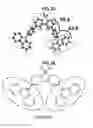
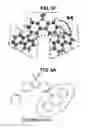
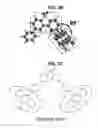
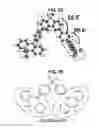
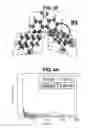
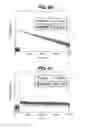
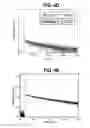
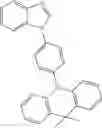
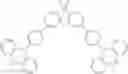
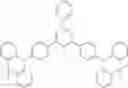
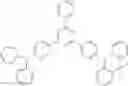
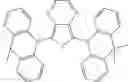




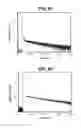


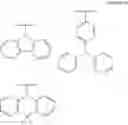
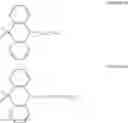

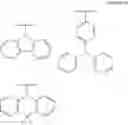



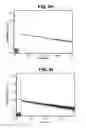
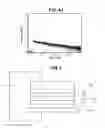
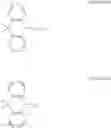
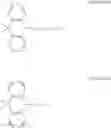
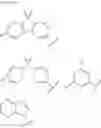
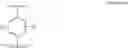
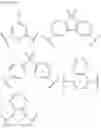
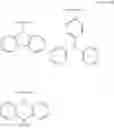







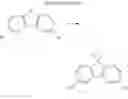
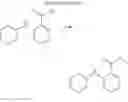
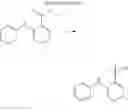
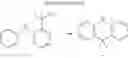
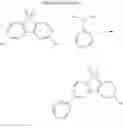

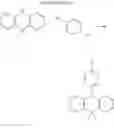
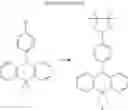




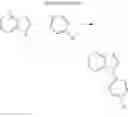
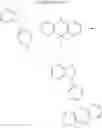
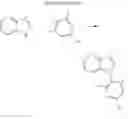

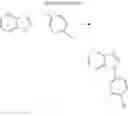
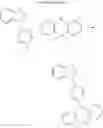
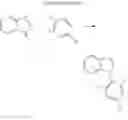

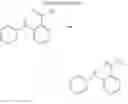
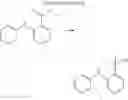
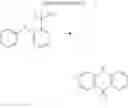
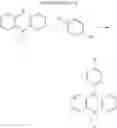
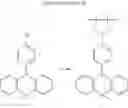
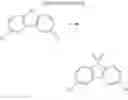
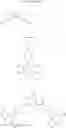
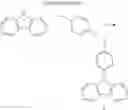
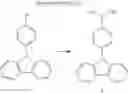


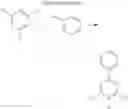
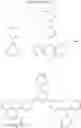


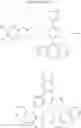

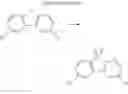
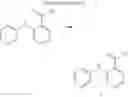

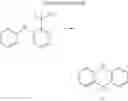

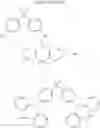
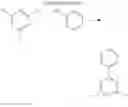
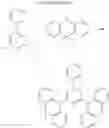
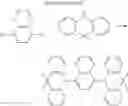
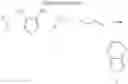
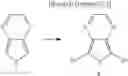
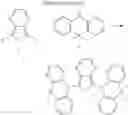

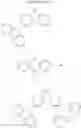
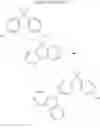
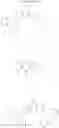



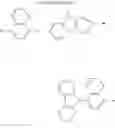


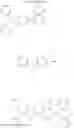


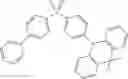
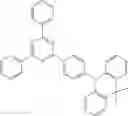
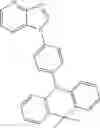
Sources:
- United States Patent and Trademark Office - verify current appl. status at the USPTO↗
Similar patent applications:
- » 20160111659
Delayed fluorescence compound, and organic light emitting diode and display device using the same - » 20160111660
Delayed fluorescence compound, and organic light emitting diode and display device using the same - » 20160163997
Delayed fluorescence compound, and organic light emitting diode and display device using the same - » 20180205023
Delayed fluorescence compound, and organic light emitting diode and display device using the same - » 20180269408
Delayed fluorescence compound, and organic light emitting diode and display device using the same - » 20190036035
Delayed fluorescence compound, and organic light emitting diode and display device using the same
Recent applications in this class:
- » 20240107880 2024-03-28
ORGANIC ELECTROLUMINESCENT MATERIALS AND DEVICES - » 20240008362 2024-01-04
LIGHT-EMITTING LAYER, LIGHT-EMITTING DEVICE AND LIGHT-EMITTING APPARATUS - » 20230320207 2023-10-05
PLURALITY OF HOST MATERIALS, ORGANIC ELECTROLUMINESCENT COMPOUND, AND ORGANIC ELECTROLUMINESCENT DEVICE COMPRISING THE SAME - » 20230309390 2023-09-28
Organic light-emitting device comprising emission layer satisfying specific singlet excitation energy level conditions - » 20230255108 2023-08-10
Phenanthroline-based compound and optoelectronic device comprising the same - » 20230232715 2023-07-20
LIGHT EMITTING DEVICE - » 20230232714 2023-07-20
LIGHT EMITTING ELEMENT AND POLYCYCLIC COMPOUND FOR THE SAME - » 20230217823 2023-07-06
ORGANIC ELECTROLUMINESCENT DEVICE - » 20230217821 2023-07-06
Light Emitting Device and Light Emitting Display Device Including the Same - » 20230217820 2023-07-06
PLURALITY OF HOST MATERIALS AND ORGANIC ELECTROLUMINESCENT DEVICE COMPRISING THE SAME
Recent applications for this Assignee:
- » 20250295016 2025-09-18
DISPLAY DEVICE - » 20250287807 2025-09-11
ORGANIC LIGHT EMITTING DISPLAY APPARATUS HAVING PIXELS OF DIFFERENT STRUCTURES - » 20250287806 2025-09-11
LIGHT EMITTING DISPLAY DEVICE - » 20250285577 2025-09-11
CLOCK GENERATOR AND DISPLAY DEVICE INCLUDING THE SAME - » 20250280721 2025-09-04
DISPLAY DEVICE - » 20250280717 2025-09-04
LIGHT EMITTING DISPLAY DEVICE - » 20250280716 2025-09-04
DISPLAY DEVICE - » 20250280709 2025-09-04
FOLDABLE DISPLAY DEVICE - » 20250280706 2025-09-04
DISPLAY DEVICE - » 20250280704 2025-09-04
DISPLAY DEVICE