Energy saving method in combined system of bioethanol producing device and solid oxide fuel cell
US20160149243A1
2016-05-26
14/899,257
2014-06-13
✅ Patent granted
US 9,680,173 B2
2017-06-13
WO; PCT/JP2014/065666; 20140613
WO; WO2014/203806; 20141224
Lucas J. O'Donnell
Locke Lord LLP
2034-06-13
Abstract:
The present invention is to provide, in a combined system of a bioethanol producing device and an SOFC, a method that is capable of further enhancing the electric power generation efficiency of the SOFC, and is also capable of achieving further reduction of the energy required for distillation of the fermented liquid. A part of an anode off-gas is refluxed to the water-containing ethanol vapor line from the mash column to the reforming device at a reflux ratio ((flow rate of reflux gas)/(flow rate of (anode off-gas)−(reflux gas))) of from 1 to 2. The ethanol concentration of the water-containing ethanol vapor is controlled by refluxing, to a range of from 25 to 35% by weight with water contained in the anode off-gas of the solid oxide fuel cell.
Inventors:
- Yoshinobu Takaki 9 🇯🇵 Osaka-shi, Japan
- Daisuke Hashimoto 4 🇯🇵 Osaka-shi, Japan
- Yoshihiro Asari 6 🇯🇵 Osaka-shi, Japan
- Daisuke Hashimoto 17 🇯🇵 Osaka, Japan
- Yoshihiro Asari 4 🇯🇵 Osaka, Japan
- Masato Kawami 1 🇯🇵 Osaka-shi, Japan
- Yoshinori Sakai 1 🇯🇵 Osaka-shi, Japan
- Yoshinobu Takaki 6 🇯🇵 Osaka, Japan
- Masato Kawami 2 🇯🇵 Osaka, Japan
- Yoshinori Sakai 1 🇯🇵 Osaka, Japan
Assignee:
- HITACHI ZOSEN CORPORATION 51 🇯🇵 Osaka-shi, Japan
Applicant:
Interested in similar patents?
Get notified when new applications in this technology area are published.
Classification:
H01M8/04014 IPC
Fuel cells; Manufacture thereof; Auxiliary arrangements, e.g. for control of pressure or for circulation of fluids related to heat exchange Heat exchange using gaseous fluids; Heat exchange by combustion of reactants
H01M8/0612 IPC
Fuel cells; Manufacture thereof; Combination of fuel cells with means for production of reactants or for treatment of residues with means for production of gaseous reactants from carbon-containing material
H01M8/0618 » CPC further
Fuel cells; Manufacture thereof; Combination of fuel cells with means for production of reactants or for treatment of residues with means for production of gaseous reactants from carbon-containing material Reforming processes, e.g. autothermal, partial oxidation or steam reforming
H01M8/04828 » CPC main
Fuel cells; Manufacture thereof; Auxiliary arrangements, e.g. for control of pressure or for circulation of fluids; Processes for controlling fuel cells or fuel cell systems characterised by variables to be controlled Humidity; Water content
H01M8/04022 » CPC further
Fuel cells; Manufacture thereof; Auxiliary arrangements, e.g. for control of pressure or for circulation of fluids related to heat exchange; Heat exchange using gaseous fluids; Heat exchange by combustion of reactants Heating by combustion
H01M8/1246 » CPC further
Fuel cells; Manufacture thereof; Fuel cells with solid electrolytes operating at high temperature, e.g. with stabilised ZrO electrolyte characterised by the process of manufacturing or by the material of the electrolyte the electrolyte consisting of oxides
H01M2008/1293 » CPC further
Fuel cells; Manufacture thereof; Fuel cells with solid electrolytes operating at high temperature, e.g. with stabilised ZrO electrolyte Fuel cells with solid oxide electrolytes
H01M2300/0071 » CPC further
Electrolytes; Non-aqueous electrolytes; Solid electrolytes inorganic Oxides
C01B3/323 » CPC further
Hydrogen; Gaseous mixtures containing hydrogen; Separation of hydrogen from mixtures containing it ; Purification of hydrogen; Production of hydrogen or of gaseous mixtures containing a substantial proportion of hydrogen by reaction of gaseous or liquid organic compounds with gasifying agents, e.g. water, carbon dioxide, air Catalytic reaction of gaseous or liquid organic compounds other than hydrocarbons with gasifying agents
C12M21/12 » CPC further
Bioreactors or fermenters specially adapted for specific uses for producing fuels or solvents
C12M43/08 » CPC further
Combinations of bioreactors or fermenters with other apparatus Bioreactors or fermenters combined with devices or plants for production of electricity
C12P7/06 » CPC further
Preparation of oxygen-containing organic compounds containing a hydroxy group acyclic Ethanol, i.e. non-beverage
H01M8/04097 » CPC further
Fuel cells; Manufacture thereof; Auxiliary arrangements, e.g. for control of pressure or for circulation of fluids; Arrangements for control of reactant parameters, e.g. pressure or concentration of gaseous reactants with recycling of the reactants
H01M8/04835 » CPC further
Fuel cells; Manufacture thereof; Auxiliary arrangements, e.g. for control of pressure or for circulation of fluids; Processes for controlling fuel cells or fuel cell systems characterised by variables to be controlled; Humidity; Water content of fuel cell reactants
C01B2203/0233 » CPC further
Integrated processes for the production of hydrogen or synthesis gas; Processes for making hydrogen or synthesis gas containing a reforming step containing a catalytic reforming step the reforming step being a steam reforming step
C01B2203/066 » CPC further
Integrated processes for the production of hydrogen or synthesis gas; Integration with other chemical processes with fuel cells
C01B2203/0811 » CPC further
Integrated processes for the production of hydrogen or synthesis gas; Methods of heating or cooling; Methods of heating the process for making hydrogen or synthesis gas by combustion of fuel
C01B2203/1229 » CPC further
Integrated processes for the production of hydrogen or synthesis gas; Feeding the process for making hydrogen or synthesis gas; Composition of the feed; Organic compounds or organic mixtures used in the process for making hydrogen or synthesis gas; Alcohols Ethanol
C01B2203/1288 » CPC further
Integrated processes for the production of hydrogen or synthesis gas; Feeding the process for making hydrogen or synthesis gas Evaporation of one or more of the different feed components
C01B2203/169 » CPC further
Integrated processes for the production of hydrogen or synthesis gas; Controlling the process Controlling the feed
C12M1/00 IPC
Apparatus for enzymology or microbiology
C01B3/32 IPC
Hydrogen; Gaseous mixtures containing hydrogen; Separation of hydrogen from mixtures containing it ; Purification of hydrogen; Production of hydrogen or of gaseous mixtures containing a substantial proportion of hydrogen by reaction of gaseous or liquid organic compounds with gasifying agents, e.g. water, carbon dioxide, air
H01M8/04089 IPC
Fuel cells; Manufacture thereof; Auxiliary arrangements, e.g. for control of pressure or for circulation of fluids; Arrangements for control of reactant parameters, e.g. pressure or concentration of gaseous reactants
H01M8/124 IPC
Fuel cells; Manufacture thereof; Fuel cells with solid electrolytes operating at high temperature, e.g. with stabilised ZrO electrolyte characterised by the process of manufacturing or by the material of the electrolyte
Description
TECHNICAL FIELD
The present invention relates to an energy saving method in a combined system of a bioethanol producing device and a solid oxide fuel cell (which may be hereinafter referred to as “SOFC”).
BACKGROUND ART
Bioethanol has a problem of consuming a large amount of energy for ethanol enrichment and distillation-purification since an automobile fuel requires high concentration ethanol of 99.5% by weight or more.
An SOFC system is equipped with a reforming device that vaporizes and reforms an ethanol aqueous solution of from 25 to 35% by weight to generate hydrogen gas, and an SOFC that generates electric power with the hydrogen gas, and thus does not require a distillation-purification column.
Under the circumstances, some proposals have been made for a system that intends to reduce the consumption energy cost and the equipment cost by combining a bioethanol producing device and an SOFC.
For example, PTL 1 proposes a combined system equipped with a means for withdrawing water-containing ethanol vapor having a concentration of from 30 to 70% by weight from an overhead of a distillation column of a bioethanol producing device, and a reforming means for producing a reformed gas from the overhead vapor, and also equipped with a SOFC operated with the reformed gas as a fuel.
PTL 2 describes a fuel cell system having a reforming device forming a reformed gas containing hydrogen from a hydrocarbon raw material supplied through reformation reaction including steam reformation reaction, a fuel cell performing electric power generation by supplying the reformed gas to an anode, and an anode off-gas introducing means for introducing at least a part of an anode off-gas containing water formed in association with the electric power generation to an inlet port of the reforming device through an ejector.
PTL 3 describes a fuel cell electric power generation system performing electric power generation in such a manner that an ethanol fuel having a concentration of from 15.4 to 46% by weight obtained from an ethanol fermented liquid is vaporized to form a mixed gas of steam and ethanol, which is reformed by being supplied to a reformation reaction zone to generate a reformed gas containing hydrogen, and the reformed gas is supplied to an SOFC.
NPL 1 reports a study on a method for providing a hydrogen rich gas suitable for supplying to a fuel cell, through steam reformation of bioethanol, in which FIG. 1 shows an electric power generation system having a step of providing a water-containing ethanol vapor of from 45 to 55% by weight through distillation of an ethanol fermented liquid, a step of reforming the water-containing ethanol vapor to form a reformed gas containing hydrogen, and a step of performing electric power generation with a fuel cell using the reformed gas as a fuel, and also shows that the heat of the off-gas discharged from the fuel cell is sent to and utilized in the distillation step and the reformation step.
CITATION LIST
Patent Literatures
- PTL 1: JP-A-2007-20407
- PTL 2: JP-A-2007-128680
- PTL 3: JP-A-2011-187328
Non Patent Literature
- NPL 1: Catalysis Today, 75 (2002), pp. 145-155
SUMMARY OF THE INVENTION
Problem to be Solved by the Invention
The techniques shown above as the background art achieve reduction of the consumption energy in the production of bioethanol to a certain extent but are still not satisfactory.
Under the circumstances, an object of the invention is to provide, in a combined system of a bioethanol producing device and an SOFC, a method that is capable of further enhancing the electric power generation efficiency of the SOFC, and is also capable of achieving further reduction of the energy required for distillation of the fermented liquid.
Means for Solving the Problem
The invention according to claim 1 relates to an energy saving method in a combined system of a bioethanol producing device and a solid oxide fuel cell,
in a combined system containing a mash column that distills a fermented liquid formed in a fermenting vessel of a bioethanol producing device to distill off a water-containing ethanol vapor from an overhead thereof, a reforming device that forms a reformed gas from the water-containing ethanol vapor, and a solid oxide fuel cell that is operated with the reformed gas as a fuel,
the method including refluxing a part of an anode off-gas of the solid oxide fuel cell to a water-containing ethanol vapor line from the mash column to the reforming device at a reflux ratio ((flow rate of reflux gas)/(flow rate of (anode off-gas)−(reflux gas))) of from 1 to 2, so as to control an ethanol concentration of the water-containing ethanol vapor to a range of from 25 to 35% by weight with water contained in the anode off-gas of the solid oxide fuel cell.
The anode off-gas contains water generated through the electric power generation of the SOFC, and thus the ethanol concentration of the water-containing ethanol vapor, which is to be supplied to the reforming device, can be controlled to a range of from 25 to 35% by weight with water contained in the anode off-gas, by refluxing a part of the anode off-gas to the water-containing ethanol vapor line from the mash column to the reforming device at the prescribed reflux ratio.
The reflux ratio is preferably in a range of from 1.2 to 1.8. When the reflux ratio is less than 1, the electric power generation efficiency of the SOFC may not be enhanced. When the reflux ratio is exceeding 1, the electric power generation efficiency of the SOFC and the total thermal efficiency may be increased, but when the reflux ratio exceeds 2, the efficiencies may be saturated but may not be further increased. Furthermore, the increase of the reflux ratio requires the increase of the loads of the blower and the ejector, and also in this point of view, the upper limit of the reflux ratio is 2.
The invention according to claim 2 relates to the energy saving method in a combined system of a bioethanol producing device and a solid oxide fuel cell according to claim 1, wherein the ethanol concentration of the water-containing ethanol vapor distilled off from the mash column is controlled to a range of from 35 to 60% by weight.
The invention according to claim 3 relates to the energy saving method in a combined system of a bioethanol producing device and a solid oxide fuel cell according to claim 1, wherein the ethanol concentration of the water-containing ethanol vapor distilled off from the mash column is controlled to a range of from 55 to 60% by weight.
The invention according to claim 4 relates to the energy saving method in a combined system of a bioethanol producing device and a solid oxide fuel cell according to any one of claims 1 to 3, wherein the balance of the anode off-gas of the solid oxide fuel cell and a cathode off-gas thereof are supplied to a catalytic combustor for the reforming device and a catalytic combustor for a reboiler of the mash column, so as to combust a combustible component in the anode off-gas with oxygen in the cathode off-gas, and heat generated in the catalytic combustor for the reforming device is used for heating the reforming device, whereas heat generated in the catalytic combustor for the reboiler is used for heating a bottom liquid of the mash column.
The anode off-gas contains combustible components, such as H2 (3 to 10% by volume) and CO (0 to 10% by volume), and the cathode off-gas contains from 5 to 10% by volume of oxygen. Accordingly, the combustible components are combusted with the oxygen in catalytic combustors, and heat generated therein is effectively used for heating the reforming device and the bottom liquid of the mash column. The catalytic combustor for the reforming device and the catalytic combustor for the reboiler each may be a known one.
Advantageous Effects of Invention
1. For vaporizing and reforming ethanol in the reforming device through sufficient and durable exhibition of the capability of the reformation catalyst to generate hydrogen gas, it is necessary to control the ethanol concentration of the water-containing ethanol vapor to a range of from 25 to 35% by weight.
In the invention according to claim 1, apart of the anode off-gas from the SOFC is refluxed to the water-containing ethanol vapor line from the mash column to the reforming device at a reflux ratio ((flow rate of reflux gas)/(flow rate of (anode off-gas)−(reflux gas))) of from 1 to 2, so as to control the ethanol concentration of the water-containing ethanol vapor, which is to be supplied to the reforming device, to a range of from 25 to 35% by weight with water contained in the anode off-gas.
2. In an SOFC cell stack, the utilization rate of the combustible component (such as H2 and CO) in the anode supply gas is generally approximately 70%. This is because the cell may be damaged if the concentration of the combustible component in the anode supply gas is too small.
In the invention according to claim 1, apart of the anode off-gas is refluxed to the water-containing ethanol vapor line from the mash column to the reforming device at the prescribed reflux ratio as described above, by which the concentration of the combustible component in the anode supply gas can be increased, so as to enhance the utilization rate of the fuel to approximately 90%, and thus the electric power generation efficiency can be enhanced.
3. In the reforming device, it is necessary to control the ethanol concentration of the water-containing ethanol vapor to a range of from 25 to 35% by weight, but in the case where a water-containing ethanol vapor that has an ethanol concentration in a range of from 25 to 35% by weight is to be distilled off from the overhead of the mash column, a large amount of energy may be consumed. In the invention according to claim 1, the ethanol concentration of the water-containing ethanol vapor can be controlled to a range of from 25 to 35% by weight by refluxing a part of the anode off-gas to the water-containing ethanol vapor line from the mash column to the reforming device at the prescribed reflux ratio as described above, by which the ethanol concentration of the water-containing ethanol vapor thus distilled off from the mash column may be from 35 to 60% by weight, and further from 55 to 60% by weight, and thereby the consumption energy of the reboiler of the mash column can be suppressed to the requisite minimum level.
4. In the invention according to claim 4, the balance of the anode off-gas of the SOFC and the cathode off-gas thereof are supplied to the catalytic combustor for the reforming device and the catalytic combustor for the reboiler of the mash column, so as to combust the combustible component (such as H2 and CO) in the anode off-gas with oxygen in the cathode off-gas, and thus heat can be generated in the catalytic combustor for the reforming device and the catalytic combustor for the reboiler, and can be effectively utilized for heating the reforming device and the bottom liquid of the mash column.
BRIEF DESCRIPTION OF DRAWINGS
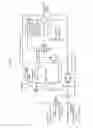
FIG. 1 is a flow diagram showing an embodiment of the invention.
FIG. 2 is a graph showing the effect of refluxing the anode off-gas on the efficiencies.
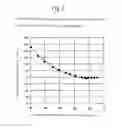
FIG. 3 is a graph showing the relationship between the overhead vapor concentration and the consumption energy in the mash column.
EMBODIMENTS OF INVENTION
The invention will be described below with reference to embodiments shown in the drawings.
In FIG. 1, the combined system of a bioethanol producing device and an SOFC according to the invention is constituted by the combination of a mash column that distills a fermented liquid formed in a fermenting vessel of a bioethanol producing device for distilling off a water-containing ethanol vapor from an overhead thereof, a reforming device that forms a reformed gas from the water-containing ethanol vapor, and a solid oxide fuel cell that is operated with the reformed gas as a fuel.
In the system, a fermented liquid having an ethanol concentration of 5% by weight is supplied to the overhead of the mash column with a pump (1) through a heat recovery device (2). The mash column, for example, has a number of distillation plates of 40, and distills the fermented liquid at a temperature in a range of from 100 to 154° C. The bottom liquid is withdrawn from the bottom of the mash column, and a part of the bottom liquid is heated with a catalytic combustor and a reboiler and then returned to the bottom of the mash column, whereas the balance of the bottom liquid is discharged as waste water having an ethanol concentration of less than 0.1% by weight through the heat recovery device (2).
On the other hand, a water-containing ethanol vapor having an ethanol concentration of from 35 to 60% by weight is distilled off from the overhead of the mash column at a temperature of from 90 to 130° C. and a pressure of from the atmospheric pressure to 430 kPaG. The water-containing ethanol vapor is sent to the reforming device through a heat recovery device (3), and in the reforming device, ethanol is vaporized and reformed to generate a reformed gas containing hydrogen. The reformed gas is sent to the anode of the SOFC unit operated at approximately 700° C., and utilized for electric power generation. Air is supplied to the cathode of the SOFC unit with a blower (4) through a heat recovery device (5), and oxygen in the air is used for electric power generation.
A part of the anode off-gas is refluxed to an ejector (7) provided in the course of the water-containing ethanol vapor line (6) from the overhead of the mash column to the reforming device at a reflux ratio ((flow rate of reflux gas)/(flow rate of (anode off-gas)−(reflux gas))) of approximately 1.5. The ethanol concentration of the water-containing ethanol vapor is controlled by refluxing, to a range of from 25 to 35% by weight with water contained in the anode off-gas of the SOFC.
A part of the anode off-gas is thus refluxed to the water-containing ethanol vapor line from the mash column to the reforming device at the prescribed reflux ratio as described above, by which the concentration of the combustible component (such as H2 and CO) in the anode supply gas can be increased, so as to enhance the utilization rate of the fuel to approximately 90%, and thus the electric power generation efficiency can be enhanced.
Furthermore, apart of the anode off-gas is thus refluxed to the water-containing ethanol vapor line from the mash column to the reforming device at the prescribed reflux ratio as described above, by which the ethanol concentration of the water-containing ethanol vapor, which is distilled off from the mash column at a temperature of from 90 to 130° C. and a pressure of from the atmospheric pressure to 430 kPaG, can be controlled to a range of from 25 to 35% by weight (assuming that the reflux ratio is from 1 to 2). Thus, the consumption energy of the reboiler of the mash column can be suppressed to the requisite minimum level.
The balance of the anode off-gas of the SOFC and the cathode off-gas thereof are combined, and at least a part of the combined gas is diverted to pass through the catalytic combustor for the reforming device, the reforming device and the heat recovery device (3), and then combined with the balance of the combined gas that is not diverted. In the catalytic combustor for the reforming device, the combustible component (such as H2 and CO) derived from the anode off-gas is combusted with oxygen derived from the cathode off-gas, and the heat thus generated is used for heating the reforming device. The combined gas is also sent to the catalytic combustor for the reboiler of the mash column, in which also the combustible component (such as H2 and CO) derived from the anode off-gas is combusted with oxygen derived from the cathode off-gas, and the heat thus generated is used for heating the bottom liquid of the mash column.
FIG. 3 shows the relationship between the overhead vapor concentration of the mash column and the consumption energy. The graph in the figure shows the result obtained by calculating the change of the reboiler heat quantity that is required for dehydrating and enriching a fermented liquid having an ethanol concentration of 5% by weight at an overhead pressure of 50 kPaG, depending on the change of the overhead vapor concentration. In the reforming device, for vaporizing and reforming ethanol through sufficient and durable exhibition of the capability of the reformation catalyst to generate hydrogen gas, it is necessary to control the ethanol concentration of the water-containing ethanol vapor to a range of from 25 to 35% by weight, and in the mash column, the consumption energy is minimized under the condition that water-containing ethanol is enriched to an ethanol concentration in a range of from 35 to 60% by weight. The consumption energy is increased under the condition that water-containing ethanol is enriched to a range exceeding 60% by weight. The reboiler heat quantity is calculated by using a process simulator (ASPEN). It is assumed that a fermented liquid having an ethanol concentration of 5% by weight is distilled at approximately 90° C. with a number of distillation plates of the distillation column of 40. In the region where the overhead vapor concentration of the distillation column is in a low concentration range, an operation referred to as simple distillation is performed, and with the increase of the concentration, the latent heat of vaporization of water is decreased to reduce the reboiler heat quantity. When the concentration is the certain value (which is approximately 55% by weight found by trial calculation), further enrichment cannot be performed by simple distillation, and a refluxing operation is required, which increases the reboiler heat quantity. In a range of enrichment of the concentration higher than the value, the consumption energy is simply increased.
INDUSTRIAL APPLICABILITY
In a combined system of a bioethanol producing device and an SOFC, the invention can be effectively applied thereto for further enhancing the electric power generation efficiency of the SOFC and for further reducing the energy required for distillation of a fermented liquid.
Claims
1. An energy saving method in a combined system of a bioethanol producing device and a solid oxide fuel cell,
in a combined system containing a mash column that distills a fermented liquid formed in a fermenting vessel of a bioethanol producing device to distill off a water-containing ethanol vapor from an overhead thereof, a reforming device that forms a reformed gas from the water-containing ethanol vapor, and a solid oxide fuel cell that is operated with the reformed gas as a fuel,
the method comprising refluxing a part of an anode off-gas of the solid oxide fuel cell to a water-containing ethanol vapor line from the mash column to the reforming device at a reflux ratio ((flow rate of reflux gas)/(flow rate of (anode off-gas)−(reflux gas))) of from 1 to 2, so as to control an ethanol concentration of the water-containing ethanol vapor to a range of from 25 to 35% by weight with water contained in the anode off-gas of the solid oxide fuel cell.
2. The energy saving method in a combined system of a bioethanol producing device and a solid oxide fuel cell according to claim 1, wherein the ethanol concentration of the water-containing ethanol vapor distilled off from the mash column is controlled to a range of from 35 to 60% by weight.
3. The energy saving method in a combined system of a bioethanol producing device and a solid oxide fuel cell according to claim 1, wherein the ethanol concentration of the water-containing ethanol vapor distilled off from the mash column is controlled to a range of from 55 to 60% by weight.
4. The energy saving method in a combined system of a bioethanol producing device and a solid oxide fuel cell according to claim 1, wherein the balance of the anode off-gas of the solid oxide fuel cell and a cathode off-gas thereof are supplied to a catalytic combustor for the reforming device and a catalytic combustor for a reboiler of the mash column, so as to combust a combustible component in the anode off-gas with oxygen in the cathode off-gas, and heat generated in the catalytic combustor for the reforming device is used for heating the reforming device, whereas heat generated in the catalytic combustor for the reboiler is used for heating a bottom liquid of the mash column.
5. The energy saving method in a combined system of a bioethanol producing device and a solid oxide fuel cell according to claim 2, wherein the balance of the anode off-gas of the solid oxide fuel cell and a cathode off-gas thereof are supplied to a catalytic combustor for the reforming device and a catalytic combustor for a reboiler of the mash column, so as to combust a combustible component in the anode off-gas with oxygen in the cathode off-gas, and heat generated in the catalytic combustor for the reforming device is used for heating the reforming device, whereas heat generated in the catalytic combustor for the reboiler is used for heating a bottom liquid of the mash column.
6. The energy saving method in a combined system of a bioethanol producing device and a solid oxide fuel cell according to claim 3, wherein the balance of the anode off-gas of the solid oxide fuel cell and a cathode off-gas thereof are supplied to a catalytic combustor for the reforming device and a catalytic combustor for a reboiler of the mash column, so as to combust a combustible component in the anode off-gas with oxygen in the cathode off-gas, and heat generated in the catalytic combustor for the reforming device is used for heating the reforming device, whereas heat generated in the catalytic combustor for the reboiler is used for heating a bottom liquid of the mash column.
Images & Drawings included:


Sources:
- United States Patent and Trademark Office - verify current appl. status at the USPTO↗
Recent applications in this class:
- » 20250192211 2025-06-12
FUEL CELL SYSTEM AND FUEL CELL SYSTEM CONTROL METHOD - » 20230081424 2023-03-16
SYSTEM FOR DISCHARGING RESIDUAL WATER IN FUEL CELL STACK AND METHOD OF CONTROLLING DISCHARGE OF RESIDUAL WATER - » 20230012347 2023-01-12
FUEL CELL SYSTEM - » 20210344027 2021-11-04
Method for controlling humidity in a fuel cell - » 20190393526 2019-12-26
CLOSED LOOP CONTROL FOR FUEL CELL WATER MANAGEMENT - » 20190372142 2019-12-05
Controller for estimating relative humidity and condensed water, and method for controlling condensed water drain using the same - » 20190372141 2019-12-05
Controller for estimating relative humidity and condensed water, and method for controlling condensed water drain using the same - » 20190363384 2019-11-28
Controller for estimating relative humidity and condensed water, and method for controlling condensed water drain using the same - » 20190157695 2019-05-23
Fuel cell system and method of controlling fuel cell system - » 20180183081 2018-06-28
Fuel cell system and method of controlling the same
Recent applications for this Assignee:
- » 20210188653 2021-06-24
Modified calcium aluminate compound and production method therefor - » 20180318762 2018-11-08
Processing apparatus equipped with catalyst-supporting honeycomb structure, and method for manufacturing same - » 20180186650 2018-07-05
Method for producing conductive mayenite type compound - » 20170166492 2017-06-15
Catalyst for methanation of carbon oxides, preparation method of the catalyst and process for the methanation - » 20170165643 2017-06-15
Catalyst for methanation of carbon oxides, preparation method of the catalyst and process for the methanation - » 20170106356 2017-04-20
HONEYCOMB STRUCTURE AND CATALYST FOR CLEANING EXHAUST GAS USING SAME, AND METHOD FOR PRODUCING CATALYST FOR CLEANING EXHAUST GAS - » 20170001181 2017-01-05
Catalyst for purifying combustion exhaust gas, and method for purifying combustion exhaust gas - » 20160305303 2016-10-20
On-site regeneration method of denitration catalyst in exhaust gas purification system - » 20160167962 2016-06-16
Ammonia oxidation/decomposition catalyst - » 20160166989 2016-06-16
Method for purifying exhaust gas