Sulfur-resistant catalyst for aromatics saturated hydrogenation and preparation method thereof
US20160167017A1
2016-06-16
14/964,204
2015-12-09
✅ Patent granted
US 10,258,965 B2
2019-04-16
-
-
Renee Robinson | Derek N Mueller
Hamilton, Brook, Smith & Reynolds, P.C.
2037-06-15
Abstract:
The present invention relates to a method for preparing a sulfur-resistant catalyst for aromatics saturated hydrogenation, comprising the steps of: preparing noble metal impregnation solutions from a noble metal and deionized water or an acid solution; impregnating a carrier with the impregnation solutions sequentially from high to low concentrations by incipient impregnation; homogenizing, drying, and calcinating to obtain the sulfur-resistant catalyst for aromatics saturated hydrogenation. The catalyst for aromatics saturated hydrogenation prepared by the method according to the present invention is primarily used in processing low-sulfur and high-aromatics light distillate, middle distillate, atmospheric gas oil, and vacuum gas oil. The method according to the present invention is advantageous in that the catalyst for aromatics saturated hydrogenation exhibits good hydrofining performance, superior aromatics saturation performance, high liquid yield of products, as well as excellent desulfurization and sulfur-resistance, and the catalyst has remarkable effects in use and a great prospect of application.
Inventors:
- Xiaodong YANG 2 🇨🇳 Daqing City, China
- Yanfeng LIU 2 🇨🇳 Daqing City, China
- Sheng HU 2 🇨🇳 Daqing City, China
- Chunmei YU 2 🇨🇳 Daqing City, China
- Hongling CHU 1 🇨🇳 Daqing City, China
- Xinmiao Wang 2 🇨🇳 Daqing City, China
- Shanbin GAO 2 🇨🇳 Daqing City, China
- Bin XIE 2 🇨🇳 Daqing City, China
- Famin SUN 2 🇨🇳 Daqing City, China
- Wencheng Zhang 2 🇨🇳 Daqing City, China
- Jintao GUO 2 🇨🇳 Daqing City, China
- Quanguo Zhang 2 🇨🇳 Daqing City, China
- Lili JIANG 2 🇨🇳 Daqing City, China
- Xiaofeng Wang 1 🇨🇳 Daqing City, China
- Yuanyuan JI 1 🇨🇳 Daqing City, China
- Ran SUN 1 🇨🇳 Daqing City, China
- Yuxiao FENG 1 🇨🇳 Daqing City, China
- Xianjun WU 1 🇨🇳 Daqing City, China
- Guojia ZHANG 2 🇨🇳 Daqing City, China
- Tan ZHAO 2 🇨🇳 Daqing City, China
- Wenyong LIU 2 🇨🇳 Daqing City, China
- Rui LI 2 🇨🇳 Daqing City, China
- Ruifeng LI 2 🇨🇳 Daqing City, China
- Cheng TANG 2 🇨🇳 Daqing City, China
- Xiaodong Yang 2 🇨🇳 Daqing, China
- Chunmei Yu 2 🇨🇳 Daqing, China
- Yanfeng Liu 2 🇨🇳 Daqing, China
- Sheng Hu 2 🇨🇳 Daqing, China
- Famin Sun 2 🇨🇳 Daqing, China
- Wencheng Zhang 2 🇨🇳 Daqing, China
- Jintao Guo 2 🇨🇳 Daqing, China
- Wenyong Liu 2 🇨🇳 Daqing, China
- Xinmiao Wang 2 🇨🇳 Daqing, China
- Shanbin Gao 2 🇨🇳 Daqing, China
- Bin Xie 2 🇨🇳 Daqing, China
- Rui Li 2 🇨🇳 Daqing, China
- Guojia Zhang 2 🇨🇳 Daqing, China
- Lili Jiang 2 🇨🇳 Daqing, China
- Tan Zhao 2 🇨🇳 Daqing, China
- Quanguo Zhang 2 🇨🇳 Daqing, China
- Ruifeng Li 2 🇨🇳 Daqing, China
- Cheng Tang 2 🇨🇳 Daqing, China
- Hongling Chu 1 🇨🇳 Daqing, China
- Xiaofeng Wang 1 🇨🇳 Daqing, China
- Yuanyuan Ji 1 🇨🇳 Daqing, China
- Ran Sun 1 🇨🇳 Daqing, China
- Yuxiao Feng 1 🇨🇳 Daqing, China
- Xianjun Wu 1 🇨🇳 Daqing, China
Assignee:
- PetroChina Company Limited 164 🇨🇳 Beijing, China
Applicant:
Interested in similar patents?
Get notified when new applications in this technology area are published.
Classification:
B01J37/02 IPC
Processes, in general, for preparing catalysts; Processes, in general, for activation of catalysts Impregnation, coating or precipitation
B01J37/0213 » CPC further
Processes, in general, for preparing catalysts; Processes, in general, for activation of catalysts; Impregnation, coating or precipitation; Impregnation Preparation of the impregnating solution
B01J35/10 IPC
Catalysts, in general, characterised by their form or physical properties; Solids characterised by their surface properties or porosity
B01J35/1019 » CPC further
Catalysts, in general, characterised by their form or physical properties; Solids characterised by their surface properties or porosity; Surface area 100-500 m2/g
C10G45/52 » CPC further
Refining of hydrocarbon oils using hydrogen or hydrogen-generating compounds; Hydrogenation of the aromatic hydrocarbons characterised by the catalyst used containing platinum group metals or compounds thereof
B01J35/1038 » CPC further
Catalysts, in general, characterised by their form or physical properties; Solids characterised by their surface properties or porosity; Pore volume less than 0.5 ml/g
B01J35/1042 » CPC further
Catalysts, in general, characterised by their form or physical properties; Solids characterised by their surface properties or porosity; Pore volume 0.5-1.0 ml/g
B01J37/0203 » CPC further
Processes, in general, for preparing catalysts; Processes, in general, for activation of catalysts; Impregnation, coating or precipitation; Impregnation the impregnation liquid containing organic compounds
B01J37/0009 » CPC further
Processes, in general, for preparing catalysts; Processes, in general, for activation of catalysts Use of binding agents; Moulding; Pressing; Powdering; Granulating; Addition of materials ameliorating the mechanical properties of the product catalyst
B01J37/08 » CPC further
Processes, in general, for preparing catalysts; Processes, in general, for activation of catalysts Heat treatment
B01J37/0205 » CPC further
Processes, in general, for preparing catalysts; Processes, in general, for activation of catalysts; Impregnation, coating or precipitation; Impregnation in several steps
B01J35/00 IPC
Catalysts, in general, characterised by their form or physical properties
B01J37/00 IPC
Processes, in general, for preparing catalysts; Processes, in general, for activation of catalysts
B01J23/40 » CPC main
Catalysts comprising metals or metal oxides or hydroxides, not provided for in group of noble metals of the platinum group metals
B01J35/0073 » CPC further
Catalysts, in general, characterised by their form or physical properties; Catalysts characterised by their physical properties Distribution of the active metal ingredient
B01J23/44 » CPC main
Catalysts comprising metals or metal oxides or hydroxides, not provided for in group of noble metals of the platinum group metals Palladium
B01J37/28 » CPC further
Processes, in general, for preparing catalysts; Processes, in general, for activation of catalysts Phosphorising
B01J2523/00 » CPC further
Constitutive chemical elements of heterogeneous catalysts
Description
RELATED APPLICATION
This application claims priority under 35 U.S.C. §119 or 365 to China, Application No. 201410758718.7, filed Dec. 10, 2014. The entire teachings of the above application are incorporated herein by reference.
FIELD OF TECHNOLOGY
The present invention relates to a method for preparing a sulfur-resistant catalyst for aromatics saturated hydrogenation, particularly to a method for preparing a catalyst for aromatics saturated hydrogenation for processing low-sulfur and high-aromatics light distillate, middle distillate, atmospheric gas oil, and vacuum gas oil.
BACKGROUND OF THE INVENTION
Worldwide, as the crude oil for processing is becoming heavier and poorer in quality, it has become a common view that, for the processed distillate oils, removal of aromatic compounds in diesel fuels may help to improve the cetane value of diesel, removal of aromatic compounds in aviation kerosene raw materials may contribute to increase the smoke point of products, and removal of aromatics in lubricant base oil raw materials may improve the antioxidant stability of products.
As compared with non-noble metal (cobalt, molybdenum, nickel, and tungsten) sulfide catalysts, noble metals prominently demonstrate more superior hydrogenation performance, and therefore noble metal catalysts are widely used in dearomatization of distillate raw materials. Noble metal catalysts exhibit good dearomatization performance at low temperature. However, the hydrogenation performance of distillate processing by using noble metal catalysts is usually related with their sensitivity to sulfur-containing compounds, while noble metals normally have poor sulfur resistance and therefore noble metal catalyst poisoning tends to occur during the distillate processing. Moreover, distillates from some refineries have high content of sulfur-containing compounds, and it is unqualified to directly use noble metal catalysts for dearomatization without desulfurization treatment of the distillates in advance.
U.S. Pat. No. 3,943,053 discloses a selective aromatics hydrogenation catalyst, and states that the catalyst prepared by the method thereof can maintain its hydrogenation performance for a very long time when used for processing sulfur-containing raw materials, wherein the catalyst employs γ-Al2O3 having high specific surface area as a carrier loaded with platinum and palladium. A crucial issue in the preparation of such a catalyst is to impregnate the carrier with platinum and palladium simultaneously in the same aqueous solution, but the distribution state of the noble metals in the catalyst is not described.
U.S. Pat. No. 5,308,814 discloses a number of carrier materials in a noble metal dearomatization catalyst composition, and describes that a carrier is prepared from Y zeolite and heat resistant inorganic oxides (for example, silica, alumina, or silica and alumina) and loaded with platinum and palladium, wherein the weight ratio of Y zeolite in the carrier is 10 to 90%. Thus, it can be deduced that such a material has strong crackability and is not suitable in the field of hydrofining.
U.S. Pat. No. 4,849,093 discloses a two-step dearomatization saturation method using a hydrogenation catalyst comprising group VIII metals or group VIB metals or combination thereof in a non-noble metal catalyst, but the distribution state of active components in the catalyst is not described in this patent either.
U.S. Pat. No. 3,869,522 discloses an aromatics hydrogenation method in which a carrier containing 30 to 90 wt % silica, 10 to 70 wt % zirconia, and 0 to 25 wt % alumina is prepared. In this patent, platinum is preferably used as the active metal, or its combination with other noble metals may be used as the active metal. Raw materials with a sulfur content exceeding standard may be catalytically desulfurized. It is acknowledged in this patent that the exposure of noble metal hydrogenation catalysts to sulfur-containing compounds leads to sulfur sensitivity to such sulfur-containing compounds, but it is not yet recognized that the noble metal hydrogenation catalysts can be protected by altering the distribution state of noble metals in the catalyst.
Currently, it is conventional in the industry to prepare an impregnation solution having a fixed concentration of active metals and impregnate a catalyst carrier by saturated or oversaturated impregnation followed by drying and calcination to prepare a catalyst. U.S. Pat. No. 4,399,058 introduces a method for preparing a hydrogenation catalyst in which group VIB and group VIII metal salts are mixed with aqueous ammonia followed by further addition of aqueous ammonia to adjust pH to a certain value so as to prepare a noble metal solution at a fixed concentration, and an inorganic oxide carrier is saturated impregnated with the metal solution, dried and calcinated to provide a hydrogenation catalyst.
European patent EP 0 204 314 describes a method for preparing a hydrogenation catalyst with an uneven distribution of noble metal components. In the preparation process, a stepwise multiple-impregnation approach is employed to load the noble metal components, i.e., a carrier is impregnated with a solution of active component A, and then washed, dried, and calcinated; subsequently, it is impregnated with an impregnation solution of active component B, and washed, dried, and calcinated again. By using a preparation method including stepwise washing, drying and calcinating, the noble metal content within the catalyst particle is made higher than the metal content on its surface, and the life span of such catalyst with an uneven distribution is extended as compared to a catalyst with an even distribution. However, due to the complexity of this preparation method and loss of noble metals in the preparation process, the cost for preparation of such a catalyst is rather high.
SUMMARY OF THE INVENTION
An objective of the present invention is to provide a method for preparing a sulfur-resistant catalyst for aromatics saturated hydrogenation in order to expand the applicability of raw materials for aromatics saturated hydrogenation, improve the sulfur resistance of the catalyst, and lengthen the life span of the catalyst. By controlling the gradient distribution of the noble metal component within the catalyst particle, the present invention improves the sulfur resistance of the noble metal.
To achieve the above objective, the present invention provides a method for preparing a sulfur-resistant catalyst for aromatics saturated hydrogenation, comprising the steps of:
(1) preparing noble metal impregnation solutions from a noble metal and deionized water or an acid solution;
(2) impregnating a carrier consisting of an inorganic porous material with the impregnation solutions by incipient impregnation; and
(3) homogenizing for 10 min to 3 h, drying at 90 to 140° C. for 3 to 6 h, and calcinating at 350 to 650° C. for 3 to 10 h to obtain a sulfur-resistant catalyst for aromatics saturated hydrogenation;
wherein, during the impregnation in the above step (2), the carrier is impregnated sequentially with the impregnation solutions from high to low concentrations, or a noble metal impregnation solution at a high concentration is prepared and then the concentration of the active metal-containing impregnation solution is gradually lowered.
In the method for preparing a sulfur-resistant catalyst for aromatics saturated hydrogenation according to the present invention, the inorganic porous material is preferably comprised of alumina and at least one selected from the group consisting of silica, titania-zirconia, alumina-silica, alumina-zirconia.
In the method for preparing a sulfur-resistant catalyst for aromatics saturated hydrogenation according to the present invention, the carrier preferably has a specific surface area of 150 to 500 m2/g and a pore volume of 0.2 to 0.7 cm3/g.
In the method for preparing a sulfur-resistant catalyst for aromatics saturated hydrogenation according to the present invention, the carrier preferably has a specific surface area of 200 to 400 m2/g and a pore volume of 0.3 to 0.6 cm3/g.
In the method for preparing a sulfur-resistant catalyst for aromatics saturated hydrogenation according to the present invention, the mass ratio of aluminum to silicon (in terms of alumina to silica) is 1:10 to 10:1 when the inorganic porous material is comprised of alumina and at least one selected from the group consisting of silica and alumina-silica; the mass ratio of aluminum to zirconium (in terms of alumina to zirconia) is 1:20 to 20:1 when the inorganic porous material is comprised of alumina and at least one selected from the group consisting of titania-zirconia and alumina-zirconia.
In the method for preparing a sulfur-resistant catalyst for aromatics saturated hydrogenation according to the present invention, the noble metal is preferably selected from at least one from the group consisting of Pt, Pd, Ru, Rh, Re, and Ir compounds, and the mass fraction of the noble metal contained in the catalyst is preferably 0.05 to 5.0 wt %.
In the method for preparing a sulfur-resistant catalyst for aromatics saturated hydrogenation according to the present invention, the noble metal is preferably one or two of Pt, Pd, Ru, and Re compounds, and the mass fraction of the noble metal contained in the catalyst is preferably 0.2 to 2.0 wt %.
In the method for preparing a sulfur-resistant catalyst for aromatics saturated hydrogenation according to the present invention, the noble metal is preferably Pt and Pd, and the mass ratio of Pt to Pd comprised in the catalyst is preferably 1:6 to 6:1.
In the method for preparing a sulfur-resistant catalyst for aromatics saturated hydrogenation according to the present invention, the acid component in the acid solution is preferably selected from at least one from the group consisting of hydrochloric acid, phosphoric acid, biphosphate, dihydric phosphate, sulfuric acid, bisulfate, acetic acid, citric acid, and nitric acid.
In the method for preparing a sulfur-resistant catalyst for aromatics saturated hydrogenation according to the present invention, the concentration of the noble metal component in the catalyst decreases gradually from the center of the particle to the outer surface thereof, the ratio of the metal content at the circumcenter of the particle to the metal content on the circumcircle surface of the particle is preferably 2.0 to 6.0, and the ratio of the metal content at 0.5 R to the metal content on the outer surface is preferably 3.0 to 1.5, where the circumradius is R with the circumcenter of the cross section of the catalyst particle taken as the starting point.
In the process of preparing the carrier for the catalyst, the inorganic porous material is kneaded and compression molded or extrusion molded into a catalyst in a form of a circular shape, a cylindrical shape, a three-leaf clover shape or a four-leaf clover shape, followed by drying and calcination at high temperature to afford the carrier.
The catalyst for aromatics saturated hydrogenation according to the present invention is advantageous in that the concentration of the noble metal active component within the catalyst particle decreases in a gradient distribution from the center to the outside, and the catalyst exhibits superior aromatics saturation activity and stability, excellent sulfur-resistance in processing low-sulfur raw materials, as well as good refining performance and high liquid yield of products. The catalyst for aromatics saturated hydrogenation prepared according to the present invention shows remarkable effects in processing low-sulfur and high-aromatics light distillate, middle distillate, atmospheric gas oil, and vacuum gas oil and has a great prospect of application.
BRIEF DESCRIPTION OF THE DRAWINGS
The foregoing will be apparent from the following more particular description of example embodiments of the invention, as illustrated in the accompanying drawings in which like reference characters refer to the same parts throughout the different views. The drawings are not necessarily to scale, emphasis instead being placed upon illustrating embodiments of the present invention.
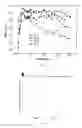
FIG. 1 is a schematic plot of the sulfur resistance and hydrodesulfurization performance of the catalysts prepared in Example 1, Example 3, Comparative Example 1 and Comparative Example 2.
FIG. 2 is a schematic plot of the relative content distribution of the noble metal in the catalyst.
FIG. 3 is a schematic plot of the relative content distribution of the noble metal in the catalyst.
DETAILED DESCRIPTION OF PREFERRED EMBODIMENTS
The present invention is now further described in details by referring to specific examples, but the present invention is not limited to the following Examples. Any modification without departing from the spirit and scope of the present invention falls within the scope of the present invention.
Example 1
An inorganic porous material containing 96 wt % of Al2O3 and Al2O3—SiO2 and 4 wt % ZrO2 in the carrier was mechanically kneaded into a carrier (the mass ratio of Al2O3 to SiO2 in the carrier was 10:1, and the mass ratio of Al2O3 to ZrO2 was 20:1), and then extruded, dried and calcinated to prepare the carrier final product.
Incipient impregnation was employed to prepare the catalyst carrier with a water absorption of 0.89 ml/g. 200 g of the carrier was weighed and sprayed and impregnated with 78 ml of an impregnation solution containing 1.0 wt % PtCl2 and 0.3 wt % PdCl2. During the spray impregnation, 100 ml of an impregnation solution containing 0.2 wt % PtCl2, 0.1 wt % PdCl2, and an acid at a concentration of 0.2 mol/L (H3PO4+HCl) was dropped into the previous impregnation solution at a constant speed over 30 minutes. The catalyst was homogenized in the spray impregnation apparatus for 40 minutes, dried at 90° C. for 4 hours, and then calcinated at 550° C. for 6 hours to afford catalyst A-1.
Example 2
An inorganic porous material containing 30 wt % of Al2O3 and SiO2, 45 wt % ZrO2, and 25 wt % ZrO2—TiO2 in the carrier was mechanically kneaded into a carrier (the mass ratio of Al2O3 to SiO2 in the carrier was 1:10, and the mass ratio of Al2O3 to ZrO2 was 1:20), and then extruded, dried and calcinated to prepare the carrier final product.
Incipient impregnation was employed to prepare the catalyst carrier with a water absorption of 0.89 ml/g. 200 g of the carrier was weighed and sprayed and impregnated with 78 ml of an impregnation solution containing 1.0 w % PtCl2 and 0.3 wt % PdCl2. During the spray impregnation, 100 ml of an impregnation solution containing 0.2 wt % PtCl2, 0.1 wt % PdCl2, and an acid at a concentration of 0.2 mol/L (nitric acid+citric acid) was dropped into the previous impregnation solution at a constant speed over 30 minutes. The catalyst was homogenized in the spray impregnation apparatus for 10 minutes, dried at 140° C. for 3 hours, and then calcinated at 500° C. for 8 hours to afford catalyst A-2.
Example 3
An inorganic porous material containing 60 wt % of Al2O3 and Al2O3—SiO2, 20 wt % ZrO2, and 20 wt % ZrO2—TiO2 in the carrier was mechanically kneaded into a carrier (the mass ratio of Al2O3 to SiO2 in the carrier was 5:1, and the mass ratio of Al2O3 to ZrO2 was 5:1), and then extruded, dried and calcinated to prepare the carrier final product.
Incipient impregnation was employed to prepare the catalyst carrier with a water absorption of 0.89 ml/g. 200 g of the carrier was weighed and sprayed and impregnated with 78 ml of an impregnation solution containing 1.0 wt % PtCl2 and 0.3 wt % PdCl2. During the spray impregnation, 100 ml of an impregnation solution containing 0.2 wt % PtCl2, 0.1 wt % PdCl2, and an acid at a concentration of 0.2 mol/L (H3PO4+HCl) was dropped into the previous impregnation solution at a constant speed over 30 minutes. The catalyst was homogenized in the spray impregnation apparatus for 3 hours, dried at 100° C. for 6 hours, and then calcinated at 650° C. for 3 hours to afford catalyst A-3.
Example 4
An inorganic porous material containing 45 wt % of Al2O3—ZrO2, 45 wt % Al2O3—SiO2, and 10 wt % TiO2 in the carrier was mechanically kneaded into a carrier (the mass ratio of Al2O3 to SiO2 in the carrier was 1:1, and the mass ratio of Al2O3 to ZrO2 was 1:1), and then extruded, dried and calcinated to prepare the carrier final product.
Incipient impregnation was employed to prepare the catalyst carrier with a water absorption of 0.89 ml/g. 200 g of the carrier was weighed and sprayed and impregnated with 78 ml of an impregnation solution containing 1.0 wt % PtCl2 and 0.3 wt % PdCl2. During the spray impregnation, 100 ml of an impregnation solution containing 0.2 wt % PtCl2, 0.1 wt % PdCl2, and an acid at a concentration of 0.3 mol/L (biphosphate+dihydric phosphate+acetic acid) was dropped into the previous impregnation solution at a constant speed over 30 minutes. The catalyst was homogenized in the spray impregnation apparatus for 50 minutes, dried at 90° C. for 5 hours, and then calcinated at 350° C. for 10 hours to afford catalyst A-4.
Example 5
An inorganic porous material containing 50 wt % of Al2O3—SiO2, 20 wt % Al2O3—ZrO2, 10 wt % Al2O3, and 20 wt % Al2O3—TiO2 in the carrier was mechanically kneaded into a carrier (the mass ratio of Al2O3 to SiO2 in the carrier was 3:1, and the mass ratio of Al2O3 to ZrO2 was 10:1), and then extruded, dried and calcinated to prepare the carrier final product.
Incipient impregnation was employed to prepare the catalyst carrier with a water absorption of 0.89 ml/g. The remaining homogenization, drying and calcination steps were the same as in Example 1, except that a phosphoric acid+sulfuric acid+bisulfate mixed solution at a concentration of 0.25 mol/L was used as the acid solution in the impregnation step, to afford catalyst A-5.
Example 6
With the exception that 100 ml of an impregnation solution containing 1.0 wt % PtCl2 and 0.3 wt % PdCl2 was sprayed and impregnated while 78 ml of an impregnation solution containing 0.2 wt % PtCl2, 0.1 wt % PdCl2, and an acid at a concentration of 0.2 mol/L (H3PO4+HCl) was dropped into the previous impregnation solution at a constant speed, the same remaining steps as in Example 1 were conducted to afford catalyst A-6.
Comparative Example 1
With the exception that a carrier was prepared from Al2O3 raw material, and 200 g of the carrier was weighed and sprayed and impregnated with 178 ml of an impregnation solution containing 0.55 wt % PtCl2, 0.19 wt % PdCl2, and an acid at a concentration of 0.11 wt % (H3PO4+HCl), the same remaining steps as in Example 1 were conducted to afford catalyst B-1.
Comparative Example 2
Catalyst B-2 was prepared in the same catalyst preparation process as in Comparative Example 1, with the exception that a carrier was prepared from SiO2 as raw material.
Example 7
Catalysts A-1, A-2, A-3, A-4, A-5, A-6, B-1, and B-2 were characterized by using EDS characterization means.
| TABLE 1 |
| Results of physical properties of the catalysts |
| No. | A-1 | A-2 | A-3 | A-4 | A-5 | A-6 | B-1 | B-2 |
| Pt + Pd(center)/Pt + Pd(outer surface) | 3.5 | |||||||
| Pt + Pd(0.5R)/Pt + Pd(outer surface) | 1.8 | |||||||
| Pt + Pd(center)/Pt + Pd(outer surface) | 3.7 | |||||||
| Pt + Pd(0.5R)/Pt + Pd(outer surface) | 2.0 | |||||||
| Pt + Pd(center)/Pt + Pd(outer surface) | 2.9 | |||||||
| Pt + Pd(0.5R)/Pt + Pd(outer surface) | 1.6 | |||||||
| Pt + Pd(center)/Pt + Pd(outer surface) | 5.1 | |||||||
| Pt + Pd(0.5R)/Pt + Pd(outer surface) | 2.2 | |||||||
| Pt + Pd(center)/Pt + Pd(outer surface) | 4.1 | |||||||
| Pt + Pd(0.5R)/Pt + Pd(outer surface) | 2.4 | |||||||
| Pt + Pd(center)/Pt + Pd(outer surface) | 4.6 | |||||||
| Pt + Pd(0.5R)/Pt + Pd(outer surface) | 1.8 | |||||||
| Pt + Pd(center)/Pt + Pd(outer surface) | 0.91 | |||||||
| Pt + Pd(0.5R)/Pt + Pd(outer surface) | 0.94 | |||||||
| Pt + Pd(center)/Pt + Pd(outer surface) | 1.10 | |||||||
| Pt + Pd(0.5R)/Pt + Pd(outer surface) | 1.05 | |||||||
| Note: | ||||||||
| R is the circumradius of the cross section of the catalyst particle, with the circumcenter of the cross section of the catalyst particle as the starting point. |
As seen in Table 1, in the catalysts A-1, A-2, A-3, A-4, A-5, and A-6 in the Examples, noble metals Pt and Pd show a trend of their contents decreasing in a gradient from inside to outside of the catalyst particle, as shown in FIG. 2 or FIG. 3; whereas, in the catalysts B-1 and B-2 in the Comparative Examples, noble metals Pt and Pd show a relative uniform distribution from inside to outside of the catalyst particle.
Example 8
Actual assessment of raw material hydrogenation was conducted using A-1, A-3, B-1, and B-2 as exemplary catalysts.
Hydrogenation assessment reaction was carried out on a 100 ml hydrogenation stationary bed, and the raw material oil for assessment was hydrogenated vacuum gas oil. The properties of raw material oil were shown in Table 2.
| TABLE 2 |
| Properties of raw material oil |
| Density (20° C.), g/cm3 | 0.8629 | |
| Distillation range | ||
| HK, ° C. | 357 | |
| 50%, ° C. | 510 | |
| KK, ° C. | 553 | |
| Sulfur, μg/g | 63 | |
| Aromatics content, wt % | 31.4 | |
Operating conditions for the assessment were shown in Table 3.
| TABLE 3 |
| Operating conditions for the assessment |
| Temperature, ° C. | 286 | |
| Pressure, MPa | 6.0 | |
| Liquid hourly mass space velocity, h−1 | 0.75 | |
| Hydrogen/oil volume ratio | 600 | |
Assessment results after the catalysts operated for 200 hours were shown in Table 4, and sulfur resistance and hydrodesulfurization performance of the catalysts were shown in FIG. 1.
| TABLE 4 |
| Assessment results |
| Analysis results |
| Analysis items | A-1 | A-3 | B-1 | B-2 | |
| Liquid yield, wt % | 99.3 | 99.0 | 98.6 | 98.1 | |
| Aromatics content, wt % | <1 | 1.3 | 3.4 | 4.7 | |
As seen from the assessment results in Table 4, the catalyst for aromatics saturated hydrogenation prepared according to the present invention exhibits good refining performance, superior aromatics saturation performance, and high liquid yield, and is superior to the hydrogenation catalysts having a uniform distribution of active ingredients prepared by conventional methods. Also, as seen in FIG. 1, the catalyst for aromatics saturated hydrogenation prepared according to the present invention shows both superior hydrodesulfurization performance and excellent sulfur resistance, and is a potential catalyst for aromatics saturated hydrogenation.
EQUIVALENTS
While this invention has been particularly shown and described with references to example embodiments thereof, it will be understood by those skilled in the art that various changes in form and details may be made therein without departing from the scope of the invention encompassed by the appended claims.
Claims
What is claimed is:1. A method for preparing a sulfur-resistant catalyst for aromatics saturated hydrogenation, comprising the steps of:
(1) preparing noble metal impregnation solutions from a noble metal and deionized water or an acid solution;
(2) impregnating a carrier consisting of an inorganic porous material with the impregnation solutions by incipient impregnation; and
(3) homogenizing for 10 min to 3 h, drying at 90 to 140° C. for 3 to 6 h, and calcinating at 350 to 650° C. for 3 to 10 h to obtain a sulfur-resistant catalyst for aromatics saturated hydrogenation;
characterized in that, during the impregnation in the above step (2), the carrier is impregnated sequentially with the impregnation solutions from high to low concentrations, or a noble metal impregnation solution at a high concentration is prepared and then the concentration of the active metal-containing impregnation solution is gradually lowered.
2. The method for preparing a sulfur-resistant catalyst for aromatics saturated hydrogenation according to claim 1, characterized in that the inorganic porous material is comprised of alumina and at least one selected from the group consisting of silica, titania-zirconia, alumina-silica, alumina-zirconia.
3. The method for preparing a sulfur-resistant catalyst for aromatics saturated hydrogenation according to claim 1, characterized in that the carrier has a specific surface area of 150 to 500 m2/g and a pore volume of 0.2 to 0.7 cm3/g.
4. The method for preparing a sulfur-resistant catalyst for aromatics saturated hydrogenation according to claim 3, characterized in that the carrier has a specific surface area of 200 to 400 m2/g and a pore volume of 0.3 to 0.6 cm3/g.
5. The method for preparing a sulfur-resistant catalyst for aromatics saturated hydrogenation according to claim 2, characterized in that the mass ratio of aluminum to silicon (in terms of alumina to silica) is 1:10 to 10:1 when the inorganic porous material is comprised of alumina and at least one selected from the group consisting of silica and alumina-silica; the mass ratio of aluminum to zirconium (in terms of alumina to zirconia) is 1:20 to 20:1 when the inorganic porous material is comprised of alumina and at least one selected from the group consisting of titania-zirconia and alumina-zirconia.
6. The method for preparing a sulfur-resistant catalyst for aromatics saturated hydrogenation according to claim 1, characterized in that the noble metal is selected from at least one from the group consisting of Pt, Pd, Ru, Rh, Re, and Ir compounds, and the mass fraction of the noble metal contained in the catalyst is 0.05 to 5.0 wt %.
7. The method for preparing a sulfur-resistant catalyst for aromatics saturated hydrogenation according to claim 6, characterized in that the noble metal is preferably one or two of the Pt, Pd, Ru, and Re compounds, and the mass fraction of the noble metal contained in the catalyst is preferably 0.2 to 2.0 wt %.
8. The method for preparing a sulfur-resistant catalyst for aromatics saturated hydrogenation according to claim 6, characterized in that the noble metal is Pt and Pd, and the mass ratio of Pt to Pd contained in the catalyst is 1:6 to 6:1.
9. The method for preparing a sulfur-resistant catalyst for aromatics saturated hydrogenation according to claim 1, characterized in that the acid component in the acid solution is selected from at least one from the group consisting of hydrochloric acid, phosphoric acid, biphosphate, dihydric phosphate, sulfuric acid, bisulfate, acetic acid, citric acid, and nitric acid.
10. A sulfur-resistant catalyst for aromatics saturated hydrogenation prepared by the method for preparing a sulfur-resistant catalyst for aromatics saturated hydrogenation according to claim 1, characterized in that the concentration of the noble metal component in the catalyst decreases gradually from the center of the particle to the outer surface thereof, the ratio of the metal content at the circumcenter of the particle to the metal content on the circumcircle surface of the particle is 2.0 to 6.0, and the ratio of the metal content at 0.5 R to the metal content on the outer surface is 3.0 to 1.5, where the circumradius is R with the circumcenter of the cross section of the catalyst particle taken as the starting point.
11. The sulfur-resistant catalyst for aromatics saturated hydrogenation according to claim 10, characterized in that the noble metal is selected from at least one from the group consisting of Pt, Pd, Ru, Rh, Re, and Ir compounds, and the mass fraction of the noble metal contained in the catalyst is preferably 0.05 to 5.0 wt %.
12. The sulfur-resistant catalyst for aromatics saturated hydrogenation according to claim 11, characterized in that the noble metal is preferably one or two of the Pt, Pd, Ru, and Re compounds, and the mass fraction of the noble metal contained in the catalyst is preferably 0.2 to 2.0 wt %.
13. Use of the sulfur-resistant catalyst for aromatics saturated hydrogenation according to claim 10 in low-sulfur and high-aromatics light distillate, middle distillate, atmospheric gas oil, and vacuum gas oil.
Images & Drawings included:

Sources:
- United States Patent and Trademark Office - verify current appl. status at the USPTO↗
Recent applications in this class:
- » 20250281911 2025-09-11
HYDROGENATION CATALYST - » 20250186976 2025-06-12
Exhaust Gas Purifying Catalyst - » 20250135440 2025-05-01
HYDRODEOXYGENATION CATALYSTS - » 20250128240 2025-04-24
SHELL CATALYST FOR PRODUCING ALKENYL CARBOXYLIC ACID ESTERS HAVING AN IMPROVED PD DISTRIBUTION - » 20240408580 2024-12-12
HYDROGEN PERMEABLE, INTERMETALLIC DIFFUSION BARRIERS USED IN BODY-CENTERED CUBIC METAL MEMBRANES - » 20240399343 2024-12-05
EXHAUST GAS PURIFICATION CATALYST, AND EXHAUST GAS PURIFICATION CATALYST APPARATUS FOR VEHICLES, USING SAME - » 20240278216 2024-08-22
Green method for preparing jute stem-supported catalyst - » 20240278215 2024-08-22
Method for making an unmodified jute supported catalyst - » 20240269652 2024-08-15
Method for making natural material-supported palladium catalyst - » 20240238764 2024-07-18
HYDROCARBON REDUCTION CATALYST AND VEHICLE EXHAUST GAS PURIFICATION DEVICE COMPRISING THE SAME
Recent applications for this Assignee:
- » 20250102339 2025-03-27
MULTIPHASE FLOW METERING SYSTEM AND METHOD - » 20240093599 2024-03-21
LOST CIRCULATION DETECTION DEVICE - » 20230258282 2023-08-17
Gas flow control valve and mounting method for gas flow control valve - » 20230220755 2023-07-13
METHOD AND APPARATUS FOR PREDICTING OIL AND GAS YIELDS IN IN-SITU OIL SHALE EXPLOITATION - » 20230204395 2023-06-29
Phase power device and fluid experiment system - » 20230028649 2023-01-26
Device and method for determining original stratum direction of core - » 20220349282 2022-11-03
Permanent packer and extended gas lift method using permanent packer - » 20220259485 2022-08-18
Carbon-dioxide-responsive self-thickening intelligent fluid based on supramolecular self-assembly - » 20220205346 2022-06-30
Downhole throttling device based on wireless control - » 20220145164 2022-05-12
Permeability-enhancing flooding system for tight oil reservoirs, and preparation and use thereof