METHOD FOR OPTIMISING THE ENERGY CONSUMPTION OF A HYBRID VEHICLE
US20160167642A1
2016-06-16
14/888,474
2014-04-11
Abstract:
A method optimizes the energy consumption of a hybrid vehicle on a route as a function of the energy management rules of the vehicle, the charge state of the traction batteries of the vehicle, and the anticipated route. The method includes splitting between the supply of torque of thermal origin and the supply of torque of electrical origin over the route based on a prediction of the total energy consumption for the route, established as a function of an estimate of the consumption and of the energy split between these two sources over different sections making up the anticipated route.
Assignee:
- RENAULT s.a.s. 1,290 🇫🇷 Boulogne-Billancourt, France
Interested in similar patents?
Get notified when new applications in this technology area are published.
Classification:
B60W2540/30 » CPC further
Input parameters relating to occupants Driving style
B60W2710/0677 » CPC further
Output or target parameters relating to a particular sub-units; Combustion engines, Gas turbines Engine power
B60W2710/086 » CPC further
Output or target parameters relating to a particular sub-units; Electric propulsion units Power
B60W2710/248 » CPC further
Output or target parameters relating to a particular sub-units; Energy storage means for electrical energy Current for loading or unloading
Y10S903/93 » CPC further
Hybrid electric vehicles, HEVS; Prime movers comprising electrical and internal combustion motors having energy storing means, e.g. battery, capacitor Conjoint control of different elements
B60W20/15 » CPC main
Control systems specially adapted for hybrid vehicles; Controlling the power contribution of each of the prime movers to meet required power demand Control strategies specially adapted for achieving a particular effect
B60W30/188 » CPC further
Purposes of road vehicle drive control systems not related to the control of a particular sub-unit, e.g. of systems using conjoint control of vehicle sub-units, or advanced driver assistance systems for ensuring comfort, stability and safety or drive control systems for propelling or retarding the vehicle; Propelling the vehicle Controlling power parameters of the driveline, e.g. determining the required power
B60W10/26 » CPC further
Conjoint control of vehicle sub-units of different type or different function including control of energy storage means for electrical energy, e.g. batteries or capacitors
B60W10/06 » CPC further
Conjoint control of vehicle sub-units of different type or different function including control of propulsion units including control of combustion engines
B60W10/08 » CPC further
Conjoint control of vehicle sub-units of different type or different function including control of propulsion units including control of electric propulsion units, e.g. motors or generators
Description
The present invention relates to the domain of energy management in hybrid vehicles having at least one source of thermal energy and one source of electrical energy.
More specifically, it relates to a method for optimizing the energy consumption of a hybrid vehicle on a route as a function of the energy management rules of said vehicle, the charge state of the traction batteries of same, and the anticipated route.
This invention is preferably but not exclusively intended for rechargeable hybrid vehicles in which the traction batteries can be recharged directly from a power outlet on the electricity network.
A common energy management method in a rechargeable hybrid vehicle involves initially preferring the electrical discharge of the batteries, and subsequently maintaining the charge state of same once the battery charge is low. This method is usually incompatible with the objective of reducing energy expenses and protecting the environment. Depending on the distance and the profile of the anticipated route, it may be more advantageous to drive in hybrid mode, even if that means reaching the destination with the batteries discharged.
To enable the judicious use of the energy resources (electric and thermal) of the vehicle, the energy management system of the vehicle needs to know the energy requirement of the vehicle and the quantity of recoverable energy on the anticipated trip. This requirement depends on a large number of parameters, such as driving style, environment (urban, freeway, elevation), as well as various disturbances, related to the vehicle (load) or external (rain, wind, traffic density, etc.).
The publication US 2010/0305839 discloses an energy-prediction method based on consumption models for vehicles as a function of traffic conditions. This method does not take account of the peculiarities of each driver. Consequently, it is unlikely to be compatible with an onboard energy management system.
The present invention is intended to predict the energy category of the sections travelled by a vehicle on a given route, in order to optimize use of the energy resources of same as a function of the peculiarities of the vehicle and of the route.
For this purpose, it proposes that the split between the supply of torque of thermal origin and the supply of torque of electrical origin over the route be based on a prediction of the total energy consumption for the route, established as a function of an estimate of the consumption and of the energy split between these two sources over different sections making up this route.
Preferably, the route is broken down into sections in a database populated with an estimate of the energy category of each section.
The present invention is further explained in the description below of a nonlimiting embodiment of same, provided with reference to the attached drawings, in which:
FIG. 1 shows a family of curves showing fuel consumption as a function of the percentage of electrical energy used to travel one kilometer, the average incline of the section, and the energy category of the section,
FIG. 2 shows the classification of the road sections in the database used,
FIG. 3 shows the results of a “logistic regression” on four energy categories of sections, and
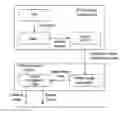
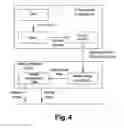
FIG. 4 summarizes the optimization method.
The invention proposes using the consumption curves of a hybrid vehicle as a function of the percentage of electrical energy used. FIG. 1 combines, by way of example and for the purpose of comparison, a family of consumption curves for a given hybrid vehicle on a freeway cycle, a road cycle, an urban cycle and in a traffic jam, to travel 1 km with different average gradients.
The invention uses an onboard navigation system in the vehicle that is able to indicate the position and route of the vehicle at all times. The system also provides information on the sections of the route, such as average speed, number of carriageways, traffic lights, signs, etc., enabling same to calculate the shortest, quickest and—most importantly—most beneficial route in terms of energy management. To do so, the method proposed is based on the use of a specific cartographic database by the navigation system.
This database is set up using existing cartographic data, listing a sufficient number of routes to establish a prediction model. A directory makes it possible to classify the road sections provided by the map provider: a section usually corresponds to a road segment having identical characteristics. Sections may be several meters to several kilometers long. They are classified as a function of the optimal split over a given distance found by an optimization algorithm using a calculation model based on the fundamental principle of dynamics, on the basis of route information given by vehicles, in particular the speeds and inclines recorded. This information also includes a family of curves such as those in FIG. 1, showing fuel consumption as a function of the percentage of electrical energy used to travel one kilometer, for four different section categories.
The sections are therefore classified into energy categories, depending on the shape of the consumption curve as a function of the percentage of electrical energy used. Correlation functions may for example be used to characterize the shape.
The energy consumption of a hybrid vehicle is optimized over the whole of a route as a function of the energy management rules of said vehicle, the charge state of the traction batteries of same, and the anticipated route. To do so, an algorithm of the navigation system calculates an optimal energy split between thermal and electrical sources over the entire anticipated trip to predict the energy requirements of the vehicle on same. The prediction involves estimating the energy category of the sections that the vehicle will travel using the populated database. This requirement for example classifies the anticipated route into one of the aforementioned four categories: traffic jam, urban, road and freeway.
The database is advantageously built by recording the global positioning system (GPS) position and speed of test vehicles. Each test route is then broken down into sections in the database, which is populated with an estimate of the energy consumption of the vehicle over each section. Using the GPS coordinates and the sections travelled, certain characteristics of these latter are also noted. The optimization algorithm is then able to determine the optimal energy split for each section, minimizing driving costs. As indicated above, the sections are classified as a function of the shape of the curve of same that is closest to one of the established categories, for example the four categories cited (traffic jam, urban, road and freeway).
The structure of the database is shown in FIG. 2 in the form of clouds of matrix points, without being limited to same. In this example, the sections are classified as a function of ten characteristic data:
-
- section type (from six categories),
- maximum permitted speed on the section,
- average actual speed, updated with traffic information (default speed),
- road “attributes”: presence of roundabouts or bridges, urban, intersection, etc.,
- section “class” (providing information on the maximum flow rate),
- a reference speed (“speed category”),
- number of carriageways (in the direction of travel),
- traffic (presence or absence of slow traffic, updated using traffic information),
- presence of stop signs,
- presence of traffic lights.
This example shows that all of the variables are relevant when selecting the energy categories. For example, a high legal speed limit shows a good correlation with the freeway and road categories. It may be complemented by journeys made by the client if they so wish (recording of client trips).
The invention provides for the implementation, using this data, of a statistical model used to predict the energy class of the route. This model is advantageously built using the “logistic regression” technique used in numerous fields, such as medicine and banking. However, other classification/sorting methods may be viable (such as decision trees, neural networks, etc.) and used to implement the invention.
The logistic regression model can for example take the following form:
log Pr ( G = 1 | X = x ) Pr ( G = K | X = x ) = β 10 + β 1 T x log Pr ( G = 2 | X = x ) Pr ( G = K | X = x ) = β 20 + β 2 T x ⋮ log Pr ( G = K - 1 | X = x ) Pr ( G = K | X = x ) = β ( k - 1 ) 0 + β K - 1 T x
The model is specified in K−1 logarithmic function, reflecting the condition that the sum of probabilities must be equal to 1. A simple calculation gives the following:
Pr ( G = k | X = x ) = ( β k 0 + β k T x ) 1 + Σ ( β 10 + β l T x ) ) l = 1 K - 1 Pr ( G = K | X = x ) = 1 1 + Σ ( β 10 + β l T x ) ) l = 1 K - 1
The estimate of the logistic regression model is provided notably by the maximum likelihood method popularized by the statistician and biologist R. A. Fisher. Since Pr (G|x) satisfies the distribution conditions, the log-likelihood function for N observations is written:
l ( β ) = ∑ i = 1 N log P gi ( x i ; β )
Once the optimization algorithm has identified the parameters of the model (equation 1) on the identification data, the validity of same must be checked on the validation data. FIG. 3 shows the results of the logistic regression for the four categories on the validation data. The unbroken lines represent the iso-probabilities of belonging to a given class. The section category predictions obtained using this method are 97% reliable.
In summary, the split between the supply of torque of thermal origin and the supply of torque of electrical origin over the route is based on a prediction of the total energy consumption of the route established as a function of an estimate of the consumption and of the energy split between these two sources over different sections making up this route. A database able to classify the sections and to predict the category of a route is required to implement the invention. This database can be continuously populated using data collected on moving vehicles, in order to feed a reliable energy prediction model. This model is preferably a “classifier” model, such as a logistic regression model. It is preferably carried on board a vehicle in a navigation system, enabling it to send the probabilities of future energy requirements to the processor carrying out the energy optimization. The database can also be updated by learning about the driver using the vehicle, with a view to optimizing the strategy for said driver.
As shown in FIG. 4, the onboard GPS processor or a “smartphone” mobile communication tool is able to establish a route future by breaking down same into sections travelled to predict the energy consumption for the trip. The “route category” datum is then used in a processor in the vehicle (HEVC) to determine the split between the supply of electrical and thermal energy on the trip.
With other information, incline and section lengths, this latter is able to apply the energy management rules (LGE) of the vehicle, the quantity of electrical energy to be used on the sections to minimize the consumption of the vehicle and to optimize the energy stored in the batteries of the vehicle. Preferably, the discharge curve of the battery on the route minimizes the total energy consumption of the vehicle.
The advantages the invention are numerous, and include:
-
- the option of adapting the energy prediction to the driver and to the driving style of the driver, using the learning option,
- reduced consumption in rechargeable hybrid vehicles, and
- the option of supplying electrical energy in urban areas restricted to “zero emission” vehicles.
Finally, it should be noted that the invention applies primarily to motorcars, but multiple supports may be used to implement the invention (“smartphone”, tablet, off-board navigation processor, portable GPS, infrastructure processor, etc.).
Claims
1-9. (canceled)
10. A method for optimizing energy consumption of a hybrid vehicle on a route as a function of energy management piles of said vehicle, a charge state of traction batteries of the vehicle, and an anticipated route, comprising:
splitting between a supply of torque of thermal origin and a supply of torque of electrical origin over the route based on a prediction of a total energy consumption for the route, established as a function of an estimate of the consumption and of the energy split between these two sources over different sections making up the anticipated route.
11. The optimization method as claimed in claim 10, wherein the route is broken down into sections in a database populated with an estimate of an energy category of all of the sections.
12. The optimization method as claimed in claim 11, wherein the sections are classified as a function of different criteria, enabling an optimal split of the energy requirement on each one to be determined.
13. The optimization method as claimed in claim 12, wherein the sections are classified according to a shape of a consumption curve of same, as a function of the electrical energy used.
14. The optimization method as claimed in claim 13, wherein the sections are classified into four categories, including freeway, road, urban, and traffic jam, as a function of the shape of the consumption curve of same.
15. The optimization method as claimed in claim 10, wherein the aggregate of the sections and a statistical model are used to determine an energy category to which the route belongs, thereby enabling prediction of the energy requirements of the vehicle on said route.
16. The optimization method as claimed in claim 15, wherein the category of the route is used in a processor in the vehicle to determine the split between electrical and thermal energy on the trip.
17. The optimization method as claimed in claim 14, wherein a discharge curve of the battery on the route minimizes the total energy consumption of the vehicle.
18. The optimization method as claimed in claim 11, wherein the database is updated by learning about a driver of the vehicle.
Images & Drawings included:



Sources:
- United States Patent and Trademark Office - verify current appl. status at the USPTO↗
Similar patent applications:
Recent applications in this class:
- » 20250171010 2025-05-29
DRIVE FORCE CONTROL SYSTEM FOR ELECTRIC VEHICLE - » 20250171009 2025-05-29
ELECTRIC MACHINE SHIFT AND ENGINE START COORDINATION - » 20250145144 2025-05-08
METHOD FOR OPTIMISING THE ENERGY CONSUMPTION OF A MOTOR VEHICLE - » 20250115234 2025-04-10
CONTROL DEVICE FOR HYBRID ELECTRIC VEHICLE - » 20250100541 2025-03-27
METHOD OF CONTROLLING REGENERATIVE BRAKING OF HYBRID VEHICLE AND SYSTEM THEREOF - » 20250100540 2025-03-27
HYBRID VEHICLE AND CONTROL METHOD FOR HYBRID VEHICLE - » 20250100539 2025-03-27
HYBRID POWERTRAIN FOR PLANER - » 20250083659 2025-03-13
VEHICLE POWERTRAIN TORQUE LIMITATION BASED ON ACCELERATOR PEDAL AND BRAKE PRESSURE - » 20250074393 2025-03-06
METHOD FOR CONTROLLING VEHICLE POWERTRAIN BASED ON OBSTACLE DETECTION - » 20250058764 2025-02-20
DRIVER TORQUE DEMAND TO ENABLE COORDINATION BETWEEN VEHICLE TORQUE SOURCES
Recent applications for this Assignee:
- » 20250174738 2025-05-29
METHOD FOR PRODUCING ALL-SOLID-STATE BATTERY - » 20250174671 2025-05-29
LITHIUM SECONDARY BATTERY - » 20250167247 2025-05-22
METHOD FOR MANUFACTURING LITHIUM SECONDARY BATTERY - » 20250162862 2025-05-22
HEAT-GENERATING MATERIAL, AND HEAT-GENERATING SYSTEM AND METHOD OF SUPPLYING HEAT USING THE SAME - » 20250156178 2025-05-15
VEHICLE ELECTRONIC CONTROL SYSTEM, AND METHOD FOR UPDATING PROGRAM USED THEREIN - » 20250153708 2025-05-15
METHOD FOR CONTROLLING AT LEAST ONE DEVICE OF A MOTOR VEHICLE, AND ASSOCIATED MOTOR VEHICLE - » 20250145097 2025-05-08
VOICE RECOGNITION METHOD AND VOICE RECOGNITION DEVICE - » 20250139148 2025-05-01
INFORMATION PROCESSING SYSTEM AND INFORMATION PROCESSING METHOD - » 20250124533 2025-04-17
BOARDING PLACE SETTING DEVICE, VEHICLE DISPATCH SERVICE SYSTEM, BOARDING PLACE SETTING METHOD, AND BOARDING PLACE DISPLAY DEVICE - » 20250061633 2025-02-20
METHOD FOR DISPLAYING A GRAPHICAL REPRESENTATION