Method and device for ascertaining a driver state
US20160167670A1
2016-06-16
14/436,820
2013-10-23
✅ Patent granted
US 9,656,677 B2
2017-05-23
WO; PCT/EP2013/072137; 20131023
WO; WO2014/064136; 20140501
Gertrude Arthur Jeanglaud
Norton Rose Fulbright US LLP | Gerard A. Messina
2033-10-23
Abstract:
A variable that represents at least the alertness of the driver in a current vehicle operating cycle is ascertained as a function of at least one of (i) the variable representing the alertness of the driver determined in a preceding vehicle operating cycle, and (ii) at least one value used for ascertaining the variable representing the alertness of the driver determined in a preceding vehicle operating cycle.
Assignee:
- Robert Bosch GMBH 19,123 🇩🇪 Stuttgart, Germany
Applicant:
Interested in similar patents?
Get notified when new applications in this technology area are published.
Classification:
B60W40/09 » CPC further
Estimation or calculation of driving parameters for road vehicle drive control systems not related to the control of a particular sub unit, related to drivers or passengers Driving style or behaviour
B60W2040/0872 » CPC further
Estimation or calculation of driving parameters for road vehicle drive control systems not related to the control of a particular sub unit, related to drivers or passengers Driver physiology
B60W40/08 » CPC main
Estimation or calculation of driving parameters for road vehicle drive control systems not related to the control of a particular sub unit, related to drivers or passengers
G01M17/00 IPC
Testing of vehicles
G08B21/06 » CPC further
Alarms responsive to a single specified undesired or abnormal condition and not otherwise provided for; Alarms for ensuring the safety of persons indicating a condition of sleep, e.g. anti-dozing alarms
B60K28/06 » CPC further
Safety devices for propulsion-unit control, specially adapted for, or arranged in, vehicles, e.g. preventing fuel supply or ignition in the event of potentially dangerous conditions responsive to conditions relating to the driver responsive to incapacity of driver
Description
BACKGROUND OF THE INVENTION
1. Field of the Invention
The present invention relates to a method and a device for ascertaining a state of a driver of a vehicle.
2. Description of the Related Art
Methods for ascertaining the state of a driver of a vehicle are known from the U.S. Pat. No. 6,313,749 B1.
BRIEF SUMMARY OF THE INVENTION
The present invention is based on a method for ascertaining a variable that represents the state of a driver of a vehicle; the variable representing the state of the driver is a variable that represents at least the alertness of the driver, which is ascertained as a function of at least the variable determined in a preceding vehicle operating cycle, and/or as a function of at least one value used for ascertaining the variable and determined in a preceding vehicle operating cycle.
An object of the present invention is to make the determination of the state of the driver driver-specific and thus more reliable in that a value that was determined in a preceding vehicle operating cycle is employed for ascertaining the variable.
In one advantageous development of the present invention, the variable representing the alertness of the driver is ascertained via another variable, which represents the activation level.
When ascertaining the variable representing the alertness, a tonic and a phaseal component are preferably taken into account.
A neural network and/or a classifier are/is advantageously used when determining the variable representing the alertness.
According to one advantageous development of the present invention, an identification of the driver is made at the start of a vehicle operating cycle.
When ascertaining the variable representing the alertness, the driving behavior, especially the lateral control behavior and/or the ability of the driver to keep the vehicle within a traffic lane as much as possible, are advantageously taken into consideration.
When ascertaining the variable representing the alertness, the driving behavior, especially the actuation of operating elements by the driver, and/or the interaction of the driver with the vehicle via HMI and/or infotainment systems, is preferably considered.
When ascertaining the variable representing the alertness, a quantity that represents the physiological state of the driver is advantageously considered.
According to one advantageous development of the present invention, the body temperature and/or the heart beat frequency of the driver and/or the pupil dilation of the driver are/is taken into account when ascertaining the variable representing the physiological state of the driver.
Driving information is preferably considered when ascertaining the variable representing the alertness.
The driving information advantageously is the already elapsed driving time and/or the brightness to which the driver is exposed, and/or the chronological time and/or the temperature to which the driver is exposed.
Preferably, a device is used for ascertaining a variable that represents a state of a driver, this variable representing a state of the driver being a variable that represents at least the alertness of the driver, which is ascertained as a function of at least the variable determined in a preceding vehicle operating cycle and/or as a function of at least one value used for ascertaining the variable, which was determined in a preceding vehicle operating cycle.
In the following text, the present invention will be discussed on the basis of an exemplary embodiment from which additional inventive features may result, but to which the present invention is not restricted in its scope. The details are shown in the drawing.
BRIEF DESCRIPTION OF THE DRAWING
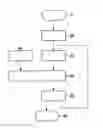
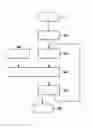
FIG. 1 shows a schematic representation of the ascertaining of an activation level of a driver of a vehicle.
DETAILED DESCRIPTION OF THE INVENTION
FIG. 1 illustrates the ascertaining of the level of activeness (alertness) of the driver of a vehicle in a schematic manner. Method step 11 initiates the process of ascertaining the activation level. In an identification step 22, the identification of the driver of a vehicle is carried out. With the aid of the identification of the driver of a vehicle, a driver profile is selected in method step 33. The driver profile includes information about the driver, especially with regard to the activation level of the driver during the preceding vehicle operating cycle. The information about the driver profile is forwarded to a classifier in classification step 44.
In addition to information from the driver profile, additional information WI is supplied to the classifier. This additional information WI is information about the behavior of a driver of a vehicle and/or the circumstances of the trip and/or the physiological state of the driver of the vehicle. With the aid of the classification carried out in method step 44, an activeness (alertness) level of the driver is ascertained in method step 55. The activeness (alertness) level is added to the individual driver profile. The method for ascertaining the activeness (alertness) level of a driver of a vehicle is concluded by method step 66.
Claims
1-12. (canceled)
13. A method for ascertaining a variable representing at least the alertness of a driver, comprising:
ascertaining, for a current vehicle operating cycle, the variable representing at least the alertness of the driver as a function of at least one of (i) the variable representing at least the alertness of the driver determined in a preceding vehicle operating cycle, and (ii) at least one value used for ascertaining the variable representing at least the alertness of the driver in a preceding vehicle operating cycle.
14. The method as recited in claim 13, wherein the variable representing at least the alertness of the driver for the current vehicle operating cycle is determined additionally as a function of a further variable which represents a level of activeness of the driver.
15. The method as recited in claim 13, wherein a tonic component and a phaseal component are considered when determining the variable representing at least the alertness of the driver.
16. The method as recited in claim 13, wherein at least one of a neuronal network and a classifier is used for ascertaining the variable representing at least the alertness of the driver.
17. The method as recited in claim 13, further comprising:
performing an identification of the driver at the start of the current vehicle operating cycle.
18. The method as recited in claim 13, wherein at least one of a lateral guidance behavior, a linear guidance behavior, and a performance of the driver to keep the vehicle inside a traffic lane is considered in ascertaining the variable representing at least the alertness of the driver.
19. The method as recited in claim 13, wherein at least one of (i) an actuation of an operating element by the driver, and (ii) an interaction of the driver with the vehicle via at least one of a human-machine-interface and an infotainment system is taken into account in ascertaining the variable representing at least the alertness.
20. The method as recited in claim 13, wherein a variable representing the physiological state of the driver is considered in ascertaining the variable representing at least the alertness of the driver.
21. The method as recited in claim 13, wherein at least one of a body temperature, a heartbeat frequency, and a pupil dilation of the driver is considered as the variable representing the physiological state of the driver.
22. The method as recited in claim 13, wherein driving information is taken into account in ascertaining the variable representing the alertness.
23. The method as recited in claim 22, wherein the driving information is at least one of an already elapsed driving time, brightness to which the driver is exposed, the time of the day, and the temperature to which the driver is exposed.
24. A device for ascertaining a variable representing at least the alertness of the driver, comprising:
a control unit including a processor configured to perform the following:
ascertaining, for a current vehicle operating cycle, the variable representing at least the alertness of the driver as a function of at least one of (i) the variable representing at least the alertness of the driver determined in a preceding vehicle operating cycle, and (ii) at least one value used for ascertaining the variable representing at least the alertness of the driver in a preceding vehicle operating cycle.
Images & Drawings included:
Sources:
- United States Patent and Trademark Office - verify current appl. status at the USPTO↗
Similar patent applications:
Recent applications in this class:
- » 20250289439 2025-09-18
ARRANGING PASSENGER PICKUPS FOR AUTONOMOUS VEHICLES - » 20250276697 2025-09-04
APPARATUS AND METHOD FOR DETERMINING A COGNITIVE STATE OF A USER OF A VEHICLE - » 20250263081 2025-08-21
ENVIRONMENT-INTEGRATED SMART RING CHARGER - » 20250263080 2025-08-21
DRIVER STATE ESTIMATION APPARATUS - » 20250263079 2025-08-21
INTEGRATED USER HEALTH AND WELLNESS MANAGEMENT - » 20250256724 2025-08-14
VALIDATING SAFETY RATED HARDWARE FOR OPERATOR AND OCCUPANT MONITORING APPLICATIONS - » 20250249913 2025-08-07
METHOD AND DEVICE FOR RECOGNIZING A HANDS-OFF STATE AT A STEERING WHEEL OF A VEHICLE - » 20250249912 2025-08-07
DRIVER STATE ESTIMATION APPARATUS, SYSTEM AND ASSOCIATED METHODS - » 20250249911 2025-08-07
DRIVER STATE ESTIMATION APPARATUS, SYSTEM AND ASSOCIATED METHODS - » 20250249910 2025-08-07
DRIVER STATE ESTIMATION APPARATUS, SYSTEM AND ASSOCIATED METHODS
Recent applications for this Assignee:
- » 20250154889 2025-05-15
PRESSURE CONTROL IN AN EXHAUST AFTERTREATMENT SYSTEM - » 20250154580 2025-05-15
ENZYME TRANSLOCATORS IN NANOGAP WITH 3' -ESTERS - » 20250147582 2025-05-08
METHOD FOR DETERMINING AN EYE DISTANCE IN A PAIR OF DATA GLASSES, AND DATA GLASSES - » 20250146568 2025-05-08
DRIVE ASSEMBLY AND VEHICLE HAVING SUCH A DRIVE ASSEMBLY - » 20250146495 2025-05-08
Flexible Pump Assembly for Use in a Fan Drive - » 20250140882 2025-05-01
FUEL CELL SYSTEM HAVING ENERGY RECUPERATION - » 20250137810 2025-05-01
METHOD FOR MATCHING A DIGITAL ROAD MAP - » 20250137033 2025-05-01
DNA UNFOLDING USING A FREE-END TAG FLOW MODIFIER - » 20250119751 2025-04-10
A BLUETOOTH COMMUNICATION METHOD AND SYSTEM - » 20250118116 2025-04-10
Diagnostic Protocol Search With Improved Efficiency