Pressure sensor for detecting force
US20160195439A1
2016-07-07
14/912,793
2014-08-18
✅ Patent granted
US 10,031,034 B2
2018-07-24
WO; PCT/EP2014/067576; 20140818
WO; WO2015/024906; 20150226
Lisa Caputo | Nathaniel T Woodward
Norton Rose Fulbright US LLP
2034-08-18
Abstract:
A method, a device and use for measurement of a force with a pressure sensor made of a piezoelectric material. The change in the capacitance of the pressure sensor is used for force measurement so that no load amplifier is necessary for measurement and as a result the measuring system as a whole is miniaturized.
Inventors:
- Hans-Jürgen Schreiner 9 🇩🇪 Hersbruck, Germany
- Reiner Bindig 16 🇩🇪 Bindlach, Germany
- Tobias Schmidt 3 🇩🇪 Lauf, Germany
Assignee:
- CERAMTEC GMBH 88 🇩🇪 Plochingen, Germany
Applicant:
Interested in similar patents?
Get notified when new applications in this technology area are published.
Classification:
G01L1/142 » CPC main
Measuring force or stress, in general by measuring variations in capacitance or inductance of electrical elements, e.g. by measuring variations of frequency of electrical oscillators using capacitors
G01L1/14 » CPC further
Measuring force or stress, in general by measuring variations in capacitance or inductance of electrical elements, e.g. by measuring variations of frequency of electrical oscillators
G01L1/16 » CPC further
Measuring force or stress, in general using properties of piezo-electric devices
Description
The invention relates to a method, a device and use for measurement of a force with a pressure sensor made of a piezoelectric material.
In the prior art the force is determined by means of the induced charge, as is the case for example in quartz load cells and piezoelectric sensors. In this connection a charging amplifier is necessary for metrological evaluation.
The object of the invention is to modify a method according to the preamble to claim 1 so that no charge amplifier is necessary for measurement and as a result the measuring system as a whole is miniaturized.
This object is achieved according to the invention by the features of claim 1.
Because the change in the capacitance of the pressure sensor is used for force measurement, no charge amplifier is necessary for measurement and as a result the measuring system as a whole is miniaturized.
In order to eliminate disturbance variables the measurement of the capacitance preferably takes place by the lock-in process at a defined measurement frequency. The measurement frequency is preferably between 800 Hz and 1.2 kHz, and is particularly preferably 1 kHz.
A pressure sensor according to the invention for carrying out the method just described is characterized in that the piezoelectric material is preferably hard, i.e. it has a high mechanical quality in the range from 200 to 2000, particularly preferably 400 to 1200 and has high coercive field strengths >1.5 kV/mm, preferably >2 kV/mm at room temperature.
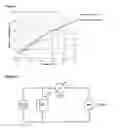
The pressure sensor may be polarized or unpolarized. Polarized pressure sensors offer the advantage of starting the measurement by a pulse and thus of saving energy. Polarized pressure sensors exhibit a steeper rise in the capacitance. Above a specific start-up load, unpolarized pressure sensors have a clearly linear characteristic (see FIG. 5). Thus the polarized pressure sensor has simpler force detection and the unpolarized pressure sensor has the advantages of more precise force determination. Combining both effects through electrotechnical linking of both types of pressure sensor is conceivable for capacitive force measurement.
It is therefore advantageous if the measurement of the force takes place simultaneously with a polarized and with an unpolarized pressure sensor and the capacitances of both pressure sensors are supplied to an electrotechnical link.
The pressure sensor is preferably a round plate with chamfered edges.
The measurement signal is preferably transmitted wirelessly to an evaluation unit.
According to the invention, the use of a pressure sensor is for measurement of a load signal for medical applications or for measurement of a load signal for industrial applications or for measurement of a load signal for consumer applications or for measurement of a load signal for automotive applications.
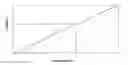
Thus the measurement principle is based on the measurement of the capacitance of a pressure-loaded pressure sensor which is made of piezoelectric material. Under pressure loading a contraction of the piezoelectric pressure sensor and thus a change in the capacitance takes place. The force or the pressure applied during the loading can be determined from this correlation with reference to the measured capacitance (see FIG. 1). The change in capacitance is composed of a ferroelectric proportion and a geometric proportion, wherein the ferroelectric proportion, that is to say the change in the dielectric constants, predominates and determines the signal strength. In a direct capacitive force measurement a charge amplifier is not necessary, so that a significant miniaturization of the measuring system is possible.
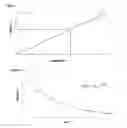
When the piezoelectric effect is used, losses occur due to conductivities of the material (see character 2) and due to hysteresis effects (see FIG. 3). The measurement of the capacitance takes place by the lock-in method at a specific measurement frequency, preferably between 800 Hz and 1.2 kHz, particularly preferably 1 kHz, so that other disturbance variables are eliminated.
Both a ferroelectrically soft and also hard material can be used for the sensor.
Studies which have been conducted were able to demonstrate a better linear behavior between applied pressure and measured capacitance for hard piezoelectric materials.
Hard piezoelectric materials are understood to be materials having a high mechanical quality in the range from 200 to 2000, preferably 400 to 1200, which at room temperature have high coercive field strengths >1.5 kV/mm, preferably >2 kV/mm.
Furthermore, in the case of hard piezoceramics, the sensitivity is substantially greater (see FIG. 4). This results in the advantage of a simpler metrological determination of the loading.
For the application, a polarized pressure sensor is used, since this simultaneously offers the possibility of starting the measurement by a pulse and thus of saving energy. Nevertheless unpolarized pressure sensors can also be used purely for capacitance measurement. Whilst the polarized pressure sensor exhibits the steeper rise in capacitance, above a specific start-up load a clearly linear characteristic (see FIG. 5) is produced for the unpolarized pressure sensors. Thus the polarized pressure sensor has simpler force detection and the unpolarized pressure sensor has the advantages of more precise force determination. Combining both effects through electrotechnical linking of both types of pressure sensor is conceivable for capacitive force measurement.
The pressure sensor may be configured for example in the form of a round plate. The pressure sensors with a chamfered edge which are used have an increased strength in the event of pressure loading. A better linear correlation between loading and measured capacitance can be achieved by the choice of a hard piezoceramic.
The present invention relates in particular to:
-
- A pressure sensor for measurement of a force, characterized in that the change in the dielectric constants is used for force measurement.
- A pressure sensor for measurement of a force, characterized in that the material used is piezoelectric/ferroelectric and the change in force effects a change in polarization and thus the change in the dielectric constants can be measured.
- A pressure sensor for measurement of a force, characterized in that a polarized ferroelectric material is used in order to enable charge generation.
- A pressure sensor for measurement of a force which, upon loading, starts up a circuit for a measurement by means of the charge generation (“trigger signal”). Before the loading, energy can be saved with the circuit in a resting phase.
- A pressure sensor for measurement of a force, consisting of an unpolarized piezoceramic for better measurement of the load signal.
- A combination of polarized and unpolarized ferroelectrics made of the same or different material, in order to dissociate the measurement from the “trigger signal.”
- A system which is characterized in that for elimination of temperature and other environmental influences one or more further ferroelectric components of the same or a different type remain unloaded. By the measurement of the capacitance of the unloaded components it is possible for example to eliminate the temperature influence.
- A system for measurement of a load signal for medical applications.
- A system for measurement of a load signal for industrial applications.
- A system for measurement of a load signal for consumer applications.
- A system for measurement of a load signal for automotive applications.
- A system which is characterized in that the energy necessary for measurement is generated by means of the polarized ferroelectrics (“energy harvesting”).
- A system which is characterized in that the measurement signal is transmitted wirelessly to an evaluation unit.
The invention is described in greater detail with reference to an example.
EXAMPLE
Medical Loading Sensor
This application involves a medical measuring system for recording loadings on limbs, for example the foot. The pressure sensor is located under the foot and senses the forces produced upon loading of the foot and transmits these via a wireless link to a storage medium. Monitoring of the progress of healing is possible by a knowledge of the static and dynamic capacitive force measurement, and by excluding disturbance variables, such as for example the temperature. Likewise it is possible to intervene in the healing process with reference to the measurement data.
(see FIG. 6)
Claims
1.-9. (canceled)
10. A method for measurement of a force using a pressure sensor made of a piezoelectric material, wherein the change in the capacitance of the pressure sensor is used for force measurement.
11. The method according to claim 10, wherein the measurement of the capacitance takes place by the lock-in process at a defined measurement frequency.
12. The method according to claim 11, wherein the measurement frequency is between 800 Hz and 1.2 kHz.
13. The method according to claim 10, wherein the measurement of the force takes place simultaneously with a polarized and with an unpolarized pressure sensor and the capacitances of both pressure sensors are supplied to an electrotechnical link in an evaluation unit.
14. The method according to claim 11, wherein the measurement of the force takes place simultaneously with a polarized and with an unpolarized pressure sensor and the capacitances of both pressure sensors are supplied to an electrotechnical link in an evaluation unit.
15. The method according to claim 12, wherein the measurement of the force takes place simultaneously with a polarized and with an unpolarized pressure sensor and the capacitances of both pressure sensors are supplied to an electrotechnical link in an evaluation unit.
16. A pressure sensor for measurement of a force, for carrying out the method according to claim 10, wherein the piezoelectric material is preferably hard, i.e. it has a high mechanical quality in the range from 200 to 2000, and has a high coercive field strength >1.5 kV/mm.
17. A pressure sensor for measurement of a force, for carrying out the method according to claim 10, wherein the piezoelectric material is preferably hard, i.e. it has a high mechanical quality in the range from 200 to 2000, and has a high coercive field strength >1.5 kV/mm.
18. A pressure sensor for measurement of a force, for carrying out the method according to claim 10, wherein the piezoelectric material is preferably hard, i.e. it has a high mechanical quality in the range from 200 to 2000, and has a high coercive field strength >1.5 kV/mm.
19. A pressure sensor for measurement of a force, for carrying out the method according to claim 10, wherein the piezoelectric material is preferably hard, i.e. it has a high mechanical quality in the range from 200 to 2000, and has a high coercive field strength >1.5 kV/mm.
20. The pressure sensor according to claim 16, wherein the pressure sensor is polarized or unpolarized.
21. The pressure sensor according to claim 16, wherein the pressure sensor is a round plate with chamfered edges.
22. The pressure sensor according to claim 16, wherein the measurement signal is transmitted wirelessly to an evaluation unit.
23. The pressure sensor according to claim 17, wherein the pressure sensor is polarized or unpolarized.
24. The pressure sensor according to claim 17, wherein the pressure sensor is a round plate with chamfered edges.
25. The pressure sensor according to claim 17, wherein the measurement signal is transmitted wirelessly to an evaluation unit.
26. A method of measuring a load signal comprising measuring the load signal with the pressure sensor according to claim 10.
Images & Drawings included:

Sources:
- United States Patent and Trademark Office - verify current appl. status at the USPTO↗
Similar patent applications:
- » 20220152454
Plurality of layers of pressure sensors within a foot force detection system - » 20090056020
Pressure detection and measurement sensor incorporating at least one resistive force-detector cell - » 20220242248
Thermal runaway detection of automotive traction batteries employing force-sensing resistor (FSR) pressure sensor - » 20220278385
Thermal runaway detection of automotive traction batteries employing force-sensing resistor (FSR) pressure sensor
Recent applications in this class:
- » 20250271311 2025-08-28
FORCE SENSING DEVICE AND A METHOD FOR MANUFACTURING A FORCE SENSING DEVICE - » 20250224284 2025-07-10
ELECTRICAL STIFFNESS-BASED SENSOR - » 20250109995 2025-04-03
LOAD DETECTING DEVICE - » 20250102375 2025-03-27
FORCE SENSOR - » 20250085175 2025-03-13
PRESSURE SENSOR AND METHOD FOR MANUFACTURING SAME, AND ELECTRONIC DEVICE - » 20250085174 2025-03-13
HIGHLY SENSITIVE HYBRID RESPONSE CAPACITIVE PRESSURE SENSOR - » 20250003813 2025-01-02
TACTILE SENSOR COMPRISED OF PRINTABLE LATTICE AND MOLDED COMPLIANT CONDUCTORS - » 20240369427 2024-11-07
CAPACITIVE PRESSURE-SENSITIVE SENSOR - » 20240344907 2024-10-17
ELECTRODE STRUCTURE - » 20240344906 2024-10-17
ELECTRODE STRUCTURE
Recent applications for this Assignee:
- » 20210384115 2021-12-09
Module with connection lugs for supply lines - » 20210071697 2021-03-11
Connection arrangement of two components - » 20200030888 2020-01-30
Tool system - » 20190366444 2019-12-05
Tool system - » 20190091031 2019-03-28
Knee endoprosthesis for replacing at least parts of the knee joint - » 20190006578 2019-01-03
Production of lead-free piezoceramics in aqueous surroundings - » 20190001419 2019-01-03
Carrier tool, cutting insert, and clamping element - » 20170362131 2017-12-21
α/β-sialon having improved sintering activity and high edge strength - » 20170348464 2017-12-07
COMPONENTS FOR FUSING VERTEBRAL BODIES - » 20170341154 2017-11-30
Cutting insert geometry