Multi-speed transmission in planetary design for a vehicle
US20160201767A1
2016-07-14
14/913,542
2014-07-22
✅ Patent granted
US 10,113,616 B2
2018-10-30
WO; PCT/EP2014/065658; 20140722
WO; WO2015/024719; 20150226
Colby M Hansen
Dority & Manning, P.A.
2035-04-12
Abstract:
A multi-speed transmission in planetary design for a vehicle with a transmission housing (10) is proposed, whereas a first shaft 1 (1) is provided as a drive (An) and a second shaft (2) is provided as an output (Ab), whereas at least five planetary gear sets (RS1, RS2, RS3, RS4, RS5) and at least seven additional shafts (3, 4, 5, 6, 7, 8, 9) are provided. In accordance with the invention, it is provided that five shift elements (SE1, SE2, SE3, SE4, SE5) are provided, through the actuation of which as gear steps, at least nine forward gears (G1, G2, G3, G4, G5, G6, G7, G8, G9) and at least one reverse gear (R) can be realized, whereas, for the realization of each gear step, at least three of the shift elements (SE1, SE2, SE3, SE4, SE5) are closed.
Inventors:
- Josef HAUPT 91 🇩🇪 Tettnang, Germany
- Stefan Beck 251 🇩🇪 Eriskirch, Germany
- Christian Sibla 91 🇩🇪 Friedrichshafen, Germany
- Wolfgang Rieger 97 🇩🇪 Friedrichshafen, Germany
Assignee:
- ZF FRIEDRICHSHAFEN AG 3,767 🇩🇪 Friedrichshafen, Germany
Applicant:
Interested in similar patents?
Get notified when new applications in this technology area are published.
Classification:
F16H2200/0065 » CPC further
Transmissions for multiple ratios characterised by the number of forward speeds the gear ratios comprising nine forward speeds
F16H2200/2015 » CPC further
Transmissions for multiple ratios; Transmissions using gears with orbital motion characterised by the number of sets of orbital gears with five sets of orbital gears
F16H2200/2043 » CPC further
Transmissions for multiple ratios; Transmissions using gears with orbital motion characterised by the engaging friction means not of the freewheel type, e.g. friction clutches or brakes with five engaging means
F16H3/66 » CPC main
Toothed gearings for conveying rotary motion with variable gear ratio or for reversing rotary motion using gears having orbital motion; Gearings having three or more central gears composed of a number of gear trains without drive passing from one train to another
F16H2200/2064 » CPC further
Transmissions for multiple ratios; Transmissions using gears with orbital motion characterised by the engaging friction means not of the freewheel type, e.g. friction clutches or brakes using at least one positive clutch, e.g. dog clutch
F16H2200/2094 » CPC further
Transmissions for multiple ratios; Transmissions using gears with orbital motion using positive clutches, e.g. dog clutches
Description
The present invention relates to a multi-speed transmission in planetary design for a vehicle in accordance with the type more specifically defined in the preamble of claim 1.
For example, publication DE 10 2009 029 156 A1 discloses a multi-speed transmission in planetary design. The multi-speed transmission comprises, including the drive shaft and output shaft, nine shafts, whereas, for the realization of nine forward gears and one reverse gear, at least five planetary gear sets and at least six shift elements are strictly necessary. This results in a high design effort in the manufacturing of the known multi-speed transmission. Further, with each gear step, at least three of the six shift elements are necessarily open, resulting in a high proportion of internal transmission losses, such that consumption is disadvantageously increased.
The present invention is subject to the task of proposing a multi-speed transmission of the type described above, which, with a maximum number of gear steps, comprises the smallest possible number of shift elements and also features a very low level of consumption.
In accordance with the invention, this task is solved by the characteristics of claim 1. Additional arrangements arise from the sub-claims, the description and the drawings.
A multi-speed transmission is proposed, which realizes at least nine forward gears and at least one reverse gear with only nine shafts, five planetary gear sets and five shift elements. The shifting logic according to the invention provides that, with each gear step, three of the only five shift elements are closed, such that, for each gearshift, two shift elements are open, by which consumption is minimized. This also gives rise to a multi-speed transmission of simple construction, which can be produced cost-effectively.
From the shifting diagram underlying the multi-speed transmission according to the invention, it arises that all single gearshifts, thus shifting processes between two adjacent gear steps, and double gearshifts are possible in each case without group gearshifts, which means that, for realizing each gear step, only one of the shift elements involved must be actuated. In addition, several, preferably three, so-called “overdrive gears” can be realized, with which a transmission ratio is carried out in overdrive. It also arises from this that the sixth forward gear is designed as a direct gear, which has a transmission ratio of i=1.
The provided planetary gear sets preferably can be designed as negative planetary gear sets. It is also conceivable that positive planetary gear sets or other types of planetary gear sets are used.
At least one of the provided shift elements can be designed as a positive-locking shift element, for example as a claw clutch or a claw brake or the like. The other shift elements can be frictional-locking shift elements or the like, such as multi-disk clutches or multi-disk brakes. Preferably, two of the shift elements are designed as brakes and three shift elements are designed as clutches. It is also conceivable that only one of the shift elements is designed as a brake and the other four shift elements are designed as clutches.
The drive shaft and the output shaft of the proposed multi-stage transmission can be preferably arranged coaxially to each other. However, other arrangements of the drive and output can be provided.
The present invention is further described below with reference to the drawings. The following is shown:
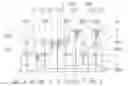
FIG. 1 a first possible embodiment of a multi-speed transmission in accordance with the invention;
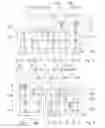
FIG. 2 a second possible embodiment of the multi-speed transmission;
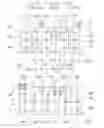
FIG. 3 a third embodiment of the multi-speed transmission;
FIG. 4 a fourth embodiment of the multi-speed transmission;
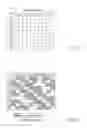
FIG. 5 a shifting diagram for all embodiments according to FIGS. 1 to 4 indicated as an example;
FIG. 6 a graphic presentation of the possible direct gearshifts for the proposed embodiments according to FIGS. 1 to 4.
FIGS. 1 to 4 show an example of a possible embodiment of the multi-speed transmission in planetary design, for example as an automated transmission or an automatic transmission, for a vehicle, in particular a motor vehicle, whereas each of FIGS. 5 and 6 indicates a shifting diagram and a direct shifting table for all embodiments of the multi-stage transmission.
Regardless of the respective embodiments, the multi-speed transmission comprises a housing 10, which is indicated solely schematically, with a first shaft 1 as the drive An and a second shaft 2 arranged coaxially to it as the output Ab, along with an additional seven shafts, 3, 4, 5, 6, 7, 8, 9. Furthermore, a first planetary gear set RS1, a second planetary gear set RS2, a third planetary gear set RS3, a fourth planetary gear set RS4 and a fifth planetary gear set RS5 are provided, each of which is designed as a negative planetary gear set. For shifting the provided gear steps, a first shift element SE1 provided as a brake, a second shift element SE2 provided as a brake, a third shift element SE3 provided as clutch, a fourth shift element SE4 provided as clutch and a fifth shift element SE5 provided as clutch are provided. With the embodiments shown, by way of example, the shift elements are designed as frictional-locking shift elements, but at least one positive-locking shift element can also be used.
It arises from the shifting diagram shown in FIG. 5 that, with the embodiments of the proposed multi-speed transmission shown in FIGS. 1 to 4 for realizing the first forward gear G1, the first shift element SE1, the second shift element SE2 and the third shift element SE3 are closed or actuated. For shifting the second forward gear G2, the first shift element SE1, the second shift element SE2 and the fourth shift element SE4 are closed. For shifting the third forward gear G3, the second shift element SE2, the third shift element SE3 and the fourth shift element SE4 are closed. For realizing the fourth forward gear G4, the second shift element SE2, the fourth shift element SE4 and the fifth shift element SE5 are closed. For shifting the fifth forward gear G5, the second shift element SE2, the third shift element SE3, and the fifth shift element SE5 are closed. For shifting the sixth forward gear G6, the third shift element SE3, the fourth shift element SE4 and the fifth shift element SE5 are closed. For shifting the seventh forward gear G7, the first shift element SE1, the third shift element SE3 and the fifth shift element SE5 are closed. For shifting the eighth forward gear G8, the first shift element SE1, the fourth shift element SE4 and the fifth shift element SE5 are closed. For shifting the ninth forward gear G9, the first shift element SE1, the third shift element SE3 and the fourth shift element SE4 are closed. For shifting the reverse gear R, the first shift element SE1, the second shift element SE2 and the fifth shift element SE5 are closed.
If arises from this that, for realizing each gear step, three of the five shift elements SE1, SE2, SE3, SE4, SE5 are closed. Both for the reverse gear R and for the first forward gear G1 and the second forward gear G2, the first and second shift elements SE1, SE2, respectively, are closed. All single gearshifts and double gearshifts are possible without group gearshifts; that is, it is always the case that the actuation of only one shift element is necessary for a gear change.
The direct shifting table according to FIG. 6 shows the possible direct gearshifts with the proposed embodiments of the multi-speed transmission. It arises from this that, from the reverse gear R, there can be a shift, directly without a group gearshift, into the first forward gear G1, into the second forward gear G2, into the fourth forward gear G4, into the fifth forward gear G5, into the seventh forward gear G7 and into the eighth forward gear G8. Further, from the first forward gear G1, there can be a shift, directly without a group gearshift, into the reverse gear R, into the second forward gear G2, into the third forward gear G3, into the fifth forward gear G5, into the seventh forward gear G7 and into the ninth forward gear G9. From the second forward gear G2, there can be a shift, directly without a group gearshift, into the reverse gear R, into the first forward gear G1, into the third forward gear G3, into the fourth forward gear G4, into the eighth forward gear G8 and into the ninth forward gear G9. Further, from the third forward gear G3, there can be a shift, directly without a group gearshift, into the first forward gear G1, into the second forward gear G2, into the fourth forward gear G4, into the fifth forward gear G5, into the sixth forward gear G6 and into the ninth forward gear G9. From the fourth forward gear G4, there can be a shift, directly without a group gearshift, into the reverse gear R, into the second forward gear G2, into the third forward gear G3, into the fifth forward gear G5, into the sixth forward gear G6 and into the eighth forward gear G8. From the fifth forward gear G5, there can be a shift, directly without a group gearshift, into the reverse gear R, into the first forward gear G1, into the third forward gear G3, into the fourth forward gear G4, into the sixth forward gear G6 and into the seventh forward gear G7. From the sixth forward gear G6, there can be a shift, directly without a group gearshift, into the third forward gear G3, into the fourth forward gear G4, into the fifth forward gear G5, into the seventh forward gear G7, into the eighth forward gear G8 and into the ninth forward gear G9. From the seventh forward gear G7, there can be a shift, directly without a group gearshift, into the reverse gear R, into the first forward gear G1, into the fifth forward gear G5, into the sixth forward gear G6, into the eighth forward gear G8 and into the ninth forward gear G9. From the eighth forward gear G8, there can be a shift, directly without a group gearshift, into the reverse gear R, into the second forward gear G2, into the fourth forward gear G4, into the sixth forward gear G6, into the seventh forward gear G7 and into the ninth forward gear G9. From the ninth forward gear G9, there can be a shift, directly without a group gearshift, into the first forward gear G1, into the second forward gear G2, into the third forward gear G3, into the sixth forward gear G6, into the seventh forward gear G7 and into the eighth forward gear G8. It also arises from this that the second shift element SE2 designed as a brake is only involved in a single gearshift, namely upon the gearshift from the fifth forward gear G5 into the sixth forward gear G6.
With the first embodiment of the multi-speed transmission shown in accordance with FIG. 1, the following gear set arrangement arises:
The first shaft 1 is connected to the planetary gear carrier PT1 of the first planetary gear set RS1 and to the ring gear HR2 of the second planetary gear set RS2. This means that the planetary gear carrier PT1 of the first planetary gear set RS1 are constantly and/or firmly connected to the ring gear HR2 of the second planetary gear set RS2 through the first shaft 1. The second shaft 2 is connected to the planetary gear carrier PT5 of the fifth planetary gear set RS5 and to the sun gear SR1 of the first planetary gear set RS1, whereas the second shaft 2 is connectable to the fourth shaft 4 through the fifth shift element SE5 designed as a clutch. The third shaft 3 is connected to the ring gear HR1 of the first planetary gear set RS1 and to the planetary gear carrier PT3 of the third planetary gear set RS3. The fourth shaft 4 is connected to the planetary gear carrier PT2 of the second planetary gear set RS2, whereas the fourth shaft 4 is connectable to the sixth shaft 6 through the fourth shift element SE4 designed as a clutch. With the first embodiment, the fifth shaft 5 is connected to the sun gear SR2 of the second planetary gear set RS2 and to the sun gear SR4 of the fourth planetary gear set RS4, whereas the fifth shaft 5 is connectable to the sixth shaft 6 through the third shift element SE3 designed as a clutch. The sixth shaft 6 is connected to the ring gear HR3 of the third planetary gear set RS3, whereas the sixth shaft 6 is connectable to the fifth shaft 5 through the third shift element SE3 designed as a clutch and to the fourth shaft 4 through the fourth shift element SE4 designed as a clutch. The seventh shaft 7 is connected to the sun gear SR3 of the third planetary gear set RS3 and to the ring gear HR4 of the fourth planetary gear set RS4, whereas the seventh shaft 7 is connectable to the housing 10 through the first shift element SE1 designed as brake. The eighth shaft 8 is connected to the planetary gear carrier PT4 of the fourth planetary gear set RS4 and to the sun gear SR5 of the fifth planetary gear set RS5. Finally, the ninth shaft 9 is connected to the ring gear HR5 of the fifth planetary gear set RS5, whereas the ninth shaft 9 is connectable to the housing 10 through the second shift element SE2 designed as a brake.
With the second embodiment of the multi-speed transmission shown in accordance with FIG. 2, the following gear set arrangement arises:
The first shaft 1 is connected to the planetary gear carrier PT2 of the second planetary gear set RS2. The second shaft 2 is connected to the planetary gear carrier PT5 of the fifth planetary gear set RS5, whereas the second shaft 2 is connectable to the eighth shaft 8 through the fifth shift element SE5 designed as a clutch. The third shaft 3 is connected to the sun gear SR1 of the first planetary gear set RS1 and to the sun gear SR2 of the second planetary gear set RS2, whereas the third shaft 3 is connectable to the housing 10 through the first shift element SE1 designed as a brake. The fourth shaft 4 is connected to the ring gear HR1 of the first planetary gear set RS1, whereas the fourth shaft 4 is connectable to the housing 10 through the second shift element SE2 designed as a brake. With the second embodiment, the fifth shaft 5 is connected to the planetary gear carrier PT1 of the first planetary gear set RS1, to the sun gear SR3 of the third planetary gear set RS3 and to the ring gear HR5 of the fifth planetary gear set RS5. The sixth shaft 6 is connected to the ring gear HR3 of the third planetary gear set RS3, whereas the sixth shaft 6 is connectable to the first shaft 1 through the third shift element SE3 designed as a clutch. The seventh shaft 7 is connected to the ring gear HR2 of the second planetary gear set RS2 and to the sun gear SR4 of the fourth planetary gear set RS4, whereas the seventh shaft 7 is connectable to the ninth shaft through the fourth shift element SE4 designed as a clutch. The eighth shaft 8 is connected to the planetary gear carrier PT4 of the fourth planetary gear set RS4, whereas the eighth shaft 8 is connectable to the second shaft 2 through the fifth shift element SE5 designed as a clutch. Finally, the ninth shaft 9 is connected to the planetary gear carrier PT3 of the third planetary gear set RS3 and to the ring gear HR4 of the fourth planetary gear set RS4 and to the sun gear SR5 of the fifth planetary gear set RS5.
With the third embodiment of the multi-speed transmission shown in accordance with FIG. 3, the following gear set arrangement arises:
The first shaft 1 is connected to the ring gear HR1 of the first planetary gear set RS1 and to the ring gear HR2 of the second planetary gear set RS2. The second shaft 2 is connected to the planetary gear carrier PT4 of the fourth planetary gear set RS4 and to the planetary gear carrier PT5 of the fifth planetary gear set RS5. The third shaft 3 is connected to the planetary gear carrier PT1 of the first planetary gear set RS1 and to the ring gear HR4 of the fourth planetary gear set RS4. The fourth shaft 4 is connected to the sun gear SR1 of the first planetary gear set RS1 and to the sun gear SR3 of the third planetary gear set RS3, whereas the fourth shaft 4 is connectable to the fifth shaft 5 through the fifth shift element SE5 designed as a clutch and to the eighth shaft 8 through the third shift element SE3 designed as a clutch. With the third embodiment, the fifth shaft 5 is connected to the planetary gear carrier PT2 of the second planetary gear set RS2. The sixth shaft 6 is connected to the sun gear SR2 of the second planetary gear set RS2 and to the planetary gear carrier PT3 of the third planetary gear set RS3, whereas the sixth shaft 6 is connectable to the housing 10 through the second shift element SE2 designed as a brake. Furthermore, the sixth shaft 6 is connectable to the eighth shaft 8 through the fourth shift element SE4 designed as a clutch. The seventh shaft 7 is connected to the ring gear HR3 of the third planetary gear set RS3 and to the ring gear HR5 of the fifth planetary gear set RS5. The eighth shaft 8 is connected to the sun gear SR4 of the fourth planetary gear set RS4, whereas the eighth shaft 8 is connectable to the fourth shaft 4 through the third shift element SE3 designed as a clutch and to the sixth shaft 6 through the fourth shift element SE4 designed as a clutch. Finally, the ninth shaft 9 is connected to the sun gear SR5 of the fifth planetary gear set RS5, whereas the ninth shaft 9 is connectable to the housing 10 through the first shift element SE1 designed as a brake.
With the fourth embodiment of the multi-speed transmission shown in accordance with FIG. 4, the following gear set arrangement arises:
The first shaft 1 is connected to the planetary gear carrier PT2 of the second planetary gear set RS2, whereas the first shaft 1 is connectable to the ninth shaft 9 through the third shift element SE3 designed as a clutch. The second shaft 2 is connected to the sun gear SR4 of the fourth planetary gear set RS4 and to the planetary gear carrier PT5 of the fifth planetary gear set RS5. The third shaft 3 is connected to the sun gear SR1 of the first planetary gear set RS1 and to the sun gear SR2 of the second planetary gear set RS2, whereas the third shaft 3 is connectable to the housing 10 through the first shift element SE1 designed as a brake. The fourth shaft 4 is connected to the ring gear HR1 of the first planetary gear set RS1, whereas the fourth shaft 4 is connectable to the housing 10 through the second shift element SE2 designed as a brake. With the fourth embodiment, the fifth shaft 5 is connected to the planetary gear carrier PT1 of the first planetary gear set RS1 and to the ring gear HR5 of the fifth planetary gear set RS5, whereas the fifth shaft 5 is connectable to the seventh shaft 7 through the fifth shift element SE5 designed as a clutch. The sixth shaft 6 is connected to the ring gear HR2 of the second planetary gear set RS2 and to the sun gear SR3 of the third planetary gear set RS3, whereas the sixth shaft 6 is connectable to the eighth shaft 8 through the fourth shift element SE4 designed as a clutch. The seventh shaft 7 is connected to the planetary gear carrier PT3 of the third planetary gear set RS3. The eighth shaft 8 is connected to the ring gear HR3 of the third planetary gear set RS3 and to the planetary gear carrier PT4 of the fourth planetary gear set RS4 and to the sun gear SR5 of the fifth planetary gear set RS5. Finally, the ninth shaft 9 is connected to the ring gear HR4 of the fourth planetary gear set RS4.
REFERENCE SIGNS
- 1 First shaft as a drive
- 2 Second shaft as an output
- 3 Third shaft
- 4 Fourth shaft
- 5 Fifth shaft
- 6 Sixth shaft
- 7 Seventh shaft
- 8 Eighth shaft
- 9 Ninth shaft
- 10 Housing
- SE1 First shift element as a brake
- SE2 Second shift element as a brake
- SE3 Third shift element as a clutch
- SE4 Fourth shift element as a clutch
- SE5 Fifth shift element as a clutch
- RS1 First planetary gear set
- RS2 Second planetary gear set
- RS3 Third planetary gear set
- RS4 Fourth planetary gear set
- RS5 Fifth planetary gear set
- SR1 Sun gear of the first planetary gear set
- PT1 Planetary gear carrier of the first planetary gear set
- HR1 Ring gear of the first planetary gear set
- SR2 Sun gear of the second planetary gear set
- PT2 Planetary gear carrier of the second planetary gear set
- HR2 Ring gear of the second planetary gear set
- SR3 Sun gear of the third planetary gear set
- PT3 Planetary gear carrier of the third planetary gear set
- HR3 Ring gear of the third planetary gear set
- SR4 Sun gear of the fourth planetary gear set
- PT4 Planetary gear carrier of the fourth planetary gear set
- HR4 Ring gear of the fourth planetary gear set
- SR5 Sun gear of the fifth planetary gear set
- PT5 Planetary gear carrier of the fifth planetary gear set
- HR5 Ring gear of the fifth planetary gear set
- G1 First forward gear
- G2 Second forward gear
- G3 Third forward gear
- G4 Fourth forward gear
- G5 Fifth forward gear
- G6 Sixth forward gear
- G7 Seventh forward gear
- G8 Eighth forward gear
- G9 Ninth forward gear
- R Reverse gear
- i Transmission ratio
Claims
1. Multi-speed transmission in planetary design for a vehicle with a transmission housing (10), whereas a first shaft (1) is provided as a drive (An) and a second shaft (2) is provided as an output (Ab), whereas at least five planetary gear sets (RS1, RS2, RS3, RS4, RS5) and at least seven additional shafts (3, 4, 5, 6, 7, 8, 9) are provided, characterized in that five shift elements (SE1, SE2, SE3, SE4, SE5) are provided, through the actuation of which as gear steps, at least nine forward gears (G1, G2, G3, G4, G5, G6, G7, G8, G9) and at least one reverse gear (R) can be realized, whereas, for the realization of each gear step, at least three of the shift elements (SE1, SE2, SE3, SE4, SE5) are closed.
2-12. (canceled)
Images & Drawings included:
Sources:
- United States Patent and Trademark Office - verify current appl. status at the USPTO↗
Recent applications in this class:
- » 20250257791 2025-08-14
TRANSMISSION ARRANGEMENT FOR AN ELECTRICALLY PROPELLED VEHICLE - » 20250198486 2025-06-19
Motor Vehicle Transmission for an at Least Partially Electrically Driven Motor Vehicle - » 20250198485 2025-06-19
MOTOR VEHICLE TRANSMISSION FOR AN AT LEAST PARTIALLY ELECTRICALLY DRIVEN MOTOR VEHICLE - » 20240418244 2024-12-19
DRIVE UNIT FOR A VEHICLE - » 20240410448 2024-12-12
MULTI-SPEED TRANSMISSION - » 20240229901 2024-07-11
DRIVE TRAIN FOR A MOTOR VEHICLE WITH A PLANETARY GEAR TRANSMISSION - » 20240167540 2024-05-23
Traction saddle and traction pin - » 20240133449 2024-04-25
Drive train for a motor vehicle with a planetary gear transmission - » 20240068545 2024-02-29
Rotation direction driven two-speed transmission - » 20230407944 2023-12-21
Multi-speed planetary transmission
Recent applications for this Assignee:
- » 20250293169 2025-09-18
STACKABLE POWER SEMICONDUCTOR MODULE - » 20250292970 2025-09-18
CAPACITIVE WINDING OF A DC LINK CAPACITOR AND DC LINK CAPACITOR WITH A COMMON-MODE CURRENT LEAKAGE FUNCTION - » 20250286013 2025-09-11
APPARATUS AND METHOD FOR MANUFACTURING A POWER SEMICONDUCTOR DEVICE - » 20250283529 2025-09-11
DRIVE UNIT FOR A VEHICLE - » 20250282215 2025-09-11
MOTOR VEHICLE TRANSMISSION FOR AN AT LEAST PARTIALLY ELECTRICALLY DRIVEN MOTOR VEHICLE - » 20250282209 2025-09-11
DRIVE UNIT FOR A VEHICLE - » 20250269709 2025-08-28
ARTICULATED RIGID AXLE OF A VEHICLE WITH AN AXLE SUPPORT WITH AN ELECTRIC MACHINE AS DRIVE - » 20250262892 2025-08-21
AXLE SUPPORT SYSTEM FOR A VEHICLE AXLE - » 20250256806 2025-08-14
BATTERY TERMINAL FOR TWO-WHEELED VEHICLES HAVING AN ELECTRIC DRIVE UNIT - » 20250251033 2025-08-07
GEARBOX AND DRIVE UNIT WITH SUCH A GEARBOX