Method for avoiding safety-critical activation of a clutch in a hybrid module of a drivetrain of a motor vehicle
US20160215832A1
2016-07-28
15/024,533
2014-09-23
✅ Patent granted
US 9,920,797 B2
2018-03-20
WO; PCT/DE2014/200495; 20140923
WO; WO2015/043596; 20150402
Behrang Badii | David A Testardi
Volpe and Koenig, P.C.
2034-09-23
Abstract:
The invention relates to a method for avoiding safety-critical activation of a clutch in a hybrid module of a drivetrain of a motor vehicle, wherein the hybrid module is effective between the internal combustion engine and the transmission and has an electric drive, the clutch and a freewheel, and the clutch is used to start the internal combustion engine by transmitting a torque, supplied by the electric drive or the drivetrain, by a frictionally locking connection to the electric drive or the drivetrain, or for disconnecting the internal combustion engine from the drivetrain for purely electric driving. In a method for avoiding safety-critical activation of a clutch in a hybrid module in which safety-critical driving situations are reliably prevented, a critical interference torque of the clutch is set as a function of ambient conditions of the motor vehicle and/or peripheral conditions of the vehicle, in order to set a safety distance to be maintained by the open clutch.
Assignee:
- Schaeffler Technologies AG &Co. KG 4,023 🇩🇪 Herzogenaurach, Germany
Applicant:
Interested in similar patents?
Get notified when new applications in this technology area are published.
Classification:
B60W10/02 » CPC further
Conjoint control of vehicle sub-units of different type or different function including control of driveline clutches
B60K6/387 » CPC further
Arrangement or mounting of plural diverse prime-movers for mutual or common propulsion, e.g. hybrid propulsion systems comprising electric motors and internal combustion engines the prime-movers consisting of electric motors and internal combustion engines, e.g. HEVs characterised by apparatus, components or means specially adapted for HEVs characterised by the driveline clutches Actuated clutches, i.e. clutches engaged or disengaged by electric, hydraulic or mechanical actuating means
B60K6/442 » CPC further
Arrangement or mounting of plural diverse prime-movers for mutual or common propulsion, e.g. hybrid propulsion systems comprising electric motors and internal combustion engines the prime-movers consisting of electric motors and internal combustion engines, e.g. HEVs characterised by the architecture of the hybrid electric vehicle; Series-parallel type Series-parallel switching type
B60W10/06 » CPC further
Conjoint control of vehicle sub-units of different type or different function including control of propulsion units including control of combustion engines
B60W10/08 » CPC further
Conjoint control of vehicle sub-units of different type or different function including control of propulsion units including control of electric propulsion units, e.g. motors or generators
B60W20/15 » CPC further
Control systems specially adapted for hybrid vehicles; Controlling the power contribution of each of the prime movers to meet required power demand Control strategies specially adapted for achieving a particular effect
B60K2006/268 » CPC further
Arrangement or mounting of plural diverse prime-movers for mutual or common propulsion, e.g. hybrid propulsion systems comprising electric motors and internal combustion engines the prime-movers consisting of electric motors and internal combustion engines, e.g. HEVs characterised by apparatus, components or means specially adapted for HEVs characterised by the motors or the generators Electric drive motor starts the engine, i.e. used as starter motor
B60Y2200/92 » CPC further
Type of vehicle; Vehicles comprising electric prime movers Hybrid vehicles
B60Y2300/182 » CPC further
Purposes or special features of road vehicle drive control systems; Propelling the vehicle Selecting between different operative modes, e.g. comfort and performance modes
B60Y2300/42 » CPC further
Purposes or special features of road vehicle drive control systems Control of clutches
B60Y2300/63 » CPC further
Purposes or special features of road vehicle drive control systems; Control of electric machines, e.g. problems related to electric motors or generators Starter motor mode
B60Y2400/424 » CPC further
Special features of vehicle units; Clutches or brakes Friction clutches
Y10S903/914 » CPC further
Hybrid electric vehicles, HEVS; Prime movers comprising electrical and internal combustion motors having energy storing means, e.g. battery, capacitor; Component specially adapted for hev; Drive line clutch Actuated, e.g. engaged or disengaged by electrical, hydraulic or mechanical means
Y10S903/946 » CPC further
Hybrid electric vehicles, HEVS; Prime movers comprising electrical and internal combustion motors having energy storing means, e.g. battery, capacitor Characterized by control of driveline clutch
B60K6/48 » CPC further
Arrangement or mounting of plural diverse prime-movers for mutual or common propulsion, e.g. hybrid propulsion systems comprising electric motors and internal combustion engines the prime-movers consisting of electric motors and internal combustion engines, e.g. HEVs characterised by the architecture of the hybrid electric vehicle Parallel type
B60K2006/4825 » CPC further
Arrangement or mounting of plural diverse prime-movers for mutual or common propulsion, e.g. hybrid propulsion systems comprising electric motors and internal combustion engines the prime-movers consisting of electric motors and internal combustion engines, e.g. HEVs characterised by the architecture of the hybrid electric vehicle; Parallel type Electric machine connected or connectable to gearbox input shaft
B60K28/165 » CPC further
Safety devices for propulsion-unit control, specially adapted for, or arranged in, vehicles, e.g. preventing fuel supply or ignition in the event of potentially dangerous conditions responsive to conditions relating to the vehicle responsive to, or preventing, skidding of wheels acting on elements of the vehicle drive train other than the propulsion unit and brakes, e.g. transmission, clutch, differential
B60K28/16 IPC
Safety devices for propulsion-unit control, specially adapted for, or arranged in, vehicles, e.g. preventing fuel supply or ignition in the event of potentially dangerous conditions responsive to conditions relating to the vehicle responsive to, or preventing, skidding of wheels
B60W2510/1005 » CPC further
Input parameters relating to a particular sub-units; Change speed gearings Transmission ratio engaged
B60W2520/10 » CPC further
Input parameters relating to overall vehicle dynamics Longitudinal speed
B60W2520/125 » CPC further
Input parameters relating to overall vehicle dynamics; Lateral speed Lateral acceleration
B60W2710/027 » CPC further
Output or target parameters relating to a particular sub-units; Clutches Clutch torque
F16D2500/10412 » CPC further
External control of clutches by electric or electronic means; System to be controlled; Clutch; Clutch position Transmission line of a vehicle
F16D2500/312 » CPC further
External control of clutches by electric or electronic means; Signal inputs External to the vehicle
F16D2500/3109 » CPC further
External control of clutches by electric or electronic means; Signal inputs from the vehicle; Vehicle speed Vehicle acceleration
F16D2500/3122 » CPC further
External control of clutches by electric or electronic means; Signal inputs; External to the vehicle; Ambient conditions, e.g. air humidity, air temperature, ambient pressure Ambient temperature
F16D2500/3125 » CPC further
External control of clutches by electric or electronic means; Signal inputs; External to the vehicle Driving resistance, i.e. external factors having an influence in the traction force, e.g. road friction, air resistance, road slope
F16D2500/5029 » CPC further
External control of clutches by electric or electronic means; Problem to be solved by the control system; Relating the clutch; Torque control Reducing drag torque
F16D2500/5104 » CPC further
External control of clutches by electric or electronic means; Problem to be solved by the control system; Relating safety Preventing failures
F16D2500/5114 » CPC further
External control of clutches by electric or electronic means; Problem to be solved by the control system; Relating safety Failsafe
F16D2500/702 » CPC further
External control of clutches by electric or electronic means; Details about the implementation of the control system Look-up tables
F16D48/06 » CPC further
External control of clutches Control by electric or electronic means, e.g. of fluid pressure
B60W20/40 » CPC further
Control systems specially adapted for hybrid vehicles Controlling the engagement or disengagement of prime movers, e.g. for transition between prime movers
B60K6/26 » CPC further
Arrangement or mounting of plural diverse prime-movers for mutual or common propulsion, e.g. hybrid propulsion systems comprising electric motors and internal combustion engines the prime-movers consisting of electric motors and internal combustion engines, e.g. HEVs characterised by apparatus, components or means specially adapted for HEVs characterised by the motors or the generators
F16D2500/1066 » CPC further
External control of clutches by electric or electronic means; System to be controlled; Engine Hybrid
F16D48/10 » CPC main
External control of clutches; Control by electric or electronic means, e.g. of fluid pressure Preventing unintentional or unsafe engagement
Description
BACKGROUND
The invention relates to a method for avoiding safety-critical activation of a clutch in a hybrid module of a drivetrain of a motor vehicle, wherein the hybrid module is effective between the internal combustion engine and the transmission and has an electric drive, the clutch and a freewheel, and the clutch is used to start the internal combustion engine by transmitting a torque, supplied by the electric drive or the drivetrain, by a frictionally locking connection to the electric drive or the drivetrain or to decouple the internal combustion engine from the drivetrain for purely electric travel.
DE 10 2012 206 680 A1 discloses a hybrid module for a drivetrain of a vehicle. The hybrid module is arranged between the internal combustion engine and the transmission and has an electric drive, a clutch and a freewheel, wherein the clutch and the freewheel are each provided in parallel with one another in order to transmit torque from the internal combustion engine in the direction of the transmission. The freewheel transmits the torque from the internal combustion engine in the direction of the transmission and opens given a torque directed in the opposite direction, with the result that the vehicle can be driven optionally by the internal combustion engine or the electric drive or at the same time by both in combination. The clutch has thereby the tasks of starting the internal combustion engine by transmitting the torque supplied by the electric drive or the drivetrain, by connecting the internal combustion engine and the electric drive or the drivetrain in a frictionally locking fashion, or of decoupling the internal combustion engine from the drivetrain in order to operate the motor vehicle in a purely electrical fashion or in order to transmit the traction torque and thrust torque of the internal combustion engine in the hybrid travel mode.
Changing over from the electric travel mode to the hybrid travel mode therefore requires the clutch to be closed in order to start the internal combustion engine. In particular, in the case of starting or restarting using the kinetic energy of the rotating drivetrain, the closing of the clutch and the associated acceleration of the immobile internal combustion engine result in a corresponding torque which will be referred to below as interference torque. This interference torque can, under specific ambient influences, lead to safety-critical scenarios of the motor vehicle.
SUMMARY
The invention is therefore based on the object of specifying a method for avoiding safety-critical activation of a clutch in a hybrid module of a motor vehicle.
According to the invention, the object is achieved in that a critical interference torque of the clutch is set in order to set a safety distance which is to be maintained by the open clutch as a function of ambient conditions of the motor vehicle and/or peripheral conditions of the vehicle. The safety distance of the open clutch is intended to be understood here as the distance between the frictional linings taking into account the disengagement travel when the clutch is open. Under poor ambient conditions, the safety distance is larger as a result of lower tolerable interference torques, whereas under better ambient conditions the safety distance is to be set to a smaller value due to larger tolerable interference torques. Due to this indirect relationship between the interference torque and the safety distance, the maximum possible system dynamics and safety is ensured in each situation of the travel mode of the motor vehicle. In this case, the motor vehicle system does not necessarily have to be generally operated in an excessively safe range which covers all conceivable cases, but it nevertheless offers the best possible system dynamics, system availability and system safety.
The critical interference torque is advantageously determined as a function of a coefficient of friction of the vehicle wheels. In particular, in the case of an underlying surface which is wet from rain or in the case of ice on the surface, the coefficient of friction changes so that the interference torque is changed as a function of different coefficients of friction, in order to prevent safety-critical activation of the clutch, since a differentiated transmission of force of the tires to the underlying surface occurs.
In one refinement, the coefficient of friction is formed as a constant for a range of an external temperature of the motor vehicle. In this context, a coefficient of friction may be defined, for example for an external temperature <3° C. and an external temperature of >3° C., in order to classify the transmission of force between the tires and the underlying surface.
In one variant, the critical interference torque is determined as a function of a lateral acceleration of the motor vehicle. In this context, in particular during cornering at a constant velocity, the dependence of the tolerable interference torque on the variables of the coefficient of friction of the road, transmission ratio and velocity or the lateral acceleration associated therewith is taken into account in order to ensure the safety of the vehicle.
In one development, when the critical interference torque is exceeded by the predefined torque, vehicle movement dynamic measures for reducing the critical interference torque are initiated in order to ensure the safety of the vehicle. With respect to such vehicle movement dynamic measures, these can be, for example, engagement of a higher gear speed or the disconnection of the drivetrain from the internal combustion engine before the internal combustion engine starts or avoidance of the starting of the internal combustion engine after a lateral acceleration limit to be defined is undershot.
In one refinement, information about the ambient conditions and/or the peripheral conditions of the vehicle is made available via a communication line of the motor vehicle. As a result, the data which is made available by sensors which are present per se in the motor vehicle is also used to prevent safety-critical activation of the clutch.
The safety distance of the open clutch is advantageously set with knowledge of a clutch characteristic curve taking into account the information about the ambient conditions and/or the peripheral conditions of the vehicle. By including the clutch characteristic curve, clutch dynamics which occur in the event of a fault are taken into account, which improves the accuracy of the safe distance which is to be set.
BRIEF DESCRIPTION OF THE PREFERRED EMBODIMENTS
The invention relates to numerous embodiments. One of these will be explained in more detail on the basis of the figures illustrated in the drawing, in which:
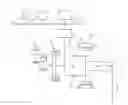
FIG. 1 shows a schematic illustration of a drivetrain of a motor vehicle having a hybrid module,
FIG. 2 shows an overview of critical interference torques as a function of the friction, the gear speed and the speed of the vehicle.
DETAILED DESCRIPTION OF THE PREFERRED EMBODIMENTS
FIG. 1 is a schematic view of a drivetrain of a motor vehicle having an internal combustion engine 1, an oscillation damper 3 which is connected to a crankshaft 2 of the internal combustion engine 1, a hybrid module 4 with a freewheel 5 and a clutch 6, and with a rotor 7 and stator 8 of an electric drive, a transmission 9, a differential 10 and wheels which are not illustrated individually. Two parallel torque transmission paths are provided between the internal combustion engine 1 and the transmission 9. A first torque transmission path contains the clutch 6 and a second torque transmission path contains the freewheel 5. The freewheel 5 transmits to the transmission 9 when torque is being transmitted from the internal combustion engine 1, and opens when there is a direction of flow of the torque from the transmission 9 to the internal combustion engine 1. Torques from the transmission 9 in the direction of the internal combustion engine 1 can be transmitted when the clutch is closed. This relates, in particular, to the starting of the internal combustion engine 1 from electric driving and the transmission of the thrust torque in the case of a fully charged battery. In the internal-combustion-engine mode of the drivetrain, the clutch 6 remains closed, with the result that, according to its present torque transmission capacity, said clutch respectively transmits proportionally together with the freewheel the torque which can be transmitted by the internal combustion engine 1. The function of the clutch 6 is controlled here by a control device 11 which is connected to a superordinate vehicle control device 12. The control device 11 and the vehicle control device 12 are connected here to one another and to the sensors 13 and to the driver assistance system 14 via a vehicle communication line, preferably a CAN bus 15.
FIG. 2 illustrates an overview of the critical interference torques as a function of the coefficient of friction, the gear speed and the vehicle speed. As is apparent from FIG. 2, the vehicle travel through a bend in the second gear speed at 30 km/h under snow or an icy underlying surface (assumption of the coefficient of friction p. =0.3), interference torques of >55 Nm can already give rise to possible safety-critical loss of adhesion between the tires and the underlying surface at the drive shaft. In order to prevent such critical situations of the motor vehicle, the control device 11 actuates the clutch 6 in such a way that a predefined safety distance of the open clutch is determined as a function of the ambient conditions or of peripheral conditions of the vehicle. In order to set this safety distance, a critical interference torque Merit is determined, which is done as follows:
M crit = m V * r dyn i gear speed * i Diff * ( g * μ ) 2 - ( v 2 r ) 2 + M E - machine
a. where
b. μ coefficient of friction
c. v2/r lateral acceleration.
Depending on additionally detected information, for example the possible risk of ice on the road, given an external temperature <3° C. and/or lateral acceleration which is measured by the vehicle assistance system 14, the critical interference torque Merit is set as a function of these ambient conditions or peripheral conditions of the vehicle correspondingly. If the predefined torque request of the superordinate vehicle control device 12 exceeds the determined critical interference torque Merit, measures to stabilize the travel mode are taken, such as shifting up into a higher gear speed or disconnecting the drivetrain from the internal combustion engine 1 or avoiding the starting of the internal combustion engine 1 until after a lateral acceleration limit to be defined is undershot. As a result, safety-critical driving states are prevented. Likewise, in the case of straight travel, that is to say virtually lateral-force-free travel, the starting of the internal combustion engine 1 can be carried out as a function of the temperature, in order to avoid safety-relevant wheel slip. Without the influence of the lateral force, the critical interference torques Merit are then formed as a function of the coefficient of friction or the engaged gear speed and as horizontal lines virtually independently of the velocity (FIG. 2).
Given an underlying surface which is wet with rain, the coefficient of friction μ is increased to approximately 0.7, which permits tolerable interference torques up to approximately 150 Nm. Taking into account the coupling dynamics which occur in the event of a fault, a necessary safety distance, to be maintained, of the open clutch 6 can be defined as a function of the required fault tolerance time. Given poorer ambient conditions, the safety distance must therefore be increased by the smaller tolerable interference torques. This fact results in different safety distances which are dependent on the ambient conditions and serve, on the one hand, to promote the functional safety as well as the possible availability of the system. Given knowledge of the clutch characteristic curve, the safety distance can be defined as a function of further detected information (for example possible smoothness temperature) at an external temperature <3° C. and/or the lateral acceleration which is measured by existing driver assistance systems, in combination with the fault tolerance time which is dependent on the entire system.
LIST OF REFERENCE NUMBERS
- 1 Internal combustion engine
- 2 Crankshaft
- 3 Oscillation damper
- 4 Hybrid module
- 5 Freewheel
- 6 Clutch
- 7 Rotor
- 8 Stator
- 9 Transmission
- 10 Differential
- 11 Control device
- 12 Vehicle control device
- 13 Sensor
- 14 Driver assistance system
- 15 CAN bus
Claims
1. A method for avoiding safety-critical activation of a clutch in a hybrid module of a drivetrain of a motor vehicle, wherein the hybrid module is effective between the internal combustion engine and a transmission and has an electric drive a clutch and a freewheel, the method comprising: using the clutch to start the internal combustion engine by transmitting a torque, supplied by the electric drive or the drivetrain, by a frictionally locking connection to the electric drive or the drivetrain or to decouple the internal combustion engine from the drivetrain for purely electric travel, setting a critical interference torque (Merit) of the clutch in order to set a safety distance which is to be maintained by the open clutch as a function of at least one of ambient conditions of the motor vehicle or peripheral conditions of the vehicle.
2. The method as claimed in claim 1, further comprising determining the critical interference torque (Merit) as a function of a coefficient of friction (μ) of wheels of the vehicle.
3. The method as claimed in claim 2, wherein the coefficient of friction (μ) is formed as a constant for a predefined range of an external temperature of the motor vehicle.
4. The method as claimed in claim 1, further comprising determining the critical interference torque (Merit) as a function of a lateral acceleration of the motor vehicle.
5. The method as claimed in claim 1, further comprising when the critical interference torque (Merit) is exceeded by a predefined torque, initiating vehicle movement dynamic measures for reducing the critical interference torque (Merit) in order to ensure safety of the vehicle.
6. The method as claimed in claim 1, wherein information about at least one of the ambient conditions or the peripheral conditions of the vehicle is made available via a communication line of the motor vehicle.
7. The method as claimed in claim 1, wherein the safety distance of the open clutch is set based on a clutch characteristic curve taking into account information about the at least one of the ambient conditions or the peripheral conditions of the vehicle.
Images & Drawings included:


Sources:
- United States Patent and Trademark Office - verify current appl. status at the USPTO↗
Recent applications in this class:
- » 20230366439 2023-11-16
Method for preventing stalling of an internal combustion engine of a motor vehicle - » 20230167862 2023-06-01
Diagnostic and control method for clutches in a vehicle system - » 20210215211 2021-07-15
Systems and methods for torque shaping - » 20210199164 2021-07-01
Powertrain for a vehicle and method for controlling a powertrain in a vehicle - » 20200378455 2020-12-03
Protecting work machine from damage due to locked state - » 20190170199 2019-06-06
Control device for selectable one-way clutch - » 20180328422 2018-11-15
Control device of vehicle power transmission device - » 20180283478 2018-10-04
Clutch control device - » 20180245644 2018-08-30
Method and control unit for avoiding failure in the drivetrain of a vehicle - » 20180216678 2018-08-02
Automatically actuated disconnect couplings
Recent applications for this Assignee:
- » 20250293624 2025-09-18
METHOD FOR DETERMINING AN INITIAL ROTOR POSITION OF A ROTOR, COMPUTER PROGRAM PRODUCT, CONTROL UNIT, ELECTRIC MACHINE, INSPECTION AND/OR TEST METHOD AND TEST STAND - » 20250290560 2025-09-18
TORQUE CONVERTER WITH PULLING BIAS SPRING - » 20250283516 2025-09-11
FREEWHEEL DEVICE AND FREEWHEEL CLUTCH - » 20250279708 2025-09-04
HYBRID DRIVE RESOLVER ROTOR MOUNTING ARRANGEMENT - » 20250273375 2025-08-28
DETENT SOLENOID - » 20250269726 2025-08-28
Electrical Circuit, On-Board Power Supply System, Vehicle, Method, Computer Program, And Computer-Readable Medium - » 20250269694 2025-08-28
ADJUSTMENT MECHANISM COMPRISING A LINEAR ACTUATOR, VEHICLE AND METHOD FOR OPERATING A VEHICLE - » 20250264157 2025-08-21
PLANETARY GEARBOX HAVING A ROTATIONALLY FIXED THRUST WASHER OF THE PLANET BEARING - » 20250263129 2025-08-21
WHEEL WELL GUARD FOR A WHEEL WELL OF A VEHICLE AND VEHICLE HAVING THE WHEEL WELL GUARD - » 20250262941 2025-08-21
Individual Monitoring Of A Plurality Of Output Points Of A System For The Vehicle-Based Supply Of External Loads