Method for producing dense lithium lanthanum tantalate lithium-ion conducting ceramics
US20160221880A1
2016-08-04
15/010,875
2016-01-29
✅ Patent granted
US 9,963,394 B2
2018-05-08
-
-
Nahida Sultana
Kevin W. Bieg
2037-01-29
Abstract:
A method to produce high density, uniform lithium lanthanum tantalate lithium-ion conducting ceramics uses small particles that are sintered in a pressureless crucible that limits loss of Li2O.
Inventors:
- Harlan James Brown-Shaklee 10 🇺🇸 Albuquerque, NM, United States
- Jon Ihlefeld 11 🇺🇸 Albuquerque, NM, United States
- Erik David Spoerke 16 🇺🇸 Albuquerque, NM, United States
- Mia Angelica Blea-Kirby 1 🇺🇸 Albuquerque, NM, United States
Assignee:
- National Technology & Engineering Solutions of Sandia, LLC 923 🇺🇸 Albuquerque, NM, United States
Applicant:
Interested in similar patents?
Get notified when new applications in this technology area are published.
Classification:
C04B35/62625 » CPC further
Shaped ceramic products characterised by their composition ; Ceramics compositions ; Processing powders of inorganic compounds preparatory to the manufacturing of ceramic products; Forming processes; Processing powders of inorganic compounds preparatory to the manufacturing of ceramic products; Preparing or treating the powders individually or as batches ; preparing or treating macroscopic reinforcing agents for ceramic products, e.g. fibres; mechanical aspects section; Treating the starting powders individually or as mixtures Wet mixtures
C04B35/6264 » CPC further
Shaped ceramic products characterised by their composition ; Ceramics compositions ; Processing powders of inorganic compounds preparatory to the manufacturing of ceramic products; Forming processes; Processing powders of inorganic compounds preparatory to the manufacturing of ceramic products; Preparing or treating the powders individually or as batches ; preparing or treating macroscopic reinforcing agents for ceramic products, e.g. fibres; mechanical aspects section; Treating the starting powders individually or as mixtures; Wet mixtures Mixing media, e.g. organic solvents
C04B35/62655 » CPC further
Shaped ceramic products characterised by their composition ; Ceramics compositions ; Processing powders of inorganic compounds preparatory to the manufacturing of ceramic products; Forming processes; Processing powders of inorganic compounds preparatory to the manufacturing of ceramic products; Preparing or treating the powders individually or as batches ; preparing or treating macroscopic reinforcing agents for ceramic products, e.g. fibres; mechanical aspects section; Treating the starting powders individually or as mixtures; Thermal treatment of powders or mixtures thereof other than sintering Drying, e.g. freeze-drying, spray-drying, microwave or supercritical drying
C04B35/62645 » CPC further
Shaped ceramic products characterised by their composition ; Ceramics compositions ; Processing powders of inorganic compounds preparatory to the manufacturing of ceramic products; Forming processes; Processing powders of inorganic compounds preparatory to the manufacturing of ceramic products; Preparing or treating the powders individually or as batches ; preparing or treating macroscopic reinforcing agents for ceramic products, e.g. fibres; mechanical aspects section; Treating the starting powders individually or as mixtures Thermal treatment of powders or mixtures thereof other than sintering
C04B35/6261 » CPC further
Shaped ceramic products characterised by their composition ; Ceramics compositions ; Processing powders of inorganic compounds preparatory to the manufacturing of ceramic products; Forming processes; Processing powders of inorganic compounds preparatory to the manufacturing of ceramic products; Preparing or treating the powders individually or as batches ; preparing or treating macroscopic reinforcing agents for ceramic products, e.g. fibres; mechanical aspects section; Treating the starting powders individually or as mixtures Milling
C04B2235/3203 » CPC further
Aspects relating to ceramic starting mixtures or sintered ceramic products; Composition of constituents of the starting material or of secondary phases of the final product; Constituents and secondary phases not being of a fibrous nature; Metal oxides, mixed metal oxides, or oxide-forming salts thereof, e.g. carbonates, nitrates, (oxy)hydroxides, chlorides; Alkali metal oxides or oxide-forming salts thereof Lithium oxide or oxide-forming salts thereof
C04B2235/3227 » CPC further
Aspects relating to ceramic starting mixtures or sintered ceramic products; Composition of constituents of the starting material or of secondary phases of the final product; Constituents and secondary phases not being of a fibrous nature; Metal oxides, mixed metal oxides, or oxide-forming salts thereof, e.g. carbonates, nitrates, (oxy)hydroxides, chlorides; Rare earth oxide or oxide forming salts thereof, e.g. scandium oxide Lanthanum oxide or oxide-forming salts thereof
C04B2235/443 » CPC further
Aspects relating to ceramic starting mixtures or sintered ceramic products; Composition of constituents of the starting material or of secondary phases of the final product; Constituents and secondary phases not being of a fibrous nature; Metal salt constituents or additives chosen for the nature of the anions, e.g. hydrides or acetylacetonate Nitrates or nitrites
C04B2235/449 » CPC further
Aspects relating to ceramic starting mixtures or sintered ceramic products; Composition of constituents of the starting material or of secondary phases of the final product; Constituents and secondary phases not being of a fibrous nature; Metal salt constituents or additives chosen for the nature of the anions, e.g. hydrides or acetylacetonate Organic acids, e.g. EDTA, citrate, acetate, oxalate
C04B2235/5436 » CPC further
Aspects relating to ceramic starting mixtures or sintered ceramic products; Composition of constituents of the starting material or of secondary phases of the final product; Constituents or additives of the starting mixture chosen for their shape or used because of their shape or their physical appearance; Particle size related information expressed by the size of the particles or aggregates thereof micrometer sized, i.e. from 1 to 100 micron
C04B2235/668 » CPC further
Aspects relating to ceramic starting mixtures or sintered ceramic products; Aspects relating to heat treatments of ceramic bodies such as green ceramics or pre-sintered ceramics, e.g. burning, sintering or melting processes; Specific sintering techniques, e.g. centrifugal sintering Pressureless sintering
C04B2235/77 » CPC further
Aspects relating to ceramic starting mixtures or sintered ceramic products; Aspects relating to sintered or melt-casted ceramic products; Physical characteristics Density
C04B2235/80 » CPC further
Aspects relating to ceramic starting mixtures or sintered ceramic products; Aspects relating to sintered or melt-casted ceramic products Phases present in the sintered or melt-cast ceramic products other than the main phase
C04B2235/81 » CPC further
Aspects relating to ceramic starting mixtures or sintered ceramic products; Aspects relating to sintered or melt-casted ceramic products; Phases present in the sintered or melt-cast ceramic products other than the main phase Materials characterised by the absence of phases other than the main phase, i.e. single phase materials
C04B35/495 » CPC main
Shaped ceramic products characterised by their composition ; Ceramics compositions ; Processing powders of inorganic compounds preparatory to the manufacturing of ceramic products based on oxide ceramics based on vanadium, niobium, tantalum, molybdenum or tungsten oxides or solid solutions thereof with other oxides, e.g. vanadates, niobates, tantalates, molybdates or tungstates
C04B35/64 » CPC further
Shaped ceramic products characterised by their composition ; Ceramics compositions ; Processing powders of inorganic compounds preparatory to the manufacturing of ceramic products; Forming processes; Processing powders of inorganic compounds preparatory to the manufacturing of ceramic products Burning or sintering processes
C04B35/626 IPC
Shaped ceramic products characterised by their composition ; Ceramics compositions ; Processing powders of inorganic compounds preparatory to the manufacturing of ceramic products; Forming processes; Processing powders of inorganic compounds preparatory to the manufacturing of ceramic products Preparing or treating the powders individually or as batches ; preparing or treating macroscopic reinforcing agents for ceramic products, e.g. fibres; mechanical aspects section
C04B2235/6567 » CPC further
Aspects relating to ceramic starting mixtures or sintered ceramic products; Aspects relating to heat treatments of ceramic bodies such as green ceramics or pre-sintered ceramics, e.g. burning, sintering or melting processes characterised by specific heating conditions during heat treatment Treatment time
Description
CROSS-REFERENCE TO RELATED APPLICATION
This application claims the benefit of U.S. Provisional Application No. 62/110,834, filed Feb. 2, 2015, which is incorporated herein by reference.
STATEMENT OF GOVERNMENT INTEREST
This invention was made with Government support under contract no. DE-AC04-94AL85000 awarded by the U. S. Department of Energy to Sandia Corporation. The Government has certain rights in the invention.
FIELD OF THE INVENTION
The present invention relates to lithium ion conducting ceramics and, in particular, to an improved method for producing dense lithium lanthanum tantalite lithium ion conducting ceramics.
BACKGROUND OF THE INVENTION
Lithium lanthanum tantalate (LLTO) ceramics exhibit broad technological significance as lithium-ion conductors, with particular relevance for applications such as lithium-ion battery systems. More recently, LLTO ceramics have been identified as useful materials for nuclear waste separation and fuel reprocessing due to a difference in Li and Cs diffusivity. See U.S. Provisional application Ser. No. 14/660,696, filed Mar. 17, 2015, which is incorporated herein by reference. For optimal ion conductivity and robust structural and chemical stability, however, lithium-ion conducting ceramics must be highly dense with no interconnected porosity. High density ceramics can also exhibit higher total conductivity due to their apparent lack of volumetric pore dilution.
Pressureless sintering is an important processing requirement for production of low cost ion conductors. Pressure assisted densification (e.g., hot pressing), although often an effective means of achieving high density ceramics, is generally considered a batch-type process that requires significant capital investment and recurring tooling costs. Moreover, it can be difficult or impossible to create contoured ceramic geometries (e.g., tubes) using hot pressing. As a result, processing methods that enable pressureless sintering are often favored over hot isostatic pressing or hot pressing.
LLTO is an alkali containing ceramic, and alkali ceramics are particularly difficult to sinter to full density for several reasons. The Li2O—La2O3—Ta2O5 phase diagram is very complex, making LLTO processing difficult. See K. Hayashi et al., Mat. Res. Bull. 21(3), (1986). Further, alkali oxides (R2O, e.g., Li2O) exhibit significant vapor pressures at common sintering temperatures, leading to significant reagent loss to volatility. See R. H. Lamoreaux and D. L. Hildenbrand, J. Phys. Chem. Ref. Data 13(1), (1984). Common sintering temperatures for alkali-based ceramics are frequently above 1000° C. which exacerbates the effects of R2O volatility. Alkali-based ceramic particles are also prone to coarsening due in part to R2O volatility as well as the propensity to form liquid phases during calcination. If the alkali is allowed to escape from the atmosphere surrounding the ceramic, a typical microstructure will exhibit a porous outer rim and semi-dense interior. Therefore, the composition of the sintered ceramic depends on location within the specimen and will be alkali deficient near the outermost regions of the sintered ceramic. Finally, Li2O(g) is reactive with most oxide kiln hardware in which many sintering studies are conducted.
SUMMARY OF THE INVENTION
The present invention is directed to a new method to produce Li5La3Ta2O12 (LLTO) lithium-ion conducting ceramics. To achieve high density, uniform LLTO ceramics with pressureless sintering, powders with small particle sizes are first produced and then sintered in an environment that limits loss of R2O. Using the hybrid solid-state synthesis method, near full density and phase pure LLTO ceramics can be produced.
As an example of the present invention, LLTO powders were first synthesized from tantalum oxide (Ta2O5), lanthanum acetate (La(OAc)), and lithium nitrate (LiNO3). LiNO3 was first dissolved in ethanol while La(OAc) was dissolved in propionic acid under mild heating. A ceramic suspension of Ta2O5 in ethanol was then blended with the LiNO3 and La(OAc) solutions and reduced in volume by evaporation of the solvents. The resulting precursor was combusted at ˜500° C. to remove the acetate ion and remaining propionic acid and then calcined above 800° C. to remove carbonates. The calcination step resulted in a mixed phase powder that can then be used to reactively sinter LLTO ceramics to >95% of the theoretical density (6.334 g/cm3). These ceramics exhibit room temperature conductivities of 2×10⁻⁵ S/cm which is about 10× higher than previously reported values.
BRIEF DESCRIPTION OF THE DRAWINGS
The detailed description will refer to the following drawings, wherein like elements are referred to by like numbers.
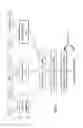
FIG. 1 is an illustration of a synthesis method for reducing the particle size of ceramic powders to enable the production of dense LLTO ceramics.
FIG. 2 is a scanning electron micrograph of a calcined powder.
FIG. 3 is a schematic illustration of a Li2O vapor containment crucible for LLTO sintering.
FIG. 4 is a graph of the room temperature impedance behavior of a sintered LLTO ceramic.
FIGS. 5(a) and 5(b) are graphs of the temperature-dependent ionic conductivity of a sintered LLTO ceramic.
DETAILED DESCRIPTION OF THE INVENTION
The invention is directed to a method to produce near full density LLTO ceramics without phase decomposition by pressureless sintering. As shown in FIG. 1, LLTO powders were synthesized from LiNO3, La(CH3CO2)3-xH2O(La(OAc)), and Ta2O5 precursors. As an example of the invention, LiNO3 and La(OAc) were dissolved in alcohol and propionic acid, respectively, to produce ˜0.4M LiNO3 and 1.9M La(OAc) solutions. These solutions were then blended with an alcohol-Ta2O5 ceramic suspension in stoichiometric quantities to achieve the target cation ratio of 5Li:3La:2Ta. After the alcohol and propionic were removed via evaporation, the mixture was then heated to achieve slow combustion within a furnace thus removing organics to produce a homogenous mixture of carbonates and oxides. This mixture was then heated in excess of 800° C. to remove carbonates of lanthanum and form the mixed oxides that will eventually form LLTO.
After calcination, the particle size of the synthesized and calcined powder is less than 2 μm, as shown in FIG. 2. The particle size can then be further reduced by low energy milling (e.g., ball milling). Prepared powder compacts or green ceramic bodies can then be placed in a closed crucible whose composition is appropriate to resist R2O diffusion and reaction with R2O. The powder compacts can then be sintered in this crucible at 1300° C. for 12 hours. With this method, the sealed crucible can produce dense (98.4% relative density) ceramic specimens with only trace minor phases.
A diagram of an exemplary R2O vapor containment crucible is shown in FIG. 3. This system contains a fully closed (not hermetically sealed) Pt crucible with Pt foil. Other crucibles that are non-reactive with LLTO ceramics and can be used include Ni, Pt, Pd, Ir, other transition group metals, and alloys thereof. LLTO powders around the exterior of the Pt—Pt interfaces prevent Li2O from leaving the crucible, i.e., Li2O permeability in Pt is sufficiently low to prevent diffusion out of the crucible. Al2O3 crucibles alone are not sufficient to prevent Li2O volatilization because Li2O vapor can readily react with Al2O3 to form Li2O—Al2O3 and Li2O-5Al2O3 intermediate compounds. These intermediate compounds consume volatile Li2O and the LLTO stoichiometry shifts to Li-deficient compounds. Conversely, oxidation of Pt crucible materials can be controlled by appropriate control of oxygen partial pressure. Any volatile alkali oxides are sufficiently maintained within the closed Pt crucible to maintain stoichiometry. If the volatile oxides are maintained within the closed and non-reactive crucible, the composition and density will be uniform throughout the ceramic body.
FIG. 4 is a plot of the impedance of the sintered ceramic measured at room temperature. The ionic conductivity values (˜2×10⁻⁵ S/cm) are significantly higher than any LLTO reported in the literature (by ˜10×) and are comparable to Ba-substituted compounds and other fast ion conductors. The conductivity improvement is likely due to the improved density.
FIGS. 5(a) and 5(b) are graphs of the ionic conductivity as a function of temperature. As shown in FIG. 5(a), the ionic conductivity of the ceramic of the present invention (labeled “Sandia Li5La3Ta2O12”) surpasses literature reports of LLTO (labeled “Thangadurai Li5La3Ta2O12) and LBLTO (labeled “Thangadurai Li6BaLa2Ta2O12) and exceeds LLZO (labeled “Murugan Li7La3Zr2O12) at 125° C. As shown in FIG. 5(b), the activation energy for Li-conduction is 0.53 eV. This activation energy is slightly higher than that determined for LLZO (Ea=0.46 eV) and compares well with literature LLTO values (Ea=0.56 eV).
The present invention has been described as a method for producing dense lithium lanthanum tantalate lithium-ion conducting ceramics. It will be understood that the above description is merely illustrative of the applications of the principles of the present invention, the scope of which is to be determined by the claims viewed in light of the specification. Other variants and modifications of the invention will be apparent to those of skill in the art.
Claims
We claim:1. A method for producing a lithium lanthanum tantalate ceramic, comprising:
dissolving lithium nitrate in an alcohol solvent;
dissolving lanthanum acetate in an acid solvent;
suspending tantalum oxide in an alcohol;
blending the lithium nitrate solution, the lanthanum acetate solution, and the tantalum oxide suspension and evaporating the solvents to provide a stoichiometric mixture;
combusting the stoichiometric mixture at a sufficiently high temperature to remove organics, thereby providing an inorganic mixture;
calcining the inorganic mixture at a sufficiently high temperature to remove carbonates, thereby providing a mixed oxide powder; and
sintering the mixed oxide powder in a closed and non-reactive crucible at a sufficiently high temperature and pressure to provide a dense lithium lanthanum tantalate ceramic.
2. The method of claim 1, wherein the alcohol solvent for dissolving lithium nitrate comprises ethanol.
3. The method of claim 1, wherein the acid solvent for dissolving lanthanum acetate comprises propionic acid.
4. The method of claim 1, wherein the alcohol for suspending tantalum oxide comprises ethanol.
5. The method of claim 1, wherein the sufficiently high temperature for combusting is greater than 500° C.
6. The method of claim 1, wherein the sufficiently high temperature for calcining is greater than 800° C.
7. The method of claim 1, wherein the sufficiently high temperature for sintering is greater than 1000° C.
8. The method of claim 1, wherein the sufficiently high pressure for sintering is ambient pressure.
9. The method of claim 1, wherein the closed and non-reactive crucible comprises a platinum crucible.
10. The method of claim 1, wherein the closed and non-reactive crucible comprises a transition metal crucible.
11. The method of claim 10, wherein the transition metal comprises nickel, platinum, palladium, iridium, or alloys thereof.
Images & Drawings included:



Sources:
- United States Patent and Trademark Office - verify current appl. status at the USPTO↗
Recent applications in this class:
- » 20250243121 2025-07-31
CE-MO COMPOSITE OXIDE CERAMIC, GREEN COMPACT, SINTERED BODY AND ARTICLE - » 20250011243 2025-01-09
PREPARATION METHOD FOR MICROWAVE DIELECTRIC RESONATOR WITH LAMINATED STRUCTURE - » 20240308917 2024-09-19
LEAD-FREE PIEZOELECTRIC CERAMIC COMPOSITION AND PIEZOELECTRIC ELEMENT - » 20240294438 2024-09-05
DIELECTRIC CERAMIC COMPOSITION AND CERAMIC CAPACITOR - » 20240217882 2024-07-04
PIEZOELECTRIC MATERIAL COMPOSITION, METHOD OF MANUFACTURING THE SAME, PIEZOELECTRIC DEVICE, AND APPARATUS INCLUDING THE PIEZOELECTRIC DEVICE - » 20240140874 2024-05-02
Ion-modified microwave dielectric ceramic and preparation method thereof, and microwave component - » 20240067572 2024-02-29
Potassium sodium bismuth niobate tantalate zirconate ferrite ceramics with non-stoichiometric Nb and preparation method therefor - » 20240067571 2024-02-29
MANUFACTURING COMPOSITE ELECTROCERAMICS USING WASTE ELECTROCERAMICS - » 20230391675 2023-12-07
PIEZOELECTRIC ELEMENT AND METHOD FOR MANUFACTURING SAME, AS WELL AS PIEZOELECTRIC VIBRATION DEVICE - » 20230348332 2023-11-02
Mg—Ta based dielectric ceramic for multi-layer ceramic capacitor and low-temperature preparation method thereof
Recent applications for this Assignee:
- » 20250002780 2025-01-02
COLORIMETRIC RADIATION DETECTOR - » 20240409561 2024-12-12
Tunable Rare Earth Metal-Organic Frameworks for Complex Optical Tags - » 20240297199 2024-09-05
SINGLE PHOTON COLOR IMAGE SENSOR - » 20240255699 2024-08-01
Heterogeneous Integrated UV-IR Ultra-Low Loss Multi-Layer Platform with Electrical Interconnects, Gain, Modulation, Detection, and Nonlinear Optics - » 20240210133 2024-06-27
Flow assisted anti-fouling geometries for compact heat exchangers - » 20240194929 2024-06-13
Battery Cell With Safety Layer - » 20240191786 2024-06-13
Systems and methods that use harmonic drives for converting reciprocating axial motion to continuous rotary motion, helical drives for converting reciprocating rotary motion to reciprocating axial motion and combinations thereof for converting reciprocating rotary motion to continuous rotary motion - » 20240162859 2024-05-16
SELF-AMPLIFIED RESONATORS WITH EMBEDDED PIEZORESISTIVE ELEMENTS FOR HIGH PERFORMANCE, ULTRA-LOW SW AP MICROWAVE AND MILLIMETER-WAVE APPLICATIONS - » 20240125948 2024-04-18
SINGLE LIGHT PHOTON COUNTING RADIATION DETECTOR AND DATA TRANSMISSION METHODS - » 20240088461 2024-03-14
Dispersion of stored energy within a battery system at risk of failure