Polymer-fixed derivatives of dithiolane or dithiane
US20160229832A1
2016-08-11
15/023,801
2014-09-23
✅ Patent granted
US 9,518,039 B2
2016-12-13
WO; PCT/EP2014/070186; 20140923
WO; WO2015/044108; 20150402
Nyeemah A Grazier
Abel Law Group, LLP
2034-09-23
Abstract:
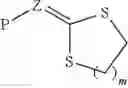
Derivatives of 1,3-dithianes and 1,3-dithiolanes of the general formula 1a
or salts thereof of the general formula 1b
where P=polymeric support, m=1 or 2, Z is an organic linker or X=inorganic or organic anion, processes for preparation thereof and use thereof.
Inventors:
- Nicole JUNG 1 🇩🇪 Mannheim, Germany
- Simone GRAESSLE 1 🇩🇪 Gaggenau, Germany
- Stefan BRAESE 2 🇩🇪 Troisdorf, Germany
Assignee:
- KARLSRUHER INSTITUT FUER TECHNOLOGIE 88 🇩🇪 Karlsruhe, Germany
Applicant:
Interested in similar patents?
Get notified when new applications in this technology area are published.
Classification:
C07D339/08 » CPC further
Heterocyclic compounds containing rings having two sulfur atoms as the only ring hetero atoms Six-membered rings
C07D409/04 » CPC further
Heterocyclic compounds containing two or more hetero rings, at least one ring having sulfur atoms as the only ring hetero atoms containing two hetero rings directly linked by a ring-member-to-ring-member bond
C07D235/18 » CPC further
Heterocyclic compounds containing 1,3-diazole or hydrogenated 1,3-diazole rings, condensed with other rings condensed with carbocyclic rings or ring systems; Benzimidazoles; Hydrogenated benzimidazoles with aryl radicals directly attached in position 2
C07F5/02 IPC
Compounds containing elements of Groups 3 or 13 of the Periodic System Boron compounds
C07F5/022 » CPC further
Compounds containing elements of Groups 3 or 13 of the Periodic System; Boron compounds without C-boron linkages
C07D339/06 » CPC main
Heterocyclic compounds containing rings having two sulfur atoms as the only ring hetero atoms; Five-membered rings having the hetero atoms in positions 1 and 3, e.g. cyclic dithiocarbonates
C07D339/00 IPC
Heterocyclic compounds containing rings having two sulfur atoms as the only ring hetero atoms
Description
All the documents cited in the present application are incorporated into the present disclosure by reference in their entirety.
The present invention relates to solid phase-fixed dithiolanylium salts and dithianylium salts and ylidene-dithianes and ylidene-dithiolanes, to the preparation thereof and to the use thereof.
STATE OF THE ART
Dithianes or dithiolanes and their oxo derivatives are known from the prior art. For example, U.S. Pat. No. 4,946,861 describes dithianylidenes and the oxides thereof and the use thereof as pharmaceuticals.
It is known that dithianes or dithiolanes can be used for the conversion of ketones or aldehydes. This affects applications including the following:
1) as protecting groups in protecting group strategies
2) as a necessary transformation in the umpolung reaction
3) as an intermediate for further derivatization, for example introduction of fluorine.
The transformation of the carbonyl functionality to give the dithiolane and to give the dithiane is a reaction that can be conducted with good to very good yields, but which generally has the following disadvantages:
1) the reagents are toxic
2) the reagents stink to high heaven
3) the products have to be purified in a complex manner after the reaction
4) many reactions are not possible or run poorly, since the acid breaks down acid-labile groups in solution.
Synthetic Communications, Vol. 34, No. 24, pages 4545-4556, 2004 discloses use of 2-[1,3]dithian-2-ylidene-3-oxobutanamide as thioacetalization reagent in liquid phase reactions, wherein the workup of the products always also includes a chromatographic purification.
In the form of 2-(1,3-dithian-2-ylidene)malonic acid, Synthetic Communications, Vol. 37:6, pages 993-1000, 2007 discloses a similar substance for thioacetalization in liquid phase reactions.
What is common to the prior art is that the compounds disclosed are in unbound, i.e. unfixed, form and the reactions accordingly proceed entirely in liquid phase. Correspondingly, the disadvantages mentioned occur.
Problem
The problem addressed by the present invention is that of avoiding the disadvantages of the prior art, especially of providing reagents that are very easy to handle, which do not have the disadvantages of the prior art, and processes for preparation thereof and the use thereof.
The intention was likewise to find new chemicals which can be obtained with the aid of the compounds of the invention.
Another intention was to use the compounds of the invention to find new access routes to chemicals, especially novel chemicals.
Solution
This problem is solved by the compounds, the processes and the uses according to the description and the claims.
DEFINITIONS OF TERMS
In the context of the present invention, all stated amounts should be understood as statements of weight, unless stated otherwise.
In the context of the present invention, the term “room temperature” means a temperature of 20° C. Temperature figures, unless stated otherwise, are in degrees Celsius (° C.).
Unless stated otherwise, reactions or process steps cited are conducted at standard pressure/atmospheric pressure, i.e. at 1013 mbar.
In the context of the present invention, the wording “and/or” includes both any desired element and all combinations of the elements listed in the particular list.
DETAILED DESCRIPTION
The present invention provides derivatives of 1,3-dithianes or 1,3-dithiolanes of the general formula 1a
or salts thereof of the general formula 1b
where
- P=polymeric support,
- m=1 or 2,
- Z=organic linker of any length which binds the dithiolane/dithiane unit of 1a via a double bond or binds the dithiolane/dithiane unit of 1 b via a single bond to the polymeric support,
- X=inorganic or organic anion.
These are also referred to generally in the context of the present invention as the inventive compounds or inventive reagents.
Preferably, Z is selected from the group consisting of the organic radicals
—CH2—Y—(CH2)n—CH2—, —CH2—Y—(CH2)n—CH═,
—CH2—Y—CO—(CH2)n—CH2—, —CH2—Y—CO—(CH2)n—CH=
—CH2—NH—C6H4—Y—(CH2)n—CH2— or —CH2—NH—C6H4—Y—(CH2)n—CH═,
more preferably selected from the group consisting of the organic radicals
—CH2—Y—(CH2)n—CH2—, —CH2—Y—(CH2)n—CH═,
—CH2—Y—CO—(CH2)n—CH2— or —CH2—Y—CO—(CH2)n—CH═
where
Y═NH or O,
n=0 to 10.
Preferably, n=1 or 2.
Preferably, X is selected from the group consisting of the anions Br−, Cl−, Br3−, ClO4−, HCl2−, BF4−, CF3SO3−, especially BF4−, CF3SO3−.
Preferably, P is selected from the group consisting of polystyrene, polypropylene, polyethylene, polyethylene terephthalate, silica and cellulose. Polystyrene is especially preferred.
In the context of the present invention, the polymeric support P is accordingly understood to mean the polymeric backbone or the polymeric structure without pendant functional groups.
It will be appreciated that it is also possible in the context of the present invention to use a plurality of different polymeric supports in a mixture.
It is likewise possible in the context of the present invention to use different Z groups (linker groups) in a mixture, optionally also together with mixtures of polymeric supports P.
Preferred inventive compounds are those selected from the group consisting of the compounds of the following formulae
and mixtures thereof.
Particularly preferred compounds are those of the formula 1a in which
P=polystyrene, m=2, Z═—CH2—Y—CO—(CH2)n—CH═ with Y═NH,
and those salts of the formula 1 b in which
P=polystyrene, m=2, Z═—CH2—Y—CO—(CH2)n—CH2— with Y═NH and X═BF4—,
where n is as defined above.
It will be appreciated that the present invention also encompasses variants in which the linker Z is bonded to the polymeric support P via double or triple bonds, rather than the single bond shown in the formulae. The present invention does of course further encompass products having a multitude of linker/dithiolane/dithiane units on a polymeric support; this is not shown in the formula representation for the sake of simplicity and better readability.
Correspondingly, it is also possible for different linkers Z to be bonded to a polymeric support via single, double and/or triple bonds.
The present invention also provides a process for preparing the inventive compounds.
The present invention provides a simple synthesis of the inventive compounds, wherein a solid support material is used, which then contains, through modification, both the thio unit and—if desired—acid.
The present invention therefore also provides a process for preparing the inventive compounds, comprising the process steps or consisting of the process steps of
- a) providing at least one polymeric support with pendant functional groups,
- b) reacting the functional groups in the polymeric support(s) with at least one chain extender,
- c) optionally modifying the functional groups of the chain-extended product resulting from b),
- d) reacting the product obtained in b) or c) with optionally substituted aliphatic or aromatic dithio compounds having two or three carbon atoms between the sulfur atoms, preferably aliphatic dithio compounds, especially 1,2-dithioethane or 1,3-dithiopropane,
- e) optionally working up the product obtained in step d)
- e1) to give the corresponding dithiolanylium salts/dithianylium salts (1b), preferably by washing using diethyl ether and THF,
- or
- e2) to give ylidene-dithiolanes/dithianes (1a), preferably by washing with other solvents than diethyl ether/THF or by adding base in the washing solvent.
The procedure for preparation of the inventive compounds is generally as follows:
First of all, at least one polymeric support, preferably one polymeric support, having pendant functional groups via which further radicals can be added on is provided.
If the polymeric support does not have the functional groups from the outset, the polymeric carrier can be functionalized by measures customary in the art.
The functional groups may, for example, be hydroxyl groups (especially in the case of silica as support) or amino groups (especially in the case of organic polymers such as polystyrene as support). Alternatively, they may equally be halogens or carbonyls in the broader sense (aldehydes/ketones/carboxylic acids or carbonyl chlorides) or the like.
Thereafter, chain extension is effected via reaction with the functional groups of the polymer with functional groups of another compound. In this case, however, it has to be ensured that a functional group remains at one end of the molecule. Examples of compounds of good suitability for this purpose are carboxylic anhydrides or dicarboxylic acids, which leave one carboxylic acid group. In addition, it is also possible to use dicarbonyl chlorides, diamines, diols or the like.
It is optionally possible to add a catalytically active compound.
The functional group which remains at the opposite end from the polymeric support can optionally be modified in order to be better suited to the subsequent reaction step. In the case of a carboxylic acid group, this may be, for example, modification with thionyl chloride to give the acid chloride group. In the subsequent reaction step (i.e. after chain extension and optional modification), reaction is effected with a dithio compound, preferably 1,2-dithioethane or 1,3-dithiopropane, which results, according to the reaction conditions, in the inventive polymeric support-bound 1,3-dithian-2-ylidenes and 1,3-dithiolan-2-ylidenes or the corresponding dithianylium and dithiolanylium salts.
In this step, it is also possible to use other dithio compounds if they have two or three carbon atoms between the two sulfur atoms. For example 1,2-dithiopropane, 1,3-dithiobutane or similar compounds.
In the context of the present invention, is it is advantageously also possible to proceed from already functionalized polymeric supports, since these are often commercially available. A preferred already functionalized polymeric support from which it is possible to proceed in the context of the present invention is polystyrene-(CH2NH2)x where x represents the number of pendant aminomethylene groups. It will be appreciated that other corresponding compounds are also usable, provided that they have corresponding functionalizations, for example polystyrene-(CH2Cl)x.
Especially preferred in accordance with the invention is a process comprising or consisting of the following process steps:
- a) providing polystyrene with pendant —CH2—NH2 groups,
- b) reacting with succinic anhydride in dimethylformamide (DMF) and/or triethylamine,
- optionally in the presence of 4-(dimethylamino)pyridine (DMAP),
- c) reacting the resulting carboxylic acid with thionyl chloride to give the acid chloride,
- d) reacting with 1,2-dithioethane or 1,3-dithiopropane in the presence of HBF4 in diethyl ether,
- e) optionally working up the product obtained in step d) by removing the solvent and washing the remaining resin, preferably with diethyl ether and/or THF, and then drying the resin.
In one variant, it is preferable to conduct the reaction in step b) in the presence of DMAP.
A further particularly preferred process of the invention comprises or consists of the following steps:
- a) providing polystyrene with pendant —CH2—NH2 groups,
- b) reacting with adipoyl dichloride in triethylamine, optionally in the presence of 4-(dimethylamino)pyridine (DMAP),
- d) reacting with 1,2-dithioethane or 1,3-dithiopropane in the presence of HBF4 in diethyl ether,
- e) optionally working up the product obtained in step d) by removing the solvent and washing the remaining resin, preferably with diethyl ether and/or THF, and then drying the resin.
In one variant, it is preferable to conduct the reaction in step b) in the presence of DMAP.
The preferred reaction of a carboxylic anhydride with a pendant amine group on the polymeric support (for example in the form of an aminomethylene group) is particularly advantageous because it firstly enables the attachment of the sulfur moiety and, secondly, the linker or the attached derivative remains stable even in the course of the acidic chlorination reaction and the salt formation which is conducted under acidic conditions.
The workup of the product obtained in step d) can be optimized by choice of the solvents such that the salt in the solid phase is conserved. Salts on the polymeric support are rare and are also difficult to maintain through the wash steps.
More particularly, the procedure in the context of the present invention may be as follows: the reaction mixture is transferred into a frit, the solvent is removed via filtration and the remaining resin is washed with solvent until it is odor-neutral. Particular preference is given here to diethyl ether and THF (unlike other solvents, these solvents keep the salt on the resin intact). The resin is then dried under high vacuum.
Correspondingly, in a preferred variant of the present invention, the workup step e) is obligatory.
Finally, the present invention provides for the various uses of the inventive compounds or of the compounds prepared by the process of the invention.
The compounds of the invention can also be referred to or used as dithioalkyl reagents.
The inventive compounds are dithianylium and dithiolanylium salts and 1,3-dithian- or 1,3-dithiolan-2-ylidenes.
The linkers Z used in accordance with the invention serve for attachment of the thio components to the polymeric support. Preferably, for attachment to the polymeric support, they have structures which remain stable in the reaction in the preparation of the inventive compounds during the acidic chlorination reaction and the salt formation which is conducted under acidic conditions.
For this purpose, preference is given to using linkers Z bonded to the polymeric support via a C—C or a C—N linkage. Amide groups are of very good suitability for this purpose.
Particular preference is given in accordance with the invention to the above-specified linkers Z.
It will be appreciated that it is possible in the context of the present invention to obtain the linkers Z by reaction with various substances. For example also by reaction with amino acids (such as beta- or gamma-amino acids).
By means of the inventive compounds, it is possible to achieve excellent results in the field of organic chemistry, for example in catalysis and also for stoichiometric conversions; for instance, it is possible to introduce protecting groups particularly easily and conduct reactions with HBF4 in a particularly simple and economically viable manner.
The inventive compounds have the following advantages:
- 1) the inventive compounds/reagents are nontoxic and easy to handle/dose by virtue of solid attachment to the support material;
- 2) the inventive compounds/reagents, because of the immobilization on the polymeric support, have virtually no odor emissions, but are (completely) odor-neutral;
- 3) a very high percentage of the reactions conducted with the inventive compounds/reagents need not include any complex purification step after the reaction. No chromatography is necessary; in most cases, simple removal of the polymer by filtration and concentration of the reaction mixture by rotary evaporation are sufficient.
- The high purity of the products obtained by means of the inventive compounds/reagents is based on the exceptional properties of the present invention compared to the prior art:
- According to the prior art, conversions in the liquid phase either usually do not run to absolute completion and still include some starting material after the reaction through the stoichiometric addition of the reagents, or still contain reagent which has to be removed in the event of addition in excess. The acid added catalytically is also still present in the crude mixture.
- In the case of the inventive compounds/reagents, both the thio component (bound to polymeric support) and the acid (also bound to polymeric support) can be added in excess. This promotes full conversion. However, the excess, in contrast to the prior art, does not lead to contamination of the mixture since it is only when the carbonyl is attacked that the two components are detached from the polymeric support.
- The acid released during the reaction (e.g. HBF4) remains immobilized on the support material after the reaction has ended and in this way does not get into the product mixture.
- 4) With the inventive compounds, it is possible to conduct reactions where a basic environment is generated by addition of bases in the liquid phase (e.g. carbonates), while the inventive compounds 1b on the support are at least partly conserved. Thus, it is also possible to convert compounds containing acid-labile groups to the dithiolane/dithiane.
- 5) The inventive compounds/reagents are easy and inexpensive to produce.
- 6) Reactions conducted with the inventive compounds/reagents lead to very good yields which are higher in most cases than in the prior art reactions.
The particular advantages of the present invention are achieved because, in contrast to the prior art, the reactions with the inventive compounds/reagents are not pure liquid phase reactions; instead, the fixing of the thio component via a linker group on a polymeric support gives rise to a solid reagent phase.
Therefore, an essential aspect of the present invention is that the inventive compounds are used as solid phase reagents.
In the form of the inventive compounds, a middle way has surprisingly been found between very stable attachment to the resin (good because it is odor-free, easy to prepare and stable) and easy transfer of the thiol moiety (good and quick reaction outcomes).
It is a further advantage of the inventive compounds that, when they are used to introduce thioacetal protecting groups into aldehydes/ketones, the reaction is not water-sensitive, and (small) amounts of water are instead tolerated; the apparatuses thus need not be dried beforehand. In addition, the reactions can be conducted in standard atmosphere; the presence of inert gas is unnecessary.
The inventive compounds can be used in order to convert both aldehydes and ketones in such a way that a thioacetal or ketal group is introduced as protecting group.
In the case of the conversion of aldehydes, no further additives are needed.
In the case of the conversion of ketones, it is advantageous and therefore preferable under some circumstances to add an acid. Preference is given here to using Lewis acids which are also used for the liquid phase conversion of ketones to dithianes, for example ZnCl2, NiCl2, CuCl2, etc.
A preferred example of a usable acid is BF3, which is normally used in diethyl ether.
In the context of the present invention, it is possible for the first time to immobilize Lewis acids in combination with thio components.
The reactions to form dithianes/dithiolanes generally proceed within a period of time between 1 hour and 3 days, the exact reaction time of course being dependent on the respective reactants and the reaction conditions such as temperature and pressure. According to the invention, it is possible to accelerate the reactions by the action of microwave radiation, such that the reactions can then be concluded within less than 4 hours.
If ketones and aldehydes are present simultaneously and no additional acid is added, the reaction for protecting group introduction is chemoselective for the aldehydes by virtue of the inventive compounds.
Preferably in accordance with the invention, the conversion of the aldehydes and/or ketones proceeds in organic solvent. These are preferably selected from the group consisting of acetonitrile (MeCN), dichloromethane, trichloromethane, dimethylformamide (DMF), toluene, tetrahydrofuran (THF), methanol, ethanol and mixtures thereof. MeCN is especially preferred; the cleanest results are achieved therewith, which means a considerable advantage in terms of costs and in the workup.
It is preferable to use the inventive compounds, when they are used for introduction of protecting groups for aldehydes/ketones, in the form of the salts of formula 1b.
In general, the conversion of the aldehydes or ketones (the introduction of a protecting group into aldehydes or ketones) can be described as follows in the context of the present invention:
Aldehyde or ketone is dissolved in solvent and an inventive compound is added. In the case of conversion of ketones, an acid, preferably BF3 in diethyl ether, is additionally added. The mixture is heated, preferably to reflux, and stirred or agitated (in a flask or closed glass vial) for a period of time, for example for 5 hours, until conversion of the starting material is complete, detected, for example, by thin layer chromatography.
The product can then be worked up as usual. According to the invention, preference is given to the following three variants:
- a) The crude reaction product is applied to a frit, and the polymeric support is filtered off. The filtrates are then collected, for example, and the solvent is removed, for example by means of a rotary evaporator.
- b) The crude reaction product is introduced into a separating funnel containing a mixture of organic solvent and water, preferably ethyl acetate and water (1:1). The different layers are separated and the organic phase is washed with water (for example 3 times). The organic phase is dried, for example with sodium sulfate, and the solvent is removed, for example by means of a rotary evaporator.
- c) The crude reaction product is introduced into a separating funnel containing a mixture of organic solvent and water, preferably ethyl acetate and water (1:1). The different phases are separated and the organic phase is washed with water (for example 3 times). The organic phase is dried, for example with sodium sulfate, and the solids are removed by means of filtration. Thereafter, silica gel is added. The crude product is then purified by means of chromatography (e.g. column chromatography with hexane/ethyl acetate in various ratios as eluent).
By means of these reactions, the following novel substances were synthesized:
- 2-(1,3-dithian-2-yl)benzene-1,3-diol,
- 3′,4′-dihydro-1′H-spiro[[1,3]dithiane-2,2′-naphthalene],
- 1-amino-2-(1,3-dithian-2-yl)anthracene-9,10(4aH,9aH)-dione,
- (E)-ethyl 3-(1,3-dithiolan-2-yl)acrylate,
- (E)-ethyl 3-(1,3-dithian-2-yl)acrylate;
these therefore also form part of the subject matter of the present invention.
The inventive compounds, especially when used as reagents, because of the fixing of the dithiane or dithiolane moieties on a polymer, are usable more flexibly than the prior art compounds, and the options in a wide variety of different reactions are extremely varied, for example for in situ fluorination as dithianes.
The inventive compounds containing bound acid can also be used for catalysis purposes. This is also true of those reactions which proceed independently of the thio component of the inventive component.
Further uses of the inventive compounds are (illustrative descriptions, the reaction in each case proceeding in solvent, preferably acetonitrile, and other inventive compounds also being usable):
- 1) Preparation of boranils, which are not known as such. The use thereof as fluorescent labels is of significance. The following three examples:
- 2) Conversion of 1,3-diketo compounds to stable BF2 adducts which have very strong fluorescence.
- 3) Preparation of benzimidazoles with addition of diaminobenzenes:
- 4) Deprotection of alcohols or amines protected with BOC, THP, silyl protecting groups.
A further possible use of the inventive compounds is the use thereof as ion exchangers, particularly using the compounds of the formula 1 b.
The various configurations of the present invention, but, for example, not exclusively those of the various dependent claims, can be combined with one another in any desired manner.
The invention is now elucidated with reference to the following nonlimiting examples:
EXAMPLES
Example 1
Preparation of the Compounds of General Formula 1a or Salts Thereof of General Formula 1 b
First Synthesis Variant
Aminomethylpolystyrene resin (1.00 g; 1.34 mmol) was allowed to swell in chloroform (10 ml), and succinic anhydride (4.02 mmol; 3.00 equiv.), triethylamine (4.02 mmol; 3.00 equiv.) and DMAP (0.67 mmol; 0.50 equiv.) were added. The resin was agitated at 80° C. overnight. This turned the resin dark brown. For workup, the resin was washed with acetone (20 ml), water (20 ml), acetone (20 ml), methanol (20 ml), acetone (20 ml) and dichloromethane (2×20 ml), and dried first in a drying cabinet, then under high vacuum.
The product (1.00 g; 1.18 mmol) was then admixed with thionyl chloride (10 ml). The resin was agitated at 40° C. overnight. For workup, the resin was washed with dry diethyl ether (3×30 ml) and dried under high vacuum.
The resulting resin (1.02 g; 1.18 mmol) was allowed to swell under an argon atmosphere in abs. diethyl ether (10 ml), and propanedithiol (1.5 ml) and HBF4 in diethyl ether (1.5 ml) were added. The reaction was agitated at 50° C. overnight. This turned the resin green. For workup, the resin was washed with diethyl ether (20 ml), THF (2×20 ml) and ether again (20 ml), and dried under high vacuum.
The synthesis route of the first variant can be represented in terms of formulae by way of example as follows (o=0 or 1):
Second Synthesis Variant
Aminomethylpolystyrene resin (1.00 g; 1.34 mmol) was allowed to swell in chloroform (10 ml), and adipoyl dichloride (6.70 mmol; 5.00 equiv.), triethylamine (3.620 mmol; 2.70 equiv.) and DMAP (0.67 mmol; 0.50 equiv.) were added. The resin was agitated at 50° C. overnight. This turned the resin brown. For workup, the resin was washed with dry diethyl ether (100 ml) and dried under high vacuum.
The product (1.196 g; 1.334 mmol) was allowed to swell under an argon atmosphere in abs. diethyl ether (10 ml), and propanedithiol (1.5 ml) and HBF4 in diethyl ether (1.5 ml) were added. The reaction was agitated at 50° C. overnight. This turned the resin green. For workup, the resin was washed with diethyl ether (20 ml), THF (2×20 ml) and dry diethyl ether again (20 ml), and dried under high vacuum.
Example 2
Method for Conversion of Aldehydes
To 0.1 mmol of the respective aldehyde compounds 1, 3 and 5 were added 200 mg of polymeric support material (compound A), and both were suspended in 2 ml of MeCN. The reaction was either heated to 80° C. or heated in a microwave (100° C., 1-3 bar, 50-200 watts).
After the reaction had ended, the polymer was separated from the reaction mixture via filtration and washing with acetone, the filtrate was concentrated on a rotary evaporator and the residue was dried. The substance was checked for purity by means of 1H and 13C NMR. The yields for compounds 1 and 3 were 95-100%, and for compound 5 80-85%.
The following compounds, divided into groups, were converted correspondingly; they were characterized by mass spectrometry or NMR spectroscopy and purification by chromatography:
-
- Group 1: aromatic aldehydes
-
- with R═OMe, OH, Ph, Oallyl, CN, C6H5CH2O, H
- Group 2: aliphatic aldehydes
-
- with R=Me, indyl, hexyl
- Group 3: vinylic aldehydes
-
- with R═H, C6H4OMe
Example 3
Method for Conversion of Ketones
To 0.1 mmol of the particular ketone compound were added 200 mg of polymeric support material, and both were suspended in 2 ml of MeCN. 1 drop of BF3*Et2O was added. The reaction was either heated to 80° C. or heated in a microwave (100° C., 1-3 bar, 50-200 watts).
After the reaction had ended, the polymer was separated from the reaction mixture via filtration and washing with acetone, the filtrate was concentrated on a rotary evaporator and the residue was dried. The substance was checked for purity by means of 1H and 13C NMR.
The following compounds were converted correspondingly; they were characterized by mass spectrometry or NMR spectroscopy and purification (if required) by chromatography:
The yields were 95-100%.
-
- with R═OMe, Ph
The yield was 60%.
Example 4
Chemoselectivity
To check the chemoselectivity, the following reaction was conducted according to the above method for conversion of aldehydes (Example 2):
There was exclusive conversion of the aldehyde group; the keto group was not converted.
By means of the present invention, the following protected aldehydes and ketones were prepared:
- 2-phenyl-1,3-dithiane
- 2-(1,3-dithian-2-yl)phenol
- 4-(1,3-dithian-2-yl)benzonitrile
- 2-(1,3-dithian-2-yl)benzene-1,3-diol
- 2-(4-(benzyloxy)phenyl)-1,3-dithiane
- 2-(4-(benzyloxy)phenyl)-1,3-dithiolane
- 4-(1,3-dithian-2-yl)-2-methoxyphenol
- 4-(1,3-dithiolan-2-yl)-2-methoxyphenol
- 2-([1,1′-biphenyl]-4-yl)-1,3-dithiane
- 2-(3-methoxyphenyl)-1,3-dithiane
- 2-(3-methoxyphenyl)-1,3-dithiolane
- 2-benzyl-1,3-dithiane
- (E)-ethyl 3-(1,3-dithian-2-yl)acrylate
- (E)-ethyl 3-(1,3-dithiolan-2-yl)acrylate
- (E)-2-styryl-1,3-dithiane
- (E)-2-(4-methoxystyryl)-1,3-dithiane
- 3-(1,3-dithiolan-2-yl)-4H-chromen-4-one
- 3-(1,3-dithian-2-yl)-4H-chromen-4-one
- 3′,4′-dihydro-1H-spiro[[1,3]dithiane-2,2′-naphthalene]
- 1-amino-2-(1,3-dithian-2-yl)anthracene-9,10(4aH,9aH)-dione
- 9-(tert-butyl)-1,5-dithiaspiro[5.5]undecane
Claims
1.-10. (canceled)
11. A derivative of a 1,3-dithiane or 1,3-dithiolane of general formula 1a
or a salt thereof of general formula 1b
wherein
P=polymeric support,
m=1 or 2,
Z=organic linker of any length which binds the dithiolane/dithiane unit of 1a via a double bond or binds the dithiolane/dithiane unit of 1b via a single bond to the polymeric support P,
X=inorganic or organic anion.
12. The derivative of claim 11, wherein Z is selected from:
—CH2—Y—(CH2)n—CH2—, —CH2—Y—(CH2)n—CH═,
—CH2—Y—CO—(CH2)n—CH2—, —CH2—Y—CO—(CH2)n—CH═,
—CH2—NH—C6H4—Y—(CH2)n—CH2— or —CH2—NH—C6H4—Y—(CH2)n—CH═,
where
Y═NH or O, and
n=0 to 10.
13. The derivative of claim 11, wherein Z is selected from:
—CH2—Y—(CH2)n—CH2—, —CH2—Y—(CH2)n—CH═,
—CH2—Y—CO—(CH2)n—CH2—, —CH2—Y—CO—(CH2)n—CH═,
where
Y═NH or O, and
n=0 to 10.
14. The derivative of claim 12, wherein n=1 or 2.
15. The derivative of claim 13, wherein n=1 or 2.
16. The derivative of claim 11, wherein X is selected from Br−, Cl−, Br3−, ClO4, HCl2−, BF4−, CF3SO3−.
17. The derivative of claim 11, wherein X is selected from BF4− and CF3SO3−.
18. The derivative of claim 11, wherein P is selected from one or more of polystyrene, polypropylene, polyethylene, polyethylene terephthalate, silica, cellulose.
19. The derivative of claim 11, wherein P represents polystyrene.
20. The derivative of claim 15, wherein P represents polystyrene and X is selected from BF4− and CF3SO3−.
21. The derivative of claim 11, namely one or more of the following:
22. A process for preparing a derivative of claim 11, wherein the process comprises or consists of
(a) providing a polymeric support with pendant functional groups,
(b) reacting the functional groups in the polymeric support with a chain extender,
(c) optionally, modifying the functional groups of the chain-extended product resulting from (b),
(d) reacting the product resulting from (b) or (c) with optionally substituted aliphatic or aromatic dithio compounds having one or two carbon atoms between the sulfur atoms, and
(e) optionally, working up the product resulting from (d)
(e1) to afford a corresponding dithiolanylium salt/dithianylium salt (1b),
or
(e2) to afford a ylidene-dithiolane/dithiane (1a).
23. A process for preparing a derivative of claim 11 of formula (1b), wherein the process comprises or consists of
(a) providing polystyrene with pendant —CH2—NH2 groups,
(b) reacting the product of (a) with succinic anhydride in dimethylformamide and/or triethylamine and in the presence of 4-(dimethylamino)pyridine to result in a carboxylic acid,
(c) reacting the carboxylic acid of (b) with thionyl chloride to afford the acid chloride,
(d) reacting the acid chloride of (c) with 1,2-dithioethane or 1,3-dithiopropane in the presence of HBF4 in diethyl ether, and
(e) optionally, working up the product of (d) by removing the solvent and washing the remaining resin, followed by drying the resin.
24. A process for preparing a derivative of claim 11 of formula (1b), wherein the process comprises or consists of
(a) providing polystyrene with pendant —CH2—NH2 groups,
(b) reacting the product of (a) with adipoyl dichloride in dimethylformamide and/or triethylamine and in the presence of 4-(dimethylamino)pyridine (DMAP),
(d) reacting the product of (b) with 1,2-dithioethane or 1,3-dithiopropane in the presence of HBF4 in diethyl ether, and
(e) optionally working up the product of (d) by removing the solvent and washing the remaining resin, followed by drying the resin.
25. A method of introducing a thioacetal protecting group into an aldehyde and/or a ketone, wherein the method comprises reacting the aldehyde and/or ketone with a derivative of claim 11.
26. A method of preparing a boranil, wherein the method comprises employing a derivative of claim 11 for preparing the boranil.
27. A method of converting a 1,3-diketo compound into a stable BF2 adduct, wherein the method comprises reacting the 1,3-diketo compound with a derivative of claim 11.
28. A method of preparing a benzimidazole, wherein the method comprises employing a derivative of claim 11 to prepare the benzimidazole.
29. A compound, namely 2-(1,3-dithian-2-yl)benzene-1,3-diol, 3′,4′-dihydro-1′H-spiro[ [1,3]dithiane-2,2′-naphthalene], or 1-amino-2-(1,3-dithian-2-yl)anthracene-9,10(4aH,9aH)-dione.
30. A compound, namely (E)-ethyl 3-(1,3-dithiolan-2-yl)acrylate or (E)-ethyl 3-(1,3-dithian-2-yl)acrylate.
Images & Drawings included:






Sources:
- United States Patent and Trademark Office - verify current appl. status at the USPTO↗
Recent applications in this class:
- » 20230227424 2023-07-20
ULTRAVIOLET ABSORBING AGENT, RESIN COMPOSITION, CURED SUBSTANCE, OPTICAL MEMBER, METHOD OF PRODUCING ULTRAVIOLET ABSORBING AGENT, AND COMPOUND - » 20230212136 2023-07-06
CURABLE RESIN COMPOSITION, CURED PRODUCT, DIFFRACTIVE OPTICAL ELEMENT, AND MULTILAYER DIFFRACTIVE OPTICAL ELEMENT - » 20200199095 2020-06-25
Cured product, optical member, lens, compound, and curable composition - » 20190169157 2019-06-06
HIGH REFRACTIVE INDEX LIQUIDS BASED ON META-SUBSTITUTED S-ALKYL THIOETHERS - » 20160200703 2016-07-14
Specific inhibitors of cytochrome P450 26 retinoic acid hydroxylase - » 20130131356 2013-05-23
PREPARATION OF PROTECTED ALPHA-KETO BETA-AMINO ESTERS AND AMIDES - » 20120035364 2012-02-09
Tetrathiafulvalene derivative, and organic film and organic transistor using the same - » 20110237804 2011-09-29
Compound having a triptycene moiety - » 20110213161 2011-09-01
Preparation of protected alpha-keto beta-amino esters and amides - » 20100213444 2010-08-26
Tetrathiafulvalene derivatives and organic thin-film transistor
Recent applications for this Assignee:
- » 20250059111 2025-02-20
PROCESS FOR CONVERTING DIMETHYL ETHER OR METHANOL TO HYDROCARBONS LOW IN AROMATIC COMPOUNDS, USING A PALLADIUM-LOADED ZEOLITE CATALYST - » 20240282961 2024-08-22
Process for making a coated cathode active material, and coated cathode active material - » 20230396109 2023-12-07
Strip conductor device and cable which contains the strip conductor device - » 20230377785 2023-11-23
Magnet device based on the bitter principle and use of a magnet device based on the bitter principle - » 20230303470 2023-09-28
DEVICE AND METHOD FOR PRODUCING METHANOL FROM CARBON DIOXIDE - » 20210208429 2021-07-08
Waveguide component - » 20200378871 2020-12-03
Microtome and method for producing thin sections from a sample by means of a microtome - » 20200324265 2020-10-15
Micro-reactor and method implementation for methanation - » 20200303735 2020-09-24
Electrode active material, its manufacture and use - » 20200108401 2020-04-09
Device and method for the selective fractionation of ultrafine particles