Membrane electrode assembly manufacturing process
US20160233532A1
2016-08-11
14/616,968
2015-02-09
✅ Patent granted
US 10,367,217 B2
2019-07-30
-
-
Philip C Tucker | Brian R Slawski
Greenberg Traurig, LLP
2036-11-05
Abstract:
A method of making a component of a membrane electrode assembly comprising the steps of forming an electrode on an air-permeable backer comprising ePTFE, depositing a mixture comprising ionomer and a water-insoluble alcohol onto said electrode, drying said mixture to form a protective ionomer layer, and depositing an ePTFE-reinforced ionomer layer onto said protective ionomer layer.
Inventors:
- Donald T. Freese 1 🇺🇸 Waikoloa Village, HI, United States
- F. Colin Busby 4 🇺🇸 Newark, DE, United States
Assignee:
- W. L. Gore Associates, Inc. 859 🇺🇸 Newark, DE, United States
Applicant:
Interested in similar patents?
Get notified when new applications in this technology area are published.
Classification:
H01M8/1018 » CPC further
Fuel cells; Manufacture thereof; Fuel cells with solid electrolytes characterised by the electrolyte material Polymeric electrolyte materials
B32B37/1292 » CPC further
Methods or apparatus for laminating, e.g. by curing or by ultrasonic bonding characterised by using adhesives; Application of adhesive selectively, e.g. in stripes, in patterns
B32B37/12 IPC
Methods or apparatus for laminating, e.g. by curing or by ultrasonic bonding characterised by using adhesives
H01M8/1086 » CPC further
Fuel cells; Manufacture thereof; Fuel cells with solid electrolytes characterised by the electrolyte material; Polymeric electrolyte materials characterised by the manufacturing processes After-treatment of the membrane other than by polymerisation
B32B2375/00 » CPC further
Polyureas; Polyurethanes
H01M8/1081 » CPC further
Fuel cells; Manufacture thereof; Fuel cells with solid electrolytes characterised by the electrolyte material; Polymeric electrolyte materials characterised by the manufacturing processes starting from solutions, dispersions or slurries exclusively of polymers
B32B2457/10 » CPC further
Electrical equipment Batteries
H01M2008/1095 » CPC further
Fuel cells; Manufacture thereof; Fuel cells with solid electrolytes Fuel cells with polymeric electrolytes
H01M8/10 IPC
Fuel cells; Manufacture thereof Fuel cells with solid electrolytes
H01M8/1004 » CPC main
Fuel cells; Manufacture thereof; Fuel cells with solid electrolytes characterised by membrane-electrode assemblies [MEA]
C08J5/2237 » CPC further
Manufacture of articles or shaped materials containing macromolecular substances; Manufacture of shaped structures of ion-exchange resins; Films, membranes or diaphragms based on organic and/or inorganic macromolecular compounds; Synthetic macromolecular compounds based on macromolecular compounds obtained by reactions involving unsaturated carbon-to-carbon bonds containing fluorine
H01M8/106 » CPC further
Fuel cells; Manufacture thereof; Fuel cells with solid electrolytes characterised by the electrolyte material; Polymeric electrolyte materials characterised by a porous support having no ion-conducting properties characterised by the chemical composition of the porous support
B29C65/483 » CPC further
Joining of preformed parts ; Apparatus therefor using adhesives, i.e. using supplementary joining material; solvent bonding characterised by the type of adhesives Reactive adhesives, e.g. chemically curing adhesives
B32B27/322 » CPC further
Layered products comprising synthetic resin comprising polyolefins comprising halogenated polyolefins, e.g. PTFE
H01M4/8657 » CPC further
Electrodes; Inert electrodes with catalytic activity, e.g. for fuel cells consisting of more than one material, e.g. consisting of composites layered
H01M4/8807 » CPC further
Electrodes; Inert electrodes with catalytic activity, e.g. for fuel cells; Processes of manufacture; Supports for the deposition of the catalytic active composition Gas diffusion layers
H01M4/8828 » CPC further
Electrodes; Inert electrodes with catalytic activity, e.g. for fuel cells; Processes of manufacture; Methods for deposition of the catalytic active composition Coating with slurry or ink
C08J5/22 IPC
Manufacture of articles or shaped materials containing macromolecular substances; Manufacture of shaped structures of ion-exchange resins Films, membranes or diaphragms
B29C66/43 » CPC further
General aspects of processes or apparatus for joining preformed parts; General aspects of joining substantially flat articles, e.g. plates, sheets or web-like materials; Making flat seams in tubular or hollow articles; Joining single elements to substantially flat surfaces; Joining substantially flat articles ; Making flat seams in tubular or hollow articles Joining a relatively small portion of the surface of said articles
B32B27/32 IPC
Layered products comprising synthetic resin comprising polyolefins
B32B2037/243 » CPC further
Methods or apparatus for laminating, e.g. by curing or by ultrasonic bonding characterised by the properties of the layers with at least one layer not being coherent before laminating, e.g. made up from granular material sprinkled onto a substrate Coating
B32B2457/18 » CPC further
Electrical equipment Fuel cells
C08J2327/18 » CPC further
Characterised by the use of homopolymers or copolymers of compounds having one or more unsaturated aliphatic radicals, each having only one carbon-to-carbon double bond, and at least one being terminated by a halogen; Derivatives of such polymers not modified by chemical after-treatment containing fluorine atoms Homopolymers or copolymers of tetrafluoroethylene
H01B7/02 IPC
Insulated conductors or cables characterised by their form Disposition of insulation
H01B13/22 IPC
Apparatus or processes specially adapted for manufacturing conductors or cables Sheathing; Armouring; Screening; Applying other protective layers
H01B13/10 IPC
Apparatus or processes specially adapted for manufacturing conductors or cables; Insulating conductors or cables by longitudinal lapping
B29C65/00 IPC
Joining of preformed parts ; Apparatus therefor
B32B3/00 IPC
Layered products comprising a layer with external or internal discontinuities or unevennesses, or a layer of non-planar form ; Layered products having particular features of form
B32B5/00 IPC
Layered products characterised by the non- homogeneity or physical structure, i.e. comprising a fibrous, filamentary, particulate or foam layer; Layered products characterised by having a layer differing constitutionally or physically in different parts
B32B5/18 IPC
Layered products characterised by the non- homogeneity or physical structure, i.e. comprising a fibrous, filamentary, particulate or foam layer; Layered products characterised by having a layer differing constitutionally or physically in different parts characterised by features of a layer of foamed material
B32B37/00 IPC
Methods or apparatus for making layered products; Treatment of the layers or of the layered products
B32B37/00 IPC
Methods or apparatus for laminating, e.g. by curing or by ultrasonic bonding
B32B33/00 IPC
Layered products characterised by particular properties or particular surface features, e.g. particular surface coatings; Layered products designed for particular purposes not covered by another single class
B32B38/04 IPC
Ancillary operations in connection with laminating processes Punching, slitting or perforating
B32B7/14 IPC
Layered products characterised by the relation between layers; Layered products characterised by the relative orientation of features between layers, or by the relative values of a measurable parameter between layers, i.e. products comprising layers having different physical, chemical or physicochemical properties; Layered products characterised by the interconnection of layers; Interconnection of layers using interposed adhesives or interposed materials with bonding properties applied in spaced arrangements, e.g. in stripes
C09J5/04 IPC
Adhesive processes in general; Adhesive processes not provided for elsewhere, e.g. relating to primers involving separate application of adhesive ingredients to the different surfaces to be joined
B65C9/25 IPC
Details of labelling machines or apparatus; Gluing the labels or articles by heat by thermo-activating the glue
C09J4/00 IPC
Adhesives based on organic non-macromolecular compounds having at least one polymerisable carbon-to-carbon unsaturated bond ; adhesives, based on monomers of macromolecular compounds of groups -
C09J201/00 IPC
Adhesives based on unspecified macromolecular compounds
B05D5/12 IPC
Processes for applying liquids or other fluent materials to surfaces to obtain special surface effects, finishes or structures to obtain a coating with specific electrical properties
H01M8/00 IPC
Fuel cells; Manufacture thereof
H01M8/1039 » CPC further
Fuel cells; Manufacture thereof; Fuel cells with solid electrolytes characterised by the electrolyte material; Polymeric electrolyte materials halogenated, e.g. sulfonated polyvinylidene fluorides
H01M4/86 IPC
Electrodes Inert electrodes with catalytic activity, e.g. for fuel cells
H01M4/88 IPC
Electrodes; Inert electrodes with catalytic activity, e.g. for fuel cells Processes of manufacture
B29C65/48 IPC
Joining of preformed parts ; Apparatus therefor using adhesives, i.e. using supplementary joining material; solvent bonding
B32B37/24 IPC
Methods or apparatus for laminating, e.g. by curing or by ultrasonic bonding characterised by the properties of the layers with at least one layer not being coherent before laminating, e.g. made up from granular material sprinkled onto a substrate
B32B27/08 » CPC further
Layered products comprising synthetic resin as the main or only constituent of a layer, next to another layer of a of synthetic resin
H01M2300/0085 » CPC further
Electrolytes Immobilising or gelification of electrolyte
C09J5/00 IPC
Adhesive processes in general; Adhesive processes not provided for elsewhere, e.g. relating to primers
H01B13/06 IPC
Apparatus or processes specially adapted for manufacturing conductors or cables Insulating conductors or cables
C09J101/00 IPC
Adhesives based on cellulose, modified cellulose, or cellulose derivatives
C09J101/00 IPC
Adhesives based on polysaccharides or on their derivatives
H01M8/1053 » CPC further
Fuel cells; Manufacture thereof; Fuel cells with solid electrolytes characterised by the electrolyte material; Polymeric electrolyte materials; Polymer electrolyte composites, mixtures or blends consisting of layers of polymers with at least one layer being ionically conductive
Description
This invention was made under a contract with an agency of the U.S. Government. The name of the U.S. Government agency is Department of Energy (Golden Field Office), and the U.S. Government contract number is DE-FC36-08GO18052.
BACKGROUND
A proton exchange membrane (hereinafter “PEM”) fuel cell membrane electrode assembly (hereinafter “MEA”) is comprised of an ionomer membrane with an anode electrode on one side and a cathode electrode on the other side. The membrane and electrodes are typically formed as separate layers and are bonded together with heat and/or pressure to form a composite sheet, known as a membrane-electrode assembly. A preferred method in which the layers are coated on top of each other in an efficient and cost-effective manner is desirable and is described below.
BRIEF DESCRIPTION OF THE DRAWINGS
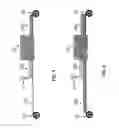
FIG. 1 is a schematic of an exemplary step of the disclosed method.
FIG. 2 is a schematic of an exemplary step of the disclosed method.
FIG. 3 is a schematic of an exemplary step of the disclosed method.
FIG. 4 is a schematic of an exemplary step of the disclosed method.
FIG. 5 is an exemplary construction of an air-permeable backer.
FIG. 6 is a scanning electron microscope image of an exemplary construction of a protective ionomer layer adjacent to an electrode.
SUMMARY
The present disclosure includes a method of making a component for a membrane electrode assembly comprising the steps of (a) providing an air-permeable backer, (b) depositing an electrode onto the backer, and (c) depositing a mixture containing an ionomer on the electrode and drying the mixture to form a protective and continuous ionomer layer. Preferably, the air-permeable backer comprises an expanded polymer having release characteristics which enable the MEA to be peeled off of the backer, such as expanded polytetrafluoroethylene (hereinafter “ePTFE”). Also preferably, the expanded polymer has a mass per area of less than about 16 g/m2, a bubble point of greater than about 70 psi, and a Z-strength sufficient to prevent cohesive failure of the expanded polymer when the electrode is peeled off of the air-permeable backer. A further embodiment includes the step of coupling a fabric to the expanded polymer, where the fabric is preferably polyester, less than about 0.006 inches thick, has a mass/area of less than about 65 g/yd2, and is dimensionally stable within +/−4% throughout the manufacturing process, such that the web can be handled on a roll to roll process without defects caused by web stretching or web shrinking. A further embodiment includes the step of bonding the fabric to the backer with a discontinuous adhesive pattern. Preferably, the fabric is dot-laminated to the backer with a urethane adhesive. A further embodiment includes an adhesive that has low swelling in the presence of water and alcohol, as described in Henn, U.S. Pat. No. 4,532,316. In a further embodiment, the air-permeable backer is a gas diffusion layer.
Also preferably, the protective ionomer layer is the dried form of a wet layer that comprises a water-insoluble alcohol. The ionomer is preferably a perfluorosulfonic acid (hereinafter “PFSA”), and the wet layer is preferably aqueous and comprises greater than about 60 wt % water, more preferably greater than about 90% water. The wet layer comprises less than about 10 wt % of the water-insoluble alcohol, and preferably less than 3 wt % of the water-insoluble alcohol. The water-insoluble alcohol is preferably hexanol. In an alternative embodiment, the wet layer further comprises a water-soluble alcohol or glycol ether, which preferably comprises less than about 10 wt % of the mixture. The water-soluble alcohol is preferably isopropanol, preferably present in an amount of less than about 5 wt %. The glycol ether is preferably dipropylene glycol (hereinafter “DPG”) or propylene glycol methyl ether (hereinafter “PGME”), preferably present in an amount of less than about 5 wt %. The protective ionomer layer is formed after the water, hexanol, and other optional additives are allowed to evaporate as in an oven at elevated temperature (up to ˜200° C.).
In a further embodiment, the disclosed method includes a further step (d) depositing a proton conducting layer onto the protective ionomer layer. Preferably, the proton conducting layer comprises an ionomer and a reinforcement. Preferably, the reinforcement comprises an ePTFE membrane. In further embodiments, the method may comprise the step of depositing a second ionomer layer onto the proton conducting layer. In further embodiments, the method may comprise the step of depositing another electrode onto said proton conducting layer or said second ionomer layer.
In all embodiments, the protective ionomer layer preferably has a thickness of about 0.1 to about 25 microns, more preferably about 0.1 to about 10 microns, and still more preferably about 0.1 to about 3 microns.
DETAILED DESCRIPTION
The disclosed method includes the steps described below and illustrated in the Figures. Although described as sequential steps for purposes of explanation, this disclosure contemplates that in practice the steps may be performed in any order or simultaneously. In all of the Figures, reference numeral 10 represents a roll feed or roll wind.
Step 1
As illustrated in FIG. 1, first electrode mixture 102 is coated and dried to form dried electrode 103 on a substrate 101 with sufficient mechanical properties for continuous web handling. The substrate 101 must be sufficiently air permeable to eliminate air-displacement defects in Step 2, described below. The substrate 101 in one embodiment is a backer or a release layer; in alternative embodiments the substrate may be a gas diffusion layer.
Electrodes for PEM fuel cells are typically coated on release layers. These layers need to have sufficient release, heat tolerance, mechanical properties for continuous web handling, surface uniformity, and must not interact chemically in a way that degrades electrode performance. Incumbent materials include Kapton® (DuPont), skived polytetrafluoroethylene (PTFE), and fluoropolymer-coated polyester films. Expanded PTFEs (ePTFEs) have been used but they usually lack robust web handling properties (they are conventionally prone to stretching, shrinkage, etc.) even with high mass/area (>50 g/m2). Additionally, all of these release layers are expensive due to raw material or manufacturing costs. Similarly, substrate 101 needs to have sufficient release, heat tolerance, mechanical properties for continuous web handling, surface uniformity, must not interact chemically in a way that degrades electrode performance, and be provided at low cost. We have identified ePTFE laminates that can be used for substrate 101 that provide the necessary properties at low cost.
Specifically, polymer webs with low mass, high Z-strength, and relatively tight pore sizes are disclosed herein to provide the required release properties for electrodes. These polymers are preferably expanded polymers such as ePTFE. The release characteristics are defined herein as the ability to be peeled away from the electrode without leaving significant visible traces of electrode on the substrate 101 nor allowing cohesive failure of the polymer web. Also preferably, the air-permeable substrate 101 comprises ePTFE having a mass per area of less than about 16 g/m2 (measurements executed in accordance to U.S. Pat. No. 7,306,729 B2), a bubble point of greater than about 70 psi (measurements executed in accordance to U.S. Pat. No. 7,306,729 B2, with device manufactured by Porous Materials, Inc. in Ithaca, N.Y.; hereinafter “PMI”), and a Z-strength sufficient to prevent cohesive failure when the electrode is peeled off the air-permeable backer (subject to the same visual test mentioned above).
In one embodiment, the substrate 101 comprises of at least two layers, layer 101a and layer 101b. As depicted in FIG. 5 an air-permeable layer 101a (such as ePTFE with mass per area of less than 16 g/m2) maybe laminated to a low-cost support 101b (a woven polyester such as 9000000322 US 101 (751125) PFP supplied by Milliken & Co. in Spartanburg, S.C.) that is also air permeable by means of a thermoplastic or other adhesive 101c element. The 101c element is compatible with the electrode mixture 102. If an adhesive is used, element 101c must be applied in a discontinuous (non-monolithic) discrete pattern to permit air permeability. Preferably, the low-cost support 101b has a thickness of less than about 0.006 inches and has a mass/area of less than about 65 g/yd2. Preferably, the substrate 101 construction is dimensionally stable within +/−4% throughout the manufacturing process. Preferably, the low cost fabric support is made of polyester laminated to, for example, an ePTFE substrate using a solvent-stable urethane adhesive, as described in Henn, U.S. Pat. No. 4,532,316, applied in a gravure dot pattern. These woven polyester supports provide superior web handling properties while maintaining the required chemical and thermal performance.
Step 2
FIG. 2 shows Step 2 of a continuous process for manufacturing a MEA. After a substantially dried electrode 103 has been formed on substrate 101 in Step 1, slot die 11 deposits an aqueous wet layer 104, comprising an aqueous ionomer mixture, onto the dried or substantially dried electrode 103. Preferably slot die 11 deposits an aqueous mixture comprising a perfluorosulfonic acid (PFSA) ionomer such as Nafion® (DuPont) and a water-insoluble alcohol, to form the aqueous wet layer 104. Coating methods other than slot die may also be used. This aqueous wet layer 104 is processed through the drying segment 12, resulting in a substantially dry protective ionomer layer 105.
Traditionally after the first electrode layer has been formed, a proton-conducting ionomer membrane layer is added on top of it, typically by hot lamination of the two dry layers. ePTFE reinforced ionomer layers are preferred, as they have mechanical properties which increase the durability of the MEA. However, if the mixtures of ionomer, water, and a water-soluble alcohol such as ethanol that are typically used to make ePTFE-reinforced proton-conducting films are coated directly on top of an electrode layer, they will penetrate, dissolve, and/or otherwise disrupt the dried electrode 103, greatly reducing the electrochemical efficiency of the electrode. Therefore, according to the present disclosure, the formation of a thin, protective ionomer layer 105 on the electrode prevents disruption of the electrode as described above. This protective ionomer layer 105 has a thickness of about 0.1 to about 25 microns, preferably about 0.1 to about 10 microns, and most preferably about 0.5 to about 3 microns.
It is difficult to coat films composed of water and perfluorosulfonic acid (PFSA) ionomer on top of porous and/or hydrophobic surfaces or substrates, such as PEM electrodes. The coating mixture needs to have sufficiently low surface tension to wet the surface of the hydrophobic substrate. Low surface tension can be achieved with high concentrations (>˜30 wt %) of water-soluble alcohols, such as ethyl alcohol, methyl alcohol, and isopropyl alcohol (hereinafter “IPA”). These coating solutions tend to reticulate during drying, resulting in non-uniformities such as thickness variations, holes, and wavy-edge defects. Furthermore, high concentrations of water-soluble alcohols can dissolve or disrupt the electrode substrate. On porous substrates, there is the additional problem that coating solutions with low surface tension will penetrate the pores in the electrode substrate. In order to minimize this penetration, the alcohol content can be reduced, but this causes poor wetting at the interface of the coating and the substrate which leads to de-wetting film defects.
We discovered that a water-insoluble alcohol such as hexanol formed stable non-separating aqueous mixtures with PFSA ionomer that behave like oil-in-water emulsions. These mixtures permit wetting and monolithic film formation on top of porous and/or hydrophobic electrode substrates. These mixtures reduce the contact angle of the ionomer solution on fuel cell electrode layers. Specifically, 1-hexanol at 1-2 wt % lowered the surface tension of a solution of 5 wt % PFSA ionomer in water from 55 dynes/cm to 28 dynes/cm. Surprisingly, the PFSA ionomer, which is not considered a surfactant, acts like it emulsifies water-insoluble alcohols. During evaporation of this mixture, the film remains intact and does not reticulate or form de-wetting defects. Furthermore, there is no significant disruption of dried electrode 103 by the aqueous wet layer 104 or the protective ionomer layer 105, as depicted in the SEM cross-section image of FIG. 6. Furthermore the protective ionomer layer 105 has no negative influence on the electrochemical performance of the dried electrode 103.
Preferably, the aqueous wet layer 104 is aqueous and comprises greater than about 60 wt % water, more preferably greater than about 90% water. The aqueous wet layer 104 comprises less than about 10 wt % of the water-insoluble alcohol, preferably less than about 5 wt % of the water-insoluble alcohol. In an alternative embodiment, the aqueous wet layer 104 further comprises a water-soluble alcohol, which preferably comprises less than about 10 wt % of the water-soluble alcohol. The water-soluble alcohol is preferably isopropanol, preferably present in an amount of less than about 5 wt %. The aqueous wet layer 104 further comprises less than about 10 wt % of a glycol ether. The glycol ether is preferably dipropylene glycol or propylene glycol methyl ether, preferably present in an amount of less than about 5 wt %.
These stable aqueous mixtures of hexanol and PFSA ionomer have been demonstrated with slot die and drawdown bar coating methods in batch coating and in continuous roll-to-roll processes. After coating the aqueous wet layer 104, heat is applied to remove water and other volatile components, resulting in a substantially dry protective ionomer layer 105, a monolithic solid film.
If the substrate 101 is not sufficiently air permeable, bubble defects will disrupt the coating. These defects can allow the ionomer/alcohol/water solution applied in Step 3 (ionomer mixture 106) to penetrate and/or dissolve the dried electrode 103 which was coated in Step 1, thus reducing electrochemical performance and/or durability.
An aqueous mixture of about 90 wt % water, 5 wt % ionomer, 3 wt % hexanol, and 2 wt % IPA was coated with a slot die and substantially dried at an oven temperature of 140° C. for 3 minutes to form a protective monolithic film of ionomer on the surface of a cathode electrode layer without substantial penetration of the protective ionomer layer into the electrode layer. The protective ionomer layer had a thickness of about 2 microns. A beginning-of-life polarization measurement indicated that the coated ionomer layer formed an ionically-conductive interface and that the electrode structure was uncompromised by the ionomer coating. Two other water-insoluble alcohols (pentanol, 2-ethyl hexanol) were used in alternative embodiments to form top coats of ionomer on electrode surfaces. Optionally, water-soluble compounds (such as IPA, DPG, PGME) are also added and are found to be compatible with the mixture. These water-soluble compounds improved film formation and/or film stability during coating and drying.
Step 3 (Optional)
A composite wet layer 108, preferably an ePTFE-reinforced ionomer layer, is formed on top of the protective ionomer layer 105. In the composite wet layer 108, the ionomer mixture 106 preferably substantially impregnates the microporous ePTFE 107 to render an interior volume of the ePTFE substantially occlusive, as described in Bahar et al, U.S. Pat. No. RE 37,307, thereby forming the composite wet layer 108. Subsequent heat treatment of composite wet layer 108 through the drying segment 12, results in formation of dried composite layer 109. Alternatively, an unreinforced ionomer may be used in place of a composite wet layer.
Step 3A (Optional)
Optionally an ionomer mixture coating can be applied to the dried composite layer 109, resulting in formation of a second wet layer and if optionally dried it will result in the formation of a second ionomer layer.
Step 4 (Optional)
Optionally a second wet electrode layer 110 is coated on 109 (or a second ionomer layer if step 3A takes place) and will result in a second electrode layer 111 after heat treatment, thus completing the membrane-electrode assembly.
Claims
What is claimed is:1. A method of making a component for a membrane electrode assembly comprising the steps of:
(a) providing an air-permeable backer;
(b) depositing an electrode onto said backer;
(c) depositing an aqueous wet layer comprising a fluoroionomer mixture onto said electrode; and
(d) substantially drying said wet layer to form a protective ionomer layer.
2. A method as defined in claim 1 wherein an air-permeable backer comprises an expanded polymer having release characteristics.
3. A method as defined in claim 2 wherein the expanded polymer is ePTFE.
4. A method as defined in claim 3 wherein said expanded polymer has a mass per area of less than about 16 g/m2 of ePTFE.
5. A method as defined in claim 3 wherein said expanded polymer has a bubble point of greater than about 70 psi PMI.
6. A method as defined in claim 3 wherein said air-permeable backer has a Z-strength sufficient to prevent cohesive failure of said ePTFE when said electrode is peeled off of said air-permeable backer.
7. A method as defined in claim 1 wherein an air-permeable backer is a gas diffusion layer.
8. A method as defined in claim 1 further comprising coupling a fabric to said backer.
9. A method as defined in claim 8 wherein said air-permeable backer is dimensionally stable within +/−4% throughout the manufacturing process.
10. A method as defined in claim 8 wherein said fabric comprises polyester.
11. A method as defined in claim 8 wherein said fabric has a thickness of less than about 0.006 inches.
12. A method as defined in claim 8 wherein said fabric has a mass/area of less than about 64 g/yd2.
13. A method as defined in claim 8 further comprising the step of bonding said fabric to said backer with an adhesive in a discontinuous pattern.
14. A method as defined in claim 13 wherein said fabric is dot-laminated to said backer with a urethane adhesive.
15. A method as defined in claim 13 wherein said adhesive is a solvent-stable adhesive.
16. A method as defined in claim 1 wherein said wet layer comprises a water-insoluble alcohol and ionomer.
17. A method as defined in claim 16 wherein said ionomer is perfluorosulfonic acid (PFSA) ionomer.
18. A method as defined in claim 16 wherein said wet layer is aqueous and comprises greater than about 60 wt % water.
19. A method as defined in claim 16 wherein said wet layer is aqueous and comprises greater than about 90 wt % water.
20. A method as defined in claim 16 wherein said wet layer is aqueous and comprises less than about 3 wt % of said insoluble alcohol.
21. A method as defined in claim 16 wherein said wet layer is aqueous and comprises less than about 5 wt % of said insoluble alcohol.
22. A method as defined in claim 16 wherein said water-insoluble alcohol comprises hexanol.
23. A method as defined in claim 16 wherein said wet layer further comprises a water-soluble alcohol.
24. A method as defined in claim 23 wherein said wet layer comprises less than about 10 wt % of said water-soluble alcohol.
25. A method as defined in claim 23 wherein said water-soluble alcohol comprises glycol ether present in an amount of less than about 5 wt %.
26. A method as defined in claim 1 further comprising a step (e) depositing a proton conducting layer onto said protective ionomer layer.
27. A method as defined in claim 26 wherein said proton conducting layer comprises an ionomer.
28. A method as defined in claim 26 wherein said proton conducting layer comprises a reinforcement.
29. A method as defined in claim 28 wherein said reinforcement comprises an ePTFE membrane.
30. A method as defined in claim 26 further comprising the step of depositing an ionomer layer onto said proton conducting layer.
31. A method as defined in claim 26 further comprising the step of depositing another electrode onto said proton conducting layer.
32. A method as defined in claim 30 further comprising the step of depositing another electrode onto said ionomer layer.
33. A method as defined in claim 1 wherein said protective ionomer layer has a thickness of about 0.1 to about 25 microns.
34. A method as defined in claim 1 wherein said protective ionomer layer has a thickness of about 0.1 to about 10 microns.
35. A method as defined in claim 1 wherein said protective ionomer layer has a thickness of about 0.1 to about 3 microns.
Images & Drawings included:



Sources:
- United States Patent and Trademark Office - verify current appl. status at the USPTO↗
Similar patent applications:
- » 20220149408
MEMBRANE ELECTRODE ASSEMBLY MANUFACTURING PROCESS - » 20220149407
Membrane electrode assembly manufacturing process - » 20190288318
Membrane electrode assembly manufacturing process - » 20050100778
Membrane electrode assembly, manufacturing process therefor and direct type fuel cell therewith - » 20240204226
MEMBRANE ELECTRODE ASSEMBLY MANUFACTURING PROCESS - » 20050003255
Membrane electrode assembly, manufacturing process therefor and solid-polymer fuel cell - » 20250201883
MEMBRANE-ELECTRODE ASSEMBLY PROCESSING APPARATUS, MEMBRANE-ELECTRODE ASSEMBLY MANUFACTURING APPARATUS, AND MEMBRANE-ELECTRODE ASSEMBLY - » 10773317
Manufacturing process for membrane-electrode assemblies - » 20070275291
NOVEL MEMBRANE ELECTRODE ASSEMBLY AND ITS MANUFACTURING PROCESS - » 20230223566
PROCESS OF MANUFACTURING A MEMBRANE ELECTRODE ASSEMBLY
Recent applications in this class:
- » 20250286095 2025-09-11
MEMBRANE-ELECTRODE ASSEMBLY AND METHOD FOR MANUFACTURING SAME - » 20250279453 2025-09-04
COMPOSITE ELECTROLYTE MEMBRANE AND METHOD OF MANUFACTURING THE SAME - » 20250273720 2025-08-28
APPARATUS AND METHOD FOR MANUFACTURING MEMBRANE-ELECTRODE ASSEMBLY - » 20250273719 2025-08-28
ION-EXCHANGE MEMBRANE, MEMBRANE ELECTRODE ASSEMBLY, CELL FOR REDOX FLOW BATTERY, AND REDOX FLOW BATTERY - » 20250266481 2025-08-21
METHOD FOR ACTIVATING POLYMER ELECTROLYTE FUEL CELL - » 20250260038 2025-08-14
RECYCLING OF CATALYST COATED MEMBRANE COMPONENTS - » 20250246659 2025-07-31
MANUFACTURING METHOD FOR ELONGATED ELECTRODE LAMINATE AND MANUFACTURING DEVICE FOR ELONGATED ELECTRODE LAMINATE - » 20250239637 2025-07-24
UNIFIED ASSEMBLY FOR ELECTROCHEMICAL DEVICE - » 20250233182 2025-07-17
DURABLE MEMBRANE-ELECTRODE ASSEMBLY WITH HIGH IONIC CONDUCTIVITY AND METHOD OF MANUFACTURING SAME - » 20250233181 2025-07-17
METHOD AND DEVICE FOR PRODUCING MEMBRANE ASSEMBLIES
Recent applications for this Assignee:
- » 20250161844 2025-05-22
GAS SEPARATION DEVICE - » 20250121334 2025-04-17
POLYETHYLENE MEMBRANE ACOUSTIC ASSEMBLY - » 20250015329 2025-01-09
HIGHLY REINFORCED IONOMER MEMBRANES FOR HIGH SELECTIVITY AND HIGH STRENGTH - » 20240335615 2024-10-10
Automated System for Assembling A Pre-Filled Syringe - » 20240258613 2024-08-01
HIGH TEMPERATURE INSULATION COMPOSITE - » 20240252756 2024-08-01
Medical Delivery Devices Having Low Lubricant Syringe Barrels - » 20240208178 2024-06-27
MULTILA YERED SUPPORTED ELASTOMERIC FOAMS AND PROCESSES FOR MAKING SAME - » 20240189122 2024-06-13
STENT GRAFT DEVICE WITH ANCHORING MEMBERS HAVING ADJUSTABLE GEOMETRIES - » 20240173154 2024-05-30
STENT HAVING ADJACENT ELEMENTS CONNECTED BY FLEXIBLE WEBS - » 20240123205 2024-04-18
GEOMETRICALLY DEFORMABLE IMPLANTABLE CONTAINMENT DEVICES FOR RETENTION OF BIOLOGICAL MOIETIES