KEEMBOO
US20160236038A1
2016-08-18
14/660,600
2015-03-17
Abstract:
An aerial projectile resting on a flat hard floor is hit two consecutive times with a stick, the first hit made in a vertical swing to one of the projectile's ends propels it upward and in mid air and perpendicularly to the floor, spinning on its larger axis; the second hit made in a waist-high horizontal baseball-like swing, making the projectile travel through the air in a trajectory horizontal to the floor and landing on the floor far from its original rest position.
Interested in similar patents?
Get notified when new applications in this technology area are published.
Classification:
A63B37/00 » CPC main
Balls
A63B37/00 » CPC main
Solid balls; Marbles Rigid hollow balls;
Description
CROSS-REFERENCES TO RELATED APPLICATIONS
U.S. Pat. No. 2,485,788-A
STATEMENT REGARDING FEDERALLY SPONSORED RESEARCH OR REDEVELOPMENT
Not Applicable
THE NAMES OF THE PARTIES TO A JOINT RESEARCH AGREEMENT
Not applicable
INCORPORATION-BY-REFERENCE OF MATERIAL SUBMITTED ON A COMPACT DISC OR A TEXT VIA THE OFFICE ELECTRONIC FILING SYSTEM (EFS-WEB)
Done
BACKGROUND OF THE INVENTION
1. Technical Field
The field of art to which the invention pertains to is Art Unit 3711, Class 473, Games Using Tangible Projectile (i.e., U.S. Pat. No. 2,485,788 A).
2. Background Art
The proposed invention modifies an aerial projectile such as the one referenced to in publication Burton Silver, New Zealand Golf Cross, 1988.
BRIEF SUMMARY OF THE INVENTION
The invention ads two tapered pointed-ends, one to each end of referenced aerial projectile Burton Silver which help generate the angular momentum required to propel the modified aerial projectile in the air when hit twice with a stick doubling the hand/eye coordination of users when compared to others toys.
BRIEF DESCRIPTION OF THE SEVERAL VIEWS OF THE DRAWING
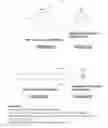
A side view of Item-1 is shown in FIG. 1A is an aerial projectile tapering longitudinally from its center to each opposite end, with round sectional view 3-3 shown in FIG. 1B throughout its length H, and its largest width W across its center.
A side view of Item-2 is shown in FIG. 2A is a hitting round rod with length L; with round cross-sectional view 4-4 shown in FIG. 2B, with diameter W throughout its length.
DETAILED BRIEF DESCRIPTION OF THE INVENTION
Item-1 is a side view of an aerial projectile constructed out of hard wood solid round rod material or hard plastic solid round rod material about three inches long, and its widest diameter W measures about one and one quarter inches; it's made by cutting a piece the round-rod with a saw thru its widest diameter W to a length H, and both of its curved ends are formed/tapered from its center toward each end with a lathe machine.
Item-2 is a side view of a hitting-stick/round rod constructed out of hard wood solid round rod material or hard plastic solid round rod material. Its length L measures about twenty inches, with uniform round cross-sectional shape along its entire length; it's made by cutting a piece of round-rod with a saw to length L.
The invention has been successfully tried with Item-1 and Item-2 being made out of hard wood solid round-rod material.
The proposed invention works as follows. On a flat hard surface (i.e., floor), a person places Item-1 with its length oriented parallel to the persons chest. The same person grabs Item-2 by one of its ends, positions him/herself with feet spread apart as in a baseball batting position, facing Item-1. The person bends his/her torso toward Item-1 with bent knees and close enough to Item-1 to strike it with Item-2 free end. The strike is made thru a vertical swing aimed at one of Item-2 pointed ends. The strike exerts a force at right angle to the stricken end of Item-1, propelling it in the air in an upward/spinning motion on its larger axis. The longer time item-1 is in the air, the better chance the person has for preparing to hit/strike Item-1 a second time while in the air; which is performed in a baseball-like swing, with the intention of hitting Item-1 with item-2 as far as possible from the projectile's original rest position.
Claims
1. An aerial projectile comprising:
a solid round rod of tapered pointed ends;
wherein said projectile travels in the air far from its original position when stricken twice by a stick.
Images & Drawings included:
Sources:
- United States Patent and Trademark Office - verify current appl. status at the USPTO↗
Similar patent applications:
- » 20170080290
KEEMBOO
Recent applications in this class:
- » 20240139586 2024-05-02
LAWN BOWL - » 20170080290 2017-03-23
KEEMBOO - » 20150328500 2015-11-19
Polyurethane/urea elastomer material for game ball applications - » 20120244962 2012-09-27
Ball markings for rotation training - » 20110190075 2011-08-04
Polyurea covers for golf balls based on isocyanate blends - » 20100229879 2010-09-16
METHOD OF TREATMENT OF INSULIN RESISTANCE SYNDROME (IRS) - » 20100048089 2010-02-25
Collectible marble set - » 20080064535 2008-03-13
Weighted Training Ball - » 20080045364 2008-02-21
Ball suitable for water games - » 20080039247 2008-02-14
Footbag And A System Relating Thereto