Hang-it-all curtain system
US20160242586A1
2016-08-25
14/628,237
2015-02-21
✅ Patent granted
US 9,609,974 B2
2017-04-04
-
-
Brian Mattei | Taylor Morris
2035-02-21
Abstract:
An improved, simpler, and more cost effective method for hanging multiple layers of curtaining with reduced damage to the casement of a window or of the walls around a window. An e-shaped hook (1) wraps around an existing bracket (3) utilized to hang a primary curtain rod. The hook (1) then extends down from the bracket (3) ending in a lateral prong at a right angle to the bracket (3) and perpendicular to the original curtain rod, pointing toward the center of the window. This prong is then inserted into the aperture of a telescoping rod with an internal spring adjustment referred to as a spring tension rod (2). The spring tension rod (2), due to its internal spring, allows for the rod to be inserted onto the hook (1) and be released from the hook (1) without the removal of the hook (1) from the bracket (3).
Assignee:
- Shelley Megan Mateer 1 🇺🇸 Columbus, OH, United States
Applicant:
Interested in similar patents?
Get notified when new applications in this technology area are published.
Classification:
F16B2/248 » CPC further
Friction-grip releasable fastenings; Clips, i.e. with gripping action effected solely by the inherent resistance to deformation of the material of the fastening of resilient material, e.g. rubbery material of metal of wire
A47H2001/021 » CPC further
Curtain suspension devices; Curtain rods Multiple rods in parallel arrangement
F16B2/24 IPC
Friction-grip releasable fastenings; Clips, i.e. with gripping action effected solely by the inherent resistance to deformation of the material of the fastening of resilient material, e.g. rubbery material of metal
A47H1/022 » CPC further
Curtain suspension devices; Curtain rods extensible
A47H1/16 » CPC further
Curtain suspension devices; Means for mounting curtain rods or rails Holders made of wire for curtain rods, rails or rollers
A47B96/06 IPC
Details of cabinets, racks or shelf units not covered by a single one of groups - ; General details of furniture Brackets or similar supporting means for cabinets, racks or shelves
A47H2001/003 » CPC further
Curtain suspension devices Constructional details common to rods or rails
A47H1/00 » CPC further
Curtain suspension devices
A47H1/00 » CPC further
Curtains; Draperies
A47H1/10 IPC
Curtain suspension devices Means for mounting curtain rods or rails
A47G29/00 IPC
Supports, holders, or containers for household use, not provided for in groups - or
A47K1/00 IPC
Wash-stands; Appurtenances therefor
E04G3/00 IPC
Scaffolds essentially supported by building constructions, e.g. adjustable in height
E04G5/06 IPC
Component parts or accessories for scaffolds Consoles; Brackets
F21V21/00 IPC
Supporting, suspending, or attaching arrangements for lighting devices ; Hand grips
F21V35/00 IPC
Candle holders
A47H1/14 » CPC further
Curtain suspension devices; Means for mounting curtain rods or rails Brackets for supporting rods or rails
A47H1/12 » CPC further
Curtain suspension devices; Means for mounting curtain rods or rails Adjustable mountings
A47H1/142 » CPC further
Curtain suspension devices; Means for mounting curtain rods or rails; Brackets for supporting rods or rails for supporting rods
A47H1/102 » CPC main
Curtain suspension devices; Means for mounting curtain rods or rails for mounting curtain rods
A47H1/02 IPC
Curtain suspension devices Curtain rods
Description
BACKGROUND
Prior Art
The following is a tabulation of some prior art that presently appears relevant:
| U.S. Patents |
| Patent Number | Kind Code | Issue Date | Patentee | |
| 7648111 | B2 | Jan. 19, 2010 | Goldstein | |
| 6719156 | B2 | Apr. 13, 2004 | Ellbogen | |
BACKGROUND OF THE INVENTION
This invention is a method and objects to add supplemental curtain rods to an existing main curtain rod and bracket. With this invention multiple layers of curtaining can decorate a window allowing these layers to be easily removed and replaced causing no further damage to the window casing or walls beyond that of the original main curtain bracketing.
In decorating a window, it is standard in the art to have brackets attached to the casing or walls, usually by the use of screws, which support a rod for hanging drapery. For larger windows additional support brackets are used. To enable the hanging of additional layers of window dressing such as a valance, jabots, and/or sheers, more rods with smaller brackets nested between the main brackets are typically used. These can be cumbersome to install and awkward to manipulate for cleaning or replacing the curtains.
Prior art exists that attempts to address this issue. U.S. Pat. No. 6,719,156 B2, 2004, Ellbogen illustrates a clip and tongue device with the clip grasping a round primary bracket and an attached tongue located below a vertical centerline of said clip perpendicular to the round bracket which is then inserted into a supplemental rod with apertures at either end to receive the tongue. The rod is retained by frictional engagement with the tongue and the inner surface of the rod.
U.S. Pat. No. 7,648,111B2, 2010, by Goldstein illustrates prior art of an apparatus and method for hanging supplemental sets of curtains through the use of end fasteners attached to a main support bracket of an existing curtain rod. These fasteners enable the rod to be easily removable and adapt to either hollow or solid supplemental curtain rods. These fasteners function like c-clamps requiring a set screw to affix the fastener to a main support bracket.
Therefore, while there exists prior art allowing for multiple sets of curtain rods to be hung from an existing curtain rod bracket system causing no more damage to casement or walls, they do not create an ease of use without the dismantling of the methods described. Additionally, Ellbogen is limited to the use of a round mounting bracket while the clip and tongue configuration brings into question the ability of the tongue to adequately maintain the weight of the curtaining desired without eventually breaking off. Added to that, Goldstein's c-clamp fasteners and caps may be more stable, yet they add an undue complexity to the utilization of the method in adding supplemental curtaining.
SUMMARY OF THE INVENTION
The object of this invention is to create a supplemental rod system that address the issues presented by the prior art.
It is also the object of this invention to provide a system that allows for easily installing the supplemental rods on various bracket styles.
It is further the object of this invention to provide a system that allows for easily removing and replacing curtaining without dismantling the whole system
In addition, the object of this system is to provide a secure method of hanging supplemental curtain rods.
It is yet another object of this invention to provide a system for large windows that require additional support with the ability of the same said hooks to be used in the same fashion on the additional supports pointing in opposite directions.
To this end, this invention provides e-shaped hooks made of a continuous wire with the ability to maintain its shape under standard curtaining weights, that slides onto an existing bracket. The configuration of the e-shaped hooks begins with the upper portion looping back on itself 180 degrees allowing it to be wrapped around the bracket, continuing with a downward arm running perpendicular to the upper portion which then returns at a right angle running parallel with the upper portion creating a prong. Onto the prongs of the hooks positioned on the brackets at either side of the window slide the apertures of a spring tension rod. The spring tension of the rod holds the rod onto the said prongs. The slight compression of the spring tension rod allows the rod to be released from the said prongs of the hooks allowing for easily removing and replacing the rod without the removal of the hooks from the primary bracket. By the utilization of the primary bracket for the hanging of the supplemental rods, no further damage is caused to the casement or walls. This system is a lower cost means of hanging multiple layers of curtaining and sold separate from the primary curtain rod.
DESCRIPTION OF THE DRAWINGS
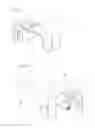
FIG. 1a is the side elevation of the e-shaped hook.
FIG. 1b is an oblique view of the e-shaped hook.
FIG. 2a is an inside perspective of the preferred embodiment in the primary stage.
FIG. 2b is the outside perspective of the preferred embodiment of the final stage.
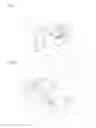
FIG. 3a is a right view variation of the preferred embodiment when a secondary support is needed.
FIG. 3b is a left view variation of the preferred embodiment when a secondary support is needed.
DRAWINGS
Reference Numerals
-
- 1 E-shaped hook
- 2 Spring Tension Rod
- 3 End Bracket of Primary Rod
- 4 Center Bracket of Primary Rod
DETAILED DESCRIPTION OF THE PREFERRED EMBODIMENT
In reference to FIG. 1a and FIG. 1b, the e-shaped hook 1 is shown with the upper portion looping back on itself 180 degrees allowing it to be wrapped around the bracket continuing with a downward arm running perpendicular to the upper portion which then turns at a right angle running parallel with the upper portion creating a prong.
FIG. 2a shows the bracket 3 is shown with the e-shaped hook 1 wrapping around said bracket 3.
FIG. 2b shows an outside perspective of the primary curtain bracket 3 with the e-shaped hook 1 slid onto it and the prong inserted into the spring tension rod 2.
FIG. 3a and FIG. 3b shows an oblique perspectives of a supplemental main curtain bracket 4 with two e-shaped hooks 1 inserted into two spring tension rods 2 from opposite directions.
Operation—FIG. 2a, 2b, 3
This system works in tandem with a previously hung rod that uses brackets to secure said rod to a window casement or wall. The e-shaped hook of the Hang-It-All Curtain System slides onto the brackets on either side of the window with the lower prong pointing in the direction of the center of the window as per FIG. 2a. The spring tension rod is adjusted as per the instructions on the use of said rod to the distance between the back side of the e-shaped hook. The spring tension rod is compressed to allow the apertures of the rod to receive the prongs within it. The spring tension rod is released allowing the spring tension of the rod to maintain itself onto the hooks as per FIG. 2b.
For larger windows that require additional brackets, two e-shaped hooks are slid onto the brackets with the prongs pointing in opposite directions as per FIG. 3a and FIG. 3b.
CONCLUSION, RAMIFICATIONS, AND SCOPE
Accordingly, the reader will see that the Hang-It-All Curtain System is a simpler and more cost effective way to hang multiple layers of curtaining. The use of the e-shaped hook allows for easy installation without the need for screws or clamps. The shape of the hook by a continuous wire creates a more secure way to hang the supplemental rod reducing the risk of breakage through t. When used with the spring tension rod, the spring tension holds the rod in place on the hook further reducing the risk of the curtains falling. This system also greatly increases the ease of removing and rehanging curtains. This is achieved by the compression of the spring tension rod allowing for this ease of use without having to take the hooks off the bracket.
Claims
1. (canceled)
2. (canceled)
3. (canceled)
4. (canceled)
5. (canceled)
6. (canceled)
7. (canceled)
8. (canceled)
9. (canceled)
10. A system for hanging curtains comprising:
a. two e-shaped hooks;
b. a telescoping rod device such as a spring tension rod supported by said e-shaped hooks; and
c. two brackets of a separate and independent curtain rod assembly from which the said shaped hooks encircle and hang upon;
whereby subsequent layers of curtaining to that of a main curtain assembly may be hung without the use of nails, screws or other securing means.
11. The system for hanging curtains according to claim 1, wherein said e-shaped hook is formed with an upper section that loops back on itself 180 degrees continuing with a downward arm running perpendicular to the upper section which then returns at a right angle running parallel with the upper section creating a prong.
12. The system for hanging curtains according to claim 2, wherein said upper section of e-shaped hook is bent to the dimensions of the said bracket.
13. The system for hanging curtains according to claim 2, wherein said e-shaped hook is made of a material that is able to maintain its shape and support the weight of standard curtaining material.
14. The system for hanging curtains according to claim 1, wherein said telescoping rod device is configured with one rod inserted into a second rod of a slightly larger dimension.
15. The system for hanging curtains according to claim 5, wherein an internal spring allows for measured adjustment of said telescoping rod.
16. The system for hanging curtains according to claim 5, wherein the ends of said telescoping rod are hollow.
17. The system for hanging curtains according to claim 5, wherein the prongs of said e-shaped hooks are inserted into the hollow ends of the said telescoping rod.
Images & Drawings included:


Sources:
- United States Patent and Trademark Office - verify current appl. status at the USPTO↗
Recent applications in this class:
- » 20250160554 2025-05-22
Wall Hanger - » 20220386800 2022-12-08
TOOL-LESS FAST FIT BRACKET - » 20220053959 2022-02-24
ILLUMINATED ROD HOLDER SYSTEM - » 20210196072 2021-07-01
Shower/tub wall including a bracketless curtain rod - » 20210177185 2021-06-17
VERTICAL PIPE CLAMP COUPLER - » 20200383509 2020-12-10
Flat-mounted connector for pipes - » 20190282017 2019-09-19
TOOL-LESS FAST FIT BRACKET - » 20190082875 2019-03-21
Telescoping curtain rod finial assemblies - » 20180255952 2018-09-13
Curtain rod bracket - » 20180064279 2018-03-08
Rod bracket