MULTILAYER POLYMER COMPOSITE FOR ENCAPSULATING QUANTUM DOTS
US20160272885A1
2016-09-22
15/062,608
2016-03-07
Abstract:
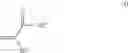
A polymer composite comprising quantum dots and polymerized units of at least one compound of formula (I)
wherein R1 is hydrogen or methyl and R2 is a C6-C20 aliphatic polycyclic substituent.
Inventors:
- Jaebum Joo 3 🇺🇸 Somerville, ME, United States
- Zhifeng BAI 11 🇺🇸 Midland, MI, United States
- James C. Taylor 7 🇺🇸 Grafton, MA, United States
- In-Kyung Sung 2 🇰🇷 Cheongju-si, South Korea
Interested in similar patents?
Get notified when new applications in this technology area are published.
Classification:
C09K11/562 » CPC main
Luminescent, e.g. electroluminescent, chemiluminescent materials containing inorganic luminescent materials containing sulfur Chalcogenides
C09K11/883 » CPC further
Luminescent, e.g. electroluminescent, chemiluminescent materials containing inorganic luminescent materials containing selenium, tellurium or unspecified chalcogen elements; Chalcogenides with zinc or cadmium
C09K11/892 » CPC further
Luminescent, e.g. electroluminescent, chemiluminescent materials containing inorganic luminescent materials containing mercury Chalcogenides
C09K11/7492 » CPC further
Luminescent, e.g. electroluminescent, chemiluminescent materials containing inorganic luminescent materials containing arsenic, antimony or bismuth Arsenides; Nitrides; Phosphides
C09K11/56 IPC
Luminescent, e.g. electroluminescent, chemiluminescent materials containing inorganic luminescent materials containing sulfur
C09K11/70 » CPC further
Luminescent, e.g. electroluminescent, chemiluminescent materials containing inorganic luminescent materials containing phosphorus
C09K11/62 » CPC further
Luminescent, e.g. electroluminescent, chemiluminescent materials containing inorganic luminescent materials containing gallium, indium or thallium
C09K11/74 IPC
Luminescent, e.g. electroluminescent, chemiluminescent materials containing inorganic luminescent materials containing arsenic, antimony or bismuth
C09K11/88 IPC
Luminescent, e.g. electroluminescent, chemiluminescent materials containing inorganic luminescent materials containing selenium, tellurium or unspecified chalcogen elements
C09K11/89 IPC
Luminescent, e.g. electroluminescent, chemiluminescent materials containing inorganic luminescent materials containing mercury
Description
FIELD OF THE INVENTION
The present invention relates to a process for preparing a multilayer polymer composite containing quantum dots.
BACKGROUND OF THE INVENTION
Semiconductor quantum dots (QD) provide optical absorption and emission (photoluminescence PL or electroluminescence EL) behaviors that are significantly different from those of bulk materials. As the particle size decreases, effective energy bandgap (Eg), or available energy levels, increases and creates a blue shifted PL spectrum. This spectrum tunability by the particle size dependent quantum confinement effect within the same material is a critical advantage over conventional bulk semiconductors. Because of their unique optical properties, QD have been of great interest in many display and lighting applications. Most QD have inorganic shells with a larger bandgap material to confine electron and hole pairs within the core region and prevent any surface charge states. The outer shells are then capped by organic ligands to reduce trap states of the shell that can lead to reduced quantum yield (QY). Organic ligands help QD to disperse in organic/aqueous solvents. Typical organic ligands surrounding QD have relatively long alkyl chains which provide high solubility in non-polar solvents or monomers. Unfortunately, QD are very susceptible to photo-oxidation during light absorption/conversion process. Also, moisture can have similar impacts when ligands are not compatible. QD typically are encapsulated in a polymer matrix to protect them from adverse effects of water and oxygen. For example, US2010/0084629 discloses a variety of polymers as encapsulants. However, this reference does not disclose the polymer compositions described herein.
SUMMARY OF THE INVENTION
The present invention provides a polymer composite comprising quantum dots and polymerized units of a compound of formula (1)
wherein R1 is hydrogen or methyl and R2 is a C6-C20 aliphatic polycyclic substituent.
DETAILED DESCRIPTION OF THE INVENTION
Percentages are weight percentages (wt %) and temperatures are in ° C., unless specified otherwise. Operations were performed at room temperature (20-25° C.), unless specified otherwise. Boiling points are measured at atmospheric pressure (ca. 101 kPa). The term “(meth)acrylate” means acrylate or methacrylate. Quantum dots are well known in the art, see, e.g., US2012/0113672.
In one preferred embodiment of the invention, the polymer composite is part of a multilayer assembly which also comprises an outer layer on each side of the polymer composite. Preferably, the outer layer is an oxygen bather which also inhibits passage of moisture. Preferably, the outer layer comprises a polymer film, preferably one comprising polyethylene terephthalate (PET), polyaryletherketones, polyimides, polyolefins, polycarbonate, polymethyl methacrylate (PMMA), polystyrene, or a combination thereof. Preferably, the outer layer further comprises oxides or nitrides, preferably silicon oxides, titanium dioxide, aluminum oxide, silicon nitrides or a combination thereof. Preferably the oxides or nitrides are coated on the surface of the polymer film facing the QD layer. Preferably, each outer layer comprises a polymer film having a thickness from 25 to 150 microns (preferably 50 to 100 microns) and an oxide/nitride layer having a thickness from 10 to 100 nm (preferably 30 to 70 nm). In some preferred embodiments of the invention, the outer layer comprises at least two polymer film layers and/or at least two oxide/nitride layers; different layers may be of differing composition. Preferably, the outer layers have a very low oxygen transmission rate (OTR, <10−1 cc/m2/day) and low water vapor transmission rate (WVTR, <10−2 g/m2/day). Preferably, the polymer film in the outer layers has a Tg from 60 to 200° C.; preferably at least 90° C., preferably at least 100° C.
Preferably, the thickness of the polymer composite of this invention is from 10 to 500 microns, preferably at least 20 microns, preferably at least 30 microns, preferably at least 40 microns; preferably no greater than 400 microns, preferably no greater than 300 microns, preferably no greater than 200 microns, preferably no greater than 150 microns. Preferably, the thickness of each outer layer is from 20 to 100 microns, preferably from 25 to 75 microns
Preferably, the polymer composite of this invention is prepared by free radical polymerization of the resin prepared by mixing monomers, QD and other optional additives. Preferably, the resin is coated on a first outer layer prior to curing by typical methods, e.g., spin coating, slot die coating, gravure, ink jet and spray coating. Preferably, curing is initiated by exposing the resin to ultraviolet light or heat, preferably ultraviolet light, preferably in the UVA range.
Preferably, R2 is a C7-C17 aliphatic polycyclic substituent, preferably R2 is a C8-C15 aliphatic polycyclic substituent. Preferably, R2 is a bridged polycyclic substituent; preferably a bicyclic, tricyclic or tetracyclic substituent; preferably a bicyclic or tricyclic substituent. Preferably, R2 is a saturated aliphatic substituent. Preferred structures for R2 include, e.g., adamantanes, bicyclo[2,2,1]alkanes, bicyclo[2,2,2]alkanes, bicyclo[2,1,1]alkanes and tricyclodecanes (e.g., tricyclo[5,2,1,026]decane); these structures may be substituted with alkyl, alkoxy groups, hydroxy groups or (meth)acrylate esters (i.e., the compound of formula (I) may have at least two (meth)acrylate ester substituents; preferably no more than two); preferably alkyl and alkoxy groups have from one to six carbon atoms, preferably one to four. Tricyclodecanes and bicyclo[2,2,1]alkanes are especially preferred, particularly tricyclo[5,2,1,026]decane, dimethanol dimethacrylate and isobomyl acrylate. Preferably, the inner layer comprises polymerized units of a compound of formula (I) having one (meth)acrylate ester substituent and a compound of formula (I) having two (meth)acrylate ester substituents; preferably in a weight ratio from 100:1 to 1:5, respectively; preferably 10:1 to 1:2
Preferably, the polymer composite of this invention comprises from 0.01 to 5 wt % of quantum dots, preferably at least 0.03 wt %, preferably at least 0.05 wt %; preferably no more than 4 wt %, preferably no more than 3 wt %, preferably no more than 2 wt %. Preferably, quantum dots comprise CdS, CdSe, CdTe, ZnS, ZnSe, ZnTe, HgS, HgSe, HgTe, GaN, GaP, GaAs, InP, InAs or a combination thereof.
Preferably, ligands surrounding the inorganic part of quantum dots have non-polar components. Preferred ligands include, for example, .trioctyl phosphine oxide, dodecanethiol and fatty acid salts (e.g., stearate salts, oleic acid salts).
Other additives which may be incorporated into the polymer composite of this invention include uv stabilizers, antioxidants, scattering agents to improve light extraction, and thickeners to increase viscosity (e.g., urethane acrylate oligomers). Preferred thickeners include urethane acrylates, cellulose ethers, cellulose acrylic esters, polystyrene polymers, polystyrene block copolymers, acrylic resin and polyolefm elastomers. Preferably, polystyrene, acrylic and polyolefm thickeners have Mw from 50,000 to 400,000; preferably from 100,000 to 200,000. Preferably, cellulose ethers have Mw from 1,000 to 100,000.
Urethane acrylate oligomers can be polyester type, polyether type, polybutadiene type, or polycarprolactone type. They can have difunctional, trifuctional, hexafunctional reactivities. Viscosities of oligomers can range from 1000 to 200,000 cPs at 50 C. For non-polar ligand QDs, polybutadiene types are preferred.
Preferably, the first inner layer comprises from 1 to 60 wt % urethane acrylates, preferably at least 5 wt %, preferably at least 10 wt %; preferably no more than 50 wt %, preferably no more than 40 wt %.
Preferred forms for the polymer composite include, e.g., films, beads, strips, rods, cubes and plates. The polymer composite is useful in many applications, including, e.g., displays, lighting and medical applications. Preferred display applications include public information displays, signage, televisions, monitors, mobile phones, tablets, laptops, automotive dashboards and watches.
EXAMPLES
Sample Preparation for Examples
All samples were prepared by lamination of the resin formulations between two i-Component PET barrier films Approximately 2 mL of resin was dispensed on the bottom film and the top has applied with a gap coating bar with gap setup (10 mil-12 mil) based on desired film thickness. Samples were cured in a Fusion UV F300S curing system with UVA 400 mJ/cm2, unless otherwise noted. Film thicknesses were determined by measurement of the cured films with a micrometer and then subtracting out the barrier film thickness. Photoluminescent Quantum Yield (PLQY), peak emission wavelength (PWL) and full-width half-max of the emission peak (FWHM) were measured with a Hamamatsu C9920-02G integrating sphere. Edge ingress was determined by image analysis of 1″×1″ samples aged on a bare backlight unit.
Example 1
Comparison of Linear Aliphatic Monomers to Cycloaliphatic Monomers
Curing condition: UVA 400 mJ/cm2×4 times
| Formulation A | Formulation B | Formulation C | Formulation D | |
| Nanoco CFQD1 quantum | 0.7 | 0.7 | 0.7 | 0.7 |
| dot | ||||
| Lauryl acrylate | 35.8 | 0 | 0 | 0 |
| Isobornyl acrylate | 0 | 35.8 | 32.7 | 29.6 |
| Tricyclodecane | 0 | 0 | 5 | 10 |
| dimethanol diacrylate | ||||
| IRGACURE I-819 | 2.5 | 2.5 | 2.5 | 2.5 |
| Trimethylolpropane tris(3- | 4 | 4 | 4 | 4 |
| mercaptopropionate | ||||
| Trimethylolpropane | 14 | 14 | 14 | 14 |
| triacrylate | ||||
| CN996 oligomer | 42 | 42 | 40.1 | 38.2 |
| BaSO4 | 1 | 1 | 1 | 1 |
1. Cadmium-free quantum dots as described in U.S. Pat. No. 7,588,828
CN996 oligomer is an aliphatic urethane acrylate oligomer, from Sartomer America.]
Coating Thickness
| Film ID | QD display film thickness mm | |
| Formulation A | 0.117 | |
| Formulation B | 0.110 | |
| Formulation C | 0.135 | |
| Formulation D | 0.121 | |
Edge Ingress Damage After 1000 Cd/m2 Blue BLU
| 24 Hr | 96 hours | 120 hr | 168 hr | 336 hr | |
| Formulation | 0.764417 | 1.276159 | 1.727667 | 2.248431 | |
| A | |||||
| Formulation | 0 | 0.336642 | 0.414909 | 0.46959 | |
| B | |||||
| Formulation | 0 | 0.333269 | 0.382147 | 0.435117 | |
| C | |||||
| Formulation | 0 | 0.26699 | 0.294882 | 0.427014 | |
| D | |||||
Example 2
Examples of Resin With Antioxidant (IRGAFOS 168) and Light Stabilizer (TINUVIN 5100)
| 1 | 2 | 3 | |
| Nanoco CFQD quantum dot | 0.14 | 0.14 | 0.14 | |
| Isobornyl acrylate | 46.61 | 46.11 | 45.11 | |
| Tricyclodecane dimethanol | 30 | 30 | 30 | |
| diacrylate | ||||
| IRGACURE I-819 | 1.5 | 1.5 | 1.5 | |
| IRGAFOS 168 | 0 | 0.5 | 0 | |
| TINUVIN 5100 | 0 | 0 | 1.5 | |
| BR-641D oligomer | 17 | 17 | 17 | |
| TIPURE 706 TiO2 particle | 7.5 | 7.5 | 7.5 | |
BR-641D oligomer is a polybutadiene urethane acrylate oligomer, from Dymax.]
TIPURE 706 is available from Dupont.
Curing: 400 mJ/cm2. Single Pass
| ID | avg (μm) | |
| 1 | 60 | |
| 2 | 72 | |
| 3 | 58 | |
| PL QY | QY stdev | PWL | FWHM | |
| 1 | 37.77 | 1.86 | 517.95 | 57.76 |
| 2 | 42.77 | 1.17 | 518.20 | 56.55 |
| 3 | 42.53 | 0.65 | 519.68 | 55.07 |
Example 3
Example of Resin Prepared With Polymer Viscosity Modifier (KRATON G1650)
| Formulation A | Formulation B | |
| Nanoco CFQD ™ | 0.2 | 0.2 | |
| quantum dot | |||
| Isobornyl acrylate | 68.5 | 58.7 | |
| Tricyclodecane dimethanol | 20 | 30 | |
| diacrylate | |||
| IRGACURE I-819 | 1.5 | 1.5 | |
| KRATON G1650 | 7.8 | 7.6 | |
| Zoco 101 ZnO particle | 2 | 2 | |
| Zoco101 is available from Zochem. |
| ID | avg (μm) | |
| Formulation A | 39 | |
| Formulation B | 22 | |
| PLQY | PWL | FWHM | |
| Formulation A | 41.4 | 638.9 | 59.6 | |
| Formulation B | 40.5 | 648.3 | 61.4 | |
Example 4
Examples of Resin Prepared With Various Ratios of Cycloaliphatic Monomers
| 1 | 2 | 3 | 4 | |
| Nanoco CFQD quantum dot | 0.05 | 0.05 | 0.05 | 0.05 | |
| Isobornyl acrylate | 60.7 | 50.7 | 40.7 | 30.7 | |
| Tricyclodecane dimethanol | 20 | 30 | 40 | 50 | |
| diacrylate | |||||
| IRGACURE I-819 | 1.5 | 1.5 | 1.5 | 1.5 | |
| BR-641D Oligomer | 17 | 17 | 17 | 17 | |
| TIPURE 706 TiO2 particle | 0.75 | 0.75 | 0.75 | 0.75 | |
| ID | avg (μm) | |
| 1 | 132 | |
| 2 | 133 | |
| 3 | 107 | |
| 4 | 123 | |
| Sample | AVG | STDEV | AVG | AVG | AVG PL | AVG FWHM |
| ID | QY | QY | PL | FWHM | RED | RED |
| 1 | 60.40 | 1.14 | 519.03 | 56.72 | 634.19 | 63.19 |
| 2 | 51.43 | 0.31 | 519.70 | 55.45 | 643.86 | 63.90 |
| 3 | 47.33 | 0.87 | 515.20 | 61.46 | 640.14 | 61.53 |
| 4 | 45.13 | 0.25 | 529.94 | 70.81 | 642.13 | 64.27 |
Edge Ingress Damage (mm) After Storage in 60° C./90% Relative Humidity
| 72 hr | 168 hr | 336 hr | |
| 1 | 1.72 | 3.17 | 5.77 | |
| 2 | 1.49 | 2.33 | 3.78 | |
| 3 | 0.86 | 1.50 | 2.41 | |
| 4 | 0.64 | 1.10 | 1.78 | |
Example 5
Examples of Resin Prepared With Small Loadings of Linear Aliphatic Monomers as Compatibilizing Additives
| 7 | 9 | |
| Nanoco CFQD ™ quantum dot | 0.04 | 0.04 | |
| Isobornyl acrylate | 53.71 | 49.73 | |
| Lauryl methacrylate | 0 | 3.96 | |
| Tricyclodecane dimethanol diacrylate | 19 | 19 | |
| IRGACURE I-819 | 1.5 | 1.5 | |
| BR-641D Oligomer | 25 | 25 | |
| TIPURE 706 TiO2 particle | 0.75 | 0.75 | |
| ID | avg (μm) | |
| 7 | 53 | |
| 9 | 45 | |
| PLQY | QY stdev | PWL | FWHM | |
| 7 | 32.9 | 0.44 | 637.7 | 66.6 |
| 9 | 36.9 | 0.55 | 637.4 | 64.1 |
Example 6
Examples of Resin Prepared With Two Different Quantum Dot Mixtures
| 1 | |
| Nanoco CFQD ™ green quantum dot | 0.28 | |
| Nanoco CFQD ™ red quantum dot | 0.07 | |
| Isobornyl acrylate | 40.525 | |
| Tricyclodecane dimethanol diacrylate | 30 | |
| IRGACURE I-819 | 15 | |
| KRATON G1652 | 9.125 | |
| TINUVIN 123 | 1.5 | |
| Zoco 101 ZnO particle | 3.5 | |
| ID | avg (μm) | |
| 1 | 104 | |
The cured film was placed between the light guide plate and prism film/brightness enhancement film of blue LED based backlight unit (BLU). BLU spectrum was measured using GL Spectis spectroradiometer. Color coordinate of final spectrum and color gamut coverage were calculated based on the BLU spectrum and an available color filter dataset.
| CIEx | CIEy | CIEz | |
| BLU white | 0.251 | 0.239 | 0.510 | |
| CIEx | CIEy | CIEz | ||
| Panel blue | 0.157 | 0.057 | 0.786 | |
| Panel green | 0.246 | 0.694 | 0.060 | |
| Panel red | 0.677 | 0.312 | 0.011 | |
| Panel white | 0.262 | 0.276 | 0.461 | |
| Color gamut coverage (vs. sRGB) | ||
| % area | 138 | |
| % overlap | 100 | |
Wavelength dependent emission spectrum normalized by the maximum peak intensity.
| wavelength | blue LED BLU | blue LED BLU + film |
| 400 | 0.001799541 | −0.001718333 |
| 405 | 0.005268541 | 0.000577671 |
| 410 | 0.016890786 | 0.007631886 |
| 415 | 0.04931601 | 0.028007319 |
| 420 | 0.122586966 | 0.081087041 |
| 425 | 0.265607892 | 0.199143175 |
| 430 | 0.511079238 | 0.430434011 |
| 435 | 0.833891183 | 0.774125936 |
| 440 | 1 | 0.991670706 |
| 445 | 0.864842533 | 0.898225587 |
| 450 | 0.57331293 | 0.61091274 |
| 455 | 0.339906003 | 0.363499942 |
| 460 | 0.199517423 | 0.211355149 |
| 465 | 0.11107564 | 0.117340634 |
| 470 | 0.063158431 | 0.069497716 |
| 475 | 0.037262744 | 0.047296871 |
| 480 | 0.021987463 | 0.037964307 |
| 485 | 0.012910007 | 0.038338101 |
| 490 | 0.007966666 | 0.046298448 |
| 495 | 0.005238596 | 0.061020953 |
| 500 | 0.003220408 | 0.084885063 |
| 505 | 0.002313958 | 0.120505083 |
| 510 | 0.001915676 | 0.168584908 |
| 515 | 0.001401463 | 0.225699285 |
| 520 | 0.000859068 | 0.285145182 |
| 525 | 0.000923902 | 0.335413153 |
| 530 | 0.00049007 | 0.362652675 |
| 535 | 0.00069194 | 0.36050481 |
| 540 | 0.00045016 | 0.335668494 |
| 545 | 0.000403799 | 0.293595319 |
| 550 | 7.34827E−05 | 0.244397867 |
| 555 | 0.000133896 | 0.194297165 |
| 560 | 3.49273E−05 | 0.151623188 |
| 565 | −1.87684E−05 | 0.11996641 |
| 570 | −4.49488E−05 | 0.096343986 |
| 575 | 7.58107E−05 | 0.078691345 |
| 580 | 7.31695E−05 | 0.06614026 |
| 585 | −0.000314182 | 0.057090482 |
| 590 | −0.000335826 | 0.052079524 |
| 595 | 7.39134E−05 | 0.051888975 |
| 600 | −0.000278013 | 0.05624342 |
| 605 | −0.000346791 | 0.066283223 |
| 610 | −0.000459618 | 0.083073783 |
| 615 | −0.000457154 | 0.106960422 |
| 620 | −0.000748242 | 0.13759379 |
| 625 | −0.000716673 | 0.175583563 |
| 630 | −0.000522994 | 0.215143612 |
| 635 | −0.000838996 | 0.249540865 |
| 640 | −0.000543793 | 0.274591557 |
| 645 | −0.000512196 | 0.286686784 |
| 650 | −0.000598369 | 0.287997624 |
| 655 | −0.000886423 | 0.279322187 |
| 660 | −0.000449722 | 0.261573281 |
| 665 | −0.000750665 | 0.238296318 |
| 670 | −0.00101099 | 0.210964628 |
| 675 | −0.001141071 | 0.183288842 |
| 680 | −0.001147285 | 0.157807348 |
| 685 | −0.001269858 | 0.136076083 |
| 690 | −0.001727023 | 0.116518628 |
| 695 | −0.00166393 | 0.098685064 |
| 700 | −0.001698529 | 0.0847294 |
| 705 | −0.001551849 | 0.070714339 |
| 710 | −0.00270767 | 0.057980488 |
| 715 | −0.003036792 | 0.046570789 |
| 720 | −0.004571635 | 0.036315994 |
| 725 | −0.009056433 | 0.02743212 |
| 730 | −0.009250231 | 0.017445023 |
| 735 | −0.0078037 | 0.010043558 |
| 740 | −0.007486296 | 0.00546386 |
| 745 | −0.007656289 | 0.004965795 |
| 750 | −0.00738996 | 0.00555811 |
Claims
1. A polymer composite comprising quantum dots and polymerized units of at least one compound of formula (I)
wherein R1 is hydrogen or methyl and R2 is a C6-C20 aliphatic polycyclic substituent.
2. The polymer composite of claim 1 in which R2 is a bridged polycyclic substituent.
3. The polymer composite of claim 2 in which R2 is a C7-C17 bridged polycyclic substituent.
4. The polymer composite of claim 3 in which the polymer composite comprises a compound of formula (I) having one (meth)acrylate ester substituent and a compound of formula (I) having two (meth)acrylate ester substituents in a weight ratio from 100:1 to 1:5, respectively.
5. The polymer composite of claim 4 in which R2 has a bicyclo[2,2,1]alkane or tricyclodecane ring system.
6. The polymer composite of claim 5 in which the quantum dots comprise CdS, CdSe, CdTe, ZnS, ZnSe, ZnTe, HgS, HgSe, HgTe, GaN, GaP, GaAs, InP, InAs or a combination thereof.
7. The polymer composite of claim 6 further comprising a urethane acrylate, a cellulose ether, a cellulose acrylic ester, a polystyrene polymer, a polystyrene block copolymer, an acrylic resin or a polyolefin elastomer.
8. The polymer composite of claim 6 further comprising a scattering agent.
9. The polymer composite of claim 8 further comprising an antioxidant or UV light stabilizer.
10. The polymer composite of claim 6 which is a film.
Images & Drawings included:


Sources:
- United States Patent and Trademark Office - verify current appl. status at the USPTO↗
Recent applications in this class:
- » 20170044430 2017-02-16
Method for preparing water-dispersible quantum dots, colloid and a method for preparing the colloid - » 20160237343 2016-08-18
Methods and compositions for the upconversion of light - » 20050122027 2005-06-09
Method of producing inorganic semiconductor-or phosphor-primary particle and inorganic semiconductor-or phosphor-primary particle