METHOD FOR PREPARATION OF A SUPERALLOY HAVING A CRYSTALLOGRAPHIC TEXTURE CONTROLLED MICROSTRUCTURE BY ELECTRON BEAM MELTING
US20160273079A1
2016-09-22
15/034,063
2014-10-28
Abstract:
The present disclosure provides a method of preparing superalloy metals having a crystallographic texture controlled micro structure by electron beam melting.
Inventors:
- Dilip M. Shah 65 🇺🇸 Glastonbury, CT, United States
- Gopal Das 13 🇺🇸 Simsbury, CT, United States
- Luliana Cernatescu 3 🇺🇸 Glastonbury, CT, United States
Interested in similar patents?
Get notified when new applications in this technology area are published.
Classification:
C22C19/056 » CPC main
Alloys based on nickel or cobalt based on nickel with chromium and Mo or W with the maximum Cr content being at least 10% but less than 20%
B23K15/0086 » CPC further
Electron-beam welding or cutting; Welding welding for purposes other than joining, e.g. built-up welding
B23K15/0093 » CPC further
Electron-beam welding or cutting; Welding characterised by the properties of the materials to be welded
B23K9/044 » CPC further
Arc welding or cutting; Welding for other purposes than joining, e.g. built-up welding Built-up welding on three-dimensional surfaces
B23K26/0006 » CPC further
Working by laser beam, e.g. welding, cutting or boring taking account of the properties of the material involved
C22C1/023 » CPC further
Making alloys by melting Alloys based on nickel
C22C1/0433 » CPC further
Making alloys by powder metallurgy Nickel- or cobalt-based alloys
B23K9/23 » CPC further
Arc welding or cutting taking account of the properties of the materials to be welded
B23K26/342 » CPC further
Working by laser beam, e.g. welding, cutting or boring; Laser welding for purposes other than joining Build-up welding
B33Y10/00 » CPC further
Processes of additive manufacturing
B33Y30/00 » CPC further
Apparatus for additive manufacturing; Details thereof or accessories therefor
B33Y80/00 » CPC further
Products made by additive manufacturing
B22F3/15 » CPC further
Manufacture of workpieces or articles from metallic powder characterised by the manner of compacting or sintering; Apparatus specially adapted therefor ; Presses and furnaces; Both compacting and sintering simultaneously Hot isostatic pressing
F01D5/286 » CPC further
Blades; Blade-carrying members ; Heating, heat-insulating, cooling or antivibration means on the blades or the members; Blades; Selecting particular materials; Particular measures relating thereto; Measures against erosion or corrosion Particular treatment of blades, e.g. to increase durability or resistance against corrosion or erosion
F01D25/005 » CPC further
Component parts, details, or accessories, not provided for in, or of interest apart from, other groups Selecting particular materials
C22C19/05 IPC
Alloys based on nickel or cobalt based on nickel with chromium
B23K9/04 IPC
Arc welding or cutting Welding for other purposes than joining, e.g. built-up welding
B23K26/00 IPC
Working by laser beam, e.g. welding, cutting or boring
C22C1/02 IPC
Making alloys by melting
C22C1/04 IPC
Making alloys by powder metallurgy
C22F1/10 » CPC further
Changing the physical structure of non-ferrous metals or alloys by heat treatment or by hot or cold working of nickel or cobalt or alloys based thereon
F01D5/28 IPC
Blades; Blade-carrying members ; Heating, heat-insulating, cooling or antivibration means on the blades or the members; Blades Selecting particular materials; Particular measures relating thereto; Measures against erosion or corrosion
F01D25/00 IPC
Component parts, details, or accessories, not provided for in, or of interest apart from, other groups
B23K15/00 IPC
Other welding or cutting; Working by laser beam
B23K15/00 IPC
Electron-beam welding or cutting
Description
RELATED APPLICATIONS
This application claims the benefit of and priority to U.S. Provisional Patent Application No. 61/899,713 filed Nov. 4, 2013, the contents of which are incorporated herein by reference in their entirety.
BACKGROUND OF THE INVENTION
1. Field of the Invention
The present disclosure relates to rapid prototyping alloys, such as for use in aerospace applications.
2. Description of Related Art
Rapid-prototyping or additive-layer manufacturing technologies employ a variety of techniques for the fabrication of small parts with complicated shapes. Electron beam melting (EBM), electron beam solid freeform fabrication, epitaxial laser beam forming, laser engineered net shaping (LENS), spray forming, three-dimensional printing, and shaped metal deposition using metal inert gas welding are some techniques currently employed for the fabrication of metal products. These techniques are particularly useful for the fabrication of nickel-based superalloy products and other alloys.
However, the current methods are unable to control the microstructure of the metal formations within each layer. This lack of control leads to lower moduli which leads to greater wear and
As such, a need exists for a rapid prototyping/multilayer manufacturing technique which provides crystallographic texture controlled microstructures.
SUMMARY OF THE INVENTION
In one aspect, a process for the preparation of a superalloy metal includes the steps of
providing a metal alloy powder composition;
providing a seed crystal;
processing the metal alloy powder composition in the presence of the seed crystal to
provide a superalloy metal having a highly textured or single crystal microstructure.
In certain embodiments, the process for the preparation of a superalloy metal according to the invention further comprises providing an inoculant prior to the processing step to provide a texture-free microstructure.
In certain embodiments, the process for the preparation of a superalloy metal according to the invention further comprises subjecting the superalloy metal, after processing, to heat treatment, hot isostatic pressing (HIP), or both. In embodiments where the after processing steps are performed the heat treatment and the hot isostatic pressing can be performed in any order.
In some embodiments, the processing step is performed by electron beam melting, electron beam solid freeform fabrication, epitaxial laser beam formation, laser engineered net shaping, spray forming, three-dimensional printing, shaped metal deposition, or metal inert gas welding. In particular embodiments, the processing step is performed by electron beam melting.
In certain embodiments, the metal alloy powder composition comprises iron, nickel, chromium, molybdenum, niobium, cobalt, manganese, copper, aluminum, titanium, silicon, carbon, sulfur, phosphorous, boron, tantalum, tungsten, or a combination thereof. In particular embodiments, the metal alloy powder composition comprises a combination of iron, nickel, titanium, aluminum, molybdenum, niobium, tantalum, carbon and chromium. In other embodiments, the metal alloy powder composition comprises a combination of iron, nickel, and chromium. In other particular embodiments, the iron powder comprises austenitic iron.
In still other embodiments, the metal alloy powder composition comprises a powder of Inconel 718, Inconel 600, Inconel 625, Inconel X-750, or Inconel 100.
In a specific embodiment, the metal alloy powder composition comprises a powder of Inconel 718.
In certain other embodiments, the seed crystal is in the form of a single crystal superalloy plate upon which the processing step is performed.
In still other embodiments, seed single crystal has a (111), (110), or (100) orientation gamma microstructure.
In certain embodiments in which an inoculant is used, the inoculant is an oxide or iron based inoculant. In particular embodiments, the inoculant is Co3FeNb2, CrFeNb, CoAl2O4, or combinations thereof.
In another aspect, the invention provides a superalloy metal formed by the process according to the invention.
In yet another aspect, the invention provides an article comprising a superalloy metal formed by the process according to the invention.
In certain embodiments, the article comprising a superalloy metal formed by the process according to the invention comprises multiple layers of superalloy metal.
In other embodiments, the article comprising a superalloy metal formed by the process according to the invention is a turbine blade, a vane, a stator, a diffuser case, TOBI, a rotor, or another component of an engine, particularly a jet engine.
BRIEF DESCRIPTION OF THE DRAWINGS
So that those skilled in the art to which the subject disclosure appertains will readily understand how to make and use the devices and methods of the subject disclosure without undue experimentation, preferred embodiments thereof will be described in detail herein below with reference to certain figures, wherein:
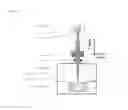
FIG. 1 is a schematic diagram of Arcam electron beam melting unit. [Reference: Silvia Sabbadini, Oriana Tassa, P. Gennaro, and Ulf Ackelid, “Additive Manufacturing of Gamma Titanium Aluminide Parts by Electron Beam Melting”, TMS Feb. 1, 2010]. The X-axis and Y axis are defined such that Y axis is in the direction of part growth or parallel with electron beam. X-axis is perpendicular to electron beam direction.
FIG. 2 shows an SEM image of the typical precursor IN 718 alloy powder.
FIG. 3a shows a top view IN 718 rods (˜0.75″-dia×4″ long) made by EDM additive manufacturing using precursor IN 718 alloy powder on a heated stainless steel plate in vacuum backfield with helium. FIG. 3b shows a side view showing the coarse surface finish of the rods produced.
FIG. 4 shows schematically the nomenclature of planar (transverse) and axial (longitudinal) sections of the rod.
FIG. 5 shows the microstructure (optical photomicrograph) of an as-processed rod along the axial (longitudinal) and transverse (planar) sections.
FIG. 6 shows EBM IN718, as processed, showing blocky gamma prime and platelet-like delta precipitates in a gamma matrix. Transverse section. BSEI.
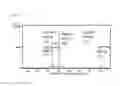
FIG. 7 shows an X-ray diffraction pattern of as-processed IN 718 along the planar (transverse) section.
FIG. 8 shows the X-ray diffraction pattern from an as-processed IN 718 along the longitudinal (axial) section.
FIG. 9 shows the (001) and (111) pole figures from the planar section of EBM IN 718 measured by x-ray diffraction.
FIG. 10 shows the reduction of crystallographic texture in the EBM IN718 upon heat treatment.
FIG. 11 shows the reduction of crystallographic texture in the EBM IN718 upon heat treatment.
FIG. 12 shows a nearly homogenous microstructure of EMB IN 718 resulting from hot isostatic pressing (HIP); longitudinal section (a) and transverse section (b) FIG. 13 shows a nearly homogenous microstructure of EMB IN 718 resulting from hot isostatic pressing (HIP) followed by standard IN718 treatment; longitudinal section (a) and transverse section (b).
FIG. 14 shows the X-ray diffraction patterns from both axial (longitudinal) and transverse (planar) sections of the EBM IN718 following hot isotactic pressing and standard IN718 heat treatment.
FIG. 15 shows the Crystallographic orientation of major component {100}<001> with respect to the component axis.
DETAILED DESCRIPTION
Definitions
As used herein the term “superalloy” refers to a high-performance alloy exhibits excellent mechanical strength and resistance to creep at high temperatures; good surface stability; and corrosion and oxidation resistance. Superalloys typically have a matrix with an austenitic face-centered cubic crystal structure. Without limitation, examples of superalloys are Hastelloy, Inconel (e.g. IN100, IN600, IN713, IN718), Waspaloy, Rene alloys (e.g. Rene 41, Rene 80, Rene 95, Rene N5), Haynes alloys, Incoloy, MP98T, TMS alloys, and CMSX (e.g. CMSX-4) single crystal alloys.
As used herein the term “seed crystal” refers to a superalloy metal crystal having a single crystal microstructure. In certain embodiments, the seed crystal is a discrete metal single crystal. In other embodiments, the seed crystal is the superalloy plate upon which the superalloy metal is formed.
As used herein the term “highly textured” refers to a superalloy metal having greater than 50% of a particular crystallographic texture component. In certain embodiments, the term highly textured refers to a superalloy metal having greater than 55%, greater than 60%, greater than 65%, greater than 70%, greater than 75%, greater than 80%, greater than 85%, greater than 90%, or greater than 95% of a particular crystallographic texture component.
As used herein the term “single crystal” refers to a superalloy metal having a particular crystal microstructure without a grain boundaries.
As used herein, the term “texture-free” or “equiaxed” refers to a superalloy metal having crystals of approximately the same length and shape with random grains/crystallites orientation.
Electron Beam Melting
Electron beam melting (EBM) is a powder-bed, additive manufacturing technique which creates nearly fully dense metal parts directly from a computer CAD model. Pre-deposited metal powder is selectively melted layer-by-layer using a focused electron beam under high vacuum. The process starts with the deposition of a thin layer of powder on a build plate. An electron beam with a defined intensity is then scanned across the surface at points that correspond to the cross-section of the component. The process uses the kinetic energy of electrons to heat up and melt metal powders creating a melt pool that causes localized bonding between powder particles. As the electron moves away from the melt pool, the molten material is solidified forming a fully dense structure. Each layer is melted deeply enough to fuse it to the underlying layer. Another layer of powder material is then spread onto the previously melted layer and the process is repeated. During the build cycle, the vacuum system is kept at ˜1×10⁻⁵ mbar or better; in addition, during the actual melting a partial pressure of He is maintained at 2×10⁻³ mbar. The EBM process is conducted at high temperature in order to stress relieve the components.
Typical EBM system is shown in FIG. 1. This is an Arcam EBM system. Using this system IN 718 alloy precursor powder is stored in a container (3 in FIG. 1). The powder is gravity fed it onto the building component (2 in FIG. 1) resting on a stainless steel build table (1 in FIG. 1), where powder is racked into layers roughly 210 microns thick. A tungsten filament is heated by running a current through it. A potential of 60 kV creates an electric field which accelerates the free electrons off of the filament towards the coil at speeds of around 0.6 c, where c is the velocity of light in vacuum. The control of the electron beam is accomplished by the focus coil, which squeezes the beam to the appropriate size, and then by the deflection coil the beam is pointed towards the powder layer on the build plate. The electron beam is scanned across the powder layer (2 in FIG. 1) by a computer-aided design system. The beam is initially scanned at high rate in multiple passes to preheat the powder, and a melt scan at (˜102 mm/sec) and 10 mA beam current selectively melts the raked layer to a thickness of ˜210 microns (roughly 3 times the average particle layer). A new layer is then racked and the process repeated, producing an additive layered monolithic build.
Process of the Invention
The invention provides a process for the preparation of a superalloy metal comprising the steps of:
providing a metal alloy powder composition;
providing a seed crystal of a superalloy metal;
processing the metal alloy powder composition in the presence of the seed crystal to
provide a superalloy metal having a highly textured or single crystal microstructure.
The metal alloy powered composition is processed by electron beam melting, electron beam solid freeform fabrication, epitaxial laser beam formation, laser engineered net shaping, spray forming, three-dimensional printing, shaped metal deposition, or metal inert gas welding. In particular embodiments, the metal alloy powder composition is processed, by melting by electron beam melting.
In general, the processing of the superalloy metal is performed on a superalloy plate in the presence of a vacuum. In certain embodiments, the plate is a stainless steel plate. In other embodiments the plate is kept at about 910±20 C during the processing.
In certain embodiments where electron beam melting is used, the electron beam melting process operates at an elevated temperature; without limitation, between 500 and 2000° C., between 600° C. and 1500, or between 700 and 1000° C. In certain embodiments where a superalloy plate is used in the processing step, the superalloy plate is also used at an elevated temperature; without limitation, between 500 and 2400° C., between 700° C. and 2000, between 1000 and 1500° C., or between 1200 and 1400° C.,
In certain other embodiments where electron beam melting is used, the melt rate of the electron beam melting process is, without limitation, from 0.1 to 100 cm3/h, from 0.5 to 90 cm3/h, or from 1 to 80 cm3/h.
The process of the invention may be used to produce superalloy metal materials and articles having a crystal microstructure which varies from highly textured to single crystal textured. The crystal microstructure can be controlled by the inclusion of one or more seed crystals having a single crystal orientation. Crystal orientations are referred to, in general, by their Miller Index. The crystal orientation of the seed crystal may be such that Y direction shown in FIG. 1 is parallel with any of the following crystallographic orientations, without limitation, <100>, <010>, <001>, <110>, <011>, <101>, <−110>, <0-11>, <−101>, <111>, <−111>, <1-11>, <11-1>, <102>, <−102>, or <200>. Thus, the resulting superalloy metal will have a microstructure orientation such that the part growth direction is parallel with one of the following crystallographic orientations, without limitation, of <100>, <010>, <001>, <110>, <011>, <101>, <−110>, <0-11>, <−101>, <111>, <−111>, <1-11>, <11-1>, <102>, <−102>, or <200>. In certain embodiments, the seed crystal may be provided in the form of a single crystal superalloy plate upon which the metal is formed during the processing step.
In certain embodiments, the process for the preparation of a superalloy metal according to the invention further comprises subjecting the superalloy metal, after processing, to heat treatment, hot isostatic pressing (HIP), or both. Such after processing steps provide increased control over the ultimate texture/microstructure as well as the ductility and creep resistance. In embodiments where the after processing steps are performed the heat treatment and the hot isostatic pressing can be performed in any order.
Such heat treatment can be performed using standard methods known in the art, for example, and without limitation, the methods of DeAntonio—ASM International, ASM Handbook, 1991; or Harf (U.S. Pat. No. 4,676,846), each of which is incorporated herein by reference. In general, and without limitation, heat treatment is performed at 750-2500° F. for about 15 minutes-3 hours. In certain embodiments, heat treatment is performed at 1000-2200° F., 1500-2000° F., or 1800-1900° F., for about 30 minutes-2 hours, about 45 minutes-90 minutes, or about 1 hour.
Similarly, such hot isostatic pressing can be performed using standard methods known in the art, for example, and without limitation, the methods of ASTM A1080-12; ASTM A989/A989M-13; DeAntonio—ASM International, ASM Handbook, 1991; Neil (U.S. Pat. No. 4,952,353), or H T Larker, R Larker—Materials Science and Technology, 1991, each of which is incorporated herein by reference. In general, and without limitation, hot isostatic pressing is performed at 500-2500° C. and 5-25 ksi, for about 30 minutes-8 hours. In certain embodiments, heat treatment is performed at 750-2000° C., 1000-1500° C., or 1100-1200° C.; and at 10-20 ksi, 12-17 ksi, or about 15 ksi; for a about 1 hour-6 hours, about 3 hours-5 hours, or about 4 hours.
Articles of superalloy metal materials may be formed by manufacturing layers of superalloy metal by the process of the invention on top of each other in a layer-by-layer approach.
In other embodiments where a layer-by-layer approach is used, the minimum layer thickness is, without limitation, 0.01 mm, 0.025 mm, or 0.05 mm.
Specific articles which may be formed by the process of the invention include, but are not limited to, turbine blades, crystal blades, turbine vanes, turbine blade outer air seals, turbine rotors, combustor components, components for space vehicles; components for submarines; components for nuclear reactors; components for electric motors; components for high-performance vehicles, chemical processing vessels, bomb casings and heat exchanger tubing.
Inoculants
In certain embodiments, the process of the invention can be used to provide a superalloy metal having a texture-free or equiaxed microstructure.
In such embodiments, the process of the invention further includes the use of an inoculant prior to the processing step. Such inoculants include, but are not limited to iron containing inoculants or oxide inoculants. Particular inoculants are, but are not limited to, Co3FeNb2, CrFeNb, CoAl2O4, or combinations thereof.
In certain embodiments, the amount of inoculant added to the metal alloy powder to produce the texture-free microstructure is present in a an amount of 0.1 wt %-5 wt % based on the total weight of the metal powder and inoculants.
Without being limited by theory, it is believed that the inoculants act as nucleation sites to thereby suppress the formation of a microstructure texture. The resulting superalloy metal is substantially texture-free or has a weak texture, which would correspond to any texture components having volume fraction below about 20%.
Metal Alloy Powder Composition
The process of the invention utilizes one or more metal or metal alloy powders for the preparation of the superalloy metal having the defined microstructure.
Such metal and metal alloy powders comprise, without being limited to, powders comprising iron, nickel, chromium, molybdenum, niobium, cobalt, manganese, copper, aluminum, titanium, silicon, carbon, sulfur, phosphorous, boron, tantalum or a combination thereof.
In certain embodiments, the metal alloy powder comprises a combination of iron, nickel, and chromium. In particular embodiments, the iron/iron alloy powder comprises austenitic iron.
In still other embodiments, the metal alloy powder composition comprises a powder of Inconel 718, Inconel 600, Inconel 625, Inconel X-750, or Inconel 100.
In particular, the metal alloy powder composition comprises an Inconel alloy powder having the following elemental makeup:
| Element (% by mass) |
| Inconel | Ni | Cr | Fe | Mo | Nb | Co | Mn | Cu | Al |
| 600[4] | 72.0 | 14.0-17.0 | 6.0-10.0 | 1.0 | 0.5 | ||||
| 617[5] | 44.2-56.0 | 20.0-24.0 | 3.0 | 8.0-10.0 | 10.0-15.0 | 0.5 | 0.5 | 0.8-1.5 | |
| 625[6] | 58.0 | 20.0-23.0 | 5.0 | 8.0-10.0 | 3.15-4.15 | 1.0 | 0.5 | 0.4 | |
| 718[7] | 50.0-55.0 | 17.0-21.0 | balance | 2.8-3.3 | 4.75-5.5 | 1.0 | 0.35 | 0.2-0.8 | 0.65-1.15 |
| X- | 70.0 | 14.0-17.0 | 5.0-9.0 | 0.7-1.2 | 1.0 | 1.0 | 0.5 | 0.4-1.0 | |
| 750[8] | |||||||||
| 100 | 60.705 | 9.5 | 3.3 | 15 | 5.5 | ||||
| Element (% by mass) |
| Inconel | Ti | Si | C | S | P | B | V | Zr | |
| 600[4] | 0.5 | 0.15 | 0.015 | ||||||
| 617[5] | 0.6 | 0.5 | 0.15 | 0.015 | 0.015 | 0.006 | |||
| 625[6] | 0.4 | 0.5 | 0.1 | 0.015 | 0.015 | ||||
| 718[7] | 0.3 | 0.35 | 0.08 | 0.015 | 0.015 | 0.006 | |||
| X- | 2.25-2.75 | 0.5 | 0.08 | 0.01 | |||||
| 750[8] | |||||||||
| 100 | 4.75 | 0.17 | 0.015 | 1.0 | 0.06 | ||||
The size of the superalloy metal powder is not generally limited. In certain embodiments, the superalloy metal powder has particle sizes ranging from about 5 μm to about 500 μm, from about 25 μm to about 400 μm, or from about 40 μm to about 200 μm. In specific embodiments, the superalloy metal powder has a powder size range from −120 mesh to +325 mesh with a mean powder size of 80 microns. Similarly, the surface area of the superalloy metal powder is not generally limited. In certain embodiments, the superalloy metal powder has a BET surface area from about 1 to 10 m2/g, from about 2.5 to 7.5 m2/g, or from about 4.5 to about 6.0 m2/g.
The bulk density of the dry superalloy metal powder is not generally limited. In certain embodiments, the superalloy metal powder has a dry bulk density from about 0.1 to 2.0 g/cm3, from about 0.3 to 1.5 g/cm3, from about 0.5 to 1.2 g/cm3, from about 0.3 to 0.8 g/cm3, or from from about 0.5 to 0.7 g/cm3.
Examples
Preparation of Cylindrical Rods of Inconel 718 Having a {100}<001> Crystallographic Orientation
Cylindrical IN718 rods (0.75″-dia×4″ long) were built layer by layer using IN 718 powders by electron beam melting on a heated stainless steel plate in vacuum. The chemical analysis of the EBM IN 718 rods is: 52.91 Ni— 18.74 Cr— 19.23 Fe— 3.09 Mo— 4.89 Nb— 0.16 Co— <0.01 Mn— 0.01Cu— 0.44 Al— 0.88 Ti— 0.03Si— 0.01C— 0.002 P— 0.001 B— <0.01N, −0.01O— <0.01Ta (all in wt. %). Crystallographic texture components analysis showed strong crystallographic texture with <100> crystallographic direction of the gamma matrix being parallel with the growth direction for the electron beam melting process. The development of {100}<001> textured microstructure during the electron beam melting additive manufacturing process is commonly explained in terms of <100> being the easy growth direction of face centered cubic (fcc) gamma matrix. FIG. 15 shows the crystallographic directions with respect to sample/part axis.
FIG. 5a shows the microstructure (optical photomicrograph) of an as-processed rod along the axial (longitudinal) direction. It consists of dendrites primarily aligned parallel to the growth direction. The thickness of the layer produced by successive scanning and is measured to be ˜250 microns. Some large pores are readily seen between two layers. FIG. 5b shows the microstructure of an as-processed rod along the planar (transverse) direction. It shows the relative width of the individual scanned layer which is measured to be ˜300 microns. Numerous rod-like delta phase precipitates are found along with globular gamma prime. However, no gamma double prime precipitates are found as they are too small to be resolved. The average hardness values for these two orientations are similar and determined to be 29 HRC.
FIG. 7 shows an X-ray diffraction pattern of as-processed IN 718 along the planar (transverse) section. The following phases are identified: Nickel-fcc (gamma matrix), Ni3(Al,Ti)-L12 (gamma prime),
Ni3 (Nb, Ti)-DO22 (gamma double prime) and Ni3(Nb, Ti)-DOa (delta phase). The planar section data indicate 100 texture (100 crystallographic direction is parallel to the growth direction). The peak intensity suggests a relatively high volume fraction of delta-phase precipitates as supported by micro-structure image in FIG. 6.
FIG. 8 shows the X-ray diffraction pattern from an as-processed IN 718 along the longitudinal (axial) section. The major reflections are 200 and 220 of the gamma matrix. The data indicate that <001> crystallographic direction of the gamma phase is perpendicular to the longitudinal (axial) section.
The pole figures from the planar section of EBM IN 718 measured by x-ray diffraction pattern are shown in FIG. 9. Analysis of the texture data indicates high crystallographic texture with the major component as {100}<001> type with 65+−5% volume fraction and the remaining volume fraction is random or other components with small volume fraction (<5%). The grains are aligned such that theirs <100> crystallographic direction is within 6-8 degrees spread from the growth direction denoted as Y in FIGS. 1 and 4. The <001> crystallographic direction is within 10-20 degrees mozaic spread.
Heat Treatment of Cylindrical Rods of Inconel 718 Having a (100) Crystallographic Texture.
Heat treatment of as-processed EBM IN 718 rods at 1900 F/1 hr+standard IN 718 solution & precipitation heat treatment resulted in gradual reduction in texture and introduced grain coarsening with little delta phase being present as shown in FIG. 10 (data collected on transverse section).
FIG. 11 shows diffraction data in axial/longitudinal specimen of EBM IN718 following 1900 F+standard IN718 heat treatment. The corresponding X-ray diffraction pattern indicates reduction of texture.
Hot Isostatic Pressing (HIP) and Heat Treatment of Cylindrical Rods of EBM IN 718 Having a (100) Crystallographic Texture.
The as-processed EBM IN 718 rods were subjected to hot isostatic pressing (HIP) at 1163 C (2125 F)/15 ksi/4 hr. In general, there is an overall reduction of porosity and considerable grain coarsening. The average grain size was larger than ASTM 1 as shown in FIGS. 12a and b. The hardness values for both transverse (planar) and longitudinal (axial) sections were the same-30.5 RC.
The as-hip'd rods were subjected to the standard IN 718 solution and precipitation heat treatment. FIG. 13 shows the microstructures for both transverse (planar) and longitudinal (axial) sections. Numerous fine pore are still present. The hardness values are the same for both orientations ˜44 RC.
FIG. 14 shows the X-ray diffraction patterns from both axial/longitudinal and transverse/planar section of as-hip'd and heat treated IN 718 rods.
FIG. 14 indicates presence of large crystallites (above 200 microns) in both HIP'ed and HIP'ed+heat treated conditions. Texture analysis has shown low crystallographic texture.
Mechanical Properties of Hip'd & Heat Treated EBM IN 718 Rods
a. Tensile Properties:
Tensile tests were conducted on Hip'd and heat treated EBM 718 specimens at RT & 1200 F (see tables A and B below).
| TABLE A |
| Tensile Properties of Hip'ed and Heat Treated EBM 718 |
| Temp | UTS | YS | Elongation | ||
| Specimen ID | (F.) | (ksi) | (ksi) | (%) | Remarks |
| EBM718*: | RT | 168 | 147 | 17 | GS ASTM 1 and coarser |
| Hip'ed + HT | (250-400 microns) | ||||
| EBM718*: | 1200 | 125 | 113 | 18 | GS ASTM 1 and coarser |
| Hip'ed + HT | (250-400 microns) | ||||
| Conventional | RT | 195 | 160 | 12 | GS ASTM 6 (45 |
| 718 | micron) | ||||
| Conventional | 1200 | 160 | 135 | 12 | GS ASTM 6 (45 |
| 718 | microns) | ||||
| *Hip'ed at 1163 C. (2125 F.)/15 ksi/4 h + Post HIP Heat treatment: (a)Solution HT: 1750 ± 25 F./1 hr − 5 min/+15 min suitable protective atmosphere (Ar, He, VAC), Air Cool or Faster (b)Aging Precip HT: 1325 ± 25 F./8 hr ± 24 min, suitable protective atmosphere (Ar, He, VAC), Furnace cool to 1150 F. + 1150 + 25 F./8 hr ± 24 min, suitable protective atmosphere (Ar, He, VAC), Air Cool or Faster |
| TABLE B |
| Tensile Properties of Hip'ed and Heat Treated EBM 718 |
| Temp | UTS | YS | Elongation | ||
| Specimen ID | (F.) | (ksi) | (ksi) | (%) | Remarks |
| EBM718*: | RT | 168 | 147 | 17 | GS ASTM 1 and coarser |
| Hip'ed + HT | (250-400 microns) | ||||
| (P&W data) | |||||
| EBM718*: | 1200 | 125 | 113 | 18 | GS ASTM 1 and coarser |
| Hip'ed + HT | (250-400 microns) | ||||
| (P&W data) | |||||
| Conventional | RT | 195 | 160 | 12 | GS ASTM 6 (45 |
| 718 | micron) | ||||
| Conventional | 1200 | 160 | 135 | 12 | GS ASTM 6 (45 |
| 718 | microns) | ||||
| *Hip'ed at 1163 C. (2125 F.)/15 ksi/4 h + Post HIP Heat treatment: (a)Solution HT: 1750 ± 25 F./1 hr − 5 min/+15 min suitable protective atmosphere (Ar, He, VAC), Air Cool or Faster (b)Aging Precip HT: 1325 ± 25F/8 hr ± 24 min, suitable protective atmosphere (Ar, He, VAC), Furnace cool to 1150 F. + 1150 + 25F/8 hr ± 24 min, suitable protective atmosphere (Ar, He, VAC), Air Cool or Faster |
b. Creep Properties of Hipre and Heat Treated EBM IN 718
A few specimens were tested in creep test at 1200 F/80 ksi. The creep life is somewhat lower than the conventional IN718.
Preparation of Cylindrical Rods of EBM IN718 Having a (111) Crystallographic Texture.
To produce a highly (111) textured or single crystal gamma microstructure in IN718 during the electron beam melting a (111) oriented single crystal plate as a seed can be used. It is known that in superalloys, crystals with <111> orientation yield the highest modulus and those with <100> provide the lowest modulus. Thus, a highly (111) textured material may replace single crystal with (111) orientation provided the property goals are met with the textured material.
To that end, cylindrical IN718 rods (0.75″-dia×4″ long) are built layer by layer using IN 718 powders by electron beam melting on a heated (111) single crystal superalloy plate in vacuum.
Preparation of Cylindrical Rods of EBM IN718 Having an Equiaxed Crystallographic Texture.
To produce a equiaxed, or texture-free, microstructure one or more inoculants are utilized with in IN718 during the electron beam melting by using (111) single crystal plate as a seed.
To that end, cylindrical IN718 rods (0.75″-dia×4″ long) are built layer by layer using a mixture of IN 718 powder and Co3FeNb2, CrFeNb, or CoAl2O4. The rods are built by electron beam melting on a heated superalloy plate in vacuum.
Preparation of Turbine Blade of Inconel 718 Having a (100) Crystallographic Texture.
Jet engine turbine blades of IN718 (0.75″-dia×4″ long) are built layer by layer using IN 718 powders by electron beam melting on a heated superalloy plate in vacuum as described for the cylindrical rods above.
Preparation of Rotors of EBM IN718 Having a (100) Crystallographic Texture.
Rotors of IN718 (0.75″-dia×4″ long) are built layer by layer using IN 718 powders by electron beam melting on a heated stainless steel plate in vacuum as described for the cylindrical rods above.
Claims
What is claimed is:1. A process for the preparation of a superalloy metal comprising the steps of
providing a metal alloy powder composition;
providing a seed crystal;
processing the metal alloy powder composition in the presence of the seed crystal to
provide a superalloy metal having a highly textured or single crystal microstructure.
2. The process for the preparation of a superalloy metal according to claim 1, further comprising:
providing an inoculant prior to the processing step to provide a texture-free microstructure.
3. The process for the preparation of a superalloy metal according to claim 1, further comprising the step of:
subjecting the superalloy metal to heat treatment.
4. The process for the preparation of a superalloy metal according to claim 1, further comprising the step of:
subjecting the superalloy metal to hot isostatic pressing (HIP).
5. The process for the preparation of a superalloy metal according to claim 1, further comprising the steps of:
subjecting the superalloy metal to heat treatment, and
subjecting the superalloy metal to hot isostatic pressing (HIP).
6. The process for the preparation of a superalloy metal according to claim 1, wherein the processing step is performed by electron beam melting, electron beam solid freeform fabrication, epitaxial laser beam formation, laser engineered net shaping, spray forming, three-dimensional printing, shaped metal deposition, or metal inert gas welding.
7. The process for the preparation of a superalloy metal according to claim 6, wherein the processing step is performed by electron beam melting.
8. The process for the preparation of a superalloy metal according to claim 1, wherein the metal alloy powder composition comprises iron, nickel, chromium, molybdenum, niobium, cobalt, manganese, copper, aluminum, titanium, silicon, carbon, sulfur, phosphorous, boron, tantalum, tungsten, or a combination thereof.
9. The process for the preparation of a superalloy metal according to claim 8, wherein the metal alloy powder composition comprises a combination of iron, nickel, titanium, aluminum, molybdenum, niobium, tantalum, carbon and chromium.
10. The process for the preparation of a superalloy metal according to claim 8, wherein the metal alloy powder composition comprises a combination of iron, nickel, and chromium.
11. The process for the preparation of a superalloy metal according to claim 8, wherein the iron powder comprises austenitic iron.
12. The process for the preparation of a superalloy metal according to claim 8, wherein the metal alloy powder composition comprises a powder of Inconel 718, Inconel 600, Inconel 625, Inconel X-750, or Inconel 100.
13. The process for the preparation of a superalloy metal according to claim 1, wherein the seed crystal has a (111), (110), or (100) textured gamma microstructure.
14. The process for the preparation of a superalloy metal according to claim 2, wherein the inoculant is Co3FeNb2, CrFeNb, CoAl2O4, or combinations thereof.
15. A superalloy metal formed by the process according to claim 1.
16. An article comprising a superalloy metal formed by the process according to claim 1.
17. The article comprising a superalloy metal according to claim 16, wherein the article comprises multiple layers of superalloy metal.
18. The article comprising a superalloy metal according to claim 16, wherein the article is a turbine blade, a vane, a stator, a diffuser case, a TOBI, or a rotor.
19. The article comprising a superalloy metal according to claim 18, wherein the article is a turbine blade, a vane, a stator, a diffuser case, a TOBI, or a rotor.
Images & Drawings included:




Sources:
- United States Patent and Trademark Office - verify current appl. status at the USPTO↗
Recent applications in this class:
- » 20250146106 2025-05-08
NICKEL-BASED ALLOY EMBODIMENTS AND METHOD OF MAKING AND USING THE SAME - » 20250137100 2025-05-01
NICKEL-BASED ALLOY EMBODIMENTS AND METHOD OF MAKING AND USING THE SAME - » 20250137099 2025-05-01
FORGEABLE GAMMA-PRIME STRENGHTENED SUPERALLOY WITH HIGH MECHANICAL STRENGTH - » 20250109464 2025-04-03
MCRALX-ALLOY, POWDER, COATING FOR PROTECTION AGAINST CORROSION AND OXIDATION AND FOR BONDING CERAMIC INSULATING COATING AND COMPONENT - » 20250101546 2025-03-27
ALLOY COMPOSITIONS AND ARTICLES FORMED OF SUCH COMPOSITIONS - » 20250084508 2025-03-13
NICKEL-BASED SUPERALLOY, SINGLE-CRYSTAL GUIDE VANE AND TURBINE ENGINE - » 20250043394 2025-02-06
NICKEL-BASED ALLOY - » 20250043393 2025-02-06
NICKEL-BASED ALLOY COMPRISING TANTALUM - » 20250034680 2025-01-30
METAL POWDER FOR A POWDER BED ADDITIVE MANUFACTURING PROCESS - » 20240352558 2024-10-24
ALLOY COMPOSITIONS AND ARTICLES FORMED OF SUCH COMPOSITIONS