Adaptive Laser Joining Of Stator And Rotor Laminations
US20160285350A1
2016-09-29
15/034,604
2014-04-10
Abstract:
The invention relates to an apparatus and a method of adaptive laser joining of stator and rotor laminations allowing individual laminations to be joined with a lower expenditure of energy. For detecting the joining point a sensor (4) is used, which transmits the signal through a filter (5) to a first microcontroller (7), where the signal is processed and transmitted, in turn, to the second microcontroller (8), which then provides for the correct triggering, delaying, or modulation of the laser beam. The software in the microcontrollers allows arbitrarily modulating the continuous beam with adjustable parameters, or triggering an arbitrary number of pulses per gap. The system allows pulse as well as continuous laser sources (11) to be used.
Inventors:
- David Vegelj 1 🇸🇮 Ziri, Slovenia
- Janez Mozina 1 🇸🇮 Radovljica, Slovenia
- Bostjan Zajec 1 🇸🇮 Crni Vrh, Slovenia
Interested in similar patents?
Get notified when new applications in this technology area are published.
Classification:
H02K15/02 » CPC main
Methods or apparatus specially adapted for manufacturing, assembling, maintaining or repairing of dynamo-electric machines of stator or rotor bodies
B23K26/04 » CPC further
Working by laser beam, e.g. welding, cutting or boring; Positioning or observing the workpiece, e.g. with respect to the point of impact; Aligning, aiming or focusing the laser beam Automatically aligning, aiming or focusing the laser beam, e.g. using the back-scattered light
Description
The present invention relates to an apparatus and a method of adaptive laser joining of stator and rotor laminations, pertaining to the technical field of laser welding techniques and is utilized for joining together individual thin electrical sheets, or laminas, into compact stator and rotor packages to be used in electric motors.
Known methods for joining together stator and rotor laminations into compact packages may be divided into various categories, depending on the particular technology employed.
Individual laminations may be integrated into compact packages by making use of the so-called interlocks clamps, as disclosed in e.g. U.S. Pat. No. 6,223,417, U.S. Pat. No. 6,018,207, and EP0082537. It is a disadvantage of interlocks that they affect the electromagnetic properties of the packages and do not perform their task when laminations of low thickness are used. Beside that, the forming of interlocks must be integrated into the blanking process as such, adding to the complexity of the tools used for producing the individual laminas.
Laminations may be bonded together by using special two-component adhesives, as set forth in WO/2013/135378 and EP1833145. The said process is complex and the packages must be heated above a predetermined temperature.
A process similar to the use of two-component adhesives is the use of electrical sheets coated with a special enamel which bonds together the individual laminations into a compact package when subjected to an elevated temperature and pressure. The details of the said process are disclosed in WO2006049935. Although this technique is simpler than the use of two-component adhesives, its main drawback is that the packages must be pressed with a predetermined force and heated to a predetermined temperature for a certain time.
The individual laminas may be joined together by using conventional welding methods, usually by using the laser-TIG process. A disadvantage of the said process is represented by the size of the weld seams produced which degrade the electromagnetic properties of the entire package just as interlocks do. Furthermore, TIG welding is not applicable for high-alloyed electrical sheets as the elevated percentages of silicon and aluminum in the electrical sheet inhibit bonding.
Nevertheless, the use of laser in both the continuous mode and the burst mode is the best and simplest option for joining individual laminations into compact packages. Laser welding is always started at the beginning and carried on continuously to the end of the package. Welding proceeds transversally across all the laminations. The patents covering this subject are for example US20130154434, JPS5538640. The drawbacks of the said method are that the weld affects the electromagnetic properties of the package and that a substantial amount of energy is still spent on melting the entire lateral surface of the lamina.
The technical problem remaining to be adequately solved with respect to prior-art methods and patents is that all the processes used for joining together laminations into stator or rotor packages are cumbersome, like the use of adhesives or enamels; or they affect the electromagnetic properties, like laser or conventional welding or interlocking; or they are not applicable for thinner laminations, like interlocking. While conventional laser joining may be the simplest method, welding is still carried out across the entire lateral surface of the stator or rotor package. Thus an exceeding amount of energy is spent for making additional welds in locations where welding is not needed, furthermore affecting the electromagnetic properties of the stator or rotor package.
It is an object and aim of the adaptive laser joining of stator and rotor laminations according to the invention to provide an apparatus and a method which will only carry out the joining of individual laminations in the exact location where bonding is required, which is to say, where individual laminations come into contact. There will be no welding in other regions of the lateral surface and this will indirectly contribute to better electromagnetic properties of the stator or rotor package. Thus, welding is also less energy-consuming because the material is only melted in particular locations, in other words, the volume of the molten material is substantially smaller.
DETAILED DESCRIPTION OF THE INVENTION
The invention at hand will be described with reference to an embodiment thereof and the accompanying drawings, of which:
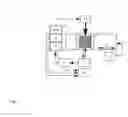
FIG. 1—represents a schematic diagram of the adaptive laser joining apparatus;
FIG. 2—represents the program settings;
FIG. 3—represents some of the possible modulation shapes of the continuous laser beam.
The apparatus for adaptive laser joining of stator and rotor laminations, as illustrated in FIG. 1, consists of three main sections. The first section comprises a sensor 4 observing/supervising the workpiece 1, namely the stator or rotor package, and transmitting an analog/digital signal to a filter 5. The workpiece is moved by means of a movable table 2, controlled by a process computer 3. The sensor may be any type of sensor capable of touchlessly detecting the individual laminas, which is to say, the gaps separating them, for example a laser sensor, a video camera etc. The sensor must be capable of detecting the gaps between the individual laminas, which are typically of the order of magnitude of up to 50 μm. A first stage of sensor detection supervision is carried out using an oscilloscope 6 or a corresponding device, connected to the filter 5. The filter ensures that noise is removed from the signal of the sensor 4. Prior to being used, the sensor 4 must be correctly adjusted. The adjustment, which is performed manually, modifies the detection range, thereby removing the greater part of the signal, while enhancing the variation of the signal in the gap region. The second section of the apparatus consists of a control unit 10, comprising a first microcontroller 7, a second microcontroller 8, and a relay 9 or a digital-to-analog converter 9a. The third section of the apparatus comprises any burst or continuous laser 11 allowing the individual bursts to be controlled or the continuous laser beam to be modulated from the outside, by means of the control unit 10.
So, for detecting the joining point, the apparatus utilizes the sensor 4 which transmits the signal through the filter 5 to the first microcontroller 7, where the signal is processed and transmitted, in turn, to the second microcontroller 8, which then provides, via the relay 9 or the digital-to-analog converter 9a, for the correct triggering, delaying, or modulation of the laser beam, so that welding takes place in a precisely defined location.
The principal phases of the process, which comprise the processing and handling of the individual signals controlling the positioning of the sensor 4, the proper triggering of the laser bursts or delays or the modulation of the laser beam, are described further below. The workpiece 1 consists of a plurality of individual laminations, generally between 0.2 and 0.65 mm thick. There is a thin gap between adjacent laminas, its width being generally between 10 and 20% of the base thickness of the laminas. The gap is detected by means of the sensor 4, which has to be set up correctly. Most important when doing this is to adjust the detection range, having the function of a first filter, on the sensor 4. The sensor 4 transmits an analog or digital signal to the filer 5, which takes care of filtering out the higher frequencies. The signal thus prepared and supervised using an oscilloscope 6 or a similar device allowing for the signal to be displayed visually, is then sent to the control unit 10. The signal is received by the first microcontroller 7 in the control unit 10. By virtue of special software the microcontroller 7 proceeds to transform the analog signal to digital under certain conditions, defined beforehand and obtained by testing various thicknesses of the individual laminas. The threshold and the sampling rate of the signal, as well as the delay following the last signal change, can be set programmatically. The microcontroller 7 then sends the digital signal to the microcontroller 8 which delays the original signal. The delay is required in order to allow for the correct positioning of the sensor 4 relative to the gap in the workpiece 1, so that the position of the sensor 4 and the position of the gap are aligned, in other words, that the sensor 4 actually detects the correct gap and not one gap before or after the detecting position. The said problem arises because the measurements and the triggering of the laser are not performed coaxially in a same device.
Now, the microcontroller 8, depending on the software loaded thereon, performs an additional task. In a first variation, used in burst laser applications, the microcontroller 8 does not further modify the signal and controls the correct triggering of the laser pulses via the relay 9. The relay 9 is connected to the triggering system on the laser 11 which actually triggers the individual laser pulses. The pulses cause the metal to melt at the point of impact of the pulse, giving rise to spot welding.
In a second variation, used in continuous laser applications, the microcontroller 8 transforms the digital signal received from the microcontroller 7 into a modulated continuous signal and sends it to the digital-to-analog converter 9a. The signal is modulated with previously defined parameters, which are programmatically set and allow for arbitrary modulation shapes. The adjustable parameters include the following setting: the welding starting point (P1, P2), the welding end point (P2, P4), the delay (D), the lower limit of laser power (A1), and the upper limit of laser power (A2). FIG. 2 represents the adjustable parameters, whereas FIG. 3 represents some of the possible signal modulation shapes. Subsequently, the digital-to-analog converter 9, similarly to the relay 9, acts upon the continuous laser beam, changing it in accordance with the software settings. To allow for additional supervision of the correct overall operation of the system, the second microcontroller 8 and the relay 9 or the digital-to-analog converter 9a are connected to the oscilloscope 6 or other device capable of visually displaying the signal.
The welding procedure is described concretely for a case of stator package welding. The workpiece 1, a stator package in this case, is fixed to the movable table 2. At this time, the sensor 4 detects only a full surface. A program is launched in the process computer 3, which ensures that the movable table 2 travels with constant speed from one position, starting at the beginning of the fixing device, to the other position, ending at the other end of the stator package 1, namely at the end of the stator package 1. Given that the stator package 1 is being moved, the sensor 4 is attached to the apparatus in such a fashion as to detect the gap several tens of milliseconds in advance of the welding position. That is to say, the sensor 4 travels ahead of the welding laser 11 to allow the signal received from the sensor 4 to be processed in the interim. The moment that the sensor 4 detects the gap between laminations on the stator package, the shape of the output signal from the sensor 4 changes. The signal travels from the sensor 4 through the filter 5 to the microcontroller 7, where it is converted into a digital signal. The digital signal proceeds to the microcontroller 8, where it is conveniently delayed and/or modulated, whereupon the signal passes to the relay 9 or to the digital-to-analog converter 9a which controls the laser. The output signal then triggers individual laser pulses, or it modulates the continuous signal. The entire cycle is repeated about 10,000 times per second, so that welding can proceed without interruptions as the stator workpiece 1 is being moved.
Claims
1. Method of adaptive laser joining of stator and rotor laminations, wherein laser joining of individual laminations only takes place where two adjacent laminations come into contact, the method comprising:
detecting an individual gap between laminations by means of a sensor (4) in real time;
based on the signal from the sensor (4), triggering an individual laser pulse, or
based on the signal from the sensor (4), performing a software-driven modulation of the signal with parameters defined beforehand, and controlling the continuous laser beam by means of the modulated signal;
wherein the detection of an individual gap by means of the sensor (4) in real time comprises adjusting the detection range of the sensor (4), transmitting the signal from the sensor (4) through a filter (5) to a microcontroller (7) in a control unit (10), which transforms the analog signal to digital under certain conditions, defined beforehand and obtained by testing various thicknesses of the individual laminas, sending the digital signal to a microcontroller (8), which delays the original signal in order to allow for the correct positioning of the sensor (4) relative to the gap in the workpiece (1);
the triggering of the individual laser pulses and the controlling of the continuous laser beam, respectively, being controlled by means of the microcontroller (8) in the control unit (10).
2. Method according to claim 1, characterized in that triggering of individual laser pulses is carried out by means of a relay (9), connected to the triggering system on the laser (11).
3. Method according to claim 1, characterized in that the software-driven modulation of the signal is performed via the microcontroller (8) in the control unit (10), which delays the digital signal received from the microcontroller (7) and transforms it into a modulated continuous signal, sending it to the digital-to-analog converter (9a) which controls the continuous laser beam.
4. Method according to claim 1, characterized in that adjustment of the detection range of the sensor (4) is performed manually prior to use, by modifying the detection range of the sensor (4) using an oscilloscope (6) or a similar device capable of visually displaying the signal and connected to the filter (5), whereby the greater part of the signal is removed, while the variation of the signal in the gap region is enhanced.
5. Apparatus for adaptive laser joining, comprising three sections, the first section comprising a sensor (4), a filter (5) and an oscilloscope (6), connected to the said filter (5), the second section consisting of a control unit (10), comprising a first microcontroller (7), a second microcontroller (8), and a relay (9) or a digital-to-analog converter (9a), and the third section comprising a pulse or continuous laser (11) allowing the individual pulses to be controlled and the continuous laser beam to be modulated, respectively, from the outside, by means of the control unit (10).
Images & Drawings included:



Sources:
- United States Patent and Trademark Office - verify current appl. status at the USPTO↗
Recent applications in this class:
- » 20250167641 2025-05-22
METHOD AND TOOL FOR MANUFACTURING A LAMINATED CORE OF AN ELECTRIC MACHINE - » 20250112530 2025-04-03
ROTATING ELECTRIC MACHINE CORE, ROTATING ELECTRIC MACHINE USING THE SAME, AND METHOD OF MANUFACTURING ROTATING ELECTRIC MACHINE CORE - » 20250096657 2025-03-20
ROTOR MANUFACTURING APPARATUS AND ROTOR MANUFACTURING METHOD - » 20250047177 2025-02-06
METHOD FOR MANUFACTURING MOTOR CORE - » 20250015684 2025-01-09
STATOR CARRIER FOR A DRIVE UNIT - » 20240421673 2024-12-19
APPARATUS FOR MANUFACTURING LAMINATED IRON CORE AND METHOD FOR MANUFACTURING LAMINATED IRON CORE - » 20240421672 2024-12-19
METHOD FOR MANUFACTURING LAMINATED IRON CORE - » 20240413718 2024-12-12
MANUFACTURING APPARATUS FOR ROTOR AND METHOD OF MANUFACTURING ROTOR - » 20240413717 2024-12-12
MOTOR CORE MANUFACTURING METHOD AND PUSH-OUT DEVICE - » 20240380290 2024-11-14
METHODS FOR MANUFACTURING SOFT MAGNETIC THIN LAMINATES