Buddleja 'Miss Violet'
US20160374243P1
2016-12-22
14/545,797
2015-06-18
Abstract:
A new and distinct variety of Buddleja plant named ‘Miss Violet’ substantially as illustrated and described, characterized by its compact stature, dense and semi-upright growth habit, oblong-elliptic leaf shape, violet flower color, distorted male flower parts (anthers) resulting in male sterility, and female structures that show reduced function, resulting in reduced seed formation.
Assignee:
- North Carolina State University 812 🇺🇸 Raleigh, NC, United States
Interested in similar patents?
Get notified when new applications in this technology area are published.
Classification:
A01H5/00 IPC
Products
A01H5/00 IPC
Angiosperms, i.e. flowering plants, characterised by their plant parts; Angiosperms characterised otherwise than by their botanic taxonomy
Description
RELATED APPLICATION INFORMATION
This application claims priority under 35 U.S. §119(a) to Canadian Plant Breeder's Rights Application No. 14-8409, filed Jul. 31, 2014; the disclosure of which is incorporated herein by reference in its entirety.
LATIN NAME OF THE GENUS AND SPECIES
Genus: Buddleja. Species: complex hybrid including davidii, lindleyana, and globosa.
VARIETY DENOMINATION
The inventive cultivar of Buddleja disclosed herein has been given the variety denomination ‘Miss Violet’.
BACKGROUND OF THE INVENTION
The present invention relates to a new and distinct variety of Buddleja (butterfly bush) grown as an ornamental shrub for home and commercial landscapes. Butterfly bush is typically grown for its attractive, fragrant flowers that are borne throughout the growing season.
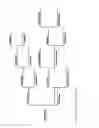
The new and distinct variety of butterfly bush resulted from a formal breeding program established by the inventor in Raleigh, N.C., United States. One of the objectives of the breeding program was to develop a compact statured, reduced male and female fertility, semi-upright Buddleja with violet (RHS 83B) flowers. ‘Miss Violet’ was selected at a research station in Jackson Springs, N.C. in 2010 from a population of about 95 seedling progeny derived from a hand pollinated cross of ‘Blue Chip’בMiss Molly’ made in summer 2009 in Raleigh, N.C. ‘Blue Chip’ was the female (seed) parent, and ‘Miss Molly was the male (pollen) parent in the aforementioned hybridization. ‘Blue Chip’ is a complex hybrid containing 3 different species and one botanical variety of Buddleja (B. davidii, B. davidii var. nanhoensis, B. lindleyana, and B. globosa). ‘Miss Molly’ was derived from hybridization of ‘Miss Ruby’בAttraction’. ‘Miss Ruby’ was derived from hybridization of ‘White Ball’בAttraction’. ‘White Ball’ is a complex hybrid, presumably containing B. davidii and B. fallowiana. ‘Attraction’ was derived as an open-pollinated seedling of ‘Honeycomb’, which is a hybrid of B. globosa×B. davidii. NC2000-1 is a hybrid of ‘Nanho Purple’×Buddleja lindleyana. ‘Nanho Purple’ is a variety derived from Buddleja davidii var. nanhoensis. All of the hybridizations described above, with the exception of the development of ‘White Ball’ and ‘Attraction’, were accomplished in the inventor's research program. The complete pedigree of ‘Miss Violet’ is shown in FIG. 4. Of all the parents used in the development of ‘Miss Violet’, the varieties ‘Blue Chip’ (U.S. Plant Pat. No. 19,991), ‘Miss Molly’ (U.S. Plant Pat. No. 23,425), ‘Miss Ruby’ (U.S. Plant Pat. No. 19,950), ‘Attraction’ (not patented), ‘White Ball’ (not patented), ‘Nanho Purple’ (not patented), and ‘Honeycomb’ (not patented), and the species Buddleja lindleyana are available in commerce.
The seeds resulting from the 2009 controlled hybridization process were harvested in fall of 2009 and germinated in a greenhouse in Raleigh, N.C. in the winter of 2010. The resulting 95 seedlings (approximate) were planted in field trials in spring of 2010 at a research station in Jackson Springs, N.C. These plants flowered in summer 2010, and one plant, designated NC2010-1, was selected in July, 2010 for its compact stature, semi-upright habit, attractive violet (RHS 83B) colored flowers, oblong-elliptic leaves, non-functional male flower parts (anthers), and reduced seed set (reduced female fertility). This original plant demonstrated characteristics identical to those subsequently expressed on other plants when propagated from stem cuttings. This single plant is the subject of the present invention Buddleja ‘Miss Violet’.
The inventor conducted the first asexual propagation of ‘Miss Violet’ in fall 2010 in Raleigh, N.C., and ‘Miss Violet’ has subsequently been propagated in the same location in years 2011 through 2013. In all cases, the original plant selection was propagated asexually by softwood to semi-hardwood stem cuttings. Such cuttings root readily under mist in about 14 to 21 days, and resume normal growth. Four plants derived from stem cuttings of the variety were established in experimental greenhouse trials in Raleigh, N.C. in fall, 2010 and in 2011. Subsequently, ten plants derived from stem cuttings were established in a field trial in Jackson Springs, N.C. in 2013. Through successive asexual propagations, the characteristics of the original plant have been maintained. Thus, plants derived from stem cuttings exhibit characteristics identical to those of the original plant, and no aberrant phenotypes have appeared.
Test plantings and performance evaluation over five years at a research station in Jackson Springs, N.C. and a greenhouse in Raleigh, N.C. demonstrate this variety to be relatively consistent in its characteristics even under the different growing conditions associated with yearly climatic variation.
Plants of the new variety are compact after establishment in the field, being less vigorous and more compact than most cultivars of butterfly bush available in commerce. Young plants have averaged about 62.0 cm of height growth per year. Plants are semi-upright in growth habit. Flowering occurs in the first year of growth on newly formed wood. The inflorescence is a panicle, and shows a deep violet flower color. Flowering usually begins in late May to early June in Jackson Springs, N.C., and continues throughout the growing season until the first freeze event in October or November. An individual inflorescence flowers for about 7-10 days, depending on temperature, but new flowers are made during the entire growing season. Flowers show reduced male and female fertility, and the new cultivar has set only limited seed in replicated field trials, an asset in landscape plantings.
‘Miss Violet’ is distinguished from other related known cultivars based on the unique combination of traits including compact plant size, dense semi-upright growth habit, green leaves (RHS N137C) with oblong-elliptic shape, attractive violet (RHS 83A) flower color, non-functional male flower parts (anthers), and reduced female fertility, resulting in low seed production. The cultural requirements for ‘Miss Violet’ are well-drained soil, full sun, and moderate moisture. ‘Miss Violet’ exhibits no serious pest or disease problems known to the inventors, except for occasional spider mite infestation during periods of hot, dry weather.
SUMMARY OF THE INVENTION
‘Miss Violet’ is a new and distinct variety of butterfly bush that has the following unique combination of desirable features outstanding in a new variety. In combination these traits set ‘Miss Violet’ apart from all other existing varieties of butterfly bush known to the inventors.
1. ‘Miss Violet’ has low vigor resulting in compact stature.
2. ‘Miss Violet’ is asexually propagated using softwood or semi-hardwood cuttings.
3. ‘Miss Violet’ demonstrates a dense, semi-upright growth habit.
4. ‘Miss Violet’ has female structures that show reduced fertility.
5. ‘Miss Violet’ has male structures (anthers) that are malformed and non-functional.
6. ‘Miss Violet’ has violet (RHS 83A) flower color.
7. ‘Miss Violet’ has oblong-elliptic leaf shape.
COMPARISON WITH KNOWN CULTIVARS
The closest comparisons known to the inventor are the varieties ‘Miss Ruby’ (U.S. Plant Pat. No. 19,950) and ‘Miss Molly’ (U.S. Plant Pat. No. 23,425). In direct comparisons of ‘Miss Ruby’ and ‘Miss Molly’ in the inventor's experimental trials, plants of ‘Miss Violet’ show violet (RHS 83A) flower color, compared to the red-purple (RHS 71B) flower color of ‘Miss Ruby’. ‘Miss Violet’ also shows greater female sterility than ‘Miss Ruby’. ‘Miss Violet’ flower color is distinctly different from the reddish-purple flower color of ‘Miss Molly’ (RHS 61B). “Miss Violet’ is male sterile (produces no anthers) and is highly female sterile, compared to the high male and female fertility of ‘Miss Molly’.
BRIEF DESCRIPTION OF THE DRAWINGS
The photographs in the drawings were made using digital photography techniques, and show the colors as true as reasonably possible by digital photography. Colors in the photographs may differ slightly from the color values cited in the detailed botanical description, which accurately describe the colors of the new Buddleja variety ‘Miss Violet’. Photographs were taken from one-year-old plants growing in Jackson Springs, N.C.
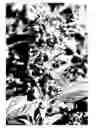
FIG. 1 shows the entire inflorescence of ‘Miss Violet’.
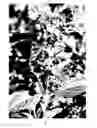
FIG. 2 shows a typical plant of ‘Miss Violet’, showing the compact stature, semi-upright growth habit, dense foliage, and violet flowers.
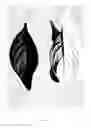
FIG. 3 shows the typical coloration and form of leaves of ‘Miss Violet’. This figure shows the upper (top) and lower (bottom) leaf surface.
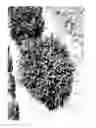
FIG. 4 provides the pedigree of Buddleja ‘Miss Violet.
DETAILED BOTANICAL DESCRIPTION OF THE VARIETY
The following is a detailed description of the botanical and ornamental characteristics of the subject butterfly bush ‘Miss Violet’. Color data are based on The Royal Horticultural Society Colour Chart, The Royal Horticultural Society, London, 2007 edition. Where dimensions, sizes, colors and other characteristics are given, it is to be understood that such characteristics are approximations of averages set forth as accurately as practicable.
The descriptions reported herein are from two-year-old specimens grown in field research trials in Jackson Springs, N.C.
- General information:
-
- Genus.—Buddleja.
- Species.—Complex hybrid, including davidii, globosa, and lindleyana.
- Denomination.—‘Miss Violet’.
- Commercial classification.—Shrub, deciduous.
- Common name.—Butterfly bush.
- Uses.—Patio container plant, herbaceous perennial border, or shrub border for residential and commercial landscapes.
- Cultural requirements.—Full sun exposure, well-drained soil, and moderate moisture.
- Parentage.—“Miss Violet’ is a sixth-generation hybrid that resulted from the most recent cross pollination of ‘Blue Chip’בMiss Molly’. See FIG. 4 for entire pedigree.
-
- Plant description:
-
- Blooming period.—June through October.
- Blooming habit.—Paniculate.
- Vigor.—Moderate vigor.
- Plant habit.—Compact, semi-upright habit.
- Height and spread.—1.2 m (height) and 1.6 m (width) on two-year-old unpruned plants.
- Hardiness.—To date, hardy to minus 14 degrees Centigrade (7 degrees Fahrenheit). Not tested below this temperature. Anticipated adapted to USDA hardiness zones 5-9.
- Propagation.—Softwood to semi-hardwood cuttings under intermittent mist. Roots typically form in 2-3 weeks.
- Root system.—Fibrous, spreading.
- Seasonal interest.—Violet (RHS 83A) flowers in spring, summer, and fall on a compact shrub with semi-upright growth habit.
- Disease and pest susceptibility and resistance.—No particular susceptibility or resistance, except occasionally susceptible to spider mites under very hot and dry conditions.
- Special growing requirements.—Moderate yearly pruning in late winter or early spring prior to bud break is recommended to encourage more profuse flowering.
-
- Stems:
-
- Shape.—Stem cross section is round.
- Length.—Average 61.9 cm in one year of growth.
- Color.—Yellow-green (RHS 145B) on recently formed shoots.
- Diameter.—4.1 mm at base of new growth.
- Stem surface.—Slight pubescence.
- Pubescence.—Sparse.
- Internode length.—5.9 cm in the middle of new growth.
-
- Foliage:
-
- Type.—Deciduous.
- Leaf arrangement.—Opposite, decussate.
- Leaf division.—Simple.
- Leaf shape.—Oblong-elliptic.
- Leaf base.—Attenuate.
- Leaf apex.—Acute.
- Leaf venation.—Pinnate.
- Leaf surface (abaxial).—Slightly pubescent.
- Leaf margin.—Serrulate.
- Leaf attachment.—Petiolate.
- Petiole dimensions.—9.2 mm length. 1 mm width.
- Petiole shape.—Sulcate and slightly pubescent.
- Petiole color.—Yellow-green (RHS 146C).
- Leaf color.—Adaxial side: green (RHS N137C). Abaxial side: grayed-green (RHS 191B).
- Leaf midrib color.—Abaxial side: greyed-green (RHS 194C).
- Leaf length.—Avg. 8.9 cm.
- Leaf width.—Avg. 3.6 cm.
- Foliar fragrance.—None detectable.
-
- Flowers:
-
- Inflorescence.—Dense panicle, terminal and axillary.
- Flower shape.—Salverform.
- Petals.—4 in number.
- Fused or unfused.—Fused at base.
- Petal margin.—Entire.
- Petal apex.—Rounded lobes, serrulate.
- Petal base.—Truncate.
- Petal surfaces.—Lacking pubescence.
- Petal shape.—Rotund.
- Petal dimensions.—4.4 mm total length. 3.6 mm width at apex. 1 mm width at base.
- Petal color.—Adaxial and abaxial surface (open flower): Violet (RHS 83A). Closed flower prior to opening: Violet (RHS 83A).
- Corolla tube color.—Outside of corolla: Violet (RHS 83A).
- Corolla throat color.—Inside of corolla: Yellow-orange (RHS 21D).
- Corolla tube surfaces (inner and outer surfaces).—Pubescence lacking.
- Corolla tube shape.—Tubular.
- Color of peduncle.—Green (RHS 142B).
- Peduncle surface.—Glaucous.
- Peduncle length.—18.0 cm.
- Peduncle shape.—Flattened oval in cross section.
- Pedicel dimensions.—2.0 mm in length and less than 1 mm in diameter.
- Pedicel color.—Green (RHS 142B).
- Pedicel shape.—Flattened oval in cross section.
- Pedicel surface.—Glaucous.
- Flowers persistent or self-cleaning.—Flowers are persistent.
- Lastingness of the overall inflorescence.—7-10 days.
- Lastingness of an individual flower.—3-5 days.
- Dimensions of inflorescence.—18.0 cm length. 2.1 cm base width/tapering to 0.5 cm at tip.
- Quantity of flowers.—Avg. 411.2 flowers per panicle (average of 5 panicles).
- Bud apex.—Rounded lobes, serrulate.
- Bud surface.—Glaucous. Lacking pubescence.
- Bud shape.—Elongated, linear balloon.
- Calyx shape.—Tubular.
- Calyx dimensions.—1 mm in width and 3.4 mm in length.
- Sepals.—Four in number.
- Sepal shape.—Lanceolate.
- Sepal apex.—Acute.
- Sepal margin.—Entire.
- Sepal surface.—Glabrous.
- Sepal color.—Green (RHS 138D).
- Flower fragrance.—Distinct sweet fragrance.
-
- Reproductive organs:
-
- Stamens.—Malformed and non-functional.
- Anther shape.—Malformed.
- Filament size.—Absent.
- Pollen amount.—Absent.
- Pistil.—One in number.
- Pistil dimensions.—3 mm in length, and less than 1 mm in diameter.
- Stigma color.—Yellow-green (RHS 144A).
- Style color.—Yellow-green (RHS 144D).
- Ovary.—Present.
- Ovary position.13 Superior.
- Ovary shape.—Oval.
- Fertility.—Essentially male (pollen) and female (seed) sterile.
-
- Other characteristics: Fruit
-
- Type.—Capsule. Rarely observed. Reduced female fertility.
- Dimensions.—2 mm length and 1 mm width.
- Color.—Yellow-green (RHS 144C) when immature.
-
Claims
What is claimed is:1. A new and distinct cultivar of Buddleja named ‘Miss Violet’ as illustrated and described herein.
Images & Drawings included:
Sources:
- United States Patent and Trademark Office - verify current appl. status at the USPTO↗
Recent applications in this class:
- » 20240292771 2024-08-29
Campanula plant named 'Twilight' - » 20240251691 2024-07-25
HYDRANGEA PLANT NAMED 'HYLV17520' - » 20240251690 2024-07-25
Vaccinium Plant Named 'BWPBLUE02' - » 20240251689 2024-07-25
BLUEBERRY PLANT NAMED 'FC13-113' - » 20240251688 2024-07-25
BLUEBERRY PLANT NAMED 'FCM14-057' - » 20240237567 2024-07-11
PONGAMIA VARIETIES - » 20240224827 2024-07-04
PELARGONIUM PLANT NAMED 'PEQZ0103' - » 20240215470 2024-06-27
Agapanthus plant named 'Monsapho' - » 20240215469 2024-06-27
plant named ‘LOCORA3519’ - » 20240206359 2024-06-20
CORYLUS PLANT NAMED 'BWM01'
Recent applications for this Assignee:
- » 20240417271 2024-12-19
CALCIUM CARBONATE MINERALIZATION OF HEMP FIBER - » 20240382412 2024-11-21
BIOORTHOGONAL CATALYTIC PATCH AND METHODS OF USING THE SAME - » 20240374240 2024-11-14
METHODS AND SYSTEMS FOR TRANSIENT TISSUE TEMPERATURE MODULATION - » 20240271156 2024-08-15
Compositions and methods for conferring resistance to geminivirus - » 20240246075 2024-07-25
DUAL UV-VIS REFLECTANCE ABSORBANCE AND PHOTOLUMINESCENCE MODULES - » 20240226950 2024-07-11
Smart Automated Spin Coater - » 20240141311 2024-05-02
COMPOSITIONS AND METHODS FOR GENERATING MALE STERILE PLANTS - » 20240141173 2024-05-02
MELT EXTRUSION OF HEMP-BASED THERMOPLASTICS - » 20240122151 2024-04-18
Compositions and methods for minimizing nornicotine synthesis in tobacco - » 20240076509 2024-03-07
Fractal-like polymeric particles and their use in diverse applications