Method for manufacturing a paneling member
US20170001367A1
2017-01-05
15/200,822
2016-07-01
✅ Patent granted
US 9,987,793 B2
2018-06-05
-
-
Ryan J Walters
Jordan IP Law, LLC | Todd A. Vaughn
2036-07-01
Abstract:
A method for producing a panelling component for a motor vehicle. The method includes press-forming a fibre-reinforced load-bearing composite component; forming a film having a class-A surface; and joining the load-bearing composite component as a first layer and the film as a second layer via an adhesive as an interposed third layer.
Assignee:
- MAGNA STEYR Fahrzeugtechnik AG &Co KG 155 🇦🇹 Graz, Austria
Applicant:
Interested in similar patents?
Get notified when new applications in this technology area are published.
Classification:
B29C51/266 » CPC further
Shaping by thermoforming, i.e. shaping sheets or sheet like preforms after heating , e.g. shaping sheets in matched moulds or by deep-drawing; Apparatus therefor; Component parts, details or accessories; Auxiliary operations Auxiliary operations after the thermoforming operation
B29C66/721 » CPC further
General aspects of processes or apparatus for joining preformed parts characterised by the composition, physical properties or the structure of the material of the parts to be joined; Joining with non-plastics material characterised by the structure of the material of the parts to be joined Fibre-reinforced materials
B62D29/043 » CPC further
Superstructures, characterised by the material thereof predominantly of synthetic material Superstructures
B29L2031/3041 » CPC further
Other particular articles; Vehicles, e.g. ships or aircraft, or body parts thereof; Body finishings Trim panels
B32B2307/75 » CPC further
Properties of the layers or laminate; Other properties Printability
B29C51/082 » CPC further
Shaping by thermoforming, i.e. shaping sheets or sheet like preforms after heating , e.g. shaping sheets in matched moulds or by deep-drawing; Apparatus therefor; Deep drawing or matched-mould forming, i.e. using mechanical means only by shaping between complementary mould parts
B29C63/0073 » CPC further
Lining or sheathing, i.e. applying preformed layers or sheathings of plastics; Apparatus therefor of non-flat surfaces, e.g. curved, profiled
B32B1/00 » CPC further
Layered products having a general shape other than plane
B32B3/08 » CPC further
Layered products comprising a layer with external or internal discontinuities or unevennesses, or a layer of non-planar form ; Layered products having particular features of form characterised by features of form at particular places, e.g. in edge regions characterised by added members at particular parts
B32B5/02 » CPC further
Layered products characterised by the non- homogeneity or physical structure, i.e. comprising a fibrous, filamentary, particulate or foam layer; Layered products characterised by having a layer differing constitutionally or physically in different parts characterised by structural features of a layer
B32B5/08 » CPC further
Layered products characterised by the non- homogeneity or physical structure, i.e. comprising a fibrous, filamentary, particulate or foam layer; Layered products characterised by having a layer differing constitutionally or physically in different parts characterised by structural features of a layer the fibres or filaments of a layer being of different substances, e.g. conjugate fibres, mixture of different fibres
B32B5/12 » CPC further
Layered products characterised by the non- homogeneity or physical structure, i.e. comprising a fibrous, filamentary, particulate or foam layer; Layered products characterised by having a layer differing constitutionally or physically in different parts characterised by structural features of a layer characterised by the relative arrangement of fibres or filaments of different layers, e.g. the fibres or filaments being parallel or perpendicular to each other
B32B7/12 » CPC further
Layered products characterised by the relation between layers; Layered products characterised by the relative orientation of features between layers, or by the relative values of a measurable parameter between layers, i.e. products comprising layers having different physical, chemical or physicochemical properties; Layered products characterised by the interconnection of layers; Interconnection of layers using interposed adhesives or interposed materials with bonding properties
B32B27/08 » CPC further
Layered products comprising synthetic resin as the main or only constituent of a layer, next to another layer of a of synthetic resin
B32B27/12 » CPC further
Layered products comprising synthetic resin next to a fibrous or filamentary layer
B32B27/308 » CPC further
Layered products comprising synthetic resin comprising vinyl (co)polymers; comprising acrylic (co)polymers comprising acrylic (co)polymers
B32B27/365 » CPC further
Layered products comprising synthetic resin comprising polyesters comprising polycarbonates
B29K2055/02 » CPC further
ABS polymers, i.e. acrylonitrile-butadiene-styrene polymers
B29K2069/00 » CPC further
Use of PC, i.e. polycarbonates or derivatives thereof , as moulding material
B29K2105/12 » CPC further
Condition, form or state of moulded material or of the material to be shaped containing reinforcements, fillers or inserts of short lengths, e.g. chopped filaments, staple fibres or bristles
B32B2255/10 » CPC further
Coating on the layer surface on synthetic resin layer or on natural or synthetic rubber layer
B32B2255/12 » CPC further
Coating on the layer surface on paper layer
B32B2255/26 » CPC further
Coating on the layer surface Polymeric coating
B32B2260/021 » CPC further
Layered product comprising an impregnated, embedded, or bonded layer wherein the layer comprises an impregnation, embedding, or binder material; Composition of the impregnated, bonded or embedded layer Fibrous or filamentary layer
B32B2260/046 » CPC further
Layered product comprising an impregnated, embedded, or bonded layer wherein the layer comprises an impregnation, embedding, or binder material; Impregnation, embedding, or binder material Synthetic resin
B32B2262/14 » CPC further
Composition or structural features of fibres which form a fibrous or filamentary layer or are present as additives Mixture of at least two fibres made of different materials
B32B2274/00 » CPC further
Thermoplastic elastomer material
B32B2307/4023 » CPC further
Properties of the layers or laminate having particular optical properties; Coloured on the layer surface, e.g. ink
B32B2307/414 » CPC further
Properties of the layers or laminate having particular optical properties Translucent
B32B2307/558 » CPC further
Properties of the layers or laminate having particular mechanical properties Impact strength, toughness
B32B2307/738 » CPC further
Properties of the layers or laminate; Other properties Thermoformability
B32B2605/08 » CPC further
Vehicles Cars
B32B2607/00 » CPC further
Walls, panels
B29C65/48 » CPC main
Joining of preformed parts ; Apparatus therefor using adhesives, i.e. using supplementary joining material; solvent bonding
B29C51/08 IPC
Shaping by thermoforming, i.e. shaping sheets or sheet like preforms after heating , e.g. shaping sheets in matched moulds or by deep-drawing; Apparatus therefor Deep drawing or matched-mould forming, i.e. using mechanical means only
B29C63/00 IPC
Lining or sheathing, i.e. applying preformed layers or sheathings of plastics; Apparatus therefor
B62D29/04 IPC
Superstructures, characterised by the material thereof predominantly of synthetic material
B29C51/26 IPC
Shaping by thermoforming, i.e. shaping sheets or sheet like preforms after heating , e.g. shaping sheets in matched moulds or by deep-drawing; Apparatus therefor Component parts, details or accessories; Auxiliary operations
B29C65/00 IPC
Joining of preformed parts ; Apparatus therefor
B32B27/30 IPC
Layered products comprising synthetic resin comprising vinyl (co)polymers; comprising acrylic (co)polymers
B32B27/36 IPC
Layered products comprising synthetic resin comprising polyesters
Description
CROSS-REFERENCE TO RELATED APPLICATIONS
The present application claims priority 35 U.S.C. §119 to European Patent Publication No. EP15174774.8 (filed on Jul. 1, 2015), which is hereby incorporated by reference in its complete entirety.
TECHNICAL FIELD
Embodiments relate to a method for producing a panelling component, and to a panelling component of this kind.
BACKGROUND
Panelling components are used in vehicle production, in particular as plastic panels for vehicles such as motor vehicles. Panelling components of this kind are generally produced by a method such as injection moulding, as a sheet moulding compound (SMC) or by thermoforming, wherein all the plastic is generally coloured all the way through or a coating is applied subsequently. Since plastics generally have a higher thermal expansion coefficient than aluminium components, fillers must be employed when using such plastic panels to reduce thermal expansion and, in addition, larger joints must be provided for tolerance compensation.
When using pressing techniques to produce the panelling components, which also allow the formation of smaller radii and hence good design capability, thermosetting plastics that are difficult to recycle must be employed. When producing a component from one or more plies that are pressed together, it is also not possible to form a class-A surface since mould surfaces generally leave an impression on the component. It is also not possible to produce a class-A surface on a component produced via a pressing tool by sticking on a surface film.
With some production methods, such as thermoforming, freedom of design is limited since relatively small radii may not be reproduced owing to the large wall thicknesses required. Components with thinner walls, on the other hand, are mechanically unstable. Moreover, colours have to be applied to the surfaces via expensive coating processes.
SUMMARY
Embodiments relate to a method for producing a panelling component which allows simple and low-cost production of a panelling component having a class-A surface.
In particular, good formability of the component in production is to be made possible. Expensive coating of the component should not be required, despite the desired class-A surface. The component should also be simple to recycle.
In accordance with embodiments, a method for producing a panelling component for a motor vehicle may comprise at least one of the following: press-forming a fibre-reinforced load-bearing composite component; forming a film having a class-A surface; and joining the load-bearing composite component as a first layer and the film as a second layer via an adhesive as an interposed third layer.
In accordance with embodiments, a load-bearing component is produced via pressing, on one hand, and a visible surface for the load-bearing component is formed separately, on the other hand, the visible surface already having a class-A surface. Since the visible surface is produced separately and is not produced simultaneously by pressing like a laminate, for example, it may be produced with a high surface finish even at this stage. Via the adhesive joint between the two formed layers, component tolerances, such as dimensional deviations and surface deviations between the load-bearing composite component and the pre-formed film, may be accommodated. During the production of the adhesive joint, the two components may be pressed together lightly.
In accordance with embodiments, the film may be formed via thermoforming, and thus, is preferably a thin, thermoformed film having a class-A surface. Thermoforming may take place in a single-sided mould a temperature range of between 175 to 190 degrees Celsius and under a vacuum formed in the mould.
In accordance with embodiments, he film may have already set and/or cooled down before joining, and/or already has the structure of the finished panelling component before joining.
In accordance with embodiments, the film may be composed of just a single ply, and not as a laminate. The film may be a co-extrudate. The film may be structurally configured to perform several functions.
In accordance with embodiments, the film may be connected to the load-bearing composite component over the full area via the adhesive. Thus, air inclusions between the components are avoided. Moreover, the overall quality of the surface is increased.
In accordance with embodiments, foams may be used as adhesives, such as, for example, PU foam or two-component foam, or indeed other materials suitable for adhesive bonding, e.g. assembly adhesive systems based on PU or acrylate, two-component adhesives, dispersion adhesives, contact adhesives but also double-sided adhesive foam tapes or adhesive foam tapes, may be used. Double-sided adhesive foam tapes or adhesive foam tapes may be applied over a large area, particularly to substantially planar surfaces. Double-sided adhesive foam tapes or adhesive foam tapes may not, however, be applied over the full area. These adhesive tapes are suitable, particularly by virtue of the flexible foam surface, for compensating differences in thickness and/or for permitting longitudinal movement between the composite component and the film.
In accordance with embodiments, the load-bearing composite component may be formed by pressing or extruding. For example, pressing may take place under high pressure at a temperature range of between 240 to 300 degrees Celsius.
In accordance with embodiments, the load-bearing composite component is preferably produced by pressing organo-sheets reinforced with continuous fibres, i.e., fibres having a thermoplastic matrix, into the desired shape under the action of heat. By using continuous fibres, lower thermal expansion of the component is achieved. The use of a thermoplastic ensures good recyclability.
In accordance with embodiments, the load-bearing composite component may also be produced from continuous fibres and a thermosetting plastic, in which case there is generally no recyclability.
In accordance with embodiments, both the load-bearing composite component and the film may be produced from a thermoplastic.
In accordance with embodiments, the adhesive may be applied having a thickness sufficient to ensure accommodation of component tolerances.
In accordance with embodiments, leads or cables may be integrated into the load-bearing composite component and/or the adhesive.
In accordance with embodiments, sensors and/or lighting systems may be integrated into the adhesive.
In accordance with embodiments, at least one aperture, in particular for a lighting system, may be formed in the load-bearing composite component.
In accordance with embodiments, the film may be made transparent at least in some region or regions, in particular in regions with a lighting system situated thereunder. The film may also have imprints or colouring in all regions or in some region or regions on the inside and/or the outside.
In accordance with embodiments, a panelling component for a motor vehicle may be produced by one of the methods described herein, and thus, may encompass all the features described herein.
In accordance with embodiments, a panelling component for a motor vehicle may comprise a press-formed, fibre-reinforced, load-bearing composite component as a first layer, a pre-formed film as a second layer having a class-A surface, and an adhesive applied as a third layer between the load-bearing composite component and the film.
DRAWINGS
Embodiments will be illustrated by way of example in the drawings and explained in the description below.
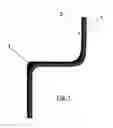
FIG. 1 illustrates a side view of a panelling component, in accordance with embodiments.
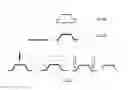
FIGS. 2a to 2c illustrate side views of a method for producing a panelling component, in accordance with embodiments.
FIG. 3 illustrates illustrate a side view of a method for producing a panelling component, in accordance with embodiments.
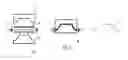
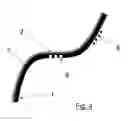
FIG. 4 illustrates a side view of a panelling component, in accordance with embodiments.
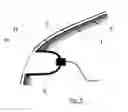
FIG. 5 illustrates a side view of a panelling component, in accordance with embodiments.
DESCRIPTION
In accordance with embodiments, a panelling component for a motor vehicle is illustrated schematically in FIG. 1, and comprises a press-formed, fibre-reinforced, load-bearing composite component 1 as a first layer, a pre-formed film 2 as a second layer having a class-A surface, and an adhesive 3 is applied as a third layer arranged between the load-bearing composite component 1 and the film 2.
The load-bearing composite component 1 may be composed of a plastic reinforced with continuous fibres, e.g., “Tepex GF” made by “Bond Laminates.” The load-bearing composite component 1 may be a pressed component comprising a thermoplastic and a fibre reinforcement, e.g., short fibres, long fibres and/or randomly oriented fibres. In accordance with embodiments, the load-bearing composite component 1 predominantly determines the properties of the panelling component, such as the thermal expansion, elasticity modulus thereof etc.
The pre-formed film 2 may be a film composed of ABS/PC or PC, e.g. “Senotop” made by “Senoplast.” The film 2 may be transparent or printed on one side or both sides. It is thermoformed using a single-sided mould.
The adhesive 3 forms a joint between the composite component 1 and the film 2. The adhesive 3 is used to impart properties, in particular, the shape of the composite component 1, to the film 2. The adhesive 3 may be applied over the full area, thus avoiding air inclusions between the composite component 1 and the film 2. The adhesive 3 may also be used to compensate for tolerances and differences in the radii of the components.
As illustrated in FIGS. 2a to 2c, the manufacturing or process steps of a method for producing a panelling component, in accordance with embodiments.
As illustrated in FIG. 2a, a film 2, to serve as the subsequent surface of the panelling component, is thermoformed on one side in a mould.
As illustrated in FIG. 2b, In parallel therewith, simultaneously or with a time delay, the composite component 1 is pressed in a different mould.
As illustrated in FIG. 2c, on the far left, an adhesive 3 is then applied to the composite component 1, e.g., by spraying. After this, the composite component 1 and the film 2 are pressed together lightly (second image from the left). After this, the joined component is trimmed (third image from the left). The finished panelling component (fourth image from the left) may be removed from the mould after being formed and provided with a class-A surface.
As illustrated in FIG. 3, a variant of a method of producing a panelling component, in accordance with embodiments, in which the load-bearing composite component 1 is formed in a thermoforming plant from a material reinforced with continuous fibres and having a thermoplastic matrix.
As illustrated on the extreme left in FIG. 3, the composite component 1 is placed in a thermoforming plant as a semi-finished product, and is heated on both sides by radiant heaters 4. The radiant heaters 4 are arranged between an upper mould half 5 and a lower mould half 6 of the thermoforming plant.
In the central illustration in FIG. 3, the radiant heaters 4 are moved back and the two mould halves 5, 6 are then closed. The hold down device 7 of the mould allows additional material to flow in.
On the extreme right in FIG. 3, a finished composite component 1 suitable for joining to a film 2 may be removed from the mould.
FIGS. 4 and 5 illustrate that other functions may also be integrated into a panelling component, in accordance with embodiments.
As illustrated in FIG. 4, a first plurality of electric leads 8 are arranged in the composite component 1, and a second plurality of electric leads 8 are arranged in the adhesive 2.
As illustrated in FIG. 5, the load-bearing composite component 1 and the adhesive 3 have an aperture to receive a lighting system 9, such as, for example, a light cluster. The film 2 may then be of transparent design, at least in a region directly over the lighting system 9. In regions outside the lighting system 9, the film 2 may have an external imprint 10 and/or an internal imprint 11.
The term “coupled” or “connected” may be used herein to refer to any type of relationship, direct or indirect, between the components in question, and may apply to electrical, mechanical, fluid, optical, electromagnetic, electromechanical or other connections. In addition, the terms “first,” “second, etc. are used herein only to facilitate discussion, and carry no particular temporal or chronological significance unless otherwise indicated.
This written description uses examples to disclose the invention, including the preferred embodiments, and also to enable any person skilled in the art to practice the invention, including making and using any devices or systems and performing any incorporated methods. The patentable scope of embodiments is defined by the claims, and may include other examples that occur to those skilled in the art. Such other examples are intended to be within the scope of the claims if they have structural elements that do not differ from the literal language of the claims, or if they include equivalent structural elements with insubstantial differences from the literal languages of the claims. Aspects from the various embodiments described, as well as other known equivalents for each such aspects, may be mixed and matched by one of ordinary skill in the art to construct additional embodiments and techniques in accordance with principles of this application.
LIST OF REFERENCE SIGNS
- 1 load-bearing composite component
- 2 film
- 3 adhesive
- 4 radiant heater
- 5 upper mould half
- 6 lower mould half
- 7 hold down device
- 8 electric leads
- 9 lighting system
- 10 external imprint
- 11 internal imprint
Claims
What is claimed is:1. A method for producing a panelling component for a motor vehicle, the method comprising:
forming a fibre-reinforced load-bearing composite component;
forming a film having a class-A surface; and
joining the load-bearing composite component as a first layer, and the film as a second layer via an adhesive as an interposed third layer.
2. The method of claim 1, wherein the film is formed via thermoforming.
3. The method of claim 1, wherein, before joining, the film has already set and/or cooled, and/or already has a structure of the finished panelling component.
4. The method of claim 1, wherein the film comprises a single ply and/or is a co-extrudate.
5. The method of claim 1, wherein the film is connected to the load-bearing composite component over a full surface area thereof via the adhesive.
6. The method of claim 1, wherein the load-bearing composite component is formed by pressing or extruding.
7. The method of claim 1, wherein the load-bearing composite component is produced by pressing organ sheets reinforced with continuous fibres into a desired shape under heat.
8. The method of claim 1, wherein the load-bearing composite component and the film are produced from a thermoplastic.
9. The method of claim 1, wherein the adhesive is applied having a thickness sufficient to ensure accommodation of component tolerances.
10. The method of claim 1, wherein leads or cables are integrated into the load-bearing composite component and/or the adhesive.
11. The method of claim 1,
wherein sensors and/or lighting systems are integrated into the adhesive.
12. The method of claim 1, further comprising:
forming at least one aperture in the load-bearing composite component and the adhesive; and
arranging a lighting system in the at least one aperture.
13. The method of claim 12, wherein the film is transparent at least in a region where the lighting system is arranged thereunder.
14. A panelling component for a motor vehicle, comprising:
a fibre-reinforced load-bearing composite component as a first layer;
a film having a class-A surface as a second layer; and
an adhesive as a third layer interposed between the load-bearing composite component and the film, to join the load-bearing composite component and the film.
15. The panelling component of claim 14, wherein the load-bearing composite component and the film are produced from a thermoplastic.
16. The panelling component of claim 14, wherein leads or cables are integrated into the load-bearing composite component and/or the adhesive.
17. The panelling component of claim 14, further comprising sensors and/or lighting systems integrated into the adhesive.
18. The panelling component of claim 14, further comprising:
at least one aperture in the load-bearing composite component and the adhesive; and
a lighting system arranged in the at least one aperture.
19. The method of claim 18, wherein the film is transparent at least in a region where the lighting system is arranged thereunder.
20. A panelling component for a motor vehicle, produced by the method of claim 1.
Images & Drawings included:
Sources:
- United States Patent and Trademark Office - verify current appl. status at the USPTO↗
Similar patent applications:
- » 20250121580
PANEL MEMBER, PANEL MEMBER MANUFACTURING METHOD, AND PANEL MEMBER MANUFACTURING APPARATUS - » 20160368540
Panel member, press mold, and manufacturing method of panel member - » 20060270304
Electro-optical panel, sealing member, electro-optical panel manufacturing method, self-emission panel, self-emission panel manufacturing method, and sealing member for use in self-emission panel - » 20210276308
MANUFACTURING METHOD OF PANEL MEMBER - » 20150301659
TOUCH PANEL MEMBER AND MANUFACTURING METHOD THEREFOR - » 20090190078
Flat-panel display member and its manufacturing method and flat-panel display and its manufacturing method - » 20190049840
Photosensitive resin composition, cured film, laminate, touch panel member, and method for manufacturing cured film - » 20180228025
Touch panel and method for manufacturing electrode member - » 20090035452
Photosensitive paste and manufacturing method of member for display panel - » 20130299220
Touch panel and method for manufacturing electrode member
Recent applications in this class:
- » 20250135729 2025-05-01
Method and Apparatus for Connecting and Reinforcing Pre-Manufactured Parts - » 20250065573 2025-02-27
METHOD FOR JOINING SILICONE RUBBER USING PLASMA TREATMENT - » 20230286221 2023-09-14
Electric heating pad - » 20230241843 2023-08-03
ENHANCED FRACTURE TOUGHNESS OF BONDED JOINTS USING TAILORED SACRIFICIAL CRACKS - » 20230050811 2023-02-16
METHOD OF MANUFACTURING A WIND TURBINE BLADE AND SHEAR WEB ASSEMBLY FOR A WIND TURBINE BLADE - » 20230034977 2023-02-02
Electric heating pad - » 20230016964 2023-01-19
Joint structure and method for manufacturing joint structure - » 20220410499 2022-12-29
SYSTEMS AND METHODS FOR MATING COMPONENTS - » 20220363015 2022-11-17
EMBEDDED POLYMERIC INSERT FOR INCREASED TOUGHNESS OF ADHESIVE BONDED JOINT - » 20220332055 2022-10-20
SUPPORT STRUCTURE FOR A PERSONAL CARE PRODUCT
Recent applications for this Assignee:
- » 20220307651 2022-09-29
Liquid hydrogen storage tank - » 20220266652 2022-08-25
AIR-CONDITIONING DEVICE - » 20220260367 2022-08-18
METHOD FOR TESTING POSITIONING DEVICES - » 20210402671 2021-12-30
Method of manufacturing a plastic tank - » 20210155125 2021-05-27
Seat module for a motor vehicle - » 20210024153 2021-01-28
Method for the production of motor vehicles - » 20210024152 2021-01-28
Device for positioning vehicle parts - » 20200325854 2020-10-15
Storage tank for cryogenic liquid gas - » 20200307705 2020-10-01
Side wall rear component and passenger vehicle - » 20200247212 2020-08-06
Thermal energy management system with high cooling capacity in idle and high performance passive battery cooling