Titanium-free alloy
US20170002437A1
2017-01-05
15/035,366
2015-02-10
✅ Patent granted
US 10,174,397 B2
2019-01-08
WO; PCT/DE2015/000053; 20150210
WO; WO2015/120832; 20150820
Colleen P Dunn | Rajinder Bajwa
Collard & Roe, P.C.
2035-07-07
Abstract:
Titanium-free alloy which has great resistance to pitting and crevice corrosion and a high yield point in the strain-hardened state and includes (in wt %) a maximum of 0.02% C, a maximum of 0.01% S, a maximum of 0.03% N, 20.0-23.0% Cr, 39.0-44.0% Ni, 0.4-<1.0% Mn, 0.1-<0.5% Si, >4.0-<7.0% Mo, a maximum of 0.15% Nb, >1.5-<2.5% Cu, 0.05-<0.3% Al, a maximum of 0.5% Co, 0.001-<0.005% B, 0.005-<0.015% Mg, the remainder consisting of Fe and smelting-related impurities.
Assignee:
- VDM Metals International GmbH 35 🇩🇪 Werdohl, Germany
Applicant:
Interested in similar patents?
Get notified when new applications in this technology area are published.
Classification:
C21D8/02 IPC
Modifying the physical properties by deformation combined with, or followed by, heat treatment during manufacturing of plates or strips
C21D8/005 » CPC further
Modifying the physical properties by deformation combined with, or followed by, heat treatment of ferrous alloys
C21D8/0221 » CPC further
Modifying the physical properties by deformation combined with, or followed by, heat treatment during manufacturing of plates or strips characterised by the working steps
C21D8/0247 » CPC further
Modifying the physical properties by deformation combined with, or followed by, heat treatment during manufacturing of plates or strips characterised by the heat treatment
C21D8/105 » CPC further
Modifying the physical properties by deformation combined with, or followed by, heat treatment during manufacturing of tubular bodies of ferrous alloys
C21D8/00 IPC
Modifying the physical properties by deformation combined with, or followed by, heat treatment
C21D9/0068 » CPC further
Heat treatment, e.g. annealing, hardening, quenching or tempering, adapted for particular articles; Furnaces therefor for particular articles not mentioned below
C21D9/52 » CPC main
Heat treatment, e.g. annealing, hardening, quenching or tempering, adapted for particular articles; Furnaces therefor for wires; for strips ; for rods of unlimited length
C22C1/02 » CPC further
Making alloys by melting
C22C30/02 » CPC further
Alloys containing less than 50% by weight of each constituent containing copper
C21D9/08 » CPC further
Heat treatment, e.g. annealing, hardening, quenching or tempering, adapted for particular articles; Furnaces therefor for tubular bodies or pipes
C21D8/10 IPC
Modifying the physical properties by deformation combined with, or followed by, heat treatment during manufacturing of tubular bodies
C21D9/00 IPC
Heat treatment, e.g. annealing, hardening, quenching or tempering, adapted for particular articles; Furnaces therefor
C21D9/46 » CPC further
Heat treatment, e.g. annealing, hardening, quenching or tempering, adapted for particular articles; Furnaces therefor for sheet metals
C22C38/00 IPC
Ferrous alloys, e.g. steel alloys
C21D6/004 » CPC further
Heat treatment of ferrous alloys containing Cr and Ni
C22C38/20 » CPC further
Ferrous alloys, e.g. steel alloys containing chromium with copper
C22C38/22 » CPC further
Ferrous alloys, e.g. steel alloys containing chromium with molybdenum or tungsten
C22C38/40 » CPC further
Ferrous alloys, e.g. steel alloys containing chromium with nickel
C22C38/42 » CPC further
Ferrous alloys, e.g. steel alloys containing chromium with nickel with copper
C22C38/44 » CPC further
Ferrous alloys, e.g. steel alloys containing chromium with nickel with molybdenum or tungsten
C22C38/52 » CPC further
Ferrous alloys, e.g. steel alloys containing chromium with nickel with cobalt
C22C38/54 » CPC further
Ferrous alloys, e.g. steel alloys containing chromium with nickel with boron
C21D6/00 IPC
Heat treatment of ferrous alloys
C21D1/26 » CPC further
General methods or devices for heat treatment, e.g. annealing, hardening, quenching or tempering Methods of annealing
C22C38/004 » CPC further
Ferrous alloys, e.g. steel alloys Very low carbon steels, i.e. having a carbon content of less than 0,01%
C21D8/021 » CPC further
Modifying the physical properties by deformation combined with, or followed by, heat treatment during manufacturing of plates or strips involving a particular fabrication or treatment of ingot or slab
C21D8/0226 » CPC further
Modifying the physical properties by deformation combined with, or followed by, heat treatment during manufacturing of plates or strips characterised by the working steps Hot rolling
C21D8/0263 » CPC further
Modifying the physical properties by deformation combined with, or followed by, heat treatment during manufacturing of plates or strips characterised by the heat treatment following hot rolling
C21D9/0081 » CPC further
Heat treatment, e.g. annealing, hardening, quenching or tempering, adapted for particular articles; Furnaces therefor for slabs; for billets
C22C38/18 » CPC further
Ferrous alloys, e.g. steel alloys containing chromium
C22C30/00 » CPC further
Alloys containing less than 50% by weight of each constituent
C22C38/08 » CPC further
Ferrous alloys, e.g. steel alloys containing nickel
Description
The invention relates to a titanium-free alloy with high pitting and crevice corrosion resistance as well as high offset yield strength and tensile strength in the cold-worked condition.
The high-corrosion-resistant material Alloy 825 is used for critical applications in the chemical industry and in the offshore technology. It is marketed under the material number 2.4858 and has the following chemical composition: C≦0.025%, S≦0.015%, Cr 19.5-23.5%, Ni 28-46%, Mn≦1%, Si≦0.5%, Mo 2.5-3.5%, Ti 0.6-1.2%, Cu 1.5-3%, Al≦0.2%, Co≦1%, Fe the rest.
For new applications in the oil and gas industry, the pitting and crevice corrosion resistance (problem 1) as well as the offset yield strength and tensile strength (problem 2) are too low.
As regards the low chromium and molybdenum content, Alloy 825 has only a relatively low effective sum (PRE=1×% Cr+3.3×% Mo). By the effective sum PRE, the person skilled in the art understands the Pitting Resistance Equivalent.
The alloy that is Alloy 825 is a titanium-stabilized alloy. However, titanium may lead to problems, especially in continuous casting, since it reacts with the SiO2 of the casting powder (problem 3). It would be desirable to avoid the element titanium, but that would lead to a significant increase of the edge-cracking tendency.
JP 61288041 A1 relates to an alloy of the following composition: C<0.045%, S<0.03%, N 0.005-0.2%, Cr 14-26%, Mn<1%, Si<1%, Mo<8%, Cu<2%, Fe<25%, Al<2%, B 0.001-0.1%, Mg 0.005-0.5%, the rest Ni. The content of Nb is generated by a formula. Furthermore, at least one of the elements Ti, Al, Zr, W, Ta, V, Hf may be present in contents≦2.
U.S. Pat. No. 2,777,766 discloses an alloy of the following composition: C<0.25%, Cr 18-25%, Ni 35-50%, Mo 2-12%, Nb 0.1-5%, Cu up to 2.5%, W up to 5%, Fe the rest (min. 15%).
The task of the invention is to provide an alloy alternative to Alloy 825 that remedies the problems outlined above and
-
- is titanium-free,
- has a high pitting and crevice corrosion resistance,
- has a higher offset yield strength in the cold-worked condition,
- has at least equally good hot formability and weldability.
Furthermore, a process for manufacture of the alloy will be presented.
This task is accomplished by a titanium-free alloy with high pitting corrosion resistance with (in wt %)
| C | max. 0.02% | |
| S | max. 0.01% | |
| N | max. 0.03% | |
| Cr | 20.0-23.0% | |
| Ni | 39.0-44.0% | |
| Mn | 0.4-<1.0% | |
| Si | 0.1-<0.5% | |
| Mo | >4.0-<7.0% | |
| Nb | max. 0.15% | |
| Cu | >1.5-<2.5% | |
| Al | 0.05-<0.3% | |
| Co | max. 0.5% | |
| B | 0.001-<0.005% | |
| Mg | 0.005-<0.015% | |
| Fe | the rest as well as melting-related impurities. | |
Advantageous improvements of the alloy according to the invention can be inferred from the associated objective dependent claims.
An expedient embodiment of the alloy according to the invention has the following composition (in wt %)
| C | max. 0.015% | |
| S | max. 0.005% | |
| N | max. 0.02% | |
| Cr | 21.0-<23% | |
| Ni | >39.0-<43.0% | |
| Mn | 0.5-0.9% | |
| Si | 0.2-<0.5% | |
| Mo | >4.5-6.5% | |
| Nb | max. 0.15% | |
| Cu | >1.6-<2.3% | |
| Al | 0.06-<0.25% | |
| Co | max. 0.5% | |
| B | 0.002-0.004% | |
| Mg | 0.006-0.015% | |
| Fe | the rest as well as melting-related impurities. | |
The content of chromium may be further modified if necessary as follows:
| Cr | >21.5-<23% | |
| Cr | 22.0-<23% | |
The nickel content may be further modified if necessary as follows:
| Ni | >39.0-<42% | |
| Ni | >39.0-<41% | |
The molybdenum content may be further modified if necessary as follows:
| Mo | >5-<6.5% | |
| Mo | >5-<6.2% | |
The content of copper may be further adjusted if necessary as follows:
| Cu | >1.6-<2.0% | |
If necessary, the element V may also be added to the alloy in contents (in wt %) of
| V | >0-1.0% | |
| V | 0.2-0.7% | |
The iron content in the alloy according to the invention should be >22%.
If the element titanium is left out, then—as explained above—edge cracks develop during rolling. The cracking tendency can be positively influenced by magnesium on the order of 50-150 ppm. The associated/investigated laboratory heats are listed in Table 1.
| TABLE 1 |
| Influence of deoxidizing elements on the edge-cracking tendency |
| during hot rolling |
| Element | Mg | Ca | |||||||||||||||
| in | in | in | Edge | ||||||||||||||
| wt % | C | S | N | Cr | Ni | Mn | Si | Mo | Ti | Nb | Cu | Fe | Al | B | ppm | ppm | cracks |
| Ref 825 | 0.002 | 0.0048 | 0.006 | 22.25 | 39.41 | 0.8 | 0.3 | 3.27 | 0.8 | 0.01 | 2 | R | 0.14 | 0 | — | — | no |
| LB2181 | 0.002 | 0.004 | 0.006 | 22.57 | 39.76 | 0.8 | 0.3 | 3.27 | 0.4 | 0.01 | 2.1 | R | 0.12 | 0 | — | — | slight |
| LB2182 | 0.006 | 0.003 | 0.052> | 22.46 | 39.71 | 0.8 | 0.3 | 3.27 | — | 0.01 | 2 | R | 0.11 | 0 | — | — | yes |
| LB2183 | 0.002 | 0.004 | 0.094> | 22.65 | 39.61 | 0.8 | 0.3 | 3.28 | — | 0.01 | 1.9 | R | 0.1 | 0 | — | — | yes |
| LB2218 | 0.005 | 0.0031 | 0.048> | 22.50 | 39.59 | 0.8 | 0.3 | 3.27 | — | 0.01 | 2 | R | 0.12 | 0.01 | 100 | — | no |
| LB2219 | 0.005 | 0.0021 | 0.043> | 22.71 | 39.99 | 0.8 | 0.3 | 4.00> | — | 0.01 | 2 | R | 0.10 | 0.01 | 100 | — | no |
| LB2220 | 0.004 | 0.00202 | 0.042> | 22.66 | 39.64 | 0.8 | 0.33 | 4.93> | — | 0.01 | 2 | R | 0.11 | 0 | 100 | — | no |
| LB2221 | 0.004 | 0.0022 | 0.038> | 22.43 | 39.66 | 0.8 | 0.3 | 3.74> | — | 0.01 | 1.9 | R | 0.11 | 0 | 10 | — | yes |
| LB2222 | 0.003 | 0.0033 | 0.042> | 22.5 | 39.62 | 0.8 | 0.3 | 3.66> | — | 0.01 | 2 | R | 0.18 | 0 | 20 | — | yes |
| LB2223 | 0.002 | 0.0036 | 0.041> | 22.4 | 39.78 | 0.7 | 0.3 | 3.65> | — | 0.01 | 2.00 | R | 0.27> | 0 | 20 | — | yes |
| LB2234 | 0.003 | 0.005 | 0.007 | 22.57 | 39.77 | 0.8 | 0.3 | 3.26 | — | 0.01 | 2.1 | R | 0.15 | 0 | 80 | 10 | no |
| LB2235 | 0.003 | 0.0034 | 0.006 | 22.56 | 39.67 | 0.8 | 0.3 | 3.28 | — | 0.01 | 2.1 | R | 0.12 | 0 | 150 | 12 | no |
| LB2236 | 0.002 | 0.004 | 0.006 | 22.34 | 39.46 | 0.8 | 0.3 | 3.27 | — | 0.01 | 2 | R | 0.11 | 0 | 30 | 42 | slight |
| LB2317 | 0.001 | 0.0025 | 0.030 | 22.48 | 40.09 | 0.8 | 0.3 | 4.21 | — | 0.01( | 2 | R | 0.16 | 0 | 100 | 5 | no |
| LB2318 | 0.002 | 0.0036 | 0.038> | 22.76 | 39.77 | 0.8 | 0.3 | 5.20> | — | 0.01 | 2.1 | R | 0.15 | 0 | 100 | 4 | no |
| LB2319 | 0.002( | 0.0039 | 0.043> | 22.93> | 39.79 | 0.8 | 0.3 | 6.06 | — | 0.01 | 2.2 | R | 0.12 | 0 | 100 | 3 | no |
| LB2321 | 0.002 | 0.0051 | 0.040> | 22.56 | 40.23> | 0.7 | 0.3 | 6.23 | — | 0.01 | 2.1 | R | 0.10 | 0 | 100 | 4 | no |
The effective sum PRE in regard to the corrosion resistance of the Alloy 825 is equal to PRE 33 and is very low compared with other alloys. Table 2 shows the effective sums PRE according to the prior art.
| TABLE 2 |
| Effective sum PRE for various alloys corresponding to the prior art |
| Alloy | Ni | Fe | Cr | Mo | Others | PRE |
| Duplex 2205 | 5.5 | Rest | 22 | 3 | 0.15 N | 37 |
| 825 | 40 | 31 | 23 | 3.2 | 33 | |
| 28 | 31 | 35 | 27 | 3.5 | 1.3 Cu | 38 |
| 926 | 25 | Rest | 19 | 6 | 0.16 N | 47 |
This effective sum and therefore the corrosion resistance can be increased by raising the molybdenum content. PRE=1×% Cr+3.3×% Mo (Pitting Resistance Equivalent).
Table 3 shows the results of diverse pitting corrosion investigations. The reduced titanium content has no negative influence on the pitting corrosion temperature. The raised molybdenum content has positive effects.
| TABLE 3 |
| Critical pitting corrosion temperature in 6% FeCl3 + 1% |
| HCl, over 72 hours (ASTM G-48 Method C). |
| T in ° C. | Ni | Cr | Mo | N | Ti | PRE | |
| LB 2316 | 35 | 39.2 | 22.4 | 3.1 | 0.04 | <0.04 | 33 |
| LB 2317 | 40 | 40.1 | 22.5 | 4.2 | 0.03 | <0.04 | 36 |
| LB 2318 | 50 | 39.8 | 22.8 | 5.2 | 0.04 | <0.04 | 40 |
| LB 2319 | 55 | 38.8 | 22.9 | 6.1 | 0.04 | <0.04 | 43 |
| LB 2320 | 50 | 39 | 22.1 | 6.2 | 0.1 | <0.03 | 43 |
| LB 2321 | 50 | 40.2 | 22.6 | 6.2 | 0.04 | 0.4 | 43 |
| LB 2322 | 40 | 40 | 23.1 | 6.3 | 0.1 | 0.4 | 44 |
| Alloy 825Reference | 30 | 40 | 23 | 3.2 | <0.02 | 0.8 | 33 |
Further corrosion investigations likewise revealed an improvement of the critical crevice corrosion temperatures compared with Alloy 825. These are presented in Table 4.
| TABLE 4 |
| Critical pitting corrosion temperature (CPT) and |
| crevice corrosion temperature (CCT) |
| CPT | CCT | |||||||
| Alloy | in ° C. | in ° C. | Ni | Cr | Mo | V | Ti | PRE |
| 825* | 30 | <5 | 33 | |||||
| PV661 | 40 | 15 | 40 | 23 | 3.3 | <0.002 | 0.8 | 34 |
| PV662 | 50 | 20 | 40 | 23 | 5.9 | <0.002 | <0.002 | 42 |
| PV663 | 50 | 20 | 39 | 23 | 5.8 | 0.4 | <0.002 | 42 |
The offset yield strength and the tensile strength can be improved by 15% and 30% cold-working. The associated investigation results of diverse laboratory alloys are listed in the following table.
| TABLE 5 |
| Tension tests at RT |
| A | Z | ||||
| Condition | Alloy | Rp0.2 | Rm | (%) | (%) |
| Solution- | 825 | 304 | 646 | — | 51 |
| annealed | Reference | ||||
| 825 Plus (A) | 389 | 754 | 39 | 59 | |
| 369 | 772 | 39.5 | 61 | ||
| 825 Plus (B) | 390 | 765 | 42.5 | 62 | |
| 383 | 755 | 40 | 63 | ||
| 15% cold work | 825 | 670 | 775 | 22 | 71 |
| 697 | 793 | 19.5 | 65 | ||
| 685 | 779 | 23.5 | 69 | ||
| 825 Plus (A) | 903 | 973 | 14.5 | 51 | |
| 893 | 964 | 13.5 | 50 | ||
| 943 | 987 | 13.5 | 54 | ||
| 825 Plus (B) | 929 | 974 | 12.5 | 56 | |
| 877 | 964 | 12.5 | 51 | ||
| 887 | 962 | 9.5 | 49 | ||
| 30% cold work | 825 | 852 | 923 | 14 | 63 |
| 832 | 922 | 13.5 | 66 | ||
| 842 | 920 | 17.5 | 64 | ||
| 825 Plus (A) | 979.0 | 1071.0 | 11.5 | 51.0 | |
| 970.0 | 1079.0 | 8.5 | 35.0 | ||
| 996.0 | 1078.0 | 11.0 | 46.0 | ||
| 825 Plus (B) | 980.0 | 1078.0 | 11.5 | 47.0 | |
| 980.0 | 1071.0 | 11.0 | 48.0 | ||
| 996.0 | 1083.0 | 10.5 | 48.0 | ||
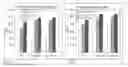
The following FIGS. 1 and 2 show results of tension tests, on the one hand for the reference alloy 825 and on the other hand for alternative alloys.
Graphical representation of the results of the tension tests at room temperature (mean values) versus condition.
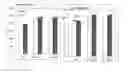
Molybdenum has a positive effect on the offset yield strength and the tensile strength. The positive influence of molybdenum is illustrated in FIGS. 3 and 4.
Graphical representation of the results of the tension tests at room temperature (mean values) versus molybdenum content.
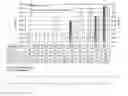
The hot-cracking sensitivity of the Alloy 825, which is an Ni-base alloy, was investigated by means of the PVR test (program-controlled deformation cracking test). The critical crosshead speed Vcr in tension was determined by applying a linearly increasing crosshead speed during TIG welding. The investigation results are illustrated in the following graph. The weldability of the material became better with higher crosshead speed and smaller hot-cracking tendency. The titanium-free, high-molybdenum variants (PV 506 and PV 507) exhibited fewer cracks than the standard alloy (PV 942).
| TABLE 6 |
| (chemical composition in wt %) |
| Heat | C | Mn | Si | P | S | Cr | Ni | Mo | Ti |
| 942 | 0.006 | 0.76 | 0.28 | 0.012 | 0.002 | 22.65 | 39.42 | 3.17 | 0.80 |
| (Prior art) | |||||||||
| 506 | 0.01 | 0.86 | 0.31 | 0.005 | 0.005 | 23.2 | 39.0 | 4.9 | 0.06 |
| (invention) | |||||||||
| 507 | 0.01 | 0.86 | 0.31 | 0.005 | 0.005 | 23.2 | 39.2 | 5.9 | 0.06 |
| (invention) | |||||||||
| Heat | |||||||||
| 942 | V | Nb | Cu | Fe | Al | Co | B | N | W |
| (Prior art) | 1.94 | R30, | 0.14 | 0.11 | |||||
| 506 | 5 | ||||||||
| (invention) | 0.01 | 0.13 | 2.4 | 28.8 | 0.14 | 0.28 | 0.003 | 0.02 | 0.10 |
| 507 | |||||||||
| (invention) | 0.01 | 0.13 | 2.4 | 28.7 | 0.14 | 0.28 | 0.003 | 0.02 | 0.11 |
The task is also accomplished by a process for the manufacture of an alloy that has a composition according to one of the objective claims, wherein
-
- a) the alloy is melted openly in the continuous or ingot casting,
- b) to eliminate the segregations caused by the increased molybdenum content, a homogenizing annealing of the produced blooms/billets is performed at 1150-1250° C. for 15 to 25 h, wherein
- c) the homogenising annealing is performed in particular following a first hot forming.
Optionally, the alloy may also be produced by ESR/VAR remelting.
The alloy according to the invention will preferably be used as a structural part in the oil and gas industry.
Product forms suitable for this purpose are sheets, strips, pipes (longitudinally welded and seamless), bars or forgings.
Table 6 compares Alloy 825 (standard) with two alloys according to the invention.
| TABLE 6 |
| (chemical composition in wt %) |
| Heat | C | Mn | Si | P | S | Cr | Ni | Mo | Ti |
| PV 661 | 0.006 | 0.75 | 0.28 | 0.003 | 22.9 | 39.9 | 3.32 | 0.79 | |
| (Prior art) | |||||||||
| PV 662 | 0.0066 | 0.75 | 0.26 | 0.003 | 0.0011 | 22.9 | 39.7 | 5.86 | 0.002 |
| (invention) | |||||||||
| PV 663 | 0.0071 | 0.77 | 0.28 | 0.004 | 0.0013 | 22.7 | 39.4 | 5.76 | <0.002 |
| (invention) | |||||||||
| Heat | V | Nb | Cu | Fe | Al | Co | B | N | Mg |
| PV 661 | <0.002 | 0.004 | 1.81 | 29.8 | 0.148 | 0.01 | 0.003 | 0.0011 | 0.012 |
| (Prior art) | |||||||||
| PV 662 | <0.002 | <0.002 | 1.80 | 28.4 | 0.142 | 0.009 | 0.003 | 0.0016 | 0.01 |
| (invention) | |||||||||
| PV 663 | 0.37 | 0.004 | 1.81 | 28.5 | 0.155 | 0.005 | 0.003 | 0.0015 | 0.01 |
| (invention) | |||||||||
Claims
1: Titanium-free alloy with high pitting and crevice corrosion resistance as well as high offset yield strength in the cold-worked condition, with (in wt %)
| C | max. 0.02% | |
| S | max. 0.01% | |
| N | max. 0.03% | |
| Cr | 20.0-23.0% | |
| Ni | 39.0-44.0% | |
| Mn | 0.4-<1.0% | |
| Si | 0.1-<0.5% | |
| Mo | >4.0-<7.0% | |
| Nb | max. 0.15% | |
| Cu | >1.5-<2.5% | |
| Al | 0.05-<0.3% | |
| Co | max. 0.5% | |
| B | 0.001-<0.005% | |
| Mg | 0.005-<0.015% | |
| Fe | the rest as well as melting-related impurities. | |
2: Alloy according to claim 1 with (in wt %)
| C | max. 0.015% | |
| S | max. 0.005% | |
| N | max. 0.02% | |
| Cr | 21.0-<23% | |
| Ni | >39.0-<43.0% | |
| Mn | 0.5-0.9% | |
| Si | 0.2-<0.5% | |
| Mo | >4.5-6.5% | |
| Nb | max. 0.15% | |
| Cu | >1.6-<2.3% | |
| Al | 0.06-<0.25% | |
| Co | max. 0.5% | |
| B | 0.002-0.004% | |
| Mg | 0.006-0.015% | |
| Fe | the rest as well as melting-related impurities. | |
4: Alloy according to claim 1, which if necessary contains (in wt %) V>0-1.0%, especially 0.2-0.7%.
5: Process for the manufacture of an alloy that has a composition according to claim 1, wherein
a) the alloy is melted openly in continuous or ingot casting,
b) to eliminate the segregations caused by the increased molybdenum content, a homogenizing annealing of the produced blooms/billets is performed at 1150-1250° C. for 15 to 25 h, wherein
c) the homogenizing annealing is performed in particular following a first hot forming.
6: Use of the alloy according to claim 1 as a structural part in the oil and gas industry.
7: Use according to claim 6, wherein the structural parts exist in the production forms sheet, strip, pipe (longitudinally welded and seamless), bar or as forging.
Images & Drawings included:
Sources:
- United States Patent and Trademark Office - verify current appl. status at the USPTO↗
Similar patent applications:
- » 20130204163
Guide wire core wire made from a substantially titanium-free alloy for enhanced guide wire steering response - » 20150231370
GUIDE WIRE CORE WIRE MADE FROM A SUBSTANTIALLY TITANIUM-FREE ALLOY FOR ENHANCED GUIDE WIRE STEERING RESPONSE - » 20240018635
USE OF A TITANIUM-FREE NICKEL-CHROMIUM-IRON-MOLYBDENUM ALLOY - » 20180202024
METHOD FOR PRODUCING TITANIUM OR TITANIUM ALUMINUM ALLOYS THROUGH TWO-STAGE ALUMINOTHERMIC REDUCTION AND OBTAINING TITANIUM-FREE CRYOLITE AS BYPRODUCTS
Recent applications in this class:
- » 20250243557 2025-07-31
ULTRAHIGH-STRENGTH COLD-ROLLED STEEL STRIP HAVING TENSILE STRENGTH OF 1450 MPA OR ABOVE AND MANUFACTURING METHOD THEREFOR - » 20250171871 2025-05-29
High Strength, Cold Rolled Steel With Reduced Sensitivity to Hydrogen Embrittlement and Method for the Manufacture Thereof - » 20250146097 2025-05-08
HIGH-STRENGTH HOT DIP-COATED STEEL STRIP WITH PLASTICITY BROUGHT ABOUT BY MICROSTRUCTURAL TRANSFORMATION AND METHOD FOR PRODUCTION THEREOF - » 20250129447 2025-04-24
METHODFOR MANUFACTURING NANOCRYSTAL ALLOY RIBBON, AND METHOD FOR MANUFACTURING MAGNETIC SHEET - » 20250011894 2025-01-09
A HOT-ROLLED STEEL STRIP PRODUCT AND METHOD FOR ITS PRODUCTION - » 20240327944 2024-10-03
PROCESS FOR DIRECT PRODUCTION OF A TRIP STEEL STRIP IN AN INTEGRATED CASTING-ROLLING PLANT AND A TRIP STEEL STRIP PRODUCED BY THE PROCESS - » 20240254587 2024-08-01
ROLL FORMING PROCESS WITH HEAT SOURCE LOCATIONS FOR FORMING A METAL ARTICLE WITH SELECTIVE THERMAL FORMING/FLANGING/TRIMMING OPERATIONS - » 20240229184 2024-07-11
COILING TEMPERATURE INFLUENCED COLD ROLLED STRIP OR STEEL - » 20240229183 2024-07-11
COILING TEMPERATURE INFLUENCED COLD ROLLED STRIP OR STEEL - » 20240191319 2024-06-13
STEEL STRIP MADE OF A HIGH-STRENGTH MULTIPHASE STEEL AND PROCESS FOR PRODUCING SUCH A STEEL STRIP
Recent applications for this Assignee:
- » 20250236941 2025-07-24
METHOD FOR PRODUCING A COMPONENT FROM THE SEMI-FINISHED PRODUCT OF A NICKEL-CHROMIUM-ALUMINUM ALLOY - » 20250215540 2025-07-03
METHOD FOR PRODUCING A SUPPORT FILM FOR CATALYTIC CONVERTERS - » 20250163550 2025-05-22
USE OF A NICKEL-IRON-CHROMIUM ALLOY HAVING HIGH RESISTANCE IN HIGHLY CORROSIVE ENVIRONMENTS AND SIMULTANEOUSLY GOOD PROCESSABILITY AND STRENGTH - » 20250163549 2025-05-22
USE OF A NICKEL-IRON-CHROMIUM ALLOY HAVING HIGH RESISTANCE IN CARBURIZING AND SULFIDIZING AND CHLORINATING ENVIRONMENTS AND SIMULTANEOUSLY GOOD PROCESSABILITY AND STRENGTH - » 20250066896 2025-02-27
METHOD FOR PRODUCING A COMPONENT MADE OF A NICKEL-CHROMIUM-ALUMINUM ALLOY AND PROVIDED WITH WELD SEAMS - » 20240018635 2024-01-18
USE OF A TITANIUM-FREE NICKEL-CHROMIUM-IRON-MOLYBDENUM ALLOY - » 20230173621 2023-06-08
WELDING FILLER MATERIAL - » 20230160040 2023-05-25
NICKEL-CHROMIUM-ALUMINUM ALLOY WITH GOOD PROCESSABILITY, CREEP RESISTANCE, AND CORROSION RESISTANCE, AND USE THEREOF - » 20230106938 2023-04-06
POWDER MADE OF A COBALT-CHROMIUM ALLOY - » 20230084075 2023-03-16
USE OF A NICKEL-CHROMIUM-IRON ALLOY