Method for measuring the concentration of a photoresist in a stripping liquid
US20170003216A1
2017-01-05
14/647,100
2014-05-23
✅ Patent granted
US 9,797,828 B2
2017-10-24
WO; PCT/CN2014/078266; 20140523
WO; WO2015/143768; 20151001
Jamil Ahmed
2034-05-23
Abstract:
The present invention discloses a method for measuring the concentration of a photoresist in a stripping liquid. In the method for measuring the concentration of a photoresist in a stripping liquid, a plurality of standard photoresist samples are prepared at first, then the spectrum of the standard photoresist samples and the spectrum of the test photoresist sample are collected, and the nth derivative of the spectrum of the standard photoresist samples and the spectrum of the test photoresist sample are taken, wherein n is an integer equal to or greater than 1, a standard curve based on the nth derivative curves and calculating the concentration of the test photoresist sample is established, the concentration of a photoresist in a stripping liquid can be measured accurately according to the standard curve.
Assignee:
- SHENZHEN CHINA STAR OPTOELECTRONICS TECHNOLOGY CO., LTD. 1,397 🇨🇳 Shenzhen, China
Applicant:
Interested in similar patents?
Get notified when new applications in this technology area are published.
Classification:
G01N1/38 » CPC further
Sampling; Preparing specimens for investigation; Preparing specimens for investigation including physical details of (bio-)chemical methods covered elsewhere, e.g. , Diluting, dispersing or mixing samples
G01N2201/13 » CPC further
Features of devices classified in; Circuits of general importance; Signal processing Standards, constitution
G01N21/33 » CPC main
Investigating or analysing materials by the use of optical means, i.e. using sub-millimetre waves, infrared, visible or ultraviolet light; Systems in which incident light is modified in accordance with the properties of the material investigated; Colour; Spectral properties, i.e. comparison of effect of material on the light at two or more different wavelengths or wavelength bands; Investigating relative effect of material at wavelengths characteristic of specific elements or molecules, e.g. atomic absorption spectrometry using ultra-violet light
G01J3/00 IPC
Spectrometry; Spectrophotometry; Monochromators; Measuring colours
G01N21/31 IPC
Investigating or analysing materials by the use of optical means, i.e. using sub-millimetre waves, infrared, visible or ultraviolet light; Systems in which incident light is modified in accordance with the properties of the material investigated; Colour; Spectral properties, i.e. comparison of effect of material on the light at two or more different wavelengths or wavelength bands Investigating relative effect of material at wavelengths characteristic of specific elements or molecules, e.g. atomic absorption spectrometry
G01N2021/3155 » CPC further
Investigating or analysing materials by the use of optical means, i.e. using sub-millimetre waves, infrared, visible or ultraviolet light; Systems in which incident light is modified in accordance with the properties of the material investigated; Colour; Spectral properties, i.e. comparison of effect of material on the light at two or more different wavelengths or wavelength bands; Investigating relative effect of material at wavelengths characteristic of specific elements or molecules, e.g. atomic absorption spectrometry with comparison of measurements at specific and non-specific wavelengths Measuring in two spectral ranges, e.g. UV and visible
Description
FIELD OF THE INVENTION
The present invention relates to a method for measuring the concentration of a photoresist in a stripping liquid.
BACKGROUND OF THE INVENTION
Photoresist (PR) is widely used as mask patterns for form layers in TFT technologies. There are two types photoresist, i.e. positive photoresist and negative photoresist. When exposed, the exposed areas of the positive photoresist are made to be solvable in a developer, and the unexposed areas are left as a pattern.
The concentration of a photoresist in a stripping liquid (also be called as stripper) is usually measured by UV-VIS (Ultraviolet and Visible Spectrophotometer). In this method, the absorbance are read directly and stored in a database to measure the concentration of a photoresist in a stripping liquid. In this method, the operation is complicated and it is not suitable to put into practice.
SUMMARY OF THE INVENTION
The present invention provides a method for measuring the concentration of a photoresist in a stripping liquid, which can measure the concentration of a photoresist in a stripping liquid accurately.
The present invention is realized in such a way that: A method for measuring the concentration of a photoresist in a stripping liquid, the method for measuring the concentration of a photoresist in a stripping liquid comprising the steps of:
S102: preparing standard photoresist samples;
S104: collecting the spectrum of the standard photoresist samples and the spectrum of the test photoresist sample; and
S106: taking the nth derivative of the spectrum of the standard photoresist samples and the spectrum of the test photoresist sample, wherein n is an integer equal to or greater than 1, and storing the nth derivative curves of the the nth derivative of the spectrum of the standard photoresist samples and the spectrum of the test photoresist sample;
S108: establishing a standard curve based on the nth derivative curves and calculating the concentration of the test photoresist sample.
Preferably, in step S102, photoresist is coated on a glass, an exposure process, a developing process and an etching process are performed, and a stripping process is simulated in a beaker by stripping the photoresist with a target weight, such as to obtain the standard photoresist samples with target concentrations.
Preferably, in step S104, the spectrum of the standard photoresist samples and the spectrum of the test photoresist sample are collected by ultraviolet and visible spectrophotometer.
Preferably, the step S104 comprises the steps of:
solvent preparing step: selecting a solvent as the reference solution;
the spectrum of the stripping liquid collecting step: diluting the stripping liquid with the reference solution, collecting the spectrum of the stripping liquid in the predetermined wavelength;
the spectrum of the standard photoresist samples collecting step: diluting a plurality of standard photoresist samples with the reference solution, collecting the spectrum of the plurality of standard photoresist samples in the predetermined wavelength;
the spectrum of the test photoresist sample collecting step: diluting the test photoresist sample with the reference solution, collecting the spectrum of the test photoresist sample in the predetermined wavelength.
Preferably, in step S106, taking the nth derivative of the spectrum of the stripping liquid, the spectrum of the standard photoresist samples and the spectrum of the test photoresist sample, wherein n is 1,2,3 or 4, and storing the nth derivative curves of the nth derivative of the spectrum of the stripping liquid, the spectrum of the standard photoresist samples and the spectrum of the test photoresist sample.
Preferably, in step S108, if the absorbance of the nth derivative curves of the nth derivative of the spectrum of the stripping liquid at a first wavelength is zero, and both the absorbance of the nth derivative curves of the nth derivative of the spectrum of the standard photoresist samples at the first wavelength and the absorbance of the nth derivative curves of the nth derivative of the spectrum of the test photoresist sample at the first wavelength are at respective troughs, then establishing the standard curve based on the respective troughs and the concentration of the photoresist of the standard photoresist samples.
Preferably, in step S108, if the absorbance of the nth derivative curves of the nth derivative of the spectrum of the stripping liquid at a second wavelength is zero, and both the absorbance of the nth derivative curves of the nth derivative of the spectrum of the standard photoresist samples at the second wavelength and the absorbance of the nth derivative curves of the nth derivative of the spectrum of the test photoresist sample at the second wavelength are at respective peaks, then establishing the standard curve based on the respective peaks and the concentration of the photoresist of the standard photoresist samples.
Preferably, in step S108, if the absorbance of the nth derivative curves of the nth derivative of the spectrum of the stripping liquid between a third wavelength and a fourth wavelength is zero, both the absorbance of the nth derivative curves of the nth derivative of the spectrum of the standard photoresist samples and the absorbance of the nth derivative curves of the nth derivative of the spectrum of the test photoresist samples at the third wavelength are at respective troughs, and both the absorbance of the nth derivative curves of the nth derivative of the spectrum of the standard photoresist samples and the absorbance of the nth derivative curves of the nth derivative of the spectrum of the test photoresist samples at the fourth wavelength are at respective peaks, then establishing the standard curve based on the difference of the absorbance between the third wavelength and the fourth wavelength and the concentration of the photoresist of the standard photoresist samples.
Preferably, the stripping liquid is organic amine stripping liquid.
Preferably, the photoresist is a phenolic resin positive type photoresist.
According to the present invention, in the method for measuring the concentration of a photoresist in a stripping liquid, a plurality of standard photoresist samples are prepared at first, then the spectrum of the standard photoresist samples and the spectrum of the test photoresist sample are collected, and the nth derivative of the spectrum of the standard photoresist samples and the spectrum of the test photoresist sample are taken, wherein n is an integer equal to or greater than 1, a standard curve based on the nth derivative curves and calculating the concentration of the test photoresist sample is established, the concentration of a photoresist in a stripping liquid can be measured accurately according to the standard curve.
For more clearly and easily understanding above content of the present invention, the following text will take a preferred embodiment of the present invention with reference to the accompanying drawings for detail description as follows.
BRIEF DESCRIPTION OF THE DRAWINGS
The drawings described herein are for illustration purposes only and are not intended to limit the scope of the present disclosure in any way.
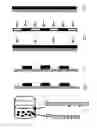
FIG. 1 is a schematic view illustrating the step of preparing standard photoresist samples according to an embodiment of the present invention;
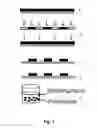
FIG. 2 is a schematic view illustrating that both the absorbance of the nth derivative curves of the nth derivative of the spectrum of the standard photoresist samples and the absorbance of the nth derivative curves of the nth derivative of the spectrum of the test photoresist sample at the first wavelength λ1 are at respective troughs in another embodiment of the present invention;
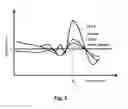
FIG. 3 is a schematic view illustrating that both the absorbance of the nth derivative curves of the nth derivative of the spectrum of the standard photoresist samples and the absorbance of the nth derivative curves of the nth derivative of the spectrum of the test photoresist sample at the second wavelength λ2 are at respective peaks in another embodiment of the present invention;
FIG. 4 is a schematic view illustrating that both the absorbance of the nth derivative curves of the nth derivative of the spectrum of the standard photoresist samples and the absorbance of the nth derivative curves of the nth derivative of the spectrum of the test photoresist samples at the third wavelength λ3 are at respective troughs, and both the absorbance of the nth derivative curves of the nth derivative of the spectrum of the standard photoresist samples and the absorbance of the nth derivative curves of the nth derivative of the spectrum of the test photoresist samples at the fourth wavelength λ4 are at respective peaks in yet another embodiment of the present invention; and
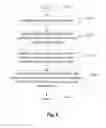
FIG. 5 is a flowchart of the method for measuring the concentration of a photoresist in a stripping liquid according to yet another embodiment of the present invention.
DETAILED DESCRIPTION OF THE PREFERRED EMBODIMENTS
The embodiments of the present invention will be described in detail with reference to the accompanying drawings.
As shown in FIG. 1 to FIG. 5, the method for measuring the concentration of a photoresist in a stripping liquid in the present embodiment comprises the steps of:
S102: preparing standard photoresist samples;
S104: collecting the spectrum of the standard photoresist samples and the spectrum of the test photoresist sample; and
S106: taking the nth derivative of the spectrum of the standard photoresist samples and the spectrum of the test photoresist sample, wherein n is an integer equal to or greater than 1, and storing the nth derivative curves of the the nth derivative of the spectrum of the standard photoresist samples and the spectrum of the test photoresist sample;
S108: establishing a standard curve based on the nth derivative curves and calculating the concentration of the test photoresist sample according to the standard curve.
In the present embodiment, the stripping liquid is organic amine stripping liquid. And the photoresist is a phenolic resin positive type photoresist.
As shown in FIG. 1, in step S102, photoresist is coated on a glass (step A), an exposure process (step B), a developing process (step C) and an etching process (step D) are performed, and a stripping process (step F) is simulated in a beaker by stripping the photoresist with a target weight, such as to obtain the standard photoresist samples with target concentrations. The difference between the step S102 and the practical photo lithography of TFT array process, metal layers and non-metal layers are not deposited on the glass in step S102.
In step S104, the spectrum of the standard photoresist samples and the spectrum of the test photoresist sample are collected by ultraviolet and visible spectrophotometer.
The step S104 comprises the steps of:
solvent preparing step: selecting a solvent as the reference solution, the solvent can be selected based on the dissolution performance, economic factor and safety factor;
baseline scanning step: scanning the reference solution in visible light region and ultraviolet light region;
the spectrum of the stripping liquid collecting step: diluting the stripping liquid with the reference solution, collecting the spectrum of the stripping liquid in the predetermined wavelength;
the spectrum of the standard photoresist samples collecting step: diluting a plurality of standard photoresist samples (3-5 standard photoresist samples for example) with the reference solution, collecting the spectrum of the plurality of standard photoresist samples in the predetermined wavelength;
the spectrum of the test photoresist sample collecting step: diluting the test photoresist sample with the reference solution, collecting the spectrum of the test photoresist sample in the predetermined wavelength.
In step S106, the nth derivative of the spectrum of the stripping liquid, the spectrum of the standard photoresist samples and the spectrum of the test photoresist sample are taken wherein n is 1,2,3 or 4, and storing the nth derivative curves of the nth derivative of the spectrum of the stripping liquid, the spectrum of the standard photoresist samples and the spectrum of the test photoresist sample. The nth derivative of the spectrum of the stripping liquid, the spectrum of the standard photoresist samples and the spectrum of the test photoresist sample maybe taken by a operation software or drawing software. In FIG. 2, FIG. 3 and FIG. 4, the reference mark Fresh stripper means the nth derivative curves of the nth derivative of the spectrum of the stripping liquid, the reference mark Sample means the nth derivative curves of the nth derivative of the spectrum of the test photoresist sample, the reference mark STD 1 means the nth derivative curves of the nth derivative of the spectrum of the first standard photoresist sample, the reference mark STD 2 means the nth derivative curves of the nth derivative of the spectrum of the second standard photoresist sample.
In step S108, if the absorbance of the nth derivative curves of the nth derivative of the spectrum of the stripping liquid at a first wavelength λ1 is zero, and both the absorbance of the nth derivative curves of the nth derivative of the spectrum of the standard photoresist samples and the absorbance of the nth derivative curves of the nth derivative of the spectrum of the test photoresist sample at the first wavelength λ1 are at respective troughs, then establishing the standard curve based on the respective troughs and the concentration of the photoresist of the standard photoresist samples.
In step S108, if the absorbance of the nth derivative curves of the nth derivative of the spectrum of the stripping liquid at a second wavelength λ2 is zero, and both the absorbance of the nth derivative curves of the nth derivative of the spectrum of the standard photoresist samples and the absorbance of the nth derivative curves of the nth derivative of the spectrum of the test photoresist sample at the second wavelength λ2 are at respective peaks, then establishing the standard curve based on the respective peaks and the concentration of the photoresist of the standard photoresist samples.
In step S108, if the absorbance of the nth derivative curves of the nth derivative of the spectrum of the stripping liquid between a third wavelength λ3 and a fourth wavelength λ4 is zero, both the absorbance of the nth derivative curves of the nth derivative of the spectrum of the standard photoresist samples and the absorbance of the nth derivative curves of the nth derivative of the spectrum of the test photoresist samples at the third wavelength λ3 are at respective troughs, and both the absorbance of the nth derivative curves of the nth derivative of the spectrum of the standard photoresist samples and the absorbance of the nth derivative curves of the nth derivative of the spectrum of the test photoresist samples at the fourth wavelength λ4 are at respective peaks, then establishing the standard curve based on the difference of the absorbance between the third wavelength λ3 and the fourth wavelength λ4 and the concentration of the photoresist of the standard photoresist samples.
The concentration of a photoresist in a stripping liquid can be measured accurately according to the standard curve. The standard curve is usually a straight line. By this way, the concentration of a photoresist in a stripping liquid can be obtained visually and directly. Thus, the time of the exchange of stripping liquid can be known in practical photo lithography of TFT array process. The life span of the stripping liquid can be extended. The method for measuring the concentration of a photoresist in a stripping liquid according to the present invention may be widely used in TFT technical field.
While the present invention has been described with reference to certain embodiments, it will be understood by those skilled in the art that various changes may be made and equivalents may be substituted without departing from the scope of the present invention. In addition, many modifications may be made to adapt a particular situation or material to the teachings of the present invention without departing from its scope. Therefore, it is intended that the present invention not be limited to the particular embodiment disclosed, but that the present invention will include all embodiments falling within the scope of the appended claims.
Claims
What is claimed is:1. A method for measuring the concentration of a photoresist in a stripping liquid, comprising the steps of:
S102: preparing standard photoresist samples;
S104: collecting the spectrum of the standard photoresist samples and the spectrum of the test photoresist sample;
S106: taking the nth derivative of the spectrum of the standard photoresist samples and the spectrum of the test photoresist sample, wherein n is an integer equal to or greater than 1, and storing the nth derivative curves of the the nth derivative of the spectrum of the standard photoresist samples and the spectrum of the test photoresist sample; and
S108: establishing a standard curve based on the nth derivative curves and calculating the concentration of the test photoresist sample.
2. The method for measuring the concentration of a photoresist in a stripping liquid of claim 1, wherein in step S102, photoresist is coated on a glass, an exposure process, a developing process and an etching process are performed, and a stripping process is simulated in a beaker by stripping the photoresist with a target weight, such as to obtain the standard photoresist samples with target concentrations.
3. The method for measuring the concentration of a photoresist in a stripping liquid of claim 1, wherein in step S104, the spectrum of the standard photoresist samples and the spectrum of the test photoresist sample are collected by ultraviolet and visible spectrophotometer.
4. The method for measuring the concentration of a photoresist in a stripping liquid of claim 1, wherein the step S104 comprises the steps of:
solvent preparing step: selecting a solvent as the reference solution;
the spectrum of the stripping liquid collecting step: diluting the stripping liquid with the reference solution, collecting the spectrum of the stripping liquid in the predetermined wavelength;
the spectrum of the standard photoresist samples collecting step: diluting a plurality of standard photoresist samples with the reference solution, collecting the spectrum of the plurality of standard photoresist samples in the predetermined wavelength; and
the spectrum of the test photoresist sample collecting step: diluting the test photoresist sample with the reference solution, collecting the spectrum of the test photoresist sample in the predetermined wavelength.
5. The method for measuring the concentration of a photoresist in a stripping liquid of claim 4, wherein in step S106, taking the nth derivative of the spectrum of the stripping liquid, the spectrum of the standard photoresist samples and the spectrum of the test photoresist sample, wherein n is 1,2,3 or 4, and storing the nth derivative curves of the nth derivative of the spectrum of the stripping liquid, the spectrum of the standard photoresist samples and the spectrum of the test photoresist sample.
6. The method for measuring the concentration of a photoresist in a stripping liquid of claim 5, wherein in step S108, if the absorbance of the nth derivative curves of the nth derivative of the spectrum of the stripping liquid at a first wavelength is zero, and both the absorbance of the nth derivative curves of the nth derivative of the spectrum of the standard photoresist samples and the absorbance of the nth derivative curves of the nth derivative of the spectrum of the test photoresist sample at the first wavelength are at respective troughs, then establishing the standard curve based on the respective troughs and the concentration of the photoresist of the standard photoresist samples.
7. The method for measuring the concentration of a photoresist in a stripping liquid of claim 5, wherein in step S108, if the absorbance of the nth derivative curves of the nth derivative of the spectrum of the stripping liquid at a second wavelength is zero, and both the absorbance of the nth derivative curves of the nth derivative of the spectrum of the standard photoresist samples and the absorbance of the nth derivative curves of the nth derivative of the spectrum of the test photoresist sample at the second wavelength are at respective peaks, then establishing the standard curve based on the respective peaks and the concentration of the photoresist of the standard photoresist samples.
8. The method for measuring the concentration of a photoresist in a stripping liquid of claim 5, wherein in step S108, if the absorbance of the nth derivative curves of the nth derivative of the spectrum of the stripping liquid between a third wavelength and a fourth wavelength is zero, both the absorbance of the nth derivative curves of the nth derivative of the spectrum of the standard photoresist samples and the absorbance of the nth derivative curves of the nth derivative of the spectrum of the test photoresist samples at the third wavelength are at respective troughs, and both the absorbance of the nth derivative curves of the nth derivative of the spectrum of the standard photoresist samples and the absorbance of the nth derivative curves of the nth derivative of the spectrum of the test photoresist samples at the fourth wavelength are at respective peaks, then establishing the standard curve based on the difference of the absorbance between the third wavelength and the fourth wavelength and the concentration of the photoresist of the standard photoresist samples.
9. The method for measuring the concentration of a photoresist in a stripping liquid of claim 6, wherein the stripping liquid is organic amine stripping liquid.
10. The method for measuring the concentration of a photoresist in a stripping liquid of claim 7, wherein the stripping liquid is organic amine stripping liquid.
11. The method for measuring the concentration of a photoresist in a stripping liquid of claim 8, wherein the stripping liquid is organic amine stripping liquid.
12. The method for measuring the concentration of a photoresist in a stripping liquid of claim 6, wherein the photoresist is a phenolic resin positive type photoresist.
13. The method for measuring the concentration of a photoresist in a stripping liquid of claim 7, wherein the photoresist is a phenolic resin positive type photoresist.
14. The method for measuring the concentration of a photoresist in a stripping liquid of claim 8, wherein the photoresist is a phenolic resin positive type photoresist.
Images & Drawings included:


Sources:
- United States Patent and Trademark Office - verify current appl. status at the USPTO↗
Recent applications in this class:
- » 20250224330 2025-07-10
UV-BASED, IN-SITU SOIL CARBON MEASUREMENT SYSTEM - » 20250208035 2025-06-26
ANALYZER WITH A LOW-MAINTENANCE LIGHT SOURCE ASSEMBLY - » 20250130163 2025-04-24
ON-LINE MONITORING OF SYNTHESIS REACTIONS - » 20250123200 2025-04-17
METHOD FOR DETECTING AN OBJECT CONTAINING RECYCLED PLASTIC MATERIALS BY QUALITATIVE AND SEMI-QUANTITATIVE DETECTIONS - » 20250110045 2025-04-03
ON-CHIP WIDE UV-VIS-NIR SPECTRAL SENSOR - » 20250102426 2025-03-27
SYSTEM AND METHOD FOR RAPID DETERMINATION OF FREE SULFUR DIOXIDE CONCENTRATION IN A LIQUID - » 20250093261 2025-03-20
LINE-ILLUMINATING LIGHT SOURCE FOR IMAGING APPARATUS, IMAGING APPARATUS INCLUDING THE SAME, AND SKIN ANALYZING APPARATUS INCLUDING THE IMAGING APPARATUS - » 20250027876 2025-01-23
DETECTING AND DIFFERENTIATING NEUROTRANSMITTERS USING ULTRAVIOLET PLASMONIC-ENGINEERED NATIVE FLUORESCENCE - » 20240377317 2024-11-14
SENSOR DEVICE FOR DETECTING BIOLOGICAL PARTICLES AND NON-BIOLOGICAL PARTICLES - » 20240361235 2024-10-31
COMPLEX GAS SENSOR, MANUFACTURING METHOD THEREOF, AND CONTROL METHOD OF COMPLEX GAS SENSOR
Recent applications for this Assignee:
- » 20220052204 2022-02-17
Amorphous silicon thin film transistor and method for manufacturing the same - » 20210405424 2021-12-30
Array substrate - » 20210358953 2021-11-18
Pixel structure, array substrate, and display device - » 20210336040 2021-10-28
Manufacturing method of TFT substrate - » 20210335832 2021-10-28
Thin film transistor (TFT) array substrate and display panel - » 20210191204 2021-06-24
Pixel structure and display panel containing same - » 20210090528 2021-03-25
Display driving system - » 20210083229 2021-03-18
OLED display panel and manufacturing method thereof - » 20210083010 2021-03-18
Color filter substrate having a filter layer disposed on quantum dot layer - » 20210082358 2021-03-18
White balance method and device for LCD panel