Nylon blend for improved mechanical properties of monofilaments and multifilament fibers
US20170009384A1
2017-01-12
15/115,410
2015-01-30
✅ Patent granted
US 9,834,868 B2
2017-12-05
WO; PCT/US2015/013753; 20150130
WO; WO2015/116922; 20150806
Ana Woodward
Eversheds Sutherland (US) LLP
2035-01-30
Abstract:
A filament comprising a polymer blend and specific articles comprising the filament are disclosed. The polymer blend includes an aliphatic nylon and a semiaromatic nylon. The aliphatic nylon is the major component of the blend and semiaromatic nylon is the minor component of the blend. The aliphatic nylon can be Nylon 6, Nylon 66, Nylon 610, Nylon 612, Nylon 12, and mixtures thereof. The semiaromatic nylon can be 6I/6T, 6T/6I, and mixtures thereof. The nylon blend filament provides enhanced mechanical properties such as modulus, ultimate strength, and yield strength with improved processability and reduced diameter variability at a reduced cost.
Assignee:
- Shakespeare Company, LLC 15 🇺🇸 Boca Raton, FL, United States
Applicant:
Interested in similar patents?
Get notified when new applications in this technology area are published.
Classification:
C08G69/265 » CPC further
Macromolecular compounds obtained by reactions forming a carboxylic amide link in the main chain of the macromolecule; Polyamides derived from amino-carboxylic acids or from polyamines and polycarboxylic acids derived from polyamines and polycarboxylic acids from at least two different diamines or at least two different dicarboxylic acids
C08L2205/02 » CPC further
Polymer mixtures characterised by other features containing two or more polymers of the same -group
C08L2205/06 » CPC further
Polymer mixtures characterised by other features having improved processability or containing aids for moulding methods
C08L2205/16 » CPC further
Polymer mixtures characterised by other features containing polymeric additives characterised by shape Fibres; Fibrils
D01F6/805 » CPC further
Monocomponent artificial filaments or the like of synthetic polymers; Manufacture thereof from copolycondensation products from copolyamides from aromatic copolyamides
C08L77/00 IPC
Compositions of polyamides obtained by reactions forming a carboxylic amide link in the main chain ; Compositions of derivatives of such polymers
C08G69/00 IPC
Macromolecular compounds obtained by reactions forming a carboxylic amide link in the main chain of the macromolecule
C08G69/26 IPC
Macromolecular compounds obtained by reactions forming a carboxylic amide link in the main chain of the macromolecule; Polyamides derived from amino-carboxylic acids or from polyamines and polycarboxylic acids derived from polyamines and polycarboxylic acids
C08L77/02 » CPC further
Compositions of polyamides obtained by reactions forming a carboxylic amide link in the main chain ; Compositions of derivatives of such polymers Polyamides derived from omega-amino carboxylic acids or from lactams thereof
C08L77/06 » CPC further
Compositions of polyamides obtained by reactions forming a carboxylic amide link in the main chain ; Compositions of derivatives of such polymers Polyamides derived from polyamines and polycarboxylic acids
D01F1/02 » CPC further
Addition of substances to the spinning solution or to the melt
D01F6/80 IPC
Monocomponent artificial filaments or the like of synthetic polymers; Manufacture thereof from copolycondensation products from copolyamides
D01F6/90 » CPC main
Monocomponent artificial filaments or the like of synthetic polymers; Manufacture thereof from mixtures of polycondensation products as major constituent with other polymers or low-molecular-weight compounds of polyamides
Description
CROSS REFERENCE TO RELATED APPLICATIONS
The present application claims priority to U.S. Provisional Application No. 61/933,997, filed Jan. 31, 2014, entitled “Novel Nylon Blend for Improved Mechanical Properties of Fiber and Filaments,” which is incorporated herein by reference.
FIELD
This application contemplates a filament made from a polymer blend and specific articles comprised of the filament. The filament includes a blend of an aliphatic nylon and a semiaromatic nylon.
BACKGROUND
Currently, there is enormous use of nylon fiber and filament materials all over the world. About 6 million pounds is consumed annually to make clothing, carpets, ropes, luggage, seat belts, filtration fabrics, musical instrument strings, fishing line, and tents, to name a few items. However, many nylon filament materials suffer from low strength, deformability, and high cost. Thus, there is a need to produce a nylon filament having improved thermal and mechanical properties at a low cost.
The present application provides a unique nylon blend filament having surprisingly enhanced mechanical properties such as modulus, ultimate strength, and yield strength with improved processability and reduced diameter variability at a reduced cost.
SUMMARY
A filament that includes a blend of an aliphatic nylon and a semiaromatic nylon is disclosed. The aliphatic nylon is the major component of the blend and semiaromatic nylon is the minor component of the blend. In one aspect, the aliphatic nylon is Nylon 612 and the semiaromatic nylon is 6I/6T copolymer. In another aspect, the filament is Nylon 66 and the semiaromatic nylon is 6I/6T copolymer.
BRIEF DESCRIPTION OF THE DRAWINGS
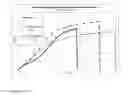
FIG. 1 illustrates a graph of toughness as defined by the area under the stress-strain curve.
DETAILED DESCRIPTION
This application considers a novel filament made from a nylon blend and specific articles comprised of the filament. More precisely, the filament includes a nylon blend of an aliphatic nylon and a semiaromatic nylon. Surprisingly, the novel fiber and filament described herein has enhanced physical and mechanical properties as compared to an aliphatic nylon filament. In addition, the semiaromatic nylon is 30-40% less costly as compared to aliphatic nylons, so the filament described herein is more economical to produce.
The major component in the blend is an aliphatic nylon and the minor component is a semiaromatic nylon. The aliphatic nylon can be Nylon 6, Nylon 66, Nylon 610, Nylon 612, Nylon 12, and mixtures thereof. The semiaromatic nylon can be 6I/6T, 6T/6I, and mixtures thereof In one embodiment, the semiaromatic nylon is 6I/6T. In another embodiment, the semiaromatic nylon is 6T/6I. The 6I/6T copolymer or 6T/61 copolymer cannot be drawn into a fiber or filament by itself, but a blend with the aliphatic nylon can be drawn and processed readily.
The aliphatic nylon is present in the range of about 70-94% by weight of the blend. In another embodiment, the amount of aliphatic nylon is in the range of about 87-91% by weight. The semiaromatic nylon is present in the range of about 6-30% by weight of the blend. In another embodiment, the amount of semiaromatic nylon is in the range of about 9-13% by weight.
The nylon blend filament can also contain additives mixed in prior to or during extrusion, such as dyes, pigments, optical brighteners, stabilizers and mixtures thereof There is no glass or carbon fiber in the nylon blend filament. The filament can have a diameter in the range of about 0.0025 to about 0.032 inches. The filament can be oriented or partially oriented. In addition, the filament can have a draw ratio in the range of about 2.7 to about 9.
Furthermore, an article can be made of a nylon blend filament, which includes a blend of an aliphatic nylon and a semiaromatic nylon. The article can be made from a monofilament or a multifilament fiber. The article can be a woven or knitted article. In one embodiment, the article can be made from a monofilament or a multifilament fiber comprised of a blend of nylon 66 and nylon 6I/6T.
EXAMPLES
Blends of Nylon Resins
Example 1
-
- Resin 1-HG264SI, high viscosity nylon 612, (Jarden Applied Materials)
- Resin 2-AR190SI, nylon 61/6T copolymer, (Jarden Applied Materials)
A nylon blend was prepared from 87 parts of Nylon 612 and 13 parts of Nylon 6I/6T in a V-blender and extruded into a monofilament. The equipment used in this process was a 1¼″ single screw extruder with two stage drawing and relax capabilities, and three independently controlled ovens. A round monofilament was prepared having a draw ratio of 5.5 and a final filament size of 27. Water quench was set at 75° F.
| TABLE 1 | ||
| Sample | ||
| Control | (Nylon 612 and | |
| Property | (Nylon 612) | Nylon 6I/6T Blend) |
| Diameter (in.) | 0.027 | 0.027 |
| Denier | 3606 | 3700 |
| Tensile Strength (N) | 173 | 195 |
| Tensile Stress (Po) | 4.7E+08 | 5.3E+08 |
| Elongation at Break | 16.5 | 19.0 |
| Initial Modulus (Po) | 4.0E+09 | 4.3E+09 |
| Energy to Break Point (N-m) | 4.25 | 5.88 |
| Toughness (Po) | 4.5E+07 | 6.3E+07 |
| Energy to Yield (N-m) | 0.11 | 2.20 |
| Load at Yield (Yield Stress) (Po) | 8.4E+07 | 4.6E+08 |
| Load at 10% Elongation (N) | 141 | 153 |
| Load at 15% Elongation (N) | 174 | 193 |
As shown in Table 1, one outstanding property of the nylon blend filament is the enhanced initial modulus and yield stress. The nylon blend filament had a yield stress 20-40% higher than that of the Nylon 612 control filament. Having an increase in yield stress makes these filaments or fibers ideal in applications like filtration fabrics, musical instrument strings, lively fishing lines, and high performance fabrics used in luggage and backpacks. Besides the increase in yield stress, the nylon blend filament's mechanical properties, such as initial modulus and tensile strength, were significantly better than those of the aliphatic nylon filament control.
The same filament also showed an improvement in diameter uniformity. A filament roundness improvement of more than about 60% was achieved in comparison to a Nylon 612 control filament. Improved processability and filament cross-section uniformity is crucial to many types of fibers produced with nylon including seat belts, filtration fabrics, tire reinforcement, sewing filaments, and high performance luggage fabrics. Such articles can be knitted or woven.
Yet another enhanced property of the nylon blend filament is a high glass transition temperature. Having a high glass transition temperature means that the filament is not deformed easily and holds its shape well. During the manufacturing of filaments, crimps in the filament can be made by the action of the air jet, the stuffing of the knit, and the deknit process. Such crimps can be intentional or unintentional. If unintentional, the crimp in the filament has to be removed by heating the filament close to the crystallization temperature of the filament.
Aliphatic nylons normally have a glass transition in the range of about 10-45° C., depending on the moisture content of the nylon. However, the 6I/6T copolymer has a glass transition temperature between 130-135° C., which allows the nylon blend filament to maintain its shape until a much higher temperature is reached than a filament comprised of aliphatic nylon alone. Further, the ability to hold higher crimp was greatly increased in the nylon blend filament as compared to the aliphatic nylon filament.
Bulked continuous filaments used for carpets and nylon filament used in fabrics will benefit from higher level of crimp. In each of these processes, ability to develop and retain higher level crimp or even an alternative type of crimp can be desirable. In carpets, higher crimp retention and stability can lead to lower cover weights without sacrificing surface coverage. In the case of nylon fabrics, higher crimp can provide more desirable hand (fabric feel).
In addition to the Nylon 612 blend filament, blends of 6I/6T copolymer with Nylon 66 or Nylon 6 can also address large markets like seat belt yarn, bulked continuous filament and luggage yarns.
Example 2
A commercial extrusion grade nylon 66 manufactured by Nilit Ltd named Polynil P60 and Shakespeare's nylon 6I/6T copolymer named AR190SI were used to make two nylon blends. The blends were prepared by blending the two resins in a defined ratio by weight in a V blender. The blend was extruded into 8 mil monofilament (340 denier) using a single screw extruder, water-filled quench tank, 3 ovens, and 4 roll stands having the process parameters detailed below.
| TABLE 2 | |||
| Polymer melt temperature | 520° | F. | |
| at extruder exit | |||
| Quench temperature | 150° | F. | |
| Oven 1 temperature | 315° | F. | |
| Oven 2 temperature | 340° | F. | |
| Oven 3 temperature | 400° | F. | |
| Roll stand 1 speed | 55.4 | rpm |
| Initial draw | 3.39 | |
| Overall draw | 4.91 | |
| TABLE 3 | |||
| Sample 1 | Sample 2 | ||
| Control | (Nylon 66:Nylon | (Nylon 66:Nylon | |
| Property | (100% Nylon 66) | 6I/6T 90:10) | 6I/6T 75:25) |
| Modulus (gpd) | 56.5 | 67.3 | 68.0 |
| Tenacity (gpd) | 7.4 | 8.1 | 6.7 |
| Elongation at | 15 | 18 | 22 |
| break (%) | |||
An unexpected improvement in mechanical properties was observed for the two sample blends as compared to the control, which was processed under the same conditions.
The stress-strain curve depicted in FIG. 1, below, shows increase in modulus, tenacity and elongation at break for the sample comprised of a 90/10 blend of nylon 66 and nylon 6I/6T copolymer in comparison to the control containing 100% of nylon 66 resin. A second sample comprised of a 75/25 blend exhibits an even higher elongation at break. Overall, toughness as defined by the area under the stress-strain curve increased 64% for a 90:10 blend over the nylon 66 control while the 75:25 blend increased 75%, as shown in FIG. 1, below.
Example 4
The nylon blend filament can be used to make many different articles. Several of these articles are listed below in Table 4.
| TABLE 4 | |||
| Fiber | Fiber | ||
| Article | Type | Description | Formulation |
| Rope | Multifilament | 1800 denier, | 90% N66, |
| 8 dpf | 10% N6I/6T | ||
| Carpet | Bulked | 1450 denier, | 88% N6, |
| Continuous | 18 dpf | 12% N6I/6T | |
| Multifilament | |||
| Seat belt | Multifilament | 1800 denier, | 90% N66, |
| 8 dpf | 10% N6I/6T |
| Fishing line | Monofilament | 4-20 | mil | 83% N6, 5% |
| N66, 12% | ||||
| N6I/6T | ||||
| Musical instrument | Monofilament | 18-32 | mil | 87% N612, |
| string | 13% N6I/6T | |||
| Filtration fabric | Monofilament | 6-12 | mil | 90% N610, |
| 10% N6I/6T | ||||
| Hook part (of hook | Monofilament | 8-14 | mil | 90% N66, |
| and loop fastener) | 10% N6I/6T | |||
| Conveyor belt | Monofilament | 10-20 | mil | 88% N6, |
| 12% N6I/6T | ||||
| Filament thread | Monofilament | 4-10 | mil | 83% N6, 5% |
| N66, 12% | ||||
| N6I/6T |
| Sail | Multifilament | 450 denier, | 88% N6, |
| 4 dpf | 12% N6I/6T | ||
| Awning | Multifilament | 1000 denier, | 88% N6, |
| 4 dpf | 12% N6I/6T | ||
| Harness | Monofilament | 8-14 mil; ribbon | 90% N66, |
| cross-section | 10% N6I/6T | ||
| dpf: denier per filament; | |||
| mil = .001 inches |
Claims
1. A filament comprising a two-component blend including an aliphatic nylon and a semiaromatic nylon wherein the aliphatic nylon comprises about 70-94% by weight of the blend and the semiaromatic nylon comprises about 6-30% by weight of the blend; and wherein the filament comprises a round shape.
2. The filament of claim 1 wherein the aliphatic nylon comprises a nylon selected from the group consisting of Nylon 6, Nylon 66, Nylon 610, Nylon 612, Nylon 12, and mixtures thereof.
3. The filament of claim 1 wherein the semiaromatic nylon comprises 6I/6T, 6T/6I, or mixtures thereof.
4. The filament of claim 1 wherein the semiaromatic nylon comprises Nylon 612.
5. The filament of claim 1 wherein the semiaromatic nylon comprises 6T/6I copolymer.
6. The filament of claim 1 wherein the aliphatic nylon comprises Nylon 612 and the semiaromatic nylon comprises 6I/6T copolymer.
7. The filament of claim 1 wherein the aliphatic nylon comprises Nylon 66 and the semiaromatic nylon comprises 6I/6T copolymer.
8. The filament of claim 1 wherein the aliphatic nylon comprises about 70-94% by weight of the blend and the aromatic nylon comprises about 9-13% by weight of the blend.
9. The filament of claim 1 wherein the filament is oriented or partially oriented.
10. The filament of claim 1 comprising a draw ratio in the range of about 2.7 to about 9.
11. The filament of claim 1 comprising a diameter in the range of about 0.0025 to about 0.032 inches.
12. The filament of claim 1 further comprising an additive selected from the group consisting of dyes, pigments, stabilizers, optical brighteners, and mixtures thereof.
13. A drawn, round, monofilament comprised of a two-component nylon blend consisting of about 70-94% by weight of an aliphatic nylon and about 6-30% by weight of a semiaromatic nylon.
14. The drawn, round, monofilament of claim 13 wherein the two-component nylon blend consists of about 87-91% by weight aliphatic nylon and about 9-13% by weight aromatic nylon.
15. The drawn, round, monofilament of claim 13 further comprising an additive selected from the group consisting of dyes, pigments, stabilizers, optical brighteners, and mixtures thereof.
16. An article comprising a filament including a blend of an aliphatic nylon and a semiaromatic nylon.
17. The article of claim 16 comprising a monofilament.
18. The article of claim 16 comprising a multifilament fiber.
19. The article of claim 16 comprising a woven or knitted article.
20. The article of claim 16 wherein the blend comprises nylon 66 and nylon 6I/6T.
Images & Drawings included:
Sources:
- United States Patent and Trademark Office - verify current appl. status at the USPTO↗
Similar patent applications:
Recent applications in this class:
- » 20250179693 2025-06-05
BIO-NYLON FIBER CONTAINING PLANT ACTIVE COMPONENTS AND PREPARATION METHOD THEREOF - » 20250003116 2025-01-02
FIRE RETARDANT NYLON FIBERS AND METHODS FOR MAKING THEM - » 20240271332 2024-08-15
ARTIFICIAL HAIR FIBER - » 20230193519 2023-06-22
POLYMERS HAVING STAIN RESISTANCE AND ANTIMICROBIAL/ANTIVIRAL PROPERTIES - » 20230121552 2023-04-20
Fire retardant nylon fibers and methods for making them - » 20210130985 2021-05-06
CONCRETE CURING BLANKETS AND ANTI-BACTERIAL TEXTILE FIBERS - » 20210102312 2021-04-08
Fire retardant nylon fibers and methods for making them - » 20200340144 2020-10-29
Artificial turf with marbled monofilament - » 20190382924 2019-12-19
NYLON BASED MATERIALS, FILAMENTS, AND FABRICS AND ASSOCIATED METHODS - » 20190309443 2019-10-10
Fire retardant nylon fibers and methods for making them
Recent applications for this Assignee:
- » 20180298525 2018-10-18
Nylon blend for improved mechanical properties of monofilaments and multifilament fibers - » 20180291150 2018-10-11
Medium and high molecular weight long chain aliphatic nylons and methods of making same - » 20180237956 2018-08-23
Nylon based filaments, yarns and fabrics - » 20180051395 2018-02-22
Nylon blend for improved mechanical properties of monofilaments and multifilament fibers - » 20170369650 2017-12-28
Powder compositions for laser sintering - » 20170191192 2017-07-06
Nylon based filaments, yarns, and fabrics - » 20160324067 2016-11-10
Trimmer head for use with line and blades - » 20160286717 2016-10-06
Trimmer head with incorporated line cutter - » 20160272763 2016-09-22
Medium and high molecular weight long chain aliphatic nylons and methods of making the same - » 20160007528 2016-01-14
Trimmer line for string trimmers