Product and method for cell preservation
US20170013825A1
2017-01-19
15/125,871
2015-02-19
✅ Patent granted
US 10,959,423 B2
2021-03-30
WO; PCT/SE2015/050192; 20150219
WO; WO2015/152788; 20151008
Teresa E Knight
Eversheds Sutherland (US) LLP
2035-02-19
Abstract:
The present invention relates to a product and method for cell preservation, such as cell banking of any type of cells for subsequent scientific or medical use. More closely, the invention relates to a product and a method for cryopreservation of cells using vacuum tubes provided with freeze media/cryopreservation liquid.
Assignee:
- CYTIVA SWEDEN AB 141 🇸🇪 Uppsala, Sweden
Applicant:
Interested in similar patents?
Get notified when new applications in this technology area are published.
Classification:
B01L3/50825 » CPC further
Containers or dishes for laboratory use, e.g. laboratory glassware ; Droppers; Containers for the purpose of retaining a material to be analysed, e.g. test tubes rigid containers not provided for above; Test tubes Closing or opening means, corks, bungs
A01N1/021 » CPC main
Preservation of bodies of humans or animals, or parts thereof; Preservation of living parts; Chemical aspects Preservation or perfusion media, liquids, solids or gases used in the preservation of cells, tissue, organs or bodily fluids
B01L2200/141 » CPC further
Solutions for specific problems relating to chemical or physical laboratory apparatus; Process control and prevention of errors Preventing contamination, tampering
B01L2300/042 » CPC further
Additional constructional details; Closures and closing means; Connecting closures to device or container Caps; Plugs
B01L2300/044 » CPC further
Additional constructional details; Closures and closing means; Connecting closures to device or container pierceable, e.g. films, membranes
B01L2300/0832 » CPC further
Additional constructional details; Geometry, shape and general structure cylindrical, tube shaped
A01N1/02 IPC
Preservation of bodies of humans or animals, or parts thereof Preservation of living parts
B01L3/00 IPC
Containers or dishes for laboratory use, e.g. laboratory glassware ; Droppers
F25D2303/0842 » CPC further
Details of devices using other cold materials; Details of devices using cold-storage bodies; Devices using cold storage material, i.e. ice or other freezable liquid; Position of the cold storage material in relationship to a product to be cooled inside the beverage contained in a bottle, can, drinking glass, pitcher or dispenser
A01N1/0268 » CPC further
Preservation of bodies of humans or animals, or parts thereof; Preservation of living parts; Mechanical aspects; Non-refrigerated containers specially adapted for transporting or storing living parts whilst preserving, e.g. cool boxes, blood bags or "straws" for cryopreservation Carriers for immersion in cryogenic fluid, both for slow-freezing and vitrification, e.g. open or closed "straws" for embryos, oocytes or semen
F25D3/08 » CPC further
Devices using other cold materials; Devices using cold-storage bodies using ice, e.g. ice-boxes; Movable containers portable, i.e. adapted to be carried personally
G01N1/42 » CPC further
Sampling; Preparing specimens for investigation; Preparing specimens for investigation including physical details of (bio-)chemical methods covered elsewhere, e.g. , Low-temperature sample treatment, e.g. cryofixation
Description
FIELD OF THE INVENTION
The present invention relates to a product and method for cell preservation, such as cell banking of any type of cells for subsequent scientific or medical use. More closely, the invention relates to a product and a method for cryopreservation of cells using vacuum tubes provided with freeze media/cryopreservation liquid.
BACKGROUND OF THE INVENTION
Today several cell banks exist which store cells, for example human placental or umbilical cord stem cells, for future medical use. There are also cell banks which store cells, cultivated in for example bioreactors, for scientific purposes. Common for all cell banks is that the cells are stored by cryopreservation usually in liquid nitrogen at −196° C.
Cryopreservation is a very manual and time consuming task usually performed under laminar air flow (LAF). Furthermore, it includes several steps with open handling which increases the risk of contamination. Due to the number of steps during traditional cell banking, batch to batch variations might also occur. During cryopreservation of cells, time and temperature are critical factors to eliminate stress such as asphyxiation.
Containers under vacuum, such as the Vacutainer™, are well-established products used at hospitals and care centers for rapid blood sampling. The containers comprise a vacuum tube that aseptically draws blood through a sleeved covered needle. The vacuum tube is available in various volumes and often pre-coated with various compounds to prevent for example blood clotting. The vacuum tube is inserted into the access device and when the sleeve protected needle penetrates the silicon cap on the vacuum tube the blood automatically will be withdrawn from the patient.
It would be desirable to have a product with which cell banking could be performed without bringing the cells out of the bioreactor and which significantly would shorten the time from bioreactor to the fridge. This would provide a powerful tool to establish large cell banks with very little effort.
SUMMARY OF THE INVENTION
The present invention provides a product and a method for rapid cell banking which reduces possible contamination and handling times and efforts compared to prior art.
Thus in a first aspect the invention relates to a product for cryopreservation of cells, comprising a vacuum tube provided with freeze media, and a penetratable and preferably removable cap on said tube.
Preferably the freeze media is DMSO, glycerol or methyl cellulose and the vacuum tube is filled with 5-20% v/v, preferably 10% v/v freeze media.
In one embodiment an access device is provided for receiving said vacuum tube. The access device is provided with a hollow needle to be inserted into the vacuum tube and also provided with a connector for connection to a cell source, such as a cell culture in a bioreactor.
In a second aspect, the invention relates to a method for cryopreservation of cells, comprising sampling or harvesting cells into a vacuum tube provided with freeze media; closing said tube with a penetratable cap; and freezing said tube.
In a preferred method for cryopreservation of cells, the method comprises cultivating cells in a bioreactor; harvesting or sampling cells from said bioreactor into a vacuum tube provided with freeze media, wherein the cells are instantly mixed with the freeze media; removing said tube from said bioreactor; and freezing said tube and its content.
Preferably the freeze media is DMSO, glycerol or methyl cellulose and the vacuum tube is filled with 5-20% v/v, preferably 10% v/v freeze media.
In a preferred embodiment, the cells are cultivated as a perfusion culture. Preferably the cells are cultivated to 10-200 MVC/mL.
If desired the cells are incubated before freezing.
One or more steps of the method may be automated.
The method of the invention would nearly eliminate the time from cell harvesting to cryopreservation, since it will be done in one step. Preferably, the cryopreservation tubes are stored cold before the procedure starts.
BRIEF DESCRIPTION OF THE DRAWINGS
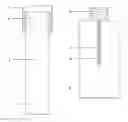
FIG. 1A shows a schematic view of a vacuum tube prepared with concentrated cryopreservation liquid.
FIG. 1B shows a schematic view of an access device for receiving the vacuum tube and having a needle for penetrating the lid of the vacuum tube.
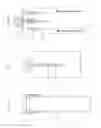
FIG. 1C shows a schematic view of the access device connected to the vacuum tube and ready to be inserted to the bioreactor for cell sampling.
DETAILED DESCRIPTION OF THE INVENTION
The present invention will now be described in relation to a non-limiting example and the accompanying figure.
FIG. 1A shows a schematic view of a vacuum tube (1) prepared with concentrated cryopreservation liquid (2). The tube is also provided with a penetratable and removable cap (3) and penetratable septum (4) of silicon or other soft material. The tube may be any vessel appropriate for cryo preservation applied with vacuum, for example tubes may be of glass or plastic.
FIG. 1B shows a schematic view of an access device (5) comprising a protective housing (5) for receiving the vacuum tube and having a needle (6) for penetrating the lid of the vacuum tube. The needle is provided with a protective sleeve (7) of rubber or silicon. The access device is provided with a Luer or other connection to a bioreactor for cell sampling directly into the vacuum tube.
FIG. 1C shows a schematic view of the access device (5) connected to the vacuum tube (1) and ready to be inserted to the bioreactor via the connection (8) for cell sampling. The cryo vessel is pushed into the protective cap (3) along the direction of the arrows. The needle will penetrate the soft material septum. The vacuum will withdraw the cell broth from the bioreactor for mixing directly with the cryopreservation liquid (freeze media). Thereafter, the tube is placed in a fridge for cell banking.
EXAMPLE
Conventional 5 ml vacuum tubes are filled with 0.5 ml concentrated DMSO (freeze media) using a syringe. A CHO (Chinese Hamster Ovary) culture is brought to up to 10-100 MVC/mL, preferably using perfusion culture. The access device with sleeve protected needle (6) is attached to the bioreactor via the connector (8). Cryo-liquid prepared vacuum tubes according to the invention are used to draw cell samples from the bioreactor. The vacuum tubes are inserted in the access device and the vacuum draws the cells broth into the tube through the needle of the access device. The cell broth and the freeze media are instantly mixed.
Thereafter the filled cryo prepared vacuum tubes are directly transferred to a cell banking fridge. If necessary, the cells in the tubes are shortly incubated before freezing.
The procedure to draw cell samples from bioreactors does not damage the cells and is very fast which enables production of large cell banks with minimum of open handling. If desired, the process may be automated.
Claims
1. A product for cryopreservation of cells, comprising a vacuum tube provided with freeze media, and a penetratable cap on said tube.
2. The product according to claim 1, wherein the freeze media is DMSO, glycerol or methyl cellulose.
3. The product according to claim 1, wherein the vacuum tube is filled with 5-20% v/v, preferably 10% v/v freeze media.
4. The product according to claim 1, comprising an access device for receiving said vacuum tube and provided with a needle to be inserted into the vacuum tube and provided with a connector for connection to a cell source, such as a cell culture in a bioreactor.
5. A method for cryopreservation of cells, comprising sampling or harvesting cells into a vacuum tube provided with freeze media; closing said tube with a penetratable cap; and freezing said tube.
6. The method according to claim 5 comprising cultivating cells in a bioreactor, harvesting cells from said bioreactor into a vacuum tube provided with freeze media, wherein the cells are instantly mixed with the freeze media; removing said tube from said bioreactor, and freezing said tube and its content.
7. The method according to claim 5, wherein the freeze media is DMSO, glycerol or methyl cellulose.
8. The method according to claim 5, wherein the vacuum tube is filled with 5-20% v/v, preferably 10% v/v freeze media.
9. The method according to claim 5, wherein the cells are cultivated as a perfusion culture.
10. The method according to claim 5, wherein the cells are cultivated to 10-200 MVC/mL.
11. The method according to claim 5, wherein one or more steps are automated.
12. The method according to claim 5, wherein the cells are incubated before freezing.
Images & Drawings included:
Sources:
- United States Patent and Trademark Office - verify current appl. status at the USPTO↗
Similar patent applications:
- » 9476485
Progenitor cell preservation factors and methods for and products of their use - » 20050181997
Progenitor cell preservation factors and methods for and products of their use - » 20130089528
Compositions and methods for preserving insulin-producing cells and insulin production and treating diabetes - » 20090222146
Method of controlling a cell that is used for the rapid cooling of a cooked product in order to preserve same
Recent applications in this class:
- » 20240397935 2024-12-05
PHOTOSYNTHETIC COMPOSITIONS AND METHODS OF PREPARING AND USING PHOTOSYNTHETIC COMPOSITIONS - » 20240373840 2024-11-14
METHODS, SYSTEMS AND COMPOSITIONS FOR RESTORATION AND PRESERVATION OF INTACT ORGANS IN A MAMMAL - » 20240365773 2024-11-07
USE OF APOPTOSIS INHIBITORS FOR COLD STORAGE OF BLOOD PLATELETS - » 20240341299 2024-10-17
COMPOSITION FOR PRESERVATION OF CELLS, TISSUES OR ORGANS, COMPRISING ISOLATED MITOCHONDRIA, AND USE THEREOF - » 20240334924 2024-10-10
STORAGE SOLUTION FOR CELL-CONTAINING SOLUTION AND STORAGE CONTAINER FOR CELL-CONTAINING SOLUTION - » 20240298631 2024-09-12
SYSTEM AND METHOD FOR REAL-TIME MONITORING CONDITION OF ORGAN DURING TRANSPORT, TRANSPLANT, AND ARTIFICIALLY DIVERTED RECIRCULATORY PATHWAYS - » 20240292830 2024-09-05
METHODS, SYSTEMS AND COMPOSITIONS FOR NORMOTHERMIC EX VIVO PRESERVATION OF INTACT ORGANS - » 20240224990 2024-07-11
CROSS-CIRCULATION PLATFORM FOR RECOVERY, REGENERATION, AND MAINTENANCE OF EXTRACORPOREAL ORGANS - » 20240215567 2024-07-04
COMPOSITIONS AND METHODS FOR PRESERVATION OF CADAVERS USED FOR SURGICAL TRAINING - » 20240180147 2024-06-06
SYSTEM AND SOLUTION FOR IMPROVED WHOLE BLOOD STORAGE
Recent applications for this Assignee:
- » 20250270488 2025-08-28
SUPPORT HOUSING FOR HOLDING A FLEXIBLE BIOPROCESS BAG AND METHOD FOR ASSEMBLING THE BAG IN THE HOUSING - » 20250129323 2025-04-24
DETECTION OF FOAM LEVELS - » 20240361282 2024-10-31
Chromatography Column and Method of Assembling the Same - » 20240096096 2024-03-21
Bioprocess system and method providing automated configuration detection - » 20240085382 2024-03-14
Testing of filtration device - » 20240076605 2024-03-07
METHOD IN BIOPROCESS PURIFICATION SYSTEM - » 20240027337 2024-01-25
Method for measuring the absorbance of a substance in a solution and a measuring device therefor - » 20240018952 2024-01-18
In and Relating to Pumps - » 20240009594 2024-01-11
System for preparing solutions for chromatography - » 20230417332 2023-12-28
Bioprocess flow system