Preparation method of fluorine-doped lamellar black titanium dioxide nano material
US20170014811A1
2017-01-19
15/208,180
2016-07-12
✅ Patent granted
US 9,868,114 B2
2018-01-16
-
-
Melvin C Mayes | Stefanie Cohen
Andrew W. Chu | Craft Chu PLLC
2036-07-26
Abstract:
The method for preparing fluorine-doped lamellar black TiO2 nanomaterials includes mixing a solution of tetra-n-butyl titanate, n-propanol and hydrofluoric acid together, and then stir the solutions for a period of time. The solution is transferred into an autoclave and reacts at a certain temperature for a period of time. The sample obtained by the reaction is washed and dried. Then, the sample is heated in a protective atmosphere for a period of time so as to produce the fluorine-doped lamellar black TiO2 nanomaterials. This fluorine-doped lamellar black TiO2 owns superior optical absorption and electron transport performances.
Inventors:
- Meicheng LI 1 🇨🇳 Beijing, China
- Jiewei CHEN 1 🇨🇳 Beijing, China
- Yancong HE 1 🇨🇳 Beijing, China
- Bixia XIE 1 🇨🇳 Beijing, China
- Wenjian LIU 5 🇨🇳 Beijing, China
- Ruike LI 6 🇨🇳 Beijing, China
Assignee:
- NORTH CHINA ELECTRIC POWER UNIVERSITY 85 🇨🇳 Beijing, China
Applicant:
Interested in similar patents?
Get notified when new applications in this technology area are published.
Classification:
B01J37/033 » CPC further
Processes, in general, for preparing catalysts; Processes, in general, for activation of catalysts; Impregnation, coating or precipitation; Precipitation; Co-precipitation; Precipitation Using Hydrolysis
B01J37/04 » CPC further
Processes, in general, for preparing catalysts; Processes, in general, for activation of catalysts Mixing
B01J27/135 » CPC main
Catalysts comprising the elements or compounds of halogens, sulfur, selenium, tellurium, phosphorus or nitrogen; Catalysts comprising carbon compounds; Halogens; Compounds thereof with titanium, zirconium, hafnium, germanium, tin or lead
B01J35/002 » CPC further
Catalysts, in general, characterised by their form or physical properties Catalysts characterised by their physical properties
B01J35/004 » CPC further
Catalysts, in general, characterised by their form or physical properties; Catalysts characterised by their physical properties Photocatalysts
B01J35/0013 » CPC further
Catalysts, in general, characterised by their form or physical properties Colloids
B01J37/031 » CPC further
Processes, in general, for preparing catalysts; Processes, in general, for activation of catalysts; Impregnation, coating or precipitation; Precipitation; Co-precipitation Precipitation
B01J37/06 » CPC further
Processes, in general, for preparing catalysts; Processes, in general, for activation of catalysts Washing
B01J37/08 » CPC further
Processes, in general, for preparing catalysts; Processes, in general, for activation of catalysts Heat treatment
C01G23/053 » CPC further
Compounds of titanium; Oxides; Hydroxides; Titanium dioxide Producing by wet processes, e.g. hydrolysing titanium salts
C09C1/3653 » CPC further
Treatment of specific inorganic materials other than fibrous fillers ; Preparation of carbon black; Compounds of titanium; Titanium dioxide Treatment with inorganic compounds
H01G9/2031 » CPC further
Electrolytic capacitors, rectifiers, detectors, switching devices, light-sensitive or temperature-sensitive devices; Processes of their manufacture; Light-sensitive devices comprising an oxide semiconductor electrode comprising titanium oxide, e.g. TiO
C01P2002/54 » CPC further
Crystal-structural characteristics; Solid solutions containing elements as dopants one element only
C01P2002/85 » CPC further
Crystal-structural characteristics defined by measured data other than those specified in group by XPS, EDX or EDAX data
C01P2004/64 » CPC further
Particle morphology; Particles characterised by their size Nanometer sized, i.e. from 1-100 nanometer
C01P2004/84 » CPC further
Particle morphology; Particles consisting of a mixture of two or more inorganic phases two phases having the same anion, e.g. both oxidic phases one phase coated with the other
Y02E10/542 » CPC further
Energy generation through renewable energy sources; Photovoltaic [PV] energy Dye sensitized solar cells
Y02E10/542 » CPC further
Energy generation through renewable energy sources; Photovoltaic [PV] energy Dye sensitized solar cells
B01J27/00 IPC
Catalysts comprising the elements or compounds of halogens, sulfur, selenium, tellurium, phosphorus or nitrogen; Catalysts comprising carbon compounds
B01J35/00 IPC
Catalysts, in general, characterised by their form or physical properties
H01G9/20 IPC
Electrolytic capacitors, rectifiers, detectors, switching devices, light-sensitive or temperature-sensitive devices; Processes of their manufacture Light-sensitive devices
B01J37/03 IPC
Processes, in general, for preparing catalysts; Processes, in general, for activation of catalysts; Impregnation, coating or precipitation Precipitation; Co-precipitation
C09C1/36 IPC
Treatment of specific inorganic materials other than fibrous fillers ; Preparation of carbon black Compounds of titanium
Description
CROSS-REFERENCE TO RELATED APPLICATIONS
See Application Data Sheet.
STATEMENT REGARDING FEDERALLY SPONSORED RESEARCH OR DEVELOPMENT
Not applicable.
THE NAMES OF PARTIES TO A JOINT RESEARCH AGREEMENT
Not applicable.
INCORPORATION-BY-REFERENCE OF MATERIAL SUBMITTED ON A COMPACT DISC OR AS A TEXT FILE VIA THE OFFICE ELECTRONIC FILING SYSTEM (EFS-WEB)
Not applicable.
STATEMENT REGARDING PRIOR DISCLOSURES BY THE INVENTOR OR A JOINT INVENTOR
Not applicable.
BACKGROUND OF THE INVENTION
1. Field of the Invention
The present invention relates to the technical field of nano materials and, more specifically, to a method for preparing a fluorine-doped lamellar black titanium dioxide nano material. This nano material owns the advantages of both superior optical absorption and electrochemical performance, so it can be used as a catalyst for photocatalysis application, as well as a photoanode material in dye-sensitized solar cells.
2. Description of Related Art Including Information Disclosed Under 37 CFR 1.97 and 37 CFR 1.98.
Titanium dioxide (TiO2) is an environmentally friendly, chemically stable and low-cost semiconductor material widely used in many fields including photoelectrochemical catalysis, dye-sensitized solar cells, perovskite solar cells, and lithium-ion batteries owing to its excellent charge transport performance, high catalytic activity under light irradiation and other feature. However, common TiO2 material possesses a distinct disadvantage of wide band gap (˜3 eV), which may restricts its absorption in visible light region and carrier transport/separating ability. Therefore, modifying the electron energy level of TiO2 to narrow the bandgap, and consequently enhance the light absorption and carrier transport/separation ability of TiO2 is of great importance to its performance improvement. Herein, we have prepared a new-type fluorine-doped lamellar black TiO2 nanomaterial by adopting a low-temperature hydrothermal synthesis method, which uses tetra-n-butyl titanate as the titanium source, n-propanol as the solvent and hydrofluoric acid as the surface agent. Specifically, trivalent titanium defects are generated in the black TiO2 as a result of the fluorine doping, making the electron energy level structure improved to some extent. The black feature of the TiO2 enables the absorption of more sunlight, and the lamellar-nanosheet structure benefits in increasing the specific surface area, thereby improving the photocatalytic performance of the material.
BRIEF SUMMARY OF THE INVENTION
The objective of this invention is to prepare a kind of fluorine-doped lamellar black TiO2 nanomaterial by a simple one-step hydrothermal synthesis method with precusors of tetra-n-butyl titanate as the titanium source, n-propanol as the solvent and hydrofluoric acid as the surface agent. The specific preparation method includes the following steps:
(1) add 20˜30 mL n-propanol into a beaker, then add 1˜3 mL tetrabutyl titanate, and stir it well stir it well;
(2) add 0.2˜0.8 mL hydrofluoric acid into the solution, and then stir the mixed solution for 1 to 3 hours;
(3) transfer the solution prepared to an autoclave, and leave it to have hydrothermal reaction at 160˜200° C. for 12˜24 hours;
(4) keep washing the precipitate obtained after reaction with deionized water and ethanol until the filtrate is neutral, and then dry it;
(5) calcine the dried precipitate at 400˜450° C. in a protective atmosphere, thus the fluorine-doped lamellar black TiO2 sample is obtained.
The n-propanol added in Step (1) is 20˜30 mL, with tetra-n-butyl titanate of 1˜3 mL.
The hydrofluoric acid added in Step (2) is 0.2˜0.8 mL, with the stirring time of 1˜3 hours.
The reaction temperature of the solution in the autoclave in Step (3) is 160˜200° C., with the reaction time of 12˜24 hours.
The drying temperature for the sample obtained in Step (4) is 50° C.˜60° C., with the drying time of 12˜20 hours.
The protective atmosphere used in Step (5) is a gas mixture of argon and hydrogen, with the calcination time of 2˜4 hours.
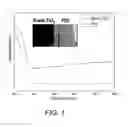
The beneficial effects of the present invention: it uses tetra-n-butyl titanate as the titanium source, n-propanol as a solvent and hydrofluoric acid as a surface agent, adopting a simple one-step hydrothermal synthesis method, to prepare a fluorine-doped lamellar black TiO2 nanomaterial. The advantages of the hydrothermal synthesis method: it can effectively conduct liquid phase control, and features lower energy consumption, good controllability and lower cost. The TiO2 nanomaterial prepared via the method provided by the present invention possesses modified energy band structure by fluorine-doping, which greatly enhances its performance. Compared with the commercial-purpose P25, which only can absorb ultraviolet light, the synthesized TiO2 nanomaterial has a relatively strong capacity of absorbing ultraviolet—visible—infrared light in full spectrum, which benefits the improvement in its photocatalytic performance. The material can be widely used in many fields including photoelectrochemistry, perovskite solar cells and dye-sensitized solar cells.
BRIEF DESCRIPTION OF THE SEVERAL VIEWS OF THE DRAWINGS
FIG. 1 is a contrast diagram of the absorption spectra between a fluorine-doped lamellar black TiO2 nanomaterials prepared in Embodiment 1 of the present invention and the commercial P25 nanoparticles.
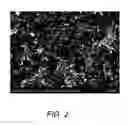
FIG. 2 is a scanning electron microscope (SEM) image of the fluorine-doped lamellar black TiO2 nanomaterials prepared in Embodiment 1 of the present invention.
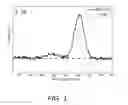
FIG. 3 is a contrast diagram of F1s signal in x-ray photo electron spectroscopy (XPS) between the fluorine-doped lamellar black TiO2 nanomaterials prepared in Embodiment 1 of the present invention and the commercial P25 nanoparticles.
DETAILED DESCRIPTION OF THE INVENTION
A method for preparing a pinecone-shaped TiO2 nanomaterial provided by the present invention can be implemented as below, and the specific preparing method includes the following steps:
Embodiment 1
(1) add 25 mL of n-propanol into a beaker, then add 2 mL of tetrabutyl titanate, and stir it well;
(2) add 0.4 mL of hydrofluoric acid into the solution, and then stir it for 2 hours;
(3) transfer the solution prepared to an autoclave, and leave it to have hydrothermal reaction at 180° C. for 18 hours;
(4) wash the precipitate obtained after reaction with deionized water and ethanol, until the filtrate is neutral, and then dry it;
(5) calcine the sample obtained at 430° C. in a protective atmosphere to obtain the fluorine-doped lamellar black TiO2 nanomaterials.
Embodiment 2
(1) add 20 mL of n-propanol into a beaker, then add 1 mL of tetrabutyl titanate, and stir it well;
(2) add 0.15 mL of hydrofluoric acid into the solution, and then stir it for 1 hour;
(3) transfer the solution prepared to an autoclave, and leave it to have hydrothermal reaction at 180° C. for 15 hours;
(4) wash the precipitate obtained after reaction with deionized water and ethanol, until the filtrate is neutral, and then dry it;
(5) calcine the sample obtained at 450° C. in a protective atmosphere to obtain the fluorine-doped lamellar black TiO2 nanomaterials.
Claims
1. A method for preparing a fluorine-doped lamellar black TiO2 nanomaterials, the method comprising the steps of:
(1) adding 20˜30 mL of n-propanol into a beaker, then adding 1˜3 mL of tetrabutyl titanate, and stir it well;
(2) adding 0.2˜0.8 mL of hydrofluoric acid into the solution prepared in (1), and then stir it for 1 to 3 hours;
(3) transfering the solution prepared in (2) to an autoclave, and leaving the solution to have hydrothermal reaction at 160˜200° C. for 12˜24 hours;
(4) washing the precipitate obtained after reaction in (3) with deionized water and ethanol, until the filtrate is neutral, and then drying the precipitate;
(5) calcining the sample obtained in (4) at 400˜450° C. in a protective atmosphere for a period of time to obtain the fluorine-doped lamellar black TiO2 nanomaterials.
2. The method for preparing a fluorine-doped lamellar black TiO2 nanomaterials as claimed in claim 1, wherein the n-propanol added in Step (1) is 20˜30 mL, with tetra-n-butyl titanate of 1˜3 mL.
3. The method for preparing a fluorine-doped lamellar black TiO2 nanomaterials as claimed in claim 1, wherein the hydrofluoric acid added in Step (2) is 0.2˜0.8 mL, with the stirring time of 1˜3 hours.
4. The method for preparing a fluorine-doped lamellar black TiO2 nanomaterials as claimed in claim 1, wherein reaction temperature of the solution in the autoclave obtained in Step (3) is 160˜200° C., with the reaction time of 12˜24 hours.
5. The method for preparing a fluorine-doped lamellar black TiO2 nanomaterials as claimed in claim 1, wherein the drying temperature for the sample obtained in Step (4) is 50˜60° C., with drying time of 12˜20 hours.
6. The method for preparing a fluorine-doped lamellar black TiO2 nanomaterials as claimed in claim 1, wherein the protective atmosphere used in Step (5) comprises a gas mixture of argon and hydrogen, with the calcination time of 2˜4 hours.
Images & Drawings included:
Sources:
- United States Patent and Trademark Office - verify current appl. status at the USPTO↗
Recent applications in this class:
- » 20250222438 2025-07-10
FISCHER-TROPSCH SYNTHESIS CATALYST, PREPARATION METHOD THEREFOR, AND APPLICATION THEREOF - » 20240375091 2024-11-14
EPOXYDATION CATALYST SYSTEMS AND PROCESS FOR PREPARING EPOXIDES - » 20210402380 2021-12-30
PEROVSKITES FOR PHOTOCATALYTIC ORGANIC SYNTHESIS - » 20200179910 2020-06-11
Method for producing photocatalyst and photocatalyst filter for air cleaning - » 20170297006 2017-10-19
Process for preparing a chlorine comprising catalyst, the prepared catalyst, and its use - » 20170266646 2017-09-21
REFORMING CATALYSTS WITH TUNED ACIDITY FOR MAXIMUM AROMATICS YIELD - » 20160175821 2016-06-23
Process for preparing a chlorine comprising catalyst, the prepared catalyst, and its use - » 20160175820 2016-06-23
Process for preparing a chlorine comprising catalyst, the prepared catalyst, and its use - » 20160158736 2016-06-09
Method for preparing iodine-doped TiOnano-catalyst and use thereof in heterogeneously catalyzing configuration transformation of trans-carotenoids - » 20150174557 2015-06-25
PURIFICATION CATALYST
Recent applications for this Assignee:
- » 20250273965 2025-08-28
Safety and stability analysis method for new energy power system based on Lyapunov function - » 20250174996 2025-05-29
METHOD AND SYSTEM FOR TRACKING THE OSCILLATION PATH OF A DIRECT DRIVE WIND FARM - » 20250131452 2025-04-24
Method for tracking carbon flow of power system, device and medium - » 20250105620 2025-03-27
LINE PROTECTION METHOD AND SYSTEM FOR WIND FARM CONNECTED TO FLEXIBLE DC SYSTEM - » 20250079848 2025-03-06
METHOD FOR MANAGING HEAT-ELECTRIC OUTPUTS OF HIGH-PROPORTION NEW ENERGY SYSTEM BASED ON CSP-CHP COMBINED ENERGY SUPPLY AND SYSTEM THEREOF - » 20240405544 2024-12-05
Power frequency line protection procedure - » 20240405543 2024-12-05
Short-circuit fault detection method for a power grid - » 20240396055 2024-11-28
Nickel/nickel hydroxide electrode catalyst, preparation method thereof and application thereof - » 20240370604 2024-11-07
METHOD AND APPARATUS FOR OPTIMALLY CONFIGURING CAPACITY OF HIGH-PROPORTION NEW ENERGY SYSTEM, DEVICE, AND MEDIUM - » 20240308896 2024-09-19
Constructing a multistage food chain biofilm system enhanced by electrochemistry and its application in pharmaceutical wastewater