METHOD FOR IN-SITU FORMATION OF METATHESIS CATALYSTS
US20170022232A1
2017-01-26
15/133,849
2016-04-20
Abstract:
Synthetic methods for the in-situ formation of olefin metathesis catalysts are disclosed, as well as the use of such catalysts in metathesis reactions of olefins and olefin compounds. In one aspect, a method is provided for synthesizing an organometallic compound of the formula
comprising contacting a precursor compound of the formula (X1X2MLjL1kL3m)i with an acetylenic compound comprising a chelating moiety, optionally, in the presence of a neutral electron donor, wherein M is a Group 8 transition metal, L, L1, L2, and L3 are neutral electron donors, X1 and X2 are anionic ligands, j is 1, 2, or 3; k is zero, 1, or 2; m is zero or 1; n is 1 or 2; and i is an integer; with the proviso that k is zero when the precursor compound is contacted with the acetylenic compound in the presence of the neutral electron donor, and R1 and R2 are independently selected from hydrocarbyl, substituted hydrocarbyl, heteroatom-containing hydrocarbyl, substituted heteroatom-containing hydrocarbyl, and functional groups, wherein R1 and R2 are linked and together form one or more cyclic groups, R2 and L2 are linked and together form one or more cyclic groups, and any other two or more of X1, X2, L1, L2, L3, R1, and R2 can be taken together to form one or more cyclic groups. The invention has utility in the fields of catalysis, organic synthesis, polymer chemistry, and industrial and fine chemicals chemistry.
Interested in similar patents?
Get notified when new applications in this technology area are published.
Classification:
C07F15/0046 » CPC main
Compounds containing elements of Groups 8, 9, 10 or 18 of the Periodic System compounds of the platinum group Ruthenium compounds
B01J31/2295 » CPC further
Catalysts comprising hydrides, coordination complexes or organic compounds containing coordination complexes; Organic complexes; Unsaturated compounds used as ligands Cyclic compounds, e.g. cyclopentadienyls
B01J31/2404 » CPC further
Catalysts comprising hydrides, coordination complexes or organic compounds containing coordination complexes; Phosphines, i.e. phosphorus bonded to only carbon atoms, or to both carbon and hydrogen atoms, including e.g. sp2-hybridised phosphorus compounds such as phosphabenzene, phosphole or anionic phospholide ligands Cyclic ligands, including e.g. non-condensed polycyclic ligands, the phosphine-P atom being a ring member or a substituent on the ring
B01J2531/821 » CPC further
Additional information regarding catalytic systems classified in; Complexes comprising metals of Group VIII as the central metal; Metals of the platinum group Ruthenium
B01J2231/543 » CPC further
Catalytic reactions performed with catalysts classified in; Redistribution or isomerisation reactions of C-C, C=C or C-C triple bonds; Metathesis reactions, e.g. olefin metathesis alkene metathesis
C07F15/00 IPC
Compounds containing elements of Groups 8, 9, 10 or 18 of the Periodic System
C07D207/46 » CPC further
Heterocyclic compounds containing five-membered rings not condensed with other rings, with one nitrogen atom as the only ring hetero atom with hetero atoms directly attached to the ring nitrogen atom
B01J31/24 IPC
Catalysts comprising hydrides, coordination complexes or organic compounds containing coordination complexes Phosphines, i.e. phosphorus bonded to only carbon atoms, or to both carbon and hydrogen atoms, including e.g. sp2-hybridised phosphorus compounds such as phosphabenzene, phosphole or anionic phospholide ligands
C07D223/04 » CPC further
Heterocyclic compounds containing seven-membered rings having one nitrogen atom as the only ring hetero atom not condensed with other rings with only hydrogen atoms, halogen atoms, hydrocarbon or substituted hydrocarbon radicals, directly attached to ring carbon atoms
B01J31/22 IPC
Catalysts comprising hydrides, coordination complexes or organic compounds containing coordination complexes Organic complexes
C07C67/333 » CPC further
Preparation of carboxylic acid esters by modifying the acid moiety of the ester, such modification not being an introduction of an ester group by isomerisation; by change of size of the carbon skeleton
C07D211/94 » CPC further
Heterocyclic compounds containing hydrogenated pyridine rings, not condensed with other rings with a hetero atom directly attached to the ring nitrogen atom Oxygen atom, e.g. piperidine N-oxide
Description
TECHNICAL FIELD
This invention relates generally to organometallic olefin metathesis catalysts, and more particularly to the in-situ formation of such olefin metathesis catalysts, as well as the use of such catalysts in metathesis reactions of olefins and olefin compounds. The invention has utility in the fields of catalysis, organic synthesis, polymer chemistry, and industrial and fine chemicals chemistry.
BACKGROUND
Olefin metathesis has become an exceptionally powerful and applicable method for the formation of carbon-carbon bonds in organic and polymer synthesis. Ruthenium-based complexes (1-3) are the most commonly employed olefin metathesis catalysts in academic and industrial laboratories, because they can be handled in air and are tolerant of various organic functional groups.
(see (a) Schrodi, Y.; Pederson, R. L. Aldrichim. Acta 2007, 40, 45-52. (b) Grubbs, R. H. Adv. Synth. Catal. 2007, 349, 34-40). However, the syntheses of these complexes are relatively cumbersome, usually involving more than one step and requiring isolation of the catalysts to remove catalyst-inhibiting by-products such as liberated phosphine ligands (Scheme 1). (see, e.g., (a) Schwab, P.; Grubbs, R. H.; Ziller, J. W. J. Am. Chem. Soc. 1996, 118, 100-110. (b) Scholl, M.; Ding, S.; Lee, C. W.; Grubbs, R. H. Org. Lett. 1999, 1, 953-956. (c) Chatterjee, A. K.; Morgan, H. P.; Scholl, M.; Grubbs, R. H., J. Am. Chem. Soc. 2000, 122, 3783-3784. (d) Kingsbury, J. S.; Harrity, J. P. A.; Bonitatebus, P. J., Jr.; Hoveyda, A. H., J. Am. Chem. Soc. 1999, 121 (4), 791-799. (e) Garber, S. B.; Kingsbury, J. S.; Gray, B. L.; Hoveyda, A. H. J. Am. Chem. Soc. 2000, 122, 8168-8179. (f) Fürstner, A.; Guth, O.; Duffels, A.; Seidel, G.; Liebl, M.; Gabor, B.; Mynott, R., Chem.—Eur. J. 2001, 7, 4811-4820. (g) Fürstner, A.; Thiel, O. R.; Ackermann, L.; Schanz, H.-J.; Nolan, S. P., J. Org. Chem. 2000, 65, 2204-2207. (h) Monsaert, S.; Drozdzak, R.; Dragutan, V.; Dragutan, I.; Verpoort, F., Eur. J. Inorg. Chem. 2008, 432-440).
Therefore, a one-step procedure that forms highly active olefin metathesis catalysts and does not require purification or isolation would provide certain advantages. Ideally, the new procedure should be as atom-economic as possible. In particular, a new method that requires only one equivalent of expensive ligands (e.g., PCy3) per ruthenium center would be desirable.
Previous attempts to generate olefin metathesis catalysts in situ focused on the preparation of ruthenium vinylidene (see (a) Katayama, H.; Ozawa, F., Coord. Chem. Rev. 2004, 248, 1703-1715. (b) Katayama, H.; Ozawa, F., Organometallics 1998, 17, 5190-5196. (c) Louie, J.; Grubbs, R. H., Angew. Chem., Int. Ed. 2001, 40, 247-249.) and allenylidene species (see (a) Dragutan, I.; Dragutan, V., Platinum Met. Rev. 2006, 50, 81-94. (b) Fürstner, A.; Liebl, M.; Lehmann, C. W.; Picquet, M.; Kunz, R.; Bruneau, C.; Touchard, D.; Dixneuf, P. H., Chem.—Eur. J. 2000, 6, 1847-1857. (c) Schanz, H.-J.; Jafarpour, L.; Stevens, E. D.; Nolan, S. P., Organometallics 1999, 18, 5187-5190). However, these types of complexes proved less active in olefin metathesis than their ruthenium-alkylidene counterparts. For example, ruthenium allenylidene complex 4 can be very conveniently prepared in a one-step procedure involving the treatment of [RuCl2(p-cymene)]2 with 1,1-diphenylprop-2-yn-1-ol in the presence of two equivalents of PCy3 (Scheme 2). (See Schanz, H.-J.; Jafarpour, L.; Stevens, E. D.; Nolan, S. P., Organometallics 1999, 18, 5187-5190). Unfortunately, 4 is inactive in olefin metathesis although its chemical isomer—ruthenium-indenylidene complex 3a—shows good activity. (See; and Schanz, H.-J.; Jafarpour, L.; Stevens, E. D.; Nolan, S. P., Organometallics 1999, 18, 5187-5190).
Recently the Schrodi and Bruneau groups have published interesting chelating indenylidene catalysts. (See Jimenez, L. R.; Gallon, B. J.; Schrodi, Y. Organometallics 2010, 29, 3471-3473, incorporated herein by reference, and Kabro, A.; Roisnel, T.; Fischmeister, C.; Bruneau, C. Chem.—Eur. J. 2010, 16, 12255-12261).
Despite the advances achieved in the preparation of olefin metathesis catalysts, a continuing need exists for new synthetic methods for preparing such catalysts. Of particular interest are methods that provide techniques for the preparation of new catalysts, while also providing for better utilization of reactants and improved product yields.
SUMMARY OF THE DISCLOSURE
Accordingly, the invention is directed to addressing one or more of the aforementioned concerns, and, in one embodiment, provides a method for preparing an organometallic compound, such as an olefin metathesis catalyst, by contacting a precursor compound with an acetylenic compound comprising a chelating moiety, optionally in the presence of a neutral electron donor.
In general, the method involves the synthesis of an organometallic compound of the formula
prepared by contacting a precursor compound of the formula (X1X2MLjL1kL3m)i with an acetylenic compound comprising a chelating moiety, optionally, in the presence of a neutral electron donor L1; wherein,
-
- M is a Group 8 transition metal;
- L, L1, L2, and L3 are neutral electron donors;
- j is 1, 2, or 3; k is zero, 1, or 2; m is zero or 1; n is 1 or 2; and i is an integer; with the proviso that k is zero when the precursor compound is contacted with the acetylenic compound in the presence of the neutral electron donor L1;
- X1 and X2 are anionic ligands; and
- R1 and R2 are independently selected from hydrocarbyl, substituted hydrocarbyl, heteroatom-containing hydrocarbyl, substituted heteroatom-containing hydrocarbyl, and functional groups, wherein R1 and R2 are linked and together form one or more cyclic groups, R2 and L2 are linked and together form one or more cyclic groups, and any other two or more of X1, X2, L1, L2, L3, R1, and R2 can be taken together to form one or more cyclic groups.
In another aspect, the invention provides novel organometallic compounds according to the above structure.
In a further aspect, the invention provides a method for performing a catalytic metathesis reaction comprising contacting at least one olefin or olefinic compound with the metathesis catalyst of the invention.
BRIEF DESCRIPTION OF THE DRAWINGS
FIG. 1 depicts RCM results for diethyl diallylmalonate as described in the examples.
DETAILED DESCRIPTION OF THE DISCLOSURE
Terminology and Definitions
Unless otherwise indicated, the invention is not limited to specific reactants, substituents, catalysts, reaction conditions, or the like, as such may vary. It is also to be understood that the terminology used herein is for the purpose of describing particular embodiments only and is not intended to be limiting.
As used in the specification and the appended claims, the singular forms “a,” “an,” and “the” include plural referents unless the context clearly dictates otherwise. Thus, for example, reference to “an α-olefin” includes a single α-olefin as well as a combination or mixture of two or more α-olefins, reference to “a substituent” encompasses a single substituent as well as two or more substituents, and the like.
As used in the specification and the appended claims, the terms “for example,” “for instance,” “such as,” or “including” are meant to introduce examples that further clarify more general subject matter. Unless otherwise specified, these examples are provided only as an aid for understanding the invention, and are not meant to be limiting in any fashion.
In this specification and in the claims that follow, reference will be made to a number of terms, which shall be defined to have the following meanings:
The term “alkyl” as used herein refers to a linear, branched, or cyclic saturated hydrocarbon group typically although not necessarily containing 1 to about 24 carbon atoms, preferably 1 to about 12 carbon atoms, such as methyl, ethyl, n-propyl, isopropyl, n-butyl, isobutyl, t-butyl, octyl, decyl, and the like, as well as cycloalkyl groups such as cyclopentyl, cyclohexyl and the like. Generally, although again not necessarily, alkyl groups herein contain 1 to about 12 carbon atoms. The term “lower alkyl” intends an alkyl group of 1 to 6 carbon atoms, and the specific term “cycloalkyl” intends a cyclic alkyl group, typically having 4 to 8, preferably 5 to 7, carbon atoms. The term “substituted alkyl” refers to alkyl substituted with one or more substituent groups, and the terms “heteroatom-containing alkyl” and “heteroalkyl” refer to alkyl in which at least one carbon atom is replaced with a heteroatom. If not otherwise indicated, the terms “alkyl” and “lower alkyl” include linear, branched, cyclic, unsubstituted, substituted, and/or heteroatom-containing alkyl and lower alkyl, respectively.
The term “alkylene” as used herein refers to a difunctional linear, branched, or cyclic alkyl group, where “alkyl” is as defined above.
The term “alkenyl” as used herein refers to a linear, branched, or cyclic hydrocarbon group of 2 to about 24 carbon atoms containing at least one double bond, such as ethenyl, n-propenyl, isopropenyl, n-butenyl, isobutenyl, octenyl, decenyl, tetradecenyl, hexadecenyl, eicosenyl, tetracosenyl, and the like. Preferred alkenyl groups herein contain 2, to about 12 carbon atoms. The term “lower alkenyl” intends an alkenyl group of 2 to 6 carbon atoms, and the specific term “cycloalkenyl” intends a cyclic alkenyl group, preferably having 5 to 8 carbon atoms. The term “substituted alkenyl” refers to alkenyl substituted with one or more substituent groups, and the terms “heteroatom-containing alkenyl” and “heteroalkenyl” refer to alkenyl in which at least one carbon atom is replaced with a heteroatom. If not otherwise indicated, the terms “alkenyl” and “lower alkenyl” include linear, branched, cyclic, unsubstituted, substituted, and/or heteroatom-containing alkenyl and lower alkenyl, respectively.
The term “alkenylene” as used herein refers to a difunctional linear, branched, or cyclic alkenyl group, where “alkenyl” is as defined above.
The term “alkynyl” as used herein refers to a linear or branched hydrocarbon group of 2 to about 24 carbon atoms containing at least one triple bond, such as ethynyl, n-propynyl, and the like. Preferred alkynyl groups herein contain 2 to about 12 carbon atoms. The term “lower alkynyl” intends an alkynyl group of 2 to 6 carbon atoms. The term “substituted alkynyl” refers to alkynyl substituted with one or more substituent groups, and the terms “heteroatom-containing alkynyl” and “heteroalkynyl” refer to alkynyl in which at least one carbon atom is replaced with a heteroatom. If not otherwise indicated, the terms “alkynyl” and “lower alkynyl” include linear, branched, unsubstituted, substituted, and/or heteroatom-containing alkynyl and lower alkynyl, respectively.
The term “alkoxy” as used herein intends an alkyl group bound through a single, terminal ether linkage; that is, an “alkoxy” group may be represented as —O-alkyl where alkyl is as defined above. A “lower alkoxy” group intends an alkoxy group containing 1 to 6 carbon atoms. Analogously, “alkenyloxy” and “lower alkenyloxy” respectively refer to an alkenyl and lower alkenyl group bound through a single, terminal ether linkage, and “alkynyloxy” and “lower alkynyloxy” respectively refer to an alkynyl and lower alkynyl group bound through a single, terminal ether linkage.
The term “aryl” as used herein, and unless otherwise specified, refers to an aromatic substituent containing a single aromatic ring or multiple aromatic rings that are fused together, directly linked, or indirectly linked (such that the different aromatic rings are bound to a common group such as a methylene or ethylene moiety). Preferred aryl groups contain 5 to 24 carbon atoms, and particularly preferred aryl groups contain 5 to 14 carbon atoms. Exemplary aryl groups contain one aromatic ring or two fused or linked aromatic rings, e.g., phenyl, naphthyl, biphenyl, diphenylether, diphenylamine, benzophenone, and the like. “Substituted aryl” refers to an aryl moiety substituted with one or more substituent groups, and the terms “heteroatom-containing aryl” and “heteroaryl” refer to aryl substituents in which at least one carbon atom is replaced with a heteroatom, as will be described in further detail infra.
The term “aryloxy” as used herein refers to an aryl group bound through a single, terminal ether linkage, wherein “aryl” is as defined above. An “aryloxy” group may be represented as —O-aryl where aryl is as defined above. Preferred aryloxy groups contain 5 to 24 carbon atoms, and particularly preferred aryloxy groups contain 5 to 14 carbon atoms. Examples of aryloxy groups include, without limitation, phenoxy, o-halo-phenoxy, m-halo-phenoxy, p-halo-phenoxy, o-methoxy-phenoxy, m-methoxy-phenoxy, p-methoxy-phenoxy, 2,4-dimethoxy-phenoxy, 3,4,5-trimethoxy-phenoxy, and the like.
The term “alkaryl” refers to an aryl group with an alkyl substituent, and the term “aralkyl” refers to an alkyl group with an aryl substituent, wherein “aryl” and “alkyl” are as defined above. Preferred alkaryl and aralkyl groups contain 6 to 24 carbon atoms, and particularly preferred alkaryl and aralkyl groups contain 6 to 16 carbon atoms. Alkaryl groups include, for example, p-methylphenyl, 2,4-dimethylphenyl, p-cyclohexylphenyl, 2,7-dimethylnaphthyl, 7cyclooctylnaphthyl, 3-ethyl-cyclopenta-1,4-diene, and the like. Examples of aralkyl groups include, without limitation, benzyl, 2-phenyl-ethyl, 3-phenyl-propyl, 4-phenyl-butyl, 5-phenyl-pentyl, 4-phenylcyclohexyl, 4-benzylcyclohexyl, 4-phenylcyclohexylmethyl, 4-benzylcyclohexylmethyl, and the like. The terms “alkaryloxy” and “aralkyloxy” refer to substituents of the formula —OR wherein R is alkaryl or aralkyl, respectively, as just defined.
The term “acyl” refers to substituents having the formula —(CO)-alkyl, —(CO)-aryl, or —(CO)-aralkyl, and the term “acyloxy” refers to substituents having the formula —O(CO)-alkyl, —O(CO)-aryl, or —(CO)-aralkyl, wherein “alkyl,” “aryl, and “aralkyl” are as defined above.
The terms “cyclic” and “ring” refer to alicyclic or aromatic groups that may or may not be substituted and/or heteroatom containing, and that may be monocyclic, bicyclic, or polycyclic. The term “alicyclic” is used in the conventional sense to refer to an aliphatic cyclic moiety, as opposed to an aromatic cyclic moiety, and may be monocyclic, bicyclic, or polycyclic.
The terms “halo” and “halogen” are used in the conventional sense to refer to a chloro, bromo, fluoro, or iodo substituent.
“Hydrocarbyl” refers to univalent hydrocarbyl radicals containing 1 to about 30 carbon atoms, preferably 1 to about 24 carbon atoms, most preferably 1 to about 12 carbon atoms, including linear, branched, cyclic, saturated, and unsaturated species, such as alkyl groups, alkenyl groups, aryl groups, and the like. The term “lower hydrocarbyl” intends a hydrocarbyl group of 1 to 6 carbon atoms, preferably 1 to 4 carbon atoms, and the term “hydrocarbylene” intends a divalent hydrocarbyl moiety containing 1 to about 30 carbon atoms, preferably 1 to about 24 carbon atoms, most preferably 1 to about 12 carbon atoms, including linear, branched, cyclic, saturated and unsaturated species. The term “lower hydrocarbylene” intends a hydrocarbylene group of 1 to 6 carbon atoms. “Substituted hydrocarbyl” refers to hydrocarbyl substituted with one or more substituent groups, and the terms “heteroatom-containing hydrocarbyl” and “heterohydrocarbyl” refer to hydrocarbyl in which at least one carbon atom is replaced with a heteroatom. Similarly, “substituted hydrocarbylene” refers to hydrocarbylene substituted with one or more substituent groups, and the terms “heteroatom-containing hydrocarbylene” and heterohydrocarbylene” refer to hydrocarbylene in which at least one carbon atom is replaced with a heteroatom. Unless otherwise indicated, the term “hydrocarbyl” and “hydrocarbylene” are to be interpreted as including substituted and/or heteroatom-containing hydrocarbyl and hydrocarbylene moieties, respectively.
The term “heteroatom-containing” as in a “heteroatom-containing hydrocarbyl group” refers to a hydrocarbon molecule or a hydrocarbyl molecular fragment in which one or more carbon atoms is replaced with an atom other than carbon, e.g., nitrogen, oxygen, sulfur, phosphorus or silicon, typically nitrogen, oxygen or sulfur. Similarly, the term “heteroalkyl” refers to an alkyl substituent that is heteroatom-containing, the term “heterocyclic” refers to a cyclic substituent that is heteroatom-containing, the terms “heteroaryl” and heteroaromatic” respectively refer to “aryl” and “aromatic” substituents that are heteroatom-containing, and the like. It should be noted that a “heterocyclic” group or compound may or may not be aromatic, and further that “heterocycles” may be monocyclic, bicyclic, or polycyclic as described above with respect to the term “aryl.” Examples of heteroalkyl groups include alkoxyaryl, alkylsulfanyl-substituted alkyl, N-alkylated amino alkyl, and the like. Examples of heteroaryl substituents include pyrrolyl, pyrrolidinyl, pyridinyl, quinolinyl, indolyl, pyrimidinyl, imidazolyl, 1,2,4-triazolyl, tetrazolyl, etc., and examples of heteroatom-containing alicyclic groups are pyrrolidine), morpholino, piperazino, piperidino, etc.
By “substituted” as in “substituted hydrocarbyl,” “substituted alkyl,” “substituted aryl,” and the like, as alluded to in some of the aforementioned definitions, is meant that in the hydrocarbyl, alkyl, aryl, or other moiety, at least one hydrogen atom bound to a carbon (or other) atom is replaced with one or more non-hydrogen substituents. Examples of such substituents include, without limitation: functional groups referred to herein as “Fn,” such as halo, hydroxyl, sulfhydryl, C1-C24 alkoxy, C2-C24 alkenyloxy, C2-C24 alkynyloxy, C5-C24 aryloxy, C6-C24 aralkyloxy, C6-C24 alkaryloxy, acyl (including C2-C24 alkylcarbonyl (—CO-alkyl) and C6-C24 arylcarbonyl (—CO-aryl)), acyloxy (—O-acyl, including C2-C24 alkylcarbonyloxy (—O—CO-alkyl) and C6-C24 arylcarbonyloxy (—O—CO-aryl)), C2-C24 alkoxycarbonyl (—(CO)—O-alkyl), C6-C24 aryloxycarbonyl (—(CO)—O-aryl), halocarbonyl (—CO)—X where X is halo), C2-C24 alkylcarbonato (—O—(CO)—)-alkyl), C6-C24 arylcarbonato (—O—(CO)—)-aryl), carboxy (—COOH), carboxylato (—COO−), carbamoyl (—(CO)—NH2), mono-(C1-C24 alkyl)-substituted carbamoyl (—(CO)—NH(C1-C24 alkyl)), di-(C1-C24 alkyl)-substituted carbamoyl (—(CO)—N(C1-C24 alkyl)2), mono-(C5-C24 aryl)-substituted carbamoyl (—(CO)—NH-aryl), di-(C5-C24 aryl)-substituted carbamoyl (—(CO)—N(C5-C24 aryl)2), di-N-(C1-C24 alkyl),N-(C5-C24 aryl)-substituted carbamoyl, thiocarbamoyl (—(CS)—NH2), mono-(C1-C24 alkyl)-substituted thiocarbamoyl (—(CO)—NH(C1-C24 alkyl)), di-(C1-C24 alkyl)substituted thiocarbamoyl (—(CO)—N(C1-C24 alkyl)2), mono-(C5-C24 aryl)-substituted thiocarbamoyl (—(CO)—NH-aryl), di-(C5-C24 aryl)-substituted thiocarbamoyl (—(CO)—N(C5-C24 aryl)2), di-N-(C1-C24 alkyl),N-(C5-C24 aryl)-substituted thiocarbamoyl, carbamido (—NH—(CO)—NH2), cyano (—C═N), cyanato (—O—C═N), thiocyanato (—S—C═N), formyl (—(CO)—H), thioformyl (—(CS)—H), amino (—NH2), mono-(C1-C24 alkyl)-substituted amino, di-(C1-C24 alkyl)-substituted amino, mono(C5-C24 aryl)-substituted amino, di-(C5-C24 aryl)-substituted amino, C2-C24 alkylamido (—NH—(CO)-alkyl), C6-C24 arylamido (—NH—(CO)-aryl), imino (—CR═NH where R=hydrogen, C1-C24 alkyl, C5-C24 aryl, C6-C24 alkaryl, C6-C24 aralkyl, etc.), C2-C20 alkylimino (—CR═N(alkyl), where R=hydrogen, C1-C24 alkyl, C5-C24 aryl, C6-C24 alkaryl, C6-C24 aralkyl, etc.), arylimino (—CR═N(aryl), where R=hydrogen, C1-C20 alkyl, C5-C24 aryl, C6-C24 alkaryl, C6-C24 aralkyl, etc.), nitro (—NO2), nitroso (—NO), sulfo (—SO2—OH), sulfonate (—SO2—O−), C1-C24 alkylsulfanyl (—S-alkyl; also termed “alkylthio”), C5-C24 arylsulfanyl (—S-aryl; also termed “arylthio”), C1-C24 alkylsulfinyl (—(SO)-alkyl), C5-C24 arylsulfinyl (—(SO)-aryl), C1-C24 alkylsulfonyl (—SO2-alkyl), C5-C24 arylsulfonyl (—SO2-aryl), boryl (—BH2), borono (—B(OH)2), boronato (—B(OR)2 where R is alkyl or other hydrocarbyl), phosphono (—P(O)(OH)2), phosphonato (—P(O)(O−)2), phosphinato (—P(O)(O−), phospho (—PO2), and phosphino (—PH2); and the hydrocarbyl moieties C1-C24 alkyl (preferably C1-C12 alkyl, more preferably C1-C6 alkyl), C2-C24 alkenyl (preferably C2-C12 alkenyl, more preferably C2-C6 alkenyl), C2-C24 alkynyl (preferably C2-C12 alkynyl, more preferably C2-C6 alkynyl), C5-C24 aryl (preferably C5-C14 aryl), C6-C24 alkaryl (preferably C6-C16 alkaryl), and C6-C24 aralkyl (preferably C6-C16 aralkyl).
By “functionalized” as in “functionalized hydrocarbyl,” “functionalized alkyl,” “functionalized olefin,” “functionalized cyclic olefin,” and the like, is meant that in the hydrocarbyl, alkyl, olefin, cyclic olefin, or other moiety, at least one hydrogen atom bound to a carbon (or other) atom is replaced with one or more functional groups such as those described hereinabove.
In addition, the aforementioned functional groups may, if a particular group permits, be further substituted with one or more additional functional groups or with one or more hydrocarbyl moieties such as those specifically enumerated above. Analogously, the above-mentioned hydrocarbyl moieties may be further substituted with one or more functional groups or additional hydrocarbyl moieties such as those specifically enumerated.
“Optional” or “optionally” means that the subsequently described circumstance may or may not occur, so that the description includes instances where the circumstance occurs and instances where it does not. For example, the phrase “optionally substituted” means that a non-hydrogen substituent may or may not be present on a given atom, and, thus, the description includes structures wherein a non-hydrogen substituent is present and structures wherein a non-hydrogen substituent is not present.
A “reaction system,” as used herein, refers to a functionally related group of components.
Methods and Compositions
The olefin metathesis catalyst complex that may be prepared according to the invention is a Group 8 transition metal complex generally having the structure of formula (I)
in which the various substituents are as follows:
-
- M is a Group 8 transition metal;
- L1, L2, and L3 are neutral electron donor ligands;
- m is zero or 1;
- n is 1 or 2;
- X1 and X2 are anionic ligands; and
- R1 and R2 are independently selected from hydrocarbyl, substituted hydrocarbyl, heteroatom-containing hydrocarbyl, substituted heteroatom-containing hydrocarbyl, and functional groups, wherein R1 and R2 are taken together to form one or more cyclic groups, R2 and L2 are taken together to form one or more cyclic groups, and any other two or more of X1, X2, L1, L2, R1, and R2 can be taken together to form one or more cyclic groups.
In certain embodiments, the catalysts contain Ru or Os as the Group 8 transition metal. Ru is particularly preferred for some embodiments.
A first group of catalysts have the structure of formula (I), in which M and n are as described above, and X1, X2, L1, L2, L3, R1, and R2 are described as follows.
For the first group of catalysts, n is 1, and L1, L2, and L3 are independently selected from phosphine, sulfonated phosphine, phosphite, phosphinite, phosphorate, arsine, stibine, ether, amine, amide, inline, sulfoxide, carboxyl, nitrosyl, pyridine, substituted pyridine, imidazole, substituted imidazole, pyrazine, thioether, and thiocarbonyl. Exemplary ligands are trisubstituted phosphines.
Suitable phosphines include, but are not limited to, phosphines of the formula PRaRbRc, wherein Ra, Rb, and Rc are each independently selected from aryl, substituted aryl, alkyl, substituted alkyl, cycloalkyl, substituted cycloalkyl, heterocycles, and substituted heterocycles
X1 and X2 are anionic ligands, and may be the same or different, or are linked together to form a cyclic group, typically although not necessarily a five- to eight-membered ring. In preferred embodiments, X1 and X2 are each independently hydrogen, halide, or one of the following groups: C1-C20 alkyl, C5-C24 aryl, C1-C20 alkoxy, C5-C24 aryloxy, C2-C20 alkoxycarbonyl, C6-C24 aryloxycarbonyl, C2-C24 acyl, C2-C24 acyloxy, C1-C20 alkylsulfonato, C5-C24 arylsulfonato, C1-C20 alkylsulfanyl, C5-C24 arylsulfanyl, C1-C20 alkylsulfinyl, or C5-C24 arylsulfinyl. Optionally, X1 and X2 may be substituted with one or more moieties selected from C1-C12 alkyl, C1-C12 alkoxy, C5-C24 aryl, and halide, which may, in turn, with the exception of halide, be further substituted with one or more groups selected from halide, C1-C6 alkyl, C1-C6 alkoxy, and phenyl. In more preferred embodiments, X1 and X2 are halide, benzoate, C2-C6 acyl, C2-C6 alkoxycarbonyl, C1-C6 alkyl, phenoxy, C1-C6 alkoxy, C1-C6 alkylsulfanyl, aryl, or C1-C6 alkylsulfonyl. In even more preferred embodiments, X1 and X2 are each halide, CF3CO2, CH3CO2, CFH2CO2, (CH3)3CO, (CF3)2(CH3)CO, (CF3)(CH3)2CO, PhO, MeO, EtO, tosylate, mesylate, or trifluoromethane-sulfonate. In the most preferred embodiments, X1 and X2 are each chloride.
R1 and R2 are independently selected from hydrocarbyl (e.g., C1-C20 alkyl, C2-C20 alkenyl, C2-C20 alkynyl, C5-C24 aryl, C6-C24 alkaryl, C6-C24 aralkyl, etc.), substituted hydrocarbyl (e.g., substituted C1-C20 alkyl, C2-C20 alkenyl, C2-C20 alkynyl, C5-C24 aryl, C6-C24 alkaryl, C6-C24 aralkyl, etc.), heteroatom-containing hydrocarbyl (e.g., heteroatom-containing C1-C20 alkyl, C2-C20 alkenyl, C2-C20 alkynyl, C5-C24 aryl, C6-C24 alkaryl, C6-C24 aralkyl, etc.), and substituted heteroatom-containing hydrocarbyl (e.g., substituted heteroatom-containing C1-C20 alkyl, C2-C20 alkenyl, C2-C20 alkynyl, C5-C24 aryl, C6-C24 alkaryl, C6-C24 aralkyl, etc.), and functional groups. R1 and R2 may also be linked to form a cyclic group, which may be aliphatic or aromatic, and may contain substituents and/or heteroatoms. Generally, such a cyclic group will contain 4 to 12, preferably 5, 6, 7, or 8 ring atoms.
Any two or more (typically two, three, or four) of X1, X2, L1, L2, L3, R1, and R2 can be taken together to form a cyclic group, including bidentate or multidentate ligands, as disclosed, for example, in U.S. Pat. No. 5,312,940 to Grubbs et al. When any of X1, X2, L1, L2, L3, R1, and R2 are linked to form cyclic groups, those cyclic groups may contain 4 to 12, preferably 4, 5, 6, 7 or 8 atoms, or may comprise two or three of such rings, which may be either fused or linked. The cyclic groups may be aliphatic or aromatic, and may be heteroatom-containing and/or substituted. The cyclic group may, in some cases, form a bidentate ligand or a tridentate ligand. Examples of bidentate ligands include, but are not limited to, bisphosphines, dialkoxides, alkyldiketonates, and aryldiketonates.
A second group of catalysts according to the general structure of formula (I), wherein L1 is a carbene ligand having the structure of formula (II)
such that the complex may have the structure of formula (III)
wherein M, m, X1, X2, L2, L3, R1, and R2 are as defined for the first group of catalysts, and the remaining substituents are as follows. X and Y are heteroatoms typically selected from N, O, S, and P. Since O and S are divalent, p is necessarily zero when X is O or S, and q is necessarily zero when Y is O or S. However, when X is N or P, then p is 1, and when Y is N or P, then q is 1. In certain embodiments, both X and Y are N.
Q1, Q2, Q3, and Q4 are linkers, e.g., hydrocarbylene (including substituted hydrocarbylene, heteroatom-containing hydrocarbylene, and substituted heteroatom-containing hydrocarbylene, such as substituted and/or heteroatom-containing alkylene) or —(CO)—, and w, x, y, and z are independently zero or 1, meaning that each linker is optional. Preferably, w, x, y, and z are all zero. Further, two or more substituents on adjacent atoms within Q1, Q2, Q3, and Q4 may be linked to form an additional cyclic group.
R3, R3A, R4, and R4A are independently selected from hydrogen, hydrocarbyl, substituted hydrocarbyl, heteroatom-containing hydrocarbyl, and substituted heteroatom-containing hydrocarbyl.
In addition, any two or more of X1, X2, L1, L2, L3, R1, R2, R3, R3A, R4, and R4A can be taken together to form a cyclic group.
Preferably, R3A and R4A are linked to form a cyclic group so that the carbene ligand has the structure of formula (IV)
wherein R3 and R4 are defined above, with preferably at least one of R3 and R4, and more preferably both R3 and R4, being alicyclic or aromatic of one to about five rings, and optionally containing one or more heteroatoms and/or substituents. Q is a linker, typically a hydrocarbylene linker, including substituted hydrocarbylene, heteroatom-containing hydrocarbylene, and substituted heteroatom-containing hydrocarbylene linkers, wherein two or more substituents on adjacent atoms within Q may also be linked to form an additional cyclic structure, which may be similarly substituted to provide a fused polycyclic structure of two to about five cyclic groups. Q is often, although again not necessarily, a two-atom linkage or a three-atom linkage.
Examples of N-heterocyclic carbene ligands and acyclic diaminocarbene ligands suitable as L1 thus include, but are not limited to, the following where DIPP is diisopropylphenyl and Mes has been defined earlier:
Examples of N-heterocyclic carbene ligands and acyclic diaminocarbene ligands suitable as L1 thus include, but are not limited to, the following where DIPP is diisopropylphenyl and Mes has been defined earlier:
In certain embodiments, preferred complexes have the structure of formula (V)
In a more preferred embodiment, Q is a two-atom linkage having the structure —CR11R12—CR13R14— or —CR11═CR13—, preferably —CR11R12—CR13R14—, wherein R11, R12, R13, and R14 are independently selected from hydrogen, hydrocarbyl, substituted hydrocarbyl, heteroatom-containing hydrocarbyl, substituted heteroatom-containing hydrocarbyl, and functional groups. Examples of functional groups here include carboxyl, C1-C20 alkoxy, C5-C24 aryloxy, C2-C20 alkoxycarbonyl, C5-C24 alkoxycarbonyl, C2-C24 acyloxy, C1-C20 alkylthio, C5-C24 arylthio, C1-C20 alkylsulfonyl, and C1-C20 alkylsulfinyl, optionally substituted with one or more moieties selected from C1-C12 alkyl, C1-C12 alkoxy, C5-C14 aryl, hydroxyl, sulfhydryl, formyl, and halide. R11, R12, R13, and R14 are preferably independently selected from hydrogen, C1-C12 alkyl, substituted C1-C12 alkyl, C1-C12 heteroalkyl, substituted C1-C12 heteroalkyl, phenyl, and substituted phenyl. Alternatively, any two of R11, R12, R13, and R14 may be linked together to form a substituted or unsubstituted, saturated or unsaturated ring structure, e.g., a C4-C12 alicyclic group or a C5 or C6 aryl group, which may itself be substituted, e.g., with linked or fused alicyclic or aromatic groups, or with other substituents. In one further aspect, any one or more of R11, R12, R13, and R14 comprises one or more of the linkers.
When R3 and R4 are aromatic, they are typically although not necessarily composed of one or two aromatic rings, which may or may not be substituted, e.g., R3 and R4 may be phenyl, substituted phenyl, biphenyl, substituted biphenyl, or the like. In one preferred embodiment, R3 and R4 are the same and are each unsubstituted phenyl or phenyl substituted with up to three substituents selected from C1-C20 alkyl, substituted C1-C20 alkyl, C1-C20 heteroalkyl, substituted C1-C20 heteroalkyl, C5-C24 aryl, substituted C5-C24 aryl, C5-C24 heteroaryl, Ct,-CA aralkyl, C6-C24 alkaryl, or halide. Preferably, any substituents present are hydrogen, C1-C12 alkyl, C1-C12 alkoxy, C5-C14 aryl, substituted C5-C14 aryl, or halide. As an example, R3 and R4 are mesityl, diisopropylphenyl, mono-ortho tolyl and mono-ortho isopropylphenyl.
Complexes wherein T is coordinated to the metal include metathesis-active metal carbene complexes that may be described by the formula
wherein,
-
- M is a Group 8 transition metal, particularly Ru or Os, or, more particularly, Ru;
- X1, X2, R1, and L1 are as previously defined herein;
- T is a heteroatom selected from N, O, S, and P; preferably T is O or N;
- R5, R6, R7, and R8 are each, independently, selected from the group consisting of hydrogen, halogen, alkyl, alkenyl, alkynyl, aryl, heteroalkyl, heteroatom containing alkenyl, heteroalkenyl, heteroaryl, alkoxy, alkenyloxy, aryloxy, alkoxycarbonyl, carbonyl, alkylamino, alkylthio, aminosulfonyl, monoalkylaminosulfonyl, dialkylaminosulfonyl, alkylsulfonyl, nitrile, nitro, alkylsulfinyl, trihaloalkyl, perfluoroalkyl, carboxylic acid, ketone, aldehyde, nitrate, cyano, isocyanate, hydroxyl, ester, ether, amine, imine, amide, halogen-substituted amide, trifluoroamide, sulfide, disulfide, sulfonate, carbamate, silane, siloxane, phosphine, phosphate, borate, and any combination of R1, R2, R5, R6, R7, and R8 can be linked to form one or more cyclic groups;
- n* is 1 or 2, such that n is 1 for the divalent heteroatoms O or S, and n is 2 for the trivalent heteroatoms N or P;
- Z is selected from hydrogen, alkyl, aryl, functionalized alkyl, and functionalized aryl, wherein the functional group(s) are independently selected from alkyl, aryl, alkoxy, aryloxy, halogen, carboxylic acid, ketone, aldehyde, nitrate, cyano, isocyanate, hydroxyl, ester, ether, amine, imine, amide, trifluoroamide, sulfide, disulfide, carbamate, silane, siloxane, phosphine, phosphate, or borate; and wherein any combination or combinations of M, X1, X2, L1, T, Z, R1, R2, R5, R6, and R7 are linked.
Complexes wherein T and L3, L1 and L3, and X1 and L3 are coordinated to the metal are examples of the fourth group of catalysts. These metathesis-active metal carbene complexes include the formula VII structures,
wherein,
-
- M is a Group 8 transition metal, particularly Ru or Os, or, more particularly, Ru;
- X1, X2, T, L1, Z, n*, R1, R2, R5, R6, and R7 are as previously defined herein;
- L3 is a neutral coordinating ligand that is optionally linked to X1, X2, T, L1, R1, R2, R5, R6, and R7; and wherein any combination of M, T, X1, X2, L1, L3, R1, R2, R5, R6, and R7 can form cyclic intermediates.
In general, organic acetylenic compounds useful in the invention may contain a chelating moiety of the formula (VII)
wherein,
-
- J is a leaving group;
- R5 to R9 are as defined above, and may contain -T-(Z)n*; and
- R10 is selected from hydrogen, halogen, alkyl, alkenyl, alkynyl, aryl, heteroalkyl, heteroatom containing alkenyl, heteroalkenyl, heteroaryl, alkoxy, alkenyloxy, aryloxy, alkoxycarbonyl, carbonyl, alkylamino, alkylthio, aminosulfonyl, monoalkylaminosulfonyl, dialkylaminosulfonyl, alkylsulfonyl, nitrile, nitro, alkylsulfinyl, trihaloalkyl, perfluoroalkyl, carboxylic acid, ketone, aldehyde, nitrate, cyano, isocyanate, hydroxyl, ester, ether, amine, imine, amide, halogen-substituted amide, trifluoroamide, sulfide, disulfide, sulfonate, carbamate, silane, siloxane, phosphine, phosphate, or borate, and wherein when R10 is aryl or heteroaryl, R10 may be substituted with any combination of R5, R6, R7, R8 and R9 and can be linked with any of R5, R6, R7, R8, and R9 to form one or more cyclic groups.
Examples of suitable leaving groups include, but are not limited to, hydroxyl, halide, ester, perhalogenated phenyl, acetate, benzoate, C2-C6 acyl, C2-C6 alkoxycarbonyl, C1-C6 alkyl, phenoxy, C1-C6 alkoxy, C1-C6 alkylsulfanyl, aryl, or C1-C6 alkylsulfonyl. In even more preferred embodiments, J is selected from hydroxyl, halide, CF3CO2, CH3CO2, CFH2CO2, (CH3)3CO, (CF3)2(CH3)CO, CF3)(CH3)2CO, PhO, MeO, EtO, tosylate, mesylate, or trifluoromethane-sulfonate. In particular embodiments, J is advantageously hydroxyl (OH).
Preferred organic acetylenic compounds are of the formula,
wherein,
-
- T, Z, and n* are as defined above;
- n1 is an integer from 1 to 5;
- n2 is an integer from 0 to 5; and
- R* is selected from R5, R6, R7, R8, and R9, or combinations thereof, as defined above.
Preferred R* and T-(Z)n* groups generally include hydrogen and alkoxy groups, more specifically, H and C1-C10 alkoxy groups that may be linear and/or include cycloalkyl groups, including methoxide (MeO), ethoxide (EtO), n-propoxide (PropO), isopropoxide (i-PropO), n-butoxide (n-BuO), isobutoxide (i-BuO), t-butoxide (t-BuO), hexyl oxide (HexO), octyl oxide (OctO), decyl oxide (DecylO), cyclopentyl oxide (CpO), and cyclohexyl oxide (CyO). Each of the R5 to R9 T-(Z)n* groups may be independently any of the groups noted above.
More preferred organic acetylenic compounds include
The metathesis catalysts can be formed in-situ with or without the need to isolate and purify prior to use in performing a metathesis reaction with an olefin or olefinic compound. A representative example of the in-situ catalyst formation reaction is as shown below,
wherein Ra, Rb, Rc, R5, T and Z and n* have been defined above.
In the foregoing molecular structures and formulae, Ph represents phenyl, Cy represents cyclohexyl, Me represents methyl, nBu represents n-butyl, i-Pr represents isopropyl, py represents pyridine (coordinated through the N atom), Mes represents mesityl (i.e., 2,4,6-trimethylphenyl) and DIPP represents 2,6-diisopropylphenyl.
Certain specific catalysts according to the invention include:
Further specific catalysts according to the invention include, wherein X is any suitable chelating moiety, including, but not limited to O, S, and P, are:
Still other catalysts according to the invention may comprise bis-chelating neutral ligands, as disclosed in WO 2009/124853, incorporated herein by reference.
The methods of the invention may further be used to regenerate decomposed catalyst to provide catalysts according to the invention. For example, decomposed first generation catalysts, such as 1st generation Hoveyda-Grubbs catalysts, may be used to prepare catalysts according to formula (VI) above by reacting the decomposed catalyst with an acetylenic compound (as described above) of the formula
Generally, such reactions may be depicted according to the following Scheme:
where the variables are described hereinabove.
It is to be understood that while the invention has been described in conjunction with specific embodiments thereof, that the description above as well as the examples included herein are intended to illustrate and not limit the scope of the invention. Other aspects, advantages, and modifications within the scope of the invention will be apparent to those skilled in the art to which the invention pertains.
EXPERIMENTAL
In the following examples, efforts have been made to ensure accuracy with respect to numbers used (e.g., amounts, temperature, etc.) but some experimental error and deviation should be accounted for. Unless indicated otherwise, temperature is in degrees C and pressure is at or near atmospheric.
EXAMPLES
General Information
NMR spectra were recorded on a Bruker 400 MHz NMR spectrometer running Xwin-NMR software. Chemical shifts are reported in parts per million (ppm) downfield from tetramethylsilane (TMS) with reference to internal solvent for 1H NMR and 13C NMR spectra. Chemical shifts are reported in parts per million (ppm) downfield from H3PO4 for 31P NMR spectra. All glassware was oven dried and reactions were done under an atmosphere of argon unless otherwise noted. All organic solvents were dried by passage through solvent purification columns containing activated molecular sieves. All other commercial chemicals were used as obtained. Diethyl diallylmalonate was obtained from Sigma-Aldrich. RuCl2(p-cymene)(PCy3),i N,N-diallyl-4-methylbenzenesulfonamide,ii N-allyl-N-(but-3-enyl)-4-methylbenzenesulfonamide,iii and N-allyl-4-methyl-N-(pent-4-enyl)benzene-sulfonamideiii were prepared according to literature procedures. N-allyl-N-(hex-5-enyl)-4-methylbenzenesulfonamideiii was prepared from N-allyl-N-hex-5-enyl-amineiv following a procedure identical to the synthesis of N,N-diallyl-4-methyl-benzenesulfonamide.
Example 1
Synthesis of 3,5-dimethoxybenzophenone
This compound was previously prepared by a two-step process.v However, we prepared it by a one-step method adapted from another literature procedure.vi Neat 3,5-dimethoxybenzonitrile (16.0 g, 98.3 mmol) was added to a 2.0 M solution of phenylmagnesium chloride in THF (98.0 mL, 196.1 mmol). The reaction mixture was refluxed for 24 hours at 70° C. The solution was then transferred into a mixture of concentrated aqueous HCl (100 mL) and ice (300 g). The mixture was allowed to warm up to room temperature and stirred for 24 hours. The product was extracted with ether (3×300 mL) and the combined organic layers were washed with brine (200 mL) and water (150 mL) before being dried with anhydrous magnesium sulfate. The filtrate was dried in vacuo to afford 3,5-dimethoxybenzophenone as a yellow solid in 75% yield. 1H NMR (CDCl3): δ 7.84 (d, 3JH-H=7.2 Hz, 1H), 7.61 (t, 3JH-H=7.6 Hz, 2H), 7.50 (t, 3JH-H=7.6 Hz, 2H), 6.95 (d, 3JH-H=2.4 Hz, 1H), 6.70 (t, 3JH-H=2.4 Hz, 2H), 3.85 (s, 6H).
Example 1a
Synthesis of 3,5-diisopropoxybenzophenone
3,5-Diisopropoxybenzophenone was prepared from 3,5-diisopropoxybenzonitrile following a procedure analogous to that described above for the preparation of 3,5-dimethoxybenzophenone (Example 1). 3,5-Diisopropoxybenzonitrile was synthesized according to a literature procedure (Wang, E.-C.; Lin, G.-J. A New One Pot Method for the Conversion of Aldehydes into Nitriles Using Hydroxyamine and Phthalic Anhydride. Tetrahedron Lett. 1998, 39, 4047-4050).
Example 2
Synthesis of 1-(3,5-Dimethoxyphenyl)-1-Phenylprop-2-yn-1-ol
The following method was adapted from a literature procedure.vii Anhydrous THF (50 mL) was cooled to −78° C. Purified acetylene gas was gently bubbled through the THF for 1 hour. A 2.5 M solution of n-butyllithium in THF (8.2 mL, 20.5 mmol) was then added drop-wise and the mixture was stirred vigorously for 20 minutes. 3,5-Dimethoxybenzophenone (5.0 g, 20.5 mmol) was dissolved in 10 mL of anhydrous THF and the solution was slowly dropped into the reaction flask. The mixture was stirred vigorously for 20 minutes at −78° C. before being allowed to slowly warm to room temperature. A 5% aqueous solution of NH4C (60 mL) was added and the mixture stirred for 30 minutes. The product was extracted with ether (3×100 mL) and the combined organic layers were washed with brine (100 mL) and water (75 mL) before being dried with anhydrous magnesium sulfate. The filtrate was dried in vacuo to afford 1-(3,5-dimethoxyphenyl)-1-phenylprop-2-yn-1-ol as a yellow oil in 95% yield. 1H NMR (CDCl3): δ 7.62 (d, 3JH-H=7.2 Hz, 2H), 7.33 (t, 3JH-H=6.4 Hz, 2H), 7.29 (d, 3JH-H=7.2 Hz, 1H), 6.79 (d, 3JH-H=2.4 Hz, 2H), 6.37 (t, 3JH-H=2.4 Hz, 2H), 3.76 (s, 6H), 3.16 (s, 1H), 2.85 (s, 1H) 13C{1H} NMR (CDCl3): δ 160.68, 146.99, 144.35, 128.39, 127.99, 126.03, 104.60, 99.84, 86.45 (C2), 75.56 (C1), 74.33, 55.46. HR-MS (FAB+) Calculated for C17H17O3, 269.1172; found, 269.1178.
Example 2a
Synthesis of 1-(3,5-Diisopropoxyphenyl)-1-Phenylprop-2-yn-1-ol
1-(3,5-Diisopropoxyphenyl)-1-Phenylprop-2-yn-1-ol was prepared in an analogous procedure according to Example 2, using 3,5-diisopropoxybenzophenone in place of 3,5-dimethoxybenzophenone.
Example 3
Synthesis of 13C2-Labled 1-(3,5-Dimethoxyphenyl)-1-Phenylprop-2-yn-1-ol
A dry 100 mL reaction flask equipped with a stir bar was charged with anhydrous THF (20 mL) inside the glove box, capped with a septum, and taken out of the glove box. The THF was then frozen in a liquid N2 bath and evacuated before doubly labeled acetylene 13C2H2 (0.5 L, 20.4 mmoles) was transferred into the reaction flask via the vacuum line. The flask was filled with Ar and warmed to −78° C. in an acetone/dry ice bath. A 2.5 M solution of n-butyl lithium in hexanes (4.1 mL, 10.2 mmoles) was added dropwise under stirring and the reaction mixture was stirred for 20 minutes at −78° C. A suspension of 3,5-dimethoxybenzophenone (2.49 g, 10.2 mmol) in 5 mL of anhydrous THF was added dropwise and the reaction mixture was stirred at −78° C. for 30 minutes. The solution was then allowed to slowly warm up to room temperature and the reaction was worked up in a manner analogous to the procedure for the preparation of 1-(3,5-dimethoxyphenyl)-1-phenylprop-2-yn-1-ol. 13C2-1-(3,5-dimethoxyphenyl)-1-phenylprop-2-yn-1-ol was obtained as a faint-yellow crystalline material in 89% yield. 1H NMR (CDCl3): δ 7.62 (d, 3JH-H=7.2 Hz, 2H), 7.33 (t, 3JH-H=6.4 Hz, 2H), 7.29 (d, 3JH-H=7.2 Hz, 1H), 6.79 (d, 3H-H=2.4 Hz, 2H), 6.37 (t, 3JH-H=2.4 Hz, 2H), 3.75 (s, 6H), 2.85 (dd, 1JC-H=250.4 Hz, 2JC-H=50.0 Hz, 1H), protons from OH group not observed. 13C{1H} NMR (CDCl3): δ 160.68, 128.39, 127.99, 126.03, 104.60, 99.84, 86.45 (d, 1JC-C=171 Hz, C2), 75.56 (d, 1JC-C=172 Hz, C1), 55.46.
Example 4
In-Situ Preparations of Olefin Metathesis Catalysts Using 1-(3,5-Dimethoxyphenyl)-1-Phenylprop-2-yn-1-ol
Method 1: A small conical vial equipped with a spin vane was charged with RuCl2(p-cymene)(PCy3) (50 mg, 0.085 mmol) and 1-(3,5-dimethoxyphenyl)-1-phenylprop-2-yn-1-ol (5) (25 mg, 0.094 mmol, 1.1 equiv). THF was added to reach a total volume of 1.0 ml of dark orange solution. The vial was sealed, removed from the glove box, and heated at 70° C. under stirring for 16 hours. The dark brown solution was used as is to catalyze ring-closing metathesis (RCM) reactions (see below). The dark brown solution features two main phosphorus-containing species in a ˜5/1 ratio according to 31P NMR spectroscopy. Major species; 31P{1H} NMR (THF-d8): δ 48.6 (s). Minor species: 31P{1H} NMR (THF-d8): δ 68.1 (s).
According to Method 1, Schema 3(a), 1-(3,5-dimethoxyphenyl)-1-phenylprop-2-yn-1-ol (5) was reacted with RuCl2(p-cymene)(PCy3) (Method 1; Scheme 3a) or with [RuCl2(p-cymene)]2 in the presence of one equivalent of PCy3 (Method 2; Scheme 3b) to yield ruthenium-indenylidene complex 6 as a major product, according to NMR spectroscopy. The resulting dark-brown solution was subsequently used without any further treatment to promote the ring-closing metathesis (RCM) of diethyl diallylmalonate (eq 2).
The in-situ catalyst proved as effective in this RCM as highly active 2a under standard conditions regardless of which method was used to generate it (FIG. 1).
Method 2: A small conical vial equipped with a spin vane was charged with [RuCl2(p-cymene)]2 (52 mg, 0.085 mmol), 1-(3,5-dimethoxyphenyl)-1-phenylprop-2-yn-1-ol (5) (55 mg, 0.206 mmol, 1.2 equiv/Ru), and tricyclohexylphosphine (48 mg, 0.17 mmol, 1.0 equiv/Ru). THF was added to reach a total volume of 2.0 mL of dark orange suspension. The vial was sealed, removed from the glove box, and heated at 70° C. under stirring for 16 hours. The dark brown solution was used as is to catalyze RCM reactions (see below). 31P NMR spectroscopy reveals that this solution contains the same species in the same ratio as what was obtained with method 1.
Method 3: A small conical vial equipped with a spin vane was charged with RuCl2(PPh3)3 (165 mg, 0.17 mmol), 1-(3,5-dimethoxyphenyl)-1-phenylprop-2-yn-1-ol (5) (55 mg, 0.206 mmol, 1.2 equiv/Ru). THF was added to reach a total volume of 2.0 mL of dark orange suspension. The vial was sealed, removed from the glove box, and heated at 70° C. under stirring for 3 hours. Tricyclohexyl-phosphine (48 mg, 0.17 mmol, 1.0 equiv/Ru) was then added at room temperature and the mixture was allowed to stir for 1 h. 31P NMR spectroscopy reveals that this solution contains complex 6 as a major species.
Example 4a
In-Situ Preparations of Olefin Metathesis Catalysts Using 1-(3,5-Diisopropoxyphenyl)-1-Phenylprop-2-yn-1-ol
An analogous procedure according to Method 1, Schema 3a), of Example 4 was used in which 1-(3,5-diisopropoxyphenyl)-1-phenylprop-2-yn-1-ol (7) was reacted with RuCl2(p-cymene)(PCy3) (see Method 1; Scheme 3a) to yield ruthenium-indenylidene complex 8.
According to Method 1, Scheme 3(a), a J-Young NMR tube was charged with a solution of RuCl2(p-cymene)(PCy3) (15 mg, 0.026 mmol) and 1-(3,5-diisopropoxyphenyl)-1-phenylprop-2-yn-1-ol (7, 14 mg, 0.043 mmol, 1.65 equiv) in THF-d8 (400 μL). The NMR tube was sealed, removed from the glove box, and heated at 70° C. for 10 hours to give 8 as a major species. The orange brown solution was used as is to catalyze ring-closing metathesis (RCM) reactions (see below). The orange brown solution features two main phosphorus-containing species according to 31P NMR spectroscopy: Major organometallic species 8 (>90%): 31P{1H} NMR (THF-d8): δ 68.0 (s). Minor organometallic species (<10%): 31P{1H} NMR (THF-d8): δ 48.6 (s).
Example 5
In-Situ Preparations of Olefin Metathesis Catalysts Using 13C2-Labelled 1-(3,5-Dimethoxyphenyl)-1-Phenylprop-2-yn-1-ol
A solution of 13C-labeled catalyst was prepared by method 1 (see above) using the 13C-labelled 1-(3,5-dimethoxyphenyl)-1-phenylprop-2-yn-1-ol (13C2-5). This solution contains the same major and minor species as described above according to 31P NMR spectroscopy. Furthermore, the 13C and 31P NMR data are consistent with a mono-phosphine ruthenium indenylidene structure (6) for the major species. Indeed, the shifts in the 13C NMR spectrum for the Cα and the Cβ are consistent with an indenylidene fragment as opposed to an allenylidene one.viii Additionally, the splitting (doublet of doublet) of the resonance corresponding to the Cα of the major species indicates that only one phosphine ligand is attached to the ruthenium. Major species: 13C{1H} NMR (THF-d8): δ 287.0 ppm (dd, 2JCα-P=11 Hz, 1JCα-Cβ=49 Hz, Cα), 129.2 ppm (d, 1JCα-Cβ51 Hz, Cβ). 31P{1H} NMR (THF-d8): δ 48.6 (d, 2JP-Cα=11 Hz). Minor species: 13C{1H} NMR (THF-d8): δ 256.2 ppm (dd, 2JCα-P=15 Hz, 1JCα-Cβ=48 Hz, Cα), 138.2 ppm (d, 1JCα-Cβ=49 Hz, Cβ). 31P{1H} NMR (THF-d8): δ 68.1 (d, 2JP-Cα=15 Hz).
Example 6
Procedure for Activity Plots of the RCM of Diethyl Diallylmalonate at 30° C.ix
A solution of the olefin metathesis catalyst—prepared by method 1 or method 2 as described above—(0.085 M, 6 μL, 0.51 μmol) and CD2Cl2 (480 μL) were transferred to an NMR tube equipped with a screw-cap septum top. The sample was equilibrated at 30° C. in the NMR probe before diethyl diallylmalonate (12 μL, 12 mg, 50 μmol, 0.1 M) was added via syringe. Data points were collected over a period of 1 hour. The conversion to the RCM product was determined by comparing the ratio of the integrals of the methylene protons in the substrate material, δ 2.61 (dt), with those in the product, δ 2.98 (s).
Example 7
Synthesis Procedure for the RCM of Diethyl Diallylmalonate Using Catalyst 6 at 40° C.
A 0.1 M stock solution of diethyl diallylmalonate in CD2Cl2 was prepared by dissolving diethyl diallylmalonate (60 mg, 0.25 mmol) in 2.44 mL of CD2Cl2. A portion of this stock solution (0.5 mL, 50 μmol of diethyl diallylmalonate) was transferred to an NMR tube equipped with a screw-cap septum top. A solution of the olefin metathesis catalyst—prepared by method 1 or method 2 as described above—(0.085 M, 6 μL, 0.51 μmol, 1.0 mol %) was added to the diethyl diallylmalonate solution via syringe. The NMR tube was then capped and placed in an oil bath regulated at 40° C. and the reaction mixture was analyzed by 1H NMR spectroscopy after a period of time. The extent of conversion of the RCM was determined by comparing the ratio of the integrals of the methylene protons in the substrate, δ 2.61 (dt), with those in the product, δ 2.98 (s).
Example 7a
Synthesis Procedure for the RCM of Diethyl Diallylmalonate Using Catalyst 8 at 40° C.
A screw-cap NMR tube was charged with diethyl diallylmalonate (20 mg, 0.083 mmol) and CDCl3 (500 μL). A 0.064 M solution of catalyst 5 (10 μL, 6.4×10⁻⁴ mmol, 0.77 mol %) prepared in situ in THF-d8 was added by syringe and the mixture was heated at 40° C. for 30 minutes, after which 1H NMR spectroscopy revealed close-to-full conversion (>97%) to the RCM product (by comparing the ratio of the integrals of the methylene protons in the substrate material at δ 2.61 with those in the product at δ 2.99). (see, e.g., Ritter, T.; Hejl, A.; Wenzel, A. G.; Funk, T. W.; Grubbs, R. H. Organometallics 2006, 25, 5740-5745 for procedural details)
Example 8
Synthesis Procedure for the RCM of N,N-diallyl-4-methylbenzenesulfonamide
A 0.1 M solution of N,N-diallyl-4-methylbenzenesulfonamide in CD2Cl2 was prepared by dissolving N,N-diallyl-4-methylbenzenesulfonamide (12.5 mg, 50 μmol) in 480 μL of CD2Cl2. A solution of the olefin metathesis catalyst—prepared by method 2 as described above—(0.085 M, 6 μL, 0.51 μmol, 1.0 mol %) was added to the N,N-diallyl-4-methylbenzenesulfonamide solution via syringe. The solution was transferred to an NMR tube equipped with a screw-cap septum top. The NMR tube was then capped and placed in an oil bath regulated at 40° C. After 1 hour, the reaction mixture was analyzed by 1H NMR spectroscopy to reveal full conversion to the RCM product (no substrate and no side-product detected).
Example 9
Synthesis Procedure for the RCM of N-allyl-N-(but-3-enyl)-4-methylbenzenesulfonamide
A 0.1 M solution of N-allyl-N-(but-3-enyl)-4-methylbenzenesulfonamide in CD2Cl2 was prepared by dissolving N-allyl-N-(but-3-enyl)-4-methylbenzenesulfonamide (13.3 mg, 50 μmol) in 480 μL of CD2Cl2. A solution of the olefin metathesis catalyst—prepared by method 2 as described above—(0.085 M, 6 μL, 0.51 μmol, 1.0 mol %) was added to the N-allyl-N-(but-3-enyl)-4-methylbenzenesulfonamide solution via syringe. The solution was transferred to an NMR tube equipped with a screw-cap septum top. The NMR tube was then placed in an oil bath regulated at 40° C. After 1 hour, the reaction mixture was analyzed by 1H NMR spectroscopy to reveal full conversion to the RCM product (no substrate and no side-product detected).
Example 10
Synthesis Procedure for the RCM of N-allyl-N-(pent-4-enyl)-4-methylbenzenesulfonamide
A 0.1 M solution of N-allyl-N-(pent-4-enyl)-4-methylbenzenesulfonamide in CD2Cl2 was prepared by dissolving N-allyl-N-(pent-4-enyl)-4-methylbenzenesulfonamide (14.0 mg, 50 μmol) in 480 μL of CD2Cl2. A solution of the olefin metathesis catalyst—prepared by method 2 as described above—(0.085 M, 6 μL, 0.51 μmol, 1.0 mol %) was added to the N-allyl-N-(pent-4-enyl)-4-methylbenzenesulfonamide solution via syringe. The solution was transferred to an NMR tube equipped with a screw-cap septum top. The NMR tube was then placed in an oil bath regulated at 40° C. After 1 hour, the reaction mixture was analyzed by 1H NMR spectroscopy to reveal full conversion to the RCM product (no substrate and no side-product detected).
Example 11
Synthesis Procedure for the RCM of N-allyl-N-(hex-5-enyl)-4-methylbenzenesulfonamide
A 0.1 M solution of N-allyl-N-(hex-5-enyl)-4-methylbenzenesulfonamide in CD2Cl2 was prepared by dissolving N-allyl-N-(hex-5-enyl)-4-methylbenzenesulfonamide (14.7 mg, 50 μmol) in 480 μL of CD2Cl2. A solution of the olefin metathesis catalyst—prepared by method 2 as described above—(0.085 M, 6 μL, 0.51 μmol, 1.0 mol %) was added to the N-allyl-N-(hex-5-enyl)-4-methylbenzenesulfonamide solution via syringe. The solution was transferred to an NMR tube equipped with a screw-cap septum top. The NMR tube was then placed in an oil bath regulated at 40° C. After 2.5 hours, the reaction mixture was analyzed by 1H NMR spectroscopy to reveal that no RCM took place (no product detected).
Example 12
Ring-Closing Metathesis (RCM) of Different Substrates
Results of the RCM conversion of different substrates into 5-, 6-, and 7-membered cycloalkanes within 1 hr under mild conditions and low ruthenium loadings are shown in Table 1 (entries 1-5). The cyclization of N-allyl-N-(hex-5-enyl)-4-methylbenzenesulfonamide to yield an eight-membered-ring olefin could not be achieved (Table 1; entry 6), as previously reported for other RCM catalysts (See, Kirkland, T. A.; Grubbs, R. H. J. Org. Chem. 1997, 62, 7310-7318).
| TABLE 1 |
| RCM with catalyst prepared in-situ by methods 1 and 2 |
| time | conv. | |||
| entry | substrate | product | (min) | (%) |
| 1a | 30 | >97c | ||
| 2b | 60 | >95 | ||
| 3b | 60 | >97c | ||
| 4b | 60 | >97c | ||
| 5b | 60 | >95 | ||
| 6b | N/A | 150 | 0 | |
| Conditions: CD2Cl2, 0.1 M substrate, 1 mol % ruthenium, 40° C., Ar; | ||||
| acatalyst prepared in-situ according to method 1; | ||||
| bcatalyst prepared in-situ according to method 2; | ||||
| cno substrate was detected by 1H NMR spectroscopy. |
Example 13
In-Situ Catalyst Stability
To investigate the stability of the in-situ catalysts prepared according to the invention, a solution of catalyst prepared by method 2 was stored in a vial under argon at room temperature for 2 weeks and then used in the RCM of diethyl diallylmalonate within 30 min at 40° C. as a freshly-prepared solution (Table 2). The stored catalyst was shown to give essentially the same RCM conversion as un-stored catalyst.
| TABLE 2 |
| Stability study of the in-situ catalyst solution. |
| Duration of storage of the catalyst solutiona |
| 0 | 5 | 9 | 14 | |
| day | days | days | days | |
| Conversion | 94% | 94% | 94% | 95% |
| athe catalyst solution was prepared by method 2 and stored in a vial under argon at 22° C. |
Although not limited thereto, the results included herein demonstrate the use of a derivative of 1,1-diphenylprop-2-yn-1-ol that contains electron-donating substituents in the meta positions of one phenyl group (5) to generate a new olefin metathesis catalyst in situ via a simple one-step procedure. As is disclosed herein more generally, the invention provides new catalysts that are as active as a commercial first-generation Hoveyda-Grubbs catalyst (2a) at promoting the formation of disubstituted five-, six-, and seven-membered ring cycloalkenes and are stable in solution for at least two weeks.
Example 14a
Generation of Olefin Metathesis Catalyst 6 from Decomposed Catalyst
A 50 ml, round bottom reaction flask equipped with a stir bar was charged with the Hoveyda-Grubbs 1st generation catalyst (0.5 g, 0.83 mmol) and dichloromethane (10 mL). The solution was exposed to ethylene (1 atm) and heated at 40° C. under stirring for 18 hours to decompose the Hoveyda-Grubbs 1st generation catalyst. The decomposed catalyst (i.e., the ruthenium-containing decomposition product) was isolated by evaporating the dichloromethane, triturating with pentane, filtering and drying the solid under vacuum. The decomposed catalyst (25 mg) was treated with 1-(3,5-dimethoxyphenyl)-1-phenylprop-2-yn-1-ol (5, 30 mg, 0.11 mmol) in THF-d8 (400 μL) at 70° C. for 4 hours according to Scheme 4 to give 6 as the major ruthenium-containing species (according to NMR spectroscopy).
Example 14b
Generation of Olefin Metathesis Catalyst 8 from Decomposed Catalyst
A 50 mL round bottom reaction flask equipped with a stir bar was charged with the Hoveyda-Grubbs 1st generation catalyst (0.5 g, 0.83 mmol) and dichloromethane (10 mL). The solution was exposed to ethylene (1 atm) and heated at 40° C. under stirring for 18 hours to decompose the Hoveyda-Grubbs 1st generation catalyst. The decomposed catalyst (i.e., the ruthenium-containing decomposition product) was isolated by evaporating the dichloromethane, triturating with pentane, filtering and drying the solid under vacuum. The decomposed catalyst (25 mg) was treated with 1-(3,5-diisopropoxyphenyl)-1-phenylprop-2-yn-1-ol (7, 36 mg, 0.11 mmol) in THF--d8 (400 μL) at 70° C. for 4 hours according to Scheme 4 shown in Example 14a to give 8 as the major ruthenium-containing species (according to NMR spectroscopy).
REFERENCES CITED IN THE EXAMPLES
- i Demonceau, A.; Stumpf, A. W.; Saive, E.; Noels, A. F. Macromolecules 1997, 30, 3127-3136.
- ii Paquette, L. A. J. Org. Chem. 2006, 71, 8438-8445.
- iii Lipshutz, H. B.; Ghorai, S. Org. Lett. 2009, 11, 3, 705-708.
- iv Marks, T. J. J. Am. Chem. Soc. 1998, 120, 1757-1771.
- v Krishnamurthy, M.; Ferreira, A. M.; Moore, B. M., II Bioorg. Med. Chem. Lett. 2003, 13, 3487-3490.
- vi Bachmann, W. E.; Ferguson, J. W. J. Am. Chem. Soc. 1934, 56, 2081-2084.
- vii Michel Treilhou. J. Org. Chem. 1992, 57, 3203-3208.
- viii For NMR data on ruthenium indenylidene complexes, see: Fürstner, A.; Guth, O.; Duffels, A.; Seidel, G.; Liebl, M.; Gabor, B.; Mynott, R., Chem.—Eur. J. 2001, 7, 4811-4820. For NMR data on ruthenium allenylidene complexes, see: Schanz, H.-J.; Jafarpour, L.; Stevens, E. D.; Nolan, S. P., Organometallics 1999, 18, 5187-5190.
- ix Ritter, T.; Hejl, A.; Wenzel, A. G.; Funk, T. W.; Grubbs, R. H. Organometallics 2006, 25, 5740-5745.
Claims
What is claimed is:1. A compound of the formula
wherein
M is a Group 8 transition metal;
L1, L2, and L3 are neutral electron donor ligands;
m is zero or 1; and n is 1 or 2;
X1 and X2 are anionic ligands; and
R1 and R2 are independently selected from hydrocarbyl, substituted hydrocarbyl, heteroatom-containing hydrocarbyl, substituted heteroatom-containing hydrocarbyl, and functional groups, wherein R1 and R2 are linked and together form one or more cyclic groups, R2 and L2 are linked and together form one or more cyclic groups, and any other two or more of X1, X2, L1, L2, L3, R1, and R2 can be taken together to form one or more cyclic groups.
2. The compound of claim 1, wherein M is Ru or Os.
3. The compound of claim 1, wherein L1, L2, and L3 are independently selected from phosphine, sulfonated phosphine, phosphite, phosphinite, phosphonite, arsine, stibine, ether, amine, amide, imine, sulfoxide, carboxyl, nitrosyl, pyridine, substituted pyridine, imidazole, substituted imidazole, pyrazine, thioether, and thiocarbonyl.
4. The compound of claim 3, wherein the phosphine is of the formula PRaRbRc, wherein Ra, Rb, and Rc are each independently selected from aryl, substituted aryl, alkyl, substituted alkyl, cycloalkyl, substituted cycloalkyl, heterocycles, and substituted heterocycles.
5. The compound of claim 1, wherein X1 and X2 are independently selected from hydrogen, halide, C1-C20 alkyl, C5-C20 aryl, C1-C20 alkoxy, C5-C20 aryloxy, C2-C20 alkoxycarbonyl, C6-C20 aryloxycarbonyl, C2-C20 acyl, C2-C20 acyloxy, C1-C20 alkylsulfonato, C5-C20 arylsulfonato, C1-C20 alkylsulfanyl, C5-C20 arylsulfanyl, C1-C20 alkylsulfinyl, or C5-C20 arylsulfinyl, any of which, with the exception of hydrogen and halide, are optionally further substituted with one or more groups selected from halide, C1-C6 alkyl, C1-C6 alkoxy, and C5-C20 aryl.
6. A compound of the formula
wherein
M is a Group 8 transition metal;
L1, L2, and L3 are neutral electron donor ligands;
m is zero or 1; and n is 1 or 2;
X1 and X2 are anionic ligands; and
R1 and R2 are independently selected from, hydrocarbyl, substituted hydrocarbyl, heteroatom-containing hydrocarbyl, substituted heteroatom-containing hydrocarbyl, and functional groups, wherein R1 and R2 are linked and together form one or more cyclic groups, R2 and L2 are linked and together form one or more cyclic groups, and any other two or more of X1, X2, L1, L2, L3, R1, and R2 can be taken together to form one or more cyclic groups;
wherein said compound is synthesized according to a method comprising contacting a precursor compound of the formula (X1X2MLjL1kL3m)i with an acetylenic compound comprising a chelating moiety, optionally, in the presence of a neutral electron donor L1; wherein
M is a Group 8 transition metal;
L, L1, L2, and L3 are neutral electron donors;
j is 1, 2, or 3; k is zero, 1, or 2; m is zero or 1; n is 1 or 2; and i is an integer; with the proviso that k is zero when the precursor compound is contacted with the acetylenic compound in the presence of the neutral electron donor L1;
X1 and X2 are anionic ligands; and
R1 and R2 are independently selected from hydrocarbyl, substituted hydrocarbyl, heteroatom-containing hydrocarbyl, substituted heteroatom-containing hydrocarbyl, and functional groups, wherein R1 and R2 are linked and together form one or more cyclic groups, R2 and L2 are linked and together form one or more cyclic groups, and any other two or more of X1, X2, L1, L2, L3, R1, and R2 can be taken together to form one or more cyclic groups.
7. The compound of claim 1, wherein the compound is of the formula
wherein
M, L1, L3, X1, X2, R1, n, and m are as defined in claim 1;
R5, R6, R7, and R8 are each independently selected from hydrogen, halogen, alkyl, alkenyl, alkynyl, aryl, heteroalkyl, heteroatom containing alkenyl, heteroalkenyl, heteroaryl, alkoxy, alkenyloxy, aryloxy, alkoxycarbonyl, carbonyl, alkylamino, alkylthio, aminosulfonyl, monoalkylaminosulfonyl, dialkylaminosulfonyl, alkylsulfonyl, nitrile, nitro, alkylsulfinyl, trihaloalkyl, perfluoroalkyl, carboxylic acid, ketone, aldehyde, nitrate, cyano, isocyanate, hydroxyl, ester, ether, amine, imine, amide, halogen-substituted amide, trifluoroamide, sulfide, disulfide, sulfonate, carbamate, silane, siloxane, phosphine, phosphate, borate, wherein R1 and R8 are linked and together form one or more cyclic groups, and any combination of R1, R5, R6, R7, and R8 can be linked to form, one or more cyclic groups;
T is a heteroatom selected from N, O, S, and P;
Z is selected from hydrogen, alkyl, aryl, functionalized alkyl, and functionalized aryl, wherein the functional group(s) are independently selected from alkyl, aryl, alkoxy, aryloxy, halogen, carboxylic acid, ketone, aldehyde, nitrate, cyano, isocyanate, hydroxyl, ester, ether, amine, imine, amide, trifluoroamide, sulfide, disulfide, carbamate, silane, siloxane, phosphine, phosphate, or borate; and
n* is 1 or 2, such that n* is 1 for the divalent heteroatoms O or S, and n* is 2 for the trivalent heteroatoms N or P.
8. The compound of claim 7, wherein R1 and R8 are linked to form a compound of the formula
wherein
M is a Group 8 transition metal;
L1 and L3 are neutral electron donor ligands;
X1 and X2 are anionic ligands;
R1 is selected from hydrocarbyl, substituted hydrocarbyl, heteroatom-containing hydrocarbyl, substituted heteroatom-containing hydrocarbyl, and functional groups;
n is 1 or 2 and m is zero or 1;
R5, R6, R7, R8, T, Z, and n* are as defined in claim 7; and
R10 is selected from hydrogen, halogen, alkyl, alkenyl, alkynyl, aryl, heteroalkyl, heteroatom containing alkenyl, heteroalkenyl, heteroaryl, alkoxy, alkenyloxy, aryloxy, alkoxycarbonyl, carbonyl, alkylamino, alkylthio, aminosulfonyl, monoalkylaminosulfonyl, dialkylaminosulfonyl, alkylsulfonyl, nitrile, nitro, alkylsulfinyl, trihaloalkyl, perfluoroalkyl, carboxylic acid, ketone, aldehyde, nitrate, cyano, isocyanate, hydroxyl, ester, ether, amine, inline, amide, halogen-substituted amide, trifluoroamide, sulfide, disulfide, sulfonate, carbamate, silane, siloxane, phosphine, phosphate, or borate, and wherein when R10 is aryl or heteroaryl, R10 may be substituted with any combination of R5, R6, R7, and R8, and further wherein R10 can be linked with any of R5, R6, and R7 to form one or more cyclic groups.
9. A method of performing an olefin metathesis reaction, comprising contacting the compound of claim 1 with an olefin.
10. The method of claim 9, wherein M of the compound is Ru or Os.
11. The method of claim 10, wherein L1, L2, and L3 of the compound are independently selected from phosphine, sulfonated phosphine, phosphite, phosphinite, phosphonite, arsine, stibine, ether, amine, amide, imine, sulfoxide, carboxyl, nitrosyl, pyridine, substituted pyridine, imidazole, substituted imidazole, pyrazine, thioether, and thiocarbonyl.
12. The method of claim 9, wherein X1 and X2 of the compound are independently selected from hydrogen, halide, C1-C20 alkyl, C5-C20 aryl, C1-C20 alkoxy, C5-C20 aryloxy, C2-C20 alkoxycarbonyl, C6-C20 aryloxycarbonyl, C2-C20 acyl, C2-C20 acyloxy, C1-C20 alkylsulfonato, C5-C20 arylsulfonato, C1-C20 alkylsulfanyl, C5-C20 arylsulfanyl, C1-C20 alkylsulfinyl, or C5-C20 arylsulfinyl, any of which, with the exception of hydrogen and halide, are optionally further substituted with one or more groups selected from halide, C1-C6 alkyl, C1-C6 alkoxy, and C5-C20 aryl.
13. The method of claim 9 further comprising, prior to the contacting step, the step of forming the compound in situ.
14. The method of claim 9, wherein the compound is of the formula
wherein
R5, R6, R7, and R8 are each independently selected from hydrogen, halogen, alkyl, alkenyl, alkynyl, aryl, heteroalkyl, heteroatom containing alkenyl, heteroalkenyl, heteroaryl, alkoxy, alkenyloxy, aryloxy, alkoxycarbonyl, carbonyl, alkylamino, alkylthio, aminosulfonyl, monoalkylaminosulfonyl, dialkylaminosulfonyl, alkylsulfonyl, nitrile, nitro, alkylsulfinyl, trihaloalkyl, perfluoroalkyl, carboxylic acid, ketone, aldehyde, nitrate, cyano, isocyanate, hydroxyl, ester, ether, amine, imine, amide, halogen-substituted amide, trifluoroamide, sulfide, disulfide, sulfonate, carbamate, silane, siloxane, phosphine, phosphate, borate, wherein R1 and R8 are linked and together form one or more cyclic groups, and any combination of R1, R5, R6, R7, and R8 can be linked to form one or more cyclic groups;
T is a heteroatom selected from N, O, S, and P;
Z is selected from hydrogen, alkyl, aryl, functionalized alkyl, and functionalized aryl, wherein the functional group(s) are independently selected from alkyl, aryl, alkoxy, aryloxy, halogen, carboxylic acid, ketone, aldehyde, nitrate, cyano, isocyanate, hydroxyl, ester, ether, amine, imine, amide, trifluoroamide, sulfide, disulfide, carbamate, silane, siloxane, phosphine, phosphate, or borate; and
n* is 1 or 2, such that n* is 1 for the divalent heteroatoms O or S, and n* is 2 for the trivalent heteroatoms N or P.
15. The method of claim 11, wherein the compound is of the formula
wherein
R5, R6, R7, and R8 are each independently selected from hydrogen, halogen, alkyl, alkenyl, alkynyl, aryl, heteroalkyl, heteroatom containing alkenyl, heteroalkenyl, heteroaryl, alkoxy, alkenyloxy, aryloxy, alkoxycarbonyl, carbonyl, alkylamino, alkylthio, aminosulfonyl, monoalkylaminosulfonyl, dialkylaminosulfonyl, alkylsulfonyl, nitrile, nitro, alkylsulfinyl, trihaloalkyl, perfluoroalkyl, carboxylic acid, ketone, aldehyde, nitrate, cyano, isocyanate, hydroxyl, ester, ether, amine, imine, amide, halogen-substituted amide, trifluoroamide, sulfide, disulfide, sulfonate, carbamate, silane, siloxane, phosphine, phosphate, borate, wherein R1 and R8 are linked and together form one or more cyclic groups, and any combination of R1, R5, R6, R7, and R8 can be linked to form, one or more cyclic groups;
T is a heteroatom selected from N, O, S, and P;
Z is selected from hydrogen, alkyl, aryl, functionalized alkyl, and functionalized aryl, wherein the functional group(s) are independently selected from alkyl, aryl, alkoxy, aryloxy, halogen, carboxylic acid, ketone, aldehyde, nitrate, cyano, isocyanate, hydroxyl, ester, ether, amine, imine, amide, trifluoroamide, sulfide, disulfide, carbamate, silane, siloxane, phosphine, phosphate, or borate; and
n* is 1 or 2, such that n* is 1 for the divalent heteroatoms O or S, and n* is 2 for the trivalent heteroatoms N or P.
16. The method of claim 9, wherein R1 and R8 of the compound are linked to form a compound of the formula
wherein
M is a Group 8 transition metal;
L1 and L3 are neutral electron donor ligands;
X1 and X2 are anionic ligands;
R1 is selected from hydrocarbyl, substituted hydrocarbyl, heteroatom-containing hydrocarbyl, substituted heteroatom-containing hydrocarbyl, and functional groups;
n is 1 or 2 and m is zero or 1;
R5, R6, R7, and R8 are each independently selected from hydrogen, halogen, alkyl, alkenyl, alkynyl, and, heteroalkyl, heteroatom containing alkenyl, heteroalkenyl, heteroaryl, alkoxy, alkenyloxy, aryloxy, alkoxycarbonyl, carbonyl, alkylamino, alkylthio, aminosulfonyl, monoalkylaminosulfonyl, dialkylaminosulfonyl, alkylsulfonyl, nitrile, nitro, alkylsulfinyl, trihaloalkyl, perfluoroalkyl, carboxylic acid, ketone, aldehyde, nitrate, cyano, isocyanate, hydroxyl, ester, ether, amine, imine, amide, halogen-substituted amide, trifluoroamide, sulfide, disulfide, sulfonate, carbamate, silane, siloxane, phosphine, phosphate, borate, wherein R1 and R8 are linked and together form one or more cyclic groups, and any combination of R1, R5, R6, R7, and R8 can be linked to form one or more cyclic groups;
T is a heteroatom selected from N, O, S, and P;
Z is selected from, hydrogen, alkyl, aryl, functionalized alkyl, and functionalized aryl, wherein the functional group(s) are independently selected from alkyl, aryl, alkoxy, aryloxy, halogen, carboxylic acid, ketone, aldehyde, nitrate, cyano, isocyanate, hydroxyl, ester, ether, amine, imine, amide, trifluoroamide, sulfide, disulfide, carbamate, silane, siloxane, phosphine, phosphate, or borate;
n* is 1 or 2, such that n* is 1 for the divalent heteroatoms O or S, and n* is 2 for the trivalent heteroatoms N or P; and
R10 is selected from hydrogen, halogen, alkyl, alkenyl, alkynyl, aryl, heteroalkyl, heteroatom containing alkenyl, heteroalkenyl, heteroaryl, alkoxy, alkenyloxy, aryloxy, alkoxycarbonyl, carbonyl, alkylamino, alkylthio, aminosulfonyl, monoalkylaminosulfonyl, dialkylaminosulfonyl, alkylsulfonyl, nitrile, nitro, alkylsulfinyl, trihaloalkyl, perfluoroalkyl, carboxylic acid, ketone, aldehyde, nitrate, cyano, isocyanate, hydroxyl, ester, ether, amine, imine, amide, halogen-substituted amide, trifluoroamide, sulfide, disulfide, sulfonate, carbamate, silane, siloxane, phosphine, phosphate, or borate, and wherein when R10 is aryl or heteroaryl, R10 may be substituted with any combination of R5, R6, R7, and R8, and further wherein R10 can be linked with any of R5, R6, and R7 to form one or more cyclic groups.
17. The method of claim 11, wherein R1 and R8 of the compound are linked to form a compound of the formula
wherein
X1 and X2 are anionic ligands;
R1 is selected from hydrocarbyl, substituted hydrocarbyl, heteroatom-containing hydrocarbyl, substituted heteroatom-containing hydrocarbyl, and functional groups;
n is 1 or 2 and m is zero or 1;
R5, R6, R7, and R8 are each independently selected from hydrogen, halogen, alkyl, alkenyl, alkynyl, aryl, heteroalkyl, heteroatom containing alkenyl, heteroalkenyl, heteroaryl, alkoxy, alkenyloxy, aryloxy, alkoxycarbonyl, carbonyl, alkylamino, alkylthio, aminosulfonyl, monoalkylaminosulfonyl, dialkylaminosulfonyl, alkylsulfonyl, nitrile, nitro, alkylsulfinyl, trihaloalkyl, perfluoroalkyl, carboxylic acid, ketone, aldehyde, nitrate, cyano, isocyanate, hydroxyl, ester, ether, amine, imine, amide, halogen-substituted amide, trifluoroamide, sulfide, disulfide, sulfonate, carbamate, silane, siloxane, phosphine, phosphate, borate, wherein R1 and R8 are linked and together form one or more cyclic groups, and any combination of R1, R5, R6, R7, and R8 can be linked to form one or more cyclic groups;
T is a heteroatom selected from N, O, S, and P;
Z is selected from hydrogen, alkyl, aryl, functionalized alkyl, and functionalized aryl, wherein the functional group(s) are independently selected from alkyl, aryl, alkoxy, aryloxy, halogen, carboxylic acid, ketone, aldehyde, nitrate, cyano, isocyanate, hydroxyl, ester, ether, amine, imine, amide, trifluoroamide, sulfide, disulfide, carbamate, silane, siloxane, phosphine, phosphate, or borate;
n* is 1 or 2, such that n* is 1 for the divalent heteroatoms O or S, and n* is 2 for the trivalent heteroatoms N or P; and
R10 is selected from hydrogen, halogen, alkyl, alkenyl, alkynyl, aryl, heteroalkyl, heteroatom containing alkenyl, heteroalkenyl, heteroaryl, alkoxy, alkenyloxy, aryloxy, alkoxycarbonyl, carbonyl, alkylamino, alkylthio, aminosulfonyl, monoalkylaminosulfonyl, dialkylaminosulfonyl, alkylsulfonyl, nitrile, nitro, alkylsulfinyl, trihaloalkyl, perfluoroalkyl, carboxylic acid, ketone, aldehyde, nitrate, cyano, isocyanate, hydroxyl, ester, ether, amine, imine, amide, halogen-substituted amide, trifluoroamide, sulfide, disulfide, sulfonate, carbamate, silane, siloxane, phosphine, phosphate, or borate, and wherein when R10 is aryl or heteroaryl, R10 may be substituted with any combination of R5, R6, R7, and R8, and further wherein R10 can be linked with any of R5, R6, and R7 to form one or more cyclic groups.
Images & Drawings included:

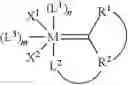
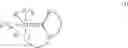

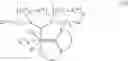


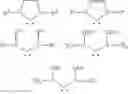
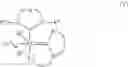
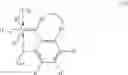
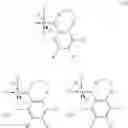
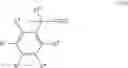
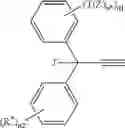

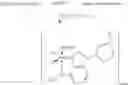


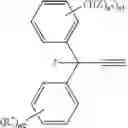
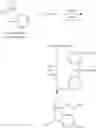
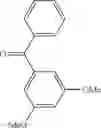
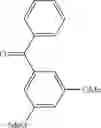
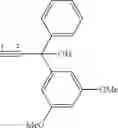
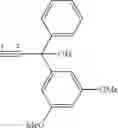
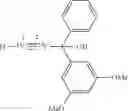









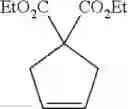
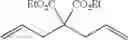
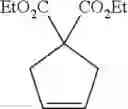
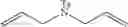
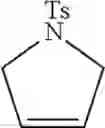
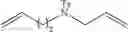
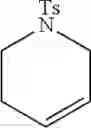
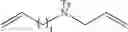
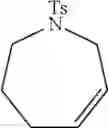
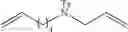

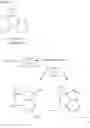
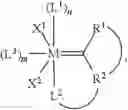
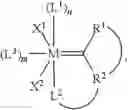
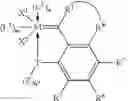
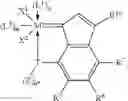
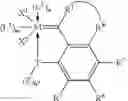
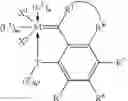
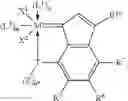
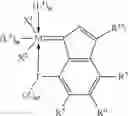
Sources:
- United States Patent and Trademark Office - verify current appl. status at the USPTO↗
Similar patent applications:
- » 20130204026
METHOD FOR IN-SITU FORMATION OF METATHESIS CATALYSTS - » 20150299235
Method for in-situ formation of metathesis catalysts
Recent applications in this class:
- » 20250171479 2025-05-29
ELECTRONICALLY STRONGLY COUPLED 1,4-DIVINYLPHENYLENEBRIDGED DIRUTHENIUM COMPLEX BEARING TWO Ru(CO)(2-MERCAPTOPYRIDINE)(PiPr3)2 MOIETIES AS AN INORGANIC CATALYST - » 20250129111 2025-04-24
RUTHENIUM PRECURSOR COMPOSITION, PREPARATION METHOD THEREFOR, AND FORMATION METHOD FOR RUTHENIUM-CONTAINING FILM USING SAME - » 20250066402 2025-02-27
PROCESS FOR PRODUCING RUTHENIUM COMPLEXES AND INTERMEDIATES THEREOF AND THEIR USE IN OLEFIN METATHESIS - » 20250051380 2025-02-13
NEW STERICALLY ACTIVATED CHELATING RUTHENIUM COMPLEXES, METHOD OF THEIR PREPARATION AND THEIR USE IN OLEFIN METATHESIS REACTIONS - » 20240150384 2024-05-09
LONG SHELF LIFE STABLE ORGANORUTHENIUM COMPLEXES AS (PRE)CATALYSTS FOR OLEFIN METATHESIS - » 20240076308 2024-03-07
Process for producing ruthenium complexes and intermediates thereof and their use in olefin metathesis - » 20230391812 2023-12-07
RUTHENIUM COMPLEX, PRODUCTION METHOD OF THE COMPLEX, AND PRODUCTION METHOD OF OPTICALLY ACTIVE SECONDARY ALCOHOLS USING THE COMPLEX AS CATALYST - » 20230348511 2023-11-02
RAW MATERIAL FOR CHEMICAL DEPOSITION CONTAINING ORGANORUTHENIUM COMPOUND, AND CHEMICAL DEPOSITION METHOD USING THE RAW MATERIAL FOR CHEMICAL DEPOSITION - » 20230322830 2023-10-12
Novel ruthenium complexes, methods of their preparation and application thereof in olefin cross metathesis - » 20230167144 2023-06-01
PREPARATION AND ITS APPLICATION OF A CYANIDE-BRIDGED METAL ORGANIC COMPOUND WITH INTRAMOLECULAR MAGNETIC TRANSFORMATION