Method and reactor for cracking hydrocarbon
US20170022428A1
2017-01-26
15/289,301
2016-10-10
✅ Patent granted
US 10,138,431 B2
2018-11-27
-
-
Youngsul Jeong
Wegman, Hessler & Vanderburg
2036-10-10
Abstract:
A method for cracking hydrocarbon, comprises: providing steam and hydrocarbon; and feeding steam and hydrocarbon into a reactor accessible to hydrocarbon and comprising a perovskite material of formula AaBbCcDdO3-δ, wherein 0<a<1.2, 0≦b≦1.2, 0.9<a+b≦1.2, 0<c<1.2, 0≦d≦1.2, 0.9<c+d≦1.2, −0.5<δ<0.5; A is selected from calcium, strontium, barium, and any combination thereof; B is selected from lithium, sodium, potassium, rubidium and any combination thereof; C is selected from cerium, zirconium, antimony, praseodymium, titanium, chromium, manganese, ferrum, cobalt, nickel, gallium, tin, terbium and any combination thereof; and D is selected from lanthanum, cerium, praseodymium, neodymium, promethium, samarium, europium, gadolinium, terbium, dysprosium, holmium, erbium, thulium, ytterbium, lutetium, scandium, titanium, vanadium, chromium, manganese, ferrum, cobalt, nickel, copper, zinc, yttrium, zirconium, niobium, molybdenum, technetium, ruthenium, rhodium, palladium, silver, cadmium, hafnium, tantalum, tungsten, rhenium, osmium, iridium, platinum, gold, gallium, indium, tin, antimony and any combination thereof.
Inventors:
- Lawrence Bernard KOOL 76 🇺🇸 Clifton Park, NY, United States
- Wenqing Peng 55 🇨🇳 Shanghai, China
- Yanfei Gu 18 🇨🇳 Shanghai, China
- Shizhong Wang 19 🇨🇳 Shanghai, China
- Chuan Lin 16 🇨🇳 Shanghai, China
- Zhaoping Wu 14 🇨🇳 Shanghai, China
- Qijia Fu 22 🇨🇳 Shanghai, China
- Zhigang Deng 16 🇨🇳 Shanghai, China
- Xiao ZHANG 31 🇨🇳 Shanghai, China
Assignee:
- GENERAL ELECTRIC COMPANY 28,775 🇺🇸 Schenectady, NY, United States
Applicant:
Interested in similar patents?
Get notified when new applications in this technology area are published.
Classification:
C10G9/203 » CPC main
Thermal non-catalytic cracking, in the absence of hydrogen, of hydrocarbon oils in pipes or coils with or without auxiliary means, e.g. digesters, soaking drums, expansion means; Apparatus; Tube furnaces chemical composition of the tubes
B01J19/0026 » CPC further
Chemical, physical or physico-chemical processes in general; Their relevant apparatus; Controlling or regulating processes; Avoiding undesirable reactions or side-effects, e.g. avoiding explosions, or improving the yield by suppressing side-reactions Avoiding carbon deposits
C04B35/505 » CPC further
Shaped ceramic products characterised by their composition ; Ceramics compositions ; Processing powders of inorganic compounds preparatory to the manufacturing of ceramic products based on rare-earth compounds based on yttrium oxide
C04B35/622 IPC
Shaped ceramic products characterised by their composition ; Ceramics compositions ; Processing powders of inorganic compounds preparatory to the manufacturing of ceramic products Forming processes; Processing powders of inorganic compounds preparatory to the manufacturing of ceramic products
C04B35/62222 » CPC further
Shaped ceramic products characterised by their composition ; Ceramics compositions ; Processing powders of inorganic compounds preparatory to the manufacturing of ceramic products; Forming processes; Processing powders of inorganic compounds preparatory to the manufacturing of ceramic products obtaining ceramic coatings
C10G9/16 » CPC further
Thermal non-catalytic cracking, in the absence of hydrogen, of hydrocarbon oils in pipes or coils with or without auxiliary means, e.g. digesters, soaking drums, expansion means Preventing or removing incrustation
C10G9/36 » CPC further
Thermal non-catalytic cracking, in the absence of hydrogen, of hydrocarbon oils by direct contact with inert preheated fluids, e.g. with molten metals or salts with heated gases or vapours
B01J2219/00245 » CPC further
Chemical, physical or physico-chemical processes in general; Their relevant apparatus; Controlling or regulating processes Avoiding undesirable reactions or side-effects
C07C4/04 » CPC further
Preparation of hydrocarbons from hydrocarbons containing a larger number of carbon atoms by cracking a single hydrocarbon or a mixture of individually defined hydrocarbons or a normally gaseous hydrocarbon fraction Thermal processes
B01J2219/0218 » CPC further
Chemical, physical or physico-chemical processes in general; Their relevant apparatus; Apparatus characterised by their chemically-resistant properties comprising coatings on the surfaces in direct contact with the reactive components of ceramic
C04B2235/3215 » CPC further
Aspects relating to ceramic starting mixtures or sintered ceramic products; Composition of constituents of the starting material or of secondary phases of the final product; Constituents and secondary phases not being of a fibrous nature; Metal oxides, mixed metal oxides, or oxide-forming salts thereof, e.g. carbonates, nitrates, (oxy)hydroxides, chlorides; Alkaline earth oxides or oxide forming salts thereof, e.g. beryllium oxide Barium oxides or oxide-forming salts thereof
C04B2235/3225 » CPC further
Aspects relating to ceramic starting mixtures or sintered ceramic products; Composition of constituents of the starting material or of secondary phases of the final product; Constituents and secondary phases not being of a fibrous nature; Metal oxides, mixed metal oxides, or oxide-forming salts thereof, e.g. carbonates, nitrates, (oxy)hydroxides, chlorides; Rare earth oxide or oxide forming salts thereof, e.g. scandium oxide Yttrium oxide or oxide-forming salts thereof
C04B2235/3248 » CPC further
Aspects relating to ceramic starting mixtures or sintered ceramic products; Composition of constituents of the starting material or of secondary phases of the final product; Constituents and secondary phases not being of a fibrous nature; Metal oxides, mixed metal oxides, or oxide-forming salts thereof, e.g. carbonates, nitrates, (oxy)hydroxides, chlorides; Refractory metal oxides, their mixed metal oxides, or oxide-forming salts thereof; Zirconium oxides, zirconates, hafnium oxides, hafnates, or oxide-forming salts thereof Zirconates or hafnates, e.g. zircon
C04B2235/79 » CPC further
Aspects relating to ceramic starting mixtures or sintered ceramic products; Aspects relating to sintered or melt-casted ceramic products; Physical characteristics Non-stoichiometric products, e.g. perovskites (ABO) with an A/B-ratio other than 1
C10G2300/107 » CPC further
Aspects relating to hydrocarbon processing covered by groups -; Feedstock materials Atmospheric residues having a boiling point of at least about 538 °C
C10G2300/1044 » CPC further
Aspects relating to hydrocarbon processing covered by groups -; Feedstock materials; Hydrocarbon fractions Heavy gasoline or naphtha having a boiling range of about 100 - 180 °C
C10G2300/1074 » CPC further
Aspects relating to hydrocarbon processing covered by groups -; Feedstock materials Vacuum distillates
C10G2300/1081 » CPC further
Aspects relating to hydrocarbon processing covered by groups -; Feedstock materials Alkanes
C10G2300/807 » CPC further
Aspects relating to hydrocarbon processing covered by groups -; Additives; Water Steam
C10G2400/20 » CPC further
Products obtained by processes covered by groups - C2-C4 olefins
C10G9/20 IPC
Thermal non-catalytic cracking, in the absence of hydrogen, of hydrocarbon oils in pipes or coils with or without auxiliary means, e.g. digesters, soaking drums, expansion means; Apparatus Tube furnaces
B01J19/00 IPC
Chemical, physical or physico-chemical processes in general; Their relevant apparatus
B01J19/02 » CPC further
Chemical, physical or physico-chemical processes in general; Their relevant apparatus Apparatus characterised by being constructed of material selected for its chemically-resistant properties
B01J19/2425 » CPC further
Chemical, physical or physico-chemical processes in general; Their relevant apparatus; Stationary reactors without moving elements inside; Tubular reactors in parallel
B01J23/002 » CPC further
Catalysts comprising metals or metal oxides or hydroxides, not provided for in group Mixed oxides other than spinels, e.g. perovskite
B01J2219/0263 » CPC further
Chemical, physical or physico-chemical processes in general; Their relevant apparatus; Apparatus characterised by their chemically-resistant properties characterised by the construction materials of the reactor vessel proper Ceramic
B01J2219/0286 » CPC further
Chemical, physical or physico-chemical processes in general; Their relevant apparatus; Apparatus characterised by their chemically-resistant properties characterised by the construction materials of the reactor vessel proper; Metal based Steel
C04B2235/3229 » CPC further
Aspects relating to ceramic starting mixtures or sintered ceramic products; Composition of constituents of the starting material or of secondary phases of the final product; Constituents and secondary phases not being of a fibrous nature; Metal oxides, mixed metal oxides, or oxide-forming salts thereof, e.g. carbonates, nitrates, (oxy)hydroxides, chlorides; Rare earth oxide or oxide forming salts thereof, e.g. scandium oxide Cerium oxides or oxide-forming salts thereof
C10G2300/1033 » CPC further
Aspects relating to hydrocarbon processing covered by groups -; Feedstock materials Oil well production fluids
C10G2300/1059 » CPC further
Aspects relating to hydrocarbon processing covered by groups -; Feedstock materials; Hydrocarbon fractions; Middle distillates Gasoil having a boiling range of about 330 - 427 °C
C10G2300/1077 » CPC further
Aspects relating to hydrocarbon processing covered by groups -; Feedstock materials Vacuum residues
C07C4/02 IPC
Preparation of hydrocarbons from hydrocarbons containing a larger number of carbon atoms by cracking a single hydrocarbon or a mixture of individually defined hydrocarbons or a normally gaseous hydrocarbon fraction
C07C5/32 IPC
Preparation of hydrocarbons from hydrocarbons containing the same number of carbon atoms by dehydrogenation with formation of free hydrogen
C10G9/18 » CPC further
Thermal non-catalytic cracking, in the absence of hydrogen, of hydrocarbon oils in pipes or coils with or without auxiliary means, e.g. digesters, soaking drums, expansion means Apparatus
B01J23/00 IPC
Catalysts comprising metals or metal oxides or hydroxides, not provided for in group
B01J19/24 IPC
Chemical, physical or physico-chemical processes in general; Their relevant apparatus Stationary reactors without moving elements inside
Description
CROSS REFERENCE TO RELATED APPLICATIONS
This application is a continuation of U.S. patent application Ser. No. 13/115,610 filed May 25, 2011, which in turn claims priority benefit under 35 USC §119 of Chinese Patent Application No. 201010192512.4 filed May 31, 2010.
BACKGROUND
The invention relates generally to methods and reactors for cracking hydrocarbon. More specifically, the invention relates to methods and reactors for cracking hydrocarbon, in which the build-up of coke deposits are undesirable.
In the petrochemical industry, hydrocarbons such as ethane, propane, butane and naphtha are cracked in reactors, in the presence of from about 30 to 70 weight percentage of steam, at temperatures of from about 700° C. to 870° C. in order to produce light olefins such as ethylene and propylene. Sometimes, hydrocarbons such as bottoms from atmospheric and vacuum distillation of crude oil are cracked in reactors at a temperature in a range from about 480° C. to about 600° C. in the presence of about 1 wt % to about 2 wt % steam.
During hydrocarbon cracking processes, the build-up of carbonaceous deposits (i.e. coke deposits) usually happens on inner surfaces of reactor components, for instance, inner radiant tube surfaces of furnace equipment. The inner radiant tube surfaces become gradually coated with a layer of coke which raises the radiant tube metal temperature (TMT) and increases the temperature drop through radiant coils. In addition, coke build-up adversely affects the physical characteristics of the reactor components, such as the radiant tubes, by deteriorating mechanical properties such as stress rupture, thermal fatigue, and ductility.
In order to decoke reactor components, the reactor must be periodically shut down. Typically, the decoking is carried out by combustion of the coke deposits with steam/air at temperatures of up to 1000° C. Such decoking operations are required approximately every 10 to 80 days, depending on the operation mode, types of hydrocarbons and hydrocarbons throughput, and result in production loss since hydrocarbons feeding must be stopped for such decoking operation.
A variety of methods have been considered in order to overcome the disadvantages of coke build-up on reactor components, such as furnace tube inner surfaces. These approaches include: metallurgy upgrade to alloys with increased chromium content of the metal substrates used in the furnaces; adding additives such as sulfur, dimethyl sulfide (DMS), dimethyl disulfide (DMDS) or hydrogen sulfide to the feedstock; increasing steam dilution of feedstock, and improved process control; selectively pre-treating the inner surface of the coils; inert surface coating; and catalytic gasification of coke to produce CO/CO2 and hydrogen.
While some of the aforementioned methods and systems have general use in the petrochemical industry, it is desirable to provide a method and reactor that obviates and mitigates the shortcomings of the prior art and successfully reduces or eliminates the build-up of coke deposits.
BRIEF DESCRIPTION
In one aspect, the invention relates to a method for cracking hydrocarbon, comprising: providing steam and hydrocarbon; and feeding steam and hydrocarbon into a reactor having an inner surface accessible to hydrocarbon, the inner surface comprising a perovskite material of formula AaBbCcDdO3-δ, wherein 0<a<1.2, 0=<b<=1.2, 0.9<a+b≦1.2, 0<c<1.2, 0≦.d≦1.2, 0.9<c+d≦1.2, −0.5<δ<0.5; A is selected from calcium (Ca), strontium (Sr), barium (Ba), and any combination thereof; B is selected from lithium (Li), sodium (Na), potassium (K), rubidium (Rb) and any combination thereof; C is selected from cerium (Ce), zirconium (Zr), antimony (Sb), praseodymium (Pr), titanium (Ti), chromium (Cr), manganese (Mn), ferrum (iron?) (Fe), cobalt (Co), nickel (Ni), gallium (Ga), tin (Sn), terbium (Tb) and any combination thereof; and D is selected from lanthanum (La), cerium (Ce), praseodymium (Pr), neodymium (Nd), promethium (Pm), samarium (Sm), europium (Eu), gadolinium (Gd), terbium (Tb), dysprosium (Dy), holmium (Ho), erbium (Er), thulium (Tm), ytterbium (Yb), lutetium (Lu), scandium (Sc), titanium (Ti), vanadium (V), chromium (Cr), manganese (Mn), ferrum (Fe), cobalt (Co), nickel (Ni), copper (Cu), zinc (Zn), yttrium (Y), zirconium (Zr), niobium (Nb), molybdenum (Mo), technetium (Tc), ruthenium (Ru), rhodium (Rh), palladium (Pd), silver (Ag), cadmium (Cd), hafnium (Hf), tantalum (Ta), tungsten (W), rhenium (Re), osmium (Os), iridium (Ir), platinum (Pt), gold (Au), gallium (Ga), indium (In), tin (Sn), antimony (Sb) and any combination thereof.
In another aspect, the invention relates to a reactor for cracking hydrocarbon having an inner surface accessible to the hydrocarbon, the inner surface comprising a perovskite material of formula AaBbCcDdO3-δ, wherein 0<a<1.2, 0.9<a+b≦1.2, 0<c<1.2, 0≦d≦1.2, 0.9<c+d≦1.2, −0.5<δ<0.5; A is selected from calcium (Ca), strontium (Sr), barium (Ba), and any combination thereof; B is selected from lithium (Li), sodium (Na), potassium (K), rubidium (Rb), and any combination thereof; C is selected from cerium (Ce), zirconium (Zr), antimony (Sb), praseodymium (Pr), titanium (Ti), chromium (Cr), manganese (Mn), ferrum (Fe), cobalt (Co), nickel (Ni), gallium (Ga), tin (Sn), terbium (Tb) and any combination thereof; and D is selected from lanthanum (La), cerium (Ce), praseodymium (Pr), neodymium (Nd), promethium (Pm), samarium (Sm), europium (Eu), gadolinium (Gd), terbium (Tb), dysprosium (Dy), holmium (Ho), erbium (Er), thulium (Tm), ytterbium (Yb), lutetium (Lu), scandium (Sc), titanium (Ti), vanadium (V), chromium (Cr), manganese (Mn), ferrum (Fe), cobalt (Co), nickel (Ni), copper (Cu), zinc (Zn), yttrium (Y), zirconium (Zr), niobium (Nb), molybdenum (Mo), technetium (Tc), ruthenium (Ru), rhodium (Rh), palladium (Pd), silver (Ag), cadmium (Cd), hafnium (Hf), tantalum (Ta), tungsten (W), rhenium (Re), osmium (Os), iridium (Ir), platinum (Pt), gold (Au), gallium (Ga), indium (In), tin (Sn), antimony (Sb) and any combination thereof.
DRAWINGS
These and other features, aspects, and advantages of the present invention will become better understood when the following detailed description is read with reference to the accompanying drawings, wherein:
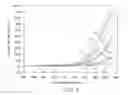
FIG. 1 shows the weight reduction percentages of the carbon black in the sample 1 and sample 2 after the sample 1 and the sample 2 were exposed to the helium-steam mixture compared with before exposure at different temperatures;
FIG. 2 shows the concentration of carbon dioxide generated after the sample 1 and the sample 2 were exposed to the helium-steam mixture at different temperatures; and
FIG. 3 shows the weight reduction percentages of carbon black in samples 3-13 after the samples 3-13 were exposed to the helium-steam mixture with respect to before exposure at different temperatures.
DETAILED DESCRIPTION
In one aspect, the invention relates to a method for cracking hydrocarbon, comprising: providing steam and hydrocarbon; and feeding steam and hydrocarbon into a reactor having an inner surface accessible to hydrocarbon, the inner surface comprising a perovskite material of formula AaBbCcDdO3-δ, wherein 0<a<1.2, 0 b≦1.2, 0.9<a+b≦1.2, 0<c<1.2, 0≦d≦1.2, 0.9<c+d≦1.2, −0.5<δ<0.5; A is selected from calcium (Ca), strontium (Sr), barium (Ba), and any combination thereof, B is selected from lithium (Li), sodium (Na), potassium (K), rubidium (Rb) and any combination thereof; C is selected from cerium (Ce), zirconium (Zr), antimony (Sb), praseodymium (Pr), titanium (Ti), chromium (Cr), manganese (Mn), ferrum (Fe), cobalt (Co), nickel (Ni), gallium (Ga), tin (Sn), terbium (Tb) and any combination thereof, and D is selected from lanthanum (La), cerium (Ce), praseodymium (Pr), neodymium (Nd), promethium (Pm), samarium (Sm), europium (Eu), gadolinium (Gd), terbium (Tb), dysprosium (Dy), holmium (Ho), erbium (Er), thulium (Tm), ytterbium (Yb), lutetium (Lu), scandium (Sc), titanium (Ti), vanadium (V), chromium (Cr), manganese (Mn), ferrum (Fe), cobalt (Co), nickel (Ni), copper (Cu), zinc (Zn), yttrium (Y), zirconium (Zr), niobium (Nb), molybdenum (Mo), technetium (Tc), ruthenium (Ru), rhodium (Rh), palladium (Pd), silver (Ag), cadmium (Cd), hafnium (Hf), tantalum (Ta), tungsten (W), rhenium (Re), osmium (Os), iridium (Ir), platinum (Pt), gold (Au), gallium (Ga), indium (In), tin (Sn), antimony (Sb) and any combination thereof.
In another aspect, the invention relates to a reactor for cracking hydrocarbon having an inner surface accessible to the hydrocarbon, the inner surface comprising a perovskite material of formula AaBbCcDdO3-δ, wherein 0<a<1.2, 0≦b≦1.2, 0.9<a+b≦1.2, 0<c<1.2, 0≦d≦1.2, 0.9<c+d≦1.2, −0.5<δ<0.5; A is selected from calcium (Ca), strontium (Sr), barium (Ba), and any combination thereof, B is selected from lithium (Li), sodium (Na), potassium (K), rubidium (Rb), and any combination thereof; C is selected from cerium (Ce), zirconium (Zr), antimony (Sb), praseodymium (Pr), titanium (Ti), chromium (Cr), manganese (Mn), ferrum (Fe), cobalt (Co), nickel (Ni), gallium (Ga), tin (Sn), terbium (Tb) and any combination thereof; and D is selected from lanthanum (La), cerium (Ce), praseodymium (Pr), neodymium (Nd), promethium (Pm), samarium (Sm), europium (Eu), gadolinium (Gd), terbium (Tb), dysprosium (Dy), holmium (Ho), erbium (Er), thulium (Tm), ytterbium (Yb), lutetium (Lu), scandium (Sc), titanium (Ti), vanadium (V), chromium (Cr), manganese (Mn), ferrum (Fe), cobalt (Co), nickel (Ni), copper (Cu), zinc (Zn), yttrium (Y), zirconium (Zr), niobium (Nb), molybdenum (Mo), technetium (Tc), ruthenium (Ru), rhodium (Rh), palladium (Pd), silver (Ag), cadmium (Cd), hafnium (Hf), tantalum (Ta), tungsten (W), rhenium (Re), osmium (Os), iridium (Ir), platinum (Pt), gold (Au), gallium (Ga), indium (In), tin (Sn), antimony (Sb) and any combination thereof.
In some embodiments, A is selected from strontium (Sr) and barium (Ba). C is selected from cerium (Ce), zirconium (Zr), and manganese (Mn). D is selected from cerium (Ce) and yttrium (Y).
In some embodiments, the perovskite material is selected from SrCeO3, SrZr0.3Ce0.7O3, BaMnO3, BaCeO3, BaZr0.3Ce0.7O3, BaZr0.3Ce0.5Y0.2O3, BaZr0.1Ce0.7Y0.2O3, BaZrO3, BaZr0.7Ce0.3O3, BaCe0.5Zr0.5O3, BaCe0.9Y0.1O3, BaCe0.85Y0.15O3, and BaCe0.8Y0.2O3. For example, for SrCeO3, A is Sr, C is Ce, a=1, b=0, c=1, d=0, and δ=0. For SrZr0.3Ce0.7O3, A is Sr, C is Zr, D is Ce, a=1, b=0, c=0.3, d=0.7, and δ=0. For BaMnO3, A is Ba, C is Mn, a=1, b=0, c=1, d=0, and δ=0. For BaCeO3, A is Ba, C is Ce, a=1, b=0, c=1, d=0, and 8=0. For BaZr0.3Ce0.7O3, A is Ba, C is Zr, D is Ce, a=1, b=0, c=0.3, d=0.7, and δ=0. For BaZr0.3Ce0.5Y0.2O3, A is Ba, C is Zr, D is combination of Ce and Y, a=1, b=0, c=0.3, d=0.7, and δ=0. As one of ordinary skill in the art can understand from the above, more examples are omitted here to avoid obscuring the disclosure in unnecessary details.
In some embodiments, the method is operated at a temperature in a range from about 700° C. to about 870° C., a weight ratio of steam to hydrocarbon is in a range from about 3:7 to about 7:3, and the hydrocarbon comprises at least one of ethane, heptane, liquid petroleum gas, naphtha, and gas oil.
In some embodiments, the method is operated at a temperature in a range from about 480° C. to about 600° C., wherein the hydrocarbon comprises bottoms from atmospheric and vacuum distillation of crude oil and the mixture comprises from about 1 wt % to about 2 wt % steam.
In some embodiments, the perovskite material is SrZr0.3Ce0.2O3.
In some embodiments, the perovskite material is BaZr0.3Ce0.2O3.
In some embodiments, the perovskite material is BaZr0.1Ce0.7Y0.2O3.
In some embodiments, the perovskite material is BaCe0.8Y0.2O3.
The perovskite material may be a coating applied using different methods, for example, air plasma spray, slurry coating, sol-gel coating, and solution coating. In some embodiments, the perovskite material is coated using air plasma spray method.
The reactor may be any reactor in which hydrocarbon is cracked. In some embodiments, the reactor comprises at least one of a furnace tube, a tube fitting, a reaction vessel, and a radiant tube.
Definitions
As used herein, the term “reactor” refers to but is not limited to at least one of a furnace tube, a tube fitting, a reaction vessel, and a radiant tube, used in petrochemical processes.
As used herein the term “cracking hydrocarbon” refers to but is not limited to processes in which hydrocarbons such as ethane, propane, butane and naphtha are cracked in reactors, in the presence of from about 30 to 70 weight percentage of steam, at temperatures of from about 700° C. to 870° C. in order to produce light olefins such as ethylene and propylene. Sometimes, hydrocarbons such as bottoms from atmospheric and vacuum distillation of crude oil are cracked in reactors at a temperature in a range from about 480 to about 600° C. in the presence of about 1 wt % to about 2 wt % steam.
As used herein the term “coke” refers to but is not limited to carbonaceous solid or liquid or particulates or macromolecules forming the carbonaceous solid or liquid, which are derived from coal, petroleum, wood, hydrocarbons and other materials containing carbon and which include, for example, carbon black, tar, and pyrolytic coke existing in hydrocarbon cracking furnace.
Any numerical values recited herein include all values from the lower value to the upper value in increments of one unit provided that there is a separation of at least 2 units between any lower value and any higher value. As an example, if it is stated that the amount of a component or a value of a process variable such as, for example, temperature, pressure, time and the like is, for example, from 1 to 90, preferably from 20 to 80, more preferably from 30 to 70, it is intended that values such as 15 to 85, 22 to 68, 43 to 51, 30 to 32 etc. are expressly enumerated in this specification. For values which are less than one, one unit is considered to be 0.0001, 0.001, 0.01 or 0.1 as appropriate. These are only examples of what is specifically intended and all possible combinations of numerical values between the lowest value and the highest value enumerated are to be considered to be expressly stated in this application in a similar manner.
EXAMPLES
The following examples are included to provide additional guidance to those of ordinary skill in the art in practicing the claimed invention. Accordingly, these examples do not limit the invention as defined in the appended claims.
A lab scale hydrocarbon-cracking furnace was built up. Due to structure similarity of naphtha, heptane was used as the source of hydrocarbon.
Samples on quartz sample holders were placed at the constant temperature region of the cracking furnace. The furnace door was then closed. Argon gas was fed in the furnace at the flow rate of 100 standard cubic centimeter per minute (sccm). The cracking furnace was heated to 880° C. with the ramping rate of 20° C./min. A vaporizer was heated to 350° C. within 30 minutes.
When the temperature of the cracking furnace reached 880° C. and the temperature of the vaporizer reached 350° C., water was pumped using a piston pump into the vaporizer with the flow rate of 1.58 ml/min. Argon gas feeding was stopped. After 5 minutes, heptane was pumped using a piston pump into the vaporizer with the flow rate of 2.32 ml/min to be vaporized and mixed with the steam in the vaporizer in a 1:1 weight ratio. The temperature of the cracking furnace was maintained at desired temperature, e.g., 800+/−5° C. or 860+/−5° C. for desired time before stopping the pumpings of the heptane and water. The residence time of the heptane and steam in the cracking furnace was 1.5 seconds, unless otherwise specified. Argon gas was fed again at the flow rate of 100 sccm before the cracking furnace and the vaporizer were shut down. When the cracking furnace cooled down, argon gas feed was stopped and the furnace door was opened to take out the sample holders.
Comparative Example
Square pellets each with the dimension of 6×6×1 mm3 made of materials commonly used in hydrocarbon-cracking reactors, i.e., 310S, incoloy 800 HT, incoloy 825, Al2O3, SiNx, SiC and SIO2 were used as samples. Compositions of the alloy pellets, i.e., 310S, incoloy 800HT, and incoloy 825 are shown in Table 1 below. Electric balance was used to measure the weight of each pellet before and after cracking experiment. Weights of cokes deposited on the pellets changed with time and are shown in Table 2 below.
| TABLE 1 | ||||||||||||
| r | i | e | n | i | u | o | l | i | ||||
| wt %) | wt %) | wt %) | wt %) | wt %) | wt %) | wt %) | wt %) | wt %) | wt %) | wt %) | wt %) | |
| 310S | 5.6 | 8.9 | 2 | .6 | .4 | .5 | ||||||
| Incoloy | 0.62 | 0.76 | 5.57 | .89 | .65 | .005 | .29 | .57 | .56 | .082 | ||
| 800HT | ||||||||||||
| Incoloy | 0.80 | 1.07 | 1.22 | .51 | .32 | .003 | .020 | .02 | .95 | .20 | .89 | .015 |
| 825 | ||||||||||||
| TABLE 2 | |||||||
| incoloy | incoloy | ||||||
| time | 310S | 800HT | 825 | Al2O3 | SiNx | SiC | SiO2 |
| (hour(s)) | (g) | (g) | (g) | (g) | (g) | (g) | (g) |
| 0 | 0.00 | 0.00 | 0.00 | 0.00 | 0.00 | 0.00 | 0.00 |
| 2 | 0.23 | 0.35 | 0.29 | ||||
| 2.5 | 0.17 | 0.18 | 0.16 | 0.17 | |||
| 4 | 0.38 | 0.50 | 0.45 | ||||
| 4.5 | 0.31 | 0.34 | 0.30 | 0.29 | |||
| 6 | 0.59 | 0.74 | 0.80 | ||||
| 8 | 0.81 | 0.98 | 0.75 | 0.56 | 0.58 | 0.62 | |
| 10 | 0.90 | 1.05 | 0.97 | 0.65 | 0.77 | 0.70 | |
Example 1
The perovskite materials were prepared by solid state reaction method. Using BaZr0.3Ce0.5Y0.2O3 as an example, stoichiometric amounts of high-purity barium carbonate, zirconium oxide, cerium oxide, and yttrium oxide powders (all from Sinopharm Chemical Reagent Co., Ltd. (SCRC), Shanghai, China) were mixed in ethanol and ball-milled for 12 hours. The resultant mixtures were then dried and calcined at 1100° C. in air for 6 hours to form the perovskite powder. The powder was iso-statically pressed at 274.6 MPa for 10 minutes to become a disk. The disk was then sintered at 1400° C. for 6 hours in air. The sintered disk was polished to have a thickness of 1 mm. The perovskite phase was confirmed using an X-ray diffractometer (D8 Advance, Bruker AXS GmbH, Karlsruhe, Germany).
Example 2
Disks made from SrCeO3, SrZr0.7Ce0.7O3, BaMnO3, BaCeO3, BaZr0.3Ce0.7O3, and Al2O3 and having a thickness of 1 mm and a diameter of 10 mm were used as samples and stayed in the cracking furnace at 800° C.+/−5° C. for 2 hours. No coke depositions were observed on surfaces of the SrCeO3 disk, the SrZr0.3Ce0.7O3 disk, the BaMnO3 disk, the BaCeO3 disk, and the BaZr0.3Ce0.7O3 disk while the coke deposition was observed on the Al2O3 disk.
The X-ray Diffraction (XRD) results of the BaZr0.3Ce0.7O3 disk before and after the experiment demonstrate that this material is rather stable in the experiment.
Example 3
Disks of 1 mm thick and 10 mm diameter made from BaCO3, BaTiO3, the mixture of CeO2 and BaCO3, and Al2O3, respectively, were used as samples and stayed in the cracking furnace at 800° C. for 2 hours. It was found that small amount of coke appeared on the surface of BaCO3 disk, relatively more cokes were deposited on the BaTiO3 and Al2O3 disks, and no coke was deposited on the CeO2 and BaCO3 mixture disk. XRD characterization shows that the perovskite material BaCeO3 was formed from the CeO2 and BaCO3 mixture in-situ during the experiment. It suggests that the perovskite material BaCeO3 with Ba on A site and Ce on C site has higher anti-coking performance than BaCO3, BaTiO3 and Al2O3.
Example 4
A coupon made from alloy 310S with the dimension of 10×30×1 mm3 was used as the substrate. Before coating, the substrate was cleaned carefully as follows: ultrasonic agitation in acetone and ethanol for 30 minutes, respectively, to remove organic contaminants, ultrasonic agitation in HCl (3.3 wt %) aqueous solution for 30 minutes to etch the substrate surface, ultrasonically rinsing in DI-water, and finally dried completely by compressed air. After ball milling and granulation process to make the average size of BaZr0.1Ce0.7Y0.2O3 powders to be around 20 micrometers, the powders were fed in an air plasma spray system to deposit BaZr0.1Ce0.7Y0.2O3 coating on the fully cleaned 310S substrate. XRD results identified the perovskite phase of BaCe0.7Zr0.1Y0.2O3 in the coating.
Example 5
The coated alloy coupon obtained in Example 4 was then used as a sample and stayed in the cracking furnace at 860° C. for 8 hours in the heptane/steam (1:1 wt) mixture. It was observed that no coke was formed on the BaZr0.1Ce0.7Y0.2O3 film. Energy disperse spectroscopy (EDS) analysis was performed after the experiment and confirmed that no carbon can be identified on the surface of the BaZr0.1Ce0.7Y0.2O3 film. However, black carbon was observed on the blank section of the alloy substrate without the BaZr0.1Ce0.7Y0.2O3 film. This experiment suggests that the BaZr0.1Ce0.7Y0.2O3 film is effective for anti-coking.
Example 6
Sample 1 (the mixture of carbon black and BaZr0.3Ce0.7O3 powders with a weight ratio of 1:10, total weight: 330 mg) and sample 2 (the carbon black powder, 30 mg) were tested in 50:50 (vol) helium:steam mixture using a thermogravimetric analyzer (TGA) (TG 151, from Calm Instruments, Inc., Cerritos, Calif., USA). The heating rate of TGA was 5° C./min, and the temperature range was 400° C. to 950° C. The weights of the samples were measured at different temperatures. The weight reduction percentages of carbon black in the samples were calculated out and shown in FIG. 1. Nicoler™ 380 FT-IR spectrometer from Thermo Electron Scientific Instruments Corp., Madison, Wis., USA was used to analyze the concentration of generated carbon dioxide at different temperatures. The concentrations of carbon dioxide at different temperatures are shown in FIG. 2.
FIG. 1 shows that more carbon black was consumed in the sample 1 than in the sample 2, especially when the temperature is around and higher than 800° C. FIG. 2 shows that more carbon dioxide were generated from the sample 1 than from the sample 2. The experiment suggests that the BaZr0.3Ce0.7O3 may be used in the temperature range of 400° C. to 950° C. where coke formation/existence is not desired.
Example 7
Samples 3-13 were tested in 50:50 (vol) helium:steam mixture by using TGA. Samples 3-5 and 7-13 are powder mixtures of carbon black with BaZr0.3Ce0.7O3, BaCeO3, BaCe0.5Zr0.5O3, BaZr0.7Ce0.3O3, BaZrO3, BaZr0.1Ce0.7Y0.2O3, BaCe0.85Y0.15O3, BaCO3, BaCe0.9Y0.1O3, and BaCe0.8Y0.2O3 respectively (weight ratio of 1:10, total weight: 330 mg). Sample 6 was carbon black powder (30 mg). The heating rate of TGA was 5° C./min, and the temperature range was from about 400° C. to about 950° C. The weight reduction percentages of carbon black in the samples were calculated out and shown in FIG. 3.
FIG. 3 shows more carbon black was consumed in the samples 3-5 and 7-13 than in the sample 6, especially when the temperature is around and higher than 785° C. It suggests that BaZr0.3Ce0.7O3, BaCeO3, BaCe0.5Zr0.5O3, BaZr0.3Ce0.7O3, BaZrO3, BaZr0.1Ce0.7Y0.2O3, BaCe0.85Y0.15O3, BaCO3, BaCe0.9Y0.1O3 and BaCe0.8Y0.2O3 may be used in the temperature range of 400° C. to 950 ° C. where the coke formation/existence is not desired.
While only certain features of the invention have been illustrated and described herein, many modifications and changes will occur to those skilled in the art. It is, therefore, to be understood that the appended claims are intended to cover all such modifications and changes as fall within the true spirit of the invention.
Claims
1. A method for inhibiting coke deposit formation in a hydrocarbon cracking reactor having an inner surface accessible to said hydrocarbon and wherein a feed stock comprising ethane is cracked in the presence of steam to form ethylene, said inner surface comprising a perovskite material of formula AaBbCcDdO3-δ, wherein 0<a<1.2, 0≦b≦1.2, 0.9<a+b≦1.2, 0<c<1.2, 0.0≦d≦1.2, 0.9<c+d≦1.2, −0.5<δ<0.5;
A is selected from calcium (Ca), strontium (Sr), barium (Ba), and any combination thereof;
B is selected from lithium (Li), sodium (Na), potassium (K), rubidium (Rb), and any combination thereof;
C is selected from cerium (Ce), zirconium (Zr), antimony (Sb), praseodymium (Pr), titanium (Ti), chromium (Cr), manganese (Mn), ferrum (Fe), cobalt (Co), nickel (Ni), gallium (Ga), tin (Sn), terbium (Tb) and any combination thereof; and
D is selected from lanthanum (La), cerium (Ce), praseodymium (Pr), neodymium (Nd), promethium (Pm), europium (Eu), gadolinium (Gd), terbium (Tb), dysprosium (Dy), holmium (Ho), erbium (Er), thulium (Tm), ytterbium (Yb), lutetium (Lu), scandium (Sc), titanium (Ti), vanadium (V), chromium (Cr), manganese (Mn), ferrum (Fe), cobalt (Co), nickel (Ni), copper (Cu), zinc (Zn), yttrium (Y), zirconium (Zr), niobium (Nb), molybdenum (Mo), technetium (Tc), palladium (Pd), silver (Ag), cadmium (Cd), hafnium (HO, tantalum (Ta), tungsten (W), rhenium (Re), osmium (Os), iridium (Ir), platinum (Pt), gold (Au), gallium (Ga), indium (In), tin (Sn), antimony (Sb) and any combination thereof.
2. The method of claim 1, wherein A is selected from strontium (Sr) and barium (Ba).
3. The method of claim 1, wherein C is selected from cerium (Ce), zirconium (Zr), and manganese (Mn).
4. The method of claim 1, wherein D is selected from cerium (Ce) and yttrium (Y).
5. The reactor of claim 1, wherein the perovskite material is selected from SrCeO3, SrZr0.3Ce0.7O3, BaMnO3, BaCeO3, BaZr0.3Ce0.5Y0.2O3, BaZr0.1Ce0.7Y0.2O3, BaZrO3, BaCe0.9Y0.1O3, BaCe0.85Y0.15O3, and BaCe0.8Y0.2O3.
6. The method of claim 1, being operated at a temperature in a range from about 700° C. to about 870° C. and wherein a weight ratio of steam to hydrocarbon in the mixture is in a range from about 3:7 to about 7:3.
7. The method as recited in claim 1 wherein said perovskite material is devoid of samarium (Sm), ruthenium (Ru) or rhodium (Rh).
8. The method of claim 1, wherein said reactor is operated at a temperature in a range from about 480 to about 600° C.
9. The method of claim 1, wherein the perovskite material is SrZr0.3Ce0.7O3.
10. The method of claim 1, wherein the perovskite material is BaZr0.1Ce0.7Y0.2O3.
11. The method of claim 1, wherein the perovskite material is BaCe0.8Y0.2O3.
12. A method for inhibiting coke deposit formation in a hydrocarbon cracking reactor having an inner surface accessible to said hydrocarbon and wherein a feedstock comprising ethane is cracked in the presence of steam to form ethylene, said inner surface comprising a perovskite material of formula AaBbCcDdO3-δ, wherein 0<a<1.2, 0≦b≦1.2, 0.9<a+b≦1.2, c is present in an amount of <1.2, 0≦d≦1.2, 0.9<c+d≦1.2, −0.5<δ<0.5; A is selected from calcium (Ca), strontium (Sr), barium (Ba), and any combination thereof;
B is selected from lithium (Li), sodium (Na), and potassium (K), and any combination thereof;
C is a combination of cerium (Ce) and zirconium (Zr); and
D is selected from lanthanum (La), cerium (Ce), praseodymium (Pr), neodymium (Nd), promethium (Pm), europium (Eu), gadolinium (Gd), terbium (Tb), dysprosium (Dy), holmium (Ho), ebium (Er), thulium (Tm), ytterbium (Yb), lutetium (Lu), scandium (Sc), titanium (Ti), vanadium (V), chromium (Cr), manganese (Mn), ferrum (Fe), cobalt (Co), nickel (Ni), copper (Cu), zinc (Zn), yttrium (Y), zirconium (Zr), niobium (Nb), molybdenum (Mo), technetium (Tc), palladium (Pd), silver (Ag), cadmium (Cd), hafnium (Hf), tantalum (Ta), tungsten (W), rhenium (Re), osmium (Os), iridium (Ir), platinum (Pt), gold (Au), gallium (Ga), indium (In), tin (Sn), antimony (Sb) and any combination thereof; said perovskite gasifying said coke to produce CO, CO2, and hydrogen.
13. A method as recited in claim 12 wherein said method is conducted at a temperature of between about 480° C. to about 870° C.
14. A method as recited in claim 12 being operated at a temperature in a range of from about 700° C. to about 870° C. and wherein a weight ratio of steam to hydrocarbon in the mixture is in a range of about 3:7 to about 7:3.
15. A method as recited in claim 12 wherein said perovskite is applied to said interior surfaces as a coating.
16. A method as recited in claim 12 wherein said perovskite is present in the form of a pressed powder.
17. A method as recited in claim 12 wherein said perovskite material is devoid of samarium (Sm), ruthenium (Ru) or rhodium (Rh).
18. A method as recited in claim 12 wherein said inner surface is devoid of Ni.
19. A method as recited in claim 12 wherein said perovskite material is selected from the group consisting of SrZr0.3Ce0.7O3, BaZr0.3Ce0.5Y0.2O3, and BaZr0.1Ce0.7Y0.2O3.
Images & Drawings included:

Sources:
- United States Patent and Trademark Office - verify current appl. status at the USPTO↗
Similar patent applications:
- » 20130267750
Method and reactor for cracking hydrocarbon and method for coating the reactor - » 20180057749
Method and reactor for cracking hydrocarbon and method for coating the reactor - » 20190169504
Method and reactor containing perovskite for cracking hydrocarbon and method for coating the reactor - » 20110295051
Method and reactor for cracking hydrocarbon - » 20210069665
Turbomachine chemical reactor and method for cracking hydrocarbons in a process fluid - » 20210355389
Dual fluid catalytic cracking reactor systems and methods for processing hydrocarbon feeds to produce olefins
Recent applications in this class:
- » 20250257267 2025-08-14
Processes and Systems for Steam Cracking Hydrocarbon Feeds - » 20230340336 2023-10-26
CHEMICAL REACTION AND CONVERSION IN THERMALLY HETEROGENEOUS AND NON-STEADY-STATE CHEMICAL REACTORS - » 20230072169 2023-03-09
SYSTEMS AND METHODS FOR STEAM CRACKING HYDROCARBONS - » 20220017827 2022-01-20
Erosion resistant alloy for thermal cracking reactors - » 20200239783 2020-07-30
Pyrolysis furnace tubes - » 20190309229 2019-10-10
Pyrolysis tube for manufacturing olefin and method for manufacturing dehydrogenating catalyst - » 20190284483 2019-09-19
Pyrolysis furnace tubes - » 20190241815 2019-08-08
Use of semipermeable membranes in cracking coils - » 20170137722 2017-05-18
Furnace tube radiants - » 20170130139 2017-05-11
System and method for producing chemicals at high temperature
Recent applications for this Assignee:
- » 20250250942 2025-08-07
Overall Engine Efficiency Rating for Turbomachine Engines - » 20250243827 2025-07-31
MULTIPLE-FLOW AIRCRAFT TURBINE ENGINE - » 20250229333 2025-07-17
SYSTEMS AND METHODS FOR SMOOTHING A CONTOUR OF AN OBJECT FORMED DURING ADDITIVE MANUFACTURING - » 20250224115 2025-07-10
TURBINE ENGINE HAVING A COMBUSTION SECTION WITH A FUEL SUPPLY ASSEMBLY - » 20250223929 2025-07-10
UNDUCTED PROPELLER GAS TURBINE COMPRISING A COOLING AIR CHANNEL AND A VARIABLE BLEED VALVE EJECTION CHANNEL - » 20250222519 2025-07-10
ADDITIVE MANUFACTURING SUPPORTS AND METHODS FOR USING SAME IN ADDITIVELY MANUFACTURING PARTS - » 20250215830 2025-07-03
SUSPENSION OF A TRIPLE-FLOW AIRCRAFT TURBINE ENGINE - » 20250215826 2025-07-03
GAS TURBINE ENGINE - » 20250215811 2025-07-03
SYSTEMS AND METHODS FOR ATTACHMENT OF MATERIALS HAVING DIFFERENT THERMAL EXPANSION COEFFICIENTS - » 20250207534 2025-06-26
GAS TURBINE ENGINES AND EPICYCLIC GEARBOXES WITH PLANET GEAR CLEARANCES