Recirculating ball nut, assembly for a ballscrew drive and method for producing a recirculating ball nut
US20170030448A1
2017-02-02
15/119,140
2015-01-27
✅ Patent granted
US 10,119,600 B2
2018-11-06
WO; PCT/EP2015/051615; 20150127
WO; WO2015/124387; 20150827
Jake Cook
MacMillan, Sobanski & Todd, LLC
2035-01-27
Abstract:
In a recirculating ball nut for a ball screw drive, having a base body which includes at least one recirculating ball track, the base body is a forged component and the recirculating ball track is manufactured by a cutting manufacturing method. A further subject matter of the invention is an assembly for a ball screw drive of a power steering, having a belt pulley and a recirculating ball nut according to the invention, the belt pulley being connected to the recirculating ball nut so as to be non-rotatable relative thereto. A further subject matter of the invention is a method of manufacturing a recirculating ball nut.
Assignee:
- TRW AUTOMOTIVE GMBH 222 🇩🇪 Alfdorf, Germany
Applicant:
Interested in similar patents?
Get notified when new applications in this technology area are published.
Classification:
F16H25/2223 » CPC main
Gearings comprising primarily only cams, cam-followers and screw-and-nut mechanisms for conveying or interconverting oscillating or reciprocating motions; Screw mechanisms with balls, rollers, or similar members between the co-operating parts; Elements essential to the use of such members with balls with elements for guiding the circulating balls Cross over deflectors between adjacent thread turns, e.g. S-form deflectors connecting neighbouring threads
B23C3/28 » CPC further
Milling particular work; Special milling operations; Machines therefor Grooving workpieces
B62D5/0448 » CPC further
Power-assisted or power-driven steering electrical, e.g. using an electric servo-motor connected to, or forming part of, the steering gear; Conversion of rotational into longitudinal movement; Screw drives Ball nuts
F16H2025/2096 » CPC further
Gearings comprising primarily only cams, cam-followers and screw-and-nut mechanisms for conveying or interconverting oscillating or reciprocating motions; Screw mechanisms; Arrangements for driving the actuator using endless flexible members
F16H25/22 IPC
Gearings comprising primarily only cams, cam-followers and screw-and-nut mechanisms for conveying or interconverting oscillating or reciprocating motions; Screw mechanisms with balls, rollers, or similar members between the co-operating parts; Elements essential to the use of such members
B62D5/04 IPC
Power-assisted or power-driven steering electrical, e.g. using an electric servo-motor connected to, or forming part of, the steering gear
B21K1/04 » CPC further
Making machine elements ball-races or sliding bearing races
B23C2220/28 » CPC further
Details of milling processes Finishing
B62D5/0424 » CPC further
Power-assisted or power-driven steering electrical, e.g. using an electric servo-motor connected to, or forming part of, the steering gear; Electric motor acting on or near steering gear the axes of motor and final driven element of steering gear, e.g. rack, being parallel
F16H25/2204 » CPC further
Gearings comprising primarily only cams, cam-followers and screw-and-nut mechanisms for conveying or interconverting oscillating or reciprocating motions; Screw mechanisms with balls, rollers, or similar members between the co-operating parts; Elements essential to the use of such members with balls
B21K1/26 » CPC further
Making machine elements housings or supporting parts, e.g. axle housings, engine mountings
F16H2025/2081 » CPC further
Gearings comprising primarily only cams, cam-followers and screw-and-nut mechanisms for conveying or interconverting oscillating or reciprocating motions; Screw mechanisms; Arrangements for driving the actuator Parallel arrangement of drive motor to screw axis
F16H2025/2481 » CPC further
Gearings comprising primarily only cams, cam-followers and screw-and-nut mechanisms for conveying or interconverting oscillating or reciprocating motions; Screw mechanisms; Elements essential to such mechanisms, e.g. screws, nuts Special features for facilitating the manufacturing of spindles, nuts, or sleeves of screw devices
F16H1/24 IPC
Toothed gearings for conveying rotary motion without gears having orbital motion involving gears essentially having intermeshing elements other than involute or cycloidal teeth
F16H25/24 » CPC further
Gearings comprising primarily only cams, cam-followers and screw-and-nut mechanisms for conveying or interconverting oscillating or reciprocating motions; Screw mechanisms Elements essential to such mechanisms, e.g. screws, nuts
F16H25/20 IPC
Gearings comprising primarily only cams, cam-followers and screw-and-nut mechanisms for conveying or interconverting oscillating or reciprocating motions Screw mechanisms
F16H55/02 IPC
Elements with teeth or friction surfaces for conveying motion; Worms, pulleys or sheaves for gearing mechanisms Toothed members; Worms
Description
CROSS-REFERENCE TO RELATED APPLICATIONS
This application is a national stage of International Application No. PCT/EP2015/051615 filed 27 Jan. 2015, the disclosures of which are incorporated herein by reference in entirety, and which claimed priority to German Patent Application No. 10 2014 102 132.0 filed 19 Feb. 2014, the disclosures of which are incorporated herein by reference in entirety.
BACKGROUND OF THE INVENTION
The invention relates to a recirculating ball nut and an assembly for a ball screw drive. The invention further relates to a method of manufacturing a recirculating ball nut.
Ball screw drives are employed in power steering systems in vehicles, for example. The recirculating ball nut is mounted on the steering linkage of the vehicle, the recirculating ball nut being held stationarily in the longitudinal direction of the steering linkage and mounted for rotation in relation to the steering linkage. Concurrent threads are provided in the recirculating ball nut and on the steering linkage. Provided between the recirculating ball nut and the steering linkage are transmission means, for example balls, which engage in both threads and in this way couple the recirculating ball nut and the steering linkage to each other. When the recirculating ball nut is rotated relative to the steering linkage, for example by a belt drive engaging the outer periphery of the recirculating ball nut, the steering linkage is shifted relative to the recirculating ball nut in the longitudinal direction by means of the balls. This allows the ball screw drive to apply an additional steering force on the steering linkage, for example.
In order to ensure both as effective a steering force assistance as possible and a reliable force transmission from the drive to the steering linkage, it is required that the recirculating ball tracks be manufactured with a very low manufacturing tolerance, so that the balls have a very small play in the recirculating ball tracks while they can still roll in the recirculating ball tracks with low friction. Until now, forging methods have been used for manufacturing the recirculating ball nuts; the known forging methods do not ensure a sufficient precision for the manufacture of the ball tracks, or a very great manufacturing effort is involved in reaching the desired precision. In addition, the internal recirculating ball tracks are difficult to access, which increases the manufacturing effort. Alternative manufacturing methods such as milling feature the drawback that very large amounts of materials are required.
BRIEF SUMMARY OF THE INVENTION
It is the feature of the invention to provide a recirculating ball nut and an assembly for a ball screw drive which are simpler and faster to manufacture and have a lower manufacturing tolerance. A further object of the invention is to provide a material-saving method of manufacturing such a recirculating ball nut.
To achieve the feature, provision is made for a recirculating ball nut for a ball screw drive, having a base body which includes at least one recirculating ball track, the base body being a forged component and the recirculating ball track being manufactured by a cutting manufacturing method.
According to the invention, the advantages of different methods, that is, the forging method on the one hand and the cutting method on the other hand, are combined. The base body is manufactured in a forging process, which allows a material-saving manufacture. The recirculating ball tracks can already be roughly incorporated into the base body in the forging process. Subsequently, the recirculating ball tracks are manufactured or finished by a cutting method, allowing the recirculating ball tracks to be produced with a very high precision.
Manufacturing the recirculating ball track by using a cutting manufacturing method additionally has the advantage that this method is easier to realize in the case of a one-piece recirculating ball nut. In a forging method, it is difficult to work the recirculating ball tracks located inside, so that the recirculating ball nut is frequently divided in a plurality of segments in the peripheral direction, which are manufactured separately and are subsequently joined together. This, however, results in steps or shoulders in the areas of the joints, hindering the transmission means in the recirculating ball nut from moving smoothly. In a recirculating ball nut according to the invention, it is possible that the base body is at first provided with a smooth internal surface in the forging process, which also allows the recirculating ball nut to be manufactured in one piece since no undercuts on the inner surface of the base body are required. Subsequently, the recirculating ball tracks can be incorporated with a very high precision by a cutting process.
Preferably, the base body may be manufactured by a precision forging method, so that it already has very low manufacturing tolerances. In this way, the amount of material which is subsequently removed by the cutting process can be kept very small.
The recirculating ball track may be manufactured by milling, for example, so that a very high precision of the recirculating ball track is feasible.
To achieve the feature, provision is further made for an assembly for a ball screw drive of a power steering, including a belt pulley and a recirculating ball nut according to the invention, the belt pulley being connected to the recirculating ball nut so as to be non-rotatable relative thereto. This two-part structure allows a simple manufacture of the assembly since both the belt pulley and the recirculating ball nut can be manufactured separately. The components are not fitted together until they have been manufactured with the desired precision. It is also possible to use separate manufacturing methods for the two components.
For connecting the two components, the belt pulley and the recirculating ball nut may have corresponding flanges provided thereon which are connected by means of fastening means, in particular rivets or bolts, so as to prevent relative rotation. In the longitudinal direction of the steering linkage, the belt pulley and the recirculating ball nut preferably rest against each other via these flanges, so that a mutual displacement in the longitudinal direction is prevented by the flanges and the fastening means.
To achieve the feature, provision is further made for a method of manufacturing a recirculating ball nut for a ball screw drive, having a base body which includes at least one recirculating ball track, the method including the following manufacturing steps:
-
- manufacturing the base body by a forging method; and
- finishing the recirculating ball track by a cutting method subsequent to manufacturing the base body.
Preferably, the recirculating ball track is milled subsequent to manufacturing the base body.
Other advantages of this invention will become apparent to those skilled in the art from the following detailed description of the preferred embodiments, when read in light of the accompanying drawings.
BRIEF DESCRIPTION OF THE DRAWINGS
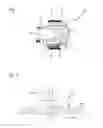
FIG. 1 shows a partly sectional and perspective view of an assembly according to the invention, for a ball screw drive with a recirculating ball nut according to the invention;
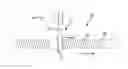
FIG. 2 shows a schematic illustration of a power steering with an assembly according to the invention;
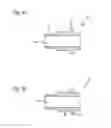
FIGS. 3a and 3b show schematic illustrations of various method steps of a method according to the invention for manufacturing a recirculating ball nut according to the invention.
DETAILED DESCRIPTION OF THE INVENTION
FIG. 1 shows an assembly 10 having a recirculating ball nut 12 for a power steering 14 which is partly shown in FIG. 2. In addition to the recirculating ball nut 12, the assembly 10 includes a belt pulley 16 which is connected to the recirculating ball nut 12 so as to be non-rotatable relative thereto.
As can be seen in FIG. 1, the recirculating ball nut 12 includes a substantially cylindrical base body 13. The base body 13 of the recirculating ball nut 12 and also the belt pulley 16 have flanges 18, 20 provided thereon which rest against each other in a longitudinal direction L and are firmly connected with each other in the longitudinal direction L and also in the peripheral direction by means of a plurality of fastening means 22, which are rivets in the embodiment shown here. Provided on the inner surface 24 of the recirculating ball nut 12 is a plurality of recirculating ball tracks 26 formed similar to a thread. A tooth profile 27 is provided on the outside of the belt pulley.
The power steering 14 shown in FIG. 2 includes a steering linkage 28 having a thread 30 that corresponds in terms of orientation and pitch to the recirculating ball tracks 26 of the recirculating ball nut 12. The assembly 10 is mounted for rotation in relation to the steering linkage 28 and held in a thrust-resistant manner in the longitudinal direction L. Provided between the recirculating ball nut 12 and the steering linkage 28 is a plurality of transmission means, in particular balls, which engage in both the recirculating ball tracks 26 and in the thread 30 of the steering linkage 28, as a result of which the recirculating ball nut 12 is coupled to the steering linkage 28.
The belt pulley 16 of the assembly 10 is coupled to a drive 34 of the power steering 14 via a belt 32. When the assembly 10 is rotated by the drive 34, the steering linkage 28 is displaced in the longitudinal direction L by means of the coupling via the balls, as a result of which a steering assist force acts on the steering linkage 28.
In order to ensure a reliable function of the assembly 10 and thus of the power steering 14, it is required for the recirculating ball tracks 26 to be manufactured with a very high precision, so that the transmission means can roll therein with a very low resistance while still featuring as little play as possible.
According to the invention, the recirculating ball nut 12 or the base body 13 of the recirculating ball nut 12 is manufactured in a forging method, in particular a precision forging method (FIG. 3a). Subsequently, the recirculating ball tracks 26 are manufactured or finished by a cutting manufacturing method, for example by milling (FIG. 3b).
This manufacturing method allows the recirculating ball nut 12 to be produced quickly and in a simple fashion. The forging method allows a material-saving manufacture of the base body 13, so that very little material is wasted. Manufacturing the entire base body 13 or the recirculating ball nut 12 by a cutting manufacturing method, on the other hand, would involve a very high material usage. For this reason, this method, which allows very low manufacturing tolerances, is made use of exclusively for manufacturing and/or for finishing those areas of the recirculating ball nut 12 where such precision is necessary, that is, the recirculating ball tracks 26. Applying the cutting manufacturing methods exclusively to the recirculating ball tracks allows a material-saving manufacture of the recirculating ball nut 12.
Instead of a milling method, any other suitable cutting manufacturing method may also be used for manufacturing the recirculating ball tracks 26.
In the embodiment shown here, the assembly 10 has a two-part configuration, with a belt pulley 16 and a recirculating ball nut 12. Depending on the structure of the assembly 10, however, these components may also be formed integrally with each other. In particular, the belt pulley 16 may be part of the base body 13 of the recirculating ball nut 12.
The connection preventing relative rotation between the belt pulley 16 and the recirculating ball nut 12 may also be produced in other ways, for example by a suitable torque transmission profile. In particular, instead of the rivets, bolts or other suitable fastening means 22 may also be used.
In accordance with the provisions of the patent statutes, the principle and mode of operation of this invention have been explained and illustrated in its preferred embodiments. However, it must be understood that this invention may be practiced otherwise than as specifically explained and illustrated without departing from its spirit or scope.
Claims
1. A recirculating ball nut for a ball screw drive, comprising a base body which includes at least one recirculating ball track, the base body being a forged component and the recirculating ball track being manufactured by a cutting manufacturing method.
2. The recirculating ball nut according to claim 1, wherein the base body is manufactured by a precision forging method.
3. The recirculating ball nut according to claim 1, wherein the recirculating ball track is manufactured by milling.
4. An assembly for a ball screw drive of a power steering, comprising a belt pulley and a recirculating ball nut according to any of the preceding claim 1, wherein the belt pulley is connected to the recirculating ball nut so as to be non-rotatable relative thereto.
5. The assembly according to claim 4, wherein the belt pulley and the recirculating ball nut have corresponding flanges provided thereon which are connected by means of fastening means so as to prevent relative rotation.
6. A method of manufacturing a recirculating ball nut for a ball screw drive, comprising a base body which includes at least one recirculating ball track, the method comprising the following manufacturing steps:
manufacturing the base body by a forging method; and
finishing the recirculating ball track by a cutting method subsequent to manufacturing the base body.
7. The method according to claim 6, wherein the recirculating ball track is milled.
8. The assembly according to claim 5, wherein the fastening means are rivets or bolts.
9. The method according to claim 6, wherein the base body is precision forged.
Images & Drawings included:
Sources:
- United States Patent and Trademark Office - verify current appl. status at the USPTO↗
Recent applications in this class:
- » 20250137515 2025-05-01
BALL SCREW DEVICE - » 20230151879 2023-05-18
BALL-SCREW DRIVE FOR AN ACTUATOR ASSEMBLY, AN ACTUATOR ASSEMBLY, AND A METHOD FOR PRODUCING A BALL-SCREW DRIVE - » 20230133413 2023-05-04
Ball screw device - » 20220090660 2022-03-24
Ball screw and spindle nut therefor - » 20220090659 2022-03-24
Ball screw - » 20220056990 2022-02-24
NUT AND BALL SCREW DEVICE - » 20210301911 2021-09-30
Ball screw, spindle nut and method for producing a spindle nut - » 20210301910 2021-09-30
Ball screw and assembly method - » 20210207693 2021-07-08
Internal-deflector type ball screw - » 20210172504 2021-06-10
Multiliner for multiple start ball nut threads
Recent applications for this Assignee:
- » 20210086716 2021-03-25
Method for assembling an actuator assembly and air bag module comprising an assembled actuator assembly - » 20210039584 2021-02-11
Gas generator container and airbag module - » 20210039580 2021-02-11
Airbag module for protecting the head - » 20200406951 2020-12-31
Locking device for an adjustable steering column assembly - » 20200298786 2020-09-24
Vehicle occupant safety system - » 20200232859 2020-07-23
Method for detecting the presence of hands on the steering wheel - » 20200223472 2020-07-16
Locking device and steering column assembly - » 20200189646 2020-06-18
Reach adjustable steering column assembly - » 20200189644 2020-06-18
Steer-by-wire steering system - » 20200189580 2020-06-18
Method and system for controlling a motor vehicle