Multi-purpose exercise bench with versatile resistance accessory
US20170036058A1
2017-02-09
15/332,243
2016-10-24
✅ Patent granted
US 9,757,608 B2
2017-09-12
-
-
Loan H Thanh | Gary D Urbiel Goldner
Saul Ewing LLP
2036-10-24
Abstract:
A multi-purpose exercise bench having a versatile resistance accessory configurable for use to provide weight-training resistance in a variety of exercises is provided. A multi-purpose exercise bench comprises: an elongated frame configured to rest on a flat floor in a stable manner; a lower seat portion supported on the frame; a resistance accessory mounted to the frame, the resistance accessory comprising: a pad movably mounted to the frame to be movable between a first position and a second position; a locking mechanism operable to lock the pad in either of the first position and the second position; and a plurality of resistance bands attached to the pad. A multi-purpose exercise system include the multi-purpose exercise bench and an exercise bar defining at least one groove dimension to receive at least one receiver ring attached to at least one of the resistance bands.
Applicant:
Interested in similar patents?
Get notified when new applications in this technology area are published.
Classification:
A63B21/4029 » CPC main
Exercising apparatus for developing or strengthening the muscles or joints of the body by working against a counterforce, with or without measuring devices; Interfaces with the user related to strength training; Details thereof; Specific exercise interfaces Benches specifically adapted for exercising
A63B21/00047 » CPC further
Exercising apparatus for developing or strengthening the muscles or joints of the body by working against a counterforce, with or without measuring devices Exercising devices not moving during use
A63B21/0435 » CPC further
Exercising apparatus for developing or strengthening the muscles or joints of the body by working against a counterforce, with or without measuring devices using resilient force-resisters attached to static foundation, e.g. a user; Anchored at two end points, e.g. installed within an apparatus One or both ends being anchored to a rotating element
A63B21/0442 » CPC further
Exercising apparatus for developing or strengthening the muscles or joints of the body by working against a counterforce, with or without measuring devices using resilient force-resisters attached to static foundation, e.g. a user Anchored at one end only, the other end being manipulated by the user
A63B21/0557 » CPC further
Exercising apparatus for developing or strengthening the muscles or joints of the body by working against a counterforce, with or without measuring devices using resilient force-resisters extension element type; Elastic ropes or bands Details of attachments, e.g. clips or clamps
A63B21/0724 » CPC further
Exercising apparatus for developing or strengthening the muscles or joints of the body by working against a counterforce, with or without measuring devices; User-manipulated weights; Dumb-bells, bar-bells or the like, e.g. weight discs having an integral peripheral handle Bar-bells; Hand bars
A63B21/4023 » CPC further
Exercising apparatus for developing or strengthening the muscles or joints of the body by working against a counterforce, with or without measuring devices; Interfaces with the user related to strength training; Details thereof the user operating the resistance directly, without additional interface
A63B21/4035 » CPC further
Exercising apparatus for developing or strengthening the muscles or joints of the body by working against a counterforce, with or without measuring devices; Interfaces with the user related to strength training; Details thereof; Specific exercise interfaces; Handles, pedals, bars or platforms for operation by hand
A63B22/203 » CPC further
Exercising apparatus specially adapted for conditioning the cardio-vascular system, for training agility or co-ordination of movements using rollers, wheels, castors or the like, to be moved over the floor or other surface, during exercising for moving a support element in reciprocating translation, i.e. for sliding back and forth on a guide track in a horizontal plane
A63B23/129 » CPC further
Exercising apparatus specially adapted for particular parts of the body for limbs, i.e. upper or lower limbs, e.g. simultaneously for upper limbs or related muscles, e.g. chest, upper back or shoulder muscles for arm wrestling
A63B23/1218 » CPC further
Exercising apparatus specially adapted for particular parts of the body for limbs, i.e. upper or lower limbs, e.g. simultaneously for upper limbs or related muscles, e.g. chest, upper back or shoulder muscles; Involving a bending of elbow and shoulder joints simultaneously Chinning, pull-up, i.e. concentric movement
A63B23/1227 » CPC further
Exercising apparatus specially adapted for particular parts of the body for limbs, i.e. upper or lower limbs, e.g. simultaneously for upper limbs or related muscles, e.g. chest, upper back or shoulder muscles; Involving a bending of elbow and shoulder joints simultaneously Dips, i.e. push-ups in a vertical position, i.e. eccentric movement, e.g. between parallel bars
A63B23/1236 » CPC further
Exercising apparatus specially adapted for particular parts of the body for limbs, i.e. upper or lower limbs, e.g. simultaneously for upper limbs or related muscles, e.g. chest, upper back or shoulder muscles; Involving a bending of elbow and shoulder joints simultaneously Push-ups in horizontal position, i.e. eccentric movement
A63B23/1245 » CPC further
Exercising apparatus specially adapted for particular parts of the body for limbs, i.e. upper or lower limbs, e.g. simultaneously for upper limbs or related muscles, e.g. chest, upper back or shoulder muscles Primarily by articulating the shoulder joint
A63B23/1254 » CPC further
Exercising apparatus specially adapted for particular parts of the body for limbs, i.e. upper or lower limbs, e.g. simultaneously for upper limbs or related muscles, e.g. chest, upper back or shoulder muscles; Primarily by articulating the shoulder joint Rotation about an axis parallel to the longitudinal axis of the body, e.g. butterfly-type exercises
A63B23/1263 » CPC further
Exercising apparatus specially adapted for particular parts of the body for limbs, i.e. upper or lower limbs, e.g. simultaneously for upper limbs or related muscles, e.g. chest, upper back or shoulder muscles; Primarily by articulating the shoulder joint Rotation about an axis passing through both shoulders, e.g. cross-country skiing-type arm movements
A63B23/1272 » CPC further
Exercising apparatus specially adapted for particular parts of the body for limbs, i.e. upper or lower limbs, e.g. simultaneously for upper limbs or related muscles, e.g. chest, upper back or shoulder muscles; Primarily by articulating the shoulder joint Rotation around an axis perpendicular to the frontal body-plane of the user, i.e. moving the arms in the plane of the body, to and from the sides of the body
A63B23/1281 » CPC further
Exercising apparatus specially adapted for particular parts of the body for limbs, i.e. upper or lower limbs, e.g. simultaneously for upper limbs or related muscles, e.g. chest, upper back or shoulder muscles primarily by articulating the elbow joint
A63B21/00 IPC
Exercising apparatus for developing or strengthening the muscles or joints of the body by working against a counterforce, with or without measuring devices
A63B21/04 IPC
Exercising apparatus for developing or strengthening the muscles or joints of the body by working against a counterforce, with or without measuring devices using resilient force-resisters attached to static foundation, e.g. a user
A63B21/055 IPC
Exercising apparatus for developing or strengthening the muscles or joints of the body by working against a counterforce, with or without measuring devices using resilient force-resisters extension element type
A63B21/072 IPC
Exercising apparatus for developing or strengthening the muscles or joints of the body by working against a counterforce, with or without measuring devices; User-manipulated weights Dumb-bells, bar-bells or the like, e.g. weight discs having an integral peripheral handle
A63B22/20 IPC
Exercising apparatus specially adapted for conditioning the cardio-vascular system, for training agility or co-ordination of movements using rollers, wheels, castors or the like, to be moved over the floor or other surface, during exercising
A63B23/12 » CPC further
Exercising apparatus specially adapted for particular parts of the body for limbs, i.e. upper or lower limbs, e.g. simultaneously for upper limbs or related muscles, e.g. chest, upper back or shoulder muscles
A63B23/14 » CPC further
Exercising apparatus specially adapted for particular parts of the body for limbs, i.e. upper or lower limbs, e.g. simultaneously for upper limbs or related muscles, e.g. chest, upper back or shoulder muscles for wrist joints
A63B21/00065 » CPC further
Exercising apparatus for developing or strengthening the muscles or joints of the body by working against a counterforce, with or without measuring devices; Mechanical means for varying the resistance by increasing or reducing the number of resistance units
Description
CROSS-REFERENCE TO RELATED APPLICATION
This application claims the benefit of priority under 35 U.S.C. §119(e) to U.S. Provisional Patent Application No. 61/861,578, filed Aug. 2, 2013, the entire disclosure of which is hereby incorporated herein by reference.
FIELD OF THE INVENTION
The present invention relates generally to a multi-purpose exercise bench, and more particularly to a multi-purpose exercise bench having a versatile resistance accessory configurable for use to provide weight-training resistance in a variety of exercises.
BACKGROUND
Exercise benches of various sizes and configurations are well-known in the art. Such benches are used in weight training to assist in the performance of a variety of muscle-building exercises. Different bench configurations permit an exerciser to perform different exercises thereon to exercise and isolate different sets of muscles.
Some exercise benches are generally fixed, and facilitate performance of only one exercise or group of exercises. Some exercise benches are more versatile, and provide a range of adjustability to facilitate performance of a broader ranges of exercises for training different muscle groups.
One common type of bench includes a flat seat portion and an adjustable backrest that is adjustable between a flat position and an inclined position. In the flat position, both the seat and back portions are generally horizontal, and the user may lie in a supine position to perform chest presses and lateral butterflies, isolating a different set of upper body muscles then when the same exercises are performed on an incline bench. In addition, the exerciser can sit upright on the flat bench and perform a shoulder press exercise. In the inclined position, the seat remains generally horizontal and the backrest is inclined to permit a user to sit on the seat and recline in an at least partially upright position against the inclined backrest to perform a variety of upper body exercises on the bench, such as a chest press, lateral butterfly, and arm curl, each of which isolates and exercises a particular set of upper body muscles.
Such benches are commonly used in conjunction with free weights, such as a barbell born weight disks or “plates” and/or dumbbells. Some exercises may be performed with elastic resistance bands, often without the benefit of an exercise bench. Some exercises may have been performed using elastic resistance bands in conjunction with an exercise bench. Some exercise benches include integral resistance members, such as those manufactured and/or sold as BowFlex® brand home gyms by Nautilus, Inc. It has been observed that many of such exercise benches lack versatility to facilitate the broad range of exercises associated with a conventional multi-purpose exercise bench.
A simpler arrangement combining the conventional range of exercises associated with a multi-purpose exercise bench and the advantages of resistance band training is desired.
SUMMARY
The present invention pertains to a multi-purpose exercise bench having a versatile resistance accessory configurable for use to provide weight-training resistance in a variety of exercises. In one embodiment, a multi-purpose exercise bench comprises: an elongated frame configured to rest on a flat floor in a stable manner; a lower seat portion supported on the frame; a resistance accessory mounted to the frame, the resistance accessory comprising: a pad movably mounted to the frame to be movable between a first position and a second position; a locking mechanism operable to lock the pad in either of the first position and the second position; and a plurality of resistance bands attached to the pad.
BRIEF DESCRIPTION OF THE FIGURES
An understanding of the following description will be facilitated by reference to the attached drawings, in which:
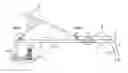
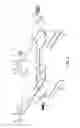
FIG. 1 is a side view of a multi-purpose exercise bench including a versatile resistance accessory in accordance with an exemplary embodiment of the present invention;
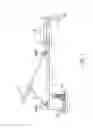
FIG. 2 is an exploded perspective view of the multi-purpose exercise bench of FIG. 1;
FIGS. 3A and 3B show side views of the accessory of FIG. 1;
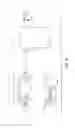
FIG. 4 is an enlarged view of an adjustable pad of the accessory of FIG. 1;
FIG. 5 is a side view of the pad illustrating the limited folding action of an exemplary pad;
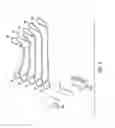
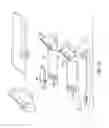
FIG. 6 is an exploded view of exemplary swing arms of the accessory;
FIG. 7 is a drawing of an exemplary resistance band housing unit for mating with a swing arm.
FIG. 8 is an exploded view of a resistance band housing unit of FIG. 7;
FIGS. 9A-9C show the placement of the swing arms on the pad and the mating of the resistance band housing units on the swing arms;
FIGS. 10A and 10B illustrate an exemplary pad, showing exemplary mating structures;
FIG. 11 illustrates an exemplary locking mechanism for locking the pad in one or a plurality of predetermined positions;
FIG. 12 is an exploded view of the locking mechanism of FIG. 11;
FIGS. 13A and 13B are drawings of an exemplary backrest/upper seat;
FIGS. 14A-14E show exemplary flat pin receivers working along with the flat pins to provide a quick-release mechanism for coupling and decoupling the backrest to the bench;
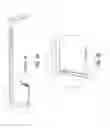
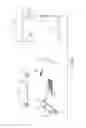
FIG. 15 includes front (upper left), side (lower left) and top (right) views of the lower seat of the bench of FIG. 1;
FIG. 16 is an exploded view of the set of FIG. 15;
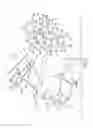
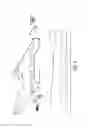
FIG. 17 illustrates an exemplary barbell configured to be used with the resistance bands by way of a receiver ring system in accordance with the present invention;
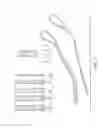
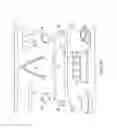
FIG. 18 illustrates various bars and handles to be used with barbell receiver ring system;
FIG. 19 illustrates a drawing leg and back accessory of the bench;
FIG. 20 is a drawing of an exemplary shin pad cushion;
FIG. 21 is a drawing of a knee cushion rail cap; and
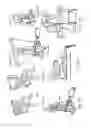
FIGS. 22a-22o illustrate various exercises that may be accomplished with the multi-purpose bench of FIG. 1.
DETAILED DESCRIPTION
The present invention provides a multi-purpose exercise bench having a versatile resistance accessory configurable for use to provide weight-training resistance in a variety of exercises.
An exemplary bench is shown in FIGS. 1-21. Referring now to FIG. 1, an exemplary multi-purpose bench 1 is shown that has structure somewhat similar to a conventional multi-purpose bench, in that it includes a frame supporting a seat 28 and an adjustable back rest 24 that permit the bench to be used as either a flat bench or an incline bench in a variety of exercises. The frame includes a longitudinally extending frame rail 16 supported by legs, which optionally are configured to fold from an open position, in which they extended generally transversely to the frame rail, to a closed position, in which they are folded to form an acute angle with the frame rail. Additionally, the exemplary bench 1 includes a knee cushion 20 and shin cushion 22 providing a leg-station suitable for leg extensions and leg curls, as is generally known in the art.
In accordance with the present invention, the bench 1 further includes a versatile resistance accessory including a pad 8 mounted to the frame. In the exemplary embodiment shown, the pad 8 is mounted at the head end of the bench, adjacent the back leg 12. In accordance with the present invention, the pad 8 provides an attachment point for one or more resistance bands that may be used to provide resistance during strength training exercises.
In a preferred embodiment, the pad 8 is mounted to the frame for movement between first and second positions. In the embodiment shown, the pad 8 is pivotably mounted to the back leg 12, and is pivotable between a first position in which the pad 8 is substantially vertical, and a second position in which the pad 8 is substantially horizontal, as shown in FIGS. 3A and 3B.
Further the pad is preferably lockable in one or more positions, so that the pad 8 and resistance bands tend to provide resistance during strength training. In the illustrated embodiment, the pad is provided with pins that nest within a horizontal portion of the back leg 12, so that the pad 8 may rotate relative to the rear leg, as best shown in FIG. 2. More specifically, the exemplary pad 8 includes pad inserts 8C that fit into the foot of the back leg 12. A ball bearing ring 8E allows the pad to fold smoothly and without play. Further, the pad includes a flange 81 including a plurality of holes 8J, and the back leg 12 includes a flange 12 with a plurality of holes 12B, as shown in FIGS. 2, 4 and 10. The holes are arranged to align at predetermined angular positions of the pad 8, to permit a pin to be placed through the aligned holes to effectively prevent relative motion of the flanges and pad/leg to lock the pad in position for use. Any suitable arrangement may be used to provide the pin. FIG. 11 shows an exemplary arrangement in which a locking mechanism is mounted on the rear leg 12. The mechanism includes a slidably mounted locker bolt 14B (the pin) that is caused to be inserted through or withdrawn from the aligned holes of the flanges 81, 12A by way of a pivotable actuator 14E in toothed engagement with the locker bolt 14B to cause translational motion thereof when the actuator is pivoted, as best shown in FIGS. 11 and 12. In this embodiment, the locker both 14B has a tapered end to provide a snug fit in the holes of the flanges and to facilitate alignment thereof during insertion.
In some embodiments, the pad 8 is not merely a unitary rigid plate-like body, but instead includes first and second portions movable relative to one another, as shown in FIGS. 2, 4 and 5. In this embodiment, The pad includes a hinged portion hingedly connected to a main portion of the pad's platform 8A. Accordingly, the hinged portion is pivotable between a first position and a second position, as shown in FIG. 6. In this embodiment, the pad 8 includes a stop 8H to limit the range of motion of the hinged portion relative to the remainder of the platform 8A. The hinge 8G permits the hinged portion to be pivoted into a position better suited for performance of an exercise. Accordingly, the hinged portion provides an extra measure of adjustability to the pad. For example, the pad may be locked in a substantially upright position, and the hinged portion may then be further pivoted toward an upright position for use in a leg press exercise.
The resistance bands are mounted to the pad 8. In this embodiment the resistance bands are joined in a resistance band housing unit 10, as shown in FIGS. 7 and 8. As shown in FIG. 8, the housing 10 includes a hollow outer tube 10B and a hollow inner center tube 10A. The outer tube 10B has a plurality of openings, and the resistance bands 10C are looped around the inner tube 10A, which is positioned within the outer tube 10B, and the resistance bands 10C exit through the holes in the outer tube 10B. This serves to anchor multiple resistance bands to a single housing unit 10. An opposite end of the resistance band may be joined to an attachment clip 10D, such as a carabiner, as shown in FIGS. 7 and 8. The clip 10D facilitates attachment of selected resistance bands to a bar or other member for exercise purposes.
The pad 8 includes swing arms 6, which serve as attachments points for attaching the resistance band units 10 to the pad 8. Preferably, the swing arms 6 are attached toward the distal end of the pad on both lateral sides, as shown in FIGS. 2 and 6. Each swing arm 6 defines a path allowing a swing arm pin 6C to be received and retained by the swing arm, as shown in FIGS. 6, 9A and 9B. The pin 6C is placed through the inner tube 10A of the housing unit, then is placed in the path of the swing arm unit 6 to fix the resistance band unit 10 to the swing arm 6 and pad 8, as shown in FIGS. 6, 9A and 9B. After mounting, the resistance band housing unit is permitted to rotate about the pin 6C while still being retained by the swing arm unit 6, to permit the resistance bands to rotate into an operative position for a variety of exercises, e.g., due to a change in position of the pad 8.
To facilitate use of the exercise bench in certain exercises, e.g., with the pad 8 positioned horizontally along the floor, it may be desirable to straddle the bench while standing on the pad 8, as shown in FIGS. 22c, 22d and 22e. Accordingly, the backrest 24 of the bench may be configured to operate substantially as in a conventional adjustable incline bench, and thus may include a backrest 24, cushion 24A. However, the bench may be modified in accordance with the present invention to include with a quick-release mechanism allow for easy, e.g., tool-free, decoupling of the backrest from the bench. In the exemplary embodiment show in FIGS. 13A and 13B, the bench is configured with a quick release mechanism that includes receivers 26 on the bench frame that include plate-like attachment pins for receipt in pin receivers. In the exemplary embodiment, the pins are plate-like and generally flat, and the pin receivers are generally of a split-ring design, as shown in FIGS. 13A-14B. Accordingly, pin receivers 24B, 26A tend to pivot about the pins, e.g. 16B, 26B, through a broad range of motion, but at a predetermined angular orientation, the pin aligns with the split in the ring-like receiver to permit the pin to exit the receiver, and thus the backrest and its supports to be decoupled from the frame, as best shown in FIGS. 14A and 14B.
Any suitable seat may be used. In the exemplary embodiment shown, the bench includes a seat as provided in accordance with the present invention, as shown in FIG. 15. FIG. 15 is a drawing of the lower seat from the front (upper left), side (lower left) and top (right) view. The front view shows the lower seat 28 on wheels 28C on the frame rail 16. Also shown are the handles 30 which are able to screw loose enough to be folded against the lower seat 28; the wheel housing unit 28B. Also seen in the front view is the cushion 28A to go on top of the wheel housing unit. The side view shows how the resistance bands can clip onto the lower seat via the clip holder 28F and that the flat pin 16B is a part of the wheel housing unit along with a stopper hole 28H that allows the lower seat to be locked into position. The top view shows the folding capability of the handles.
FIG. 16 is an exploded drawing of the lower seat, including the wheel housing unit 28B; the wheel frame 28D; the wheels 28C; the wheel pins 28E; the lower seat handle housing 30A; and the lower seat handles 30B. Together these sit on and ride along the frame rail 16.
FIG. 17 is a drawing of an exemplary barbell to be used with the resistance bands. The exemplary barbell is typical of various other accessories in that it comprises a bar 32 configured to define grooves to receive a receiver ring 32A. This ring is shaped to fit into the grooves of the barbell to rotate freely yet not able to become disengaged from the bar. The larger part of the ring is to be used to allow the resistance band clips to fit onto.
FIG. 18 is a drawing of various alternative bars and handles to be used with barbell receiver ring 32A system includes but is not limited to, a barbell 32; a short bar 34; triceps rope 36; single handles 38; ankle cuffs 39; an EZ curl bar 40; pull-down bar 42; belt 44; tricep bar 46; and a close grip handle 48.
FIG. 19 is a drawing of an optional leg and back accessory 50. This accessory comprises swing arms with hooks 50C attached to heavy duty cloth straps 50A that can be wedged between a door and a door frame via a protrusion 50B. The swing arm has a hook to accept a latch 50D. The hook and latch allows the leg and back accessory to be wrapped around and secured to the front foot of the bench. Two of these straps may be connected via a stiff spacer 50E to complete one full leg and back accessory.
FIG. 20 is a drawing of an exemplary shin pad cushion 22A. The shin pad cushion holder is attached to the back part of the front leg approximately half way down and secured with the shin cushion bolt 22B.
FIG. 21 is a drawing of an exemplary knee cushion rail cap 20A. This is used to hold the knee cushions 20. The knee cushion pole 20B fits into the holes of the knee cushion rail cap. These are secured to the front end of the frame rail 16 via knee cushion bolts 20C.
In use, the assembled bench may be adjusted as desired before performing an exercise—e.g., to position the lower seat 28 in a suitable location along the frame rail, and to position the backrest 24 at a suitable position on the frame (flat or inclined), or removed from the frame, e.g., by manipulating the backrest 24 and its associated pin receivers relative to the pins on the frame rail 16 and/or lower seat 28 until the pins align with the splits in the pins receivers, and the moving the backrest to separate the pin receivers from the pins.
Next, the pad may be positioned as desired, e.g., in a upright or horizontal position, e.g., by unlocking the pad 8 by moving the appropriate actuator of the pad locking mechanism, pivoting the pad 8 until the holes in the flanges of the pad 8 and rear foot 12 align with the pad in the desired position, and then manipulating the actuator of the locking mechanism to lock the pad in the desired position.
Next the user may selected an appropriate bar/handle, attach the appropriate receiver rings 32A to the bar/handle, if necessary (in some embodiments the rings are permanently joined to the bar/handle), and then attach the clips of one or more resistance bands of the resistance band housing units 10 to the receiver rings 32A to provide the desired level of resistance.
Next, the user may manipulate the bar/handle in performance of the desired strength training exercise, against the resistance of the attached resistance bands.
A list of reference numerals is provided below for reference purposes:
| 2A | Small Rubber Pad |
| 2B | Large Rubber Pad |
| 6 | Swing Arm |
| 6A | Swing arm Plate |
| 6B | Swing arm Spring |
| 6C | Swing Arm Pin |
| 6D | Swing arm Pin Lock |
| 6E | Swing Arm Hinge |
| 8 | The Pad |
| 8A | Platform |
| 8B | Rail |
| 8C | Pad Inserts aka hinges |
| 8D | Pad protective strips for rail |
| 8E | Ball Bearings |
| 8F | Screws For Hinges |
| 8G | Hinge |
| 8H | Stopper For Hinge |
| 8I | Pad Flange |
| 8J | Pad Flange Hole |
| 10 | Resistance Band Housing Unit |
| 10A | Hollow Center Tube |
| 10B | Outer shell |
| 10C | Resistance bands |
| 10D | Clips |
| 12 | Back Leg |
| 12A | Back Foot With Flange |
| 12B | Flange Hole |
| 12C | Pin Or Bolt |
| 12D | Leg Protective Strip |
| 12E | protective strips for back foot |
| 14 | Pad Locker |
| 14A | Pad Locker Handle |
| 14B | Locker Bolt |
| 14C | Guide For The Bolt |
| 14D | Guide For The bolt and Pin insert |
| 14E | Pad locker Hinge Pin |
| 16 | Rail |
| 16A | End Cap |
| 16B | Flat Pin |
| 16C | Rail Holes |
| 18 | Front Leg |
| 18A | Bolt or pin |
| 18B | Front Foot |
| 18C | Front foot caps |
| 20 | Knee Cushion |
| 20A | Knee Cushion Rail Cap |
| 20B | Knee Cushion Pole |
| 20C | Knee cushion Bolt |
| 22 | Shin Cushion |
| 22A | Shin Cushion holder |
| 22B | Shin Cushion Bolt |
| 24 | Upper Seat |
| 24A | Cushion |
| 24B | Upper Seat Rails With Flat Pin Receivers |
| 24C | Cross Brace Big |
| 24D | Cross Brace Small |
| 24E | Screws For Cushion |
| 26 | Incline Adjuster |
| 26A | Flat Pin Receiver |
| 26B | Bolt |
| 26C | Stabilizers |
| 28 | Lower Seat |
| 28A | Cushion |
| 28B | Wheel Housing Unit |
| 28C | Wheels |
| 28D | Wheel Frames |
| 28E | Wheel Pins |
| 28F | Clip Holder |
| 28G | Stopper Bolt |
| 28H | Stopper Hole |
| 30 | Lower Seat Handles |
| 30A | Handle Housing That Holds Knobbed screw |
| 30B | Handle With Knobbed Screw |
| 31 | Front Leg |
| 32 | Barbell |
| 32A | Receiver Ring |
| 34 | Short Bar |
| 36 | Triceps Rope |
| 38 | Single Handles |
| 39 | Ankle Cuffs |
| 40 | EZ Curl Bar |
| 42 | Pull-Down Bar |
| 44 | Belt |
| 46 | Tricep Bar |
| 48 | Close Grip Handle |
| 50 | Accessory |
| 50A | Cloth Strip |
| 50B | Protrusion |
| 50C | Swing Arm With Hook |
| 50D | Latch |
| 50E | Spacer |
| PARTS LIST |
| 2A | Small Rubber Pad-Attached to the top front of the pad for |
| comfort | |
| 2B | Large Rubber Pad-Attached to the top back of the pad for |
| comfort | |
| 6 | Swing Arm-The swing arm allows the resistance bands to be |
| secured in place quickly and easily | |
| 6A | Swing Arm Plate-Is the part of the swing arm that is secured |
| directly to the rail of the pad and is the foundation of the | |
| swing arms | |
| 6B | Swing Arm Spring-This add tension to the swing arm pin |
| 6C | Swing Arm Pin-This is what the resistance bands are |
| secured with | |
| 6D | Swing arm Pin Lock-This holds the swing arm in place |
| 6E | Swing Arm Hinge-This part houses the swing arm pin |
| and spring | |
| 8 | The Pad-This is the platform that the swing arms attach to the |
| sides of, where the user may stand on for certain exercises and | |
| which folds in an up or down position depending on the desired | |
| location of the swing arms | |
| 8A | Platform-The platform of the pad is the biggest portion of the |
| pad and may be used to stand on when the pad is folded | |
| down against the floor. The back of the platform also acts as | |
| a foot rest for the user when the pad is folded up against the | |
| leg. | |
| 8B | Rail-The rails run along the sides of the platform. They act as |
| structural support for the pad and is what the swing arms are | |
| attached directly to | |
| 8C | Pad Inserts/Hinges-The back of the pad has two “pegs” that fit |
| into the foot of the back leg. They are used the secure the pad | |
| to the bench and as a hinge point for the pad and gives the pad | |
| its folding capabilities. | |
| 8D | Pad Protective Strips For Rail-these plastic or rubber pieces |
| cap the bottom of the pad to prevent the metal of the rail from | |
| scratching the floor | |
| 8E | Ball Bearings-These ball bearings are sandwiched between the |
| pad inserts and the inside of the back foot. They provide | |
| smooth and stable folding of the pad. | |
| 8F | Screws For Hinges-Because of the rigidity of the pad and the |
| back foot, the pad inserts cannot be a piece of the pad. They | |
| must be separate. Once the pad inserts are placed into the | |
| back foot, the rails of the pad can now be screwed to them | |
| 8G | Hinge-The hinge runs along the platform of the pad from one |
| rail to the other and is located more to the front of the pad. The | |
| purpose of the hinge is that when the pad is folded up against | |
| the leg, that portion of the pad can hinge forward for a more | |
| comfortable foot rest | |
| 8H | Stopper For Hinge-The stopper is a piece of metal that |
| prevents the front portion of the platform from folding too far | |
| 81 | Pad Flange-This is simply an area for holes at the back of the |
| rails of the pad. | |
| 8J | Pad Flange Hole-The holes in the pad flange line up with the |
| holes of the back foot flange for the pad locker bolt to slide | |
| into. | |
| 10 | Resistance Band Housing Unit-This is designed to house |
| multiplebands in one unit for convenience and easy handling | |
| 10A | Hollow Center Tube-This center tube secures the resistance |
| bands on the outside of it. the center of the tube slides onto the | |
| swing arm pins. | |
| 10B | Outer Shell-The outer shell of the resistance band housing unit |
| helps to secure the resistance bands in place neatly and acts as | |
| a shield for the portion of the bands wrapped around the hollow | |
| center tube. | |
| 10C | Resistance Bands-The exercise bench uses a series of |
| resistance bands from heavy duty to very lightweight | |
| 10D | Clips-The clips of the resistance bands can be hooked on the |
| bar, grip, handle or lower seat clip, depending on the exercise | |
| desired | |
| 12 | Back Leg-The back leg of the bench can be folded open or |
| closed. The top of the leg has a unique shape to allow it to fold | |
| without fitting snug against the bottom of the rail. This small | |
| gap is enough for the pad to be used when folded against the | |
| back leg. | |
| 12A | Back Foot With Flange-On the top of the farthest extensions |
| of the back foot is an area for holes. | |
| 12B | Flange Hole-These holes are to be used in conjunction with the |
| pad flange and the pad locker. | |
| 12C | Pin Or Bolt-This is simple a way to secure the back leg to the |
| rail and still be able to hinge for folding open or closed. | |
| 12D | Leg Protective Strip-These plastic or rubber pieces are secured |
| to the back of the back leg to prevent the metal of the back leg | |
| from scratching the floor when the leg is folded closed. | |
| 12E | Protective Strips For Back Foot-These plastic or rubber pieces |
| cap the bottom of the back foot to prevent the metal of the | |
| back foot from scratching the floor | |
| 14 | Pad Locker-The purpose of the pad locker is to lock the pad |
| in place when it is folded up or down. | |
| 14A | Pad Locker Handle-The pad locker handle is used to |
| manipulate the pad locker bolt in and out of the flange holes | |
| 14B | Locker Bolt-The locker bolt fits snugly into both the back foot |
| flange and the pad flange holes. While the bolt is moved into | |
| the holes the pad cannot move from its position. | |
| 14C | Guide For The Bolt-The guide for the bolt is two rises on the |
| top of the back foot with small protrusions that fit into grooves | |
| in the side of the bolt. This keeps the bolt lined up with the | |
| holes of the flanges | |
| 14D | Guide For The bolt and Pin insert-This is another guide just like |
| the bolt guide and works the same way. the difference is that | |
| this particular guides not only guide the bolt but also act as a | |
| hinge point for the pad locker handle | |
| 14E | Pad locker Hinge Pin-This is simply a small pin that fits |
| through the guide for the bold and pin insert and the handle of | |
| the pad licker allowing the handle to be used as needed | |
| 16 | Rail-The rail is the horizontal piece held up by the legs and |
| on which the upper and lower seats sit. | |
| 16A | End Cap-The rail is capped on its end closest to the back leg |
| 16B | Flat Pin-The flat pin sits near the back of the rail and is used |
| to secure the upper seat to the rail via a rod called the | |
| incline adjuster | |
| 16C | Rail Holes-There are a series of holes in the rail to be used |
| in conjunction with the lower seat and a stopper bolt. These | |
| holes are used to stop the lower seat from rolling. | |
| 18 | Front Leg-The front leg is the front leg of the bench |
| 18A | Pin or Bolt-This secures the front leg to the rail while still |
| allowing it to fold open or closed against the rail | |
| 18B | Front Foot-The front foot is at the bottom of the front leg |
| and stabilizes the bench. | |
| 18C | Front foot caps-The front foot caps are rubber or plastic caps |
| to protect the floor from being scratched by the foot | |
| 20 | Knee Cushion-The knee cushion is located near the front of |
| the rail. The cushion is useful for many abdominal or leg | |
| exercises | |
| 20A | Knee Cushion Rail Cap-The knee cushion rail cap is secured |
| to the front of the rail and is used to hold the knee cushion pole | |
| 20B | Knee Cushion Pole-The knee cushion pole is used to hold |
| the actual pads used for cushioning | |
| 20C | Knee cushion Bolts-The knee cushion bolts secure the knee |
| cushion rail cap to the rail | |
| 22 | Shin Cushion-The shin cushion is located approximately |
| half way down the back of the front leg. It is useful for | |
| cushioning during certain abdominal exercises | |
| 22A | Shin Cushion holder-The shin cushion holder is a piece |
| secured directly to the front leg and holds the actual pad | |
| used for cushioning | |
| 22B | Shin Cushion Bolt-This bolt secures the shin cushion holder |
| to the front leg | |
| 24 | Upper Seat-The upper seat is the long portion of the working |
| surface of the exercise bench | |
| 24A | Cushion-For the upper seat |
| 24B | Upper Seat Rails With Flat Pin Receivers-the upper seat rail |
| or frame has two flat pin receivers to be used to secure the | |
| upper seat to the lower seat | |
| 24C | Cross Brace Big-This helps to hold the upper seat rails or |
| frame together | |
| 24D | Cross Brace Small-This helps to hold the upper seat rails or |
| frame together | |
| 24E | Screws For Cushion-These secure the cushion to the frame |
| 26 | Incline Adjuster-This rod is used to secure the upper seat |
| to the rail. It is also used to adjust the angle of the upper seat | |
| 26A | Flat Pin Receiver-This is a portion of the incline adjuster |
| used with the flat pin of the rail | |
| 26B | Bolt-this bolt secures the incline adjuster to the upper seat |
| 26C | Stabilizers-These keep the upper seat stable during use |
| 28 | Lower Seat-This is the small portion of the working surface |
| of the exercise bench | |
| 28A | Cushion-For the lower seat |
| 28B | Wheel Housing Unit-This is the major portion of the lower |
| seat which everything is secured to. | |
| 28C | Wheels-The 8 wheels are mounted under and inside of |
| the wheel housing unit to allow ease of use when adjusting | |
| the angle of the upper seat cushion | |
| 28D | Wheel Frames-These hold the wheels |
| 28E | Wheel Pins-These are the ball bearing axis for the wheels |
| 28F | Clip Holder-These are secure to either side of the wheel |
| housing unit and is used to clip the resistance band to | |
| during certain exercises | |
| 28G | Stopper Bolt-This is used to not allow the wheel housing |
| unit to roll along the rail | |
| 28H | Stopper Hole-the hole used by the stopper bolt in conjunction |
| with the rail holes | |
| 30 | Lower Seat Handles-These are on either side of the wheel |
| housing unit and to be used during certain leg or abdominal | |
| exercises. The handles are featured to be able to unscrew | |
| enough to be folded against the lower seat, and screwed | |
| tightly again to secure it in place. | |
| 30A | Handle Housing That Holds Knobbed Screw-This secures |
| the actual handle to the wheel housing unit | |
| 30B | Handle With Knobbed Screw-The knobbed end of the screw |
| ensures that the handle cannot unscrew completely from the | |
| handles | |
| 32 | Barbell-this barbell is shorter than traditional barbells |
| because it doesn't use traditional weights. It is | |
| approximately 48 inches | |
| 32A | Receiver Ring-The receiver ring fits into a groove of the |
| barbell or other handle. It is shaped so that it cannot be | |
| removed from the bar yet spins freely. It also has a portion | |
| to allow multiple resistance bands to be attached to it. | |
| 34 | Short Bar-This is a bar approximately 16 inches with a |
| single groove and receiver ring in the middle of it | |
| 36 | Triceps Rope-A traditional tricep rope with a receiver ring |
| 38 | Single Handles-Traditional handles with a receiver ring |
| 39 | Ankle Cuffs-Cushioned cuffs with a receiver ring on each |
| 40 | EZ Curl Bar-Just like the barbell just with an ergonomic shape |
| 42 | Pull-Down Bar-A traditional pull down bar with a receiver ring |
| 44 | Belt-A belt to be used for leg presses with a receiver rings |
| on each side of it | |
| 46 | Tricep Bar-A traditional tricep bar with a receiver rings |
| 48 | Close Grip Handle-A traditional close grip handle with an |
| area to accept multiple resistance band clips | |
| 50 | Accessory-The accessory can be use two different ways. |
| The first way is as an overhead pull down device. The cloth | |
| straps can be placed between a door and a door frame. The | |
| protrusion in each strap prevents the strap from pulling | |
| through the door opening when the door is closed. There | |
| are two swing arms which resistance bands housing units | |
| can be secured to. The second way to use the accessory is | |
| as a leg exerciser. This is accomplished by clasping it | |
| around the front foot of the exercise bench and securing | |
| it via the latch and hook on the swing arms | |
| 50A | Cloth Strip-These are thin enough to fit most doorways |
| yet strong enough to handle the load stress placed upon it | |
| 50B | Protrusion-This is sewn into the straps and prevents the |
| straps from pulling through the doorway | |
| 50C | Swing Arm With Hook-These are just like swing arms |
| in every respect except they have a hook portion to it to | |
| work along with the latch | |
| 50D | Latch-The latch secures the accessory around the front foot |
| 50E | Spacer-The spacer ensures proper spacing between the straps |
Having thus described a few particular embodiments of the invention, various alterations, modifications, and improvements will readily occur to those skilled in the art. Such alterations, modifications, and improvements as are made obvious by this disclosure are intended to be part of this description though not expressly stated herein, and are intended to be within the spirit and scope of the invention. Accordingly, the foregoing description is by way of example only, and not limiting. The invention is limited only as defined in the following claims and equivalents thereto.
Claims
1-21. (canceled)
22. A multi-purpose exercise system, comprising:
a multi-purpose exercise bench comprising:
an elongated frame configured to rest on a flat floor in a stable manner, said frame comprising a longitudinally-extending member supported at each end by a respective leg, at least one of said legs comprising a ground-engaging support member extending transversely to the longitudinally-extending member for engaging the floor to support the frame in the stable manner;
a lower seat portion supported on the frame;
a resistance accessory mounted to the frame, the resistance accessory comprising:
a pad movably mounted to the ground-engaging support member of the frame to be movable between a first position and a second position;
a locking mechanism operable to lock the pad in either of the first position and the second position; and
a plurality of resistance bands attached to the pad, each of said plurality of resistance bands terminating with a respective receiver ring; and
an exercise bar defining a groove dimensioned to receive one of said receiver rings.
23. The multi-purpose exercise system of claim 22, wherein said exercise bar comprises a rigid bar defining the groove by providing a groove portion having a cross-section smaller than a corresponding cross-section of portions of the bar adjacent the groove portion.
24. The multi-purpose exercise system of claim 23, wherein the rigid bar is configured as one of a barbell, a short bar, an EZ-curl bar, and a tricep bar.
25. The multi-purpose exercise system of claim 22, wherein said exercise bar is configured as one of a barbell, an EZ-curl bar, and a tricep bar, and wherein said exercise bar comprises a longitudinally-extending bar having a pair of opposed ends, the exercise bar defining a plurality of grooves, a respective one of said plurality of grooves being defined adjacent each of said pair of opposed ends.
26. A multi-purpose exercise system, comprising:
a plurality of resistance bands, each of said plurality of resistance bands terminating with a respective receiver ring; and
an exercise bar defining a groove dimensioned to receive one of said receiver rings.
27. The multi-purpose exercise system of claim 26, wherein each receiver ring is shaped to fit into the groove to rotate freely.
28. The multi-purpose exercise system of claim 26, wherein each receiver ring has a first part shaped to fit into the groove to rotate freely, and a second part, larger than the first part, that provides an attachment point for respective resistance bands.
29. The multi-purpose exercise system of claim 28, wherein each receiver ring is formed as a continuous loop.
30. The multi-purpose exercise system of claim 26, wherein each receiver ring is formed as a continuous loop.
31. The multi-purpose exercise system of claim 26, further comprising:
at least one resistance band housing comprising a hollow outer tube and a hollow inner tube positioned within the hollow outer tube, each of the plurality of resistance bands extending around the inner tube and passing transversely through a wall of the hollow outer tube.
32. The multi-purpose exercise system of claim 31, further comprising a leg and back accessory 50, the leg and back accessory comprising:
a flexible strap, the strap having a pair of opposed ends, the flexible strap comprising a protrusion adjacent a first end of the strap, the protrusion having a thickness greater than a remaining portion of the strap;
a swing arm assembly for attaching the plurality of resistance bands to the accessory, the swing arm assembly being joined to the strap adjacent a second end of the strap opposite the first end of the strap, the swing arm assembly comprising:
a swing arm plate joined to the pad, the swing arm plate comprising a swing arm pin lock defining a curved path; and
a swing arm pin having a first end captured by the swing arm plate, and a second end movable between an open position in which the second end is free of the curved path so that the resistance bands can be looped over the swing arm pin and a closed position in which the second end is captured within the curved path by the swing arm plate so that the plurality of resistance bands is retained by the swing arm pin.
33. The multi-purpose exercise system of claim 32, wherein the swing arm assembly comprises a hook, and wherein the leg and back accessory further comprises a latch joined to the strap adjacent its first end, the latch being adapted to mate with the hook to join the first end of the strap to the send end of the strap.
34. The multi-purpose exercise system of claim 32, further comprising a stiff spacer for joining multiple leg and back accessories.
35. A multi-purpose exercise system comprising a leg and back accessory, the leg and back accessory comprising:
a flexible strap, the strap having a pair of opposed ends, the flexible strap comprising a protrusion adjacent a first end of the strap, the protrusion having a thickness greater than a remaining portion of the strap;
a swing arm assembly for attaching a plurality of resistance bands to the accessory, the swing arm assembly being joined to the strap adjacent a second end of the strap opposite the first end of the strap, the swing arm assembly comprising:
a swing arm plate joined to the pad, the swing arm plate comprising a swing arm pin lock defining a curved path; and
a swing arm pin having a first end captured by the swing arm plate, and a second end movable between an open position in which the second end is free of the curved path so that the resistance bands can be looped over the swing arm pin and a closed position in which the second end is captured within the curved path by the swing arm plate so that the plurality of resistance bands is retained by the swing arm pin.
36. The multi-purpose exercise system of claim 35, wherein the swing arm assembly comprises a hook, and wherein the leg and back accessory further comprises a latch joined to the strap adjacent its first end, the latch being adapted to mate with the hook to join the first end of the strap to the send end of the strap.
37. The multi-purpose exercise system of claim 35, further comprising a stiff spacer for joining multiple leg and back accessories.
Images & Drawings included:






Sources:
- United States Patent and Trademark Office - verify current appl. status at the USPTO↗
Similar patent applications:
Recent applications in this class:
- » 20250222299 2025-07-10
RETRACTABLE EXERCISE SYSTEM - » 20250186827 2025-06-12
METHODS FOR A MULTI-CONFIGURATION EXERCISE DEVICE - » 20250186826 2025-06-12
DEVICES AND METHODS FOR A MULTI-CONFIGURATION EXERCISE DEVICE WITH DECLINE CONFIGURATION - » 20250161742 2025-05-22
MULTI-FUNCTION EXERCISE APPARATUS - » 20250152994 2025-05-15
EXERCISE BACKREST ALLOWING FOR INCREASED RANGE OF MOTION - » 20250135264 2025-05-01
GAPLESS HINGE FOR ADJUSTABLE WEIGHT BENCH - » 20250121247 2025-04-17
EXERCISE BENCH WITH SIDE PADS - » 20250108250 2025-04-03
EXERCISE EQUIPMENT AND RELATED METHODS - » 20250025740 2025-01-23
DUMBBELL BENCH - » 20250001239 2025-01-02
EXERCISE BENCH