Turning plate for measuring the pushing-off forces of swimmers
US20170036067A1
2017-02-09
15/303,079
2015-04-23
✅ Patent granted
US 10,335,638 B2
2019-07-02
WO; PCT/CH2015/000060; 20150423
WO; WO2015/161390; 20151029
Lauren A Crane
Dority & Manning, P.A.
2035-04-23
Abstract:
The invention relates to a turning plate for measuring the pushing-off forces of swimmers in a swimming pool when turning and includes force sensors for determining the pushing-off forces and a stiff plate, which can be secured in a stable position parallel to the pool wall. The turning plate has a stiff rectangular frame on which the stiff plate is secured with pre-tensioning by a clamping screw at four locations, in each case over a force sensor. Moreover, next to each of these force sensors, an adjusting pin is arranged on the frame and can be driven out from the frame in order to support the frame on the pool wall. The frame has at least one, preferably two stiff securing brackets for mounting it on the pool edge, preferably on a starting block.
Inventors:
- RETO GASSER 1 🇨🇭 SCHNOTTWIL, Switzerland
- ADRIAN HOFMANN 2 🇨🇭 HENGGART, Switzerland
- FLORIAN ULLRICH 1 🇩🇪 DORNACH, Germany
- MARC WEHRLI 1 🇨🇭 DORNACH, Switzerland
Assignee:
- KISTLER HOLDING AG 122 🇨🇭 WINTERTHUR, Switzerland
Applicant:
Interested in similar patents?
Get notified when new applications in this technology area are published.
Classification:
A63B24/0062 » CPC main
Electric or electronic controls for exercising apparatus of preceding groups; Controlling or monitoring of exercises, sportive games, training or athletic performances Monitoring athletic performances, e.g. for determining the work of a user on an exercise apparatus, the completed jogging or cycling distance
G01L5/00 IPC
Apparatus for, or methods of, measuring force, work, mechanical power, or torque, specially adapted for specific purposes
G01L5/0038 » CPC further
Apparatus for, or methods of, measuring force, work, mechanical power, or torque, specially adapted for specific purposes; Force sensors associated with force applying means applying a pushing force
A63B2208/03 » CPC further
Characteristics or parameters related to the user or player the user being in water
A63B2220/51 » CPC further
Measuring of physical parameters relating to sporting activity; Force related parameters Force
A63B2225/60 » CPC further
Miscellaneous features of sport apparatus, devices or equipment Apparatus used in water
A63B24/00 IPC
Electric or electronic controls for exercising apparatus of preceding groups; Controlling or monitoring of exercises, sportive games, training or athletic performances
A63B69/12 » CPC further
Training appliances or apparatus for special sports Arrangements in swimming pools for teaching swimming or for training
H01H3/14 » CPC further
Mechanisms for operating contacts; Operating parts, i.e. for operating driving mechanism by a mechanical force external to the switch adapted for operation by a part of the human body other than the hand, e.g. by foot
H01H35/00 IPC
Switches operated by change of a physical condition
H01H35/003 » CPC further
Switches operated by change of a physical condition Switches operated by other part of human body than hands
A63B5/10 » CPC further
Apparatus for jumping; Spring-boards for aquatic sports
A63B71/06 » CPC further
Games or sports accessories not covered in groups - Indicating or scoring devices for games or players, or for other sports activities
E04H4/14 » CPC further
Swimming or splash baths or pools Parts, details or accessories not otherwise provided for
Description
CROSS-REFERENCE TO RELATED APPLICATIONS
This application claims priority to International Application Serial No. PCT/CH2015/000060, filed Apr. 22, 2015, which claims priority to Swiss Application No. 828/14, filed Apr. 25, 2014. International Application Serial No. PCT/CH2015/000060 is hereby incorporated herein in its entirety for all purposes by this reference.
FIELD OF THE INVENTION
The invention relates to a turning plate for measuring push-off forces of swimmers in a swimming pool during turning said turning plate comprising a stiff plate which can be secured in a stable manner parallel to the pool wall as well as force sensors for determining the push-off forces.
BACKGROUND
Nowadays, athletes increasingly use technical appliances in order to optimize movements while training. Therefore, in swimming training, the take-off forces from the starting blocks are measured, for example. Also, devices at the pool wall are known which capture the forces exerted by the swimmers during turning, i. e. when they change their direction at the pool wall. Such conventional turning plates which typically have dimensions of 900×600 mm at a thickness of 100 mm cause problems in particular with respect to the mounting possibilities. Since these turning plates are very heavy with a weight of about 180 kg a crane is usually required for mounting the same. In addition, bore holes must be drilled in the pool wall which adds to the effort and may deteriorate the leak-tightness of the swimming pool. In addition, the turning plates have to be corrosion resistant, especially in heavily chlorinated water in which they are employed. Moreover, the thickness of 100 mm is increasingly less tolerated because the turning plate should not be significantly different from the swimming pool wall. This is particularly important for backstroke starts when the swimmers grab on a bar at the starting block and place their feet on the turning plate.
BRIEF SUMMARY OF THE INVENTION
Therefore, the problem underlying the present invention is to provide a turning plate that is easier to mount.
The problem is solved by a turning plate having the features described hereafter. In particular, the turning plate according to the invention has a stiff rectangular frame on which the plate is secured at four positions under pretension by a clamping screw, in each case via a force sensor. Moreover, next to each of these sensors, an adjusting pin is arranged on the frame that can be moved out of the frame for supporting the frame on the pool wall. The frame has at least one and preferably two stiff securing brackets for mounting it on the pool edge, preferably on a starting block.
Such a turning plate can be lowered easily into the pool by two persons and afterwards be secured on the mounting brackets at mounting positions intended for this purpose arranged above the water surface of the pool, usually on the edge of the pool or on a starting block. Once the turning plate is secured on the mounting brackets, it can be braced on the pool edge by means of the adjusting pins. Therefore, no bore holes in the pool wall are required which is a great advantage.
Further advantageous embodiments are described hereafter.
BRIEF DESCRIPTION OF THE DRAWINGS
In the following, the invention will be explained in more detail with respect to the drawings which show
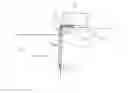
FIG. 1 a schematic representation in cross-section of a detail of a swimming pool with a turning plate according to the invention attached thereto;
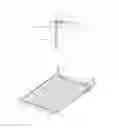
FIG. 2 a representation of a turning plate according to the invention in a perspective view;
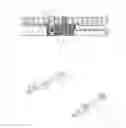
FIG. 3 a cross-section of a turning plate according to the invention in the area of a sensor and an adjusting pin;
FIG. 4 a mounting device for mounting a turning plate according to the invention in a perspective view.
DESCRIPTION OF EXEMPLARY EMBODIMENTS OF THE INVENTION
FIG. 1 shows a portion of a swimming pool 18 with a pool wall 17 and a pool edge 18 with a start block 19 arranged thereon. This starting block 19 is provided with a mounting device 20 to which a turning plate 1 according to the invention is mounted. The turning plate 1 could also be mounted directly or indirectly on the edge 18 of the pool.
FIG. 2 shows such a turning plate 1 according to the invention in a perspective view while FIG. 3 is a detailed view of plate 1 in the area 7 of a force sensor 8 and an adjusting pin 10.
The turning plate 1 is used by the swimmers for measuring push-off forces In a swimming pool 18 when turning and comprises a stiff plate 2 that can be stably secured parallel to the pool wall 17 as well as force sensors 8 to determine the push-off forces. For example, piezoelectric or resistive force sensors 8 can be used that in particular measure in three dimensions.
Furthermore, the turning plate 1 according to the invention comprises a stiff, rectangular frame 6 on which the plate 2 is attached at four positions 7 under pretension by means of a clamping screw 9, in each case via a force sensor 8.
Next to each of these sensors 8, an adjusting pin 10 is arranged on the frame 6 which can be moved out of frame 6 to support the frame 6 on the pool wall 17. The frame 6 has at least one, preferably two stiff securing brackets 13 for mounting it on the pool edge 18, preferably on a starting block 19.
Such a turning plate 1 can be easily carried into a pool 16 and can be assembled outside the water without having to damage the pool wall 17, The adjusting pins 10 can be moved out against the pool wall, for example using an hex-wrench, until the turning plate 1 is uniformly braced. For this purpose, it is advantageous that the plate 2 has a recess 4 flush with each adjusting pin 10 that enables access to the adjusting pin 10. Within this recess 4 is provided a bracket for guiding the adjusting pin 10, This is attached to the frame 6 so that the plate 2 is attached to the frame 6 only by the preloading screw 9 and the force sensor 8. Supporting plates 12 may be arranged behind the adjusting pins 10 to protect the pool wall 17.
Preferably, the plate 2 is made of carbon, for example, of laminated carbon with chlorinated water-resistant resin, This achieves a substantial weight reduction of the turning plate 1, Also, it can be ensured by the construction described that the total thickness of turning plate 1 including the extended adjusting pins 10 does not exceed 50 mm.
Furthermore, it is advantageous if the plate 2 has a plurality of holes 3 for a how wave to pass therethrough which a swimmer approaching the turning plate 1 pushes forward. This provision of holes 3 has been shown to avoid measurement errors. In addition, it is very important that the turning plate 1 must always abut on the pool edge 18 with the adjusting pin 10 or the supporting plates 12 attached thereto because otherwise the measurement will also be falsified.
Preferably, the frame 6 is made of high-quality stainless steel that is resistant to chlorine and ozone. This is also true for all screws and additional components of the turning plate 1. Since swimming pool water can be very aggressive.
Frame 6 preferably has at least one, more preferably two handles 5 that facilitate its handling during mounting.
In a preferred embodiment, the turning plate 1 comprises a mounting device 20, shown in FIG. 4, which can be fixed on the pool edge 18 or on a starting block 19 to accommodate the securing bracket or brackets 13. Preferably, the mounting device 20 has at least a quick release 21 for quick mounting of the turning plate 1 to the mounting device 20.
The accommodation between mounting device 20 and securing bracket 13 can be designed to be tilt adjustable so that the turning plate 1 can be attached with an inclination to the vertical of up to 5 degrees, preferably up to 10 degrees. This is Important when as shown in FIG. 1 for example the angle a of the pool wall 17 to the pool edge 18 is more than 90°, In this way, the position of the turning plate 1 can be optimally adapted to the angle of pool wall 17.
Additionally, the accommodation between mounting device 20 and securing bracket 13 can be horizontally slidable in the swimming direction, which is indicated by a double-headed arrow in FIG. 1, so that the turning plate 1 can be attached as close as possible to the pool wall 17. Alternatively or in addition, mounting device 20 can also be attached to a starting block 19 so that it is horizontally slidable in the swimming direction.
Preferably, each bracket 13 is attached in two positions with a fixed component on the edge of the pool and the brackets 13 are themselves locked by quick releases 21, for example. For this purpose, each securing bracket 13 has two slits 14 wherein both slits 14 have an L shape and at least one of the two slits has a wide transversal slit 15 at the inner end of the L for varying the angle α during mounting. Therefore, the turning plate 1 according to the invention with a size of the plate 2 of about 900×800 mm can be designed to be movable while having a total weight of less than 30 kg and thus can be easily carried and mounted by two persons.
LIST OF REFERENCE NUMERALS
1 turning plate
2 plate
3 holes
4 recess
5 handle
6 frame
7 position of sensor and adjusting pin
8 force sensors
9 clamping screw
10 adjusting pin
11 socket
12 supporting plate
13 securing bracket
14 slit, L-shaped slit
15 transversal slit
18 swimming pool
17 pool wall
18 pool edge
19 starting block
20 mounting device
21 quick release
α angle of pool edge
Claims
1. A turning plate for measuring push-off forces of swimmers during turning In a swimming pool defined in part by a pool wall that is disposed generally normal to a pool edge, comprising:
a stiff plate,
at least four force sensors for detecting the push-off forces applied by swimmers to the stiff plate,
a stiff, rectangular frame on which the plate is mounted in at least four positions under pretension with a respective clamping screw and via a respective force sensor.
2. The turning plate according to claim 1, wherein next to each of these force sensors an adjusting pin is arranged on the frame that can be moved out of the frame to support the frame on the pool wall.
3. The turning plate according to claim 2, wherein the adjusting pin can be moved out against the pool wall until the turning plate is uniformly braced.
4. The turning plate according to claim two, wherein the plate has a recess flush with each adjusting pin which enables access to the adjusting pin.
5. The turning plate according to claim 1, wherein the frame has at least two stiff securing brackets for mounting on the edge of the pool.
6. The turning plate according to claim 1, wherein the plate is made of carbon.
7. The turning plate according to claim 1, wherein the plate has a plurality of holes for a bow wave to pass therethrough.
8. The turning plate according to claim 1, wherein the frame together with the plate is not thicker than 50 mm.
9. The turning plate according to claim 1, wherein the frame has at least one handle which facilitates handling during mounting of the frame to the pool.
10. The fuming plate according to claim 5 and further comprising a mounting device that can be secured on the pool edge or on a starting block for accommodation of the securing bracket.
11. The turning plate according to claim 10, wherein the mounting device has at least a quick release for quick attachment of the turning plate to the mounting device.
12. The turning plate according to claim 10, wherein the accommodation between the mounting device and the securing bracket is tilt-adjustable so that the turning plate can be mounted with an inclination to the vertical of up to 10 degrees.
13. The turning plate according to claim 10, wherein the accommodation between the mounting device and the securing bracket is horizontally slidable in a swimming direction so that the turning plate can be attached as close as possible to the pool wall.
14. The turning plate according to claim 10, wherein the mounting device can be attached to a starting block so that it is horizontally slidable in a swimming direction.
15. The turning plate according to claim 5, wherein each securing bracket can be attached in two positions by a fixed component to the pool edge, each securing bracket having two slits wherein both of said slits are L-shaped and at least one of the two slits has a wide transversal slit at the inner end the L for varying during mounting of the turning plate an inclination angle between the stiff plate and the pool edge.
16. The turning plate according to claim 1, wherein the turning plate is movable with a total weight of less than 30 kg and has a surface area of about 900×600 mm.
17. The turning plate according to claim 1, wherein the frame has at least two stiff securing brackets for mounting on a starting block that is disposed on the edge of the pool.
18. The turning plate according to claim 1, wherein the plate is made of laminated carbon with chlorinated water-resistant resin.
19. The turning plate according to claim 10, wherein the disposition between the mounting device and the securing bracket is tilt-adjustable so that the turning plate can be mounted with an inclination to the vertical of up to 5 degrees.
Images & Drawings included:
Sources:
- United States Patent and Trademark Office - verify current appl. status at the USPTO↗
Recent applications in this class:
- » 20250288870 2025-09-18
DEVICE AND METHODS FOR MEASURING SHOULDER STRENGTH - » 20250288869 2025-09-18
GAIT ANALYSIS METHOD AND DEVICE USING AUGMENTED REALITY INTERACTIVE SPORTS DEVICE - » 20250281796 2025-09-11
CYCLING POWER AND STATUS MEASUREMENT APPARATUS OF RIDING DEVICE AND RELATED CLOUD-BASED SYSTEM - » 20250276215 2025-09-04
PORTABLE ELECTRONIC DEVICE FOR STEP DETECTION AND OPERATING METHOD THEREOF - » 20250269235 2025-08-28
ELECTRONIC DEVICE AND METHOD FOR DETECTING USER'S EXERCISE - » 20250269234 2025-08-28
Systems and Methods for Integrated Automated Sports Data Collection and Analytics Platform - » 20250269233 2025-08-28
PERSONALIZED COMMUNICATION IN A DIGITAL THERAPY PLATFORM - » 20250256159 2025-08-14
PREDICTIVE ANALYSIS SYSTEM FOR ATHLETIC PERFORMANCE - » 20250256158 2025-08-14
Artificial Intelligence Apparatus and Method for monitoring prescribed Movements - » 20250256157 2025-08-14
Smart Sports Result Implications
Recent applications for this Assignee:
- » 20230288444 2023-09-14
Acceleration transducer - » 20230258685 2023-08-17
Acceleration transducer - » 20230090638 2023-03-23
Cutting Machine Comprising a Force Transducer, Use of Such a Cutting Machine and Process of Calibrating the Force Transducer of Such a Cutting Machine - » 20230052650 2023-02-16
SYSTEM FOR CHIP-REMOVING MACHINING OF A WORKPIECE AND FOR MEASURING AND EVALUATING FORCE AND TORQUE DURING CHIP-REMOVING MACHINING OF THE WORKPIECE - » 20230017978 2023-01-19
Simulation device for the screw joint simulation of a screw-driving tool - » 20230008136 2023-01-12
SIMULATION DEVICE FOR THE SCREW JOINT SIMULATION OF A NUTRUNNER - » 20220397436 2022-12-15
TRANSDUCER ELEMENT - » 20220223323 2022-07-14
Joint, electrical feedthrough, and sensor - » 20220221358 2022-07-14
Screw load testing device and method for performing a load test on a screw - » 20220221326 2022-07-14
Transducer assembly for mounting in a roadway