Method of manufacturing nitrone compound
US20170036989A1
2017-02-09
14/931,385
2015-11-03
✅ Patent granted
US 9,708,242 B2
2017-07-18
-
-
Zinna Northington Davis
Wang Law Firm, Inc.
2035-11-03
Abstract:
A method of manufacturing nitrone compounds is provided. The method includes: providing a nitro compound; and performing a photoreaction of the nitro compound, a catalyst and an additive under visible light to obtain the nitrone compound.
Inventors:
- Bor-Cherng Hong 1 🇹🇼 Min-Hsiung Township, Taiwan
- Cheng-Wei Lin 1 🇹🇼 Changhua City, Taiwan
- Cheng-Wei Lin 1 🇹🇼 Changhua, Taiwan
Assignee:
- National Chung Cheng University 3 🇹🇼 Min-Hsiung Township, Taiwan
Applicant:
Interested in similar patents?
Get notified when new applications in this technology area are published.
Classification:
B01J31/1815 » CPC further
Catalysts comprising hydrides, coordination complexes or organic compounds containing coordination complexes containing nitrogen, phosphorus, arsenic or antimony as complexing atoms, e.g. in pyridine ligands, or in resonance therewith, e.g. in isocyanide ligands C=N-R or as complexed central atoms the ligands containing nitrogen; Cyclic ligands, including e.g. non-condensed polycyclic ligands, comprising at least one complexing nitrogen atom as ring member, e.g. pyridine with more than one complexing nitrogen atom, e.g. bipyridyl, 2-aminopyridine
B01J2231/44 » CPC further
Catalytic reactions performed with catalysts classified in; Substitution reactions at carbon centres, e.g. C-C or C-X, i.e. carbon-hetero atom, cross-coupling, C-H activation or ring-opening reactions Allylic alkylation, amination, alkoxylation or analogues
B01J2531/821 » CPC further
Additional information regarding catalytic systems classified in; Complexes comprising metals of Group VIII as the central metal; Metals of the platinum group Ruthenium
B01J2531/827 » CPC further
Additional information regarding catalytic systems classified in; Complexes comprising metals of Group VIII as the central metal; Metals of the platinum group Iridium
C07C291/06 IPC
Compounds containing carbon and nitrogen and having functional groups not covered by groups - containing nitrogen-oxide bonds Nitrile oxides
C07D213/53 » CPC further
Heterocyclic compounds containing six-membered rings, not condensed with other rings, with one nitrogen atom as the only ring hetero atom and three or more double bonds between ring members or between ring members and non-ring members having three double bonds between ring members or between ring members and non-ring members having no bond between the ring nitrogen atom and a non-ring member or having only hydrogen or carbon atoms directly attached to the ring nitrogen atom with substituted hydrocarbon radicals attached to ring carbon atoms; Radicals substituted by doubly-bound oxygen, sulfur, or nitrogen atoms, or by two such atoms singly-bound to the same carbon atom Nitrogen atoms
C07C205/03 » CPC main
Compounds containing nitro groups bound to a carbon skeleton having nitro groups bound to acyclic carbon atoms of an unsaturated carbon skeleton
C07D207/06 » CPC further
Heterocyclic compounds containing five-membered rings not condensed with other rings, with one nitrogen atom as the only ring hetero atom with only hydrogen or carbon atoms directly attached to the ring nitrogen atom having no double bonds between ring members or between ring members and non-ring members with radicals, containing only hydrogen and carbon atoms, attached to ring carbon atoms
C07D311/80 » CPC further
Heterocyclic compounds containing six-membered rings having one oxygen atom as the only hetero atom, condensed with other rings ortho- or peri-condensed with carbocyclic rings or ring systems; Ring systems having three or more relevant rings Dibenzopyrans; Hydrogenated dibenzopyrans
B01J31/18 IPC
Catalysts comprising hydrides, coordination complexes or organic compounds containing coordination complexes containing nitrogen, phosphorus, arsenic or antimony as complexing atoms, e.g. in pyridine ligands, or in resonance therewith, e.g. in isocyanide ligands C=N-R or as complexed central atoms
C07C291/02 » CPC further
Compounds containing carbon and nitrogen and having functional groups not covered by groups - containing nitrogen-oxide bonds
C07C205/45 » CPC further
Compounds containing nitro groups bound to a carbon skeleton the carbon skeleton being further substituted by at least one doubly—bound oxygen atom, not being part of a —CHO group
C07C205/51 » CPC further
Compounds containing nitro groups bound to a carbon skeleton the carbon skeleton being further substituted by carboxyl groups having nitro groups and carboxyl groups bound to acyclic carbon atoms of the carbon skeleton the carbon skeleton being saturated
Description
CROSS-REFERENCE TO RELATED APPLICATION
This application claims priority from Taiwan Patent Application No. 104125714, filed on Aug. 6, 2015, in the Taiwan Intellectual Property Office, the content of which are hereby incorporated by reference in their entirety for all purposes.
BACKGROUND OF THE INVENTION
1. Field of the Invention
The present invention relates to a manufacturing method, in particular with respect to a manufacturing method of manufacturing nitrone compound.
2. Description of the Related Art
Nitrone compound is a key intermediate for the synthesis of naturally occurring compounds or medical drugs. Nitrone compound is well-known for trapping free radicals. Recently, several nitrone compounds have demonstrated potent biological activity against many diseases, such as aging, Alzheimer's disease, cancer, Parkinson disease and stroke.
Nitrone compounds have usually been prepared by condensation reactions between carbonyl compounds and hydroxylamines. Wherein hydroxylamines can be obtained by oxidation of amines or imines or by reduction of nitro compound. However, the strong reactive agents or reaction conditions are necessary. Other recent preparations include copper-mediated coupling of fluorenone oxime and vinyl boronic acid and cyclization of β-allenyloximes.
SUMMARY OF THE INVENTION
In view of the aforementioned technical problems of the prior art, one purpose of the present invention is to provide a method of manufacturing nitrone compound so as to solve the problem of using strong reactive agents or reaction conditions to prepare nitrone compounds in prior art.
In order to accomplish the preceding purpose, the present invention provides a method of manufacturing nitrone compound, comprising: providing a nitro compound; and performing a photoreaction of the nitro compound, a catalyst and an additive under visible light to obtain the nitrone compound.
Wherein the catalyst is Ru(bpy3)Cl2.6H2O, Ru(bpy3)Cl2, Ru(bpy)3(BF4)2, Ru(bpy)3(PF6)2, Ir[dF(CF3)ppy]2(dtbbpy)(PF6) or Ir(ppy)2(dtbbpy)(PF6).
Wherein a wavelength of the visible light is within the range of 350 to 700 nm. Preferably, a wavelength of the visible light is within the range of 450 to 460 nm.
Wherein the nitro compound is a second order or third order nitro compound.
Wherein the additive is diisopropylethylamine (DIPEA), diisopropylisobutylamine (DIPIBA) or a derivative of 1,4-Dihydropyridine (DHP). When the additive is diisopropylisobutylamine (DIPIBA), an aldehyde compound is further added in the photoreaction. The derivative of 1,4-Dihydropyridine (DHP) is Hantzsch ester.
Wherein the catalyst is performed a photoredox catalyst reaction in the photoreaction.
In accordance with the preceding description, a method of manufacturing nitrone compound may have one or more following advantages:
(1) In the method of the present invention, the photoreaction is performed under visible light by the nitro compound, the catalyst and the additive, and the nitrone compound can be manufactured under mild condition.
(2) In the method of the present invention, the nitrone compounds can be manufactured by only using available visible light and catalyst without heating or using strong reactive chemicals or materials needed protected.
(3) In the method of the present invention, the nitrone compounds having various substituents can be manufactured by choosing various nitro compounds, additives or aldehydes.
BRIEF DESCRIPTION OF THE DRAWINGS
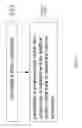
FIG. 1 is a schematic flow diagram showing the method of manufacturing nitrone compound of the present invention.
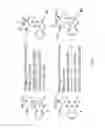
FIG. 2 is a schematic flow diagram showing the preparation of nitrone compounds by second order nitro compound.
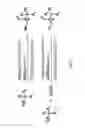
FIG. 3 is a schematic flow diagram showing the preparation of nitrone compounds by third order nitro compound.
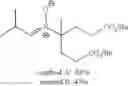
FIG. 4 is a reaction mechanism of the method of manufacturing nitrone compound of the present invention.
DETAILED DESCRIPTION OF THE PREFERRED EMBODIMENTS
The detailed structure, operating principle and effects of the present invention will now be described in more details hereinafter with reference to the accompanying drawings that show various embodiments of the invention as follows.
Refer to FIG. 1, the present invention provides a method of manufacturing nitrone compound, comprising: providing a nitro compound S10; and performing a photoreaction of the nitro compound, a catalyst and an additive under visible light to obtain the nitrone compound S20.
The catalyst is, for example, Ru(bpy3)Cl2.6H2O, Ru(bpy3)Cl2, Ru(bpy)3(BF4)2 or Ru(bpy)3(PF6)2. In the preceding examples, the catalyst which can produce Ru(bpy3)(II) ion in the reaction can be used as the catalyst used in the present invention. Wherein, the different counter anions of the catalyst will only affect the yield of manufactured nitrone compounds. Further, the catalysts are not limited to the preceding bipyridine (bpy) derivatives, and the derivatives of bipyrazine or bipyrimidine can also be used as the catalyst of the present invention depending upon actual demand. Moreover, the catalyst can also be the catalyst comprising iridium (Ir) metal, such as Ir[dF(CF3)ppy]2(dtbbpy)(PF6) or Ir(ppy)2(dtbbpy)(PF6). However, Ir(ppy)3 can not be used to perform the reaction of the present invention.
The wavelength of the visible light can be, for example, within the range of 350 to 700 nm. Preferably, the wavelength of the visible light can be, for example, within the range of 450 to 460 nm. Wherein, the nitro compound can be a second order or third order nitro compound. The additive can be diisopropylethylamine (DIPEA) (formula I), diisopropylisobutylamine (DIPIBA) (formula II) or derivatives of 1,4-Dihydropyridine (DHP) (formulas III and IV). Wherein, when the additive is diisopropylisobutylamine (DIPIBA), the aldehyde compound is further added in the photoreaction. Wherein, the catalyst can perform the photoredox catalyst reaction in the photoreaction. The derivative of 1,4-Dihydropyridine (DHP) can be, for example, Hantzsch ester (formula III). The kinds of preceding catalysts and additives and the wavelength of the visible light are not limited thereto.
Further, the additives can also be the derivatives of formula I, II, III or IV. For example, the additives can be:
| R1 | R2 | R3 |
| Hbi | CH3 | OCH3 |
| CH3CH2CH2 | CH3 | OCH3 |
| 3-NO2—C6H4 | CH3 | OCH3 |
| H | CH3 | CH3 |
| CH3CH2CH2 | CH3 | CH3 |
| 3-NO2—C6H4 | CH3 | CH3 |
| H | —CH2CH2CH2— |
| CH3CH2CH2 | —CH2CH2CH2— |
| 3-NO2—C6H4 | —CH2CH2CH2— |
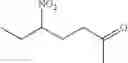
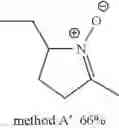
Refer to FIGS. 2 and 3, FIG. 2 is a schematic flow diagram showing the preparation of nitrone compounds by second order nitro compound, and FIG. 3 is a schematic flow diagram showing the preparation of nitrone compounds by third order nitro compound. In the method of manufacturing nitrone compound by second order nitro compound, such as the two embodiments as shown in FIG. 2, the nitrone compounds 2a and 2b can be obtained by second order nitro compound represented by compound 1 according to the preceding disclosed method (the detailed parametric conditions are noted in FIG. 2).
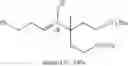
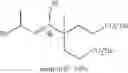
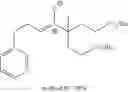
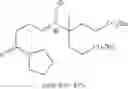
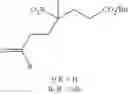
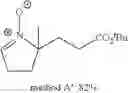
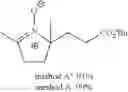
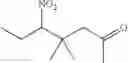
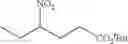
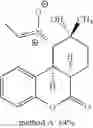
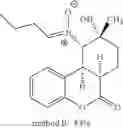
And, in the method of manufacturing nitrone compound by third order nitro compound, such as the two embodiments as shown in FIG. 3, the nitrone compounds 4, 6 and 7 can be obtained by third order nitro compound represented by compound 3 according to the preceding disclosed method (the detailed parametric conditions are noted in FIG. 3). Wherein, the nitro compound 3 can be the nitro compounds represented by 3l, 3m or 3n listed in table 1, the nitrone compound 4 can be the nitrone compounds represented by 4a or 4b listed in table 1, and the nitrone compound 6 can be the nitrone compounds represented by 6a, 6c to 6n listed in table 1, and the nitrone compound 7 can be the nitrone compound represented by 7m listed in table 1.
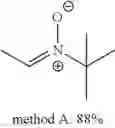
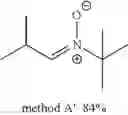
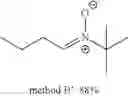
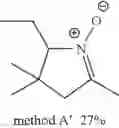
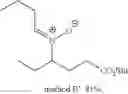
The nitrone compound represented in table 1 is obtained by reacting 5 mol % catalyst and 0.1 M nitro compound 3. Wherein, in method A, the additive DIPEA is 10 equivalents; in method A′, the additive DIPIBA is 10 equivalents; in method B, the additive DIPEA is 10 equivalents and aldehyde compound R4CHO is 5 equivalents; and in method B′, the additive DIPIBA is 10 equivalents and aldehyde compound R4CHO is 5 equivalents. The yields of each nitrone compounds are shown in table 1.
| TABLE 1 | ||
| 4a | ||
| 6a | ||
| 6c | ||
| 6d | ||
| 6e | ||
| 6f | ||
| 6g | ||
| 4b | ||
| 6h | ||
| 6i | ||
| 6j | ||
| 6k | ||
| 3l | ||
| 6l | ||
| 3m | ||
| 6m | ||
| 7m | ||
| 3n | ||
| 6n | ||
| 2a | ||
| 2b | ||
Refer to FIG. 4, FIG. 4 is a reaction mechanism of the method of manufacturing nitrone compound of the present invention. As shown in FIG. 4, the photoredox catalyst reaction of the catalyst Ru(bpy3)Cl2.6H2O is performed and then the electron exchange reaction is performed between the Ru(bpy3)Cl2.6H2O and the nitro compound 3 so as to obtain the intermediate of the nitro compound. The intermediate of the nitro compound, the ruthenium ion and hydrogen ion perform a nitroalkane reduction and then react with DIPEA or with DIPIBA and aldehyde compound R4CHO to obtain nitrone compound 4 or 6.
As shown in FIG. 4, when the additive is DIPEA, DIPEA will involve in the reaction (as shown in FIG. 3, Me group of manufactured nitrone compound 4 is from DIPEA). Because steric effect of the additive DIPIBA is bigger than that of DIPEA, DIPIBA is less involved in the reaction (see compound A′ and B′). Therefore, the nitrone compounds having various substituents can be manufactured by choosing aldehydes with various functional groups (R5 groups of the nitrone compound 6 and 7 are from R4 of aldehyde compound R4CHO). And, as shown in the following reaction scheme, the nitroalkane reaction of FIG. 4 can be inferred from this reaction scheme, wherein the compound D is corresponding to compound 5a.
In summary, the photoreaction is performed under visible light by the nitro compound, the catalyst and the additive, and the nitrone compound can be manufactured under mild condition. And, the nitrone compounds having various substituents can be manufactured by choosing various nitro compounds, additives or aldehydes
While the means of specific embodiments in present invention has been described by reference drawings, numerous modifications and variations could be made thereto by those skilled in the art without departing from the scope and spirit of the invention set forth in the claims. The modifications and variations should in a range limited by the specification of the present invention.
Claims
1. A method of manufacturing nitrone compound, comprising:
providing a nitro compound; and
performing a photoreaction of the nitro compound, a catalyst and an additive under visible light to obtain the nitrone compound.
2. The method of claim 1, wherein the catalyst is Ru(bpy3)Cl2.6H2O, Ru(bpy3)Cl2, Ru(bpy)3(BF4)2, Ru(bpy)3(PF6)2, Ir[dF(CF3)ppy]2(dtbbpy)(PF6) or Ir(ppy)2(dtbbpy)(PF6).
3. The method of claim 1, wherein a wavelength of the visible light is within the range of 350 to 700 nm.
4. The method of claim 3, wherein a wavelength of the visible light is within the range of 450 to 460 nm.
5. The method of claim 1, wherein the nitro compound is a second order or third order nitro compound.
6. The method of claim 1, wherein the additive is diisopropylethylamine (DIPEA), diisopropylisobutylamine (DIPIBA) or a derivative of 1,4-Dihydropyridine (DHP).
7. The method of claim 6, wherein when the additive is diisopropylisobutylamine (DIPIBA), an aldehyde compound is further added in the photoreaction.
8. The method of claim 6, wherein the derivative of 1,4-Dihydropyridine (DHP) is Hantzsch ester.
9. The method of claim 1, wherein the catalyst is performed a photoredox catalyst reaction in the photoreaction.
Images & Drawings included:


Sources:
- United States Patent and Trademark Office - verify current appl. status at the USPTO↗
Recent applications in this class:
- » 20200157038 2020-05-21
Preparation of cyclic allylic nitro compounds - » 20130210917 2013-08-15
Nitrated lipids and methods of making and using thereof - » 20090299106 2009-12-03
Highly energy-producing compound
Recent applications for this Assignee:
- » 20150211993 2015-07-30
Multiplex fiber optic biosensor and detection method by using the same - » 20140296552 2014-10-02
Mercaptoalkylsilatrane derivative having protecting group and method of manufacturing the same