Hydroxamic acids and uses thereof
US20170036996A1
2017-02-09
15/280,817
2016-09-29
✅ Patent granted
US 9,688,618 B2
2017-06-27
-
-
Karl J Puttlitz
Pillsbury Winthrop Shaw Pittman LLP
2036-09-29
Abstract:
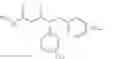
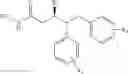
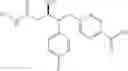
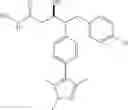
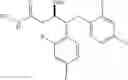
Compounds of formula I are provided:
R1 is an alkoxy or O(CH2)pX, p is an integer from 2 to 3 and X is OH, NH2, or CO2H, m is an integer from 0 to 5, n is an integer from 0 to 5, each R2 is independently selected from hydrogen, alkenyl, hydroxyalkyl, alkoxymethyl, heterocyclyl, hetereocyclylmethyl, amino, amido, hydroxamido, any of which may be optionally substituted with one or more of acyl, alkyl, alkoxy, hydroxyalkyl, or halogen, each R3 is independently selected from hydrogen, halogen, alkyl, alkenyl, carboxy, hydroxymethyl, amido, and at least one of R2 and R3 is not hydrogen.
Inventors:
- Alan Thomas Johnson 2 🇺🇸 Kaneohe, HI, United States
- Seong Jin Kim 4 🇺🇸 Honolulu, HI, United States
- Sean O'Malley 24 🇺🇸 Honolulu, HI, United States
- Henry Lee Jackson 2 🇺🇸 Pearl City, HI, United States
Assignee:
- HAWAII BIOTECH, INC. 7 🇺🇸 Honolulu, HI, United States
Applicant:
Interested in similar patents?
Get notified when new applications in this technology area are published.
Classification:
C07D295/16 » CPC further
Heterocyclic compounds containing polymethylene-imine rings with at least five ring members, 3-azabicyclo [3.2.2] nonane, piperazine, morpholine or thiomorpholine rings, having only hydrogen atoms directly attached to the ring carbon atoms acylated on ring nitrogen atoms
C07D295/205 » CPC further
Heterocyclic compounds containing polymethylene-imine rings with at least five ring members, 3-azabicyclo [3.2.2] nonane, piperazine, morpholine or thiomorpholine rings, having only hydrogen atoms directly attached to the ring carbon atoms acylated on ring nitrogen atoms by radicals derived from carbonic acid, or sulfur or nitrogen analogues thereof Radicals derived from carbonic acid
C07D239/42 » CPC further
Heterocyclic compounds containing 1,3-diazine or hydrogenated 1,3-diazine rings not condensed with other rings having three or more double bonds between ring members or between ring members and non-ring members with hetero atoms or with carbon atoms having three bonds to hetero atoms with at the most one bond to halogen, directly attached to ring carbon atoms; One oxygen, sulfur or nitrogen atom One nitrogen atom
C07D231/12 » CPC further
Heterocyclic compounds containing 1,2-diazole or hydrogenated 1,2-diazole rings not condensed with other rings having two or three double bonds between ring members or between ring members and non-ring members with only hydrogen atoms, hydrocarbon or substituted hydrocarbon radicals, directly attached to ring carbon atoms
C07D303/46 » CPC further
Compounds containing three-membered rings having one oxygen atom as the only ring hetero atom; Compounds containing oxirane rings with hydrocarbon radicals, substituted by carbon atoms having three bonds to hetero atoms with at the most one bond to halogen, e.g. ester or nitrile radicals by amide or nitrile radicals
C07D295/155 » CPC further
Heterocyclic compounds containing polymethylene-imine rings with at least five ring members, 3-azabicyclo [3.2.2] nonane, piperazine, morpholine or thiomorpholine rings, having only hydrogen atoms directly attached to the ring carbon atoms with substituted hydrocarbon radicals attached to ring nitrogen atoms substituted by carbon atoms having three bonds to hetero atoms with at the most one bond to halogen, e.g. ester or nitrile radicals with the ring nitrogen atoms and the carbon atoms with three bonds to hetero atoms separated by carbocyclic rings or by carbon chains interrupted by carbocyclic rings
C07D239/26 » CPC further
Heterocyclic compounds containing 1,3-diazine or hydrogenated 1,3-diazine rings not condensed with other rings having three or more double bonds between ring members or between ring members and non-ring members with only hydrogen atoms, hydrocarbon or substituted hydrocarbon radicals, directly attached to ring carbon atoms
C07D213/56 » CPC further
Heterocyclic compounds containing six-membered rings, not condensed with other rings, with one nitrogen atom as the only ring hetero atom and three or more double bonds between ring members or between ring members and non-ring members having three double bonds between ring members or between ring members and non-ring members having no bond between the ring nitrogen atom and a non-ring member or having only hydrogen or carbon atoms directly attached to the ring nitrogen atom with substituted hydrocarbon radicals attached to ring carbon atoms; Radicals substituted by carbon atoms having three bonds to hetero atoms with at the most one bond to halogen, e.g. ester or nitrile radicals Amides
C07C259/06 » CPC main
Compounds containing carboxyl groups, an oxygen atom of a carboxyl group being replaced by a nitrogen atom, this nitrogen atom being further bound to an oxygen atom and not being part of nitro or nitroso groups without replacement of the other oxygen atom of the carboxyl group, e.g. hydroxamic acids having carbon atoms of hydroxamic groups bound to hydrogen atoms or to acyclic carbon atoms
C07C259/10 » CPC further
Compounds containing carboxyl groups, an oxygen atom of a carboxyl group being replaced by a nitrogen atom, this nitrogen atom being further bound to an oxygen atom and not being part of nitro or nitroso groups without replacement of the other oxygen atom of the carboxyl group, e.g. hydroxamic acids having carbon atoms of hydroxamic groups bound to carbon atoms of six-membered aromatic rings
C07D207/337 » CPC further
Heterocyclic compounds containing five-membered rings not condensed with other rings, with one nitrogen atom as the only ring hetero atom with only hydrogen or carbon atoms directly attached to the ring nitrogen atom having two double bonds between ring members or between ring members and non-ring members with only hydrogen atoms, hydrocarbon or substituted hydrocarbon radicals, directly attached to ring carbon atoms with substituted hydrocarbon radicals, directly attached to ring carbon atoms Radicals substituted by carbon atoms having three bonds to hetero atoms with at the most one bond to halogen, e.g. ester or nitrile radicals
Description
CROSS-REFERENCE TO RELATED APPLICATIONS
This application is a continuation of U.S. application Ser. No. 15/099,438, filed Apr. 14, 2016, which claims priority to U.S. Provisional Application No. 62/148,442 filed Apr. 16, 2015, the entire contents of which are incorporated herein by reference in its entirety.
STATEMENT OF GOVERNMENT SPONSORSHIP
This invention was made with government support under HDTRA1-13-C-0007 awarded by the Department of Defense, Defense Threat Reduction Agency. The government has certain rights in the invention.
INTRODUCTION
The present disclosure relates to compounds developed to treat exposure to toxins, such as Botulinum neurotoxin (BoNT). In particular, the present disclosure relates to hydroxamic acid compounds that serve as inhibitors of toxins, such as BoNT.
Botulinum neurotoxin A (BoNT/A), in particular, has an LD50 of 1 ng/kg i.v. in mammals (100 ng/kg inhalational, 14 ng/kg oral) (Burnett et al. Nat. Rev. Drug Disc. 4(4):281-296 (2005); Wein et al. Proc. Natl. Acad. Sci. U.S.A. 102(28):9984-9989 (2005)). Its ease of production, transport, and delivery make it a significant threat as a biological warfare and bioterrorism weapon (Glik et al. Biosecur. Bioterror. 2(3):216-223 (2004). Military programs to develop BoNT as a biological warfare agent in multiple nations have been documented (Arnon et al. J. Am. Med. Assoc. 285(8): 1059-1070 (2001); Noah et al. Emerg. Med. Clin. North Am. 20(2): 255-71 (2002)). Development and stockpiling of a BoNT inhibitor small molecule therapeutic drug is a priority of the Joint Science and Technology Office-Chemical and Biological Defense/Defense Threat Reduction Agency for warfighter protection. BoNT is a CDC/NIAID Category A Biodefense Pathogen, one of twelve Top Priority Biological Threats for which the Department of Homeland Security has completed full Material Threat Determinations and Population Threat Assessments.
SUMMARY
In some aspects, there are provided compounds of formula I:
-
- wherein R1 is an alkoxy or O(cH2)pX;
- wherein p is an integer from 2 to 3 and X is OH, NH2, or CO2H;
- m is an integer from 0 to 5;
- n is an integer from 0 to 5;
- each R2 is independently selected from the group consisting of halogen, hydrogen, alkenyl, hydroxyalkyl, alkoxymethyl, heterocyclyl, hetereocyclylmethyl, amino, amido, hydroxamido, any of which may be optionally substituted with one or more of acyl, alkyl, alkoxy, hydroxyalkyl, or halogen;
- each R3 is independently selected from the group consisting of hydrogen, halogen, alkyl, alkenyl, carboxy, hydroxymethyl, amido; and wherein at least one of R2 and R3 is not hydrogen.
- wherein R1 is an alkoxy or O(cH2)pX;
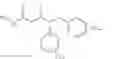
In some aspects, there are provided compounds of formula II:
-
- wherein R1 is an alkoxy or O(cH2)pX;
- wherein p is an integer from 2 to 3 and X is OH, NH2, or CO2H;
- n is an integer from 0 to 5;
- X is a halogen;
- each R2 is independently selected from the group consisting of halogen, hydrogen, alkenyl, hydroxyalkyl, alkoxymethyl, heterocyclyl, hetereocyclylmethyl, amino, amido, hydroxamido, any of which may be optionally substituted with one or more of acyl, alkyl, alkoxy, hydroxyalkyl, or halogen; and R3 is methyl or hydrogen.
- wherein R1 is an alkoxy or O(cH2)pX;
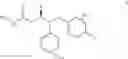
In some aspects, there are provided compounds of formula III:
-
- wherein R1 is an alkoxy or O(cH2)pX;
- wherein p is an integer from 2 to 3 and X is OH, NH2, or CO2H;
- n is an integer from 0 to 5;
each R2 is independently selected from the group consisting of halogen, hydrogen, alkenyl, hydroxyalkyl, alkoxymethyl, heterocyclyl, hetereocyclylmethyl, amino, amido, hydroxamido, any of which may be optionally substituted with one or more of acyl, alkyl, alkoxy, hydroxyalkyl, or halogen.
- wherein R1 is an alkoxy or O(cH2)pX;
The aforementioned compounds may be formulated in pharmaceutical compositions comprising the compound along with a pharmaceutically acceptable carrier.
The aforementioned compositions may be used in methods of treating a subject exposed to a botulinum toxin comprising administering to the subject the pharmaceutical composition.
DETAILED DESCRIPTION
The botulinum neurotoxins (BoNTs) have been indicated to inhibit acetylcholine release at the neuromuscular junction and other peripheral cholinergic sites (Arnon et al. supra; Poulain et al. The Botulinum J. 1(1):14-87 (2008)). At least seven serologically distinct BoNT proteins (types /A through /G) are produced by different strains of the anaerobic bacterium Clostridium botulinum; it has been indicated that type /A is the most lethal protein toxin. Symptoms of BoNT intoxication can include difficulty swallowing, impaired vision, muscle weakness, and death due to respiratory failure (MacDonald et al. J. Am. Med. Assoc. 253:1275-1278 (1985)). Exposure to toxin in a bioterrorism scenario could occur through ingestion or inhalation (Park et al. Infect. Immun. 71(3): 1147-54 (2003)).
Without being bound by theory, it is postulated that the BoNTs exert their biological effects by a triphasic mechanism involving: 1) serotype-specific ‘double-receptor’ binding to sialic acid and protein receptors on the surface of motor nerve endings, 2) internalization of the toxin-receptor complex and translocation of proteolytic subunit LC into the cytoplasm, and 3) intraneuronal cleavage of proteins responsible for neurotransmitter release (Montal Annu. Rev. Biochem. 79:591-617 (2010)). The holotoxins consists of a heavy chain (HC, MW≈100 kD) that mediates receptor binding and internalization, and a zinc-metalloprotease light chain (LC, MW≈50 kD). The LCs are partially unfolded in the acidic endosome and translocated into the cytosol through a narrow HC channel. They may be phosphorylated and/or palm itoylated once inside the cell; these modifications may enable serotype-specific trafficking that could be responsible for the unique months-long persistence of serotype A (and to a lesser extent, B) (Dong et al. Proc. Natl. Acad. Sci. U.S.A. 101(41):14701-14706 (2004); Fernandez-Salas Mov. Disord. 19(8):S23-S34 (2004)). While the exact mechanism of persistence has not been fully elucidated, evasion of the ubiquitination-proteasome degradation pathway may be involved (Tsai et al. Proc. Natl. Acad. Sci. U.S.A. 107(38): 16554-16559 (2010)).
Light chain /A is believed to exert its intraneuronal effects by site-specific cleavage of SNAP-25 (25 kD synaptosomal associated protein), one of three proteins that form the complex that mediates fusion of carrier vesicles to target membranes (SNARE, soluble N-ethylmaleimide-sensitive fusion protein-attachment protein receptor). Disruption of the SNARE complex can prevent vesicle exocytosis, thus blocking neurotransmitter secretion. Each serotype of BoNT cleaves a SNARE protein at a unique site. The high cleavage specificity of the BoNTs is thought to be due to a complex substrate binding mechanism involving exosites (Montal 2010, supra).
Though there are significant differences in potency among serotypes, with /A being the most potent, a striking difference lies in the persistence of their effect. Recovery of paralyzed nerve endings takes 30-90 days (or more) after intoxication with serotype A, and a few weeks with type B, while the remaining serotypes have a much shorter duration (days or hours) (Adler et al. Toxicon 39(2-3):233-43 (2001); Foran et al. Trends Mol. Med. 9(7): 291-9 (2003)). Serotype A was selected as the initial target because of its potency and persistence, and also because of its ready availability to potential terrorists and its documented use in large-scale biowarfare production efforts in Iraq in the late 80's (Arnon et al. 2001, supra; Cohen et al. Science 294(5542):498-501 (2001)).
The bioterrorism threat is BoNT, a “toxin weapon,” rather than the rare natural infection by C. botulinum. BoNT is deliverable in cold foods or beverages, or as an aerosol. In a military deployment, aerosolized toxin delivered via bomb, missile, or directly sprayed from a plane would be considered the primary threat; all three delivery mechanisms were explored by the Iraq military before 1991 (Arnon et al. 2001, supra). Homeland Security concerns focus on sabotage in foodstuffs (Wein et al. 2005, supra).
Extracellular interventions are generally ineffective unless given immediately after toxin exposure. Any intervention which targets the initial steps in intoxication (binding, translocation, or endocytosis (Montal 2010, supra)) generally cannot provide benefit to neurons which are already intoxicated by intracellular LC; nor can such an intervention accelerate recovery from paralysis. Importantly, BoNT/A LC reaches its intraneuronal target site within hours after exposure and persists in neurons for months (Montal 2010, supra). Based upon the purported mechanism of action for BoNT, two efficacy profiles are possible for a small molecule intraneuronal LC inhibitor, Type I and Type II, as detailed further below. In some embodiments, a therapeutic provides both types of efficacy.
Type I Efficacy involves slowing or halting progression of intoxication. Type I efficacy results from inhibition of the intraneuronal LC activity before proteolysis of SNAP-25 has reached levels that result in functional failure of exocytosis. The window of opportunity for Type I intervention remains to be fully elucidated, but it is postulated to be significantly longer than the window for protection through systemic clearance of extracellular toxin.
Type II Efficacy involves accelerating recovery of paralyzed tissue. Type II efficacy results from inhibition of LC activity in a neuron which is already functionally incompetent in terms of exocytosis. Under this circumstance, exocytosis may be restored upon attaining functional levels of newly synthesized SNAP-25. Depending on SNAP-25 depletion at initiation of therapy and the rate of SNAP-25 turnover (Foran et al. J. Biol. Chem. 278(2): 1363-71(2003)) restoration of normal function could occur in days with LC inhibitor therapy as opposed to months without it. Type II Efficacy is generally not achieved by any extraneuronal therapy.
An advanced agent may be artificially engineered to bypass existing countermeasures or produce a more severe or otherwise enhanced spectrum of disease. Genetic engineering of an infectious organism vector which could deliver BoNT LC into cells has been studied (Arnon et al. (2001), supra). Such an advanced agent, with BoNT LC delivered in a viral vector such as vaccinia, may be unaffected by any therapeutics acting against the native toxin proteins or its entry mechanism. For defense against such a ‘next generation’ infectious BoNT LC advanced agent, a countermeasure directly targeting the proteolytic action of BoNT LC may be effective.
Small molecules capable of inhibiting the proteolytic activity of BoNT/A LC have been indicated (Adler et al. (2008), supra; Li et al. Molecules 16(1): 202-20 (2010); Dickerson et al. Curr. Top. Med. Chem. 14: 2094-2102 (2014)). These include small molecule inhibitors containing a hydroxamic acid zinc binding group (Pang et al. PLoS one 5(4): e10129 (2010); Stowe et al. Org. Lett. 12(4):756-9 (2010); Capek et al. ACS Chem. Neurosci. 2(6):288-293 (2011)). The hydroxamic acid moiety has been shown to bind to the active site zinc in several reported co-crystal structures of inhibitors bound in the active site (Silvaggi et al. Chem. Biol. 14:533-542 (2007)).
Other inhibitors include those based on peptides, quinolines (Burnett et al. J. Med. Chem. 50(9):2127-36(2007); Roxas-Duncan et al. Antimicrob. Agents Chemother. 53(8):3478-3486 (2009); Caglic et al. J. Med. Chem. 57(3):669-676 (2014)), thiols (Moe et al. Bioorg. Med. Chem. 17(8):3072-9 (2009)), polycationic small molecules (Nuss et al. ACS Med. Chem. Left. 1(7): 301-5 (2010); Opsenica, Burnett et al. J. Med. Chem. 54(5):1157-69 (2011)), and other groups (Cai et al. Toxicon. 55(4): 818-826 (2010); Capkova et al. Bioorg. Med. Chem. Lett. 20(1):206-8 (2010); Cardinale et al. Botulinum J. 2(1):16-20 (2011); Silhar et al. Bioorg. Med. Chem. Lett. 21:2229-2231 (2011); Cardellina II et al. ACS Med. Chem. Lett. 3:387-391 (2012)).
Drugs containing a hydroxamic acid zinc-binding moiety have been approved for use by the FDA. The following small molecules bearing hydroxamic acids have received FDA approval for use in humans: Verinostat (Zolinza), Belinostat (Beleodaq), Deferoxamine (Desferal), Bufexamac (Paraderm), and Panobinostat (Farydak).
In some embodiments, there are provided compounds of formula I:
-
- wherein R1 is an alkoxy;
- m is an integer from 0 to 5;
- n is an integer from 0 to 5;
- each R2 is independently selected from the group consisting of halogen, hydrogen, alkenyl, hydroxyalkyl, alkoxymethyl, heterocyclyl, hetereocyclylmethyl, amino, amido, hydroxamido, any of which may be optionally substituted with one or more of acyl, alkyl, alkoxy, hydroxyalkyl, or halogen;
- each R3 is independently selected from the group consisting of hydrogen, halogen, alkyl, alkenyl, carboxy, hydroxymethyl, amido; and
- wherein at least one of R2 and R3 is not hydrogen.
In some embodiments, R1 is an alkoxy in the R-diastereomeric configuration.
In some embodiments, R1 is an alkoxy in the S-diastereomeric configuration.
In some embodiments, R1 is ethoxy or methoxy.
In some embodiments, m=1 and R3 is 4-chloro.
In some embodiments, m is an integer from 0 to 2.
In some embodiments, n is an integer from 0 to 4.
In some embodiments, each R2 is a halogen independently selected from the group consisting of fluorine, bromine, and chlorine.
In some embodiments, R2 is a 4-substituted halogen.
In some embodiments, the R2 heterocyclyl or hetereocyclylmethyl group comprises a morpholine, a piperazine, an oxirane, or a piperidine.
In some embodiments, there are provided compounds of formula II:
-
- wherein R1 is an alkoxy;
- n is an integer from 0 to 5;
- X is a halogen;
- each R2 is independently selected from the group consisting of halogen, hydrogen, alkenyl, hydroxyalkyl, alkoxymethyl, heterocyclyl, hetereocyclylmethyl, amino, amido, hydroxamido, any of which may be optionally substituted with one or more of acyl, alkyl, alkoxy, hydroxyalkyl, or halogen; and
- R3 is methyl or hydrogen.
In some embodiments, R1 is methoxy or ethoxy.
In some embodiments, at least one R2 is halogen.
In some embodiments, X is chlorine.
In some embodiments, x is fluorine.
In some embodiments, at least one R2 is heterocyclyl or hetereocyclylmethyl.
In some embodiments, the heterocyclyl or hetereocyclylmethyl group comprises a morpholine, a piperazine, an oxirane, or a piperidine.
In some embodiments, there are provided compounds of formula III:
-
- wherein R1 is an alkoxy;
- n is an integer from 0 to 5;
- each R2 is independently selected from the group consisting of halogen, hydrogen, alkenyl, hydroxyalkyl, alkoxymethyl, heterocyclyl, hetereocyclylmethyl, amino, amido, hydroxamido, any of which may be optionally substituted with one or more of acyl, alkyl, alkoxy, hydroxyalkyl, or halogen.
In some embodiments, at least one R2 is halogen.
In some embodiments, at least one R2 is hydroxymethyl.
In some embodiments, at least on R2 is heterocyclyl or hetereocyclylmethyl.
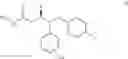
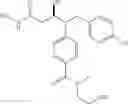
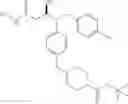
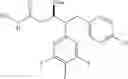
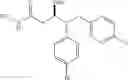
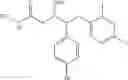
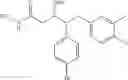
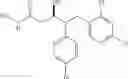
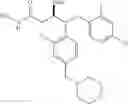
In some embodiments, there are provided compounds selected from any one of Examples 1 to 52 of Table 1.
In some embodiments, there are provided pharmaceutical composition comprising a compound according one or more of the previous embodiments along with a pharmaceutically acceptable carrier.
In some embodiments, there are provided methods of treating a subject exposed to a botulinum toxin comprising administering to the subject a pharmaceutical composition comprising a compound according to one or more of the previous embodiments.
The term “acyl,” as used herein, alone or in combination, refers to a carbonyl attached to an alkenyl, alkyl, aryl, cycloalkyl, heteroaryl, heterocycle, or any other moiety where the atom attached to the carbonyl is carbon. An “acetyl” group refers to a —C(O)CH3 group. An “alkylcarbonyl” or “alkanoyl” group refers to an alkyl group attached to the parent molecular moiety through a carbonyl group. Examples of such groups include methylcarbonyl and ethylcarbonyl. Examples of acyl groups include formyl, alkanoyl and aroyl.
The term “alkenyl,” as used herein, alone or in combination, refers to a straight-chain or branched-chain hydrocarbon group having one or more double bonds and containing from 2 to 20 carbon atoms. In certain embodiments, the alkenyl will comprise from 2 to 6 carbon atoms. The term “alkenylene” refers to a carbon-carbon double bond system attached at two or more positions such as ethenylene [—CH═CH—]. Examples of suitable alkenyl groups include ethenyl, propenyl, 2-methylpropenyl, 1,4-butadienyl and the like. Unless otherwise specified, the term “alkenyl” may include “alkenylene” groups.
The term “alkoxy,” as used herein, alone or in combination, refers to an alkyl ether group, wherein the term alkyl is as defined below. Examples of suitable alkyl ether groups include methoxy, ethoxy, n-propoxy, isopropoxy, n-butoxy, iso-butoxy, sec-butoxy, tert-butoxy, and the like.
The term “alkyl,” as used herein, alone or in combination, refers to a straight-chain or branched-chain alkyl group containing from 1 to 20 carbon atoms. In certain embodiments, the alkyl group will comprise from 1 to 10 carbon atoms. In further embodiments, the alkyl group will comprise from 1 to 6 carbon atoms. Alkyl groups may be optionally substituted as defined herein. Examples of alkyl groups include methyl, ethyl, n-propyl, isopropyl, n-butyl, isobutyl, sec-butyl, tert-butyl, pentyl, iso-amyl, hexyl, octyl, noyl and the like. The term “alkylene,” as used herein, alone or in combination, refers to a saturated aliphatic group derived from a straight or branched chain saturated hydrocarbon attached at two or more positions, such as methylene (—CH2-). Unless otherwise specified, the term “alkyl” may include “alkylene” groups.
The terms “amido” is interchangeable with “carbamoyl,” and as used herein, alone or in combination, refer to an amino group as described below attached to the parent molecular moiety through a carbonyl group, or vice versa. The term “C-amido” as used herein, alone or in combination, refers to a —C(O)—NR2 group with R as defined herein. The term “N-amido” as used herein, alone or in combination, refers to a RC(O)NH— group, with R as defined herein. The term “acylamino” as used herein, alone or in combination, embraces an acyl group attached to the parent moiety through an amino group. An example of an “acylamino” group is acetylamino (CH3C(O)NH—).
The term “amino,” as used herein, alone or in combination, refers to —NRR′, wherein R and R′ are independently chosen from hydrogen, alkyl, acyl, heteroalkyl, aryl, cycloalkyl, heteroaryl, and heterocycloalkyl, any of which may themselves be optionally substituted. Additionally, R and R′ may combine to form heterocycloalkyl, either of which may be optionally substituted.
The term “carboxyl” or “carboxy,” as used herein, refers to —C(O)OH or the corresponding “carboxylate” anion, such as is in a carboxylic acid salt. An “O-carboxy” group refers to a RC(O)O— group, where R is as defined herein. A “C-carboxy” group refers to a —C(O)OR groups where R is as defined herein.
The term “halo,” or “halogen,” as used herein, alone or in combination, refers to fluorine, chlorine, bromine, or iodine.
The term “heterocyclyl,” as used herein, alone or in combination as in “heterocyclylmethyl”, refers to a stable cyclic hydrocarbon group, fully saturated or containing from 1 to 3 degrees of unsaturation, consisting of from one to three heteroatoms chosen from 0, N, and S, and wherein the nitrogen and sulfur atoms may optionally be oxidized and the nitrogen heteroatom may optionally be quaternized. The heterocycle groups may be optionally substituted unless specifically prohibited.
The term “hydroxyalkyl,” as used herein, alone or in combination, refers to a hydroxy group attached to the parent molecular moiety through an alkyl group.
Any definition herein may be used in combination with any other definition to describe a composite structural group. By convention, the trailing element of any such definition is that which attaches to the parent moiety. For example, the composite group alkylamido would represent an alkyl group attached to the parent molecule through an amido group, and the term alkoxyalkyl would represent an alkoxy group attached to the parent molecule through an alkyl group.
The term “optionally substituted” means the anteceding group may be substituted or unsubstituted. When substituted, the substituents of an “optionally substituted” group may include, without limitation, one or more substituents independently selected from the following groups or a particular designated set of groups, alone or in combination: lower alkyl, lower alkenyl, lower alkynyl, lower alkanoyl, lower heteroalkyl, lower heterocycloalkyl, lower haloalkyl, lower haloalkenyl, lower haloalkynyl, lower perhaloalkyl, lower perhaloalkoxy, lower cycloalkyl, phenyl, aryl, aryloxy, lower alkoxy, lower haloalkoxy, oxo, lower acyloxy, carbonyl, carboxyl, lower alkylcarbonyl, lower carboxyester, lower carboxamido, cyano, hydrogen, halogen, hydroxy, amino, lower alkylamino, arylamino, amido, nitro, thiol, lower alkylthio, lower haloalkylthio, lower perhaloalkylthio, arylthio, sulfonate, sulfonic acid, trisubstituted silyl, N3, SH, SCH3, C(O)CH3, CO2CH3, CO2H, pyridinyl, thiophene, furanyl, lower carbamate, and lower urea. Two substituents may be joined together to form a fused five-, six-, or seven-membered carbocyclic or heterocyclic ring consisting of zero to three heteroatoms, for example forming methylenedioxy or ethylenedioxy. An optionally substituted group may be unsubstituted (e.g., —CH2CH3), fully substituted (e.g., —CF2CF3), monosubstituted (e.g., —CH2CH2F) or substituted at a level anywhere in-between fully substituted and monosubstituted (e.g., —CH2CF3). Where substituents are recited without qualification as to substitution, both substituted and unsubstituted forms are encompassed. Where a substituent is qualified as “substituted,” the substituted form is specifically intended. Additionally, different sets of optional substituents to a particular moiety may be defined as needed; in these cases, the optional substitution will be as defined, often immediately following the phrase, “optionally substituted with.”
Asymmetric centers exist in the compounds disclosed herein. These centers are designated by the symbols “R” or “5,” depending on the configuration of substituents around the chiral carbon atom. It should be understood that the invention encompasses all stereochemical isomeric forms, including diastereomeric, enantiomeric, and epimeric forms, as well as d-isomers and 1-isomers, and mixtures thereof. Individual stereoisomers of compounds can be prepared synthetically from commercially available starting materials which contain chiral centers or by preparation of mixtures of enantiomeric products followed by separation such as conversion to a mixture of diastereomers followed by separation or recrystallization, chromatographic techniques, direct separation of enantiomers on chiral chromatographic columns, or any other appropriate method known in the art. Starting compounds of particular stereochemistry are either commercially available or can be made and resolved by techniques known in the art.
The term “inhibition” (and by extension, “inhibitor”) as used herein encompasses all forms of functional protein (enzyme, kinase, receptor, channel, etc., for example) inhibition, including neutral antagonism, inverse agonism, competitive inhibition, and non-competitive inhibition (such as allosteric inhibition). Inhibition may be phrased in terms of an IC50.
As used herein, reference to “treatment” or “treating” of a subject is intended to include prophylaxis. The term “subject” means all mammals including humans. In some embodiments, the patient is a human.
The term “compound,” as used herein, includes salts, solvates and polymorphs of the compound, as well as the free base. In certain embodiments, the solvate is a hydrate. A solvate is a stable, solid or semi-solid form of a compound that comprises either a non-stoichiometric or a stoichimetric equivalent of solvent. If the solvent is water, the solvate is a hydrate. In certain embodiments, the hydrate has a stoichimetric equivalent of water chosen from about 0, about 0.5, and about 1 H2O; that is, the hydrate is anhydrous, a hemihydrate, or a monohydrate. Non-stoichiometric hydrates and stoichiometric hydrates are both contemplated. As further discussed below, a polymorph is a distinct crystalline form of a compound. A compound may be, for example, a polymorph of a free base, a polymorph of a salt, a polymorph of a hydrate, or a polymorph of a hydrate of a salt of a compound, and so forth.
The following Examples are being submitted to illustrate embodiments of the present disclosure. These Examples are intended to be illustrative only and are not intended to limit the scope of the present disclosure. Also, parts and percentages are by weight unless otherwise indicated. As used herein, “room temperature” refers to a temperature of from about 20° C. to about 25° C.
Examples
These examples describe exemplary BoNT/A LC assays.
Assay A: In a 96 well, clear bottom black plate, the following was added to each well: 13 nM BoNT/A LC1-429, 25 μM substrate in 30 mM HEPES pH 7.3, 0.05 mM zinc acetate, 0.05% Tween 20 for a total volume of 100 μL. Varying concentrations of inhibitor were added with a final DMSO concentration of 2.5%. The rate of enzymatic activity (RFU/sec) was monitored by a 30 minute kinetic read at ex 320 nm, em 420 nm.
Assay B: BoNT/A LC Assay Potent Range Conditions. In a 96 well, clear bottom black plate, the following was added to each well: 5 nM BoNT/A LC1-429, 28 μM substrate in 30 mM HEPES pH 7.3, 0.05 mM zinc acetate, 0.05% Tween 20 for a total volume of 100 μL. Varying concentrations of inhibitor were added with a final DMSO concentration of 2.5%. The rate of enzymatic activity (RFU/sec) was monitored by a 60 minute kinetic read at ex 320 nm, em 420 nm.
Substrate: Abz-Thr-dArg-Ile-Asp-Glu-Ala-Asn-Gln-Arg-Ala-Thr-Lys-Nle-Lys(Dnp)-NH2 (SEQ ID NO:1); λex=320 nm, λem=420 nm
HBI BoNT/A LC1-429 construct (Hall A1):
BoNT/A LC429 Enzymatic assay construct:
| (SEQ ID NO: 2) |
| MRHHHHHHGAQMPFVNKQFNYKDPVNGVDIAYIKIPNAGQMQPVKAFKIH |
| NKIWVIPERDTFTNPEEGDLNPPPEAKQVPVSYYDSTYLSTDNEKDNYL |
| KGVTKLFERIYSTDLGRMLLTSIVRGIPFWGGSTIDTELKVIDTNCINVI |
| QPDGSYRSEELNLVIIGPSADIIQFECKSFGHEVLNLTRNGYGSTQYIRF |
| SPDFTFGFEESLEVDTNPLLGAGKFATDPAVTLAHELIHAGHRLYGIAIN |
| PNRVFKVNTNAYYEMSGLEVSFEELRTFGGHDAKFIDSLQENEFRLYYYN |
| KFKDIASTLNKAKSIVGTTASLQYMKNVFKEKYLLSEDTSGKFSVDKLKF |
| DKLYKMLTEIYTEDNFVKFFKVLNRKTYLNFDKAVFKINIVPKVNYTIYD |
| GFNLRNTNLAANFNGQNTEINNMNFTKLKNFTGLFEFYKLL |
Table 1 below shows the results of application of these assays to small molecule hydroxamic acid compounds in accordance with embodiments herein.
| TABLE 1 |
| C5—Ph—R3 |
| Example | BoNT/A | |||
| No. | R1 | R2 | R3 | Ki (nM) |
| 1-1 | OEt | 4-F | H | 38.5 a |
| 1-2 | OEt | 4-F | 3-Br | 154 a |
| 1-3 | OMe | 4-Br | 4-F | 9.36 |
| 1-4 | OEt | 4-F | 4-Br | 6.8 a |
| 1-5 | OEt | 4-F | 4-CH═CH2 | 33.5 a |
| 1-6 | OEt | 4-F | 4-Et | 91.5 a |
| 1-7 | OEt | 4-F | 4-C(O)—NHMe | 1220 a |
| 1-8 | OEt | 4-F | 4-C(O)—NMe2 | 4350 a |
| 1-9 | OEt | 4-F | 4-CH2OH | 299 |
| 1-10 | OEt | 4-F | 4-CO2H | 23250 a |
| 1-11 | OEt | 4-F | 3-(pyridin-4-yl) | 1060 a |
| 1-12 | OEt | 4-F | 4-(pyridin-4-yl) | 178 a |
| 1-13 | OEt | 4-F | 4-(pyridin-3-yl) | 147 a |
| 1-14 | OEt | 4-F | 4-(5-methylpyridin-3-y) | 158 a |
| a data obtained under Assay A conditions; all other data obtained under Assay B conditions. |
| TABLE 2 | |
| C5-Ph-polysubstituted | |
| Example | BoNT/A | ||||
| No. | R1 | R2 | R3 | Ki (nM) | |
| 2-1 | OMe | 4-Br | 2-Me—4-F | 235 | |
| 2-2 | OMe | 4-Br | 3-Me—4-F | 3.4 | |
| 2-3 | OMe (S) | 4-Br | 2-Me—4-F | 4855 | |
| 2-4 | OMe (S) | 4-Br | 3-Me—4-F | 145 | |
| a data obtained under Assay A conditions; all other data obtained under Assay B conditions. |
| TABLE 3 |
| C4—Ph—R2 |
| Example | BoNT/A | |||
| No. | R1 | R2 | R3 | Ki (nM) |
| 3-1 | OEt | H | 4-Cl | 15.5 |
| 3-2 | H | H | 4-Cl | 2700 |
| 3-3 | H | 4-Br | 4-Cl | 915 |
| 3-4 | OMe | 4-Cl | 4-Cl | 4.8 |
| 3-5 | OMe | 4-F | 4-Cl | 5.2 |
| 3-6 | OEt | 4-Br | 4-Cl | 2.0 ± 0.42 |
| 3-7 | OEt (S) | 4-Br | 4-Cl | 73 |
| 3-8 | OMe | 4-Br | 4-Cl | 1.75 |
| 3-9 | OEt | 4-CH═CH2 | 4-Cl | 3.2 |
| 3-10 | OEt | 4-CH2OH | 4-Cl | 2.7 |
| 3-11 | OMe | 4-CH2OH | 4-Cl | 9.7 |
| 3-12 | OEt | 4-(-2-methyloxiran-2-yl) | 4-Cl | 9.6 |
| 3-13 | OMe | 4-(CH2O(CH2)3CH3) | 4-Cl | 24.9 |
| 3-14 | OEt | 4-(CH2OCH2OCH3) | 4-Cl | 21.2 |
| 3-15 | OEt | 4-(CH2OCH2O—(CH2)2OCH3) | 4-Cl | 30 |
| 3-16 | OEt | 4-(CH2-morpholin-1yl) | 4-Cl | 10.1 ± 2.4 |
| 3-17 | OEt | 4-(CH2-N-Boc-piperazin-1-yl) | 4-Cl | 8.5 |
| 3-18 | OEt | 4-(CH2-piperazin-1-yl) | 4-Cl | 13.5 ± 2.8 |
| 3-19 | OEt | 4-(CH2-piperidin-1-yl) | 4-Cl | 19.5 |
| 3-20 | OMe | 4-(CH2-piperidin-1-yl) | 4-Cl | 37 |
| 3-21 | OEt | 4-(N(Me)CH2CH2OH) | 4-Cl | 8.5 |
| 3-22 | OEt | 4-(piperazin-1-yl) | 4-Cl | 13.5 |
| 3-23 | OEt | 4-(morpholin-1-yl) | 4-Cl | 10.0 |
| 3-24 | OEt | 4-(N-Boc-2-pyrrol-2-yl) | 4-Cl | 8.8 |
| 3-25 | OEt | 4-(1H-pyrrol-2-yl) | 4-Cl | 8.0 |
| 3-26 | OEt | 4-(4-(pyrimidin-5-yl) | 4-Cl | 3.7 |
| 3-27 | OEt | 4-(2-(dimethylamino)pyrimidin- | 4-Cl | 5.3 |
| 5-yl) | ||||
| 3-28 | OEt | 4-(1,3,5-trimethyl-1H-pyrazol- | 4-Cl | 3.7 |
| 4-yl) | ||||
| 3-29 | OEt | 4-(1H-imidazol-1-yl) | 4-Cl | 3.6 |
| 3-30 | OEt | 4-(pyridine-4-yl) | 4-Cl | 4.5 |
| a data obtained under Assay A conditions; all other data obtained under Assay B conditions. |
| TABLE 4 |
| C4—Ph-amides |
| Example | BoNT/A | |||
| No. | R1 | R2 | R3 | Ki (nM) |
| 4-1 | OEt | 4-C(O)NHOH | 4-Cl | 10.5 |
| 4-2 | OEt | 4-C(O)—N(nPr)2 | 4-Cl | 3.9 |
| 4-3 | OEt | 4-C(O)-piperidin-1-yl | 4-Cl | 4.3 ± 2.0 |
| 4-4 | OEt | 4-C(O)N(Me)CH2CH2OH | 4-Cl | 9.8 ± 3.7 |
| 4-5 | OEt | 4-C(O)-morpholin--1yl | 4-Cl | 5.8 ± 1.1 |
| 4-6 | OMe | 4-C(O)-morpholin-1-yl | 4-Cl | 11.4 |
| 4-7 | OMe | 4-C(O)-piperidin-1-yl | 4-Cl | 5.5 |
| 4-8 | OEt | 4-C(O)-N-Boc-piperazin-1-yl | 4-Cl | 22 |
| 4-9 | OEt | 4-C(O)-N-H-piperazin-1-yl | 4-Cl | 9.2 ± 6.1 |
| 4-10 | OEt | 4-C(O)N(Me)(CH2CH2OH)2 | 4-Cl | 16.7 |
| a data obtained under Assay A conditions; all other data obtained under Assay B conditions. |
| TABLE 5 |
| C4—Ph- polysubstituted |
| Example | BoNT/A | |||
| No. | R1 | R2 | R3 | Ki (nM) |
| 5-1 | OMe | 3-Br—4-Cl | 4-Cl | 5.2 |
| 5-2 | OMe | 3-(CH2-piperidin-1-yl)-4-Cl | 4-Cl | 3.7 |
| 5-3 | OMe | 3-(C(O)-piperidin-1-yl)-4-Cl | 4-Cl | 13.1 |
| 5-4 | OMe | 2,4-diF | 4-Cl | 3.95 |
| 5-5 | OMe | 3,4,5-triF | 4-Cl | 5.36 |
| 5-6 | OMe | 2,3,4,5-tetraF | 4-Cl | 4.95 |
| a data obtained under Assay A conditions; all other data obtained under Assay B conditions. |
| TABLE 6 |
| Example | BoNT/A | |||
| No. | R1 | R2 | R3 | Ki (nM) |
| 6-1 | OEt | 4-Cl | 4-Cl | 4.9 |
| 6-2 (K salt) | OMe | 4-F | 4-Cl | 13.0 |
| 6-3 (K Salt) | OEt | 4-F | 4-Cl | 8.90 |
| C5—Ph- | ||||
| polysubstituted | ||||
| 6-4 | OMe | 4-F | 2-Me—4-Cl | 1.48 |
| 6-5 (K salt) | OMe | 4-F | 2-Me—4-Cl | 3.88 |
| 6-6 | OEt | 4-Br | 2,4-diCl | 4.90 |
| C4—Ph- | ||||
| amides | ||||
| 6-7 | OMe | 4-C(O)N(diMe) | 4-Cl | 26.2 |
| C4—Ph- | ||||
| polysubstituted | ||||
| 6-8 | OMe | 2-F-4-(CH2-morpholin-1-yl) | 2-Me-4-Cl | 45.8 |
| 6-9 | OEt | 3-morpholino-4-Cl | 4-Cl | 5.8 |
| 6-10 | OEt | 2,4-diF | 2-Me-4-Cl | 10.0 |
| 6-11 | OEt | 2,4-diF | 4-Cl | 10.3 |
| 6-12 | OMe | 2,4-diF | 2,4-diF | 29.5 |
| 6-13 | OBn | 2,4-diF | 4-Cl | 114 |
| 6-14 | OEtOMe | 2,4-diF | 4-Cl | 55.1 |
| 6-15 | OBu | 2,4-diF | 4-Cl | 48.5 |
| 6-16 | OPr | 2,4-diF | 4-Cl | 38.5 |
| 6-17 | O(CH2-cyc-Pr) | 2,4-diF | 4-Cl | 52.4 |
| 6-18 | O(CH2)2OH | 2,4-diF | 4-Cl | 8.75 |
| 6-19 | O(CH2)3OH | 2,4-diF | 4-Cl | 1.45 |
| 6-20 (K salt) | OMe | 2,4-diF | 4-Cl | 8.30 |
| 6-21 (K salt) | OEt | 2,4-diF | 4-Cl | 12.0 |
| 6-22 (K salt) | OMe | 2,4-diF | 2-Me—4-Cl | 6.70 |
| 6-23 | OMe | 2-F—4-Br | 2-Me—4-Cl | 1.94 |
| 6-24 | OEt | 3-Br—4-Cl | 4-Cl | 8.1 |
| 6-25 | O(CH2)3NHbutyloxycarbonyl | 2,4-diF | 4-Cl | >150,000 |
| 6-26 | O(CH2)3NH2 | 2,4-diF | 4-Cl | 55,000 |
| 6-27 | O(CH2)2CO2H | 2,4-diF | 4-Cl | 361 |
| all data obtained under Assay B conditions. |
Table 7 below summarizes the abbreviations used in conjunction with Synthetic Schemes I-V below.
| TABLE 7 | ||
| DMF | dimethylfoimamide | |
| DCM | dichloromethane | |
| DCE | 1,2-dichloroethane | |
| DMSO | dimethyl sulfoxide | |
| DMPAO | 2-(2,6-dimethylphenylamino)-2- | |
| oxoacetic acid | ||
| pyBOP | benzotriazol-1-yl-oxy-tris- | |
| pyrrolidino-phosphonium | ||
| hexafluorophosphate | ||
| EtOAc | ethyl acetate | |
| THF | tetrahydrofuran | |
| DIEA | N,N-diisopropylethylamine | |
| Jones oxidation reagent | H2CrO4/H2SO4/H2O | |
| DMP | Dess-Martin periodinane | |
| n-BuLi | n-Butyllithium | |
| MeOH | methanol | |
| LAH | lithium aluminum hydride | |
| TMS | trimethylsilyl | |
| Xc | chiral auxiliary | |
| Ipc | isopinocampheyl | |
| HMDS | hexamethyldisilazide | |
| IR | infared spectroscopy | |
| MS(EI) | mass spectrometry(electron impact) | |
| Oet | ethoxy (—OCH2CH3) | |
| Ome | methoxy (—OCH3) | |
| Oac | acetate (OC(O)CH3) | |
| Ph3P or PPh3 | triphenylphosphine | |
| EtOH | ethanol | |
| Et2O | diethyl ether | |
| MS(API-ES) | mass spectrometry(atmospheric | |
| pressure ionization-electrospray) | ||
2-(4-bromophenyl)acetyl chloride (Intermediate A1): To a solution of 2-(4-bromophenyl)acetic acid (10.0 g, 46 mmol) in DCM (150 mL) was slowly added oxalyl chloride (28 mL, 2M in DCM, 56 mmol) followed by DMF (20 μL). The reaction mixture was then stirred at ambient temperature for three hours and concentrated in vacuo to afford 2-(4-bromophenyl)acetyl chloride as a light yellow liquid. The crude product was used for the next step without further purification. IR (film) 1790, 1489, 1407, 1318, 1180, 1072, 1013, 959 cm−1.
(R)-4-benzyl-3-(2-(4-bromophenyl)acetyl)oxazolidin-2-one (Intermediate B1) To a solution of (R)-4-benzyloxazolidin-2-one (9.9 g, 56 mmol) in THF (300 mL) at −78° C. was added n-BuLi (35 mL, 1.6 M in hexanes, 56 mmol). The resulting solution was stirred at −78° C. for 30 min. A solution of 2-(4-bromophenyl)acetyl chloride (46 mmol) in THF (50 mL) was then added dropwise and the reaction mixture was stirred for one hour at −78° C., then slowly warmed to 0° C. A saturated solution of NH4Cl (200 mL) was added and the organic layer was separated, The aqueous layer was extracted with EtOAc (3×150 mL). The combined organic extracts were washed with brine (2×100 mL), dried over Na2SO4, and evaporated under reduced pressure. The residue was purified by flash chromatography on silica gel eluting with 0-30% EtOAc/hexanes to yield 13.4 g (79.5%) of the title compound. MS(EI) m/z 373(M+), 196(M+-176) base peak; IR (dry film) 1779, 1695, 1489, 1393, 1361, 1252, 1198, 1107, 1012 cm−1.
(R)-4-benzyl-3-((R)-2-(4-bromophenyl)-3-(4-chlorophenyl)propanoyl)oxazolidin-2-one (Intermediate C1): To a solution of (R)-4-benzyl-3-(2-(4-bromophenyl)acetyl) oxazolidin-2-one (13.0 g, 35 mmol) in THF (180 mL) at −78° C. was added LiHMDS (42 mL, 1.0 M in THF, 42 mmol) dropwise and the resultant solution was stirred at −78° C. for 30 minutes. 1-(bromomethyl)-4-chlorobenzene (10.7 g, 52.5 mmol) was then added at −78° C. dropwise and kept at −20° C. for 16 hours before being quenched with a saturated solution of NH4Cl (200 mL). The crude reaction was extracted with EtOAc (3×100 mL), and the combined organic extracts were dried over Na2SO4 and concentrated in vacuo. Purification by flash chromatography on silica gel eluting with 5-30% EtOAc/hexanes and recrystallization (Et2O) afforded 12.3 g (70.4%) of the desired product as a white solid, dr>96:4, MS(EI) m/z 497 (M+), 117(M+-380) base peak; IR (dry film) 1778, 1694, 1488, 1389, 1367, 1211, 1097, 1011, 817 cm−1.
(R)-2-(4-bromophenyl)-3-(4-chlorophenyl)propan-1-ol (Intermediate D1): A solution of (R)-4-benzyl-3-((R)-2-(4-bromophenyl)-3-(4-chlorophenyl)propanoyl)oxazolidin-2-one (3.7 g, 7.4 mmol) in THF (35 mL) was added LAH (22.2 mL, 1.0 M in THF, 22.2 mmol) dropwise at −4° C. The solution was stirred for an additional three hours, and the temperature was slowly increased to room temperature during the period. Then, the reaction mixture was carefully quenched with 4% H2SO4, and pH was adjusted to 4 with more 4% H2SO4. The resulting mixture was extracted with EtOAc (3×60 mL), and the combined organic extracts were washed with 4% H2SO4 (30 mL) and brine (2×40 mL). After drying over Na2SO4, the extracts were concentrated in vacuo. Purification by flash chromatography on silica gel eluting with 5-50% EtOAc/hexanes afforded 1.9 g (80.4%) of the desired product as a colorless oil. MS(EI) m/z 324(M+), 120(M+-204) base peak; IR (film) 1359, 2929, 1489, 1407, 1092, 1073, 1009, 821 cm−1.
(R)-2-(4-bromophenyl)-3-(4-chlorophenyl)propanal (Intermediate E1): To a solution of (R)-2-(4-bromophenyl)-3-(4-chlorophenyl)propan-1-ol (1.8 g, 5.8 mmol) in DCM (70 mL) at 25° C. was slowly added Dess-Martin periodinane (3.6 g, 8.6 mmol). The reaction was stirred at 25° C. for three hours, then quenched by addition of saturated NaHCO3 (50 mL). The organic phase was separated and the aqueous phase was extracted with DCM (3×50 mL). The combined organic layers were washed with brine and dried over Na2SO4. The solvent was evaporated under reduced pressure and the residue was used for the next step without further purification. MS(EI) m/z 322 (M+), 125(M+-195) base peak.
(2R,3R)-2-(4-bromophenyl)-1-(4-chlorophenyl)hex-5-en-3-ol (Intermediate F1)A solution of (+)-B-methoxydiisopinocampheylborane ((+)-(Ipc)2BOMe) (1.9 g, 6.1 mmol) in Et2O (10 mL) was cooled to 0° C. and vigorously stirred. An allylmagnesium bromide solution (6.1 mL, 1.0 M in Et2O, 6.1 mmol) was then added dropwise. After the addition was complete, the reaction mixture was vigorously stirred for one hour at room temperature. The resulting solution of (+)-(Ipc)2B(allyl) was cooled to −78° C. under vigorous stirring, then a solution of (R)-2-(4-bromophenyl)-3-(4-chlorophenyl)propanal in Et2O (15 mL) was added dropwise. The resulting mixture was vigorously stirred at −78° C. for three hours, and allowed to warm to room temperature over three hours. The mixture was stirred for another 12 hours. The reaction mixture was cooled to 0° C. and a premixed solution of 3N NaOH (6 mL) and 30% H2O2 (2 mL) was carefully added over 10 minutes. The resulting biphasic mixture was refluxed for two hours with vigorous stirring. The reaction mixture was cooled to room temperature, the organic phase was separated, and the aqueous phase was extracted with Et2O (2×30 mL). The combined organic layers were washed with brine (2×30 mL), dried over Na2SO4, and filtered. The filtrate was concentrated under reduced pressure to give a light yellow residue. This mixture was purified by flash chromatography eluting with 0-30% EtOAc/hexanes on silica gel to provide the allyl alcohol as a colorless oil. MS(EI) m/z 364(M+), 346(M+-H2O), 125(M+-239) base peak; IR (film) 3412, 2926, 1639, 1489, 1221, 1092, 1009, 920, 821 cm−1.
Alternatively, to a solution of (R)-2-(4-bromophenyl)-3-(4-chlorophenyl)propanal (Intermediate E1) (3.8 mmol) in THF (30 mL) cooled to −78° C., was added allylmagnesium bromide solution (1.0 M in Et2O, 6.0 mL, 6.0 mmol). After stirring for two hours, the reaction was quenched with addition of saturated NH4Cl. The resultant mixture was extracted with EtOAc (3×50 mL). The combined organic layers were washed with brine (2×30 mL), and dried over Na2SO4. Purification of the crude material via flash chromatography on silica gel (0-20% EtOAc/hexanes) afforded 627 m (45.3%) of the desired product, dr>68:32, MS(EI) m/z 364(M+), 346(M+-H2O), 125(M+-239) base peak; IR (film) 3412, 2926, 1639, 1489, 1221, 1092, 1009, 920, 821 cm−1.
1-bromo-4-((2R,3R)-1-(4-chlorophenyl)-3-ethoxyhex-5-en-2-yl)benzene (Intermediate G1): To a solution of (2R,3R)-2-(4-bromophenyl)-1-(4-chlorophenyl)hex-5-en-3-ol (2.7 mmol) in DMF (15 mL), cooled to 0° C., was added sodium hydride (648 mg, 16.2 mmol). After stirring for five minutes, ethyl iodide (2.1 g, 13.7 mmol) was added and the reaction was allowed to warm to room temperature. After three hours, the reaction was quenched with very slow addition of saturated NH4Cl. The resulting mixture was extracted with EtOAc (3×50 mL). The combined organic layers were washed with brine (2×30 mL) and dried over Na2SO4. Purification of the crude material via flash chromatography on silica gel (0-15% EtOAc/hexanes) afforded 956 mg (87.8%) of the ether as a light yellow oil. MS(EI) m/z 392 (M+), 99 (M+-292) base peak.
(3R,4R)-4-(4-bromophenyl)-5-(4-chlorophenyl)-3-ethoxypentanal (Intermediate H1): A solution of 1-bromo-4-((2R,3R)-1-(4-chlorophenyl)-3-ethoxyhex-5-en-2-yl)benzene (1.0 g, 2.6 mmol) in DCM (30 mL) was cooled to −78° C. Then O3 was bubbled through the reaction until the solution turned blue. The reaction mixture was then sparged with argon. Triphenylphosphine (2.6 g, 10.2 mmol), was added. The solution was allowed to slowly warm to room temperature over one hour. After two hours of additional stirring at room temperature, the solution was concentrated by in vacuo. The residue was purified by flash chromatography on silica gel eluting with 0-20% EtOAc/hexanes to afford 847 mg (82.6%) of the desired product as a light yellow oil. MS(EI) m/z 394 (M+), 101(M+-292) base peak; IR (film) 2974, 2727, 1722, 1489, 1406, 1094, 1074, 1010, 823 cm−1.
(3R,4R)-4-(4-bromophenyl)-5-(4-chlorophenyl)-3-ethoxypentanoic acid (Intermediate 11): To a solution of (3R,4R)-4-(4-bromophenyl)-5-(4-chlorophenyl)-3-ethoxypentanal (847 mg, 2.1 mmol) in acetone (8 mL) was added prepared Jones oxidation reagent. The addition was continued until the characteristic orange color of the reagent persisted for approximately 20 minutes. The reaction mixture was diluted with water (20 mL) and DCM (20 mL) and the layers were separated. The aqueous layer was extracted with additional DCM (20 mL). The combined organic layers were washed with brine (2×20 mL) and dried over Na2SO4. The solution was concentrated under reduced pressure. The residue was used to prepare methyl (3R,4R)-4-(4-bromophenyl)-5-(4-chlorophenyl)-3-ethoxypentanoate without further purification.
(3R,4R)-4-(4-bromophenyl)-5-(4-chlorophenyl)-3-ethoxypentanoate (Intermediate J1): A solution of (3R,4R)-4-(4-bromophenyl)-5-(4-chlorophenyl)-3-ethoxypentanoic acid (2.1 mmol) in MeOH (1 mL) and DCM (9 mL) at room temperature was slowly treated with 2M trimethylsilyldiazomethane in hexanes until the solution became light yellow. The mixture was concentrated to provide the crude product. The residue was purified by flash chromatography on silica gel eluting with 0-15% EtOAc/hexanes to yield 678 mg (76.1%) of the title compound. MS(EI) m/z=424 (M+), 131 (M+-292) base peak; IR (dry film) 2974, 1738, 1489, 1436, 1163, 1093, 1074, 1010, 822 cm−1.
(3R,4R)-4-(4-bromophenyl)-5-(4-chlorophenyl)-3-ethoxy-N-hydroxypentanamide (Compound 3-6): To a solution of (3R,4R)-4-(4-bromophenyl)-5-(4-chlorophenyl)-3-ethoxypentanoate (120 mg, 0.28 mmol) in 10 mL of THF, MeOH, and 50 wt % NH2OH in H2O (2:2:1) was added KCN (20 mg). The resulting mixture stirred for 2 days at room temperature. Evaporation of solvent left the crude product mixture from which the product was isolated by flash chromatography on silica gel eluting with 0-40% EtOH/DCM to give 91 mg (75.8%) of the title compound as a white solid, 75.8%. MS (API-ES) m/z 425 (M+H+)IR (dry film) 3227, 2975, 2926, 2892, 1652, 1492, 1092, 1074, 1010, 822 cm−1.
Methyl (3R,4R)-5-(4-chlorophenyl)-3-ethoxy-4-(4-vinylphenyl)pentanoate (Intermediate A2): To a mixture of (3R,4R)-4-(4-bromophenyl)-5-(4-chlorophenyl)-3-ethoxypentanoate (424 mg, 1.0 mmol) and Pd(PPh3)4 (23 mg, 0.02 mmol) in toluene (10 mL) was added tributyl(vinyl)tin compound (602 mg, 1.9 mmol) at ambient temperature. The mixture was stirred at 80° C. for 16 hours. After cooling, the reaction mixture was evaporated under reduced pressure. The crude product was purified by flash chromatography on silica gel eluting with 0-20% EtOAc/hexanes to give 267 mg (72%) of the title compound as a colorless oil. MS(EI) m/z 326 (M+-0Et), 89 (M+-283) base peak.
Methyl (3R,4R)-5-(4-chlorophenyl)-3-ethoxy-4-(4-formylphenyl)pentanoate (Intermediate B2): A solution of methyl (3R,4R)-5-(4-chlorophenyl)-3-ethoxy-4-(4-vinylphenyl)pentanoate (420 mg, 1.1 mmol) in DCM (20 mL) was cooled to −78° C. Then O3 was bubbled through the reaction until the solution turned blue. The reaction mixture was then sparged with argon. Triphenylphosphine (1.2 g, 4.5 mmol), was added. The solution was allowed to slowly warm to room temperature over one hour. After two hours of additional stirring at room temperature, the solution was concentrated by under reduced pressure. The residue was purified by flash chromatography on silica gel eluting with 0-20% EtOAc/hexanes to afford 387 mg (94.1%) of the desired product as a light yellow oil. MS(EI) m/z 374 (M+), 89 (M+-285) base peak; IR (film) 2952, 2736, 1725, 1696, 1606, 1491, 1437, 1212, 1170, 1093, 1015, 842 cm−1.
4-((2R,3R)-1-(4-chlorophenyl)-3-ethoxy-5-methoxy-5-oxopentan-2-yl)benzoic acid (Intermediate C2): To a solution of methyl (3R,4R)-5-(4-chlorophenyl)-3-ethoxy-4-(4-formylphenyl)pentanoate (387 mg, 1.0 mmol) in acetone (4 mL) was added prepared Jones oxidation reagent. The mixture was heated to reflux and the addition of Jones oxidation reagent was continued until the characteristic orange color of the reagent persisted for about 20 minutes. Analysis of the reaction by TLC indicated the reaction was complete The reaction mixture was diluted with water (20 mL) and DCM (20 mL) and the layers were separated. The aqueous layer was extracted with DCM (2×20 mL). The combined organic layers were washed with brine (2×20 mL) and dried over Na2SO4. The solution was concentrated under reduced pressure. The residue was used without further purification. IR (dry film) 2952, 1738, 1695, 1558, 1436, 1287, 1180, 1099 cm−1.
Methyl (3R,4R)-5-(4-chlorophenyl)-3-ethoxy-4-(4-(piperidine-1-carbonyl)phenyl)pentanoate (Intermediate D2): A solution of 4-((2R,3R)-1-(4-chlorophenyl)-3-ethoxy-5-methoxy-5-oxopentan-2-yl)benzoic acid (140 mg, 0.36 mmol), piperidine (107 mg, 1.3 mmol), benzotriazol-1-yl-oxy-tris-pyrrolidino-phosphonium hexafluorophosphate (PyBop; 303 mg, 0.72 mmol), and DIEA (438 □L, 2.5 mmol) in DMF (4 ml) was stirred at room temperature for 12 hours. The reaction was quenched with addition of saturated NH4Cl. The resulting mixture was extracted with EtOAc (3×30 mL). The combined organic layers were washed with brine (2×15 mL), and dried over Na2SO4. Purification of the crude material via flash chromatography on silica gel (0-10% MeOH/DCM) afforded 118 mg (71.7%) of the amide as a light yellow oil. MS(EI) m/z 457 (M+), 71(M+-386) base peak; IR (film) 2936, 2856, 1738, 1678, 1630, 1630, 1491, 1435, 1275, 1092, 1014, 844 cm−1.
(3R,4R)-5-(4-chlorophenyl)-3-ethoxy-N-hydroxy-4-(4-(piperidine-1-carbonyl)phenyl)pentanamide (Compound 4-3): To a solution of methyl (3R,4R)-5-(4-chlorophenyl)-3-ethoxy-4-(4-(piperidine-1-carbonyl)phenyl)pentanoate (118 mg, 0.26 mmol) in 10 mL of THF, MeOH, and 50 wt % NH2OH in H2O (2:2:1) was added KCN (20 mg). The resulting mixture stirred for 2 days at room temperature. Evaporation of solvent left the crude product mixture from which the product was isolated by flash chromatography on silica gel eluting with 0-40% EtOH/DCM to give 91 mg (76.4%) of the title compound as a white solid. MS (API-ES) m/z 459 (M+H+) IR (dry film): 3307, 3207, 2935, 2858, 1668, 1599, 1574, 1492, 1471, 1446, 1276, 1091 cm−1.
Methyl (3R,4R)-5-(4-chlorophenyl)-3-ethoxy-4-(4-(morpholinomethyl)phenyl)pentanoate (Intermediate A3): To a solution of methyl (3R,4R)-5-(4-chlorophenyl)-3-ethoxy-4-(4-formylphenyl) pentanoate (400 mg, 1.1 mmol) and morpholine (125 mg, 1.4 mmol) in DCE (6 mL), was added sodium triacetoxhydroborate (354 mg, 1.7 mmol) and acetic acid (86.4 mg, 1.4 mmol). The reaction mixture was stirred at room temperature for 16 h. The reaction solution was diluted with EtOAc and aqueous 5% NaOH solution. The mixture was extracted with more EtOAc (3×30 mL). The combined organic layers were washed with brine (2×30 mL), dried over Na2SO4, filtered and concentrated under reduced pressure. Purification of the crude material via flash chromatography on silica gel (0-10% MeOH/DCM) gave the desired compound as a light yellow oil (506 mg, 94.7%). MS(EI) m/z 445 (M+), 71(M+-374) base peak; IR (film): 2971, 2805, 1738, 1492, 1455, 1366, 1117, 1093, 1015, 867 cm−1.
(3R,4R)-5-(4-chlorophenyl)-3-ethoxy-N-hydroxy-4-(4-(morpholinomethyl)phenyl) pentanamide (Compound 3-16): To the solution of methyl (3R,4R)-5-(4-chlorophenyl)-3-ethoxy-4-(4-(morpholinomethyl)phenyl) pentanoate (506 mg, 1.1 mmol) in 10 mL of THF, MeOH, and 50 wt % NH2OH in H2O (2:2:1) was added KCN (20 mg). The resulting mixture stirred for 2 days at room temperature. Evaporation of solvent left the crude product mixture from which the product was isolated by flash chromatography on silica gel eluting with 0-45% EtOH/DCM to give the title compound as a white solid (431 mg, 85.5%).
MS (API-ES) m/z 447 (M+H+) IR (dry film): 3388, 3183, 1953, 2925, 2854, 1661, 1505, 1455, 1219, 1093, 1014, 969, 867, 837 cm−1.
Methyl (3R,4R)-5-(4-chlorophenyl)-3-ethoxy-4-(4-(pyridin-4-yl)phenyl)pentanoate (Intermediate A4): (3R,4R)-4-(4-bromophenyl)-5-(4-chlorophenyl)-3-ethoxypentanoate (120 mg, 0.28 mmol), 4-pyridineboronic acid (40.2 mg, 0.33 mmol), K2CO3 (58 mg, 0.42 mmol), and Pd(PPh3)4 (6.5 mg, 0.0056 mmol) were dissolved with THF (1.5 mL), EtOH (1.5 mL), toluene (1.5 mL), and water (0.6 mL). The reaction mixture was stirred at 90° C. for 12 h. The reaction mixture was cooled to room temperature and concentrated under reduced pressure. The residue was purified by flash chromatography on silica gel eluting with 0-15% MeOH/DCM to give 97 mg (81.9%) of the title compound as a light yellow oil. IR (film) 3387, 3028, 2974, 2927, 1733, 1596, 1491, 1437, 1406, 1371, 1230, 1159, 1093, 1014, 813 cm−1.
(3R,4R)-5-(4-chlorophenyl)-3-ethoxy-N-hydroxy-4-(4-(pyridin-4-yl)phenyl)pentanamide (Compound 3-30): To a solution of methyl methyl (3R,4R)-5-(4-chlorophenyl)-3-ethoxy-4-(4-(pyridin-4-yl)phenyl)pentanoate (97 mg, 0.23 mmol) in 5 mL of THF, MeOH, and 50 wt % NH2OH in H2O (2:2:1) was added KCN (10 mg). The resulting mixture was stirred for 2 days at room temperature. The reaction mixture was concentrated under reduced pressure and the crude product was purified by flash chromatography on silica gel eluting with 0-45% EtOH/DCM to give the title compound as a white solid (43 mg, 44.1%). MS (API-ES) m/z 425 (M+H+); IR (dry film): 3345, 3144, 3064, 2977, 2864, 1710, 1653, 1607, 1491, 1326, 1090, 993, 814 cm−1.
Methyl (3R,4R)-5-(4-chlorophenyl)-3-ethoxy-4-(4-morpholinophenyl) pentanoate (Intermediate A5): To (3R,4R)-4-(4-bromophenyl)-5-(4-chlorophenyl)-3-ethoxypentanoate (100 mg, 0.23 mmol) was added Cul (4.3 mg, 0.023 mmol), DMPAO (8.8 mg, 0.046 mmol), and K3PO4 (62.5 mg, 0.46 mmol) at ambient temperature. The tube was evacuated and backfilled with argon, and then morpholine (30.5 mg, 0.35 mmol) and DMSO (1 mL) was added. The reaction mixture was stirred at 90° C. for 24 h. After (3R,4R)-4-(4-bromophenyl)-5-(4-chlorophenyl)-3-ethoxypentanoate was consumed, water was added and the mixture was extracted with EtOAc (3×20 mL). The combined organic layers were dried over Na2SO4 and evaporated. The residue was purified by flash chromatography on silica gel to give the desired product as a light yellow oil (43 mg, 43.3%).
(3R,4R)-5-(4-chlorophenyl)-3-ethoxy-N-hydroxy-4-(4-morpholinophenyl)pentanamide (Compound 3-23): To a solution of methyl (3R,4R)-5-(4-chlorophenyl)-3-ethoxy-4-(4-morpholinophenyl)pentanoate (43 mg, 0.10 mmol) in 5 mL of THF, MeOH, and 50 wt % NH2OH in H2O (2:2:1) was added KCN (10 mg). The resulting mixture was stirred for 2 days at room temperature. Evaporation of solvent left the crude product mixture from which the product was isolated by flash chromatography on silica gel eluting with 0-45% EtOH/DCM to give the title compound as a white solid (4.8 mg, 11.1%). MS (API-ES) m/z 433 (M+H+); IR (dry film): 2956, 2924, 2854, 1652, 1615, 1557, 1456, 1377, 1234, 1162, 1082 cm−1.
Characterizing Data for Exemplary Compounds
(3R,4R)-3-ethoxy-4-(4-fluorophenyl)-N-hydroxy-5-phenylpentanamide (Compound 1-1)
MS (API-ES) m/z 332(M+H+); IR: 3176, 2974, 2871, 1652, 1622, 1511, 1454, 1222, 1159, 1083, 834 cm−1.
(3R,4R)-5-(3-bromophenyl)-3-ethoxy-4-(4-fluorophenyl)-N-hydroxypentanamide (Compound 1-2): MS (API-ES) m/z 410(M+H+); IR: 3221, 2975, 2926, 2880, 1652, 1511, 1472, 1223, 1159, 1086, 834, 780 cm−1.
(3R,4R)-5-(4-bromophenyl)-3-ethoxy-4-(4-fluorophenyl)-N-hydroxypentanamide (Compound 1-4): MS (API-ES) m/z 410(M+H+): IR: 3249, 2974, 2926, 1872, 1652, 1616, 1510, 1488, 1223, 1159, 1090, 1072, 1011, 135, 802 cm−1.
(3R,4R)-3-ethoxy-4-(4-fluorophenyl)-N-hydroxy-5-(3-(pyridin-4-yl)phenyl)pentanamide (Compound 1-11): MS (API-ES) m/z 409 (M+H+); IR: 3208, 2925, 2853, 1654, 1602, 1511, 1222, 1159, 1094, 832, 790 cm−1.
(3R,4R)-3-ethoxy-4-(4-fluorophenyl)-N-hydroxy-5-(4-(pyridin-4-yl)phenyl)pentanamide (Compound 1-12): MS (API-ES) m/z 409(M+H+); IR: 3183, 2974, 1893, 2870, 1654, 1602, 1509, 1222, 1159, 1092, 834, 806, 734 cm−1.
(3R,4R)-3-ethoxy-4-(4-fluorophenyl)-N-hydroxy-5-(4-(pyridin-3-yl)phenyl)pentanamide (Compound 1-13): MS (API-ES) m/z 409(M+H+); IR: 3183, 2974, 1893, 2870, 1654, 1602, 1509, 1222, 1159, 1092, 834, 806, 734 cm−1
(3R,4R)-3-ethoxy-4-(4-fluorophenyl)-N-hydroxy-5-(4-(5-methylpyridin-3-yl)phenyl)pentanamide (Compound 1-14): MS (API-ES) m/z 423(M+H+); IR: 3182, 2973, 1894, 2871, 1652, 1602, 1509, 1222, 1159, 1092, 834, 807, 734 cm−1.
(3R,4R)-3-ethoxy-4-(4-fluorophenyl)-N-hydroxy-5-(4-vinylphenyl)pentanamide (Compound 1-5): MS (API-ES) m/z 358(M+H+); IR: 3196, 2977, 2925, 2870, 1652, 1605, 1511, 1442, 1222, 1159, 1091, 1013, 833 cm−1.
(3R,4R)-3-ethoxy-5-(4-ethylphenyl)-4-(4-fluorophenyl)-N-hydroxypentanamide (Compound 1-6): MS (API-ES) m/z 360(M+H+); IR: 3201, 2968, 2928, 2871, 1652, 1605, 1511, 1451, 1377, 1223, 1159, 1094, 1014, 833 cm−1.
(4-((2R,3R)-3-ethoxy-2-(4-fluorophenyl)-5-(hydroxyamino)-5-oxopentyl)-N-methylbenzamide (Compound 1-7): LC/MS: tR=4.3 min. MS (API-ES) m/z 389 (M+H+); IR: 3214, 2956, 2924, 2852, 1653, 1647, 1617, 1559, 1506, 1457, 1395, 1261, 1221, 1088, 1021, 836 cm−1.
4-((2R,3R)-3-ethoxy-2-(4-fluorophenyl)-5-(hydroxyamino)-5-oxopentyl)-N,N-dimethylbenzamide (Compound 1-8): MS (API-ES) m/z 403 (M+H+); IR: 3214, 2956, 2923, 2852, 1653, 1647, 1616, 1558, 1539, 1505, 1457, 1380, 1261, 1227, 1155, 1090, 1021 cm−1.
(3R,4R)-3-ethoxy-4-(4-fluorophenyl)-N-hydroxy-5-(4-(hydroxymethyl)phenyl)pentanamide (Compound 1-9): MS (API-ES) m/z 362 (M+H+); IR: 3238, 2974, 2925, 2870, 1652, 1538, 1505, 1222, 1159, 1082, 1014, 836, 735 cm−1.
4-((2R,3R)-3-ethoxy-2-(4-fluorophenyl)-5-(hydroxyamino)-5-oxopentyl)benzoic acid (Compound 1-10)
MS (API-ES) m/z 376 (M+H+); IR: 3212, 2953, 2922, 2852, 1694, 1652, 1505, 1220, 1082 cm−1.
(3R,4R)-5-(4-chlorophenyl)-3-ethoxy-N-hydroxy-4-(4-vinylphenyl)pentanamide (Compound 3-9): MS (API-ES) m/z 374 (M+H+); IR: 3208, 2976, 2927, 2869, 1652, 1505, 1446, 1407, 1220, 1092, 1021, 840 cm−1.
(3R,4R)-5-(4-chlorophenyl)-3-ethoxy-N-hydroxy-4-(4-(morpholine-4-carbonyl)phenyl)pentanamide (Compound 4-5): MS (API-ES) m/z 461 (M+H+); IR: 3208, 2971, 2924, 2856, 1652, 1622, 1492, 1435, 1376, 1278, 1260, 1114, 1091, 1014, 840 cm−1
4-((2R,3R)-1-(4-chlorophenyl)-3-ethoxy-5-(hydroxyamino)-5-oxopentan-2-yl)-N-hydroxybenzamide (Compound 4-1): MS (API-ES) m/z 407 (M+H+); IR: 3193, 2926, 2867, 2855, 1694, 1654, 1622, 1470, 1221, 1158, 1098, 1013, 896, 837 cm−1.
tert-butyl 2-(4-((2R,3R)-1-(4-chlorophenyl)-3-ethoxy-5-(hydroxyamino)-5-oxopentan-2-yl)phenyl)-1H-pyrrole-1-carboxylate (Compound 3-24): MS (API-ES) m/z 413 (M+H+-BOC); IR: 3255, 2971, 2926, 2871, 1656, 1645, 1615, 1509, 1492, 1455, 1091, 1014, 837 cm−1.
(3R,4R)-4-(4-(1H-pyrrol-2-yl)phenyl)-5-(4-chlorophenyl)-3-ethoxy-N-hydroxypentanamide (Compound 3-25): MS (API-ES) m/z 413 (M+H+); IR: 3147, 2048, 2970, 1654, 1649, 1631, 1566, 1411, 1091, 1031, 837 cm−1.
(3R,4R)-5-(4-chlorophenyl)-3-ethoxy-N-hydroxy-4-(4-(pyrimidin-5-yl)phenyl)pentanamide (Compound 3-26): MS (API-ES) m/z 426(M+H+): IR: 3343, 3131, 3046, 2972, 2905, 1713, 1652, 1486, 1404, 1328, 1091, 994, 836 cm−1
(3R,4R)-5-(4-chlorophenyl)-4-(4-(2-(dimethylamino)pyrimidin-5-yl)phenyl)-3-ethoxy-N-hydroxypentanamide (Compound 3-27): MS (API-ES) m/z 469(M+H+); IR: 3196, 3030, 2897, 2869, 1652, 1615, 1557, 1505, 1393, 1271, 1236, 1204, 1015, 964, 833 cm−1.
(3R,4R)-5-(4-chlorophenyl)-3-ethoxy-N-hydroxy-4-(4-(1, 3,5-trimethyl-1H-pyrazol-4-yl)phenyl)pentanamide (Compound 3-28): MS (API-ES) m/z 456(M+H+); IR: 3185, 2969, 2926, 2862, 1648, 1617, 1560, 1499, 1406, 1300, 1097, 1014, 823 cm−1.
4-((2R,3R)-1-(4-chlorophenyl)-3-ethoxy-5-(hydroxyamino)-5-oxopentan-2-yl)-N, N-dipropylbenzamide (Compound 4-2): MS (API-ES) m/z 475(M+H+); IR: 3205, 2967, 2930, 2875, 1652, 1605, 1464, 1456, 1429, 1373, 1344, 1306, 1258, 1093, 1015, 840 cm−1.
4-((2R,3R)-1-(4-chlorophenyl)-3-ethoxy-5-(hydroxyamino)-5-oxopentan-2-yl)-N-(2-hydroxyethyl)-N-methylbenzamide (Compound 4-4): MS (API-ES) m/z 449(M+H+); IR: 3218, 2973, 2926, 2876, 1652, 1605, 1486, 1407, 1265, 1169, 1086, 1015, 840 cm−1
(3R,4R)-5-(4-chlorophenyl)-3-ethoxy-N-hydroxy-4-(4-(hydroxymethyl)phenyl)pentanamide (Compound 3-10): MS (API-ES) m/z 378 (M+H+): IR: 3212, 2971, 2929, 2863, 1645, 1541, 1501, 1083, 1013 cm−1
tert-butyl 4-(4-((2R,3R)-1-(4-chlorophenyl)-3-ethoxy-5-(hydroxyamino)-5-oxopentan-2-yl)benzoyl)piperazine-1-carboxylate (Compound 4-8): MS (API-ES) m/z 560 (M+H+): IR: 3345, 3243, 2975, 2929, 2870, 1668, 1652, 1645, 1557, 1470, 1429, 1370, 1264, 1251, 1202, 1164, 1127, 1091, 1075, 1009, 840 cm−1.
(3R,4R)-5-(4-chlorophenyl)-3-ethoxy-N-hydroxy-4-(4-(piperazine-1-carbonyl)phenyl)pentanamide (Compound 4-9): MS (API-ES) m/z 460 (M+H+); IR: 3395, 3183, 2970, 2926, 2855, 1652, 1622, 1532, 1455, 1290, 1086, 1014, 844 cm−1.
tert-butyl 4-(4-((2R,3R)-1-(4-chlorophenyl)-3-ethoxy-5-(hydroxyamino)-5-oxopentan-2-yl)benzyl)piperazine-1-carboxylate (Compound 3-17): MS (API-ES) m/z 546 (M+H+); IR: 3345, 3253, 2975, 2926, 2870, 2820, 1668, 1661, 1492, 1461, 1422, 1366, 1247, 1168, 1128, 1091, 1003, 864 cm−1.
(3R,4R)-5-(4-chlorophenyl)-3-ethoxy-N-hydroxy-4-(4-(piperazin-1-ylmethyl)phenyl)pentanamide (Compound 3-18): MS (API-ES) m/z 446 (M+H+); IR: 3387, 3189, 2964, 2926, 2849, 1652, 1634, 1557, 1492, 1445, 1166, 1091, 1014, 943, 854 cm−1.
(3R,4R)-5-(4-chlorophenyl)-3-ethoxy-N-hydroxy-4-phenylpentanamide (Compound 3-1): MS (API-ES) m/z 348(M+H+); IR: 3227, 3063, 3029, 2972, 2926, 2898, 1653, 1490, 1091, 1015, 836, 808 cm−1.
(3R,4R)-5-(4-chlorophenyl)-3-ethoxy-N-hydroxy-4-(4-((2-hydroxyethyl)(methyl)amino)phenyl)pentanamide (Compound 3-21): MS (API-ES) m/z 421(M+H+); IR: 3220, 2973, 2927, 2884, 1648, 1613, 1518, 1488, 1375, 1350, 1188, 1091, 1014, 818 cm−1.
(3R,4R)-5-(4-chlorophenyl)-3-ethoxy-N-hydroxy-4-(4-(piperazin-1-yl)phenyl)pentanamide (Compound 3-22): MS (API-ES) m/z 432(M+H+); IR: 2956, 2924, 2854, 1652, 1615, 1557, 1456, 1377, 1234, 1162, 1082 cm−1.
(3R,4R)-5-(4-chlorophenyl)-3-ethoxy-N-hydroxy-4-(4-morpholinophenyl)pentanamide (Compound 3-23): MS (API-ES) m/z 433(M+H+); IR: 2956, 2924, 2854, 1652, 1615, 1557, 1456, 1377, 1234, 1162, 1082 cm−1.
(3R,4R)-4-(4-(1H-imidazol-1-yl)phenyl)-5-(4-chlorophenyl)-3-ethoxy-N-hydroxypentanamide (Compound 3-29): MS (API-ES) m/z 414 (M+H+): IR: 3176, 2973, 2925, 2896, 2875, 1652, 1524, 1489, 1305, 1247, 1092, 1060, 1014, 964, 833 cm−1
(3R,4R)-5-(4-chlorophenyl)-3-ethoxy-N-hydroxy-4-(4-(2-methyloxiran-2-yl)phenyl)pentanamide (Compound 3-12): MS (API-ES) m/z 404 (M+H+); IR: 3253, 2972, 2926, 2871, 1652, 1492, 1377, 1244, 1159, 1092, 1043, 1015, 833 cm−1.
4-((2R,3R)-1-(4-chlorophenyl)-3-ethoxy-5-(hydroxyamino)-5-oxopentan-2-yl)-N, N-bis(2-hydroxyethyl)benzamide (Compound 4-10): MS (API-ES) m/z 479 (M+H+); IR: 3441, 2956, 2924, 2853, 1646, 1635, 1457, 1075 cm−1.
(3S,4R)-4-(4-bromophenyl)-5-(4-chlorophenyl)-3-ethoxy-N-hydroxypentanamide (Compound 3-7):MS (API-ES) m/z 426 (M+H+); IR: 3227, 2975, 2926, 2892, 1652, 1492, 1092, 1074, 1010, 822 cm−1.
(3R,4R)-4-(4-bromophenyl)-5-(4-chlorophenyl)-N-hydroxy-3-methoxypentanamide (Compound 3-8): MS (API-ES) m/z 411 (M+H+); IR: 3226, 2927, 1652, 1489, 1094, 1074, 1009, 821 cm−1.
(3R,4R)-5-(4-chlorophenyl)-N-hydroxy-4-(4-(hydroxymethyl)phenyl)-3-methoxypentanamide (Compound 3-11): MS (API-ES) m/z 364 (M+H+); IR: 3227, 2926, 2871, 1652, 1492, 1213, 1179, 1094, 1014, 840 cm−1.
(3R,4R)-5-(4-chlorophenyl)-N-hydroxy-3-methoxy-4-(4-(morpholine-4-carbonyl)phenyl)pentanamide (Compound 4-6): MS (API-ES) m/z 447 (M+H+); IR: 3238, 2926, 2859, 1652, 1622, 1492, 1464, 1436, 1279, 1261, 1112, 1014, 840 cm−1.
(3R,4R)-4,5-bis(4-chlorophenyl)-N-hydroxy-3-methoxypentanamide (Compound 3-4): MS (API-ES) m/z 368 (M+H+); IR: 3217, 2931, 2835, 1658, 1491, 1408, 1091, 1014, 827 cm−1.
(3R,4R)-4-(3-bromo-4-chlorophenyl)-5-(4-chlorophenyl)-N-hydroxy-3-methoxypentanamide (Compound 5-1): MS (API-ES) m/z 445 (M+H+); IR: 3229, 2931, 2833, 1651, 1491, 1466, 1396, 1370, 1264, 1094, 1015, 824 cm−1.
(3R,4R)-5-(4-chlorophenyl)-N-hydroxy-3-methoxy-4-(4-(piperidin-1-ylmethyl)phenyl)pentanamide (Compound 3-20): MS (API-ES) m/z 431 (M+H+) IR: 3165, 2955, 2667, 1652, 1428, 1214, 1179, 1095, 854 cm−1.
(3R,4R)-5-(4-chlorophenyl)-3-ethoxy-N-hydroxy-4-(4-(piperidin-1-ylmethyl)phenyl)pentanamide (Compound 3-19): MS (API-ES) m/z 445 (M+H+); IR: 3179, 2949, 1926, 1649, 1453, 1370, 1090, 853 cm−1.
(3R,4R)-5-(4-chlorophenyl)-N-hydroxy-3-methoxy-4-(4-(piperidine-1-carbonyl)phenyl)pentanamide (Compound 4-7): MS (API-ES) m/z 445 (M+H+); IR: 3218, 1937, 2857, 1652, 1602, 1492, 1444, 1278, 1099, 1014, 852 cm−1.
(3R,4R)-4-(4-chloro-3-(piperidin-1-ylmethyl)phenyl)-5-(4-chlorophenyl)-N-hydroxy-3-methoxypentanamide (Compound 5-2): MS (API-ES) m/z 465 (M+H+); IR: 3175, 2926, 2853, 1652, 1489, 1454, 1099, 950, 833 cm−1.
(3R,4R)-4-(4-chloro-3-(piperidine-1-carbonyl)phenyl)-5-(4-chlorophenyl)-N-hydroxy-3-methoxypentanamide (Compound 5-3): MS (API-ES) m/z 479 (M+H+); IR: 3208, 2939, 2858, 1652, 1608, 1464, 1446, 1289, 1264, 1095 cm−1.
(3R,4R)-5-(4-chlorophenyl)-4-(2,4-difluorophenyl)-N-hydroxy-3-methoxypentanamide (Compound 5-4): MS (API-ES) m/z 370 (M+H+); IR: 3236, 2933, 2837, 1653, 1506, 1491, 1274, 1139, 1091, 1014, 966, 850 cm−1.
(3R,4R)-5-(4-chlorophenyl)-N-hydroxy-3-methoxy-4-(2, 3,4,5-tetrafluorophenyl)pentanamide (Compound 5-6): MS (API-ES) m/z 406 (M+H+); IR: 3238, 2937, 2837, 1650, 1521, 1485, 1363, 1095, 1016 cm−1.
(3R,4R)-5-(4-chlorophenyl)-N-hydroxy-3-methoxy-4-(3,4,5-trifluorophenyl)pentanamide (Compound 5-5): MS (API-ES) m/z 388 (M+H+); IR: 3230, 2935, 2839, 1658, 1622, 1529, 1448, 1352, 1236, 1095, 1039, 1014, 858, 806 cm−1.
(3R,4R)-4-(4-bromophenyl)-5-(4-fluorophenyl)-N-hydroxy-3-methoxypentanamide (Compound 1-3): MS (API-ES) m/z 396 (M+H+); IR: 3252, 3041, 2933, 1653, 1506, 1489, 1220, 1157, 1093, 1074, 1010, 823 cm−1.
(3R,4R)-4-(4-bromophenyl)-5-(4-fluoro-2-methylphenyl)-N-hydroxy-3-methoxypentanamide (Compound 2-1): MS (API-ES) m/z 410 (M+H+); IR: 3227, 2929, 2835, 1645, 1504, 1489, 1249, 1213, 1101, 1074, 1010, 821 cm−1.
(3R,4R)-4-(4-bromophenyl)-5-(4-fluoro-3-methylphenyl)-N-hydroxy-3-methoxypentanamide (Compound 2-2): MS (API-ES) m/z 410 (M+H+); IR: 3225, 2933, 1651, 1494, 1265, 1249, 1186, 1151, 1093, 1074, 1010, 958, 819 cm−1.
(3R,4R)-5-(4-chlorophenyl)-4-(4-fluorophenyl)-N-hydroxy-3-methoxypentanamide (Compound 3-5): MS (API-ES) m/z 352 (M+H+); IR: 3252, 2933, 2835, 1658, 1510, 1492, 1222, 1159, 1095, 1014, 833 cm−1.
(3S,4R)-4-(4-bromophenyl)-5-(4-fluoro-2-methylphenyl)-N-hydroxy-3-methoxypentanamide (Compound 2-3): MS (API-ES) m/z 410 (M+H+); IR: 3229, 2926, 2834, 1652, 1503, 1486, 1249, 1211, 1104, 1075, 1011, 823 cm−1.
(3S,4R)-4-(4-bromophenyl)-5-(4-fluoro-3-m ethylphenyl)-N-hydroxy-3-methoxypentanamide (Compound 2-4): MS (API-ES) m/z 410 (M+H+); IR: 3228, 2930, 1651, 1450, 1262, 1249, 1186, 1151, 1093, 1074, 1010, 958, 819 cm−1.
(3R,4R)-4,5-bis(4-chlorophenyl)-3-ethoxy-N-hydroxypentanamide (Compound 6-1): MS (API-ES) m/z 382 (M+H+); IR: 3259, 2974, 2926, 1660, 1492, 1091, 1014 cm−1.
(3R,4R)-5-(4-chlorophenyl)-4-(4-fluorophenyl)-N-hydroxy-3-methoxypentanamide potassium salt (Compound 6-2):MS (API-ES) m/z 352 (M-K++2H+).
(3R,4R)-5-(4-chlorophenyl)-3-ethoxy-4-(4-fluorophenyl)-N-hydroxypentanamide potassium salt (Compound 6-3):MS (API-ES) m/z 366 (M-K++2H+).
(3R,4R)-5-(4-chloro-2-methylphenyl)-4-(4-fluorophenyl)-N-hydroxy-3-methoxypentanamide (Compound 6-4): MS (API-ES) m/z 366 (M+H+)
(3R,4R)-5-(4-chloro-2-methylphenyl)-4-(4-fluorophenyl)-N-hydroxy-3-methoxypentanamide potassium salt (Compound 6-5): MS (API-ES) m/z 366 (M-K++2H+)
(3R,4R)-4-(4-bromophenyl)-5-(2,4-dichlorophenyl)-3-ethoxy-N-hydroxypentanamide (Compound 6-6): MS (API-ES) m/z 462 (M+H+)
4-((2R,3R)-1-(4-chlorophenyl)-5-(hydroxyamino)-3-methoxy-5-oxopentan-2-yl)-N,N-dimethylbenzamide (Compound 6-7): MS (API-ES) m/z 405 (M+H+); IR: 3444, 3211, 2926, 1651, 1614, 1489, 1456, 1408, 1265, 1087, 1014 cm−1.
(3R,4R)-5-(4-chloro-2-methylphenyl)-4-(2-fluoro-4-(morpholinomethyl)phenyl)-N-hydroxy-3-methoxypentanamide (Compound 6-8): MS (API-ES) m/z 465 (M+H+); IR: 3404, 3209, 2955, 2928, 2870, 1653, 1541, 1506, 1456, 1435, 1261, 1124, 1101, 1080, 966 cm−1.
(3R,4R)-4-(4-chloro-3-morpholinophenyl)-5-(4-chlorophenyl)-3-ethoxy-N-hydroxypentanamide (Compound 6-9): MS (API-ES) m/z 467 (M+H+).
(3R,4R)-5-(4-chloro-2-methylphenyl)-4-(2,4-difluorophenyl)-3-ethoxy-N-hydroxypentanamide (Compound 6-10): MS (API-ES) m/z 389 (M+H+); IR: 3230, 2974, 2926, 1651, 1620, 1599, 1504, 1427, 1267, 1139, 1091, 966, 850 cm−1.
(3R,4R)-5-(4-chlorophenyl)-4-(2,4-difluorophenyl)-3-ethoxy-N-hydroxypentanamide (Compound 6-11): MS (API-ES) m/z 384 (M+H+); IR: 3236, 2976, 2929, 2897, 1651, 1504, 1427, 1276, 1139, 1091, 1014, 966 cm−1.
(3R,4R)-4,5-bis(2,4-difluorophenyl)-N-hydroxy-3-methoxypentanamide (Compound 6-12): MS (API-ES) m/z 372 (M+H+).
(3R,4R)-3-(benzyloxy)-5-(4-chlorophenyl)-4-(2,4-difluorophenyl)-N-hydroxypentanamide (Compound 6-13): MS (API-ES) m/z 446 (M+H+)
(3R,4R)-5-(4-chlorophenyl)-4-(2,4-difluorophenyl)-N-hydroxy-3-(2-methoxyethoxy)pentanamide (Compound 6-14): MS (API-ES) m/z 414 (M+H+)
(3R,4R)-3-butoxy-5-(4-chlorophenyl)-4-(2,4-difluorophenyl)-N-hydroxypentanamide (Compound 6-15): MS (API-ES) m/z 412 (M+H+)
(3R,4R)-5-(4-chlorophenyl)-4-(2,4-difluorophenyl)-N-hydroxy-3-propoxypentanamide (Compound 6-16): MS (API-ES) m/z 398 (M+H+)
(3R,4R)-5-(4-chlorophenyl)-3-(cyclopropylmethoxy)-4-(2,4-difluorophenyl)-N-hydroxypentanamide (Compound 6-17): MS (API-ES) m/z 410 (M+H+)
(3R,4R)-5-(4-chlorophenyl)-4-(2,4-difluorophenyl)-N-hydroxy-3-(2-hydroxyethoxy)pentanamide (Compound 6-18): MS (API-ES) m/z 400 (M+H+)
(3R,4R)-5-(4-chlorophenyl)-4-(2,4-difluorophenyl)-N-hydroxy-3-(3-hydroxypropoxy)pentanamide (Compound 6-19): MS (API-ES) m/z 414 (M+H+)
(3R,4R)-5-(4-chlorophenyl)-4-(2,4-difluorophenyl)-N-hydroxy-3-methoxypentanamide potassium salt (Compound 6-20):MS (API-ES) m/z 370 (M-K++2H+).
(3R,4R)-5-(4-chlorophenyl)-4-(2,4-difluorophenyl)-3-ethoxy-N-hydroxypentanamide potassium salt (Compound 6-21):MS (API-ES) m/z 384 (M-K++2H+).
(3R,4R)-5-(4-chloro-2-methylphenyl)-4-(2,4-difluorophenyl)-N-hydroxy-3-methoxypentanamide potassium salt (Compound 6-22):MS (API-ES) m/z 384 (M-K++2H+).
(3R,4R)-4-(4-bromo-2-fluorophenyl)-5-(4-chloro-2-methylphenyl)-N-hydroxy-3-methoxypentanamide (Compound 6-23): MS (API-ES) m/z 444 (M+H+); IR: 3196, 2929, 1651, 1602, 1485, 1406, 1257, 1220, 1103, 1078, 871, 819, 740, 667 cm−1.
(3R,4R)-4-(3-bromo-4-chlorophenyl)-5-(4-chlorophenyl)-3-ethoxy-N-hydroxypentanamide (Compound 6-24): MS (API-ES) m/z 461 (M+H+); IR: 3255, 2974, 1897, 1653, 1489, 1457, 1398, 1265, 1122, 1091, 1022, 1014, 976 cm−1.
tert-butyl (3-(((3R,4R)-5-(4-chlorophenyl)-4-(2,4-difluorophenyl)-1-(hydroxyamino)-1-oxopentan-3-yl)oxy)propyl)carbamate (Compound 6-25): MS (API-ES) m/z 513 (M+H+).
(3R,4R)-3-(3-aminopropoxy)-5-(4-chlorophenyl)-4-(2,4-difluorophenyl)-N-hydroxypentanamide (Compound 6-26):MS (API-ES) m/z 413 (M+H+).
3-(((3R,4R)-5-(4-chlorophenyl)-4-(2,4-difluorophenyl)-1-(hydroxyamino)-1-oxopentan-3-yl)oxy)propanoic acid (Compound 6-27): MS (API-ES) m/z 428 (M+H+)
Claims
What is claimed is:1. A compound of Formula I:
wherein the compound is selected from the group consisting of:
(1) R1=OEt; R2=4-Br; R3=4-Cl;
(2) R1=OEt; R2=4-CH═CH2; R3=4-Cl;
(3) R1=OEt; R2=4-(CH2-morpholin-1-yl); R3=4-Cl;
(4) R1=OEt; R2=4-(morpholin-1-yl); R3=4-Cl;
(5) R1=OEt; R2=4-(pyrimidin-5-yl); R3=4-Cl;
(6) R1=OEt; R2=4-(pyridin-4-yl); R3=4-Cl;
(7) R1=OEt; R2=4-C(O)-piperidin-1-yl; R3=4-Cl;
(8) R1=OMe; R2=2,4-diF; R3=4-Cl;
(9) R1=OMe; R2=3,4,5-triF; R3=4-Cl;
(10) R1=OEt; R2=3-morpholino-4-Cl; R3=4-Cl;
(11) R1═O(CH2)3OH; R2=2,4-diF; R3=4-Cl;
(12) R1=OMe; R2=2,4-diF; R3=4-Cl, optionally as its sodium or potassium salt; and
(13) R1═O(CH2)2CO2H; R2=2,4-diF; R3=4-Cl.
2. The compound of claim 1, wherein the compound is R1=OEt; R2=4-Br; R3=4-Cl.
3. The compound of claim 1, wherein the compound is R1=OEt; R2=4-CH═CH2; R3=4-Cl.
4. The compound of claim 1, wherein the compound is R1=OEt; R2=4-(CH2-morpholin-1-yl); R3=4-Cl.
5. The compound of claim 1, wherein the compound is R1=OEt; R2=4-(morpholin-1-yl); R3=4-Cl.
6. The compound of claim 1, wherein the compound is R1=OEt; R2=4-(pyrimidin-5-yl); R3=4-Cl.
7. The compound of claim 1, wherein the compound is R1=OEt; R2=4-(pyridin-4-yl); R3=4-Cl.
8. The compound of claim 1, wherein the compound is R1=OEt; R2=4-C(O)-piperidin-1-yl; R3=4-Cl.
9. The compound of claim 1, wherein the compound is R1=OMe; R2=2,4-diF; R3=4-Cl.
10. The compound of claim 1, wherein the compound is R1=OMe; R2=3,4,5-triF; R3=4-Cl.
11. The compound of claim 1, wherein the compound is R1=OEt; R2=3-morpholino-4-Cl; R3=4-Cl.
12. The compound of claim 1, wherein the compound is R1═O(CH2)3OH; R2=2,4-diF; R3=4-Cl.
13. The compound of claim 1, wherein the compound is R1=OMe; R2=2,4-diF; R3=4-Cl, optionally as its sodium or potassium salt.
14. The compound of claim 1, wherein the compound is R1═O(CH2)2CO2H; R2=2,4-diF; R3=4-Cl.
15. A pharmaceutical composition comprising a compound according to claim 1, along with a pharmaceutically acceptable carrier.
16. A method of treating a subject exposed to a botulinum toxin comprising:
administering to the subject a pharmaceutical composition comprising a compound according to claim 1.
Images & Drawings included:






















Sources:
- United States Patent and Trademark Office - verify current appl. status at the USPTO↗
Similar patent applications:
- » 20120053201
Substituted hydroxamic acids and uses thereof - » 20120015943
SUBSTITUTED HYDROXAMIC ACIDS AND USES THEREOF - » 20120015942
SUBSTITUTED HYDROXAMIC ACIDS AND USES THEREOF - » 20110039827
Substituted hydroxamic acids and uses thereof - » 20110046157
Substituted hydroxamic acids and uses thereof - » 20110212969
SUBSTITUTED HYDROXAMIC ACIDS AND USES THEREOF - » 20110213003
Substituted hydroxamic acids and uses thereof - » 20110251184
Substituted hydroxamic acids and uses thereof - » 20110288117
Substituted hydroxamic acids and uses thereof - » 20120094997
Substituted hydroxamic acids and uses thereof
Recent applications in this class:
- » 20250206700 2025-06-26
SYSTEM FOR PRODUCING REMOTE SENSING DATA FROM NEAR EARTH ORBIT - » 20240425447 2024-12-26
BENZOYLGLYCINE DERIVATIVES AND METHODS OF MAKING AND USING SAME - » 20240409501 2024-12-12
CYRSTALLINE FORMS OF RIP1 INHIBITOR - » 20240317677 2024-09-26
System for producing remote sensing data from near earth orbit - » 20230002312 2023-01-05
A CONTINUOUS FLOW PROCESS FOR THE SYNTHESIS OF HYDROXAMIC ACID - » 20220371990 2022-11-24
ANTI-FIBROTIC COMPOUNDS AND USE THEREOF - » 20220289668 2022-09-15
N-FORMYLHYDROXYLAMINES AS NEPRILYSIN (NEP) INHIBITORS, IN PARTICULAR AS MIXED AMINOPEPTIDASE N (APN) AND NEPRILYSIN (NEP) INHIBITORS - » 20220073452 2022-03-10
Alpha-cinnamide compounds and compositions as HDAC8 inhibitors - » 20220041547 2022-02-10
Compounds useful for treating a Mannheimia haemolytica or Histophilus somni infection - » 20220017455 2022-01-20
SURFACE TREATMENT AGENT, SURFACE TREATMENT METHOD, AND REGION SELECTIVE FILM FORMATION METHOD FOR SURFACE OF SUBSTRATE
Recent applications for this Assignee:
- » 20210371383 2021-12-02
Pyridin-2-yl alkylamino substituted hydroxamic acid and uses thereof - » 20210332084 2021-10-28
Optimized Zika virus envelope gene and expression thereof - » 20200399223 2020-12-24
Hydroxamic acids comprising pyrazole moiety and uses thereof - » 20190298819 2019-10-03
West nile virus vaccine and method of use thereof - » 20170165349 2017-06-15
West nile virus vaccine comprising WN-80E recombinant subunit protein - » 20160304443 2016-10-20
Hydroxamic acids and uses thereof