Vacuum powered surface cleaning apparatus
US20170042397A1
2017-02-16
14/824,279
2015-08-12
✅ Patent granted
US 9,908,155 B2
2018-03-06
-
-
Sarah B McPartlin
2036-03-07
Abstract:
A vacuum powered surface cleaning apparatus which is capable of cleaning an adjacent surface to remove debris without external leaking, dripping or misting. The vacuum powered surface cleaning apparatus includes an eductor assembly to create a vacuum within the device to naturally induce a flow of cleaning fluid which is imparted onto the adjacent surface to be cleaned. The expended cleaning fluid and debris are expelled from the apparatus through the eductor to external atmosphere or to an external waste or recycling container. Removal of the adjacent surface opens the internal chamber which causes a loss of partial vacuum which ceases flow of cleaning fluid, thereby eliminating the possibility of external dripping or misting.
Inventors:
- JONATHAN WILLIAM SMITH 3 🇨🇦 NEPEAN, Canada
- HUGH HUNTER CHANT 3 🇨🇦 LYN, Canada
- MATTHEW WILLIAM SMITH 3 🇨🇦 ALGONQUIN, Canada
Applicant:
Interested in similar patents?
Get notified when new applications in this technology area are published.
Classification:
A47L7/0033 » CPC main
Suction cleaners adapted for additional purposes ; Tables with suction openings for cleaning purposes; Containers for cleaning articles by suction; Suction cleaners adapted to cleaning of brushes; Suction cleaners adapted to taking-up liquids; Suction cleaners adapted to take up liquids, e.g. wet or dry vacuum cleaners; Recovery tanks with means for recycling the dirty liquid
A47L7/00 IPC
Suction cleaners adapted for additional purposes ; Tables with suction openings for cleaning purposes; Containers for cleaning articles by suction; Suction cleaners adapted to cleaning of brushes; Suction cleaners adapted to taking-up liquids
B08B3/02 » CPC main
Cleaning by methods involving the use or presence of liquid or steam Cleaning by the force of jets or sprays
B08B2203/0229 » CPC further
Details of cleaning machines or methods involving the use or presence of liquid or steam; Details of machines or methods for cleaning by the force of jets or sprays Suction chambers for aspirating the sprayed liquid
B08B15/04 » CPC further
Preventing escape of dirt or fumes from the area where they are produced; Collecting or removing dirt or fumes from that area from a small area, e.g. a tool
B08B5/04 » CPC further
Cleaning by methods involving the use of air flow or gas flow Cleaning by suction, with or without auxiliary action
Description
CROSS-REFERENCE TO RELATED APPLICATION
Not Applicable
BACKGROUND OF INVENTION
This invention pertains to surfaces in industry which are required to be cleaned by flushing and/or diluting with a cleaning fluid, without risk of dripping or misting.
Existing technologies fail to meet the full performance of the present invention for any or all of the following reasons: The use of pumps or other pressure devices to induce a flow of cleaning fluid will contribute to dripping or misting outside of the cleaning apparatus. Low flow pumping systems do not introduce cleaning fluid in sufficient volume or with sufficient energy to flush debris from the surface being cleaned. Gravity cleaning systems do not adequately remove expended cleaning fluid and debris from the surface being cleaned.
BRIEF SUMMARY OF THE INVENTION
The subject invention is a device which allows for efficient and hygienic fluid cleaning of a surface without dripping or misting and without the need for external cleaning fluid pumping. The adjacent surface to be cleaned must be present in order to enclose the vacuum chamber and in order to induce cleaning fluid flow. Once the adjacent surface is removed, the static vacuum dissipates and cleaning fluid no longer flows. This design approach allows for high flow of cleaning fluid for aggressive and rapid cleaning without the risk of fluid or debris leaving the apparaus.
BRIEF DESCRIPTION OF DRAWING VIEWS
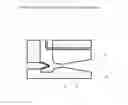
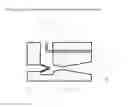
FIG. 1: Cross section of the Vacuum Powered Surface Cleaning Apparatus
DETAILED DESCRIPTION OF THE INVENTION
Referring now in detail to FIG. 1, numbered features are described as follows: 1 is a connection point for a compressed air supply. 2 is a nozzle which converts high static pressure air into low static pressure, high dynamic pressure air. 3 is the ejected air stream. 4 is the enclosed partial-vacuum chamber which may be integral as shown or may be a duct of any length and shape. 5 is the eductor throat which creates the chamber vacuum by entraining fluid from the chamber with the stream of lower static pressure air from the nozzle. 6 is the independent adjacent surface to be cleaned. 7 is the channel for introducing cleaning fluid. 8 is the zone of the surface being cleaned by the fluid and vacuum. 9 is the channel through which cleaning fluid is naturally drawn by the vacuum in the enclosed partial vacuum chamber. 10 is the downstream outlet where expended air, cleaning fluid and other debris are expelled to atmosphere or to a waste container or to a recycle container for cleaning fluid reuse.
The apparatus can be constructed with any size and external geometry to conform to the adjacent surface being cleaned, whether that adjacent surface is planar, curved or of an irregular shape.
The apparatus can function statically or dynamically relative to the adjacent surface being cleaned.
Items 2 and 5, as shown in FIG. 1, form an ‘eductor’ which is existing technology, well established in industry. However, the size and geometry of items 2 and 5, as shown in FIG. 1, must be properly proportioned to suit the overall requirements for vacuum level and flow rates of compressed air and cleaning fluid. That tuning is specific to each application, but could easily be performed using established principles of fluid dynamics.
The materials of construction of the apparatus are not restricted, provided that they are structurally sturdy enough to perform as intended, and compatible with the cleaning fluid and other matter flowing through the apparatus.
Claims
1. A vacuum powered surface cleaning apparatus comprising:
an enclosed partial vacuum chamber comprising:
a partially enclosed chamber; and
an adjacent surface; and
an eductor assembly comprising:
an air nozzle; and
an eductor throat; and
an eductor outlet;
a connecting duct which connects the eductor assembly to the enclosed partial vacuum chamber;
a compressed air supply;
a cleaning fluid supply comprising;
an external cleaning fluid source; and
a cleaning fluid flow channel;
wherein the compressed air supply passes through the air nozzle and is converted from high static pressure to low static pressure and high dynamic pressure, and the ejected low static pressure air stream enters the eductor throat inducing a low static pressure within the connecting duct and enclosed partial vacuum chamber which induces a flow of cleaning fluid from the cleaning fluid source and through the cleaning fluid flow channel and imparts the flow of cleaning fluid onto the adjacent surface to be cleaned, and expended cleaning fluid together with dislodged debris are expelled from the partial vacuum chamber through the connecting duct and through the eductor and through the eductor outlet.
2. The vacuum powered surface cleaning apparatus of claim 1, wherein the adjacent surface is of any shape including planar, contoured or irregular.
3. The vacuum powered surface cleaning apparatus of claim 1, wherein the removal of the adjacent surface causes the partial vacuum chamber to become open to atmosphere which ceases the induced flow of cleaning fluid from the cleaning fluid source and cleaning fluid channel.
Images & Drawings included:
Sources:
- United States Patent and Trademark Office - verify current appl. status at the USPTO↗
Recent applications in this class:
- » 20220151448 2022-05-19
Water management system - » 20200100635 2020-04-02
ROD-TYPE CLEANING COMPONENT AND DUST COLLECTOR WITH SAME - » 20170258284 2017-09-14
Portable liquid-recycling liquid-reusing cleaning system for hard surface flooring - » 20170119222 2017-05-04
Recycling cleaning device - » 20050217065 2005-10-06
Air recirculating surface cleaning device