Naphtha reforming process
US20170051212A1
2017-02-23
15/119,942
2015-02-26
✅ Patent granted
US 9,827,557 B2
2017-11-28
WO; PCT/IB2015/051424; 20150226
WO; WO2015/128824; 20150903
Randy Boyer
Fish IP Law, LLC
2035-02-26
Abstract:
The present disclosure relates to a naphtha reforming process for obtaining reformed naphtha comprising contacting naphtha with a catalyst, the catalyst comprising a chloride free zeolite coated alumina support impregnated with 0.01 wt % to 0.5 wt % active metal and 0.01 wt % to 0.5 wt % promoter metal, wherein the thickness of the zeolite coating on the alumina support ranges from 100 μm to 200 μm, which results in formation of reformed products of naphtha and ethylbenzene formed in-situ.
Inventors:
- Nagesh Sharma 16 🇮🇳 Vadodara, India
- Raksh Vir Jasra 38 🇮🇳 Vadodara, India
- Veera Venkata Satya Bhaskara Sita Rama Murthy Katravulapalli 6 🇮🇳 Hyderabad, India
- Ajay Kumar 7 🇮🇳 Vadodara, India
- Anilkumar Mettu 4 🇮🇳 Guntur, India
- Kalpana Gopalakrishna 3 🇮🇳 Akota Vadodara, India
Assignee:
- RELIANCE INDUSTRIES LIMITED 135 🇮🇳 Mumbai, India
Applicant:
Interested in similar patents?
Get notified when new applications in this technology area are published.
Classification:
C10G35/095 » CPC main
Reforming naphtha; Catalytic reforming characterised by the catalyst used containing crystalline alumino-silicates, e.g. molecular sieves
B01J29/076 » CPC further
Catalysts comprising molecular sieves having base-exchange properties, e.g. crystalline zeolites; Crystalline aluminosilicate zeolites; Isomorphous compounds thereof containing arsenic, antimony, bismuth, vanadium, niobium, tantalum, polonium, chromium, molybdenum, tungsten, manganese, technetium or rhenium
B01J35/023 » CPC further
Catalysts, in general, characterised by their form or physical properties; Solids Catalysts characterised by dimensions, e.g. grain size
B01J29/42 » CPC further
Catalysts comprising molecular sieves having base-exchange properties, e.g. crystalline zeolites; Crystalline aluminosilicate zeolites; Isomorphous compounds thereof of the pentasil type, e.g. types ZSM-5, ZSM-8 or ZSM-11, as exemplified by patent documents US3702886, GB1334243 and US3709979, respectively containing iron group metals, noble metals or copper
B01J29/7007 » CPC further
Catalysts comprising molecular sieves having base-exchange properties, e.g. crystalline zeolites; Crystalline aluminosilicate zeolites; Isomorphous compounds thereof of types characterised by their specific structure not provided for in groups - Zeolite Beta
B01J37/06 » CPC further
Processes, in general, for preparing catalysts; Processes, in general, for activation of catalysts Washing
B01J29/072 » CPC further
Catalysts comprising molecular sieves having base-exchange properties, e.g. crystalline zeolites; Crystalline aluminosilicate zeolites; Isomorphous compounds thereof containing iron group metals, noble metals or copper Iron group metals or copper
B01J37/02 IPC
Processes, in general, for preparing catalysts; Processes, in general, for activation of catalysts Impregnation, coating or precipitation
B01J29/08 IPC
Catalysts comprising molecular sieves having base-exchange properties, e.g. crystalline zeolites; Crystalline aluminosilicate zeolites; Isomorphous compounds thereof of the faujasite type, e.g. type X or Y
B01J29/084 » CPC further
Catalysts comprising molecular sieves having base-exchange properties, e.g. crystalline zeolites; Crystalline aluminosilicate zeolites; Isomorphous compounds thereof of the faujasite type, e.g. type X or Y Y-type faujasite
B01J29/70 IPC
Catalysts comprising molecular sieves having base-exchange properties, e.g. crystalline zeolites; Crystalline aluminosilicate zeolites; Isomorphous compounds thereof of types characterised by their specific structure not provided for in groups -
B01J37/08 » CPC further
Processes, in general, for preparing catalysts; Processes, in general, for activation of catalysts Heat treatment
C10G35/09 » CPC further
Reforming naphtha; Catalytic reforming characterised by the catalyst used containing platinum group metals or compounds thereof Bimetallic catalysts in which at least one of the metals is a platinum group metal
B01J29/40 » CPC further
Catalysts comprising molecular sieves having base-exchange properties, e.g. crystalline zeolites; Crystalline aluminosilicate zeolites; Isomorphous compounds thereof of the pentasil type, e.g. types ZSM-5, ZSM-8 or ZSM-11, as exemplified by patent documents US3702886, GB1334243 and US3709979, respectively
B01J29/7038 » CPC further
Catalysts comprising molecular sieves having base-exchange properties, e.g. crystalline zeolites; Crystalline aluminosilicate zeolites; Isomorphous compounds thereof of types characterised by their specific structure not provided for in groups - MWW-type, e.g. MCM-22, ERB-1, ITQ-1, PSH-3 or SSZ-25
B01J37/0236 » CPC further
Processes, in general, for preparing catalysts; Processes, in general, for activation of catalysts; Impregnation, coating or precipitation Drying, e.g. preparing a suspension, adding a soluble salt and drying
B01J37/0242 » CPC further
Processes, in general, for preparing catalysts; Processes, in general, for activation of catalysts; Impregnation, coating or precipitation; Multiple impregnation or coating Coating followed by impregnation
B01J37/0246 » CPC further
Processes, in general, for preparing catalysts; Processes, in general, for activation of catalysts; Impregnation, coating or precipitation; Multiple impregnation or coating Coatings comprising a zeolite
B01J29/18 » CPC further
Catalysts comprising molecular sieves having base-exchange properties, e.g. crystalline zeolites; Crystalline aluminosilicate zeolites; Isomorphous compounds thereof of the mordenite type
B01J2229/186 » CPC further
Aspects of molecular sieve catalysts not covered by; After treatment, characterised by the effect to be obtained to introduce other elements into or onto the molecular sieve itself not in framework positions
C10G35/06 IPC
Reforming naphtha; Catalytic reforming characterised by the catalyst used
B01J29/068 » CPC main
Catalysts comprising molecular sieves having base-exchange properties, e.g. crystalline zeolites; Crystalline aluminosilicate zeolites; Isomorphous compounds thereof containing iron group metals, noble metals or copper Noble metals
B01J29/44 » CPC further
Catalysts comprising molecular sieves having base-exchange properties, e.g. crystalline zeolites; Crystalline aluminosilicate zeolites; Isomorphous compounds thereof of the pentasil type, e.g. types ZSM-5, ZSM-8 or ZSM-11, as exemplified by patent documents US3702886, GB1334243 and US3709979, respectively containing iron group metals, noble metals or copper Noble metals
B01J35/02 IPC
Catalysts, in general, characterised by their form or physical properties Solids
B01J29/48 » CPC further
Catalysts comprising molecular sieves having base-exchange properties, e.g. crystalline zeolites; Crystalline aluminosilicate zeolites; Isomorphous compounds thereof of the pentasil type, e.g. types ZSM-5, ZSM-8 or ZSM-11, as exemplified by patent documents US3702886, GB1334243 and US3709979, respectively containing arsenic, antimony, bismuth, vanadium, niobium tantalum, polonium, chromium, molybdenum, tungsten, manganese, technetium or rhenium
B01J29/7034 » CPC further
Catalysts comprising molecular sieves having base-exchange properties, e.g. crystalline zeolites; Crystalline aluminosilicate zeolites; Isomorphous compounds thereof of types characterised by their specific structure not provided for in groups - MTW-type, e.g. ZSM-12, NU-13, TPZ-12 or Theta-3
Description
FIELD OF THE DISCLOSURE
The present disclosure relates to a naphtha reforming process.
DEFINITIONS
An active metal is a Group VIII metal of the modern periodic table. The Group VIII metals are platinum (Pt), palladium (Pd) and nickel (Ni),
A promoter metal is a Group IV metal of the modern periodic table. The Group IV metals are tin (Sn), rhenium (Re) and iridium (Ir).
ZSM-5 is an aluminosilicate zeolite belonging to the pentasil family of zeolites and its chemical formula is NanAlnSi96-nO192.16H2O (0<n<27).
Mordenite is a zeolite mineral with the chemical formula Al2Si10O24.7H2O.
Ultra-stable Y (USY) zeolite is a form of type Y zeolite with the majority of sodium ions removed and treated thermally to enhance its thermal and steam stability.
H-beta zeolite is a high-silica content zeolite having full three dimensional 12-ring pore system.
MCM-22 is a type of zeolite having unique phase and good crystallinity.
ZSM-12 is a type of pentasil zeolite having silica to alumina ratio above 33.
Liquid Hourly Space Velocity (LHSV) is a volumetric flow-rate of the reactants divided by the catalyst bed volume (or the reactor volume).
BACKGROUND
Catalytic naphtha reforming is an important industrial process. During the naphtha reforming process, mainly low-octane straight chain alkanes (paraffins), with 6-10 carbon atoms, are reformed into molecules having branched alkanes (isoparaffins) and cyclic naphthenes, which are then partially dehydrogenated to produce high-octane aromatic hydrocarbons such as benzene, toluene and xylenes (BTX) in the reformate. The naphtha feedstock used for catalytic reforming contains naphthenic hydrocarbons, paraffinic hydrocarbons and aromatic hydrocarbons of different carbon numbers. The major reactions in naphtha reforming process include dehydrogenation of naphthenes, dehydrocyclization of paraffins, isomerization of paraffins and hydrocracking. The chemical reactions in reforming process occur in presence of a catalyst and a high partial pressure of hydrogen. In a typical reforming process, naphtha is processed over conventional acidic reforming catalysts which results in undesired products.
In the catalytic naphtha reforming process, the C8 aromatic isomers formed i.e., ethyl benzene (EB), para-xylenes (p-X), meta-xylenes (m-X), and ortho-xylenes (o-X) appear in thermodynamic equilibrium in the product. Conventionally, the ethyl benzene formed in the reforming reactor takes an idle ride in the post reforming downstream p-xylene recovery unit, thus occupying unit capacity and leading to undesired operating cost.
There is, therefore, a need for a naphtha reforming process. Further, there is a need to improve the yield of benzene (C6) and toluene (C7) during the naphtha reforming process. Furthermore, there is a need to reduce the undesired operating cost of the p-xylene recovery unit.
OBJECTS
Some of the objects of the present disclosure, which at least one embodiment herein satisfies, are as follows:
It is an object of the present disclosure to provide a naphtha reforming process.
It is another object of the present disclosure to improve the yield of benzene and toluene during the naphtha reforming process.
It is yet another object of the present disclosure to reduce the undesired operating cost of a p-xylene recovery unit.
It is still another object of the present disclosure to ameliorate one or more problems associated with the conventional catalyst or at least provide a useful alternative.
Other objects and advantages of the present disclosure will be more apparent from the following description which is not intended to limit the scope of the present disclosure.
SUMMARY
The present disclosure provides a naphtha reforming process for obtaining reformed naphtha comprising contacting naphtha with a catalyst, the catalyst comprising a chloride free zeolite coated alumina support impregnated with 0.01 wt % to 0.5 wt % active metal and 0.01 wt % to 0.5 wt % promoter metal, wherein the thickness of the zeolite coating on the alumina support ranges from 100 μm to 200 μm, which results in formation of reformed products of naphtha and ethylbenzene formed in-situ.
In accordance with the present disclosure, the in-situ ethylbenzene is dealkylated into benzene (C6) and/or toluene (C7).
The ethylbenzene formed in the reformed products is in the range of 3.6 wt % to 4.75 wt %.
The ethyl benzene formed in the reformed product is in the range of 4.68 wt % to 4.75 wt % of the mass of the reformed products.
The zeolite is at least one selected from a group consisting of ZSM-5, mordenite, USY, H-Beta, MCM-22, and ZSM-12.
BRIEF DESCRIPTION OF THE ACCOMPANYING DRAWINGS
The disclosure will now be described with reference to the accompanying non-limiting drawings:
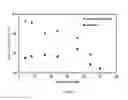
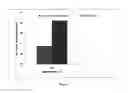
FIG. 1 illustrates the graph depicting the yield of ethyl benzene (wt %) obtained by reforming of naphtha in presence of the conventional catalyst and a catalyst in accordance with the present disclosure;
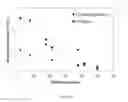
FIG. 2 illustrates the graph depicting the ratio of ethyl benzene (wt %) to p-xylene obtained by reforming of naphtha in presence of the conventional catalyst and the catalyst in accordance with the present disclosure;
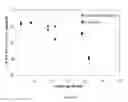
FIG. 3 illustrates the graph depicting the yield of benzene (wt %) obtained by reforming of naphtha in presence of the conventional catalyst and a catalyst in accordance with the present disclosure;
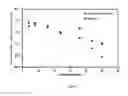
FIG. 4 illustrates the graph depicting the yield of toluene (wt %) obtained by reforming of naphtha in presence of the conventional catalyst and a catalyst in accordance with the present disclosure;
FIG. 5 illustrates the graph depicting the yield of C8 aromatic hydrocarbon (wt %) obtained by reforming of naphtha in presence of the conventional catalyst and a catalyst in accordance with the present disclosure;
FIG. 6 illustrates the graph depicting the yield of total aromatics (wt %) obtained by reforming of naphtha in presence of the conventional catalyst and a catalyst in accordance with the present disclosure; and
FIG. 7 illustrates the graph depicting the yield of C5+ aromatic hydrocarbons (wt %) obtained by reforming of naphtha in presence of the conventional catalyst and a catalyst in accordance with the present disclosure.
DETAILED DESCRIPTION
The present disclosure provides a naphtha reforming process for obtaining reformed naphtha comprising contacting naphtha with a catalyst, the catalyst comprising a chloride free zeolite coated alumina support impregnated with 0.01 wt % to 0.5 wt % active metal and 0.01 wt % to 0.5 wt % promoter metal, wherein the thickness of the zeolite coating on the alumina support ranges from 100 μm to 200 μm, which results in formation of reformed products of naphtha and ethylbenzene formed in-situ.
In accordance with the present disclosure, the in-situ ethylbenzene is dealkylated into benzene (C6) and/or toluene (C7).
The ethylbenzene formed in the reformed products is in the range of 3.6 wt % to 4.75 wt %.
The ethyl benzene formed in the reformed product is in the range of 4.68 wt % to 4.75 wt % of the mass of the reformed products.
Examples of the zeolite include ZSM-5, mordenite, USY, H-Beta, MCM-22, and ZSM-12.
In accordance with one embodiment, the zeolite is ZSM-5 comprising SiO2 and Al2O3.
In accordance with the present disclosure, the ratio of SiO2 to Al2O3 in the ZSM-5 catalyst ranges from 10:1 to 20:1.
In accordance with another embodiment, the ratio of SiO2 to Al2O3 in the ZSM-5 catalyst is 15:1.
Examples of the active metals include platinum (Pt), palladium (Pd) and nickel (Ni).
In accordance with one embodiment, the active metal is platinum (Pt).
Examples of the promoter metals include tin (Sn), rhenium (Re) and Iridium (Ir).
In accordance with one embodiment, the promoter metal is tin (Sn).
In accordance with the present disclosure, the reforming reaction during the naphtha reforming process is at least one selected from the group consisting of dehydrogenation of naphthenes, dehydrocyclization of paraffins, isomerization of paraffins, and hydrocracking of paraffins.
In accordance with an exemplary embodiment, the desirable reforming reactions during naphtha reforming process are dehydrogenation of naphthenes, isomerization of paraffins, and dehydrocyclization of paraffins.
The yield of ethylbenzene (wt %) obtained in presence of the catalyst of the present disclosure reduces by 10% as compared to that obtained in presence of the conventional catalyst. Further, ethylbenzene formed during the reforming process is dealkylated to obtain benzene (C6) and/or toluene (C7). This results in reduction of energy/operating cost of the downstream p-xylene recovery unit/s.
The present disclosure is further illustrated herein below with the help of the following examples. The examples used herein are intended merely to facilitate an understanding of the ways in which the embodiments herein may be practiced and to further enable those of skilled in the art to practice the embodiments herein. Accordingly, the examples should not be construed as limiting the scope of the embodiments herein.
The reformed naphtha (products) obtained by the reforming process carried out at a pressure of 7.3 kg/cm2, LHSV of 1.95 h−1, hydrogen to hydrocarbon molar ratio of 4 and at a temperature range between 500° C. and 600° C. The yields of the reformed products obtained from the reforming process are illustrated in the following Table 1. Further, the deposition of coke (%) on the conventional catalyst during the naphtha reforming process is greater than the catalyst of the present disclosure which is depicted in Table 2.
| TABLE 1 |
| illustrates the yields of the reformed naphtha (products) obtained |
| by the reforming process carried out in presence of the conventional |
| catalyst and the catalyst of the present disclosure. |
| Catalyst of the present | ||
| Conventional catalyst | disclosure (Catalyst-A) |
| Time (hours) |
| 7 | 17 | 30 | 7 | 17 | 30 |
| Bed Temperature (° C.) |
| Products | 521 | 521 | 521 | 521 | 521 | 521 |
| H2 | 2.11 | 2.11 | 2.11 | 1.85 | 1.85 | 1.85 |
| C1 | 1.11 | 1.11 | 1.11 | 0.68 | 0.68 | 0.68 |
| C2 | 2.10 | 2.10 | 2.10 | 1.00 | 1.00 | 1.00 |
| C3 | 3.71 | 3.71 | 3.71 | 3.20 | 3.20 | 3.20 |
| iC4 | 1.93 | 1.93 | 1.93 | 2.14 | 2.14 | 2.14 |
| nC4 | 2.29 | 2.29 | 2.29 | 1.93 | 1.93 | 1.93 |
| Total gas yield | 13.25 | 13.25 | 13.25 | 10.80 | 10.80 | 10.80 |
| C6 | 1.30 | 1.34 | 1.15 | 1.60 | 1.30 | 1.18 |
| C7 | 16.65 | 16.29 | 15.21 | 17.31 | 16.37 | 15.73 |
| Ethylbenzene | 5.13 | 5.02 | 4.65 | 4.75 | 4.77 | 4.66 |
| (EB) | ||||||
| p-xylene (PX) | 6.10 | 6.15 | 5.58 | 6.17 | 5.93 | 5.65 |
| m- xylene | 13.56 | 13.64 | 12.76 | 13.64 | 13.11 | 12.46 |
| (MX) | ||||||
| o- xylene (OX) | 7.36 | 7.12 | 6.41 | 7.64 | 7.34 | 6.88 |
| C8 | 32.14 | 31.93 | 29.39 | 32.20 | 31.15 | 29.65 |
| C9 | 19.58 | 19.60 | 17.62 | 19.89 | 19.72 | 19.03 |
| C10 | 4.55 | 4.64 | 4.22 | 4.40 | 4.70 | 4.67 |
| C11+ | 1.30 | 0.00 | 0.00 | 1.07 | 0.88 | 0.79 |
| Total aromatic | 75.52 | 73.80 | 67.58 | 76.47 | 74.12 | 71.05 |
| C5+ | 86.75 | 86.75 | 86.75 | 89.20 | 89.20 | 89.20 |
| EB/PX | 0.840 | 0.817 | 0.833 | 0.770 | 0.804 | 0.825 |
The comparative analysis of the yields is further described in detail in the following examples:
Example 1
Yield of Ethylbenzene (EB)
Table 1 shows that the yield of ethylbenzene obtained in presence of the catalyst of the present disclosure is 4.73 wt % which is less than the yield of ethylbenzene (5.13 wt %) obtained in presence of the conventional catalyst. It is observed that the yield of ethylbenzene obtained in presence of the catalyst is reduced approximately by 10% as compared to that obtained in presence of the conventional catalyst.
Further, same can be shown by FIG. 1 which illustrates the graph depicting the yield of ethyl benzene (wt %) obtained by reforming of naphtha in presence of the conventional catalyst and a catalyst in accordance with the present disclosure. FIG. 1 shows that the yield of ethylbenzene in presence of the catalyst of the present disclosure is decreased as compared to that obtained in presence of the conventional catalyst.
Example 2
Ethylbenzene (EB) to p-Xylene (PX) Ratio
Table 1 shows that the ratio of ethylbenzene to p-xylene obtained in presence of the catalyst of the present disclosure is 0.770 which is less than the ratio (0.840) of ethylbenzene to p-xylene obtained in presence of the conventional catalyst.
Further, same can be shown by FIG. 2 which illustrates the graph depicting the ratio of ethyl benzene (wt %) to p-xylene obtained by reforming of naphtha in presence of the conventional catalyst and the catalyst in accordance with the present disclosure.
FIG. 2 shows that the ratio of ethyl benzene (wt %) to p-xylene obtained in presence of the catalyst of the present disclosure is decreased as compared to that obtained in presence of the conventional catalyst.
Example 3
Yield of Benzene (C6)
Table 1 shows that the yield of benzene obtained in presence of the catalyst of the present disclosure is 1.60 wt % which is greater than the yield of benzene (1.30 wt %) obtained in presence of the conventional catalyst.
Further, same can be shown by FIG. 3 which illustrates the graph depicting the yield of benzene (wt %) obtained by reforming of naphtha in presence of the conventional catalyst and a catalyst in accordance with the present disclosure.
FIG. 3 shows that the yield of benzene (wt %) obtained in presence of the catalyst of the present disclosure is increased as compared to that obtained in presence of the conventional catalyst.
Example 4
Yield of Toluene (wt %)
Table 1 shows that the yield of toluene obtained in presence of the catalyst of the present disclosure is 17.31 wt % which is greater than the yield of toluene (16.65 wt %) obtained in presence of the conventional catalyst.
Further, same can be shown by FIG. 4 which illustrates the graph depicting the yield of toluene (wt %) obtained by reforming of naphtha in presence of the conventional catalyst and a catalyst in accordance with the present disclosure.
FIG. 4 shows that the yield of toluene (wt %) obtained in presence of the catalyst of the present disclosure is increased as compared to that obtained in presence of the conventional catalyst.
Example 5
Yield of C8 Aromatic Hydrocarbon (wt %)
Table 1 shows that the yield of C8 aromatic hydrocarbons obtained in presence of the catalyst of the present disclosure is 32.20 wt % which is equivalent or marginally greater than the yield of C8 aromatic hydrocarbon (32.14 wt %) obtained in presence of the conventional catalyst.
Further, same can be shown by FIG. 5 which illustrates the graph depicting the yield of C8 hydrocarbons (wt %) obtained by reforming of naphtha in presence of the conventional catalyst and a catalyst in accordance with the present disclosure.
FIG. 5 shows that the yield of C8 aromatic hydrocarbon (wt %) obtained in presence of the catalyst of the present disclosure is equivalent or marginally greater as compared to that obtained in presence of the conventional catalyst.
Example 6
Total Aromatics Yield (wt %)
Table 1 shows that the yield of total aromatics obtained in presence of the catalyst of the present disclosure is 76.47 wt % which is equivalent or marginally greater than the yield of total aromatics (75.50 wt %) obtained in presence of the conventional catalyst.
Further, same can be shown by FIG. 6 which illustrates the graph depicting the yield of total aromatics (wt %) obtained by reforming of naphtha in presence of the conventional catalyst and a catalyst in accordance with the present disclosure.
FIG. 6 shows that the yield of total aromatics (wt %) obtained in presence of the catalyst of the present disclosure is equivalent or marginally greater as compared to that obtained in presence of the conventional catalyst.
Example 6
Yield of C5+ Aromatic Hydrocarbons (wt %)
Table 1 shows that the yield of C5+ aromatic hydrocarbons obtained in presence of the catalyst of the present disclosure is 89.20 wt % which is greater than the yield of C5+ aromatic hydrocarbons (86.75 wt %) obtained in presence of the conventional catalyst.
Further, same can be shown by FIG. 7 which illustrates the graph depicting the yield of C5+ aromatic hydrocarbons (wt %) obtained by reforming of naphtha in presence of the conventional catalyst and a catalyst in accordance with the present disclosure.
FIG. 7 shows that the yield of C5+ aromatic hydrocarbons (wt %) obtained in presence of the catalyst of the present disclosure is greater as compared to that obtained in presence of the conventional catalyst.
| TABLE 2 |
| illustrates the deposition of coke (%) per Kg of feed processed on the |
| conventional catalyst and the catalyst of the present disclosure. |
| Sample | % coke per Kg of feed processed |
| Conventional catalyst | 6.1 |
| Catalyst of the present disclosure | 5.7 |
Table 2 indicates that due to less deposition of coke on the catalyst of the present disclosure, deactivation of the catalyst is slow and the catalytic activity of the catalyst is improved.
It is observed from the above description that the reforming process carried out in presence of the catalyst of the present disclosure overcomes the drawbacks associated with the reforming process carried out in presence of the conventional catalyst.
TECHNICAL ADVANCEMENT
The present disclosure relates to the naphtha reforming process. The process has several technical advancements:
-
- the yield of benzene (C6) and toluene (C7) is improved;
- the yield of ethyl benzene is reduced; and
- the energy/operating cost of the p-xylene recovery unit is reduced due to reduction in the yield of ethyl benzene during the naphtha reforming process.
Throughout this specification the word “comprise”, or variations such as “comprises” or “comprising”, will be understood to imply the inclusion of a stated element, integer or step, or group of elements, integers or steps, but not the exclusion of any other element, integer or step, or group of elements, integers or steps.
The use of the expression “at least” or “at least one” suggests the use of one or more elements or ingredients or quantities, as the use may be in the embodiment of the invention to achieve one or more of the desired objects or results. While certain embodiments of the inventions have been described, these embodiments have been presented by way of example only, and are not intended to limit the scope of the inventions. Variations or modifications to the formulation of this invention, within the scope of the invention, may occur to those skilled in the art upon reviewing the disclosure herein. Such variations or modifications are well within the spirit of this invention.
The numerical values given for various physical parameters, dimensions and quantities are only approximate values and it is envisaged that the values higher than the numerical value assigned to the physical parameters, dimensions and quantities fall within the scope of the invention unless there is a statement in the specification to the contrary.
Claims
1. A naphtha reforming process for obtaining reformed naphtha comprising contacting naphtha with a catalyst, said catalyst comprising a chloride free zeolite coated alumina support impregnated with 0.01 wt % to 0.5 wt % active metal and 0.01 wt % to 0.5 wt % promoter metal, wherein the thickness of the zeolite coating on the alumina support ranges from 100 μm to 200 μm, which results in formation of reformed products of naphtha and ethylbenzene formed in-situ.
2. The naphtha reforming process as claimed in claim 1, wherein said in-situ ethylbenzene is dealkylated into benzene (C6) and/or toluene (C7).
3. The naphtha reforming process as claimed in claim 1, wherein the ethylbenzene formed in the reformed products is in the range of 3.6 wt % to 4.75 wt % of the mass of the reformed products.
4. The naphtha reforming process as claimed in claim 1, wherein the ethylbenzene formed in the reformed products is in the range of 4.68% to 4.75% of the mass of the reformed products
Images & Drawings included:


Sources:
- United States Patent and Trademark Office - verify current appl. status at the USPTO↗
Similar patent applications:
- » 20050011810
Catalytic naphtha reforming process - » 20170072389
Catalyst For A Naphtha Reforming Process - » 10216155
Bismuth- and phosphorus-containing reforming catalysts, method of making and naphtha reforming process - » 20180010058
Apparatus and method for investigating naphtha reforming processes - » 20050121364
Bismuth- and phosphorus-containing reforming catalysts, method of making and naphtha reforming process - » 20190062649
Selective naphtha reforming processes - » 20080131338
Catalytic naphtha reforming process - » 20130020233
Processes for catalytically reforming naphtha - » 20170144138
Naphtha reforming catalyst and processes thereof - » 20190062652
Processes for selective naphtha reforming
Recent applications in this class:
- » 20250250491 2025-08-07
USE OF HIGH HALIDE-CONTAINING CATALYST IN FRONT REACTORS TO EXTEND THE LIFE AND SELECTIVITY OF REFORMING CATALYST - » 20230407189 2023-12-21
Use of high halide-containing catalyst in front reactors to extend the life and selectivity of reforming catalyst - » 20230235236 2023-07-27
METHOD FOR PRODUCING HIGH-OCTANE MOTOR GASOLINES OF LOW-OCTANE HYDROCARBON FRACTIONS, FRACTIONS OF GASEOUS OLEFINS AND OXYGENATES AND A PLANT FOR THE METHOD EMBODIMENT - » 20220025276 2022-01-27
Processing of paraffinic naphtha with modified USY zeolite dehydrogenation catalyst - » 20210115342 2021-04-22
Processes for producing high octane reformate having high Cyield - » 20200291304 2020-09-17
Method for producing high-octane motor gasolines of low-octane hydrocarbon fractions, fractions of gaseous olefins and oxygenates and a plant for the method embodiment - » 20170114288 2017-04-27
Catalyst composition for converting light naphtha to aromatic compounds and a process thereof - » 20150284643 2015-10-08
Single step catalytic process for the conversion of n-paraffins and naphtha to diesel range hydrocarbons - » 20150275104 2015-10-01
System and method for on stream catalyst replacement - » 20120298555 2012-11-29
Magnetic removal of material from a mixture based on sulfided diluent in the mixture
Recent applications for this Assignee:
- » 20250066674 2025-02-27
A PROCESS FOR THE PRODUCTION OF NEEDLE COKE - » 20250066542 2025-02-27
A BIODEGRADABLE POLYMER AND A PROCESS FOR ITS PREPARATION - » 20240270882 2024-08-15
A PROCESS FOR PREPARATION OF DISENTANGLED ULTRA-HIGH MOLECULAR WEIGHT ISOTACTIC POLYPROPYLENE - » 20240060033 2024-02-22
System, and a method for Algal Cultivation - » 20230235102 2023-07-27
A ZIEGLER-NATTA CATALYST SYSTEM AND A PROCESS OF POLYMERISATION THEREFROM - » 20230227610 2023-07-20
A PROCESS FOR THE PREPARATION OF AN ORGANO-POLYSULFIDE - » 20220379288 2022-12-01
AN FCC CATALYST COMPOSITION AND A PROCESS FOR ITS PREPARATION - » 20220340692 2022-10-27
Catalyst composition and a process for preparation thereof - » 20220339608 2022-10-27
Catalyst system and method for its preparation - » 20220333017 2022-10-20
FCC catalyst composition and a process for its preparation