Method and device of dynamically configuring linear density and blending ratio of yarn by four-ingredient asynchronous/synchronous drafted
US20170051439A1
2017-02-23
15/306,762
2015-07-27
✅ Patent granted
US 10,351,975 B2
2019-07-16
WO; PCT/CN2015/085214; 20150727
WO; WO2016/155163; 20161006
Shaun R Hurley
Gokalp Bayramoglu
2036-03-02
Abstract:
The invention discloses a method and device of dynamically configuring linear density and blending ratio of yarn by four-ingredient asynchronous/synchronous drafted, comprising: a drafting and twisting system, which includes a first stage drafting unit, a successive second stage drafting unit and an integrating and twisting unit. The first stage drafting unit includes a combination of back rollers and a middle roller. The second stage drafting unit includes a front roller and the middle roller. Blending proportion and linear densities of the four ingredients are dynamically adjusted by the first stage asynchronous drafting mechanism, and reference linear density is adjusted by the second stage synchronous drafting mechanism. The invention can not only accurately control a linear density change, but also accurately control color change of the yarn. Further, rotation rate of the middle roller is constant, ensuring a reproducibility of patterns and colors of the yarn with changing linear density.
Inventors:
- Weidong Gao 8 🇨🇳 Wuxi, China
- Yuan XUE 4 🇨🇳 Wuxi, China
- Mingrui GUO 4 🇨🇳 Wuxi, China
- Jian ZHOU 4 🇨🇳 Wuxi, China
- Ruihua YANG 4 🇨🇳 Wuxi, China
- Hongbo WANG WANG 1 🇨🇳 Wuxi, China
- Hongbo WANG 6 🇨🇳 Wuxi, China
Assignee:
- JIANGNAN UNIVERSITY 433 🇨🇳 Wuxi, China
Applicant:
Interested in similar patents?
Get notified when new applications in this technology area are published.
Classification:
D01H5/74 » CPC further
Drafting machines or arrangements ; Threading of roving into drafting machine; Drafting machines or arrangements without fallers or like pinned bars; Constructional features of drafting elements Rollers or roller bearings
D01H5/36 » CPC main
Drafting machines or arrangements ; Threading of roving into drafting machine; Drafting machines or arrangements without fallers or like pinned bars; Regulating or varying draft according to a pre-arranged pattern, e.g. to produce slubs
Description
CROSS REFERENCE TO RELATED APPLICATIONS
This application is a national phase entry application of International Application No. PCT/CN2015/085214, filed on Jul. 27, 2015, which is based upon and claims priority to NO. CN201510142129.0, filed on Mar. 27, 2015, claims another priority to NO. CN201510141818.X, filed on Mar. 27, 2015, and claims a third priority to NO. CN201510141427.8, tiled on Mar. 27, 2015, the entire contents of which are incorporated herein by reference.
TECHNICAL FIELD
The invention relates to a ring spinning filed of a textile industry, and particularly relates to a method and device of dynamically configuring linear density and blending ratio of yarn by four-ingredient asynchronous drafted.
BACKGROUND
Yarn is a long and thin fiber assembly formed by orienting in parallel and twisting of fiber. The characteristic parameters generally include fineness (linear density), twist, blending ratio (color blending ratio), etc. The characteristic parameters are important features which should be controlled during a forming process.
The yarn can be divided into four categories:
(1) yarn with a constant linear density and a variable blending ratio, such as a color yarn of constant liner density, with a gradient or segmented color;
(2) yarn with a constant blending ratio and variable linear density, such as a slub yarn, a big-belly yarn, a dot yarn, etc.;
(3) yarn with a variable linear density and blending ratio, such as segmented a color slab yarn, a segmented color big-belly yarn, a segmented color dot yarn, etc.;
(4) blended yarn or mixed color yarn mixed at any rate, with a constant linear density and blending ratio.
The development of yarn processing technology mainly relates to the problems of special yarns. The existing spinning technology and the patent applications fail to fide the spinning production of the above four types of yarns, challenging the existing spinning theories. Specifically, it is analyzed as follows:
(1) yarn with a constant linear density and a variable blending ratio (color blending ratio)
The yarn with a constant linear density and a variable blending ratio (color blending ratio) can be assumed as a color yarn of constant liner density, with a gradient or segmented color. No existing patent application is related to this type of yarn.
(2) yarn with a constant blending ratio and variable linear density
The yarn with a constant blending ratio and variable linear density, can be such as a slub yarn, a big-belly yarn, a dot yarn, etc. The existing method of manufacturing the ring spun yarn with a variable linear density comprises feeding one roving yarn each to the middle roller and back roller, and discontinuously spinning to manufacture the yarns with variable linear density by uneven feeding from the back roller. For example, a patent entitled “a discontinuous spinning process and yarns thereof” (ZL01126398.9), comprising: feeding an auxiliary fiber strand B from the back roller; unevenly drafting it via the middle roller and back roller; integrating with another main fiber strand A fed from the middle roller, and entering into the drafting area; drafting them by the front roller and middle roller, and outputting from the jaw of the front roller; entering into the twisting area to be twisted and form yarns. Because the auxiliary fiber strand is fed from the back roller intermittently and integrates with the main fiber strand, under the influence of the front area main drafting ratio, the main fiber strand is evenly drafted to a certain linear density, and the auxiliary fiber strand is attached to the main fiber strand to form a discontinuous and uneven linear density distribution. By controlling the fluctuation quantity of the uneven feeding from the back roller, different effects such as a dot yarn, a slut) yarn, a big-belly yarn, etc. are obtained finally on the yarn. The deficiencies of this method are that the main and auxiliary fiber strands cannot be exchanged and a range of slub thickness is limited.
(3) yarn with a variable linear density and blending ratio
No existing patent application relates to this type of yarn.
(4) blended yarn or mixed color yarn mixed at any rate, with a constant linear density and blending ratio
The blended yarn or mixed color yarn mixed at any rate, with a constant linear density and blending ratio, are disclosed. The current method comprises blending two or more than two different ingredients to obtain a roving yarn at a certain blending ratio, by fore-spinning process, then spinning the roving yarn to form a spun yarn by spinning process to obtain a yarn with a constant linear density and a blending ratio. Usually spinning processes can only achieve several conventional proportions, such as 50:50, 65:35, 60:40. The deficiencies are that they cannot be blended at any rate and two or more than two fibers cannot be blended at any rate in a single step.
SUMMARY OF THE INVENTION
To solve the above problems, the objective of this invention is to disclose a process of providing four-ingredient asynchronous/synchronous two-stage drafting fiber strands, and then integrating and twisting to form a yarn. The linear density and blending ratio of a ring spun yarn can be adjusted arbitrarily. The invention can adjust the linear density and blending ratio of the yarn at the same time to produce the above four types of yarns, overcoming the limitation of being unable to adjust characteristic parameters of a yarn on line.
To achieve the above objectives, the invention discloses a method of dynamically configuring linear density and blending ratio of yarn by four-ingredient asynchronous/synchronous drafting, comprising:
-
- 1) An actuating mechanism mainly includes a four-ingredient asynchronous/synchronous two-stage drafting mechanism, a twisting mechanism and a winding mechanism. The four-ingredient asynchronous/synchronous two-stage drafting mechanism includes a first stage asynchronous drafting unit and a successive second stage synchronous drafting unit;
- 2) The first stage asynchronous drafting unit includes as combination of back rollers and a middle roller. The combination of back rollers has four rotational degrees of freedom and includes a first back roller, a second back roller, a third back roller and a fourth back roller, which are set abreast on as same back roller shaft. The first back roller, the second back roller, the third back roller and the fourth back roller move at the speeds Vh1,Vh2,Vh3, Vh4 respectively. The middle roller rotates at the speed Vz. The second stage synchronous drafting unit includes a front roller and the middle roller. The front roller rotates at the surface linear speed Vq.
Assuming the linear densities of a first roving yarn ingredient, a second roving yarn ingredient, a third roving yarn ingredient, a fourth roving yarn ingredient drafted by the first back roller, the second back roller, the third back roller and the fourth back roller are respectively ρ1, ρ2, ρ3, ρ4, the linear density of the yarn Y drafted and twisted by the front roller is ρy.
ρ y = 1 V q ( V h 1 * ρ 1 + V h 2 * ρ 2 + V h 3 * ρ 3 + V h 4 * ρ 4 ) ( 1 )
The blending ratios of the first roving yarn ingredient, the second roving yarn ingredient, the third roving yarn ingredient, the fourth roving yarn ingredient are respectively k1, k2, k3, k4.
k 1 = ρ 1 ″ ρ 1 ″ + ρ 2 ″ + ρ 3 ″ + ρ 4 ″ = ρ 1 ′ ρ 1 ′ + ρ 2 ′ + ρ 3 ′ + ρ 4 ′ = ρ 1 * V h 1 ρ 1 * V h 1 + ρ 2 * V h 2 + ρ 3 * V h 3 ++ ρ 4 * V h 4 k 2 = ρ 2 ″ ρ 1 ″ + ρ 2 ″ + ρ 3 ″ + ρ 4 ″ = ρ 2 ′ ρ 1 ′ + ρ 2 ′ + ρ 3 ′ + ρ 4 ′ = ρ 2 * V h 2 ρ 1 * V h 1 + ρ 2 * V h 2 + ρ 3 * V h 3 ++ ρ 4 * V h 4 k 3 = ρ 3 ″ ρ 1 ″ + ρ 2 ″ + ρ 3 ″ + ρ 4 ″ = ρ 3 ′ ρ 1 ′ + ρ 2 ′ + ρ 3 ′ + ρ 4 ′ = ρ 3 * V h 3 ρ 1 * V h 1 + ρ 2 * V h 2 + ρ 3 * V h 3 ++ ρ 4 * V h 4 k 4 = ρ 4 ″ ρ 1 ″ + ρ 2 ″ + ρ 3 ″ + ρ 4 ″ = ρ 4 ′ ρ 1 ′ + ρ 2 ′ + ρ 3 ′ + ρ 4 ′ = ρ 1 * V h 1 ρ 1 * V h 1 + ρ 2 * V h 2 + ρ 3 * V h 3 ++ ρ 4 * V h 4
3) Keeping the ratio of linear speeds of the front roller and the middle roller Vq/Vz constant, the speeds of the front roller and the middle roller depend on reference linear density of the yarn;
4) The linear density of yarn Y or/and blending ratio can be dynamically adjusted on line, by adjusting the rotation rates of the first back roller, the second back roller, the third back roller and the fourth back roller.
Further, according to the changes of the blending ratio K of the yarn Y with time t, and the changes of the linear density ρy of the yarn Y with the time t, the changes of the surface linear speeds of the first back roller, the second back roller, the third back roller and the fourth back roller are derived. The blending ratios of the first roving yarn ingredient, the second roving yarn ingredient, the third roving yarn ingredient, the fourth roving yarn ingredient are set respectively as k1, k2, k3, k4. The ratios of blending ratios of the yarn Y are respectively K1, K2 and K3,
K 1 = k 1 k 2 = ρ 1 V h 1 ρ 2 V h 2 K 2 = k 1 k 3 = ρ 1 V h 1 ρ 3 V h 3 K 3 = k 1 k 4 = ρ 1 V h 1 ρ 4 V h 4
Linear density of yarn Y is
ρ y = V h 1 * + ρ 1 + V h 2 * + ρ 2 + V h 3 * + ρ 3 + V h 4 * + ρ 4 V q
Then a surface linear speed of the back roller 1:
V h 1 = ρ y V q ρ 1 ( 1 + 1 K 1 + 1 K 2 + 1 K 3 )
a surface linear speed of the back roller 2:
V h 2 = ρ y V q ρ 2 ( 1 + K 1 + K 1 K 2 + K 2 K 3 )
a surface linear speed of the back roller 3:
V h 3 = ρ y V q ρ 3 ( 1 + K 2 + K 2 K 1 + K 2 K 3 )
a surface linear speed of the back roller 4:
V h 4 = ρ y V q ρ 4 ( 1 + K 3 + K 3 K 1 + K 3 K 3 )
wherein ρ1, ρ2, ρ3, ρ4 and vq are constants, and Ki and ρy are functions changing with time t.
Further, let ρ1=ρ2=ρ3=ρ4=ρ, then:
1) change the speed of any one of the first back roller, the second back roller, the third back roller, the fourth back roller, and keep the speeds of the other three backer rollers unchanged. The yarn ingredient and the linear density thereof of the yarn Y drafted by this back roller change accordingly. The linear density ρ′y of the year Y is adjusted as:
ρ y ′ = ρ y + Δ ρ y = ρ V q * ( V h 1 + V h 2 + V h 3 + V h 4 + Δ V h 4 ) or ρ y ′ = ρ y + Δ ρ y = ρ V q * ( V h 1 + V h 2 + V h 3 + V h 4 + Δ V h 3 ) or ρ y ′ = ρ y + Δ ρ y = ρ V q * ( V h 1 + V h 2 + V h 3 + V h 4 + Δ V h 2 ) or ρ y ′ = ρ y + Δ ρ y = ρ V q * ( V h 1 + V h 2 + V h 3 + V h 4 + Δ V h 1 )
wherein Δρy is a linear density change of the yarn, ΔVh1, ΔVh2, ΔVh3 and ΔVh4 is a speed change of the back roller one, second, third and fourth respectively.
2) change the speeds of any two back rollers of the first back roller, the second back roller, the third back roller, the fourth back roller, and keep the speeds of the other two backer rollers unchanged. The yarn ingredients of the yarn Y drafted by these any two back rollers and the linear densities thereof change accordingly. The linear density ρ′y of yarn Y is adjusted as:
ρ y ′ = ρ y + Δ ρ y = ρ V q * [ V h 1 + V h 2 + V h 3 + V h 4 + ( Δ V h 1 + Δ V h 2 ) ] or ρ y ′ = ρ y + Δ ρ y = ρ V q * [ V h 1 + V h 2 + V h 3 + V h 4 + ( Δ V h 1 + Δ V h 4 ) ] or ρ y ′ = ρ y + Δ ρ y = ρ V q * [ V h 1 + V h 2 + V h 3 + V h 4 + ( Δ V h 1 + Δ V h 3 ) ] or ρ y ′ = ρ y + Δ ρ y = ρ V q * [ V h 1 + V h 2 + V h 3 + V h 4 + ( Δ V h 2 + Δ V h 3 ) ] or ρ y ′ = ρ y + Δ ρ y = ρ V q * [ V h 1 + V h 2 + V h 3 + V h 4 + ( Δ V h 2 + Δ V h 4 ) ] or ρ y ′ = ρ y + Δ ρ y = ρ V q * [ V h 1 + V h 2 + V h 3 + V h 4 + ( Δ V h 3 + Δ V h 4 ) ]
3) change the speeds of any three back rollers of the first back roller, the second back roller, the third back roller, the fourth back roller, and keep the speeds of the other one backer rollers unchanged. The yarn ingredients of the yarn Y drafted by these any three back rollers and the linear densities thereof change accordingly. The linear density ρ′y of the yarn Y is adjusted as:
ρ y ′ = ρ y + Δ ρ y = ρ V q * [ V h 1 + V h 2 + V h 3 + V h 4 + ( Δ V h 1 + Δ V h 2 + Δ V h 3 ) ] or ρ y ′ = ρ y + Δ ρ y = ρ V q * [ V h 1 + V h 2 + V h 3 + V h 4 + ( Δ V h 4 + Δ V h 2 + Δ V h 3 ) ] or ρ y ′ = ρ y + Δ ρ y = ρ V q * [ V h 1 + V h 2 + V h 3 + V h 4 + ( Δ V h 4 + Δ V h 1 + Δ V h 3 ) ] or ρ y ′ = ρ y + Δ ρ y = ρ V q * [ V h 1 + V h 2 + V h 3 + V h 4 + ( Δ V h 4 + Δ V h 2 + Δ V h 1 ) ] .
4) change the speeds of the first back roller, the second back roller, the third back roller and the fourth back roller simultaneously, and the sum of the speeds of the four back rollers is unequal to zero. The yarn ingredients of the yarn Y drafted by these four back rollers and the linear densities thereof change accordingly. The linear density of the yarn Y is adjusted as:
ρ y ′ = ρ y + Δ ρ y = ρ V q * [ V h 1 + V h 2 + V h 3 + V h 4 + ( Δ V h 1 + Δ V h 2 + Δ V h 3 + Δ V h 4 ) ]
Further, change the speeds of the first back roller, the second back roller, the third back roller, the fourth back roller, and make the speed of any of back rollers equal to zero, while the speeds of the other three backer rollers unequal to zero. The yarn ingredient of the yarn Y drafted by the any one of back rollers is thus discontinuous, while the other three yarn ingredients are continuous. The linear density ρ′y of yarn Y is adjusted as:
ρ y ′ = ρ V q * [ ( V h 1 + Δ V h 1 ) + ( V h 2 + Δ V h 2 ) + ( V h 3 + Δ V h 3 ) + ( V h 4 + Δ V h 4 ) ] ( 0 ≤ t ≤ T 1 ) ρ y ′ = ρ V q * [ ( V h 1 + Δ V h 1 ) + ( V h 2 + Δ V h 2 ) + ( V h 3 + Δ V h 3 ) ] ( T 1 ≤ t ≤ T 2 ) or ρ y ′ = ρ V q * [ ( V h 1 + Δ V h 1 ) + ( V h 4 + Δ V h 4 ) + ( V h 3 + Δ V h 3 ) ] ( T 1 ≤ t ≤ T 2 ) or ρ y ′ = ρ V q * [ ( V h 4 + Δ V h 4 ) + ( V h 2 + Δ V h 2 ) + ( V h 3 + Δ V h 3 ) ] ( T 1 ≤ t ≤ T 2 ) or ρ y ′ = ρ V q * [ ( V h 1 + Δ V h 1 ) + ( V h 2 + Δ V h 2 ) + ( V h 4 + Δ V h 4 ) ] ( T 1 ≤ t ≤ T 2 )
wherein T1, and T2 are time points, and t is a time variable.
Further, change the speeds of the first back roller, the second back roller, the third back roller, the fourth back roller, and make the speeds of any two back rollers equal to zero, while the speeds of the other three backer rollers unequal to zero. The yarn ingredients of the yarn Y drafted by the any two back rollers are thus discontinuous, while the other two yarn ingredients are continuous. The linear density ρ′y of the yarn Y is adjusted as:
ρ y ′ = ρ V q * [ ( V h 1 + Δ V h 1 ) + ( V h 2 + Δ V h 2 ) + ( V h 3 + Δ V h 3 ) + ( V h 4 + Δ V h 4 ) ] ( 0 ≤ t ≤ T 1 ) ρ y ′ = ρ V q * [ ( V h i + Δ V h i ) + ( V h j + Δ V h j ) ] ( T 1 ≤ t ≤ T 2 )
wherein T1, and T2 are time points, and t is a time variable,; i,j∈(1,2,3,4).
Further, change the speeds of the first back roller, the second back roller, the third back roller, the fourth back roller, and make the speeds of any three back rollers equal to zero, while the speeds of the other one backer rollers unequal to zero. The yarn ingredients of the yarn Y drafted by the any three back rollers are thus discontinuous, while the other one yarn ingredients are continuous. The linear density ρ′y of the yarn Y is adjusted as:
ρ y ′ = ρ V q * [ ( V h 1 + Δ V h 1 ) + ( V h 2 + Δ V h 2 ) + ( V h 3 + Δ V h 3 ) + ( V h 4 + Δ V h 4 ) ] ( 0 ≤ t ≤ T 1 ) ρ y ′ = ρ V q * [ ( V h j + Δ V h j ) ] ( T 1 ≤ t ≤ T 2 )
wherein T1, and T2are time points, and t is a time variable; h∈(1,2,3,4).
Further, change the speeds of the first back roller, the second back miler, the third back roller, the fourth back roller, and make the speeds of any two back ram equal to zero successively, while the speeds of the other Iwo backer rollers unequal to zero.
The yarn ingredients of the yarn Y drafted by the any two back rollers are thus discontinuous successively, while the other two yarn ingredients are continuous. The linear density ρ′y of yarn Y is adjusted as:
ρ y ′ = ρ V q * [ ( V h 1 + Δ V h 1 ) + ( V h 2 + Δ V h 2 ) + ( V h 3 + Δ V h 3 ) + ( V h 4 + Δ V h 4 ) ] ( 0 ≤ t ≤ T 1 ) ρ y ′ = ρ V q * [ ( V h i + Δ V h i ) + ( V h j + Δ V h j ) + ( V h k + Δ V h k ) ] ( T 1 ≤ t ≤ T 2 ) ρ y ′ = ρ V q * [ ( V h i + Δ V h i ) + ( V h j + Δ V h j ) ] ( T 2 ≤ t ≤ T 3 )
wherein T1, T2 and T3 are time points, and t is a time variable.
i≠j≠k, and i, j, k∈(1,2,3,4)
Further, change the speeds of the first back roller, the second back roller, the third back roller and the fourth back roller, and make the speeds of any three back rollers equal to zero successively, while the speeds of the other one backer rollers unequal to zero. The yarn ingredients of the yarn Y drafted by the any three back rollers are thus discontinuous successively, while the other yarn ingredients are continuous. The linear density ρ′y of yarn Y is adjusted as:
ρ y ′ = ρ V q * [ ( V h 1 + Δ V h 1 ) + ( V h 2 + Δ V h 2 ) + ( V h 3 + Δ V h 3 ) + ( V h 4 + Δ V h 4 ) ] ( 0 ≤ t ≤ T 1 ) ρ y ′ = ρ V q * [ ( V h i + Δ V h i ) + ( V h j + Δ V h j ) + ( V h k + Δ V h k ) ] ( T 1 ≤ t ≤ T 2 ) ρ y ′ = ρ V q * [ ( V h i + Δ V h i ) + ( V h j + Δ V h j ) ] ( T 2 ≤ t ≤ T 3 ) ρ y ′ = ρ V q * [ ( V h i + Δ V h i ) ] ( T 3 ≤ t ≤ T 4 )
wherein T1, T2 T3 and T4 are time points, and t is a time variable.
i≠j≠k, and i, j, k∈(1,2,3,4).
Further, change the speeds of the first back roller, the second back roller, the third back roller and the fourth back roller and keep
Vh1*ρ1+Vh2*ρ2+Vh3*ρ3+Vh4*ρ4=constant,
and let ρ1=ρ2=ρ3=ρ4=ρ, then the linear density of the yarn Y is thus fixed while the blending ratios of the ingredients thereof change; the blending ratios of the first roving ingredient, the second roving ingredient, the third roving ingredient, the fourth roving ingredient are k1, k2, k3, k4.
k j = V hj + Δ V hj V h 1 + Δ V h 1 + V h 2 + Δ V h 2 + V h 3 + Δ V h 3 + V h 4 + Δ V h 4
Wherein J∈(1,2,3,4).
Further, according to the set blending ratio and/or linear density, divide the yarn Y into n segments. The linear density and blending ratio of each segment of the yarn Y are the same, while the linear densities and blending ratios of the adjacent segments are different. When drafting the segment i of the yarn Y, the linear speeds of the first back roller, the second back roller, the third back roller and the fourth back roller are Vh1i, Vh2i, Vh3i, Vh4i, wherein i∈(1, 2, . . . , n); The first roving ingredient, the second roving ingredient, the third roving ingredient, the fourth roving ingredient are two-stage drafted and twisted to form segment i of the yarn Y, and the blending ratios k1i, k2i, k3i, k4i thereof are expressed as below:
k 1 i = ρ 1 * V h 1 i p 1 * V h 1 i + p 2 * V h 2 i + p 3 * V h 3 i + p 4 * V h 4 i ( 2 ) k 2 i = ρ 2 * V h 2 i p 1 * V h 1 i + p 2 * V h 2 i + p 3 * V h 3 i + p 4 * V h 4 i ( 3 ) k 3 i = ρ 3 * V h 3 i p 1 * V h 1 i + p 2 * V h 2 i + p 3 * V h 3 i + p 4 * V h 4 i ( 4 ) k 4 i = ρ 4 * V h 4 i p 1 * V h 1 i + p 2 * V h 2 i + p 3 * V h 3 i + p 4 * V h 4 i ( 5 )
the linear density of segment i of yarn Y is:
ρ y 1 = V z V q * ( V h 1 i V z * ρ 1 + V h 2 i V z ρ 2 + V h 3 i V z ρ 3 + V h 4 i V z ρ 4 ) = 1 e q * ( V h 1 i V z * ρ 1 + V h 2 i V z ρ 2 + V h 3 i V z ρ 3 + V h 4 i V z ρ 4 ) ( 6 )
Wherein
e q = V q V z
is the two-stage drafting ratio;
(1) Take the segment with the lowest density as a reference segment, whose reference linear density is ρ0. The reference linear speeds of the first back roller, the second back roller, the third back roller and the fourth back roller for this segment are respectively Vh10, Vh20, Vh30, Vh40; and the reference blending ratios of the first roving yarn ingredient, the second roving yarn ingredient, the third roving yarn ingredient, the fourth roving yarn ingredient for this segment are respectively k10, k20, k30, k40, Keep the linear speed of the middle roller constant, and
Vs=Vh10+Vh20+Vh30+Vh40 (7);
also keep two-stage drafting ratio
e q = V q V z
constant;
wherein the reference linear speeds of the first back roller, the second back roller, the third hack roller and the fourth back roller for this segment are respectively Vh10, Vh20, Vh30, Vh40 and Vh50, which can be predetermined according to the material, reference linear density ρ0 and reference blending ratios k10, k20, k30, k40 of the first roving ingredient, the second roving ingredient, the third roving ingredient, the fourth roving ingredient
(2) When the segment i of the yarn Y is drafted and blended, on the premise of known set linear density ρyi and blending ratios k1i, k2i, k3i, k4i, the linear speeds Vh1i, Vh2i, Vh3i, Vh4i of the first back roller, the second back roller, the third back roller and the fourth back roller are calculated according to Equations (2)-(7);
(3) Based on the reference linear speeds Vh10, Vh20, Vh30, Vh40 for the reference segment, increase or decrease the rotation rates of the first hack roller, the second back roller, the third back roller, or/and the fourth back roller to dynamically adjust the linear density or/and blending ratio for the segment i of the yarn Y.
Further, let ρ1=ρ2=ρ3=ρ4=ρ, the Equation (6) can be simplified as
ρ y i = ρ e q * V h 11 + V h 21 + V h 31 + V h 41 V z . ( 8 )
According to Equations(2)-(5) and (7)-(8), the linear speeds Vh1i, Vh2i, Vh3i, Vh4i of the first back roller, the second back roller, the third back roller and the fourth back roller are calculated; based on the reference linear speeds Vh10, Vh20, Vh30, Vh40, the rotation rates of the first back roller, the second back roller, the third back roller, or/and the fourth back roller are increased or decreased to reach the preset linear density and blending ratio for the segment i of yarn Y.
Further, at the moment of switching the segment i−1 to the segment i of yarn Y, let the linear density of the yarn Y increase by dynamic increment Δρyi, i.e., thickness change Δρyi, on the basis of reference linear density; and thus the first back roller, the second bad roller, the third back roller, and the fourth back roller have corresponding increments on the basis of the reference linear speed, i.e., when (Vh10+Vh20+Vh30+Vh40)→(Vh10+Vh1i+Vh20+Vh2i+Vh30+Vh3i+Vh40+Vh4i), the linear density increment of yarn Y is:
Δ ρ yi = ρ e q V z * ( Δ V h 1 i + Δ V h 2 i + Δ V h 3 i + Δ V h 4 i ) :
Then the linear density ρyi of the yarn Y is expressed as
ρ yi = ρ y 0 + Δ ρ yi = ρ y 0 + Δ V h 1 i + Δ V h 2 i + Δ V h 3 i + Δ V h 4 i V z * ρ e q . ( 9 )
Let ΔVi=ΔVh1i+ΔVh2i+ΔVh3i+ΔVh4i, the Equation (9) is simplified as:
ρ yi = ρ y 0 + Δ V i V z * ρ e q . ( 10 )
The linear density of yarn Y can be adjusted by controlling the sum of the linear speed increments ΔVi of the first back roller, the second back roller, the third back roller, and the fourth back roller.
Further, let ρ1=ρ2=ρ3=ρ4=ρ, at the moment of switching the segment i−1 to the segment i of the yarn Y, the blending ratios of the yarn Y in Equations (2)-(5) can be simplified as:
k 1 i = V h 10 + Δ V h 1 i V z + Δ V i ( 11 ) k 2 i = V h 20 + Δ V h 2 i V z + Δ V i ( 12 ) k 3 i = V h 30 + Δ V h 3 i V z + Δ V i ( 13 ) k 4 i = V h 40 + Δ V h 4 i V z + V i ( 14 )
The blending ratios of the yarn Y can be adjusted by controlling the linear speed increments of the first back roller, the second back roller, the third back roller, and the fourth back roller;
wherein
ΔVh1i=k1i+(Vz+ΔVi)−Vh10
ΔVh2i=k2i+(Vz+ΔVi)−Vh20
ΔVh3i=k3i+(Vz+ΔVi)−Vh30
ΔVh4i=k4i+(Vz+ΔVi)−Vh40.
Further, let Vh1i*ρ1+Vh2i*ρ2+Vh3i*ρ3+Vh4i*ρ4=H, and H is a constant, then ΔVi is constantly equal to zero, and thus the linear density is unchanged when the blending ratios of the yarn Y are adjusted.
Further, let any one to three of ΔVh1i, ΔVh2i, ΔVh3i, and ΔVh4i be equal to zero, while the remaining ones are not zero, then the one to three roving yarn ingredients can be changed while the other roving yarn ingredients are unchanged. The adjusted blending ratio are:
k ki = V hk 0 + Δ V hki V z + Δ V i k ji = V hj 0 V z + Δ V i
wherein k·j∈(1,2,3,4) and k≠j.
Further, let none of ΔVh1i, ΔVh2i, ΔVh3i, ΔVh4i be equal to zero, then the proportion of the four roving yarn ingredients in the yarn Y may be changed.
Further, let any one to three of ΔVh1i, ΔVh2i, ΔVh3i, and ΔVh4i be equal to zero, while the remaining ones are not zero, then the one to three roving yarn ingredients of the segment i of the yarn Y may be discontinuous.
Further, yellow, magenta, cyan, and black yarns are respectively drafted by the first back roller, the second back roller, the third back roller and the fourth back roller. The speed Vq of the front roller is kept constant and the speeds of the first back roller, the second back roller, the third back roller and the fourth back roller are adjusted to regulate the colors of the yarns. When blending the colors, the color depth or the saturation of the colored spun yarn is adjusted by the black yarn.
In mixing mode of the four primary colors, taking 10 percent as changing rate, the following color mixing colors can be formed.
| TABLE 1 |
| Color scheme of different blending ratio |
| Color A | Color B | Color C | Color D | |||
| Ratio K1 | Ratio K2 | Ratio K3 | Ratio K4 | No. | ||
| Single Color | A | 1 | 0 | 0 | 0 | 1 |
| B | 0 | 1 | 0 | 0 | 2 | |
| C | 0 | 0 | 1 | 0 | 3 | |
| D | 0 | 0 | 0 | 1 | 4 | |
| Blended By | AB | 0.1 | 0.9 | 0 | 0 | 5 |
| Double Colors | 0.2 | 0.8 | 0 | 0 | 6 | |
| 0.3 | 0.7 | 0 | 0 | 7 | ||
| 0.4 | 0.6 | 0 | 0 | 8 | ||
| 0.5 | 0.5 | 0 | 0 | 9 | ||
| 0.6 | 0.4 | 0 | 0 | 10 | ||
| 0.7 | 0.3 | 0 | 0 | 11 | ||
| 0.8 | 0.2 | 0 | 0 | 12 | ||
| 0.9 | 0.1 | 0 | 0 | 13 | ||
| AC | 0.1 | 0 | 0.9 | 0 | 14 | |
| 0.2 | 0 | 0.8 | 0 | 15 | ||
| 0.3 | 0 | 0.7 | 0 | 16 | ||
| 0.4 | 0 | 0.6 | 0 | 17 | ||
| 0.5 | 0 | 0.5 | 0 | 18 | ||
| 0.6 | 0 | 0.4 | 0 | 19 | ||
| 0.7 | 0 | 0.3 | 0 | 20 | ||
| 0.8 | 0 | 0.2 | 0 | 21 | ||
| 0.9 | 0 | 0.1 | 0 | 22 | ||
| AD | 0.1 | 0 | 0 | 0.9 | 23 | |
| 0.2 | 0 | 0 | 0.8 | 24 | ||
| 0.3 | 0 | 0 | 0.7 | 25 | ||
| 0.4 | 0 | 0 | 0.6 | 26 | ||
| 0.5 | 0 | 0 | 0.5 | 27 | ||
| 0.6 | 0 | 0 | 0.4 | 28 | ||
| 0.7 | 0 | 0 | 0.3 | 29 | ||
| 0.8 | 0 | 0 | 0.2 | 30 | ||
| 0.9 | 0 | 0 | 0.1 | 31 | ||
| BC | 0 | 0.1 | 0.9 | 0 | 32 | |
| 0 | 0.2 | 0.8 | 0 | 33 | ||
| 0 | 0.3 | 0.7 | 0 | 34 | ||
| 0 | 0.4 | 0.6 | 0 | 35 | ||
| 0 | 0.5 | 0.5 | 0 | 36 | ||
| 0 | 0.6 | 0.4 | 0 | 37 | ||
| 0 | 0.7 | 0.3 | 0 | 38 | ||
| 0 | 0.8 | 0.2 | 0 | 39 | ||
| 0 | 0.9 | 0.1 | 0 | 40 | ||
| BD | 0 | 0.1 | 0 | 0.9 | 41 | |
| 0 | 0.2 | 0 | 0.8 | 42 | ||
| 0 | 0.3 | 0 | 0.7 | 43 | ||
| 0 | 0.4 | 0 | 0.6 | 44 | ||
| 0 | 8.5 | 0 | 0.5 | 45 | ||
| 0 | 0.6 | 0 | 8.4 | 46 | ||
| 0 | 0.7 | 0 | 0.3 | 47 | ||
| 0 | 0.8 | 0 | 0.2 | 48 | ||
| 0 | 0.9 | 0 | 0.1 | 49 | ||
| CD | 0 | 0 | 0.1 | 0.9 | 50 | |
| 0 | 0 | 0.2 | 0.8 | 51 | ||
| 0 | 0 | 0.3 | 0.7 | 52 | ||
| 0 | 0 | 0.4 | 0.6 | 53 | ||
| 0 | 0 | 0.5 | 0.5 | 54 | ||
| 0 | 0 | 0.6 | 0.4 | 55 | ||
| 0 | 0 | 0.7 | 0.3 | 56 | ||
| 0 | 0 | 0.8 | 0.2 | 57 | ||
| 0 | 0 | 0.9 | 0.1 | 58 | ||
| Blended By | ABC | 0.1 | 0.1 | 0.8 | 0 | 59 |
| Three Colors | 0.1 | 0.2 | 0.7 | 0 | 60 | |
| 0.1 | 0.3 | 0.6 | 0 | 61 | ||
| 0.1 | 0.4 | 0.5 | 0 | 62 | ||
| 0.1 | 0.5 | 0.4 | 0 | 63 | ||
| 0.1 | 0.6 | 0.3 | 0 | 64 | ||
| 0.1 | 0.7 | 0.2 | 0 | 65 | ||
| 0.1 | 0.8 | 0.1 | 0 | 66 | ||
| 0.2 | 0.1 | 0.7 | 0 | 67 | ||
| 0.2 | 0.2 | 0.6 | 0 | 68 | ||
| 0.2 | 0.3 | 0.5 | 0 | 69 | ||
| 0.2 | 0.4 | 0.4 | 0 | 70 | ||
| 0.2 | 0.5 | 0.3 | 0 | 71 | ||
| 0.2 | 0.6 | 0.2 | 0 | 72 | ||
| 0.2 | 0.7 | 0.1 | 0 | 73 | ||
| 0.3 | 0.1 | 0.6 | 0 | 74 | ||
| 0.3 | 0.2 | 0.5 | 0 | 75 | ||
| 0.3 | 0.3 | 0.4 | 0 | 76 | ||
| 0.3 | 0.4 | 0.3 | 0 | 77 | ||
| 0.3 | 0.5 | 0.2 | 0 | 78 | ||
| 0.3 | 0.6 | 0.1 | 0 | 79 | ||
| 0.4 | 0.1 | 0.5 | 0 | 80 | ||
| 0.4 | 0.2 | 0.4 | 0 | 81 | ||
| 0.4 | 0.3 | 0.3 | 0 | 82 | ||
| 0.4 | 0.4 | 0.2 | 0 | 83 | ||
| 0.4 | 0.5 | 0.1 | 0 | 84 | ||
| 0.5 | 0.1 | 0.4 | 0 | 85 | ||
| 0.5 | 0.2 | 0.3 | 0 | 86 | ||
| 0.5 | 0.3 | 0.2 | 0 | 87 | ||
| 0.5 | 0.4 | 0.1 | 0 | 88 | ||
| 0.6 | 0.1 | 0.3 | 0 | 89 | ||
| 0.6 | 0.2 | 0.2 | 0 | 90 | ||
| 0.6 | 0.3 | 0.1 | 0 | 91 | ||
| 0.7 | 0.1 | 0.2 | 0 | 92 | ||
| 0.7 | 0.2 | 0.1 | 0 | 93 | ||
| 0.8 | 0.1 | 0.1 | 0 | 94 | ||
| BCD | 0 | 0.1 | 0.1 | 0.8 | 95 | |
| 0 | 0.1 | 0.2 | 0.7 | 96 | ||
| 0 | 0.1 | 0.3 | 0.6 | 97 | ||
| 0 | 0.1 | 0.4 | 0.5 | 98 | ||
| 0 | 0.1 | 0.5 | 0.4 | 99 | ||
| 0 | 0.1 | 0.6 | 0.3 | 100 | ||
| 0 | 0.1 | 0.7 | 0.2 | 101 | ||
| 0 | 0.1 | 0.8 | 0.1 | 102 | ||
| 0 | 0.2 | 0.1 | 0.7 | 103 | ||
| 0 | 0.2 | 0.2 | 0.6 | 104 | ||
| 0 | 0.2 | 0.3 | 0.5 | 105 | ||
| 0 | 0.2 | 0.4 | 0.4 | 106 | ||
| 0 | 0.2 | 0.5 | 0.3 | 107 | ||
| 0 | 0.2 | 0.6 | 0.2 | 108 | ||
| 0 | 0.2 | 0.7 | 0.1 | 109 | ||
| 0 | 0.3 | 0.1 | 0.6 | 110 | ||
| 0 | 0.3 | 0.2 | 0.5 | 111 | ||
| 0 | 0.3 | 0.3 | 0.4 | 112 | ||
| 0 | 0.3 | 0.4 | 0.3 | 113 | ||
| 0 | 0.3 | 0.5 | 0.2 | 114 | ||
| 0 | 0.3 | 0.6 | 0.1 | 115 | ||
| 0 | 0.4 | 0.1 | 0.5 | 116 | ||
| 0 | 0.4 | 0.2 | 0.4 | 117 | ||
| 0 | 0.4 | 0.3 | 0.3 | 118 | ||
| 0 | 0.4 | 0.4 | 0.2 | 119 | ||
| 0 | 0.4 | 0.5 | 0.1 | 120 | ||
| 0 | 0.5 | 0.1 | 0.4 | 121 | ||
| 0 | 0.5 | 0.2 | 0.3 | 122 | ||
| 0 | 0.5 | 0.3 | 0.2 | 123 | ||
| 0 | 0.5 | 0.4 | 0.1 | 124 | ||
| 0 | 0.6 | 0.1 | 0.3 | 125 | ||
| 0 | 0.6 | 0.2 | 0.2 | 126 | ||
| 0 | 0.6 | 0.3 | 0.1 | 127 | ||
| 0 | 0.7 | 0.1 | 0.2 | 128 | ||
| 0 | 0.7 | 0.2 | 0.1 | 129 | ||
| 0 | 0.8 | 0.1 | 0.1 | 130 | ||
| CDA | 0.8 | 0 | 0.1 | 0.1 | 131 | |
| 0.7 | 0 | 0.1 | 0.2 | 132 | ||
| 0.6 | 0 | 0.1 | 0.3 | 133 | ||
| 0.5 | 0 | 0.1 | 0.4 | 134 | ||
| 0.4 | 0 | 0.1 | 0.5 | 135 | ||
| 0.3 | 0 | 0.1 | 0.6 | 136 | ||
| 0.2 | 0 | 0.1 | 0.7 | 137 | ||
| 0.1 | 0 | 0.1 | 0.8 | 138 | ||
| 0.7 | 0 | 0.2 | 0.1 | 139 | ||
| 0.6 | 0 | 0.2 | 0.2 | 140 | ||
| 0.5 | 0 | 0.2 | 0.3 | 141 | ||
| 0.4 | 0 | 0.2 | 0.4 | 142 | ||
| 0.3 | 0 | 0.2 | 0.5 | 143 | ||
| 0.2 | 0 | 0.2 | 0.6 | 144 | ||
| 0.1 | 0 | 0.2 | 0.7 | 145 | ||
| 0.6 | 0 | 0.3 | 0.1 | 146 | ||
| 0.5 | 0 | 0.3 | 0.2 | 157 | ||
| 0.4 | 0 | 0.3 | 0.3 | 148 | ||
| 0.3 | 0 | 0.3 | 0.4 | 149 | ||
| 0.2 | 0 | 0.3 | 0.5 | 150 | ||
| 0.1 | 0 | 0.3 | 0.6 | 151 | ||
| 0.5 | 0 | 0.4 | 0.1 | 152 | ||
| 0.4 | 0 | 0.4 | 0.2 | 153 | ||
| 0.3 | 0 | 0.4 | 0.3 | 154 | ||
| 0.2 | 0 | 0.4 | 0.4 | 155 | ||
| 0.1 | 0 | 0.4 | 0.5 | 156 | ||
| 0.4 | 0 | 0.5 | 0.1 | 157 | ||
| 0.3 | 0 | 0.5 | 0.2 | 158 | ||
| 0.2 | 0 | 0.5 | 0.3 | 159 | ||
| 0.1 | 0 | 0.5 | 0.4 | 160 | ||
| 0.3 | 0 | 0.6 | 0.1 | 161 | ||
| 0.2 | 0 | 0.6 | 0.2 | 162 | ||
| 0.1 | 0 | 0.6 | 0.3 | 163 | ||
| 0.2 | 0 | 0.7 | 0.1 | 164 | ||
| 0.1 | 0 | 0.7 | 0.2 | 165 | ||
| 0.1 | 0 | 0.8 | 0.1 | 166 | ||
| Blended By | ABCD | 0.1 | 0.1 | 0.1 | 0.7 | 167 |
| Four Colors | 0.1 | 0.1 | 0.2 | 0.6 | 168 | |
| 0.1 | 0.1 | 0.3 | 0.5 | 169 | ||
| 0.1 | 0.1 | 0.4 | 0.4 | 170 | ||
| 0.1 | 0.1 | 0.5 | 0.3 | 171 | ||
| 0.1 | 0.1 | 0.6 | 0.2 | 172 | ||
| 0.1 | 0.1 | 0.7 | 0.1 | 173 | ||
| 0.1 | 0.1 | 0.7 | 0.1 | 174 | ||
| 0.1 | 0.2 | 0.6 | 0.1 | 175 | ||
| 0.1 | 0.3 | 0.5 | 0.1 | 176 | ||
| 0.1 | 0.4 | 0.4 | 0.1 | 177 | ||
| 0.1 | 0.5 | 0.3 | 0.1 | 178 | ||
| 0.1 | 0.6 | 0.2 | 0.1 | 179 | ||
| 0.1 | 0.7 | 0.1 | 0.1 | 180 | ||
| 0.1 | 0.7 | 0.1 | 0.1 | 181 | ||
| 0.1 | 0.6 | 0.1 | 0.2 | 182 | ||
| 0.1 | 0.5 | 0.1 | 0.3 | 183 | ||
| 0.1 | 0.4 | 0.1 | 0.4 | 184 | ||
| 0.1 | 0.3 | 0.1 | 0.5 | 185 | ||
| 0.1 | 0.2 | 0.1 | 0.6 | 186 | ||
| 0.1 | 0.1 | 0.1 | 0.7 | 187 | ||
| 0.2 | 0.1 | 0.1 | 0.6 | 188 | ||
| 0.2 | 0.1 | 0.2 | 0.5 | 189 | ||
| 0.2 | 0.1 | 0.3 | 0.4 | 190 | ||
| 0.2 | 0.1 | 0.4 | 0.3 | 191 | ||
| 0.2 | 0.1 | 0.5 | 0.2 | 192 | ||
| 0.2 | 0.1 | 0.6 | 0.1 | 193 | ||
| 0.2 | 0.1 | 0.6 | 0.1 | 194 | ||
| 0.2 | 0.2 | 0.5 | 0.1 | 195 | ||
| 0.2 | 0.3 | 0.4 | 0.1 | 196 | ||
| 0.2 | 0.4 | 0.3 | 0.1 | 197 | ||
| 0.2 | 0.5 | 0.2 | 0.1 | 198 | ||
| 0.2 | 0.6 | 0.1 | 0.1 | 199 | ||
| 0.2 | 0.6 | 0.1 | 0.1 | 200 | ||
| 0.2 | 0.5 | 0.1 | 0.2 | 201 | ||
| 0.2 | 0.4 | 0.1 | 0.3 | 202 | ||
| 0.2 | 0.3 | 0.1 | 0.4 | 203 | ||
| 0.2 | 0.2 | 0.1 | 0.5 | 204 | ||
| 0.2 | 0.1 | 0.1 | 0.6 | 205 | ||
| 0.3 | 0.1 | 0.1 | 0.5 | 206 | ||
| 0.3 | 0.1 | 0.2 | 0.4 | 207 | ||
| 0.3 | 0.1 | 0.3 | 0.3 | 208 | ||
| 0.3 | 0.1 | 0.4 | 0.2 | 209 | ||
| 0.3 | 0.1 | 0.5 | 0.1 | 210 | ||
| 0.3 | 0.1 | 0.5 | 0.1 | 211 | ||
| 0.3 | 0.2 | 0.4 | 0.1 | 212 | ||
| 0.3 | 0.3 | 0.3 | 0.1 | 213 | ||
| 0.3 | 0.4 | 0.2 | 0.1 | 214 | ||
| 0.3 | 0.5 | 0.1 | 0.1 | 215 | ||
| 0.3 | 0.5 | 0.1 | 0.1 | 216 | ||
| 0.3 | 0.4 | 0.1 | 0.2 | 217 | ||
| 0.3 | 0.3 | 0.1 | 0.3 | 218 | ||
| 0.3 | 0.2 | 0.1 | 0.4 | 219 | ||
| 0.3 | 0.1 | 0.1 | 0.5 | 220 | ||
| 0.4 | 0.1 | 0.1 | 0.4 | 221 | ||
| 0.4 | 0.1 | 0.2 | 0.3 | 222 | ||
| 0.4 | 0.1 | 0.3 | 0.2 | 223 | ||
| 0.4 | 0.1 | 0.4 | 0.1 | 224 | ||
| 0.4 | 0.1 | 0.4 | 0.1 | 225 | ||
| 0.4 | 0.2 | 0.3 | 0.1 | 226 | ||
| 0.4 | 0.3 | 0.2 | 0.1 | 227 | ||
| 0.4 | 0.4 | 0.1 | 0.1 | 228 | ||
| 0.4 | 0.4 | 0.1 | 0.1 | 229 | ||
| 0.4 | 0.3 | 0.1 | 0.2 | 230 | ||
| 0.4 | 0.2 | 0.1 | 0.3 | 231 | ||
| 0.4 | 0.1 | 0.1 | 0.4 | 232 | ||
| 0.5 | 0.1 | 0.1 | 0.3 | 233 | ||
| 0.5 | 0.1 | 0.2 | 0.2 | 234 | ||
| 0.5 | 0.1 | 0.3 | 0.1 | 235 | ||
| 0.5 | 0.1 | 0.3 | 0.1 | 236 | ||
| 0.5 | 0.2 | 0.2 | 0.1 | 237 | ||
| 0.5 | 0.3 | 0.1 | 0.1 | 238 | ||
| 0.5 | 0.3 | 0.1 | 0.1 | 239 | ||
| 0.5 | 0.2 | 0.1 | 0.2 | 240 | ||
| 0.5 | 0.1 | 0.1 | 0.3 | 241 | ||
| 0.6 | 0.1 | 0.1 | 0.2 | 242 | ||
| 0.6 | 0.1 | 0.2 | 0.1 | 243 | ||
| 0.6 | 0.1 | 0.2 | 0.1 | 244 | ||
| 0.6 | 0.2 | 0.1 | 0.1 | 245 | ||
| 0.6 | 0.2 | 0.1 | 0.1 | 246 | ||
| 0.6 | 0.1 | 0.1 | 0.2 | 247 | ||
| 0.7 | 0.1 | 0.1 | 0.1 | 248 | ||
There can be countless combinations with CMYK four basic colored slivers (Magenta, Yellow, Cyan and Black) different blend ratio under the condition that K1+K2+K3+K4=100%. By coupling and drafting, interactive discolour, gradient color matching, and blending and twisting from the ring spinning frame-drafting-twisting system, the yellow, magenta, cyan, and black fibers of the yellow, magenta, cyan, and black roving yarns, i.e., CMYK four basic colors roving yarns can be blended in any proportion considering. Taking 10 percent as changing rate, there are 248 different colored yarns can be produced. Color blending types were greatly enriched. Yellow, magenta, cyan three kinds of color yarn cannot bring about color effects in theory during the process of blending, due to the characteristics of the material itself and engineering defects of the production process, resulting color difference between the theoretical and the present. Through the introduction of black color in this invention, using black yarn to adjust the final yarn color depth, and to make up for these deficiencies, the desired color effect can be get.
A device for configuring a linear density and a blending ratio of a yarn by four-ingredient asynchronous/synchronous, drafted, comprises a control system and an actuating mechanism. The actuating mechanism includes four-ingredient asynchronous/synchronous two-stage drafting mechanism, a twisting mechanism and a winding mechanism. The two-stage drafting mechanism includes a first stage drafting unit and a second stage drafting unit; the first stage drafting unit includes a combination of back rollers and a middle roller. The combination of back rollers has four rotational degrees of freedom and includes a first back roller, a second back roller, a third back roller, a fourth back roller, which are set abreast on a same back roller shaft. The second stage drafting unit includes a front roller and the middle roller.
Further, the control system mainly includes a PLC programmable controller, a servo driver, a servo motor, etc.
Further, any of the back roller including the first back roller, second back roller, third back miler and fourth back roller disposed on a fixed shaft, the other three back rollers disposed independently of each other in the back roller axis.
Further, the third back roller is fixedly set on the back roller shaft The other three back rollers are respectively symmetrically set on the back roller shaft and independently rotatable with each other. The second back roller has a second sleeve connected to the driving mechanism thereof; the second sleeve is placed around the back roller shaft, and the first back roller is rotatably placed around the second sleeve.
Further, during the process of drafting, the speed of the middle roller is fixed and no more than the sum of the speeds of the first back roller, the second back roller, the third back roller, and the fourth back roller.
The method of the invention changes the traditional four-ingredient front and back areas synchronous drafting to four-ingredient separate asynchronous drafting (referred to as first stage asynchronous drafting) and four-ingredient integrated synchronous drafting (referred to as second stage synchronous drafting). The blending proportion of the four ingredients and linear density of the yarn are dynamically adjusted by the first stage separate asynchronous drafting, and the reference linear density of the yarn is adjusted by the second stage synchronous drafting. The linear density and the blending ratio of the yarn can be dynamically adjusted online by the four-ingredient separate/integrated asynchronous/synchronous two-stage drafting, combined with the spinning device and process of the twisting, which breaks through the three bottlenecks existing in the slug yarn spinning process of the prior art. The three bottlenecks are: 1. only the linear density can be adjusted while the blending ratio (color change) cannot be adjusted; 2. monotonous pattern of the slub yarn; 3. poor reproducibility of the slab yarn pattern.
Calculations for the Processing Parameters of Four-Ingredient Separate/Integrated Asynchronous/Synchronous Two-Stage Drafting Coaxial Twisting Spinning System
According to the drafting theory, the drafting ratio of first stage drafting is:
e h 1 = V z V h 1 = ρ 1 ρ 1 ′ , ( 1 ) e h 2 = V z V h 2 = ρ 2 ρ 2 ′ , ( 2 ) e h 3 = V z V h 3 = ρ 3 ρ 3 ′ , ( 3 ) e h 4 = V z V h 4 = ρ 4 ρ 4 ′ . ( 4 )
The equivalent drafting ratio of the first stage drafting is:
e _ h = ρ 1 + ρ 2 + ρ 3 + ρ 4 ρ 1 ′ + ρ 2 ′ + ρ 3 ′ + ρ 4 ′ . ( 5 )
The drafting ratio of the second stage drafting is:
e q = V q V z = ρ 1 ′ ρ 1 ″ = ρ 2 ′ ρ 2 ″ = ρ 3 ′ ρ 3 ″ = ρ 4 ′ ρ 4 ″ = ρ 1 ′ + ρ 2 ′ + ρ 3 ′ + ρ 4 ′ ρ 1 ″ + ρ 2 ″ + ρ 3 ″ + ρ 4 ″ . ( 6 )
The total equivalent drafting ratio ē is:
e _ = ρ 1 + ρ 2 + ρ 3 + ρ 4 ρ 1 ″ + ρ 2 ″ + ρ 3 ″ + ρ 4 ″ = e _ h * e q . ( 7 )
The total equivalent drafting ratio ē is a significant parameter in the spinning process, which is the product of front area drafting ratio and back area drafting ratio.
According to the established spinning model of the invention, the four roving yarns are asynchronously drafted in the back area and synchronously drafted in the from area and then are integrated and twisted to form a yarn, the blending ratios thereof k1, k2, k3, k4 can be expressed as follows:
k 1 = ρ 1 ″ ρ 1 ″ + ρ 2 ″ + ρ 3 ″ + ρ 4 ″ = ρ 1 ′ ρ 1 ′ + ρ 2 ′ + ρ 3 ′ + ρ 4 ′ = ρ 1 * V h 1 ρ 1 * V h 1 + ρ 2 * V h 2 + ρ 3 * V h 3 ++ ρ 4 * V h 4 . ( 8 ) k 2 = ρ 2 ″ ρ 1 ″ + ρ 2 ″ + ρ 3 ″ + ρ 4 ″ = ρ 2 ′ ρ 1 ′ + ρ 2 ′ + ρ 3 ′ + ρ 4 ′ = ρ 2 * V h 2 ρ 1 * V h 1 + ρ 2 * V h 2 + ρ 3 * V h 3 + ρ 4 * V h 4 . ( 9 ) k 3 = ρ 3 ″ ρ 1 ″ + ρ 2 ″ + ρ 3 ″ + ρ 4 ″ = ρ 3 ′ ρ 1 ′ + ρ 2 ′ + ρ 3 ′ + ρ 4 ′ = ρ 2 * V h 3 ρ 1 * V h 1 + ρ 2 * V h 2 + ρ 3 * V h 3 ++ ρ 4 * V h 4 . ( 10 ) k 4 = ρ 4 ″ ρ 1 ″ + ρ 2 ″ + ρ 3 ″ + ρ 4 ″ = ρ 4 ′ ρ 1 ′ + ρ 2 ′ + ρ 3 ′ + ρ 4 ′ = ρ 4 * V h 4 ρ 1 * V h 1 + ρ 2 * V h 2 + ρ 3 * V h 3 ++ ρ 4 * V h 4 . ( 11 )
As known from the Equations(8), (9), (10), (11) the blending ratios of the four ingredients in the yarn is related to the surface rotation rates Vh1, Vh2, Vh3, Vh4 of the back toilers and the linear densities ρ1, ρ2, ρ3, ρ4 of the four roving yarns. Generally, ρ1, ρ2, ρ3, ρ4 are constant and irrelevant to the time, while Vh1, Vh2, Vh3, Vh4 are related to the speed of the main shaft. Because the main shaft speed has a bearing on the spinner production, different main shaft speeds are adopted for different materials and product specifications in different enterprises. As such, even though ρ1, ρ2, ρ3, ρ4 of the roving yarns are constant, the blending ratios determined by Equations (8), (9), (10), (11) change due to the speed change of the main shaft, which results in the changes of Vh1, Vh2, Vh3, Vh4 rendering the blending ratios uncertain.
In the same way, the four roving yarns are two-stage drafted, integrated and twisted to form a yarn with the following linear density:
ρ y = ρ 1 + ρ 2 + ρ 3 + ρ 4 e _ = ρ 1 ″ + ρ 2 ″ + ρ 3 ″ + ρ 4 ″ ρ y = V z V q * ρ 1 ′ + V z V q * ρ 2 ′ + V z V q * ρ 3 ′ + V z V q * ρ 4 ′ ρ y = V z V q * V h 1 V z * ρ 1 + V z V q * V h 2 V z ρ 2 + V z V q * V h 3 V z ρ 3 + V z V q * V h 4 V z ρ 4
and then the linear density of the yarn is:
ρ y = 1 V q ( V h 1 * ρ 1 + V h 2 * ρ 2 + V h 3 * ρ 3 + V h 4 * ρ 4 ) ( 12 )
As known from Equation (12), the linear density of the yarn is related to the speed Vh1, Vh2, Vh3, Vh4 of the combination of back rollers and the linear densities ρ1, ρ2, ρ3, ρ4 of the four roving yarns. Generally, ρ1, ρ2, ρ3, ρ4 are constant and irrelevant to the time while Vh1, Vh2, Vh3, Vh4 are related to the main shaft speed set by the spinning machine. Because the main shaft speed has a bearing on the production of the spinning machine, different main shaft speeds would be adopted when spinning the different materials with different product specifications in different enterprises. As such, for the linear density determined by Equation (8), even though ρ1, ρ2, ρ3, ρ4 of the four roving yarns remain unchanged, Vh1, Vh2, Vh3, Vh4 would change with the main shaft speed, rendering the linear density uncertain.
From Equation (1):
ρ 1 ′ = V h 1 V z * ρ 1
From Equation (2):
ρ 2 ′ = V h 2 V z * ρ 2
From Equation (3):
ρ 3 ′ = V h 3 V z * ρ 3
From Equation (4):
ρ 4 ′ = V h 4 V z * ρ 4
∴ ρ 1 ′ + ρ 2 ′ + ρ 3 ′ + ρ 4 ′ = V h 1 * ρ 1 + V h 2 * ρ 2 + V h 3 * ρ 3 + V h 4 * ρ 4 V z ( 13 )
Equation (11) is substituted in Equation (5) and then solved for the equivalent drafting ratio ēh.
e _ n = ρ 1 + ρ 2 + ρ 3 + ρ 4 V h 1 * ρ 1 + V h 2 * ρ 2 + V h 3 * ρ 3 + V h 4 * ρ 4 * V z ( 14 )
Equation (14) is substituted in Equation (7) and then solved for the total equivalent drafting ratio ē:
e _ = ρ 1 + ρ 2 + ρ 3 + ρ 4 V h 1 * ρ 1 + V h 2 * ρ 2 + V h 3 * ρ 3 + V h 4 * ρ 4 * V z * V q V z e _ = ρ 1 + ρ 2 + ρ 3 + ρ 4 V h 1 * ρ 1 + V h 2 * ρ 2 + V h 3 * ρ 3 + V h 4 * ρ 4 * V q ( 15 )
To negate the (lames caused by the different main shaft speeds, the limited condition is provided as follows:
ρ1=ρ2=ρ3=ρ4=ρ (16)
Equation (12) is substituted in Equation (9):
ρ 1 ′ + ρ 2 ′ + ρ 3 ′ + ρ 4 ′ = ρ * ( V h 1 + V h 2 + V h 3 + V h 4 ) V z ( 17 )
Equations (12), (13) are substituted in Equation (10):
e _ n = V z ( V h 1 + V h 2 + V h 3 + V h 4 ) 4 ( 18 )
Equations (14) is substituted in Equation (5):
e _ = e _ n * e q = V q ( V h 1 + V h 2 + V h 3 + V h 4 ) 4 ( 19 )
Equations (17), (18), (19) are substituted in Equations (8), (9), (10), (11):
k 1 = V h 1 V h 1 + V h 2 + V h 3 + V h 4 = V z V h 1 + V h 2 + V h 3 + V h 4 * 1 e h 1 ( 20 ) k 2 = V h 2 V h 1 + V h 2 + V h 3 + V h 4 = V z V h 1 + V h 2 + V h 3 + V h 4 * 1 e h 2 ( 21 ) k 3 = V h 3 V h 1 + V h 2 + V h 3 + V h 4 = V z V h 1 + V h 2 + V h 3 + V h 4 * 1 e h 3 ( 22 ) k 4 = V h 4 V h 1 + V h 2 + V h 3 + V h 4 = V z V h 1 + V h 2 + V h 3 + V h 4 * 1 e h 4 ( 23 )
As known from the equations (17) and (18), the changes of the blending ratios all depend on the changes of (Vh1+ΔVh1), (Vh2+ΔVh2), (Vh3+ΔVh3), (Vh4+ΔVh4), i.e., the changes of speeds of the four back rollers.
k 1 = V h 1 + Δ V h 1 V h 1 + Δ V h 1 + V h 2 + Δ V h 2 + V h 3 + Δ V h 3 + V h 4 + Δ V h 4 k 2 = V h 2 + Δ V h 2 V h 1 + Δ V h 1 + V h 2 + Δ V h 2 + V h 3 + Δ V h 3 + V h 4 + Δ V h 4 k 3 = V h 3 + Δ V h 3 V h 1 + Δ V h 1 + V h 2 + Δ V h 2 + V h 3 + Δ V h 3 + V h 4 + Δ V h 4 k 4 = V h 4 + Δ V h 4 V h 1 + Δ V h 1 + V h 2 + Δ V h 2 + V h 3 + Δ V h 3 + V h 4 + Δ V h 4
In a special condition ΔVh1+ΔVh2+ΔVh3+ΔVh4=0 then the above equation can be simplified as:
k 1 = V h 1 + Δ V h 1 V h 1 + V h 2 + V h 3 + V h 4 k 2 = V h 2 + Δ V h 2 V h 1 + V h 2 + V h 3 + V h 4 k 3 = V h 3 + Δ V h 3 V h 1 + V h 2 + V h 3 + V h 4 k 4 = V h 4 + Δ V h 4 V h 1 + V h 2 + V h 3 + V h 4
Further in a special condition, Vh1+Vh2+Vh3+Vh4=Vz, i.e., the sum of the speeds of the four back rollers is equal to the linear speed of the middle roller, then the above four equations can be further simplified as:
k 1 = V h 1 V z = 1 e h 1 k 2 = V h 2 V z = 1 e h 2 k 3 = V h 3 V z = 1 e h 3 k 4 = V h 4 V z = 1 e h 4
The blending ratios of the four ingredients ρ1, ρ4, ρ3, ρ4 in the yarn are equal to the inverses of their respective drafting ratios.
e h 1 = V z V h 1 = 1 k 1 e h 2 = V z V h 2 = 1 k 2 e h 3 = V z V h 3 = 1 k 3 e h 4 = V z V h 4 = 1 k 4
For example, assuming:
k1=0, 0.1, 0.2, 0.3, 0.4, 0.5, 0.6, 0.7, 0.8, 0.9, 1
k2=0.7, 0.6, 0.5, 0.4, 0, 3, 0, 2, 0.1, 0, 0.1, 0.1, 0
k3=0.2, 0.2, 0.2, 0.2, 0.2, 0.2, 0.2, 0.2, 0.1, 0, 0
k3=0.1, 0.1, 0.1, 0.1, 0.1, 0.1, 0.1, 0.1, 0, 0, 0
eh1, eh2, eh3 and eh4 can be calculated as listed by Table 2.
| TABLE 2 |
| Blending ratio and first-stage drafting |
| k1 | 0 | 0.1 | 0.2 | 0.3 | 0.4 | 0.5 | 0.6 | 0.7 | 0.8 | 0.9 | 1 |
| eh1 | X | 10 | 5 | 10/3 | 10/4 | 10/5 | 10/6 | 10/7 | 10/8 | 10/9 | 1 |
| k2 | 0.7 | 0.6 | 0.5 | 0.4 | 0.3 | 0.2 | 0.1 | 0 | 0.1 | 0.1 | 0 |
| eh2 | 10/7 | 10/6 | 10/5 | 10/4 | 10/3 | 5 | 10 | X | 10 | 10 | X |
| k3 | 0.2 | 0.2 | 0.2 | 0.2 | 0.2 | 0.2 | 0.2 | 0.2 | 0.1 | 0 | 0 |
| eh3 | 10/2 | 10/2 | 10/2 | 10/2 | 10/2 | 10/2 | 10/2 | 10/2 | 10 | X | X |
| k4 | 0.1 | 0.1 | 0.1 | 0.1 | 0.1 | 0.1 | 0.1 | 0.1 | 0 | 0 | 0 |
| eh4 | 10 | 10 | 10 | 10 | 10 | 10 | 10 | 10 | X | X | X |
BRIEF DESCRIPTION OF THE DRAWINGS
FIG. 1 is a principle schematic diagram of the two-stage drafting spinning device;
FIG. 2 is a structural schematic diagram of a combination of back rollers;
FIG. 3 is a structural side view of the two-stage drafting spinning device;
FIG. 4 is a yarn route of the two-stage drafting in an embodiment;
FIG. 5 is a structural schematic diagram of a control system.
DETAILED DESCRIPTION OF THE INVENTION
The embodiments of the invention are described as below, in combination with the accompanying drawings.
Embodiment 1
A method and device of configuring linear density and blending ratio of yarn by four-ingredient asynchronous/synchronous drafted is disclosed, comprising:
1) as shown in FIGS. 1-5, a drafting and twisting system includes a first stage drafting unit and a successive second stage drafting unit;
2) the first stage drafting unit includes a combination of back rollers and a middle roller 3; the combination of back rollers has four rotational degrees of freedom and includes a first back roller 6, a second back roller 8, a third back roller 10, a fourth back roller 12, which are set abreast on a same back roller shaft; the second stage drafting unit includes a front roller land the middle roller 3.
4 is the top roller of middle roller 3, 5, 7, 9, 11 are the top rollers of four back rollers respectively. 2 is the top roller of front roller 1. respectively refer to axis lines of back rollers, the middle roller and the front roller. The first stage drafting is implemented by the middle roller and the back rollers and the second drafting is implemented by the front roller and the middle roller. 15 is the winding device and 14 is guider roller. 16 is the yarn Y.
FIG. 2 shows a four-nested combination of back rollers with four rotational degrees of freedom. The four movable back rollers 6,8,10,12 are respectively driven by a core shaft and pulleys 20, 24, 30 and 32. The first back roller, the second back roller, the third back roller and the fourth back roller move at. the speeds Vh1,Vh2, Vh3, and Vh4 respectively; the middle roller rotates at the speed Vz; the front roller rotates at the surface linear speed Vq. Assuming the linear densities of a first roving yarn ingredient, a second roving yarn ingredient, a third roving yarn ingredient, a fourth roving yarn ingredient drafted by the first back roller, the second back roller the third back roller and the fourth back roller are respectively ρ1, ρ2, ρ3, and ρ4, the linear density of the yarn Y drafted and twisted by the front roller is ρy.
The four coaxial back rollers with the same diameters correspond with four coaxial top rollers with the same diameters. The roving yarns are held by the four pairs of parallel arranged upper aprons and corresponding lower aprons located in the back area. When spinning, the four roving yarns are located by a guide rod and a bell mouth in the process of drafting and twisting, to travel according to the route showed in FIG. 4. The four roving yarns ρ1, ρ2, ρ3, ρ4 are fed into the first stage drafting area via the jaws a1, a2, a3, a4 of the back rollers at different speeds, and travel in parallel to the holding points b1, b2, b3, b4 and output at the speed Vz. The linear densities of the four strands are respectively ρ1′, ρ2′, ρ3′, ρ4′. Then the four strands enter into the second stage drafting area and integrate at the jaw c of the front roller. The linear densities of the four strands are changed to ρ1″, ρ2″, ρ3″, ρ4″ after synchronously drafted by the front roller at the surface speed Vq. The four strands are integrated at the jaw c of the front roller and then twisted together to form the yarn Y.
ρ y = 1 V q ( V h 1 * ρ 1 + V h 2 * ρ 2 + V h 3 * ρ 3 + V h 4 * ρ 4 ) ( 1 )
3) The second stage drafting unit includes the front roller and the middle roller; the front roller moves at the speed Vq;
4) The speed Vq, of the front roller and the speed Vz of the middle roller are kept constant, and only the speeds of first back roller, the second back roller, the third back roller and the fourth back roller are adjusted, and the linear density or/and the blending ratio of the yarn can be adjusted.
The Specific Adjusting Method for the Linear Density:
Assuming the linear densities of a first roving yarn ingredient, a second roving yarn ingredient, a third roving yarn ingredient, a fourth roving yarn ingredient drafted by the first back roller, the second back roller, the third back roller and the fourth back roller are respectively ρ1, ρ2, ρ3, and ρ4, the linear density of the yarn Y drafted and twisted by the front roller is ρy.
ρ y = 1 V q ( V h 1 * ρ 1 + V h 2 * ρ 2 + V h 3 * ρ 3 + V h 4 * ρ 4 )
1) change the speed of any of the first back roller, the second back roller, the third back roller, the fourth back roller, and keep the speeds of the other three backer rollers unchanged, and then the yarn ingredient of the yarn Y drafted by this back roller and the linear density thereof change accordingly. The linear density ρ′y of the yarn Y is adjusted as:
ρ y ′ = ρ y + Δρ y = ρ V q * ( V h 1 + V h 2 + V h 3 + V h 4 + Δ V h 4 ) or ρ y ′ = ρ y + Δρ y = ρ V q * ( V h 1 + V h 2 + V h 3 + V h 4 + Δ V h 3 ) or ρ y ′ = ρ y + Δρ y = ρ V q * ( V h 1 + V h 2 + V h 3 + V h 4 + Δ V h 2 ) or ρ y ′ = ρ y + Δρ y = ρ V q * ( V h 1 + V h 2 + V h 3 + V h 4 + Δ V h 1 )
wherein Δρy is a linear density change of the yarn, ΔVh1, ΔVh2, ΔVh3 and ΔVh4 is a speed change of the first back roller, second, third and fourth respectively .
2) change the speeds of any two back rollers of the first back roller, the second back roller, the third back roller, the fourth back roller, and keep the speeds of the other two backer rollers unchanged, the yarn ingredients of the yarn Y drafted by these any two back rollers and the linear densities thereof change accordingly. The linear density ρ′y of the yarn Y is adjusted as:
ρ y ′ = ρ y + Δρ y = ρ V q * [ V h 1 + V h 2 + V h 3 + V h 4 + ( Δ V h 1 + Δ V h 2 ) ] or ρ y ′ = ρ y + Δρ y = ρ V q * [ V h 1 + V h 2 + V h 3 + V h 4 + ( Δ V h 1 + Δ V h 4 ) ] or ρ y ′ = ρ y + Δρ y = ρ V q * [ V h 1 + V h 2 + V h 3 + V h 4 + ( Δ V h 1 + Δ V h 3 ) ] or ρ y ′ = ρ y + Δρ y = ρ V q * [ V h 1 + V h 2 + V h 3 + V h 4 + ( Δ V h 2 + Δ V h 3 ) ] or ρ y ′ = ρ y + Δρ y = ρ V q * [ V h 1 + V h 2 + V h 3 + V h 4 + ( Δ V h 2 + Δ V h 4 ) ] or ρ y ′ = ρ y + Δρ y = ρ V q * [ V h 1 + V h 2 + V h 3 + V h 4 + ( Δ V h 3 + Δ V h 4 ) ]
3) change the speeds of any three back rollers of the first back roller, the second back roller, the third back roller, the fourth back roller simultaneously, and keep the speeds of the other one backer rollers unchanged, the yarn ingredients of the yarn Y drafted by these any three back rollers and the linear densities thereof change accordingly.
The linear density ρ′y of yarn Y is adjusted as:
ρ y ′ = ρ y + Δρ y = ρ V q * [ V h 1 + V h 2 + V h 3 + V h 4 + ( Δ V h 1 + Δ V h 2 + Δ V h 3 ) ] or ρ y ′ = ρ y + Δρ y = ρ V q * [ V h 1 + V h 2 + V h 3 + V h 4 + ( Δ V h 4 + Δ V h 2 + Δ V h 3 ) ] or ρ y ′ = ρ y + Δρ y = ρ V q * [ V h 1 + V h 2 + V h 3 + V h 4 + ( Δ V h 4 + Δ V h 1 + Δ V h 3 ) ] or ρ y ′ = ρ y + Δρ y = ρ V q * [ V h 1 + V h 2 + V h 3 + V h 4 + ( Δ V h 4 + Δ V h 2 + Δ V h 1 ) ]
4) change the speeds of the first back roller, the second back roller, the third back roller and the fourth back roller simultaneously, and the sum of the speeds of the four back rollers is unequal to zero. The yarn ingredients of the yarn Y drafted by these. four back rollers and the linear densities thereof change accordingly. The linear density ρ′y of the yarn Y is adjusted as:
ρ y ′ = ρ y + Δρ y = ρ V q * [ V h 1 + V h 2 + V h 3 + V h 4 + ( Δ V h 1 + Δ V h 2 + Δ V h 3 + Δ V h 4 ) ]
5) change the speeds of the first back roller, the second back roller, the third back roller, and the fourth back roller, and make the speed of any of back rollers equal to zero, while the speeds of the other three backer rollers unequal to zero. The yarn ingredient. of the yarn Y drafted by the any one of back rollers is thus discontinuous, while the other four yarn ingredients are continuous. The linear density ρ′y of the yarn Y is adjusted as:
ρ y ′ = ρ V q * [ ( V h 1 + Δ V h 1 ) + ( V h 2 + Δ V h 2 ) + ( V h 3 + Δ V h 3 ) + ( V h 4 + Δ V h 4 ) ] ( 0 ≤ t ≤ T 1 ) ρ y ′ = ρ V q * [ ( V h 1 + Δ V h 1 ) + ( V h 2 + Δ V h 2 ) + ( V h 3 + Δ V h 3 ) ] ( T 1 ≤ t ≤ T 2 ) or ρ y ′ = ρ V q * [ ( V h 1 + Δ V h 1 ) + ( V h 4 + Δ V h 4 ) + ( V h 3 + Δ V h 3 ) ] ( T 1 ≤ t ≤ T 2 ) or ρ y ′ = ρ V q * [ ( V h 4 + Δ V h 4 ) + ( V h 2 + Δ V h 2 ) + ( V h 3 + Δ V h 3 ) ] ( T 1 ≤ t ≤ T 2 ) or ρ y ′ = ρ V q * [ ( V h 1 + Δ V h 1 ) + ( V h 2 + Δ V h 2 ) + ( V h 4 + Δ V h 4 ) ] ( T 1 ≤ t ≤ T 2 )
wherein T1, and T2 are time points, and t is a time variable.
6) change the speeds of the first back roller, the second back roller, the third back roller and the fourth back roller, and make the speeds of any two back rollers equal to zero, while the speeds of the other two backer rollers unequal to zero. The yarn ingredients of the yarn Y drafted by the any two back rollers are thus discontinuous, while the other two yarn ingredients are continuous. The linear density ρ′y of the yarn Y is adjusted as:
ρ y ′ = ρ V q * [ ( V h 1 + Δ V h 1 ) + ( V h 2 + Δ V h 2 ) + ( V h 3 + Δ V h 3 ) + ( V h 4 + Δ V h 4 ) ] ( 0 ≤ t ≤ T 1 ) ρ y ′ = ρ V q * [ ( V h i + Δ V h i ) + ( V h j + Δ V h j ) ] ( T 1 ≤ t ≤ T 2 )
wherein T1, and T2 are time points, and t is a time variable; i≠j, and i, j∈(1,2,3,4)
7) change the speeds of the first back roller, the second back roller, the third back roller, and the fourth back roller, and make the speeds of any three back rollers equal to zero, while the speeds of the other one backer rollers unequal to zero. The yarn ingredients of the yarn Y drafted by the any three back rollers are thus discontinuous, while the other one yarn ingredients are continuous. The linear density ρ′y of the yarn Y is adjusted as:
ρ y ′ = ρ V q * [ ( V h 1 + Δ V h 1 ) + ( V h 2 + Δ V h 2 ) + ( V h 3 + Δ V h 3 ) + ( V h 4 + Δ V h 4 ) ] ( 0 ≤ t ≤ T 1 ) ρ y ′ = ρ V q * [ ( V h j + Δ V h j ) ] ( T 1 ≤ t ≤ T 2 )
wherein T1, and T2 are time points, and t is a time variable; j∈(1,2,3,4)
8) change the speeds of the first back roller, the second back roller, the third back roller, and the fourth back roller, and make the speeds of any two back rollers equal to zero successively, while the speeds of the other two backer rollers unequal to zero. The yarn ingredients of the yarn Y drafted by the any two back rollers are thus discontinuous successively, while the other two yarn ingredients are continuous. The linear density ρ′y of the yarn Y is adjusted as:
ρ y ′ = ρ V q * [ ( V h 1 + Δ V h 1 ) + ( V h 2 + Δ V h 2 ) + ( V h 3 + Δ V h 3 ) + ( V h 4 + Δ V h 4 ) ] ( 0 ≤ t ≤ T 1 ) ρ y ′ = ρ V q * [ ( V h i + Δ V h i ) + ( V h j + Δ V h j ) + ( V h k + Δ V h k ) ] ( T 1 ≤ t ≤ T 2 ) ρ y ′ = ρ V q * [ ( V h i + Δ V h i ) + ( V h j + Δ V h j ) ] ( T 2 ≤ t ≤ T 3 )
wherein T1, T2 and T3 are time points, and t is a time variable; i≠j≠k, and i, j, k∈(1,2,3,4).
9) change the speeds of the first back roller, the second back roller, the third back roller, and the fourth back roller, and make the speeds of any three back rollers equal to zero successively, while the speeds of the other one backer rollers unequal to zero. The yarn ingredients of the yarn Y drafted by the any three back rollers are thus discontinuous successively, while the other yarns ingredients are continuous. The linear density ρ′y of yarn Y is adjusted as:
ρ y ′ = ρ V q * [ ( V h 1 + Δ V h 1 ) + ( V h 2 + Δ V h 2 ) + ( V h 3 + Δ V h 3 ) + ( V h 4 + Δ V h 4 ) ] ( 0 ≤ t ≤ T 1 ) ρ y ′ = ρ V q * [ ( V h i + Δ V h i ) + ( V h j + Δ V h j ) + ( V h k + Δ V h k ) ] ( T 1 ≤ t ≤ T 2 ) ρ y ′ = ρ V q * [ ( V h i + Δ V h i ) + ( V h j + Δ V h j ) ] ( T 2 ≤ t ≤ T 3 ) ρ y ′ = ρ V q * [ ( V h i + Δ V h i ) ] ( T 3 ≤ t ≤ T 4 )
wherein T1, T2, T3 and T4 are time points, and t is a time variable: i≠j≠k, and i, j, k∈(1,2,3,4).
The specific adjusting method for blending ratio:
change the speeds of the first back roller, the second back roller, the third back roller, and the fourth back roller, and keep
Vh1*ρ1+Vh2*ρ2+Vh2*ρ3+Vh4*ρ4=constant,
assuming ρ1=ρ2=ρ3=ρ4=ρ, then linear density of the yarn Y is thus fixed while the blending ratios of the ingredients thereof change; the blending ratios k1, k2, k3 and k4 of the first yarn ingredient, the second yarn ingredient, the third yarn ingredient, and the fourth yarn ingredient are provided as below:
k j = V hj + ΔV hj V h 1 + ΔV h 1 + V h 2 + ΔV h 2 + V h 3 + ΔV h 3 + V h 4 + ΔV h 4
wherein j∈(1,2,3,4)
let ρ1=ρ2=ρ3=ρ4=ρ and adjust the speeds of the first back roller, the second back roller, the third back roller, and the fourth back roller by Vh1+Vh2+Vh3+Vh4, i.e., the sum of the linear speeds of the four back rollers is equal to the linear speed of the middle roller, then:
k 1 = V h 1 V z = 1 e h 1 k 2 = V h 2 V z = 1 e h 2 k 3 = V h 3 V z = 1 e h 3 k 4 = V h 4 V z = 1 e h 4
i.e., the blending ratios of the four yarn ingredients ρ1, ρ2, ρ3, ρ4 of the yarn Y are equal to the inverses of their drafting ratios in the first stage drafting area,
e h 1 = V z V h 1 = 1 k 1 e h 2 = V z V h 2 = 1 k 2 e h 3 = V z V h 3 = 1 k 3 e h 4 = V z V h 4 = 1 k 4
Wherein there is an integrator between the combination of back rollers and the middle roller, the speed of the middle roller is kept unchanged, and then the first stage drafting unit functions as a blended or color-mixing unit, and the second stage drafting unit functions as a pure liner density regulating unit.
By controlling the operating speed of the middle roller, without regard for the later linear density adjusting process, the yarn can be blended more even and thorough, preventing the influences on the blending process from the linear density adjusting process. Further, the yarn can be ensured to be blended more evenly by controlling the speed of the middle roller under Vh1+Vh2+Vh3+Vh4.
Embodiment 2
The method of this embodiment is substantially the same as Embodiment 1, and the differences are:
The yellow, magenta, cyan, and black yarns are respectively drafted by the first back roller, the second back roller, the third back roller, and the fourth back roller; the speed Vq of the front roller is kept constant and the speeds of the first back roller, the second back roller, the third back roller, and the fourth back roller are adjusted to regulate the colors of the yarns; when blending the colors, the color depth or the saturation of the colored spun yarn is adjusted by the black yarn.
Linear density of yellow, magenta, cyan, and black yarns are ρ1, ρ2, ρ3 and ρ4 respectively. Let Vh1×ρ1+Vh2×ρ2+Vh3×ρ3+Vh4×ρq=constant,
or
ρ 1 E 1 + ρ 2 E 2 + ρ 3 E 3 + ρ 4 E 4 =
constant, then the linear density of blended yarn can be unchanged.
Wherein Ei=Vq/Vhi is the drafting ratio of front roller to the i back roller, i=1, 2, 3.
In this invention, blending ratios of yellow, magenta, cyan, and black yarns are respectively adjusted by changing the speed of first back roller, the second back roller, the third back roller and the fourth back roller respectively. Blending ratios of the four basic color are as followings:
K 1 = ρ 1 ′ ρ 1 ′ + ρ 2 ′ + ρ 3 ′ + ρ 4 ′ = ρ 1 / E 1 ρ 1 / E 1 + ρ 2 / E 2 + ρ 3 / E 3 + ρ 4 / E 4 = V h 1 × ρ 1 V h 1 × ρ 1 + V h 2 × ρ 2 + V h 3 × ρ 3 + V h 4 × ρ 4 K 2 = ρ 1 ′ ρ 1 ′ + ρ 2 ′ + ρ 3 ′ + ρ 4 ′ = ρ 1 / E 1 ρ 1 / E 1 + ρ 2 / E 2 + ρ 3 / E 3 + ρ 4 / E 4 = V h 1 × ρ 1 V h 1 × ρ 1 + V h 2 × ρ 2 + V h 3 × ρ 3 + V h 4 × ρ 4 K 3 = ρ 3 ′ ρ 1 ′ + ρ 2 ′ + ρ 3 ′ + ρ 4 ′ = ρ 3 / E 3 ρ 1 / E 1 + ρ 2 / E 2 + ρ 3 / E 3 + ρ 4 / E 4 = V h 1 × ρ 3 V h 1 × ρ 1 + V h 2 × ρ 2 + V h 3 × ρ 3 + V h 4 × ρ 4 K 4 = ρ 4 ′ ρ 1 ′ + ρ 2 ′ + ρ 3 ′ + ρ 4 ′ = ρ 4 / E 4 ρ 1 / E 1 + ρ 2 / E 2 + ρ 3 / E 3 + ρ 4 / E 4 = V h 4 × ρ 4 V h 1 × ρ 1 + V h 2 × ρ 2 + V h 3 × ρ 3 + V h 4 × ρ 4
Let ρ1=ρ2=ρ3=ρ4, the sum of linear speeds of the first back roller, the second back roller, the third back roller and the fourth back roller are unchanged, thus Vh1+Vh2+Vh3+Vh4=constant, blending ratios of different base colors in the yarn can be adjusted by changing Vh1, Vh2, Vh3, Vh4. For example, blending ratios are calculated as followings:
K 1 = V h 1 V h 1 + V h 2 + V h 3 + V h 4 K 2 = V h 2 V h 1 + V h 2 + V h 3 + V h 4 K 3 = V h 3 V h 1 + V h 2 + V h 3 + V h 4 K 4 = V h 4 V h 1 + V h 2 + V h 3 + V h 4 .
Therefore the process of calculations of the blending ratio is simplified and the efficiency are improved, also the mixed color are more accurate.
Embodiment 3
The method of this embodiment is substantially the same as Embodiment I, and the differences are:
1) According to the set blending ratio and/or linear density, divide the yarn Y into n segments. The linear density and blending ratio of each segment of yarn Y are the same, while the linear densities and blending ratios of the adjacent segments are different; when drafting the segment i of the yarn Y, the linear speeds of the first back roller, the second back roller, the third back roller and the fourth back roller are Vh1, Vh2i, Vh3i, Vh4i, Wherein i∈(1, 2, . . . , n); the first roving yarn ingredient, the second roving yarn ingredient, the third roving yarn ingredient, the fourth roving yarn ingredient are two-stage drafted and twisted to form segment i of yarn Y, and the blending ratios k1i, k2i, k3i and k4i thereof are expressed as below:
k 1 i = ρ 1 * V h 1 i ρ 1 * V h 1 i + ρ 2 * V h 2 i + ρ 3 * V h 3 i + ρ 4 * V h 4 i ( 2 ) k 2 i = ρ 2 * V h 2 i ρ 1 * V h 1 i + ρ 2 * V h 2 i + ρ 3 * V h 3 i + ρ 4 * V h 4 i ( 3 ) k 3 i = ρ 3 * V h 3 i ρ 1 * V h 1 i + ρ 2 * V h 2 i + ρ 3 * V h 3 i + ρ 4 * V h 4 i ( 4 ) k 4 i = ρ 4 * V h 4 i ρ 1 * V h 1 i + ρ 2 * V h 2 i + ρ 3 * V h 3 i + ρ 4 * V h 4 i ( 5 )
the linear density of the segment i of yarn Y is:
ρ yi = V s V q ( V h 1 i V z * ρ 1 + V h 2 i V z ρ 2 + V h 3 i V z ρ 3 + V h 1 i V z ρ 4 ) = 1 e q * ( V h 1 i V z * ρ 1 + V h 2 i V z ρ 2 + V h 3 i V z ρ 3 + V h 4 i V z ρ 4 ) ( 6 )
wherein
e q = V q V z
is the two-stage drafting ratio;
2) lake the segment with the lowest density as a reference segment, whose reference linear density is ρ0; the reference linear speeds of the first back roller, the second back roller, the third back roller and the fourth back roller for this segment are respectively Vh10, Vh20, Vh30, and Vh40; and the reference blending ratios of the first roving yarn ingredient, the second roving yarn ingredient, the third roving yarn ingredient, the fourth roving yarn ingredient for this segment are respectively k10, k20, k30, and k40, keep the linear speed of the middle roller constant, and
Vz=Vh10+Vh20+Vh30+Vh40 (7);
also keep two-stage drafting ratio
e q = V q V z
constant;
wherein the reference linear speeds of the first back roller, the second back roller, the third back roller and the fourth back roller for this segment are respectively Vh10, Vh20, Vh30, and Vh40, which can be predetermined according to the material, the reference linear density ρ0 and the reference blending ratios k10, k20, k30, and k40 of the first roving yarn ingredient, the second roving yarn ingredient, the third roving yarn ingredient, and the fourth roving yarn ingredient.
3) When the segment i of the yarn Y is drafted and blended, on the premise of known set linear density ρyi and blending ratios k1i, k2i, k3i, and k4i, the linear speeds Vh1i, Vh2i, Vh3i, and Vh4i, of the first back roller, the second back roller, the third back roller, the the fourth back roller are calculated according to Equations (2)-(7);
4) Based on the reference linear speeds Vh10, Vh20, Vh30, and Vh40 for the reference segment, increase or decrease the rotation rates of the first back roller, the second back roller, the third back roller, or/and the fourth back roller to dynamically adjust the linear density or/and blending ratio for the segment i of yarn Y.
5) Let ρ1=ρ2=ρ3=ρ4=ρ, the Equation (6) can be simplified as
ρ yi = ρ e q * V h 1 i + V h 2 i + V h 3 i + V h 4 i V z . ( 8 )
According to Equations (2)-(5) and (7)-(8), the linear speeds Vh1i, Vh2i, Vh3i, Vh4i of the first back roller, the second back roller, the third back roller, and the fourth back roller are calculated. Based on the reference linear speeds Vh10, Vh20, Vh30, and Vh40, the rotation rates of the first back roller, the second back roller, the third back roller, or/and the fourth back roller are increased or decreased to reach the preset linear density and blending ratio for the segment i of the yarn Y.
6) At the moment of switching the segment i−1 to the segment i of yarn Y, let the linear density of the yarn Y increase by dynamic increment Δρyi, i.e., thickness change Δρyi, on the basis of the reference linear density; and thus the first back roller, the second back roller, the third back roller and the fourth back roller have corresponding increments on the basis of the reference linear speed, i.e., when (Vh10+Vh20+Vh30+Vh40)→(Vh10+ΔVh1i+Vh20+ΔVh2i+Vh30+ΔVh3i+Vh40+ΔVh4i), the linear density increment of yarn Y is:
Δ ρ yi = ρ e q * V z * ( Δ V h 1 i + Δ V h 2 i + Δ V h 3 i + Δ V h 4 i )
Then the linear density ρyi of the yarn Y is expressed as
ρ yi = ρ y 0 + Δ ρ yi = ρ y 0 + Δ V h 1 i + Δ V h 2 i + Δ V h 3 i + Δ V h 4 i V z * ρ e q ( 9 )
Let, ΔVi=ΔVh1i+ΔVh2i+ΔVh3i+ΔVh4i, then Equation (9) is simplified as:
ρ yi = ρ y 0 + Δ V i V z * ρ e q . ( 10 )
The linear density of the yarn Y can be adjusted by controlling the sum of the linear speed increments ΔVi of the first back roller, the second back roller, the third back roller, the fourth back roller.
7) Let, ρ1=ρ2=ρ3=ρ4=ρ, at the moment of switching the segment i−1 to the segment i of the yarn Y, the blending ratios of the yarn Y in Equations (2)-(6) can be simplified as:
k 1 i = V h 10 + Δ V h 1 i V z + Δ V i ( 11 ) k 2 i = V h 20 + Δ V h 2 i V z + Δ V i ( 12 ) k 3 i = V h 30 + Δ V h 3 i V z + Δ V i ( 13 ) k 4 i = V h 40 + Δ V h 4 i V z + Δ V i ( 14 )
The blending ratios of the yarn Y can be adjusted by controlling the linear speed increments of the first back roller, the second back roller, the third back roller, the fourth back roller;
wherein
ΔVh1i=k1i*(V2+ΔV1)−Vh10
ΔVh2i=k2i*(V2+ΔV1)−Vh20
ΔVh3i=k3i*(V2+ΔV1)−Vh30
ΔVh4i=k4i*(V2+ΔV1)−Vh40.
8) Let Vh1i*ρ1+Vh2i*ρ2+Vh3i*ρ3+Vh4i*ρ4=H, and H is a constant, then ΔVi is constantly equal to zero, and thus the linear density is unchanged when the blending ratios of the yarn Y are adjusted.
9) Let any one to three of ΔVh1i, ΔVh2i, ΔVh3i, and ΔVh4i be equal to zero, while the remaining ones are not zero, then the one to three roving yarn ingredients can be changed while the other roving yarn ingredients are unchanged. The adjusted blending ratio are:
k ki = V hk 0 + Δ V hki V z + Δ V i k ji = V hj 0 V z + Δ V i
Wherein k, j∈(1,2,3,4,5), and k≠j.
10) Let none of ΔVh1i, ΔVh2i, ΔVh3i, and ΔVh4i i be equal to zero, then the four roving yarn ingredients in the yarn Y may be changed.
11) Let any one to three of ΔVh1i, ΔVh2i, ΔVh3i, and ΔVh4i i be equal to zero, while the remaining ones are not zero, then the one to three roving yarn ingredients of the segment i of the yarn Y may be discontinuous.
Embodiment 4
The method of dynamically configuring linear density and blending ratio of a yarn by four-ingredient asynchronous drafting disclosed in this embodiment is substantially the same as Embodiment 3, and the differences are:
Set the initial linear speeds of the first back roller, a second back roller, a third back roller, and a fourth back roller as Vh10, Vh20, Vh30, Vh40,; the initial linear speed of the middle roller Vz0=Vh10+Vh20+Vh30+Vh40.
In addition, set Vzi=Vh1(i−1)+Vh2(i−1)+Vh3(i−1)+Vh4(i−1), and let the two-stage drafting ratio
e qi = V qi V zi
constantly be equal to the set value eq;
When drafting and blending the segment i of the yarn Y, take the linear density and the blending ratio of the segment i−1 as a reference linear density and a reference blending ratio of segment i. On the premise of the known set linear density ρyi and blending ratios k1i, k2i, k3i, k4i, the linear speeds Vh1i, Vh2i, Vh3i, Vh4i of a first back roller, a second back roller, a third back roller, and a fourth back roller are calculated. On the basis of the segment i−1, the rotation rates of the first back roller and/or the second back roller are adjusted to dynamically regulate the linear density or/and blending ratio of segment i of the yarn Y on line.
In the method, Vzi=Vh1(i−1)+Vh2(i−1)+Vh3(i−1)+Vh4(i−1) and the two-stage drafting ratio is constant, and thus the speeds of the middle roller and the front roller are continually adjusted with the speeds of the back rollers, to avoid a substantial change of the drafting ratio of the yarn resulted from untimely adjusted speeds of the middle roller and the front roller as opposed to a relatively large speed adjustment of the combination of the back rollers, and effectively prevent yarn breakage.
In addition, the operating speed of each roller is recorded in real time by a computer or other intellectual control unit, and thus the speeds of the middle roller and the front roller in the next step can be automatically calculated if the current speeds of the back rollers are known. The speed increments/decrements of the combination of the back rollers are calculated quickly with the above equations and models, to adjust the set blending ratio and linear density more easily and accurately.
Embodiment 5
A device for spinning a multi-color slab yarn and dot yarn by four-ingredient two-stage drafting, comprises a control system and an actuating mechanism. The actuating mechanism includes four-ingredient separate/integrated asynchronous/synchronous two-stage drafting mechanism, a twisting mechanism and a winding mechanism; the two-stage drafting mechanism includes a first stage drafting unit and a second stage drafting unit.
As shown in FIGS. 1 and 2, the first stage drafting unit includes combination 15 of back rollers and middle roller 3: combination 15 of back rollers has four rotational degrees of freedom and includes first back roller 6, second back roller 8, third back roller 10, and fourth back roller 12, which are set abreast on a same back roller shaft 21. The second stage drafting unit includes front roller 1 and middle roller 3. The numeral 4 refers to a top roller corresponding to middle roller 3, and the numerals 5, 7, 9, and 11 refer to four top rollers corresponding to the four back rollers. The numeral 2 refers to a top roller corresponding to front roller 1.
As shown in FIG. 2, a four-nested combination of back rollers with four rotational degrees of freedom is provided. The four movable back rollers 6, 8, 10, 12 are movably placed around the same core shaft 21 and respectively driven by pulleys 30, 32, 20, 24. The four back rollers are adjacently provided in sequence and the driving pulleys 30, 32, 20, 24 are located on both sides of the four back rollers.
As shown in FIG. 5, the control system mainly includes a PLC programmable controller, a servo driver, a servo motor, etc. The PLC programmable controller controls the motor by the servo driver, to drive the rollers, rings and spindles.
The four back rollers are set abreast on a same back roller shaft, with the driving mechanisms set on both sides, which makes the mechanic structure more compact and the four types of roving yarns drafted by the four back rollers more close when blending, so as to effectively prevent the yarn from interferences and pollutions when the driving mechanisms work. In addition, the four basic colors yarns go through the bell mouth with a smaller clamping angle, rendering the blending of the yarn more even and almost unbreakable.
| TABLE 2 |
| Parameter comparison between asynchronous drafting and synchronous |
| drafting (taking 18.45 tex cotton yarn as an example) |
| Synchronous | Synchronous | |||
| drafting for | drafting for | |||
| Synchronous | double | double | ||
| drafting | ingredients | ingredients | ||
| for single | spinning | spinning | Asynchronous drafting for four ingredients spinning |
| ingredient | Ingredient | Ingredient | Ingredient | Ingredient | Ingredient | Ingredient | Ingredient | Ingredient | |
| spinning | 1 | 2 | 1 | 2 | 1 | 2 | 3 | 4 | |
| Roving | 5.0 | 5.0 | 5.0 | 5.0 | 5.0 | 5.0 | 5.0 | 5.0 | 5.0 |
| yarn |
| weight | ||||||||||
| (g/5 m) | ||||||||||
| Back area | 1.1-1.3 | 1.1-1.3 | 1.1-1.3 | 1.1-1.3 | 1.1-1.3 | 1.1-1.3 | 4*(k1 + k2 + | 4*(k1 + k2 + | 4*(k1 + k2 + | 4*(k1 + k2 + |
| drafting | k3 + k4)/k1 | k3 + k4)/k1 | k3 + k4 + | k3 + k4)/k1 | ||||||
| ratio | Changes with | Changes | k5)/k1 | Changes | ||||||
| the blending | with the | Changes | with the | |||||||
| ratio | blending | with the | blending | |||||||
| ratio | blending | ratio | ||||||||
| ratio | ||||||||||
| Front area | 24.6-20.8 | 22.7 | 49.2-41.6 | 45.4 | 45.4 | 45.4 | 108.4 | 108.4 | 108.4 | 108.4 |
| drafting | ||||||||||
| ratio |
| Back | unchanged | changed | unchanged | changed | — | Asynchronous | Asynchronous | Asynchronous | Asynchronous |
| rollers | change | unchange | unchange | change | |||||
| speed |
| Middle | unchanged | unchanged | unchanged | unchanged | unchanged |
| roller | ||||||
| speed |
| Front | unchanged | unchanged | unchanged | unchanged | unchanged |
| roller | ||||||
| speed |
| Average | 18.45 | 18.45 | 18.45 | 18.45 | 18.45 |
| spinning | ||||||
| number | ||||||
| (tex) |
| Linear | invariable | Limitedly | invariable | Limitedly | Variable, adjustable |
| speed | variable | variable |
| variable |
| Blending | invariable | invariable | invariable | Limitedly | Variable, adjustable |
| ratio | variable |
| variable |
| Linear | invariable | invariable | invariable | Limitedly | Variable, adjustable |
| speed and | variable |
| blending | ||||||||||
| ratio both | ||||||||||
| variable |
| Spinning | Even yarn | Slub yarn | Even yarn | Limited | Even yarn | Even yarn | Even yarn | Even yarn |
| effect | segmented color | Any blending | Any blending | Any blending | Any blending | ||||
| Limited slub yarn | ratio | ratio | ratio | ratio |
| Color-blended | Segment-color | Segment-color | slub yarn | |||||||
| yarn | blended yarn | slub yarn | ||||||||
Several preferable embodiments are described, in combination with the accompanying drawings. However, the invention is not intended to be limited herein. Any improvements and/or modifications by the skilled in the art, without departing from the spirit of the invention, would fall within protection scope of the invention.
Claims
What is claimed is:1. A method of dynamically configuring a linear density and a blending ratio of a yarn by four-ingredient asynchronous drafted, comprising:
1) an actuating mechanism includes a four-ingredient asynchronous/synchronous two-stage drafted mechanism, a twisting mechanism and a winding mechanism; the four-ingredient asynchronous/synchronous two-stage drafted mechanism includes a first stage asynchronous drafting unit and a successive second stage synchronous drafting unit;
2) the first stage asynchronous drafting unit includes a combination of back rollers and a middle roller; the combination of back rollers has four rotational degrees of freedom and includes a first back roller, a second back roller, a third back roller, and a fourth back roller, which are set abreast on a same back roller shaft; the first back roller, the second back roller, the third back roller, and the fourth back roller move at speeds of Vh1,Vh2,Vh3, and Vh4 respectively; the middle roller rotates at a speed of Vz; the second stage synchronous drafting unit includes a front roller and the middle roller; the front roller rotates at a surface linear speed of Vq;
assuming linear densities of a first roving yarn ingredient, a second roving yarn ingredient, a third roving yarn ingredient, and a fourth roving yarn ingredient drafted by the first back roller, the second back roller, the third back roller, and the fourth back roller are respectively ρ1, ρ2, ρ3, and ρ4, the linear density of the yarn Y drafted and twisted by the front roller is ρy.
ρ y = 1 V q ( V h 1 * ρ 1 + V h 2 * ρ 2 + V h 3 * ρ 3 + V h 4 * ρ 4 ) ( 1 )
blending ratios of the first roving yarn ingredient, the second roving yarn ingredient, the third roving yarn ingredient, and the fourth roving yarn ingredient are respectively k1, k2, k3, k4,
k 1 = ρ 1 ″ ρ 1 ″ + ρ 2 ″ + ρ 3 ″ + ρ 4 ″ = ρ 1 ′ ρ 1 ′ + ρ 2 ′ + ρ 3 ′ + ρ 4 ′ = ρ 1 * V h 1 ρ 1 + V h 1 * ρ 2 + V h 2 + ρ 3 * V h 3 + ρ 4 * V h 4 k 2 = ρ 2 ″ ρ 1 ″ + ρ 2 ″ + ρ 3 ″ + ρ 4 ″ = ρ 2 ′ ρ 1 ′ + ρ 2 ′ + ρ 3 ′ + ρ 4 ′ = ρ 2 * V h 2 ρ 1 + V h 1 + ρ 2 * V h 2 + ρ 3 * V h 3 + ρ 4 * V h 4 k 3 = ρ 3 ″ ρ 1 ″ + ρ 2 ″ + ρ 3 ″ + ρ 4 ″ = ρ 3 ′ ρ 1 ′ + ρ 2 ′ + ρ 3 ′ + ρ 4 ′ = ρ 3 * V h 3 ρ 1 + V h 1 + ρ 2 * V h 2 + ρ 3 * V h 3 ++ ρ 4 * V h 4 k 4 = ρ 4 ″ ρ 1 ″ + ρ 2 ″ + ρ 3 ″ + ρ 4 ″ = ρ 4 ′ ρ 1 ′ + ρ 2 ′ + ρ 3 ′ + ρ 4 ′ = ρ 4 * V h 4 ρ 1 + V h 1 + ρ 2 * V h 2 + ρ 3 * V h 3 ++ ρ 4 * V h 4
3) a ratio of linear speeds of the tact and the middle roller Vq/Vz is kept constant, and speeds of the front roller and the middle roller depend on a reference linear density of the yarn;
4) the linear density of the yarn Y or/and the blending ratio are dynamically adjusted on line, by adjusting rotation rates of the first back roller, the second back roller, the third back roller, and the fourth back roller.
2. The method of claim 1, wherein according to a change of the blending ratio K of the yarn Y with a time t, and a change of the linear density ρy of the yarn Y with the time t, a change of surface linear speeds of the first back roller, the second back roller, the third back roller, and the fourth back roller is derived; blending ratios of the first roving yarn ingredient, the second roving yarn ingredient, the third roving yarn ingredient, and the fourth roving yarn ingredient are set respectively as k1, k2, k3, and k4, and ratios of blending ratios of the yarn Y are respectively k1, k2, and k3,
K 1 = k 1 k 2 = ρ 1 V h 1 ρ 2 V h 2 K 2 = k 1 k 3 = ρ 1 V h 1 ρ 3 V h 3 K 3 = k 1 k 4 = ρ 1 V h 1 ρ 4 V h 4
the linear density of the yarn Y
ρ y = V h 1 * ρ 1 + V h 2 * ρ 2 + V h 3 * ρ 3 + V h 4 * ρ 4 V q
then a surface linear speed of the back roller 1 is
V h 1 = ρ y V q ρ 1 ( 1 + 1 K 1 + 1 K 2 + 1 K 3 )
a surface linear speed of the back roller 2 is
V h 2 = ρ y V q ρ 2 ( 1 + K 1 + K 1 K 2 + K 1 K 3 )
a surface linear speed of the back roller 3 is
V h 3 = ρ y V q ρ 3 ( 1 + K 2 + K 2 K 1 + K 2 K 2 )
a surface linear speed of the back roller 4 is
V h 4 = ρ y V q ρ 4 ( 1 + K 2 + K 2 K 1 + K 2 K 2 )
wherein ρ1, ρ2, ρ3, and ρ4 and are constants, and Ki and ρy are functions changing with the time t.
3. The method of claim 1, wherein assuming, ρ1=ρ2=ρ3=ρ4=ρ, then:
1) a speed of any one of the first back roller, the second back roller, the third back roller and the fourth back roller is changed, and speeds of the other three backer rollers are kept unchanged, and then a yarn ingredient drafted by the any one of back rollers and a linear density thereof change, and the linear density ρ′y of the yarn Y is adjusted as:
ρ y ′ = ρ y + Δρ y = ρ V q * ( V h 1 + V h 2 + V h 3 + V h 4 + Δ V h 4 ) or ρ y ′ = ρ y + Δρ y = ρ V q * ( V h 1 + V h 2 + V h 3 + V h 4 + Δ V h 3 ) or ρ y ′ = ρ y + Δρ y = ρ V q * ( V h 1 + V h 2 + V h 3 + V h 4 + Δ V h 2 ) or ρ y ′ = ρ y + Δρ y = ρ V q * ( V h 1 + V h 2 + V h 3 + V h 4 + Δ V h 1 )
wherein Δρy is a linear density change of the yarn, ΔVh1, ΔVh2, ΔVh3, and ΔVh4 is a speed change of the first, second, third and fourth back roller respectively.
2) speeds of any two back rollers of the first back roller, the second back roller, the third back roller, and the fourth back roller are changed, and speeds of the other two backer rollers are kept unchanged, two yarn ingredients drafted by the any two back rollers and linear densities thereof change, and the linear density ρ′y of the yarn Y is adjusted as:
ρ y ′ = ρ y + Δρ y = ρ V q * ( V h 1 + V h 2 + V h 3 + V h 4 + ( Δ V h 1 + Δ V h 2 ) ] or ρ y ′ = ρ y + Δρ y = ρ V q * [ V h 1 + V h 2 + V h 3 + V h 4 + ( Δ V h 1 + Δ V h 4 ) ] or ρ y ′ = ρ y + Δρ y = ρ V q * [ V h 1 + V h 2 + V h 3 + V h 4 + ( Δ V h 1 + Δ V h 3 ) ] or ρ y ′ = ρ y + Δρ y = ρ V q * [ V h 1 + V h 2 + V h 3 + V h 4 + ( Δ V h 2 + Δ V h 3 ) ] or ρ y ′ = ρ y + Δρ y = ρ V q * [ V h 1 + V h 2 + V h 3 + V h 4 + ( Δ V h 2 + Δ V h 4 ) ] or ρ y ′ = ρ y + Δρ y = ρ V q * ( V h 1 + V h 2 + V h 3 + V h 4 + ( Δ V h 3 + Δ V h 4 ) ]
3) speeds of any three back rollers of the first back roller, the second back roller, the third back roller and the fourth back roller are changed, and speeds of the other backer rollers are kept unchanged, three yarn ingredients drafted by the any three back rollers and the linear densities thereof change, and the linear density ρ′y of the yarn Y is adjusted as:
ρ y ′ = ρ y + Δρ y = ρ V q * [ V h 1 + V h 2 + V h 3 + V h 4 + ( Δ V h 1 + Δ V h 2 + Δ V h 3 ) ] or ρ y ′ = ρ y + Δρ y = ρ V q * [ V h 1 + V h 2 + V h 3 + V h 4 + ( Δ V h 4 + Δ V h 2 + Δ V h 3 ) ] or ρ y ′ = ρ y + Δρ y = ρ V q * [ V h 1 + V h 2 + V h 3 + V h 4 + ( Δ V h 4 + Δ V h 1 + Δ V h 3 ) ] or ρ y ′ = ρ y + Δρ y = ρ V q * [ V h 1 + V h 2 + V h 3 + V h 4 + ( Δ V h 4 + Δ V h 2 + Δ V h 1 ) ]
4) speeds of the first back roller, the second back roller, the third back roller, and the fourth back roller are changed simultaneously, and a sum of speeds of four back rollers is unequal to zero, yarn ingredients drafted by the four back rollers and linear densities thereof change, and the linear density ρ′y of the yarn Y is adjusted as:
ρ y ′ = ρ y + Δρ y = ρ V q * [ V h 1 + V h 2 + V h 3 + V h 4 + ( Δ V h 1 + Δ V h 2 + Δ V h 3 + Δ V h 4 ) ]
4. The method of claim 3, wherein speeds of the first back roller, the second back roller, the third back roller, and the fourth back roller are changed, and a speed of any one of back rollers is equal to zero, while speeds of other three backer rollers are unequal to zero, a yarn ingredient drafted by the any one of back rollers is discontinuous, while other three yarn ingredients are continuous, and the linear density ρ′y of the yarn Y is adjusted as:
ρ y ′ = ρ V q * [ ( V h 1 + Δ V h 1 ) + ( V h 2 + Δ V h 2 ) + ( V h 3 + Δ V h 3 ) + ( V h 4 + Δ V h 4 ) ] ( 0 ≤ t ≤ T 1 ) ρ y ′ = ρ V q * [ ( V h 1 + Δ V h 1 ) + ( V h 2 + Δ V h 2 ) + ( V h 3 + Δ V h 3 ) ] ( T 1 ≤ t ≤ T 2 ) or ρ y ′ = ρ V q * [ ( V h 1 + Δ V h 1 ) + ( V h 4 + Δ V h 4 ) + ( V h 3 + Δ V h 3 ) ] ( T 1 ≤ t ≤ T 2 ) or ρ y ′ = ρ V q * [ ( V h 4 + Δ V h 4 ) + ( V h 2 + Δ V h 2 ) + ( V h 3 + Δ V h 3 ) ] ( T 1 ≤ t ≤ T 2 ) or ρ y ′ = ρ V q * [ ( V h 1 + Δ V h 1 ) + ( V h 2 + Δ V h 2 ) + ( V h 4 + Δ V h 4 ) ] ( T 1 ≤ t ≤ T 2 )
wherein T1, and T2 are time points, and t is a time variable.
5. The method of claim 3, wherein speeds of the first back roller, the second back roller, the third back roller, the fourth back roller, and speeds of any two back rollers are equal to zero, while speeds of other two backer rollers are unequal to zero, and the yarn ingredients drafted by the any two back rollers are discontinuous, while other two yarn ingredients are continuous, and the linear density ρ′y of the yarn Y is adjusted as:
ρ y ′ = ρ V q * [ ( V h 1 + Δ V h 1 ) + ( V h 2 + Δ V h 2 ) + ( V h 3 + Δ V h 3 ) + ( V h 4 + Δ V h 4 ) ] ( 0 ≤ t ≤ T 1 ) ρ y ′ = ρ V q * [ ( V hi + Δ V hi ) + ( V hj + Δ V hj ) ] ( T 1 ≤ t ≤ T 2 )
wherein T1, and T2 are time points, and t is a time variable. i≠j and i, j∈(1,2,3,4)
6. The method of claim 3, wherein speeds of the first back roller, the second back roller, the third back roller and the fourth back roller are changed, and speeds of any three back rollers are equal to zero, while speeds of other one backer roller is unequal to zero, three yarn ingredients drafted by the any three back rollers are discontinuous, while the other yarn ingredients are continuous, and the linear density ρ′y of the yarn Y is adjusted as:
ρ y ′ = ρ V q * [ ( V h 1 + Δ V h 1 ) + ( V h 2 + Δ V h 2 ) + ( V h 3 + Δ V h 3 ) + ( V h 4 + Δ V h 4 ) ] ( 0 ≤ t ≤ T 2 ) ρ y ′ = ρ V q * [ ( V kj + Δ V hj ) ] ( T 1 ≤ t ≤ T 2 )
wherein T1, and T2 are time points, and t is a time variable. j∈(1,2,3,4)
7. The method of claim 3, wherein the speeds of the first back roller, the second back roller, the third back roller, and the fourth back roller are changed, and speeds of any two back rollers are equal to zero successively, while speeds of other backer rollers are unequal to zero, and yarn ingredients drafted by the any two back rollers are discontinuous successively, while other yarn ingredients are continuous, and the linear density ρ′y of the yarn Y is adjusted as:
ρ y ′ = ρ V q * [ ( V h 1 + Δ V h 1 ) + ( V h 2 + Δ V h 2 ) + ( V h 3 + Δ V h 3 ) + ( V h 4 + Δ V h 4 ) ] ( 0 ≤ t ≤ T 2 ) ρ y ′ = ρ V q * [ ( V ki + Δ V hi ) ( V hj + Δ V hj ) ( V hk + Δ V hk ) ] ( T 1 ≤ t ≤ T 2 ) ρ y ′ = ρ V q * [ ( V hi + Δ V hj ) + ( V hj + Δ V hj ) ] ( T 2 ≤ t ≤ T 2 )
wherein T1, T2 and T3 are time points, and t is a time variable. i≠j≠k, and i≠j≠k, i, j, k∈(1,2,3,4).
8. The method of claim 3, wherein the speeds of the first back roller, the second back roller, the third back roller, and the fourth back roller are changed, and speeds of any three back rollers are equal to zero successively, while speeds of the other backer rollers are unequal to zero, and yarn ingredients drafted by the any three back rollers are discontinuous successively, while other yarn ingredients are continuous, and the linear density ρ′y of the yarn Y is adjusted as:
ρ y ′ = ρ V q * [ ( V h 1 + Δ V h 1 ) + ( V h 2 + Δ V h 2 ) + ( V h 3 + Δ V h 3 ) + ( V h 4 + Δ V h 4 ) ] ( 0 ≤ t ≤ T 2 ) ρ y ′ = ρ V q * [ ( V hi + Δ V hi ) + ( V hj + Δ V hj ) + ( V hk + Δ V hk ) ] ( T 1 ≤ t ≤ T 2 ) ρ y ′ = ρ V q * [ ( V hi + Δ V hi ) + ( V hj + Δ V hj ) ] ( T 2 ≤ t ≤ T 3 ) ρ y ′ = ρ V q * [ ( V hi + Δ V hi ) ] ( T 3 ≤ t ≤ T 4 )
wherein T1, T2 T3 and T4 are time points, and t is a time variable. i≠j≠k, and i≠j≠k, i, j, k∈(1,2,3,4).
9. The method of claim 3, wherein the speeds of the first back roller, the second back roller, the third back roller, and the fourth back roller are changed, and—Vh1*ρ1+Vh2*ρ2+Vh3*ρ3+Vh4*ρ4 are a constant, and, ρ1=ρ2=ρ3=ρ4=ρ, then the linear density of the yarn Y is unchanged while the blending ratios of the ingredients change; the blending ratios k1, k2, k3, k4 of the first yarn ingredient, the second yarn ingredient, the third yarn ingredient, and the fourth yarn ingredient are provided as below:
k j = V hj + Δ V hj V h 1 + Δ V h 1 + V h 2 + Δ V h 2 + V h 3 + Δ V h 3 + V h 4 + Δ V h 4 .
wherein j∈(1,2,3,4)
10. The method of claim 1, wherein according to the set blending ratio and/or linear density, the yarn Y is divided into n segments; then a linear density and a blending ratio of each segment of yarn Y are the same, while linear densities and blending ratios of adjacent segments are different; when drafting the segment i of the yarn Y, linear speeds of the first back roller, the second back roller, the third back roller, and the fourth back roller are Vh1i, Vh2i, Vh3i, Vh4i, wherein i∈(1, 2, . . . , n); the first roving yarn ingredient, the second roving yarn ingredient, the third roving yarn ingredient, and the fourth roving yarn ingredient are two-stage drafted and twisted to form segment i of yarn Y, and blending ratios k1i, k2i, k3i, and k4i thereof are:
k 1 i = ρ 1 * V h 1 i ρ 1 * V h 1 i + ρ 2 * V h 2 i + ρ 3 * V h 3 i + ρ 4 * V h 4 i ( 2 ) k 2 i = ρ 2 * V h 21 ρ 1 * V h 1 i + ρ 2 * V h 2 i + ρ 3 * V h 3 i + ρ 4 * V h 4 i ( 3 ) k 3 i = ρ 3 * V h 3 i ρ 1 * V h 1 i + ρ 2 * V h 2 i + ρ 3 * V h 3 i + ρ 4 * V h 4 i ( 4 ) k 4 i = ρ 4 * V h 4 i ρ 1 * V h 1 i + ρ 2 * V h 2 i + ρ 3 * V h 3 i + ρ 4 * V h 4 i ( 5 )
the linear density of the segment i of the yarn Y is:
ρ yi = V z V q * ( V h 11 V z * ρ 1 + V h 21 V z * ρ 2 + V h 31 V z * ρ 3 + V h 41 V z * ρ 4 ) = 1 e q * ( V h 11 V z * ρ 1 + V h 21 V z ρ 2 + V h 31 V z ρ 3 + V h 41 V z ρ 4 ) ( 6 )
wherein
e q = V q V z
is a two-stage drafting ratio;
(1) a segment with the lowest density is taken as a reference segment, whose reference linear density is ρ0; reference linear speeds of the first back roller, the second back roller, the third back roller, and the fourth back roller for the reference segment are respectively Vh10, Vh20, Vh30, and Vh40; and reference blending ratios of the first roving yarn ingredient, the second roving yarn ingredient, the third roving yarn ingredient., and the fourth roving yarn ingredient for the reference segment are respectively k10, k20, k30, and k40,
a linear speed of the middle roller is kept constant, and
Vz=Vh10+Vh20+Vh30+Vh40 (7);
and the two-stage drafting ratio
e q = V q V z
is kept constant;
wherein reference linear speeds of the first back roller, the second back roller, the third back roller, and the fourth back roller for the reference segment are respectively Vh10, Vh20, Vh30, and Vh40, which are predetermined according to a material, a reference linear density ρ0 and a reference blending ratios k10, k20, k30, and k40 of the first roving yarn ingredient, the second roving yarn ingredient, the third roving yarn ingredient, and the fourth roving yarn ingredient.
(2) when the segment i of the yarn Y is drafted and blended, on a premise of known set linear density ρyi and blending ratios k1i, k2i, k3i, and k4i, linear speeds Vh1i, Vh2i, Vh3i, and Vh4i of the first back roller, the second back roller, the third back roller, and the fourth back roller are calculated according to equations (2)-(7);
(3) based on reference linear speeds Vh10, Vh20, Vh30, and Vh40 for the reference segment, rotation rates of the first back roller, the second back roller, the third back roller, or/and the fourth back roller are increased/decreased to dynamically adjust the linear density or/and the blending ratio for the segment i of the yarn Y;
11. The method of claim 10, wherein, ρ1=ρ2=ρ3=ρ4=ρ, equation (6) is simplified as
ρ yi = ρ e q * V h 1 i + V h 2 i + V h 3 i + V h 4 i V z , ( 8 )
according to equations (2)-(5) and (7)-(8), linear speeds Vh1i, Vh2i, Vh3i, Vh4i of the first back roller, the second back roller, the third back roller and the fourth back roller are calculated; based on reference linear speeds Vh10, Vh20, Vh30, Vh40, rotation rates of the first back roller, the second back roller, the third back roller, or/and the fourth back roller are increased or decreased to reach a preset linear density and blending ratio for the segment i of the yarn Y;
12. The method of claim 10, wherein at a moment of switching segment i−1 to segment i of the yarn Y, the linear density of the yarn Y is increased by dynamic increment Δρyi, i.e., linear density change Δρyi, on a basis of the reference linear density; and the first back roller, the second back roller, the third back roller and the fourth back roller have corresponding increments on a basis of the reference linear speed, when Vh10+Vh20+Vh30+Vh40)→(Vh10+ΔVh1i+Vh20+ΔVh2i+Vh30+ΔVh3i+Vh40+ΔVh4i) a linear density increment of the yarn Y is:
Δρ yi = ρ e q * V z * ( Δ V h 1 i + Δ V h 2 i + Δ V h 3 i + Δ V h 4 i ) :
the linear density ρyi of the yarn Y is
ρ yi = ρ y 0 + Δρ yi = ρ y 0 + Δ V h 1 i + Δ V h 2 i + Δ V h 3 i + Δ V h 4 i V z * ρ e q ( 9 )
let ΔVi=ΔVh1i+ΔVh2i+ΔVh3i+ΔVh4i, then equation (9) is simplified as:
ρ yi = ρ y 0 + Δ V i V z * ρ e q ( 10 )
the linear density of the yarn Y is adjusted by controlling a sum of linear speed increments ΔVi of the first back roller, the second back roller, the third back roller, and the fourth back roller.
13. The method of claim 12, wherein, ρ1=ρ2=ρ3=ρ4=ρ, at a moment of switching the segment i−1 to the segment i of the yarn Y, blending ratios of the yarn Y in equations (2)-(5) are simplified as:
k 1 i = V h 10 + Δ V h 1 i V z + Δ V i ( 11 ) k 2 i = V h 20 + Δ V h 2 i V z + Δ V i ( 12 ) k 3 i = V h 30 + Δ V h 3 i V z + Δ V i ( 13 ) k 4 i = V h 40 + Δ V h 4 i V z + Δ V i ( 14 )
blending ratios of the yarn Y are adjusted by controlling linear speed increments of the first hack roller, the second back roller, the third back roller, the fourth back roller; wherein
ΔVh1i=k1i+(Vz+ΔVi)−Vh10
ΔVh2i=k2i+(Vz+ΔVi)−Vh20
ΔVh3i=k3i+(Vz+ΔVi)−Vh30
ΔVh4i=k4i+(Vz+ΔVi)−Vh40.
14. The method of claim 12, wherein, Vh1i*ρ1+Vh2i*ρ2+Vh3i*ρ3+Vh4i*ρ4=H is a constant, and ΔVi is constantly equal to zero, the linear density is unchanged when the blending ratios of the yarn Y are adjusted.
15. The method of claim 12, wherein any one to three of ΔVh1i, ΔVh2i, ΔVh3i, and ΔVh4i are equal to zero, while the remaining ones are not zero, and one to three roving yarn ingredients are changed while the other rovings ingredients are unchanged, and the adjusted blending ratios are:
k ki = V hk 0 + Δ V hki V z + Δ V i k ji = V hj 0 V z + Δ V i
wherein k, j∈(1,2,3,4), and k≠j.
16. The method of claim 12, wherein none of ΔVh1i, ΔVh2i, ΔVh3i, and ΔVh4i are equal to zero, and the four roving yarn ingredients in the yarn Y change.
17. The method of claim 12, wherein any one to three of ΔVh1i, ΔVh2i, ΔVh3i, and ΔVh4i is equal to zero, while the remaining ones are not zero, then the one to three roving yarn ingredients of the segment i of the yarn Y are discontinuous.
18. The method of claim 1, wherein yellow, magenta, cyan, and black yarns are respectively drafted by the first back roller, the second back roller, the third back roller, and the fourth back roller; a speed Vq of the front roller is kept constant and speeds of the first back roller, the second back roller, the third back roller, and the fourth back roller are adjusted to regulate colors of the yarns; when blending colors, a concentration or brightness and a hue is adjusted with a proportion of black color.
19. A device for implementing the method of claim 1 and dynamically configuring a linear density and a blending ratio of a yarn by four-ingredient asynchronous/synchronous drafting, comprising:
a control system, and
an actuating mechanism,
wherein the actuating mechanism includes a four-ingredient separate/integrated asynchronous/synchronous two-stage drafting mechanism, a twisting mechanism and a winding mechanism; the two-stage drafting mechanism includes a first stage drafting unit and a second stage drafting unit;
the first stage drafting unit includes a combination of back rollers and a middle roller; the combination of back rollers has four rotational degrees of freedom and includes a first back roller, a second back roller, a third back roller, and a fourth back roller, which are set abreast on a same back roller shaft; four back rollers are adjacently provided in sequence and driving pulleys thereof are located on both sides of the four back rollers; the second stage drafting unit includes a front roller and a middle roller.
20. The device of claim 19, wherein anyone of the four back roller is fixedly set on the back roller shaft; other three back rollers are respectively symmetrically set on the back roller shaft and independently rotatable with each other.
21. The device of claim 20, wherein the third back roller is fixed on the back roller shaft and the other three back rollers are respectively symmetrically set on the back roller shaft and independently rotatable with each other; the second back roller has a second sleeve connected to a driving mechanism of the second back roller, and the second sleeve is placed sleeve connected to a driving mechanism around the back roller shaft, and the first back roller is rotatably placed around the second sleeve.
Images & Drawings included:
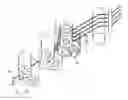
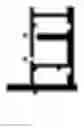
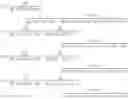











































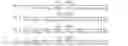
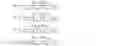



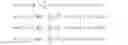







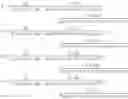












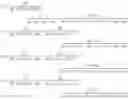








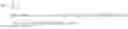
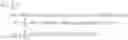
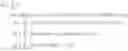



Sources:
- United States Patent and Trademark Office - verify current appl. status at the USPTO↗
Recent applications in this class:
- » 20170268134 2017-09-21
Method and device of dynamically configuring linear density and blending ratio of yarn by two-ingredient asynchronous/synchronous drafted - » 20170073849 2017-03-16
Method and device of dynamically configuring linear density and blending ratio of yarn by five-ingredient asynchronous/synchronous drafting - » 20060277892 2006-12-14
Core yarn production method and apparatus
Recent applications for this Assignee:
- » 20250243463 2025-07-31
EXOSOMES DERIVED FROM HUMAN NASAL MUCOSA MESENCHYMAL STEM CELLS, METHOD FOR PREPARING EXOSOMES, AND APPLICATION OF EXOSOMES - » 20250171748 2025-05-29
DIOXYGENASE MUTANTS AND USE THEREOF IN SYNTHESIZING (2S,3R)-3-HYDROXYPIPECOLIC ACID - » 20250150070 2025-05-08
Offset Calibration Method and Circuit Applied to Comparator Array - » 20250122484 2025-04-17
OLIGOSACCHARIDE DEBRANCHING ENZYME MUTANT AND USE THEREOF IN GLUCOSE MOTHER LIQUOR - » 20250099936 2025-03-27
Emulsion gel with both a freshness indication and a low migration rate, and preparation method therefor - » 20240423226 2024-12-26
Method for preparing concentrated high-protein yogurt before fermentation - » 20240369509 2024-11-07
Flexible pH sensor and detection system - » 20240292841 2024-09-05
Preparation method and application of water-soluble chlorhexidine hyaluronate antibacterial agents - » 20240287557 2024-08-29
Method of enzymatically preparing n-3 polyunsaturated fatty acid diacylglycerol - » 20240267506 2024-08-08
INCOMPLETE MULTI-VIEW FUZZY SYSTEM MODELING METHOD BASED ON VISIBLE AND HIDDEN VIEW COLLABORATIVE LEARNING