Clematis Plant Named 'Evipo074'
US20170055419P1
2017-02-23
14/756,261
2015-08-20
Abstract:
A new Clematis plant with a compact growth habit, profuse, violet purple flowers, and continuous summer flowering. The variety successfully propagates from softwood cuttings and is suitable for cultivation in commercial nursery culture. This new and distinct variety has shown to be uniform and stable in the resulting generations from asexual propagation from vegetative cuttings.
Interested in similar patents?
Get notified when new applications in this technology area are published.
Classification:
A01H5/00 IPC
Products
A01H5/00 IPC
Angiosperms, i.e. flowering plants, characterised by their plant parts; Angiosperms characterised otherwise than by their botanic taxonomy
Description
Botanical classification:
Genus: Clematis.
Species: viticella.
Variety denomination: ‘Evipo074’.
SUMMARY OF THE CLAIMED PLANT
The present invention constitutes a new and distinct variety of Clematis plant which originated from a controlled crossing between the female seed parent, an unnamed seedling, and the male pollen parent, an un-named seedling. Both parent varieties are non-patented.
The two parents were crossed during the summer of 2003 and the resulting seeds were planted the following winter in a controlled environment in Guernsey, Channel Islands, United Kingdom. The new variety named ‘Evipo074’ originated as a single seedling from the stated cross.
The new clematis plant may be distinguished from its female seed parent and male pollen parent by the following characteristics. The female seed parent has flowers which are red-purple, while the new variety has flowers which are lavender blue with a red-purple central bar. The male pollen plant has flowers which are red-purple.
The objective of the hybridization of this clematis plant was to create a new and distinct variety for nursery culture with unique qualities such as:
1. Uniform and abundant violet purple flowers;
2. Vigorous and compact growth, making the variety suitable for container culture; and
3. Improved disease resistance.
This combination of qualities was lacking in clematis plants that were in commercial cultivation and the qualities have been substantially achieved in the new variety.
‘Evipo074’ was selected by Mogens N. Olesen and Raymond J. Evison in their clematis development program in the Channel Islands, United Kingdom in 2004. Asexual reproduction of ‘Evipo074’ by means of vegetative cuttings and traditional layering was first performed by Mogens N. Olesen and Raymond J. Evison in the nursery during the summer of 2004. This initial and subsequent asexual propagations have demonstrated that the characteristics of ‘Evipo074’ are true to type and are transmitted from one generation to the next.
BRIEF DESCRIPTION OF THE DRAWING
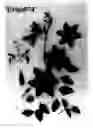
The accompanying color illustration shows as true as is reasonably possible to obtain in color photographs of this type the typical characteristics of the buds, flowers, leaves, and stems, of ‘Evipo074’. Specifically illustrated in the drawing are flowers at various stages of development, flower in parts, juvenile stem and leaves, mature leaves, and a stem exhibiting flower buds, partially opened flowers, and leaves. Plants shown are 2 years of age.
DETAILED DESCRIPTION OF THE VARIETY
The following is a detailed description of ‘Evipo074’, as observed in its growth throughout the flowering period in Yamhill County Oregon. Observed plants were cultivated for a period of 24 months in 2 liter containers. Certain phenotypical characteristics of the variety may vary under different environmental, cultural, agronomic, seasonal, and climatic conditions. Color references are made using The Royal Horticultural Society (London, England) Colour Chart, 2001, except where common terms of color are used.
For a comparison, several physical characteristics of the clematis variety ‘Evipo037’ described and illustrated in U.S. Plant Pat. No. 18,104 are compared to ‘Evipo074’ in Chart 1.
| CHART 1 | ||
| ‘Evipo074’ | ‘Evipo037’ | |
| Flower diameter | 135 mm | 130 to 150 mm |
| Tepal upper | Violet Group N88A | Violet-Blue Group N89C |
| surface | with a central bar | |
| Violet Group N79B | ||
| Tepal count | 6 | 6 to 7 tepals |
- Flower and flower bud:
-
- Blooming habit.—Continuous. The natural flowering period is generally from April to September.
- Flower bud.—Size: Normally 40 mm in length. Bud diameter is 17 mm. Bud form: Elliptic, somewhat urceolate. Texture: Pubescent. Bud color: Yellow-Green Group 145A.
- Peduncle.—Surface Texture: Smooth. Length: On average 20 mm. Diameter: 2 mm. Color: Yellow-Green Group 144B. Strength: Moderately strong.
- Receptacle.—Surface Texture: Lightly pubescent. Shape: Broad funnel. Size: 1 mm (h)×3 mm (w). Color: Yellow-Green Group 144B.
- Flower arrangement.—Location on vine: New and old growth. Borne: Each flowering branch develops 3 to 7 flower buds.
- Flower bloom.—Size: On average, flowers are 135 mm in diameter and 25 mm in depth. Profile: Open flowers are almost flat. Fragrance: None. Lasting Quality: Flowers normally remain up to 10 days on the plant.
- Tepals.—Tepal Color: Upon opening, the upper surface is Violet Group N88A with a central bar Violet Group N79 B. Lower surface is Violet Group 86A with overlay of Violet-Blue Group 91B and a central bar Yellow-Green Group 145C. After opening, the upper surface is Violet Group N88A with a central bar of Violet Group N79B. The lower surface is Violet Group 86A with overlay of Violet-Blue Group 91B and a central bar Yellow-Green Group 145C. Quantity: Normally 6 tepals. Size: About 65 mm in length by 30 mm wide. Shape: Individual tepal shape is ovate/lanceolate/oblanceolate/obovate/elliptic/spatulate. The tepal apex is acuminate/mucronate/rounded. The tepal base is typically acute/rounded. Apex Recurvature: Slight. Tepal Cross section: Slightly cupped. Margins: Entire. Strong to moderate, tight undulations. Persistence: Tepals drop off cleanly.
- Reproductive organs.—Arrangement: Open. Pollen: None observed. Anthers: Size: 5 mm in length. Color: Black Group 202A. Quantity: On average, 45. Filaments: Color: Violet-Blue Group 91A at the base, and Purple Group 76D. Length: 10 mm. Pistils: Quantity: On average, 25. Styles: Color: White Group 155D. Length: 15 mm.
-
- Plant:
-
- Plant form.—Climbing.
- Plant growth.—Moderately vigorous.
- Size.—Seasons growth attains about 60 cm in height. Average spread is 40 cm.
- Stems.—Color: Juvenile stems are Yellow-Green Group 144B. Mature stems are Greyed-Purple 183C. Internodes: On average, 60 cm between nodes. Length: Normally 20 cm from the base of the plant to the flowering portion of the stem. Diameter: 2 or 3 mm. Texture: Mature stems are generally smooth.
- Plant foliage.—Leaf characteristics: Deciduous. Arrangement: Trifoliate. Leaf Size: Compound leaves are normally 140 mm (l)×120 mm (w). Leaflets are normally 45 mm (l)×25 mm (w). Abundance: On average 1 or 2 leaves per 10 cm of stem. Leaf Color: Juvenile upper Yellow-Green Group 144A. Juvenile lower Yellow-Green Group 144B. Mature upper Yellow-Green Group 146A with marginal intonations of Greyed-Red Group 178A. Mature, lower leaflets are Yellow-Green Group 146C. Stipules: Absent. Petioles: Size: Normally 60 mm in length by 1 mm diameter. Texture: Smooth. Color: Greyed-Purple Group 187A. Petioloule: Size: Normally 10 mm in length by 1 mm diameter. Texture: Smooth. Color: Greyed-Purple Group 187A. Leaflet Shape: Elliptic. The base is rounded. The apex is acute. Margin: Entire. Texture: The upper and lower surfaces are smooth. Thickness: Average. Glossiness: Somewhat glossy.
- Disease resistance.—Subject to any disease that normally attacks the species. However the variety is more tolerant to clematis wilt, Ascochyta clematidina, than some clematis known to the inventors.
- Cold hardiness.—The variety is tolerant to USDA Hardiness Zone 6.
- Heat tolerance.—The variety has been found to be suitable for climate conditions found in the American Horticulture Society heat zone 7.
-
Claims
We claim:1. A new and distinct variety of clematis plant named ‘Evipo074’, substantially as described and illustrated, due to its abundant violet purple flowers with good keepability, attractive long lasting foliage and compact growth, year round flowering under glasshouse conditions, suitability for production from softwood cuttings in pots, durable flowers and foliage which make the variety suitable for distribution in the floral industry.
Images & Drawings included:

Sources:
- United States Patent and Trademark Office - verify current appl. status at the USPTO↗
Recent applications in this class:
- » 20240292771 2024-08-29
Campanula plant named 'Twilight' - » 20240251691 2024-07-25
HYDRANGEA PLANT NAMED 'HYLV17520' - » 20240251690 2024-07-25
Vaccinium Plant Named 'BWPBLUE02' - » 20240251689 2024-07-25
BLUEBERRY PLANT NAMED 'FC13-113' - » 20240251688 2024-07-25
BLUEBERRY PLANT NAMED 'FCM14-057' - » 20240237567 2024-07-11
PONGAMIA VARIETIES - » 20240224827 2024-07-04
PELARGONIUM PLANT NAMED 'PEQZ0103' - » 20240215470 2024-06-27
Agapanthus plant named 'Monsapho' - » 20240215469 2024-06-27
plant named ‘LOCORA3519’ - » 20240206359 2024-06-20
CORYLUS PLANT NAMED 'BWM01'