Method for creating a revised application by adding code functionality to an existing application executable
US20170060565A1
2017-03-02
15/230,524
2016-08-08
✅ Patent granted
US 10,310,870 B2
2019-06-04
-
-
Evral E Bodden
Fish & Richardson P.C.
2036-08-08
Abstract:
It is often desired to add or change the functionality of an existing executable, also known as binary.
Simply splicing in new machine code into the binary will not work due to host system-specific and platform-specific limitations.
The present invention will enable adding any new code to an existing program while overcoming the aforementioned consistency limitations and maintaining the original functionality.
Inventors:
- Avner Yehuda 11 🇮🇱 Ramat-Gan, Israel
- Omer Schory 8 🇮🇱 Givatayim, Israel
- Meir Tsvi 7 🇮🇱 Tel Aviv, Israel
- Daniel Zatuchne 1 🇮🇱 etanya, Israel
Assignee:
- APPDOME LTD. 10 🇮🇱 Tel Aviv, Israel
Applicant:
Interested in similar patents?
Get notified when new applications in this technology area are published.
Classification:
G06F8/65 » CPC main
Arrangements for software engineering; Software deployment Updates
G06F9/445 IPC
Arrangements for program control, e.g. control units using stored programs, i.e. using an internal store of processing equipment to receive or retain programs; Arrangements for executing specific programs Program loading or initiating
G06F9/44521 » CPC main
Arrangements for program control, e.g. control units using stored programs, i.e. using an internal store of processing equipment to receive or retain programs; Arrangements for executing specific programs; Program loading or initiating Dynamic linking or loading; Link editing at or after load time, e.g. Java class loading
G06F9/44 IPC
Arrangements for program control, e.g. control units using stored programs, i.e. using an internal store of processing equipment to receive or retain programs Arrangements for executing specific programs
Description
BACKGROUND
It is often required to add functionality to existing applications—for example security. in many cases it is required to add functionality at a certain point in the subject application, it is impossible to run a separate application before or after the subject application, and this is possible today only by rewriting the code , as explained here. CPUs and other processing code engines operate by executing machine code. This machine code, which is generally referred to as binary code, or by the shorthand binary, is usually the result of a compilation of higher-level languages.
In addition, most platforms come with an operating system which requires that machine code which is to be executed on the platform must come packed in some sort of container which dictates the layout of the binary. It is one of the tasks of the compiler to package the resulting machine code into the container. The container is sometimes referred to as an object file.
It is often desired to modify or enhance the function of an existing object file by splicing or appending new machine code to the object file. Changing code is relatively simple but adding a new functionality is a problem.
This proves impossible due to two factors:
1. Modifications applied to source code are not applicable in the output of a compiler.
2. The structure of object files does not allow room for adding new code.
Specifically adding a code will not allow a position dependent code (SP, PC) to continue operating properly
BRIEF DESCRIPTION OF THE DRAWINGS
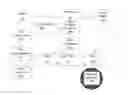
FIG. 1 describes the patch process (offline)
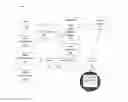
FIG. 2a describes the memory view after the system loads the object file
FIG. 2b describes the memory view after the offset table is allocated
FIG. 2c describes the memory view of the final memory state
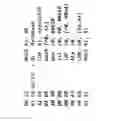
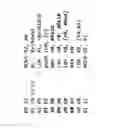
FIG. 3 is a run-time code example
SUMMARY
The invention is about enabling adding one or more library object codes to existing code while maintaining its existing correct functionality. A preparation to the invention process it is determined at which addresses of the object code new functionality should be inserted and the new functionalities determined. An additional object file (henceforth hook object) is loaded into the same memory space as the original object file.
The original object file is modified a-priori by patching it with snippets of machine code (henceforth outgoing trampoline) which act as a bridge by which the original object file's machine code can branch to the additional hook object file's machine code.
A code called Hook trampoline will be prepared. It will include the code which allows maintaining the old code functionality and a jump to the hook object.
The outgoing trampoline will jump in a described process to this code.
DETAILED DESCRIPTION
The described method has four phases:
-
- 1. Preparation
- 2. Building the New Code by Patching the Original Object Code
- 3. Loading the New Code
- 4. Running the New Code
The first two steps can be done off line on another processing device.:
The new code can replace an existing code or add a new functionality. Replacing a code is simple—just providing a new branch address. The invention is focused on adding new functionality, and several functions can be added.
The elements described in this document are as follows:
Hook specification 101, Code engine 105, Binary 102, Hook trampoline, 106, Hook implementations 103 .Builder 107. Hook infrastructures. 104 hook object .111 Outgoing trampolines. 108 Patch maker. 109 Patched binary. 110, Packer 112, Patched application 113 The preparation is about preparing the new functions and deciding where to insert them in the existing binary. This will be described in the hook specification.
FIG. 1 Build Process
FIG. 1 explains the build step. The process will be done by a tool. The process can be repeated per function added to the original code.
In the drawing the elements of the tool are colored red and the available code elements yellow and the prepared code elements green
The tool elements are:
-
- 1. The code engine which prepares new code
- 2. The builder which will compile the hook trampoline, hook implementation (as selected by indications from the hook specifications) and hook infrastructure together
- 3. The patch maker which will modify the existing binary code
- 4. The packer which will pack together the modified binary, potentially with several modifications together with one or more hook objects to form the new application.
The existing code elements are ingredients to process are:
1. Binary (102): An object file on which the modifications are performed.
2. Hook implementations (103): One or more Source code elements of the new or modified functionality implemented in a high level language
3. Hook specification (101): A mapping of functions from the hook implementations (103) to locations in the binary (102) and an indication of which hook implementation to pick
4. Hook infrastructure (104): Source code of a constant mechanism which forms the runtime of the hooking method.
The generated code elements are:
-
- 1. Outgoing trampoline which will perform the jump to the new functionality
- 2. Hook trampoline which will guarantee continued correct existing code execution
- 3. Hook object—the hook code after compilation of the hook implementation and the hook infrastructure together with the hook trampoline which will form the new code to be executed
- 4. Patched binary. The binary with the outgoing trampoline inside
- 5. Patched application—the new code with the added functions.
The code engine (105) forms the core of the build phase. It takes the binary (102) and the hook specification (101) and generates two elements:
1. Outgoing trampolines (108): A series of machine instructions which access the offset table, retrieve an address from there and branch to that address. As such there is one outgoing trampoline per mapping in the hook specification (101). The outgoing trampoline will also incorporate the jump address 204 to the hook object, as explained later.
2. Hook trampoline (106): A series of machine instructions which form the glue between the outgoing trampoline (108) and the hook implementation (103). Again, there is one hook trampoline per entry in the hook specification (101). The purpose of this function is to guaranteed correct operation of the full code after the jump and return from the hook object code. Several tasks will be performed {part of it will run before the new function and part of it after.
a. Set up a working stack frame for all the following tasks
b. Since the outgoing trampoline (108) modifies the host machine's registers in order to perform the offset table access and branch, the hook trampoline makes sure that the registers contain their original values in preparation for task c
c. Since the outgoing trampoline (108) overwrites a chunk of machine instructions they need to be executed. However, since the state of the machine has been inevitably modified, first by task a, which modifies the SP (=Stack Pointer) and secondly by the fact that the address at which the code executes (PC=Program Counter) is no longer that at which the machine instructions were originally, requires the emulation of these instructions, i.e. executing en equivalent series of instructions which have the same effect on the memory/registers as if PC/SP were in their intended state.
d. Branching to the compiled machine code of the corresponding Hook implementation (103).
e. Wrapping up the working stack frame
f. Branching back to the binary (102) right after the end of the outgoing trampoline (108) in a way that does not modify the machine's state.
The patch maker (109) takes the binary (102) and patches it with the outgoing trampolines (108) which results in the patched binary (110).
The builder (107) will compile together the hook trampolines (106), hook implementations (103) and hook infrastructure (104)
It will organize the code such that part of the hook trampoline will execute before the new function and part of it after all compiled together into a single object file called hook object (111).
The packer (112) takes the patched binary (110) and the hook objects (111) and makes sure they are structures so that the host system loads them together. The resulting patched application (112) is ready to be installed and run on the host system.
FIGS. 2a through 2c describe the memory layout of the process during the various phases
FIG. 2a—Memory View After the System Loads the Binaries of the New Application.
The OS loader will load the patched application 113 .The hook object 111 (which incorporates the complied hook implementation, infrastructure and trampoline) at address 210 and the patched binary (which incorporates the outgoing trampoline) 110 at address 111. These locations will be known only at load time and will change from one run to the other.
FIG. 2b—Memory View After the Offset Table is Allocated
In FIG. 2b, after the OS loaded the patched binary (110) and hook object (111) into memory, the hook object's (111) initialization maps the offset table (205) in a known fixed address fixed address: 0×10000000
It will serve as a table of pointers to the hook objects. A direct jump to the hook object is not possible as this address will vary every OS load.
FIG. 2c—Memory View of the Final Memory State
In FIG. 2c, the final image of the memory can be seen for 2 added function code:At the offset table at the two addresses 204 of the offset table pointed by the outgoing trampolines there will be put the two addresses of the hook trampolines 208 FIG. 3 describes the run time process using a code example.
The process will include:
-
- 1. Normal execution
- 2. Jump to address 204
- 3. Pick up address 208 and jump to it
- 4. Execute hook trampoline (108) preparation code
- 5. Execute replaces code emulation
- 6. Execute new function/hook implementation (103)
- 7. Execute status resumption
- 8. Return
- 9. Resume normal execution.
- The above can be performed several times for several new functions
- This is described in FIG. 3.
51. Normal execution
52. Outgoing trampoline
a. Status saving
b. Loading hook trampoline address from the offset table 205
c. Jumping to it.
53. Restore starting status for replaced code
54. Execution of replaced code.
55. Calling the new function/ hook implementation (103)
56. New function execution/hook implementation (103), in this example fast inverse sqrt.
57. Return from new function
58. Return to normal code
59. Normal code execution.
The above method allows adding a new function or replacing a code for any existing code in any operating system.
Claims
What we claim is:1. A method where a new function is added to an existing code by adding a flexible jump to the new function to the existing code while maintaining the functionality of the existing code.
2. A method as in claim 1 where a functionality maintenance code is being added to the new code to be executed
3. A method as in claim 1 where several functions can be added
4. A method as in claim 1 where the added function can be selected from a library of existing functions
Images & Drawings included:









Sources:
- United States Patent and Trademark Office - verify current appl. status at the USPTO↗
Recent applications in this class:
- » 20250291580 2025-09-18
CONTAINER-BASED OPERATING SYSTEM FOR CELLULAR USER EQUIPMENT - » 20250291579 2025-09-18
UPDATE CONTROL SYSTEM, UPDATE CONTROL METHOD, NON-TRANSITORY STORAGE MEDIUM, AND IN-VEHICLE CONTROL DEVICE - » 20250291578 2025-09-18
ELECTRONIC DEVICE, AND METHOD FOR UPDATING EXTERNAL ELECTRONIC DEVICE USING SAME - » 20250291577 2025-09-18
METHODS AND SYSTEMS FOR ADAPTING A CODE BASE OF AN APPLICATION AND UPDATING AN APPLICATION IN A DISTRIBUTED ENVIRONMENT - » 20250291576 2025-09-18
PROGRAM UPDATE METHOD AND INFORMATION PROCESSING SYSTEM - » 20250291575 2025-09-18
COMMUNICATION DEVICE AND VEHICLE - » 20250291574 2025-09-18
CONTROLLING DEPLOYMENT OF SOFTWARE APPLICATIONS BY SOFTWARE EXTENSIONS - » 20250291573 2025-09-18
PLUG-AND-PLAY SOFTWARE AND FIRMWARE INTEGRATION - » 20250291572 2025-09-18
Statistical Analysis With Influence Factor For Implementing Candidate Applications - » 20250291571 2025-09-18
UPDATING AN OPERATING SYSTEM IMAGE USING BINARY LARGE OBJECT FILES
Recent applications for this Assignee:
- » 20210049005 2021-02-18
Automated mobile application integration - » 20200153815 2020-05-14
Single sign-on for mobile applications using direct brokering for identity authentication - » 20200150933 2020-05-14
Artificial intelligence mobile integration - » 20190114160 2019-04-18
Automated mobile application integration - » 20170255795 2017-09-07
Application control system and method for a personal computing devices - » 20170228540 2017-08-10
Method and a system for detecting malicious code activity by generating software traps per application - » 20170201526 2017-07-13
System and method for protecting sections inside a file - » 20170149826 2017-05-25
System For Data Protection In An Emplyee Private Mobile Devices - » 20170139696 2017-05-18
Method and a system for merging several binary executables