Ruthenium-phenol catalysts and method of preparing menthone from isopulegol
US20170066704A1
2017-03-09
15/123,271
2015-03-04
✅ Patent granted
US 9,790,157 B2
2017-10-17
WO; PCT/EP2015/054453; 20150304
WO; WO2015/132275; 20150911
Pancham Bakshi
Drinker Biddle & Reath LLP
2035-03-04
Abstract:
The present invention is directed towards a catalyst which is obtainable by contacting in situ a ruthenium precursor and a phenol derivative. Furthermore, the present invention is directed towards the use of said catalyst in transfer hydrogenation reactions. In particular, the present invention is directed to a method for preparing menthone starting from isopulegol.
Assignee:
- BASF SE (REITSTÖTTER, KINZEBACH & PARTNER) 1 🇩🇪 Ludwigshafen, Germany
Applicant:
Interested in similar patents?
Get notified when new applications in this technology area are published.
Classification:
C07C45/512 » CPC main
Preparation of compounds having >C = O groups bound only to carbon or hydrogen atoms; Preparation of chelates of such compounds by pyrolysis, rearrangement or decomposition involving transformation of singly bound oxygen functional groups to >C = O groups the singly bound functional group being a free hydroxyl group
B01J31/0202 » CPC further
Catalysts comprising hydrides, coordination complexes or organic compounds containing organic compounds or metal hydrides; Oxygen-containing compounds Alcohols or phenols
B01J31/2226 » CPC further
Catalysts comprising hydrides, coordination complexes or organic compounds containing coordination complexes; Organic complexes the ligands containing oxygen or sulfur as complexing atoms; Oxygen, e.g. acetylacetonates Anionic ligands, i.e. the overall ligand carries at least one formal negative charge
C07F15/0046 » CPC further
Compounds containing elements of Groups 8, 9, 10 or 18 of the Periodic System compounds of the platinum group Ruthenium compounds
B01J2231/44 » CPC further
Catalytic reactions performed with catalysts classified in; Substitution reactions at carbon centres, e.g. C-C or C-X, i.e. carbon-hetero atom, cross-coupling, C-H activation or ring-opening reactions Allylic alkylation, amination, alkoxylation or analogues
B01J2231/643 » CPC further
Catalytic reactions performed with catalysts classified in; Reduction reactions, e.g. hydrogenation; Reductions in general of organic substrates, e.g. hydride reductions or hydrogenations; Hydrogenation of organic substrates, i.e. H or H-transfer hydrogenations, e.g. Fischer-Tropsch processes of R2C=O or R2C=NR (R= C, H)
B01J2231/645 » CPC further
Catalytic reactions performed with catalysts classified in; Reduction reactions, e.g. hydrogenation; Reductions in general of organic substrates, e.g. hydride reductions or hydrogenations; Hydrogenation of organic substrates, i.e. H or H-transfer hydrogenations, e.g. Fischer-Tropsch processes of C=C or C-C triple bonds
B01J2531/821 » CPC further
Additional information regarding catalytic systems classified in; Complexes comprising metals of Group VIII as the central metal; Metals of the platinum group Ruthenium
C07C45/51 IPC
Preparation of compounds having >C = O groups bound only to carbon or hydrogen atoms; Preparation of chelates of such compounds by pyrolysis, rearrangement or decomposition
B01J31/02 IPC
Catalysts comprising hydrides, coordination complexes or organic compounds containing organic compounds or metal hydrides
C07F15/00 IPC
Compounds containing elements of Groups 8, 9, 10 or 18 of the Periodic System
B01J31/223 » CPC further
Catalysts comprising hydrides, coordination complexes or organic compounds containing coordination complexes; Organic complexes the ligands containing oxygen or sulfur as complexing atoms; Oxygen, e.g. acetylacetonates; Anionic ligands, i.e. the overall ligand carries at least one formal negative charge At least two oxygen atoms present in one at least bidentate or bridging ligand
B01J2231/641 » CPC further
Catalytic reactions performed with catalysts classified in; Reduction reactions, e.g. hydrogenation; Reductions in general of organic substrates, e.g. hydride reductions or hydrogenations Hydrogenation of organic substrates, i.e. H or H-transfer hydrogenations, e.g. Fischer-Tropsch processes
C07C2601/14 » CPC further
Systems containing only non-condensed rings with a six-membered ring The ring being saturated
C07C45/00 IPC
Preparation of compounds having >C = O groups bound only to carbon or hydrogen atoms; Preparation of chelates of such compounds
B01J31/22 IPC
Catalysts comprising hydrides, coordination complexes or organic compounds containing coordination complexes Organic complexes
Description
The present invention is directed towards a catalyst which is obtainable by contacting in situ a ruthenium precursor and a phenol derivative. Furthermore, the present invention is directed towards the use of said catalyst in transfer hydrogenation reactions. In particular, the present invention is directed to a method for preparing menthone starting from isopulegol.
BACKGROUND OF THE INVENTION
Ruthenium transfer hydrogenation catalysts are known in the literature. These ruthenium catalysts all require specific ligands (e.g. phosphine, NHC-ligands, bipyridine ligands). The recycling behaviour of these ruthenium catalysts is not optimal. Their activity (Turnover frequency: TOF) diminishes with the increase of recycling-cycles and a high turnover number (TON) and thus a long life-cycle cannot be achieved.
Thus, ruthenium catalysts with improved characteristics are still needed. In particular, ruthenium catalysts which are readily accessible and with a long lifetime are highly desirable.
Ruthenium phenolate complexes have been reported in the literature. The synthesis of ruthenium phenolate complexes is described by Kondo at al. in Organometallics 2005, 24, 905-910. A ruthenium phenolate complex was prepared by reacting Ru(η6-COT)(dmfm)2 with phenol. The resulting complex was isolated.
Panichakul et al., Organometallics 2008, 27, 6390-6392 describes the synthesis of BINOLate complexes of ruthenium. Said BINOLate complexes were prepared by reacting [RuCl2-p-cymene]2 with BINOL and isolated.
However, said ruthenium phenolate complexes are neither readily accessible nor has their use as catalysts been described.
Koelle at al., Organometallics 1991, 10, 2573-2577 describes the synthesis and structure of a bis(phenol) adduct of Cp*Ru(η5-oxocyclohexadienyl) (Cp*=η5−C5Me5). Catalytic properties have not been described.
Bhattacharya et al., J. Am. Chem. Soc. 1990, 112, 1088-1096 describes the synthesis of tris(3,5-di-tert-butylquinone) complexes of ruthenium. Their periodic trends in charge distribution have been investigated. Catalytic properties have not been described.
Yildiz at al., Asian Journal of Chemistry 2009, 21 (5), 4047-4053 describes Ru(III) complex compounds of alizarin. The use of these complexes as UV absorbers was investigated. Catalytic properties have not been described.
Treibs et al, Ber. Dtsch. Chem. Gas. 1927, 60B, 2335-2341, describes the gas phase synthesis of menthone starting from isopulegol by using a copper catalyst. Under these conditions significant amounts of thymol (35%) have been observed. Menthone was obtained as a not clearly identified mixture of L-menthone and D-isomenthone. Ni-catalysts, which may be used for the dehydrogenation of menthol to menthone, lead to the elimination of water from isopulegol.
The problem to be addressed by the present invention is to provide a catalyst, suitable for transfer hydrogenation reactions, which is readily accessible, preferably obtainable from a commercially available starting material, which can be used in low concentrations and having a long lifetime.
It is a further object of the invention to provide a catalyst suitable for transfer hydrogenation reactions, which lead to high selectivity and high yield of the transfer hydrogenation product.
It is a further object of the Invention to provide an improved method for preparing menthone.
SUMMARY OF THE INVENTION
The above problems have been solved according to the invention by providing a ruthenium catalyst which is obtainable in situ in a liquid medium, which may be the liquid reaction medium.
In particular, the above problems has been solved by providing a ruthenium catalyst which is obtainable by contacting in situ in a liquid medium a ruthenium precursor which has labile ligands and as further ligand a phenol derivative of formula (I)
-
- wherein
- R1, R2, R3 independently are hydrogen, alkyl, or hydroxy;
- Y is a chemical bond, optionally substituted alkylene, optionally substituted arylene, —O—, or —S—;
- R4 is hydrogen, alkyl, hydroxy or optionally substituted aryl; or
- R3, Y—R4 together with the carbon atoms to which they are bound form an anellated aromatic ring;
- X is a chemical bond, optionally substituted alkylene, optionally substituted arylene, —O—, or —S—; and
- R5 is hydrogen, alkyl, hydroxy, or an optionally substituted aryl, or
- R5, R4 together are optionally substituted arylene.
Preferably said ruthenium precursor does not possess strong donor ligands such as nitrogen or phosphorous donor ligands.
The ruthenium catalyst according to the invention is useful to catalyse transfer hydrogenation reactions, in particular dehydrogenation/hydrogenation reactions.
The present invention further provides a method for preparing menthone wherein a dehydrogenation/hydrogenation reaction is carried out in the liquid phase using isopulegol, a ruthenium precursor which has labile ligands and a phenol derivative of formula (I) as defined above.
The catalyst according to the Invention shows at least one of the following advantages:
-
- Increased activity of the catalyst (high TOF);
- Low concentrations of the catalyst are needed;
- High yields and selectivity of the transfer hydrogenation product can be obtained.
DETAILED DESCRIPTION OF THE INVENTION
a) General Definitions
“In situ” describes that the ruthenium catalyst is prepared in the liquid medium such as the liquid reaction medium without isolation of the catalytic species.
“Liquid medium” refers to an organic substance or a mixture of organic substances which are in the liquid state under the following conditions: T in the range from 100 to 220° C., preferably 150 to 200° C., more preferably 170 to 190° C.; p in the range of 1 to 100 bar, preferably 1 to 50 bar, more preferably 1 to 10 bar.
Normal pressure is preferred, but overpressure can be adjusted to keep reaction components in the liquid phase.
“Ruthenium precursor” refers to a ruthenium compound which allows the coordination of phenols, i.p. of such of formula (I) above. In particular, “ruthenium precursor” refers to ruthenium compounds which possess “labile” ligands. The ruthenium precursors do not possess strong donor ligands such as nitrogen and phosphorous donor-ligands (in particular trivalent N and trivalent P ligands and N-heterocyclic carbene ligands). Examples of such compounds are trialkylamines, trialkylphosphines, triarytphosphines, phosphonites, phosphites, pyridines, 1,3-bis(alkyl)imidazol-2-ylidenes and 1,3-bis(alkyl)imidazol-2-ylidenes.
“Labile” refers to the relative ability of the ligands to remain coordinated to the transition metal complex. Non-limiting examples of labile ligands are halides, alkyl, olefins (e.g. methylallyl, cyclooctadien, cyclooctatetraene, bicyclo[2.2.1]hepta-2,5-diene), hydrogen, or aromatic residues in particular aryl (e.g. benzene or p-cymene).
“Halogen” denotes fluorine, chlorine, bromine, iodine.
“Halide” denotes fluoride, chloride, bromide, iodide.
“Alkyl” represents a linear or branched alkyl group having 1 to 20, preferably 1 to 10 carbon atoms. Examples thereof are: C1-C4-alkyl radicals selected from methyl, ethyl, prop-1-yl, prop-2-yl, but-1-yl, but-2-yl, 2-methylprop-1-yl, or 2-methylprop-2-yl, or C1-C10-alkyl radicals selected from C1-C4-alkyl radicals as defined above and additionally pent-1-yl, 1-methylbut-1-yl, 2-methylbut-1-yl, 3-methytbut-1-yl, 2,2-dimethylprop-1-yl, 1-ethylprop-1-yl, hex-1-yl, 1,1-dimethylprop-1-yl, 1,2-dimethylprop-1-yl, 1-methylpent-1-yl, 2-methylpent-1-yl, 3-methylpent-1-yl, 4-methylpent-1-yl, 1,1-dimethylbut-1-yl, 1,2-dimethylbut-1-yl, 1,3-dimethylbut-1-yl, 2,2-dimethylbut-1-yl, 2,3-dimethylbut-1-yl, 3,3-dimethylbut-1-yl, 1-ethylbut-1-yl, 2-ethylbut-1-yl, 1,1,2-trimethylprop-1-yl, 1,2,2-trimethylprop-1-yl, 1-ethyl-1-methylprop-1-yl, 1-ethyl-2-methylprop-1-yl, hept-1-yl, oct-1-yl, non-1-yl, or dec-1-yl.
“Substituted alkyl” is an alkyl group as defined herein substituted with 1, 2, 3, 4 or 5 substituents, in particular 1, 2 or 3 substituents, preferably one substituent, which are independently selected from the group consisting of halogen, alkyl, substituted alkyl, cycloalkyl, aryl, and OH.
“Alkylene” represents a linear or branched divalent hydrocarbon group having 1 to 8 carbon atoms, preferably 1 to 4 as for example C1-C4-alkylene groups, like —CH2—, —(CH2)2—, —CH(CH3)—, and —C(CH3)2—.
“Substituted alkylene” Is an alkylene group as defined herein substituted with 1, 2 or 3 substituents, preferably one substituent, which are independently selected from the group consisting of halogen, alkyl, substituted alkyl, cycloalkyl, aryl, and OH.
“Cycloalkyl” represents a 3- to 12-membered, in particular 3- to 6-membered cycloaliphatic radical. Examples thereof are C3-C12-cycloalky such as cyclopropyl, cyclobutyl, cyclo-pentyl and cyclohexyl. The cyclic structure may be unsubstituted or may carry 1, 2, 3 or 4 C1-C4 alkyl radicals, preferably one or more methyl radicals.
“Aliphatic olefins” are C2-C12-like C2-C4-olefins, such as ethylene, propene, but-1-ene, but-2-ene, 2-methylprop-1-ene,
“Substituted aliphatic olefins” are aliphatic olefins as defined herein, substituted by 1, 2 or 3 substituents, preferably one substituent, which are independently selected from the group consisting of halogen, alkyl, substituted alkyl, cycloalkyl, aryl, and OH.
“Cyclic olefins” are C3-C20-, like C3-C8- or C4-C12-cyclic olefins, such as cyclopropene, cyclobutene, cyclobutadiene, cyclopentadlene, cyclohexene, cyclohexadiene, cyclooctene, cyclooctadiene;
“Substituted cyclic olefins” are cyclic olefins as defined herein, substituted by 1, 2 or 3 substituents, preferably one substituent, which are independently selected from the group consisting of halogen, alkyl, substituted alkyl, cycloalkyl, aryl, and OH.
“Aryl” represents a 6- to 12-membered, in particular 6- to 10-membered, aromatic cyclic radical. Examples thereof are: C6-C12-aryl such as phenyl and naphthyl.
“Substituted aryl” is an aryl group as defined herein substituted with 1, 2, 3, 4, or 5 substituents, in particular 1, 2, 3 substituents, preferably one or two substituents, which are independently selected from the group consisting of halogen, alkyl, substituted alkyl, alkoxy and OH.
“Arylene” represents a 6- to 12-membered, in particular 6- to 10-membered aromatic cyclic diradical. Examples thereof are: C6-C12-arylene such as 1,2-phenylene and 2,3-naphthylene.
“Substituted arylene” is an arylene group as defined herein substituted with 1, 2, 3 substituents, preferably one substituent, which are independently selected from the group consisting of halogen, alkyl, substituted alkyl, alkoxy and OH.
“Alkoxy” represents a radical of the formula R—O—, wherein R is a linear or branched alkyl group having from 1 to 6, in particular 1 to 4 carbon atoms. Examples thereof are C1-C6-alkoxy radicals selected from methoxy, ethoxy, n-propoxy, isopropoxy, n-butoxy, 2-butoxy, iso-butoxy (2-methylpropoxy), tert-butoxy pentyloxy, 1-methylbutoxy, 2 methylbutoxy, 3-methylbutoxy, 2,2-dimethylpropoxy, 1-ethylpropoxy, hexyloxy, 1,1-dimethylpropoxy, 1,2-dimethylpropoxy, 1-methylpentyloxy, 2-methylpentyloxy, 3-methylpentyloxy, 4 methylpentyloxy, 1,1-dimethylbutyloxy, 1,2-dimethylbutyloxy, 1,3-dimethylbutyloxy, 2,2-dimethylbutyloxy, 2,3-dimethylbutyloxy, 3,3-dimethylbutyloxy, 1-ethylbutyloxy, 2-ethylbutyloxy, 1,1,2-trimethylpropoxy, 1,2,2-trimethylpropoxy, 1-ethyl-1-methylpropoxy and 1-ethyl-2-methylpropoxy.
Carbonyl is >C═O.
“1,3-Dialkyldionate” denotes the anion of 1,3-dialkylcarbonyl of general formula R—C(O)—CH2—C(O)—R, wherein R is an alkyl radical having from 1 to 6, preferably from 1 to 4, carbon atoms as defined herein. Examples thereof are 1,3-di-C1-C4-alkyl-dionate such as acetylacetonate and 2,2,6,6-tetramethyl-3,5-heptanedionate.
“Alkanoate” represents a radical R—C(O)—O, wherein R is an alkyl radical having from 1 to 6, preferably from 1 to 4, carbon atoms as defined herein. Examples thereof are C1-C4-alkanoate such as acetate
Abbreviations used herein include the following:
COD=cyclooctadien; COT=cyclooctatetraene; NBD=bycyclo[2.2.1]hepta-2,5-dien (Norbomadlene); acac=acetylacetonate, dmfm=dimethyl fumarate.
Compounds with at least one asymmetric carbon atom as mentioned herein encompass, unless otherwise stated, any isomeric form thereof.
If not otherwise stated the term menthone refers to anyone of the possible stereoisomers such as:
If not otherwise stated the term isopulegol refers to anyone of the possible stereoisomers such as:
b) Particular Embodiments of the Invention
The present invention relates in particular to the following embodiments:
- 1. A ruthenium catalyst which is obtainable by contacting in situ in a liquid medium a ruthenium precursor which has labile ligands and a phenol derivative of formula (I)
-
- wherein
- R1, R2, R3 Independently are hydrogen, alkyl, like C1-C10-alkyl (e.g. methyl, tertbutyl, nonyl) or hydroxy;
- Y is a chemical bond, optionally substituted alkylene like C1-C6-alkylene (e.g. —C(Me2)-), optionally substituted arylene like optionally substituted phenylene, (e.g. 1,2-phenylene), —O—, or S—;
- R4 is hydrogen, alkyl, like C1-C10-alkyl (e.g. methyl), hydroxy or optionally substituted aryl, like optionally substituted phenyl, (e.g. phenyl), or
- R3, Y—R4 together with the carbon atoms to which they are bound form an anellated aromatic ring;
- X is a chemical bond, optionally substituted alkylene, like C1-C6-alkylene (e.g. —CH2—), optionally substituted arylene like optionally substituted phenylene, (e.g. 1,2-phenylene), —O—, or S—, and
- R5 is hydrogen, alkyl, like C1-C10-alkyl (e.g. methyl, tertbutyl, nonyl), hydroxy, or an optionally substituted aryl, like optionally substituted C6-C12-aryl, (e.g. phenyl, 2-hydroxy-phenyl, 2-hydroxy-3,5-dimethyl-phenyl, 2-hydroxy-3,5-ditertbutyl-phenyl, 2-hydroxy-naphthyl), or
- R5, R4 together are optionally substituted arylene, like optionally substituted phenylene, (e.g. 4-methyl-6-hydroxy-1,2-phenylene).
- 2. The ruthenium catalyst of embodiment 1 wherein the phenol derivative has one of the formulae
-
- wherein
- R1, R2, R3, R4 independently are hydrogen, alkyl, like C1-C10-alkyl (e.g. methyl, tertbutyl, nonyl), or hydroxy, or
- R3, R4 together with the carbon atoms to which they are bound form an anellated aromatic ring (e.g. phenyl);
- R5a is hydrogen, alkyl, like C1-C10-alkyl (e.g. methyl, tertbutyl, nonyl), or hydroxy;
- Y is a chemical bond, optionally substituted alkylene, like C1-C8-alkylene (e.g. —CMe2-), optionally substituted arylene, like optionally substituted phenylene (e.g. 1,2-phenylene), —O—, or —S—;
- R6, R7, R8, R9 independently are hydrogen or alkyl, like C1-C10-alkyl (e.g. methyl, tertbutyl, nonyl), or
- R6, R7 together with the carbon atoms to which they are bound form an anellated aromatic ring (e.g. phenyl);
- R10 is hydrogen or hydroxy, and
- X is a chemical bond, optionally substituted alkylene, like C1-C8-alkylene (e.g. —CMe2-), optionally substituted arylene like optionally substituted phenylene (e.g. 1,2-phenylene), —O—, or —S—.
- 3. The ruthenium catalyst of embodiment 2 wherein
- R1, R2, R3, R4 independently are hydrogen, branched or linear alkyl, like C1-C10-alkyl (e.g. tBu, Me, nonyl), or hydroxy, or
- R3, R4 together with the carbon atoms to which they are bound form an anellated aromatic ring (e.g. phenyl);
- R5a is hydrogen, branched or linear alkyl, like C1-C10-alkyl (e.g. tBu, Me), or hydroxy;
- Y is a chemical bond or optionally substituted alkylene, like C1-C6-alkylene (e.g. —CMe2-), preferably optionally substituted alkylene (e.g. —CMe2-);
- R6, R7, R8, R9 independently are hydrogen or branched or linear alkyl, like C1-C10-alkyl (e.g. tBu, Me), or
- R6, R7 together with the carbon atoms to which they are bound form an anellated aromatic ring (e.g. phenyl);
- R10 is hydrogen or hydroxy, and
- X is a chemical bond, optionally substituted alkylene, like optionally substituted phenylene (e.g. —CH2—), or —O—.
- For formulae (Ia), (Ib) and (Ic) according to embodiments 2 and 3 the following meanings are particularly mentioned:
- R1, R3 independently are hydrogen, linear or branched alkyl, like C1-C10-alkyl (e.g. methyl, tertbutyl, nonyl), or hydroxy.
R2 is hydrogen or linear or branched alkyl, like C1-C10-alkyl (e.g. methyl, tertbutyl, nonyl), in particular hydrogen or methyl.
R4 is hydrogen or linear or branched alkyl, like C1-C10-alkyl (e.g. methyl, tertbutyl, nonyl), in particular hydrogen, or R3, R4 together with the carbon atoms to which they are bound form an anellated aromatic ring, in particular a phenyl ring.
R6 is hydrogen or linear or branched alkyl, like C1-C10-alkyl (e.g. methyl, tertbutyl, nonyl), in particular hydrogen.
R7, R9 independently are hydrogen, linear or branched alkyl, like C1-C10-alkyl (e.g. methyl, tertbutyl, nonyl), or R7, R6 together with the carbon atoms to which they are bound form an anellated aromatic ring, in particular a phenyl ring.
R8 is hydrogen or linear or branched alkyl, like C1-C10-alkyl (e.g. methyl, tertbutyl, nonyl), in particular hydrogen or methyl.
- 4. The ruthenium catalyst of any of the previous embodiments wherein the phenol derivative has formula (Ia)
-
- wherein R1, R2, R3, R4 and R5a independently are hydrogen, alkyl, like C1-C10-alkyl, or hydroxy.
- In the phenol derivatives of formula (Ia), the following meanings are particularly mentioned:
- R1, R3 independently are hydrogen, linear C1-C10-alkyl (e.g. methyl, nonyl), branched C3-C10-alkyl (e.g. tertbutyl), or hydroxy.
- R2 is hydrogen, linear C1-C10-alkyl (e.g. methyl, nonyl), or branched C3-C10-alkyl (e.g. tertbutyl), In particular hydrogen.
- R4 is hydrogen, linear C1-C10-alkyl (e.g. methyl, nonyl), or branched C3-C10-alkyl (e.g. tertbutyl), in particular hydrogen.
- R5a is hydrogen, linear C1-C10-alkyl (e.g. methyl, nonyl), branched C3-C10-alkyl (e.g. tertbutyl), or hydroxy.
- 5. The ruthenium catalyst of embodiment 1 or 2 wherein the phenol derivative has formula (Ib)
-
- wherein
- R1, R2, R3 independently are hydrogen or alkyl.
Y is a chemical bond, optionally substituted alkylene, like C1-C8-alkylene (e.g. —CMe2-), optionally substituted arylene, like optionally substituted phenylene, —O—, or —S—;
-
- R7, R8, R9 independently are hydrogen or alkyl, like C1-C10-alkyl;
- R10 is hydrogen or hydroxy, and
- X is a chemical bond, optionally substituted alkylene, like C1-C8-alkylene (e.g. —CMe2-), optionally substituted arylene, like optionally substituted phenylene, —O—, or —S—.
- 6. The ruthenium catalyst of embodiment 5 wherein in the phenol derivative of formula (Ib)
- R1, R2, R3 independently are hydrogen, linear C1-C10-alkyl, or branched C3-C10-alkyl;
- Y is optionally substituted alkylene, preferably alkylene like C1-C8-alkylene, (e.g. —CMe2-);
- R7, R8, R9 independently are hydrogen, linear C1-C10-alkyl, or branched C3-C1-alkyl;
- R10 is hydrogen or hydroxy, and
- X is —O—.
- In the phenol derivatives of formula (Ib) according to embodiments 5 and 6 the following meanings are particularly mentioned:
- R1, R3 are hydrogen.
- R2 is hydrogen, linear C1-C10-alkyl (e.g. methyl, nonyl), or branched C3-C10-alkyl (e.g. tertbutyl), in particular methyl.
- R7, R9 are hydrogen.
- R8 is hydrogen, linear C1-C10-alkyl (e.g. methyl, nonyl), or branched C3-C10-alkyl (e.g. tertbutyl), in particular methyl.
- 7. The ruthenium catalyst of embodiments 1 or 2 wherein the phenol derivative has formula (Ic)
-
- wherein
- R1, R2, R3, R4 independently are hydrogen or alkyl, like C1-C10-alkyl, or
- R3, R4 together with the carbon atoms to which they are bound form an anellated aromatic ring, preferably a phenyl ring;
- R6, R7, R8, R9 independently are hydrogen or alkyl, like C1-C10-alkyl, or
- R6, R7 together with the carbon atoms to which they are bound form an anellated aromatic ring, preferably a phenyl ring;
- R10 is hydrogen or hydroxy, and
- X is a chemical bond, optionally substituted alkylene, like C1-C8-alkylene (e.g. —CH2—), optionally substituted arylene, like optionally substituted phenylene, —O—, or —S—.
- 8. The ruthenium catalyst of embodiment 7, wherein in the phenol derivative of formula (Ic)
- R1, R2, R3, R4 independently are hydrogen, linear C1-C10-alkyl, or branched C3-C100-alkyl, or
- R3, R4 together with the carbon atoms to which they are bound form an anellated aromatic ring, preferably a phenyl ring;
- R6, R7, R8, R9 independently are hydrogen, linear C1-C10-alkyl, or branched C3-C10-alkyl, or
- R6, R7 together with the carbon atoms to which they are bound form an anellated aromatic ring, preferably a phenyl ring;
- R10 is hydrogen or hydroxy, and
- X is a chemical bond or alkylene, like C1-C8-alkylene (e.g. —CH2—).
- In the phenol derivatives of formula (Ic) according to embodiments 7 and 8 the following meanings are particularly mentioned:
- R2 is hydrogen.
- R4 is hydrogen, or R4, R3 together with the carbon atoms to which they are bound form an anellated aromatic ring, preferably a phenyl ring.
- R6 is hydrogen, or R6, R7 together with the carbon atoms to which they are bound form an anellated aromatic ring, preferably a phenyl ring.
R8 is hydrogen.
- 9. The ruthenium catalyst of any one of previous embodiments wherein the phenol derivative of formula (I) is selected from among the compounds:
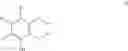
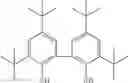
- 3,3′,5,5′-tetra-tert-butyl-(1,1′-biphenyl)-2,2′-diol;
- nonylphenol;
- 2,2′-biphenol;
- 2-benzylphenol;
- 2,4-di-tert-butylphenol;
- 2,6-di-tert-butylphenol;
- phenol;
- hydroquinone;
- 2,6-di-tert-butyl-4-methylphenol;
- 4′,5,5′-tetramethyl-2,2′biphenol, and
- (R)-(+)-1,1′-bi(2-naphtol).
- Preferably the phenol derivative of formula (I) is nonyl phenol, 2,2′-biphenol, or 3,3′,5,5′-tetra-tert-butyl-(1,1′-biphenyl)-2,2′-diol.
- 10. The ruthenium catalyst of any of the previous embodiments wherein the ruthenium precursor which has labile ligands is represented by the formula (II)
[RuLm]n (II)
-
- wherein
- Ru is in the oxidation state (+II), (+III) or (+IV);
- each ligand L independently is hydride, halide (e.g. Cl, Br, I), alkyl, like C1-C10-alkyl, optionally substituted aliphatic olefins like C2-C12-olefins, (e.g. methyl allyl, 2,4-dimethylpentadienyl, 2,7-dimethyl-2,6-octadiene, dodecatriene), optionally substituted cyclic olefins, like C4-C10-cyclic olefins, (e.g. cyclooctadiene, cyclopentadienyl, pentamethyicycopentadienyl), —CO, 1,3-dialkyldionate (e.g. acetylacetonate, 2,2,6,6-tetramethyl-3,5-heptanedionate), alkanoate, like C1-C6-alkanoate, (e.g. acetate), or optionally substituted aryl (e.g. benzene, p-cymene);
- m is an integer in a range from 2 to 6;
- n is at least 1,
- or a salt thereof.
- 11. The ruthenium catalyst of any of the preceding embodiments, wherein R4 is different from hydroxy, when Y represents —O— or —S— and R5 is different from hydroxy, when X represents —O— or —S—.
- 12. The ruthenium catalyst of any of the preceding embodiments, wherein the ruthenium precursor does not possess strong donor ligands, in particular nitrogen or phosphorous donor ligands, in particular trivalent nitrogen or trivalent phosphorous donor ligands or N-heterocyclic carbene donor ligands; non-limiting examples of such “strong donor ligands” are trialkylamines, trialkylphosphines, triarylphosphines, phosphites, phosphonites, 1,3-bis(aryl)imidazol-2-ylidenes, 1,3-bis(alkyl)imidazol-2-ylidenes or pyridines, in particular trimethylphosphine, tricyclohexylphosphine, triphenylphosphine, triethylphosphite, diethylmethylphosphonite, triethylamine, triphenylamine, tetramethylethylenediamine, pyridine, 2,2′-bipyridine, 1,3-di-t-butylimidazol-2-ylidene or 1,3-bis(2,6-di-i-propylphenyl)4,5-dihydroimidazol-2-ylidine.
- 13. The ruthenium catalyst of any of the preceding embodiments, wherein the phenol derivative of formula I, Ia, Ib or Ic does not possess strong donor substituents, in particular nitrogen or phosphorous donor substituents; non-limiting examples of such “strong donor substituents” are dimethylphosphanyl, diphenylphosphanyl, dicyclohexylphosphanyl, diethoxyphosphanyl, diethylamino, diphenylamino, dimethylamino, methylamino, pyridyl and 2,2′-bipyridyl substituents.
- 14. The ruthenium catalyst of any of the preceding embodiments, wherein
- optionally substituted alkylene represents alkylene optionally substituted by 1, 2 or 3 substituents which are independently selected from the group consisting of halogen, alkyl, substituted alkyl, cycloalkyl, aryl, and OH;
- optionally substituted arylene represents arylene optionally substituted by 1, 2, 3 substituents which are independently selected from the group consisting of halogen, alkyl, substituted alkyl, alkoxy and OH;
- optionally substituted aryl represents aryl optionally substituted by 1, 2, 3, 4 or 5 substituents, in particular 1, 2, 3 substituents which are independently selected from the group consisting of halogen, alkyl, substituted alkyl, alkoxy and OH;
- optionally substituted aliphatic olefins represents aliphatic olefins optionally substituted by 1, 2 or 3 substituents which are independently selected from the group consisting of halogen, alkyl, substituted alkyl, cycloalkyl, aryl, and OH; and
- optionally substituted cyclic olefins represents cyclic olefins optionally substituted by 1, 2 or 3 substituents which are independently selected from the group consisting of halogen, alkyl, substituted alkyl, cycloalkyl, aryl, and OH.
- 15. The ruthenium catalyst of any of the previous embodiments wherein the ruthenium in the ruthenium precursor is in the oxidation state (+II), (+III) or (+IV).
- 16. The ruthenium catalyst of any of the previous embodiments wherein the labile ligands of the ruthenium precursor are independently selected from the group consisting of hydride, halide (e.g. Cl, Br, I), alkyl like C1-C10-alkyl, optionally substituted aliphatic olefins like C2-C12-olefins, (e.g. methyl allyl, 2,4-dimethylpentadienyl, 2,7-dimethyl-2,6-octadiene, dodecatriene), optionally substituted cyclic olefins like C4-C10-cyclic olefins, (e.g. cyclooctadiene, cyclopentadienyl, pentamethylcyclopentadienyl), —CO, 1,3-dialkyldionate (e.g. acetylacetonate, 2,2,6,6-tetramethyl-3,5-heptanedionate), alkanoate like C1-C6-alkanoate, (e.g. acetate), or optionally substituted aryl (e.g. benzene, p-cymene).
- 17. The ruthenium catalyst of any of the previous embodiments wherein the ruthenium precursor is selected from among the compounds:
- Bis(2,4-dimethylpentadienyl)ruthenium(II);
- Bis(2-methylallyl)(1,5-cyclooctadiene)ruthenium(II);
- Bis(2,2,6,6-tetramethyl-3,5-heptanedionato)(1,5-cyclooctadiene)ruthenium(II);
- Chloro(1,5-cyclooctadiene)(pentamethylcyclopentadienyl)ruthenium(II);
- Chloro(pentamethylcyclopentadienyl)ruthenium(II) tetramer;
- Cyclopentadienyl(p-cymene)ruthenium(II) hexafluorophosphat;
- Dicarbonylcyclopentadienylruthenium(II) dimer,
- Dichloro(benzene)ruthenium(II);
- Di-μ-chlorobis[(p-cymene)chlororuthenium(II)];
- Dichloro(1,5-cyclooctadiene)ruthenium(II);
- Dichlorotricarbonytruthenium (dimer);
- Dichloro(pentamethylcyclopentadienyl)ruthenium(III) polymer;
- Ruthenium(III) acetylacetonate;
- Ruthenium(III) bromide;
- Ruthenium(III) chloride;
- Ruthenium(III) iodide;
- Acetatodicarbonylruthenium(IV) polymer,
- Ammonium hexachlororuthenate(IV);
- Dichloro(μ-chloro)bis[(1,2,3,6,7,8-η)-2,7-dimethyl-2,6-octadien-1,8-dlyl]diruthenium(IV); or
- Dichloro(2,6,10-dodecatriene-1,12-diyl)ruthenium(IV).
- 18. The ruthenium catalyst of any of the previous embodiments wherein the ruthenium in the ruthenium precursor is in the oxidation state (+II) or (+III).
- 19. The ruthenium catalyst of any of the previous embodiments wherein the ruthenium precursor is bis(2-methylallyl)(1,5-cyclooctadiene)ruthenium(II), dichloro(1,5-cyclooctadiene)ruthenium(II), ruthenium(II) acetylacetonate or ruthenium chloride(III).
- 20. The ruthenium catalyst of any of the previous embodiments wherein the ruthenium precursor is bis(2-methylallyl)(1,5-cyclooctadiene)ruthenium(III) or ruthenium(III) acetylacetonate.
- 21. The use of the ruthenium catalyst of any of the previous embodiments in transfer hydrogenation reactions.
- 22. The use of the ruthenium catalyst of any of the previous embodiments wherein the transfer hydrogenation reaction is the isomerization of unsaturated alcohols, the isomerization of unsaturated carbonyl, the hydrogenation of alkenes, the hydrogenation of ketones, the dehydrogenation of alcohols, a dehydrogenating esterification, the dehydrogenating coupling of alcohols with amines to amides, the alkylation of amines with alcohols, or the oxidation of alcohols to aldehydes.
- 23. The use of the ruthenium catalyst of any of the previous embodiments wherein the transfer hydrogenation reaction is the isomerization of unsaturated alcohols, the isomerization of unsaturated aldehydes, the hydrogenation of alkenes, the hydrogenation of ketones, or the dehydrogenation of alcohols.
- 24. The use of the ruthenium catalyst of any of the previous embodiments wherein the transfer hydrogenation reaction is the isomerization of unsaturated alcohols (i.p. the preparation of menthone from isopulegol).
- 25. A method for preparing menthone wherein a dehydrogenation/hydrogenation reaction is carried out in the liquid phase using isopulegol, a ruthenium precursor according to any one of embodiments 10 to 16 and a phenol derivative of formula (I) according to any one of embodiments 1 to 9.
- 26. The method according to embodiment 25, wherein the amount of ruthenium in the ruthenium catalyst of any one of claims 1 to 16 is in the range from 50 to 3000, preferably 100 to 1000, more preferably is 200 to 600 ppm by weight based on the total liquid reaction mixture in the reaction space.
- 27. The method according to embodiment 25 or 26, wherein the weight ratio between the phenol derivative and isopulegol is in the range from 1:1 to 1:20.
- Preferably the weight ratio between the phenol derivative and isopulegol is 1:10.
- 28. The method according to any one of embodiments 25 to 27, wherein the reaction is carried out at a temperature in the range from 100 to 220° C., preferably 150 to 200° C. More preferably, the reaction is carried out at a temperature in the range from 170 to 190° C.
C. Further Embodiment of the Invention
a) Reactants
The ruthenium precursors are commercially available or can be easily prepared following standard chemistry. See for example J. Powell, B. L. Shaw, J. Chem. Soc. A: Inorganic, Physical, Theoretical 1968, 1, 159-161; M. O. Albers, E. Singleton, J. E. Yates, Inorg. Synthesis 1989, 26, 249-258; R. Grobelny, B. Jezowska-Trzeblatowska, W. Wojchiechowski J. Inorg. Nucl. Chem. 1966, 28, 2715-2718; A. Endo, K. Shimizu, G. P. Satô, M. Mukaida Chem. Lett. 1984, 437-440.
The phenol derivatives of formula (I) are commercially available or can be easily prepared following standard chemistry. See for example U.S. Pat. No. 4,380,676, U.S. Pat. No. 4,097,461, U.S. Pat. No. 2,885,444, U.S. Pat. No. 2,785,188 and U.S. Pat. No. 3,247,262.
b) Transfer Hydrogenation Reactions
The use of ruthenium catalysts in transfer hydrogenation reactions has been described in the following reviews: T. Naota, H. Takaya and S. Murahashi, Chem. Rev. 1998, 98, 2599-2660; S. Bähn, S. Imm, L. Neubert, M. Zhang, H. Neumann and M. Beller, ChemCatChem 2011, 3, 1853; C. Gunanathan and D. Milstein Science, 2013, 341, 1229712-1-1229812-12.
The ruthenium catalyst according to the invention is used in transfer hydrogenation reactions such as the isomerization of unsaturated alcohols, the isomerization of unsaturated carbonyl, the hydrogenation of alkenes, the hydrogenation of ketones, the dehydrogenation of alcohols, a dehydrogenating esterification, the dehydrogenating coupling of alcohols with amines to amides, the alkylation of amines with alcohols, or the oxidation of alcohols to aldehydes.
In the isomerization of unsaturated alcohols compounds comprising at least a double or triple bond and a primary or secondary alcohol are heated in presence of a catalyst according to the invention.
Representative non limiting examples of isomerization of alcohols are shown in the scheme below:
Hydrogenation of alkenes is performed in presence of a suitable hydrogen source and the catalyst according to the invention. Representative non limiting examples of alkene hydrogenations are reported in the scheme below.
Hydrogenation of ketones or aldehydes is performed in presence of a suitable hydrogen source and the catalyst according to the Invention. Representative non limiting examples of ketone hydrogenations are reported in the scheme below.
In the alkylation of amines with alcohols compounds comprising at least a primary or secondary alcohol are reacted with a primary amine in presence of the catalyst according to the Invention. Representative non limiting examples of alkylations of amines with alcohols are reported in the scheme below.
In the dehydrogenating coupling of alcohols with amines to amides compounds comprising at least a primary alcohol are reacted with a primary amine in presence of the catalyst according to the Invention. Representative non limiting examples of dehydrogenating coupling of alcohols with amines are reported in the scheme below.
In a dehydrogenating esterification compounds comprising at least one primary alcohol are reacted with a further primary or secondary alcohol in presence of the catalyst according to the Invention. Representative non limiting examples of dehydrogenating esterifications are reported in the scheme below.
The Invention is illustrated by the following non-limiting examples:
EXPERIMENTAL SECTION
General Information
In the following examples the following definitions apply:
“Inert conditions”: All experiments and manipulations were carried out under an atmosphere of argon. The weighing of all starting materials was done in a nitrogen purged glovebox. Reactions and further manipulations were performed using standard schlenk techniques.
“Semi-inert condition”: When weighing the starting materials no special precautions were taken. Inertization of the reaction vessel equipped with the starting material was done by applying vacuum and ventilating with argon for 3 times. Reactions and further manipulations were than carried out under an atmosphere of argon using standard Schlenk techniques.
“Ambient pressure”=1070 mbar
The following ruthenium precursors A and B were used:
A=Bis(2-methylallyl)(1,5-cylcooctadiene)ruthenium(II).
B=Ruthenium(III) acetyl acetonate (Ruacac).
The following phenol derivatives 1 to 11 were used:
| TABLE 1 | ||
| 1 | 3,3′,5,5′-tetra-tert- butyl-(1,1′-biphenyl)- 2,2′-diol | |
| 2 | Nonylphenol | |
| 3 | 2,2′-Biphenol | |
| 4 | 2-Benzylphenol | |
| 5 | 2,4-Di-tert-butylphenol | |
| 6 | 2,6-Di-tert-butylphenol | |
| 7 | Phenol | |
| 8 | Hydroquinone | |
| 9 | 2,6-Di-tert-butyl-4- methylphenol | |
| 10 | 4,4′,5,5′-Tetramethyl- 2,2′Biphenol | |
| 11 | (R)-(+)-1,1′-Bi(2- naphtol) | |
Example 1
Isomerization of Unsaturated Alcohols—Isopulegol to Menthone/Isomenthone
Analytical Method:
GC analyses were performed using an Agilent 6890 equipped with a VF-23ms column (60 m, 0.25 mm, 0.25 μm).
Temperature program: 90° C., 2 min isotherm
-
- 3 K/min to 120° C., 2 min isotherm
- 20 K/min to 240° C., 10 min isotherm
Constant Flow: 3 ml/min
Carrier gas: Hydrogen
Internal Standard: Decane
Using enantiomerically pure L-isopulegol as starting material the reactions described below gave enantiomerically pure L-menthone and D-isomenthone. The term “menthone yield” in the following examples is therefore defined as the sum of the yield of L-menthone and the yield of D-isomenthone. The term “menthone selectivity” is defined as sum of the selectivity L-menthone and the selectivity D-isomenthone.
Menthol and pulegone are intermediates in the isomerization of isopulegol and will react further to form menthone or rather isomenthone by increasing the reaction time or the reaction temperature. This is therefore not to be regarded as a loss of the starting material isopulegol. Unless otherwise stated, menthol and pulegone will both be included in the total selectivity listed below.
(“Total selectivity”=selectivity of menthone+selectivity of isomenthone+selectivity of pulegone+selectivity of menthol).
The following individual examples and comparative examples 1.1 to 1.38 were performed to illustrate said isomerization reaction:
Comparative Example 1.1-1.7
Ruthenium-Phosphanyl-Complexes as Catalyst
The ruthenium-phosphanyl-complexes were synthesized according to the literature (S. P. Nolan, T. R. Belderrain and R. H. Grubbs Organometallics 1997, 16, 5569-5571).
Under inert conditions the ruthenium-phosphanyl-complex and 9 g isopulegol were placed in a 30 ml Schlenk-flask equipped with a magnetic stirring bar. At ambient pressure the mixture was heated at 180° C. and stirred for the reaction time t1. Conversion and menthone yield were determined via calibrated GC analysis. The results are summarized in the Table 2 below.
| TABLE 2 | ||||||
| Total* | ||||||
| m(Ru) | t1 | Conversion | Selectivity | Menthone | ||
| Example | Catalyst | [ppm] | [h] | [%] | [%] | yield [%] |
| 1.1 | [Ru(PnOct3)4(H)2] | 2000 | 2 | 45.2 | 58.7 | 15.8 |
| 4 | 100 | 91.3 | 63.9 | |||
| 6 | 100 | 92.3 | 84.9 | |||
| 1.2 | [Ru(PCyhex3)4(H)2] | 2000 | 2 | 32.1 | 82.5 | 23.5 |
| 4 | 38.9 | 82.1 | 28.2 | |||
| 6 | 40.2 | 80.3 | 28.1 | |||
| 1.3 | [Ru(PnBu3)4(H)2] | 2000 | 18 | 42.4 | 67.5 | 14.2 |
| 42 | 56.7 | 53.5 | 14.3 | |||
| 1.4 | [Ru(CO)(PnBu3)3(H)2] | 2000 | 18 | 92.0 | 75.4 | 22.6 |
| 42 | 99.8 | 81.7 | 35.1 | |||
| 1.5 | [Ru(dcpe)2(H)2] | 2000 | 2 | 100 | 84.9 | 39.3 |
| 4 | 100 | 90.8 | 87.9 | |||
| 6 | 100 | 88.8 | 85.4 | |||
| 1.6 | [Ru(dppbutyl)2(H)2] | 2000 | 2 | 56.8 | 69.4 | 28.3 |
| 4 | 83.3 | 82.8 | 32.3 | |||
| 6 | 91.8 | 87.8 | 36.3 | |||
| 1.7 | [Ru(dppbenzyl)2(H)2] | 2000 | 18 | 86.8 | 75.5 | 25.1 |
| 42 | 100 | 82.7 | 46.9 | |||
wherein
dcpe is
dppbutyl is
dppbenzyl is
Example 1.8
Ruthenium Precursor A and Phenol Derivative 1 as Catalyst
Under semi-inert conditions 9 g Isopulegol, 76 mg A (=2000 ppm [Ru]) and 3 g of the phenol derivative 1 were placed in a 30 ml Schlenk-flask equipped with a magnetic stirring bar. At ambient pressure the mixture was heated at 180° C. and stirred for 4 hours. Conversion and menthone yield were determined via calibrated GC analysis. The results are summarized in the Table 3 below.
Comparative Example 1.9
Ruthenium Precursor A as Catalyst
Under semi-inert conditions 12 g Isopulegol and 76 mg A (=2000 ppm [Ru]) were placed in a 30 ml Schlenk-flask equipped with a magnetic stirring bar. At ambient pressure the mixture was heated at 180° C. and stirred for 4 hours. Conversion and menthone yield were determined via calibrated GC analysis. In the absence of phenol precipitation of ruthenium black is observed, illustrating the essential role of the phenol for avoiding catalyst loss i.e. for improving catalyst recycling. The results are summarized in the Table 3 below.
Comparative Example 1.10
No Addition of Catalyst
Under semi-inert conditions 12 g isopulegol were placed in a 30 ml Schlenk-flask equipped with a magnetic stirring bar. At ambient pressure the mixture was heated at 180° C. and stirred for 18 hours. Conversion and menthone yield were determined via calibrated GC analysis. The results are summarized in the Table 3 below.
| TABLE 3 | ||||||
| Total | ||||||
| m(Ru) | t1 | Conversion | Selectivity | Menthone | ||
| Example | Catalyst | [ppm] | [h] | [%] | [%] | yield [%] |
| 1.1 | [Ru(PnOct3)4(H)2] | 2000 | 2 | 45.2 | 58.7 | 15.8 |
| 4 | 100 | 91.3 | 63.9 | |||
| 6 | 100 | 92.3 | 84.9 | |||
| 1.5 | [Ru(dcpe)2(H)2] | 2000 | 2 | 100 | 84.9 | 39.3 |
| 4 | 100 | 90.8 | 87.9 | |||
| 6 | 100 | 88.8 | 85.4 | |||
| 1.8 | A + 1 | 2000 | 2 | 100 | 87.9 | 78.9 |
| 4 | 100 | 88.0 | 81.0 | |||
| 1.9 | A * | 2000 | 2 | 100 | 91.3 | 72.4 |
| 4 | 100 | 91.5 | 76.3 | |||
| 1.10 | No catalyst | — | 18 | 15.2 | 6.0 | 0.0 |
| * Ruthenium ,,black“ precipitates during the reaction |
Example 1.11
Ruthenium Precursor A and Phenol Derivative 1 as Catalyst
Under semi-inert conditions 102 g isopulegol, 106.4 mg A (=300 ppm [Ru]) and 10.1 g of the phenol derivative 1 were placed in a 250 ml Schlenk-flask equipped with a magnetic stirring bar. At ambient pressure the mixture was heated at 180° C. and stirred for 4 hours. The reaction mixture was allowed to cool down to room temperature before conversion and menthone yield were determined via calibrated GC analysis. Full-conversion of 100% could be obtained and a menthone yield of 95.4% was determined in the crude product. (menthone selectivity=90.3%; pulegone selectivity=1.4%; menthol selectivity=0%; total selectivity=91.7%)
For catalyst separation the reaction mixture was distilled at 1 mbar and 60° C. overhead temperature. 96.4 g distillation product could be obtained. GC analysis of the product gave a composition of 1.3 wt % menthol, 1.5 wt. % pulgone, 1.7 wt. % unknown by-products, 53.3 wt % L-menthone and 42.2 wt % D-isomenthone giving an isolated menthone yield of 90% (=92 g menthone+isomenthone)
Examples 1.12-1.18
Ruthenium Precursor A and Phenol Derivatives 2-6, 9 or 11 as Catalyst
Under semi-inert conditions 9 g isopulegol, 9.5 mg A (=300 ppm [Ru]) and 1 g of the phenol derivative were placed in a 30 ml Schlenk-flask equipped with a magnetic stirring bar. At ambient pressure the mixture was heated at 180° C. and stirred for reaction time t1. Conversion and menthone yield were determined via calibrated GC analysis. The results are summarized in the Table 4 below.
| TABLE 4 | |||||
| Phenol | t1 | Conversion | Total | Menthone | |
| Example | derivative | [h] | [%] | Selectivity [%] | yield [%] |
| 1.12 | 2 | 6 | 100 | 93.8 | 80.3 |
| 1.13 | 3 | 6 | 65.3 | 92.6 | 46.5 |
| 1.14 | 4 | 6 | 66.1 | 93.9 | 40.2 |
| 1.15 | 5 | 6 | 100 | 97.4 | 72.4 |
| 1.16 | 6 | 6 | 100 | 100 | 85.8 |
| 1.17 | 9 | 6 | 34.5 | 100 | 24.3 |
| 1.18 | 11 | 4 | 100 | 97.5 | 94.5 |
Examples 1.19-1.25
Ruthenium Precursor A and Phenol Derivatives 3-9 as Catalyst
Under semi-inert conditions 9 g isopulegol, 9.5 mg A (=300 ppm [Ru]) and 1 g of the phenol derivative were placed in a 30 ml Schlenk-flask equipped with a magnetic stirring bar. At ambient pressure the mixture was heated at 160′C and stirred for reaction time t1. Conversion and menthone yield were determined via calibrated GC analysis. The results are summarized in the Table 5 below.
| TABLE 5 | |||||
| Phenol | t1 | Conversion | Total | Menthone | |
| Example | derivative | [h] | [%] | Selectivity [%] | yield [%] |
| 1.19 | 3 | 6 | 22.9 | 100 | 14.8 |
| 1.20 | 4 | 6 | 73.1 | 100 | 61.5 |
| 1.21 | 5 | 6 | 83.9 | 100 | 73.1 |
| 1.22 | 6 | 4 | 100 | 97.4 | 73.6 |
| 1.23 | 7 | 4 | 100 | 96.8 | 84.3 |
| 1.24 | 8 | 4 | 46.1 | 86.4 | 33.9 |
| 1.25 | 9 | 4 | 100 | 97.4 | 70.5 |
Examples 1.26-1.29
Ruthenium Precursor B and Phenol Derivatives 1-3 and 10 as Catalyst
Under semi-inert conditions 9 g isopulegol, 11.8 mg B and 1 g of the phenol derivative were placed in a 30 ml Schlenk-flask equipped with a magnetic stirring bar. At ambient pressure the mixture was heated at 180° C. and stirred for the reaction time t1. Conversion and menthone yield were determined via GC analysis. The results are summarized in the Table 6 below.
| TABLE 6 | |||||
| Phenol | t1 | Conversion | Total | Menthone | |
| Example | derivative | [h] | [%] | Selectivity [%] | yield [%] |
| 1.26 | 1 | 4 | 100 | 89.1 | 73.8 |
| 1.27 | 2 | 4 | 100 | 84.8 | 79.6 |
| 1.28 | 3 | 4 | 77.8 | 95.1 | 60.5 |
| 1.29 | 10 | 4 | 47.5 | 93.4 | 30.6 |
Comparative Example 1.30 and 1.31
Catalyst Recycling Experiments
Under inert conditions the ruthenium-phosphanyl-complex and isopuelgol were placed in a 100 ml Schlenk-flask equipped with a magnetic stirring bar. At ambient pressure the mixture was heated at 180° C. and stirred for the reaction time t1. The reaction mixture was then distilled (p=1 mbar, overhead temperature=55-60° C.) in order to separate the catalyst and the reaction products. The latter was analyzed by calibrated GC chromatography in order to determine the conversion and menthone yield. Isopulegol was then added to the catalyst containing distillation residue and the reaction was repeated. 5 catalyst recycles were carried out for each catalyst. The examples show that the catalysts of the invention compared to the phosphanyl-substituted ruthenium complexes are recyclable. One can see very clearly that the turn over frequency of the claimed catalysts is well above that of the phosphanyl catalysts. The selectivity and yield of menthone is also improved.
Example 1.32-1.35
Catalyst Recycling Experiments
Under semi-inert conditions Isopulegol, A or rather B and the phenol derivative 1, 2 or 3 were placed in a 100 ml Schlenk-flask equipped with a magnetic stirring bar. At ambient pressure the mixture was heated at 180° C. and stirred for the reaction time t1. The reaction mixture was than distilled (p=1 mbar, overhead temperature=55-60° C.) in order to separate the catalyst and the reaction products. The latter was analyzed by calibrated GC chromatography in order to determine the conversion and menthone yield. Isopulegol were then added to the catalyst containing distillation residue and the reaction was repeated. 5 catalyst recycles were carried out for each catalyst.
The results of the catalyst recycling experiments are summarized in the Table 7 below:
| TABLE 7 | |||
| Example | 1.30 | 1.31 | 1.32 |
| Cat. | [Ru(dcpe)2(H)2] | [Ru(PnOct3)4(H)2] | A + 1 |
| Recycle | 1 | 2 | 3 | 4 | 5 | 1 | 2 | 3 | 4 | 5 | 1 | 2 | 3 | 4 | 5 |
| m (Isopulegol) | 18.9 | 19.0 | 19.0 | 47.6 | 18.7 | 26.0 | 28.6 | 24.9 | 25.1 | 24.9 | 15 | 15 | 15.1 | 16.1 | 15.6 |
| [g] |
| m (phenol | — | — | 3 |
| derivate) [g] | |||
| m (Ru-complex) | 265 | 810 | 25.3 |
| [mg] |
| m (Ru) in ppm | 1495 | 1486 | 1486 | 593 | 1510 | 1984 | 1804 | 2072 | 2055 | 2072 | 539 | 539 | 535 | 502 | 518 |
| t1 [h] | 20 | 20 | 20 | 44 | 20 | 22 | 22 | 22 | 22 | 22 | 2 | 2 | 2 | 2 | 2 |
| TOF [h−1] | 7 | 6 | 15 | 14 | 11 | 13 | 8 | 9 | 7 | 5 | 396 | 525 | 490 | 496 | 538 |
| TON | 1393 | 905 | 4888 |
| Total Sel. | 57.4 | 83.9 | 86.2 | 80.1 | 86.6 | 95.2 | 72.9 | 84.7 | 80.0 | 73.6 | 76.4 | 94.2 | 96.3 | 89.1 | 98.1 |
| Menthone yield | 34.1 | 27.4 | 67.1 | 55.2 | 50.2 | 88.8 | 45.7 | 59.8 | 46.3 | 34.6 | 64.4 | 85.5 | 79.2 | 75.2 | 84.2 |
| [%] | |||||||||||||||
| Example | 1.33 | 1.34 | 1.35 |
| Cat. | A + 2 | B + 2 | B + 3 |
| Recycle | 1 | 2 | 3 | 4 | 5 | 1 | 2 | 3 | 4 | 5 | 1 | 2 | 3 | 4 | 5 |
| m (Isopulegol) | 45 | 45 | 45 | 45 | 45 | 45 | 45 | 45 | 45 | 45 | 45 | 45 | 45 | 45 | 45 |
| [g] |
| m (phenol | 5 | 5 | 5 |
| derivate) [g] | |||
| m (Ru-complex) | 47 | 59 | 59 |
| [mg] |
| m (Ru) in ppm | 295 | 295 | 295 | 295 | 295 | 296 | 296 | 296 | 296 | 296 | 296 | 296 | 296 | 296 | 296 |
| t1 [h] | 2 | 2 | 2 | 2 | 2 | 4 | 4 | 4 | 4 | 4 | 8 | 8 | 8 | 8 | 8 |
| TOF [h−1] | 920 | 940 | 845 | 784 | 832 | 392 | 472 | 470 | 469 | 415 | 125 | 128 | 140 | 134 | 125 |
| TON | 8644 | 8872 | 5213 |
| Total Sel. [%] | 96.4 | 99.9 | 100 | 98.8 | 100 | 84.8 | 100 | 100 | 100 | 96.3 | 73.5 | 68.0 | 89.5 | 88.8 | 83.9 |
| Menthone yield | 92.8 | 94.8 | 85.2 | 79.1 | 83.9 | 79.6 | 95.8 | 95.4 | 95.2 | 84.2 | 50.6 | 51.8 | 57.0 | 54.0 | 50.6 |
| [%] | |||||||||||||||
Comparative Example 1.38
Ruthenium Precursor A and Phenol Derivative 1 (Pre-Synthesized and Isolated Catalyst)
Under semi-inert conditions 0.5 g A and 1.93 g of the phenol derivative 1 were placed in a 30 ml Schlenk-flask equipped with a magnetic stirring bar. At ambient pressure the mixture was heated at 160° C. and stirred for 30 minutes. After cooling down to room temperature an orange-brown solid was obtained and purified by silica gel column chromatography using heptane as eluent. 38.2 mg (=300 ppm [Ru]) of the obtained greyish solid together with 9 g isopulegol were then placed in a 30 ml Schlenk-flask. At ambient pressure the mixture was heated at 180° C. and stirred for 4 hours. Conversion and menthone yield were determined via calibrated GC analysis. The results are shown in Table 8 below.
Comparative Example 1.37
Ruthenium Precursor A and Phenol Derivative 1 (Pre-Synthesized and Isolated Catalyst)
Under semi-inert conditions 0.1 g A and 384 mg of the phenol derivative 1 were placed in a 30 ml Schlenk-flask equipped with a magnetic stirring bar and were dissolved in 2 ml mesitylene. At ambient pressure the mixture was heated at 160° C. and stirred for 30 minutes. After cooling down to room temperature the orange-brown reaction mixture was filtered. The obtained light-brown solid was washed with mesitylene and dried in vacuum. 38.4 mg (=300 ppm [Ru]) of the obtained solid together with 9 g isopulegol were then placed in a 30 ml Schlenk-flask. At ambient pressure the mixture was heated at 180° C. and stirred for 4 hours. Conversion and menthone yield were determined via calibrated GC analysis. The results are shown in Table 8 below.
Comparative Example 1.38
Ruthenium Precursor A and Phenol Derivative 3 (Pre-Synthesized and Isolated Catalyst)
Under semi-inert conditions 0.2 g A and 350 mg of the phenol derivative 3 were placed in a 30 ml Schlenk-flask equipped with a magnetic stirring bar. At ambient pressure the mixture was heated at 160° C. and stirred for 30 minutes. After cooling down to room temperature an orange-brown solid was obtained. 14.3 mg (=300 ppm [Ru]) of the obtained solid together with 9 g isopulegol were then placed in a 30 ml Schlenk-flask under semi-inert conditions. At ambient pressure the mixture was heated at 180° C. and stirred for 4 hours. Conversion and menthone yield were determined via calibrated GC analysis. The results are shown in Table 8 below.
| TABLE 8 |
| Results of the experiments with pre-synthesized and |
| isolated catalysts in comparison to example 1.8 |
| t1 | Conversion | Total | Menthone | |
| Example | [h] | [%] | Selectivity [%] | yield [%] |
| 1.8 | 4 | 100 | 88.0 | 81.0 |
| 1.36 | 4 | 2.5 | 78.9* | 0.0 |
| 1.37 | 4 | 2.8 | 71.0* | 0.0 |
| 1.38 | 4 | 11.6 | 75.3 | 5.3 |
| *Yield of menthol = 2.0%; taking the very low conversion into account, the total selectivity is >70%. |
Example 2
Hydrogenation of Unsaturated Bonds/Dehydrogenation of Alcohols
Example 2.1
1-Octane to Octane
Analytical Method:
GC analyses were performed using an Agilent6890 equipped with an Optima-1 column (30 m, 0.32 mm, 0.5 μm).
Temperature program: 50° C., 2 min isotherm
-
- 5 K/min to 190° C., 5 min isotherm
- 20 K/min to 250° C., 17 min isotherm
Constant Flow: 0.8 ml/min
Carrier gas: Helium
Under semi-inert conditions 0.5 g 1-octane, 5 g 2-propanol, 0.5 g 1 and 4.5 mg A were placed in a 50 ml glass autoclave equipped with a paddle stirrer. At inherent pressure the mixture was heated at 140° C. and stirred for 24 hours. A 1-octene conversion of 99% and an octane selectivity of 73% were determined via GC analysis.
Example 2.2
Pulegone to Menthone
Analytical Method: (see example 1)
Under semi-inert conditions 1 g L-pulegone, 8 g 2-propanol, 1 g 1 and 9.5 mg A were placed in a 50 ml glass autoclave equipped with a paddle stirrer. At inherent pressure the mixture was heated at 180° C. and stirred for 5 hours. A L-pulegone conversion of 88% and a menthone selectivity of 93.6% were determined via calibrated GC analysis.
Example 2.3
Menthol+Pulegone to Menthone
Analytical Method: (see example 1)
Under semi-inert conditions 0.5 g L-menthol, 0.5 L-pulegone, 1 g 1 and 9.5 mg A were placed in a 50 ml Schlenk-flask equipped with a paddle stirrer. At ambient pressure the mixture was heated at 180° C. and stirred for 18 hours. A conversion of 76.5%, a menthone selectivity of 96.5% and a menthone yield of 73.9% were determined via calibrated GC analysis.
Example 3
Hydrogenation of Ketone/Dehydrogenation of Alcohols
Example 3.1
Butenone to 2-Butanol
Analytical Method:
GC analyses were performed using an Agilent6890 equipped with an Optima-1 column (30 m, 0.32 mm, 0.5 μm).
Temperature program: 50° C., 2 min isotherm
-
- 5 K/min to 90° C., 5 min isotherm
- 20 K/min to 250° C., 17 min isotherm
Constant Flow: 0.8 ml/min
Carrier gas: Helium
Under semi-inert conditions 0.5 g butanone, 7.9 g 2-propenol, 0.84 g 1 and 8.8 mg A were placed in a 50 ml glass autoclave equipped with a paddle stirrer. At inherent pressure the mixture was heated at 180° C. and stirred for 24 hours. A butanone conversion of 91.6% and a 2-butanol yield of 91.6% were determined via GC analysis.
Example 4
Amination of Alcohols
Example 4.1
Dihexylamine+Hexanol to Trihexylamine
Analytical Method:
GC analyses were performed using an Agilent6890 equipped with an Optima-1 column (30 m, 0.32 mm, 0.5 μm).
Temperature program: 50° C., 5 min isotherm
-
- 20 K/min to 300° C., 42.5 min isotherm
Constant Flow: 0.8 m/min
Carrier gas: Helium
Under semi-inert conditions 4.9 g dihexylamine, 3 g 1-hexanol, 1 g 1 and 9.5 mg A were placed in a 30 ml Schlenk-flask equipped with a magnetic stirring bar. At ambient pressure the mixture was heated at 180° C. and stirred for 8 hours. A 1-hexanol conversion of 21.3% and a trihexylamine yield of 18.2% were determined via GC analysis.
Example 4.2
Hexylamine+Hexanol to Dihexylamine
Analytical Method: (See Example 4.1)
Under semi-inert conditions 4.0 g hexylamine, 4.5 g 1-hexanol, 1 g 1 and 9.0 mg A were placed in a 30 ml Schlenk-flask equipped with a magnetic stirring bar. At ambient pressure the mixture was heated at 160° C. and stirred for 24 hours. A 1-hexanol conversion of 38.2% and a dihexylamine yield of 31.1% were determined via GC analysis.
The disclosure of any document referred to herein is Incorporated by reference.
Claims
1.-15. (canceled)
16. A method for preparing menthone comprising conducting a transfer hydrogenation reaction in the presence of a liquid medium that includes isopulegol, a ruthenium precursor and a phenol derivative,
wherein the phenol derivative is selected from one of the formulae (Ia) or (Ic)
wherein
R1, R2, R3, R4 independently are hydrogen, alkyl, or hydroxy, or
R3, R4 together with the carbon atoms to which they are bound form an anellated aromatic ring;
R5a is hydrogen, alkyl, or hydroxy;
R6, R7, R8, R9 independently are hydrogen or alkyl, or
R6, R7 together with the carbon atoms to which they are bound form an anellated aromatic ring;
R10 is hydrogen or hydroxy, and
X is a chemical bond; alkylene optionally substituted by 1, 2 or 3 substituents which are independently selected from the group consisting of halogen, alkyl, substituted alkyl, cycloalkyl, aryl, and OH; or arylene optionally substituted by 1, 2, 3 substituents which are independently selected from the group consisting of halogen, alkyl, substituted alkyl, alkoxy and OH; —O—, and —S—;
and the ruthenium precursor does not possess nitrogen or phosphorous donor ligands.
17. The method of claim 16 wherein
R1, R2, R3, R4 independently are hydrogen, branched or linear alkyl, or hydroxy, or
R3, R4 together with the carbon atoms to which they are bound form an anellated aromatic ring (e.g. phenyl);
R5a is hydrogen, alkyl branched or linear alkyl, or hydroxy;
R6, R7, R8, R9 independently are hydrogen, or branched or linear alkyl, or
R6, R7 together with the carbon atoms to which they are bound form an anellated aromatic ring;
R10 is hydrogen or hydroxy, and
X is a chemical bond, alkylene optionally substituted by 1, 2 or 3 substituents which are independently selected from the group consisting of halogen, alkyl, substituted alkyl, cycloalkyl, aryl, and OH, or —O—.
18. The method of claim 16 wherein the phenol derivative is of the formula (Ia)
wherein R1, R2, R3, R4 and R5a independently are hydrogen, alkyl, or hydroxy.
19. The method of claim 16 wherein the phenol derivative is of the formula (Ic)
wherein
R1, R2, R3, R4 independently are hydrogen or alkyl, or
R3, R4 together with the carbon atoms to which they are bound form an anellated aromatic ring;
R6, R7, R8, R9 independently are hydrogen or alkyl, or
R6, R7 together with the carbon atoms to which they are bound form an anellated aromatic ring;
R10 is hydrogen or hydroxy, and
X is a chemical bond; alkylene optionally substituted by 1, 2 or 3 substituents which are independently selected from the group consisting of halogen, alkyl, substituted alkyl, cycloalkyl, aryl, and OH; arylene optionally substituted by 1, 2, 3 substituents which are independently selected from the group consisting of halogen, alkyl, substituted alkyl, alkoxy and OH; —O—, or —S—.
20. The method of claim 19 wherein
R1, R2, R3, R4 independently are hydrogen, linear C1-C10-alkyl, or branched C3-C10-alkyl, or
R3, R4 together with the carbon atoms to which they are bound form an anellated aromatic ring;
R6, R7, R8, R9 independently are hydrogen, linear C1-C10-alkyl, or branched C3-C10-alkyl, or
R6, R7 together with the carbon atoms to which they are bound form an anellated aromatic ring;
R10 is hydrogen or hydroxy, and
X is a chemical bond or alkylene.
21. The method of claim 16 wherein the ruthenium precursor having labile ligands is of formula (II) or a salt thereof
[RuLm]n (II)
wherein
Ru is in the oxidation state (+II), (+III) or (+IV);
each L independently is hydride, halide, alkyl, aliphatic olefins optionally substituted by 1, 2 or 3 substituents which are independently selected from the group consisting of halogen, alkyl, substituted alkyl, cycloalkyl, aryl, OH, cyclic olefins optionally substituted by 1, 2 or 3 substituents which are independently selected from the group consisting of halogen, alkyl, substituted alkyl, cycloalkyl, aryl, and OH, CO, 1,3-dialkyldionate, alkanoate, or aryl optionally substituted by 1, 2, 3, 4 or 5 substituents,
m is an integer in a range from 2 to 6;
n is at least 1.
22. The method of claim 20 wherein the ruthenium precursor having labile ligands is of formula (II) or a salt thereof
[RuLm]n (II)
wherein
Ru is in the oxidation state (+II), (+III) or (+IV);
each L independently is hydride, halide, alkyl, aliphatic olefins optionally substituted by 1, 2 or 3 substituents which are independently selected from the group consisting of halogen, alkyl, substituted alkyl, cycloalkyl, aryl, OH, cyclic olefins optionally substituted by 1, 2 or 3 substituents which are independently selected from the group consisting of halogen, alkyl, substituted alkyl, cycloalkyl, aryl, and OH, CO, 1,3-dialkyldionate, alkanoate, or aryl optionally substituted by 1, 2, 3, 4 or 5 substituents,
m is an integer in a range from 2 to 6;
n is at least 1.
23. The method of claim 16 wherein the ruthenium precursor is selected from the group consisting of
Bis(2,4-dimethylpentadienyl)ruthenium(II);
Bis(2-methylallyl)(1,5-cyclooctadiene)ruthenium(II);
Bis(2,2,6,6-tetramethyl-3,5-heptanedionato)(1,5-cyclooctadiene)ruthenium(III);
Chloro(1,5-cyclooctadiene)(pentamethylcyclopentadienyl)ruthenium(II);
Chloro(pentamethylcyclopentadienyl)ruthenium(II) tetramer;
Cyclopentadienyl(p-cymene)ruthenium(II) hexafluorophosphat;
Dicarbonylcyclopentadienylruthenium(II) dimer;
Dichloro(benzene)ruthenium(II);
Di-μ-chlorobis[(p-cymene)chlororuthenium(II)];
Dichloro(1,5-cyclooctadiene)ruthenium(II);
Dichlorotricarbonylruthenium (dimer);
Dichloro(pentamethylcyclopentadienyl)ruthenium(III) polymer;
Ruthenium(III) acetylacetonate;
Ruthenium(III) bromide;
Ruthenium(III) chloride;
Ruthenium(III) iodide;
Acetatodicarbonylruthenium(IV) polymer;
Ammonium hexachlororuthenate(IV);
Dichloro(μ-chloro)bis[(1,2,3,6,7,8-η)-2,7-dimethyl-2,6-octadien-1,8-diyl]diruthenium(IV); and
Dichloro(2,6,10-dodecatriene-1,12-diyl)ruthenium(IV).
24. A ruthenium catalyst prepared by a process comprising contacting a ruthenium precursor which has labile ligands with a phenol derivative in a liquid medium,
wherein the ruthenium precursor does not possess nitrogen or phosphorous donor ligands, and wherein the phenol derivative is selected from one of formulae (Ia) or (Ic)
wherein
R1 is hydrogen, linear C1-C10-alkyl, branched C3-C10-alkyl, or hydroxy;
R2 is hydrogen, linear C1-C10-alkyl, or branched C3-C10-alkyl;
R3 is linear C1-C10-alkyl, branched C3-C10-alkyl, or hydroxy;
R4 is hydrogen, linear C1-C10-alkyl, or branched C3-C10-alkyl;
R5a is hydrogen, linear C1-C10-alkyl, branched C3-C10-alkyl, or hydroxy;
or
wherein
R1, R2, R3, R4 independently are hydrogen or alkyl, or
R3, R4 together with the carbon atoms to which they are bound form an anellated aromatic ring;
R6, R7, R8, R9 independently are hydrogen or alkyl, or
R6, R7 together with the carbon atoms to which they are bound form an anellated aromatic ring;
R10 is hydrogen or hydroxy, and
X is a chemical bond; alkylene optionally substituted by 1, 2 or 3 substituents which are independently selected from the group consisting of halogen, alkyl, substituted alkyl, cycloalkyl, aryl, and OH; arylene optionally substituted by 1, 2, 3 substituents which are independently selected from the group consisting of halogen, alkyl, substituted alkyl, alkoxy and OH; —O—, or —S—;
with the proviso that the ruthenium catalyst is not obtained from [(p-cymene)RuCl2]2 or (R)-binol.
25. The ruthenium catalyst of claim 24 wherein the phenol derivative is of formula (Ic), and
R1, R2, R3, R4 independently are hydrogen, linear C1-C10-alkyl, or branched C3-C10-alkyl, or
R3, R4 together with the carbon atoms to which they are bound form an anellated aromatic ring;
R6, R7, R8, R9 independently are hydrogen, linear C1-C10-alkyl, or branched C3-C10-alkyl, or
R6, R7 together with the carbon atoms to which they are bound form an anellated aromatic ring;
R10 is hydrogen or hydroxy, and
X is a chemical bond or alkylene.
26. The ruthenium catalyst of claim 24 wherein the ruthenium precursor which has labile ligands is represented by the formula (II)
[RuLm]n (II)
wherein
Ru is in the oxidation state (+II), (+III) or (+IV);
each L independently is hydride, halide, alkyl, aliphatic olefins optionally substituted by 1, 2 or 3 substituents which are independently selected from the group consisting of halogen, alkyl, substituted alkyl, cycloalkyl, aryl, and OH, cyclic olefins optionally substituted by 1, 2 or 3 substituents which are independently selected from the group consisting of halogen, alkyl, substituted alkyl, cycloalkyl, aryl, and OH, —CO, 1,3-dialkyldionate, alkanoate, or aryl optionally substituted by 1, 2, 3, 4 or 5 substituents, in particular 1, 2, 3 substituents which are independently selected from the group consisting of halogen, alkyl, substituted alkyl, alkoxy and OH;
m is an integer in a range from 2 to 6;
n is at least 1,
or a salt thereof.
27. The ruthenium catalyst of claim 24 wherein the ruthenium precursor is selected from the group consisting of
Bis(2,4-dimethylpentadienyl)ruthenium(II);
Bis(2-methylallyl)(1,5-cyclooctadiene)ruthenium(II);
Bis(2,2,6,6-tetramethyl-3,5-heptanedionato)(1,5-cyclooctadiene)ruthenium(II);
Chloro(1,5-cyclooctadiene)(pentamethylcyclopentadienyl)ruthenium(II);
Chloro(pentamethylcyclopentadienyl)ruthenium(II) tetramer;
Cyclopentadienyl(p-cymene)ruthenium(II) hexafluorophosphat;
Dicarbonylcyclopentadienylruthenium(II) dimer;
Dichloro(benzene)ruthenium(II);
Di-μ-chlorobis[(p-cymene)chlororuthenium(II)];
Dichloro(1,5-cyclooctadiene)ruthenium(II);
Dichlorotricarbonylruthenium (dimer);
Dichloro(pentamethylcyclopentadienyl)ruthenium(III) polymer;
Ruthenium(III) acetylacetonate;
Ruthenium(III) bromide;
Ruthenium(III) chloride;
Ruthenium(III) iodide;
Acetatodicarbonylruthenium(IV) polymer;
Ammonium hexachlororuthenate(IV);
Dichloro(μ-chloro)bis[(1,2,3,6,7,8-η)-2,7-dimethyl-2,6-octadien-1,8-diyl]diruthenium(IV); and
Dichloro(2,6,10-dodecatriene-1,12-diyl)ruthenium(IV).
28. The method of claim 16 wherein the transfer hydrogenation reaction is selected from an isomerization of unsaturated alcohols, an isomerization of unsaturated carbonyl, a hydrogenation of alkenes, a hydrogenation of ketones, a dehydrogenation of alcohols, a dehydrogenating esterification, a dehydrogenating coupling of alcohols with amines to amides, an alkylation of amines with alcohols, or the oxidation of alcohols to aldehydes.
29. The method of claim 16 wherein the phenol derivative:isopulegol is present at a weight ratio of 1:10, and the transfer hydrogenation reaction is carried out at a temperature in a range from 150 to 200° C.
Images & Drawings included:




Sources:
- United States Patent and Trademark Office - verify current appl. status at the USPTO↗
Recent applications in this class:
- » 20180037530 2018-02-08
Ruthenium-phenol catalysts for transfer hydrogenation reactions - » 20170305827 2017-10-26
Method for producing specific α, β-unsaturated aldehydes - » 20170217864 2017-08-03
Process of production of 1-(5,5-dimethylcyclohex-1-en-1-yl)ethanone and 1-(5,5-dimethylcyclohex-6-en-1-yl )ethanone - » 20170088500 2017-03-30
Method for producing acrolein and/or acrylic acid from glycerol - » 20170066705 2017-03-09
Method for producing menthones from isopulegol in the gas phase - » 20160052853 2016-02-25
Plate-type reactor with in-situ injection - » 20160031784 2016-02-04
Process for preparing cyclododecanone - » 20160031783 2016-02-04
Process for preparing cyclododecanone - » 20150376102 2015-12-31
Method of producing optically-active aldehyde - » 20130197273 2013-08-01
Method for the continuous production of 2-butanone in hot pressurized water having an added electrolyte