Pain visualization system and method
US20170068503A1
2017-03-09
15/294,747
2016-10-16
✅ Patent granted
US 10,353,662 B2
2019-07-16
-
-
Christopher Koharski | James Moss
Standley Law Group LLP
2037-06-30
Abstract:
A computerized pain visualization system and method. A web-based application and interface allows individuals to anonymously share information about where they hurt or specific regions of the body that are most worrisome to them. The web-based application comprises a visual interface that supports selection of parts or regions on an image of a human body. The data becomes viewable and filterable by geographic location, age, sex, or a variety of other data sets collected from the anonymous users. In an example embodiment, Users register and sign in at a web site. A selectable body interface is presented and the user is prompted to select one or more pain locations on the virtual body. The user's selections are recorded in a database. Another page of the application presents a search option that facilitates searching and visualizing the data, filterable by users' registration information.
Assignee:
- HUMANA INC. 133 🇺🇸 Louisville, KY, United States
Applicant:
Interested in similar patents?
Get notified when new applications in this technology area are published.
Classification:
G06T11/00 » CPC further
2D [Two Dimensional] image generation
G06F3/1454 » CPC main
Input arrangements for transferring data to be processed into a form capable of being handled by the computer; Output arrangements for transferring data from processing unit to output unit, e.g. interface arrangements; Digital output to display device ; Cooperation and interconnection of the display device with other functional units involving copying of the display data of a local workstation or window to a remote workstation or window so that an actual copy of the data is displayed simultaneously on two or more displays, e.g. teledisplay
G06F3/14 IPC
Input arrangements for transferring data to be processed into a form capable of being handled by the computer; Output arrangements for transferring data from processing unit to output unit, e.g. interface arrangements Digital output to display device ; Cooperation and interconnection of the display device with other functional units
G06F3/0482 » CPC further
Input arrangements for transferring data to be processed into a form capable of being handled by the computer; Output arrangements for transferring data from processing unit to output unit, e.g. interface arrangements; Input arrangements or combined input and output arrangements for interaction between user and computer; Interaction techniques based on graphical user interfaces [GUI] based on specific properties of the displayed interaction object or a metaphor-based environment, e.g. interaction with desktop elements like windows or icons, or assisted by a cursor's changing behaviour or appearance Interaction with lists of selectable items, e.g. menus
G16H50/50 » CPC further
ICT specially adapted for medical diagnosis, medical simulation or medical data mining; ICT specially adapted for detecting, monitoring or modelling epidemics or pandemics for simulation or modelling of medical disorders
G06Q50/01 » CPC further
Systems or methods specially adapted for specific business sectors, e.g. utilities or tourism Social networking
G06T2207/20021 » CPC further
Indexing scheme for image analysis or image enhancement; Special algorithmic details Dividing image into blocks, subimages or windows
G16H15/00 » CPC further
ICT specially adapted for medical reports, e.g. generation or transmission thereof
G06F3/0481 » CPC further
Input arrangements for transferring data to be processed into a form capable of being handled by the computer; Output arrangements for transferring data from processing unit to output unit, e.g. interface arrangements; Input arrangements or combined input and output arrangements for interaction between user and computer; Interaction techniques based on graphical user interfaces [GUI] based on specific properties of the displayed interaction object or a metaphor-based environment, e.g. interaction with desktop elements like windows or icons, or assisted by a cursor's changing behaviour or appearance
G16H50/70 » CPC further
ICT specially adapted for medical diagnosis, medical simulation or medical data mining; ICT specially adapted for detecting, monitoring or modelling epidemics or pandemics for mining of medical data, e.g. analysing previous cases of other patients
A61B5/4824 » CPC further
Measuring for diagnostic purposes ; Identification of persons; Other medical applications Touch or pain perception evaluation
A61B5/7435 » CPC further
Measuring for diagnostic purposes ; Identification of persons; Details of notification to user or communication with user or patient ; user input means using visual displays Displaying user selection data, e.g. icons in a graphical user interface
G06Q50/00 IPC
Systems or methods specially adapted for specific business sectors, e.g. utilities or tourism
G16H80/00 » CPC further
ICT specially adapted for facilitating communication between medical practitioners or patients, e.g. for collaborative diagnosis, therapy or health monitoring
G06T2207/30196 » CPC further
Indexing scheme for image analysis or image enhancement; Subject of image; Context of image processing Human being; Person
G06T2210/41 » CPC further
Indexing scheme for image generation or computer graphics Medical
A61B5/00 IPC
Measuring for diagnostic purposes ; Identification of persons
G06F16/9535 » CPC further
Information retrieval; Database structures therefor; File system structures therefor; Details of database functions independent of the retrieved data types; Retrieval from the web; Querying, e.g. by the use of web search engines Search customisation based on user profiles and personalisation
Description
CROSS-REFERENCE TO RELATED APPLICATION
This application is a continuation of U.S. patent application Ser. No. 13/004,603, filed Jan. 11, 2011, issuing Nov. 1, 2016 as U.S. Pat. No. 9,483,622, which claims priority to U.S. Provisional Patent Application No. 61/293,878, filed Jan. 11, 2010, titled Pain Visualization System and Method, each of which is hereby incorporated by reference in their entirety.
BACKGROUND
People today use social networking services to share information about themselves and in many instances, to connect with others who share similar experiences or feelings. Many people are willing to share detailed or intimate information about theft own health in order to connect with others who may have similar problems or conditions. Although people are willing to discuss health issues and to provide information about theft own health problems or conditions, it is often difficult for them to qualify and/or quantify various health conditions and to communicate them to others in a meaningful way. Social networking services generally facilitate communication between groups of individuals, but they do not have features or functionality that specifically support communication regarding health problems or conditions. There is a need for a system and method that uses social networking features and functionality and that facilitates communication of health information, problems, and conditions.
SUMMARY
The present disclosure describes a web-based application and interface for individuals to anonymously share information about where they hurt or the specific regions of the body that are most worrisome to them. The web-based application comprises a highly visual interface that supports selection of parts or regions on an image of a virtual human body. The data becomes viewable and filterable by geographic location, age, sex, or a variety of other data sets collected from the anonymous users. It is a visualization tool that provides a powerful way for individuals to communicate health concerns without intruding into their privacy. The data may be analyzed to present visualizations of pains and worries over time, geography, etc.
In an example embodiment, users register and sign in at a web site. A selectable body interface is presented and the user is prompted to select one or more pain locations on the virtual body. The user's selections are recorded in a database. Another page of the application presents a search option that facilitates searching and visualizing the data, filterable by users' registration information.
BRIEF DESCRIPTION OF THE DRAWINGS
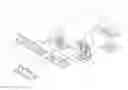
FIG. 1 is a flow diagram of a virtual pain visualization system according to an example embodiment;
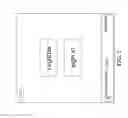
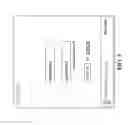
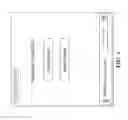
FIG. 2 illustrates a sample “register/sign in” page of the present invention;
FIG. 3 illustrates a sample “register” page of the present invention;
FIG. 4 illustrates a sample “sign in” page according to the present invention;
FIG. 5 illustrates a sample “welcome” page according to the present invention;
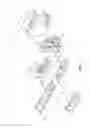
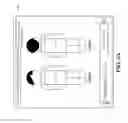
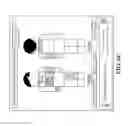
FIG. 6A illustrates a sample page showing a virtual body or human figure to demarcate areas, regions, or parts;
FIG. 6B illustrates another view of the page of FIG. 6A showing a user selection of an area, region, or part of the virtual body;
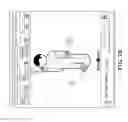
FIG. 6C illustrates another view of the page of FIG. 6A showing the ability to “undo” a selection by selecting the area, region, or part a second time;
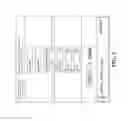
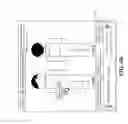
FIG. 7A illustrates a “search pain” page indicating for each area, region, or part the number of users that have registered pain in that area/region/part; and
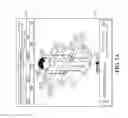
FIG. 7B illustrates a search results display page identifying on the virtual body the areas, regions, or parts that match the search criteria as well as the related number of users.
DETAILED DESCRIPTION
Referring to FIG. 1, a flow diagram of a virtual pain visualization system according to an example embodiment is shown. Initially, a user registers with the system 100. In a registration process 102, a user may be prompted to provide location information, an age, a sex, and a username and password. Registered users may sign in 100 by entering the username and password provided during the registration process.
After signing in, a user may select a “pain selection” or a “pain search” option 104. If a user selects the “pain selection” option, a web page with a virtual body is displayed 106. The body may be visually divided into areas or regions such as “right foot,” “left foot,” “right leg,” “left leg,” “stomach,” “chest,” etc. The body may be rotated to allow the user to access front and back areas or regions. The user is prompted to identify one or more areas or regions in which he or she is experiencing pain. After selecting an area or region (e.g., by clicking on it), the user may be prompted to confirm the selection 108. The selected area and date is registered in a database and a confirmation message (e.g., “anonymous user's pain in right shoulder registered on 11-20-09”) is displayed to the user 110.
If a user selects the “pain search” option, a web page with search criteria and a virtual body is presented 112. The user may be prompted to select, for example, a location, age, sex, and/or date. Upon submission of the search criteria, the database is searched and the web page is refreshed to identify areas or regions of the virtual body relevant to the user's search criteria. The web page may further display a message that lists the number of “pains” recorded by users that match the selection criteria. For instance, a user may search for pain data entered the day before, pain data entered yesterday by women, or pain data entered yesterday for women who are 30-40 years old.
Referring to FIG. 2, a sample “register/sign in” page according to an example embodiment is shown. Referring to FIG. 3, a sample “register” page according to an example embodiment is shown. A first time user may be prompted to enter a username and password and further provide location, age, and sex data. Referring to FIG. 4, a sample “sign in” page according to an example embodiment is shown. Referring to FIG. 5, a “welcome” page according to an example embodiment is shown. In an example embodiment, the user is prompted to select a “record pain” option or a “search pain” option.
Referring to FIGS. 6A-6C, sample “record pain” pages according to an example embodiment are shown. Referring to FIG. 6A, initially, a virtual body or human figure is presented on the display page with lines to demarcate areas, regions, or parts. The virtual body may comprise a front and back to allow the user to more clearly identify the area of pain he or she is experiencing. The page further comprises a message area 120 with instructions to the user (e.g., “record your pain by clicking on the part of one of the figures that hurts”).
Referring to FIG. 6B, when the user selects an area, region, or part of the virtual body, the display page is refreshed to identify the selected area, region, or part (e.g., “right wrist”). The selection is then registered in a database. In an example embodiment, the selection is registered with user's non-identifying data (e.g., location, age, and sex) and the date. The user may then select the “search pain” option to learn about others that have the same pain. Referring to FIG. 6C, a user that has selected an incorrect area, region, or part can “undo” a selection by selecting the area, region, or part a second time. The second selection unregisters the previously selected area, region, or part.
Referring to FIGS. 7A and 7B, a “search pain” page according to an example embodiment is shown. Referring to FIG. 7A, the “search pain” page may initially indicate for each area, region, or part the number of users that have registered pain in that area/region/part 142. The page further comprises a section for entering search criteria 140 to filter the results. In an example embodiment, the user may enter selection criteria for date, age, location, and sex. Referring to FIG. 7B, a search results display page identifies on the virtual body the areas, regions, or parts that match the search criteria as well as the related number of users.
A computerized virtual pain interface system and method is described in reference to the appended figures. The description with reference to figures is made to exemplify the disclosed computerized system and method and is not intended to limit the system and method to the representations in the figures. From the foregoing description, it can be understood that there are various ways to display a virtual body and illustrate selected areas or regions of pain while still falling within the scope of the present invention. In addition, the type of data that is registered and available for searching may be varied while still falling within the scope of the present invention. As such, while certain embodiments of the present invention are described in detail above, the scope of the invention is not to be considered limited by such disclosure, and modifications are possible without departing from the spirit of the invention as evidenced by the following claims.
Claims
What is claimed is:1. A computerized pain visualization method comprising:
(a) receiving at a server user registration data for a plurality of users;
(b) receiving at said server from at least a subset of said plurality of users a first selection of a record pain option;
(c) in response to receiving said first selection of said record pain option, generating at said server for display at user computers of the at least a subset of said plurality of users a body image;
(d) visually dividing said body image into a plurality of user selectable body areas;
(e) receiving at said serer from each of the at least a subset of said plurality of users a second selection of at least one selectable body area;
(f) storing in a database at said server for each of the at least a subset of said plurality of users non-identifying user data and body identifying data for said second selection of at least one selectable body area, the non-identifying user data including geographic location, age, sex, and date corresponding to when said second selection is received;
(g) receiving at said server from one of said plurality of users a third selection of said record pain option;
(h) receiving at said server from said one of said plurality of users a fourth selection of said at least one selectable body area and registering said fourth selection of said at least one selectable body area in the database along with the geographic location, age, and sex of said one of said plurality of users and a date corresponding to when said fourth selection is received;
(i) searching said database to calculate a number of said plurality of users that recorded pain for said at least one selectable body area for a predetermined time period;
(j) generating at said server an updated body image for display at said user computer of said one said plurality of users to identify on said body image said number of said plurality of users that recorded pain for said at least one selectable body area for said predetermined time period;
(k) receiving at said server a selection of a search pain option from another one of said plurality of users;
(l) receiving at said server inputted search criteria from said another one of said plurality of users including date, age, geographic location, and sex;
(m) searching said database for body identifying data matching said inputted search criteria;
(n) generating at said server for display at a user computer of said another one of said plurality of users an updated view of said body image to identify on said updated view of said body image:
(i) at least one body area consistent with said body identifying data matching said inputted search criteria; and
(ii) a number of said plurality of users that recorded pain for said at least one body area matching said inputted search criteria.
2. The computerized pain visualization method of claim 1 wherein generating at a server for display at said user computer a body image comprises generating a full human figure.
3. The computerized pain visualization method of claim 2 wherein identifying on said body image a plurality of user selectable body areas comprises identifying a head area, a chest area, two arm areas, and two leg areas.
4. The computerized pain visualization method of claim 2 wherein identifying on said body image a plurality of user selectable body areas comprises identifying a head area, a neck area, a chest area, a stomach area, two upper arm areas, two middle area arms, two lower area arms, two wrist areas, two upper leg areas and two lower leg areas.
5. The computerized pain visualization method of claim 2 wherein generating a full human figure comprises generating a first figure representative of a front of a human and a second figure representative of a back of a human.
6. The computerized pain visualization method of claim 1 wherein generating at a server for display at a user computer at a body image comprises generating a partial human figure.
7. The computerized pain visualization method of claim 1 wherein the predetermined time period is the date corresponding to when said fourth selection is receiving.
8. The computerized pain visualization method of claim 1 wherein the geographic location is a state and wherein the age is an age range.
9. A computerized pain visualization system comprising a server with programming instructions to:
(a) receive at said server user registration data for a plurality of users;
(b) receive at said server from at least a subset of said plurality of users a first selection of a record pain option;
(c) in response to receiving said first selection of said record pain option, generate at said server for display at user computers of the at least a subset of said plurality of users a body image;
(d) visually divide said body image into a plurality of user selectable body areas;
(e) receive at said server from the at least a subset of said plurality of users a second selection of at least one selectable body area;
(f) store in a database for the at least a subset of said plurality of users non-identifying user data and body identifying data for said selection of at least one selectable body area, the non-identifying user data including geographic location, age, sex, and date corresponding to when said second selection is received;
(g) receive at said server from one of said plurality of users a third selection of said record pain option;
(h) receive at said server from said one of said plurality of users a fourth selection of said at least one selectable body area;
(i) search said database to calculate a number of said plurality of users that recorded pain for said at least one selectable area on said date corresponding to when said fourth selection is received;
(j) generate at said server an updated body image for display at said user computer of said one of said plurality of users with said number of said plurality of users that recorded pain for said at least one body area on said date corresponding to when said fourth selection is received;
(k) receive at said server a selection of a search pain option from another one of said plurality of users;
(l) receive at said server inputted search criteria from said another one of said plurality of users including date, age, geographic location, and sex;
(m) search said database for body identifying data matching said inputted search criteria'
(n) generate at said server for display at a user computer of said another one of said plurality of users an updated view of said body image to identify on said updated view of said body image;
(i) at least one body area consistent with said body identifying data matching said inputted search criteria; and
(ii) a number of said plurality of users that recorded pain for said at least one body area matching said inputted search criteria.
10. The computerized pain visualization system of claim 9 wherein said body image comprises a full human figure.
11. The computerized pain visualization system of claim 9 wherein said plurality of user selectable body areas comprises a head area, a chest area, two arm areas, and two leg areas.
12. The computerized pain visualization system of claim 9 wherein said plurality of user selectable body areas comprises a head area, a neck area, a chest area, a stomach area, two upper arm areas, two middle arm areas, two lower arm areas, two wrist areas, two upper leg areas, and two lower leg areas.
13. The computerized pain visualization system of claim 10 wherein said full human figure comprises a first figure representative of a front of a human and a second figure representative of a back of a human.
14. The computerized pain visualization system of claim 9 wherein said body image comprises a partial human figure.
15. A computerized pain visualization method comprising:
(a) receiving at a server user registration data for a plurality of users;
(b) receiving at said server from at least a subset of said plurality of users a first selection of a record pain option;
(c) in response to receiving said first selection of said record pain option, generating at said server for display at user computers of the at least a subset of said plurality of users a body image;
(d) visually dividing said body image into a plurality of user selectable body areas;
(e) receiving at said server from each of the at least a subset of said plurality of users a second selection of at least one selectable body area;
(f) storing in a database at said server for each of the at least a subset of said plurality of users non-identifying user data and body identifying data for said second selection of at least one selectable body area, the non-identifying user data including geographic location, age, sex, and date corresponding to when said second selection is received;
(g) receiving at said server a selection of a search pain option from one of said plurality of users;
(h) receiving at said server inputted search criteria from said one of said plurality of users including date, age, geographic location, and sex;
(i) searching said database for body identifying data matching said inputted search criteria;
(j) generating at said server for display at a user computer of said one of said plurality of users an updated view of said body image to identify on said updated view of said body image:
(i) at least one body area consistent with said body identifying data matching said inputted search criteria; and
(ii) a number of said plurality of users that recorded pain for said at least one body area matching said inputted search criteria.
Images & Drawings included:
Sources:
- United States Patent and Trademark Office - verify current appl. status at the USPTO↗
Similar patent applications:
- » 13004603
Pain visualization system and method
Recent applications in this class:
- » 20250291539 2025-09-18
IMAGE MIRRORING SYSTEM AND METHOD - » 20250284449 2025-09-11
METHOD FOR DISPLAYING CASTED CONTENT ON SPLIT WINDOW AND CIRCUIT SYSTEM - » 20250284448 2025-09-11
CONTENT SHARING SYSTEM AND METHOD FOR SHARING PRESENTING DATA - » 20250278233 2025-09-04
ARTIFICIAL INTELLIGENCE-ASSISTED SMART MIRROR - » 20250272047 2025-08-28
MEDIA STREAMING TO AUGMENTED REALITY GLASSES OVER A LOCAL NETWORK - » 20250272046 2025-08-28
COMMUNICATION SYSTEM, INFORMATION PROCESSING SYSTEM, AND INFORMATION PROCESSING METHOD - » 20250258639 2025-08-14
APPLICATION CASTING - » 20250258638 2025-08-14
METHOD, SYSTEM AND APPARATUS FOR ACCESSING A USER INTERFACE OF A MOBILE COMPUTER - » 20250258637 2025-08-14
CONTENT SHARING CONTROL METHOD, APPARATUS, STORAGE MEDIUM, AND TERMINAL - » 20250258636 2025-08-14
HUMAN-COMPUTER INTERFACE-DRIVEN DEMAND-AWARE SCREEN SHARING
Recent applications for this Assignee:
- » 20240330150 2024-10-03
INFRASTRUCTURE QUALITY ASSURANCE FRAMEWORK - » 20240311218 2024-09-19
METHOD AND SYSTEM FOR MONITORING THE HEALTH OF A SERVER AND FOR PROACTIVELY PROVIDING ALERTS AND GUIDANCE BASED ON A SERVER HEALTH SCORECARD - » 20230379162 2023-11-23
System and method of authenticating devices for secure data exchange - » 20230136623 2023-05-04
Infrastructure quality assurance framework - » 20230110722 2023-04-13
Integrated development environment for development and continuous delivery of cloud-based applications - » 20220400016 2022-12-15
Resiliency architecture for identity provisioning and verification - » 20220400009 2022-12-15
System and method of authenticating devices for secure data exchange - » 20220164171 2022-05-26
Certifying deployment artifacts generated from source code using a build pipeline - » 20210224749 2021-07-22
Enterprise message management system and method - » 20210073672 2021-03-11
Determining impact of features on individual prediction of machine learning based models