Material application to fishing lures possessing temperature sensitive chromaticity vicissitude creating a color changing fishing lure or rubber bait
US20170079255A1
2017-03-23
15/370,241
2016-12-06
✅ Patent granted
US 9,814,222 B2
2017-11-14
-
-
Marc Burgess | Morgan T Barlow
Jason H. Vick | Sheridan Ross, PC
2036-12-06
Abstract:
A process where materials are applied to a plastic fishing lure surface, producing a lure that possesses chromatic vicissitude as a result of water temperature fluctuations. A non-thermochromatic base layer of one or more colors is applied to the plastic fishing lure. This layer acts as the visual appearance of the fishing lure in the absence of temperature fluctuations. Clear extender is then used as an additive to the thermochromatic ink. This addition to the ink then allows the ink to be sprayed onto the surface of the lure. This ink-extender amalgam can be applied in multiple layers however the bottom layer must have the least amount of hue saturation. Each layer thereafter would increase in hue saturation. Multiple hue combinations can be utilized. Once the desired number of thermochromatic layers has been applied, an ultra-clear super high gloss lacquer finish is sprayed on to the exterior of all layers.
Assignee:
- 2028631 ONTARIO INC. 3 🇨🇦 Ontario, Canada
Applicant:
Interested in similar patents?
Get notified when new applications in this technology area are published.
Classification:
A01K85/00 » CPC main
Artificial bait for fishing
A01K85/01 » CPC further
Artificial bait for fishing with light emission, sound emission, scent dispersal or the like
Description
RELATED APPLICATION DATA
This application claims the benefit of and priority under 35 U.S.C. §119(e) to U.S. patent application Ser. No. 61/422,152, filed Dec. 11, 2010, entitled “Material Application to Fishing Lures Possessing Temperature Sensitive Chromaticity Vicissitude Creating a Color Changing Fishing Lure or Rubber Bait,” which is incorporated herein by reference in its entirety.
SUMMARY
This invention relates to the unique process by which a thermochromatic ink is applied the surface of a plastic fishing lure.
A process where materials are applied to a plastic fishing lure surface is performed, producing a lure that possesses chromatic vicissitude as a result of water temperature fluctuations. A non-thermochromatic base layer of one or more colors is applied to the plastic fishing lure. This layer acts as the visual appearance of the fishing lure in the absence of temperature fluctuations. Clear extender is then used as an additive to the thermochromatic ink. This addition to the ink then allows the ink to be sprayed onto the surface of the lure. This ink-extender amalgam can be applied in multiple layers however the bottom layer must have the least amount of hue saturation. Each layer thereafter would increase in hue saturation. Multiple hue combinations can be utilized. Once the desired number of thermochromatic layers has been applied, an ultra-clear super high gloss lacquer finish is sprayed on to the exterior of all layers.
The employment of thermochromatic inks to produce color changing effects has been previously utilized on fishing lures. These previous uses however, have employed the application to the entirety of the lure. The result of this previous application is blocks of color. As it is commonly understood, fishing lures are designed with the purpose of resembling and moving like the prey of a fish. As the prey of fish never appears in nature as blocks of color, this is problematic for the fisherman who is attempting to employ lures that have the maximum degree of authenticity.
This particular process however, enables application in a manner that produces a gradient effect in addition to the chromatic vicissitude; that is more like that seen in nature, ergo, more life-like. Thermochromatic inks cannot be sprayed onto to a surface without the addition of a thinning agent due to its thick viscosity. It would stand to reason then that a process that allows the ink to be sprayed on in a gradient pattern, versus a solid, achieves a more accurately realistic finish. This results in attaining the design objectives of a fishing lure with exactitude and realism. Aspects of the invention are directed toward:
-
- 1. A plastic fishing lure having materials applied to it in such a manner that result in temperature sensitive chromatic vicissitude and design required exactitude and realism.
- 2. The fishing lure of aspect 1, wherein a base or ‘primer’ layer of non-thermochromatic coating is applied to the plastic body of the fishing lure in preparation for the application and bonding of a thermochromatic ink layer.
- 3. The thermochromatic ink of aspect 2 is mixed with a clear extender resulting in an ink-extender amalgam.
- 4. The ink-extender amalgam of aspect 3 is then applied to the fishing lure of claim 1 in a sprayed on gradient on top of the bonding layer of claim 2. This layer enables thermochromatic sensitivity to water temperature variations and provides the optic achievement of fish prey realism.
- 5. The ink-extender amalgam of aspect 3 is applied in one or more layers with the bottom layer being of least amount of hue saturation and each additional layer increasing with hue saturation. Each layer possessing a different temperature sensitivity.
- 6. Upon completion of the layers of aspect 5, the fishing lure of claim 1 has a final layer of ultra clear super high gloss lacquer finish sprayed upon it.
BRIEF DESCRIPTION OF THE DRAWINGS
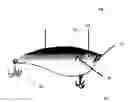
FIG. 1 illustrates an exemplary fishing lure in accordance with an aspect of the invention; and
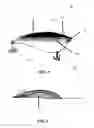
FIG. 2 illustrates a cross-section of a surface of the fishing lure coated with one base layer of non-thermochromatic ink and multiple layers of thermochromatic ink of different colors.
DETAILED DESCRIPTION
FIG. 1 shows an illustration of a standard fishing lure that will be spray coated with multiple layers of thermochromatic ink- extender amalgam and a single base layer of non-thermochromatic coating. Although standard fishing lures come in various sizes, shapes, and hardness, they will be coated with similar gradient patterns and designs.
FIG. 1 shows an exemplary fishing lure 10. The fishing lure 10 includes an upper body 1. The exemplary fishing lure includes eyes 20, mouth lines 30, gill lines 40, fins and scale markings and one or more hooks 50.
The upper body 1 of the top portion 60 of the fishing lure 10 will be coated with a thermochromatic ink-extender amalgam in a gradient pattern. The gradient pattern will start solid and will fade in opacity as the coating traverses the body of the lure. The gradient effect will stop halfway to two-thirds of the way down the body of the lure. The gradient effect on the lure will consist of multiple layers of thermochromatic ink-extender amalgam and one non-thermochromatic layer of different colors. The layering of the gradient pattern will allow the lure to possess color changing properties in response to water temperature changes.
Further details will be added to the standard lure such as the eyes 20, mouth lines 30, gill lines 40, fins and scale markings, etc., using non-thermochromatic ink for a more realistic effect. Using these details on the lure 10, in addition to the color changing gradient effect, will allow the lure to resemble actual prey to predator fish.
FIG. 2 illustrates a cross section of the surface of a standard fishing lure coated with one base layer of non-thermochromatic ink and multiple layers of thermochromatic ink of different colors.
-
- Label 3 shows a cross section of the bottom layer of the top portion of a standard fishing lure. This layer will be coated with a layer of non-thermochromatic ink and will be the base layer of the fishing lure.
- Label 4 shows a layer of thermochromatic ink-extender amalgam on top of the base layer 3 that will be transparent or solid depending on the temperature of the water. If this ink-extender amalgam layer is in the transparent state then it will expose the base non-thermochromatic layer. If this layer is in the solid state then it will cover the base non-thermochromatic layer.
- Label 5 shows a layer of thermochromatic ink-extender amalgam on top of another ink-extender amalgam layer that will be transparent or solid depending upon the temperature of the water. If this amalgam layer is in the transparent state, then it will expose the underlying amalgam layer. If this layer is in the solid state, then it will cover the underlying amalgam layer. Each thermochromatic-extender layer will react at a different temperature than the previous or underlying thermochromatic-extender layer.
Claims
1. A plastic fishing lure having materials applied to it in such a manner that result in temperature sensitive chromatic vicissitude and design required exactitude and realism.
2-6. (canceled)
Images & Drawings included:
Sources:
- United States Patent and Trademark Office - verify current appl. status at the USPTO↗
Similar patent applications:
- » 20130333272
Material application to fishing lures possessing temperature sensitive chromaticity vicissitude creating a color changing fishing lure or rubber bait - » 20150351373
Material application to fishing lures possessing temperature sensitive chromaticity vicissitude creating a color changing fishing lure or rubber bait - » 20180064081
Material application to fishing lures possessing temperature sensitive chromaticity vicissitude creating a color changing fishing lure or rubber bait - » 20190008127
Material application to fishing lures possessing temperature sensitive chromaticity vicissitude creating a color changing fishing lure or rubber bait - » 20200060247
Material application to fishing lures possessing temperature sensitive chromaticity vicissitude creating a color changing fishing lure or rubber bait - » 20220030839
MATERIAL APPLICATION TO FISHING LURES POSSESSING TEMPERATURE SENSITIVE CHROMATICITY VICISSITUDE CREATING A COLOR CHANGING FISHING LURE OR RUBBER BAIT
Recent applications in this class:
- » 20250098653 2025-03-27
FISHING LURE - » 20220369613 2022-11-24
FISHING LURES - » 20220142131 2022-05-12
Fishing bait, a mouldable composition for manufacturing the fishing bait, a method for manufacturing the fishing bait and a use of the mouldable composition - » 20220087240 2022-03-24
Fishing Lure - » 20220087239 2022-03-24
Variable Weight Cast-Mold Fishing Jig - » 20220007623 2022-01-13
Fishing lure sheet - » 20210298279 2021-09-30
STICKBAIT FISHING LURE AND PROCESS OF FORMING AN IMPROVED STICKBAIT FISHING LURE - » 20210282380 2021-09-16
FISHING LURE - » 20210282379 2021-09-16
LURE WITH MOVABLE HOOK - » 20210137084 2021-05-13
COMBINATION LURE
Recent applications for this Assignee:
- » 20150351373 2015-12-10
Material application to fishing lures possessing temperature sensitive chromaticity vicissitude creating a color changing fishing lure or rubber bait - » 20130333272 2013-12-19
Material application to fishing lures possessing temperature sensitive chromaticity vicissitude creating a color changing fishing lure or rubber bait