Soft touch laminates constructed with improved fire retardant properties for transportation
US20170087809A1
2017-03-30
15/350,548
2016-11-14
✅ Patent granted
US 10,596,788 B2
2020-03-24
-
-
Nicole M. Buie-Hatcher
Hahn Loeser + Parks LLP | Scott M. Oldham, Esq.
2037-10-09
Abstract:
Soft touch fire retardant laminates with PVC middle layers, foamed or unfoamed, and multiblock copolymer or polyurethane or silicone top layers which meet FAA requirements are disclosed.
Inventors:
- Matthew A. HARTHCOCK 6 🇺🇸 Stow, OH, United States
- Robert G. PIERSON 9 🇺🇸 Akron, OH, United States
- Mark D. TENNANT 5 🇺🇸 Cuyahoga Falls, OH, United States
Assignee:
- Schneller LLC 8 🇺🇸 Kent, OH, United States
Applicant:
Interested in similar patents?
Get notified when new applications in this technology area are published.
Classification:
B32B27/065 » CPC main
Layered products comprising synthetic resin as the main or only constituent of a layer, next to another layer of a of foam
B32B5/02 » CPC further
Layered products characterised by the non- homogeneity or physical structure, i.e. comprising a fibrous, filamentary, particulate or foam layer; Layered products characterised by having a layer differing constitutionally or physically in different parts characterised by structural features of a layer
B32B5/18 » CPC further
Layered products characterised by the non- homogeneity or physical structure, i.e. comprising a fibrous, filamentary, particulate or foam layer; Layered products characterised by having a layer differing constitutionally or physically in different parts characterised by features of a layer of foamed material
B32B5/245 » CPC further
Layered products characterised by the non- homogeneity or physical structure, i.e. comprising a fibrous, filamentary, particulate or foam layer; Layered products characterised by having a layer differing constitutionally or physically in different parts characterised by the presence of two or more layers which are next to each other and are fibrous, filamentary, formed of particles or foamed one layer being a fibrous or filamentary layer another layer next to it being a foam layer
B32B7/00 » CPC further
Layered products characterised by the relation between layers; Layered products characterised by the relative orientation of features between layers, or by the relative values of a measurable parameter between layers, i.e. products comprising layers having different physical, chemical or physicochemical properties; Layered products characterised by the interconnection of layers
B32B7/12 » CPC further
Layered products characterised by the relation between layers; Layered products characterised by the relative orientation of features between layers, or by the relative values of a measurable parameter between layers, i.e. products comprising layers having different physical, chemical or physicochemical properties; Layered products characterised by the interconnection of layers; Interconnection of layers using interposed adhesives or interposed materials with bonding properties
B32B17/04 » CPC further
Layered products essentially comprising sheet glass, or glass, slag, or like fibres in the form of fibres or filaments bonded with or embedded in a plastic substance
B32B27/08 » CPC further
Layered products comprising synthetic resin as the main or only constituent of a layer, next to another layer of a of synthetic resin
B32B27/12 » CPC further
Layered products comprising synthetic resin next to a fibrous or filamentary layer
B32B27/18 » CPC further
Layered products comprising synthetic resin characterised by the use of special additives
B32B27/20 » CPC further
Layered products comprising synthetic resin characterised by the use of special additives using fillers, pigments, thixotroping agents
B32B27/283 » CPC further
Layered products comprising synthetic resin comprising synthetic resins not wholly covered by any one of the sub-groups - comprising polysiloxanes
B32B27/302 » CPC further
Layered products comprising synthetic resin comprising vinyl (co)polymers; comprising acrylic (co)polymers comprising aromatic vinyl (co)polymers, e.g. styrenic (co)polymers
B32B27/304 » CPC further
Layered products comprising synthetic resin comprising vinyl (co)polymers; comprising acrylic (co)polymers comprising vinyl halide (co)polymers, e.g. PVC, PVDC, PVF, PVDF
B32B27/34 » CPC further
Layered products comprising synthetic resin comprising polyamides
B32B27/36 » CPC further
Layered products comprising synthetic resin comprising polyesters
B32B27/40 » CPC further
Layered products comprising synthetic resin comprising polyurethanes
B32B33/00 » CPC further
Layered products characterised by particular properties or particular surface features, e.g. particular surface coatings; Layered products designed for particular purposes not covered by another single class
C09J7/21 » CPC further
Adhesives in the form of films or foils characterised by their carriers Paper; Textile fabrics
C09J7/245 » CPC further
Adhesives in the form of films or foils characterised by their carriers; Plastics; Metallised plastics based on macromolecular compounds obtained by reactions involving only carbon-to-carbon unsaturated bonds Vinyl resins, e.g. polyvinyl chloride [PVC]
C09J7/29 » CPC further
Adhesives in the form of films or foils characterised by their carriers Laminated material
B32B2255/10 » CPC further
Coating on the layer surface on synthetic resin layer or on natural or synthetic rubber layer
B32B2255/26 » CPC further
Coating on the layer surface Polymeric coating
B32B2260/021 » CPC further
Layered product comprising an impregnated, embedded, or bonded layer wherein the layer comprises an impregnation, embedding, or binder material; Composition of the impregnated, bonded or embedded layer Fibrous or filamentary layer
B32B2262/101 » CPC further
Composition or structural features of fibres which form a fibrous or filamentary layer or are present as additives; Inorganic fibres Glass fibres
B32B2264/00 » CPC further
Composition or properties of particles which form a particulate layer or are present as additives
B32B2264/10 » CPC further
Composition or properties of particles which form a particulate layer or are present as additives Inorganic particles
B32B2264/102 » CPC further
Composition or properties of particles which form a particulate layer or are present as additives; Inorganic particles Oxide or hydroxide
B32B2266/0235 » CPC further
Composition of foam; Organic; Materials belonging to; Vinyl resin Vinyl halide, e.g. PVC, PVDC, PVF, PVDF
B32B2307/3065 » CPC further
Properties of the layers or laminate having particular thermal properties; Resistant to heat Flame resistant or retardant, fire resistant or retardant
B32B2405/00 » CPC further
Particular articles
B32B2405/00 » CPC further
Adhesive articles, e.g. adhesive tapes
B32B2601/00 » CPC further
Upholstery
B32B2605/00 » CPC further
Vehicles
B32B2605/18 » CPC further
Vehicles Aircraft
C09J2427/006 » CPC further
Presence of halogenated polymer in the substrate
Y10T428/249981 » CPC further
Stock material or miscellaneous articles; Web or sheet containing structurally defined element or component; Composite having voids in a component [e.g., porous, cellular, etc.] Plural void-containing components
Y10T428/249983 » CPC further
Stock material or miscellaneous articles; Web or sheet containing structurally defined element or component; Composite having voids in a component [e.g., porous, cellular, etc.]; With component specified as adhesive or bonding agent As outermost component
Y10T428/249991 » CPC further
Stock material or miscellaneous articles; Web or sheet containing structurally defined element or component; Composite having voids in a component [e.g., porous, cellular, etc.]; With nonvoid component of specified composition Synthetic resin or natural rubbers
Y10T428/2848 » CPC further
Stock material or miscellaneous articles; Web or sheet containing structurally defined element or component and having an adhesive outermost layer Three or more layers
Y10T428/31544 » CPC further
Stock material or miscellaneous articles; Composite [nonstructural laminate]; Of fluorinated addition polymer from unsaturated monomers Addition polymer is perhalogenated
B32B27/06 IPC
Layered products comprising synthetic resin as the main or only constituent of a layer, next to another layer of a
B32B5/24 IPC
Layered products characterised by the non- homogeneity or physical structure, i.e. comprising a fibrous, filamentary, particulate or foam layer; Layered products characterised by having a layer differing constitutionally or physically in different parts characterised by the presence of two or more layers which are next to each other and are fibrous, filamentary, formed of particles or foamed one layer being a fibrous or filamentary layer
C09J7/24 IPC
Adhesives in the form of films or foils characterised by their carriers; Plastics; Metallised plastics based on macromolecular compounds obtained by reactions involving only carbon-to-carbon unsaturated bonds
B32B27/28 IPC
Layered products comprising synthetic resin comprising synthetic resins not wholly covered by any one of the sub-groups -
B32B27/30 IPC
Layered products comprising synthetic resin comprising vinyl (co)polymers; comprising acrylic (co)polymers
Description
CROSS REFERENCE TO RELATED APPLICATIONS
This application is a divisional of co-pending U.S. application Ser. No. 14/213,554 filed Mar. 14, 2014, which in turns claims the benefit of U.S. Provisional Application No. 61/782,907, filed Mar. 14, 2013, all of which are incorporated herein by reference.
FIELD OF THE INVENTION
The present invention relates to multi-layered laminates for use in surface covering applications having improved fire retardant properties. These materials have the look and feel of leather with a greater resistance to burning than presently available soft touch laminates.
BACKGROUND OF THE INVENTION
While “Soft-Touch”/“Soft-Feel” leather like materials are well known in the art, the traditional products have undesirable burn properties when used in commercial transportation (for upholstering or covering surfaces; i.e. they readily burn and/or give off toxic fumes/smoke. Current “soft-touch” products for general use (automotive, consumer products, etc.) readily burn or melt and produce toxic smoke. In commercial aviation there are even fewer options; due to the stringent regulatory requirements designed to protect passenger safety in the event of a fire. Synthetic leathers make up the majority of what is used. These often have marginal burn properties which limits where and how they can be used. Additionally many have poor durability and stain easily.
The art has tried to address this by using fire resistant silicones. Silicone products have been developed that can be used for a soft feel and some of them can meet aviation requirements. However these silicones feel “sticky” or “tacky” and while soft, are generally not mistaken for leather. Additionally, because of the stickiness, silicones can pick up and retain dirt and stains.
Further, other soft feel products do not have great damage resistance/durability rendering them unsuitable for high wear areas such as aircraft or other interiors or had a soft feel but lacked the compressive quality or could not pass the burn requirements.
DESCRIPTION OF THE DRAWING FIGURES
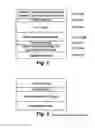
FIG. 1 is a schematic representation of a first embodiment of a laminate of the present disclosure;
FIG. 2 is a schematic representation of a second embodiment of a laminate of the present disclosure;
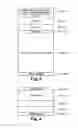
FIG. 3 is a schematic representation of a third embodiment of a laminate of the present disclosure, and
FIG. 4 is a schematic representation of a fourth embodiment of a laminate of the present disclosure.
DETAILED DESCRIPTION OF PREFERRED AND ALTERNATE EMBODIMENTS
The present invention is an engineered high performance decorative laminate that has a soft feel, for example like leather or synthetic leather. It will meet or exceed all Federal Aviation Administration (“FAA”) regulations. Specifications for fire, smoke and toxic gases for use in all areas of commercial aircraft are considered. It will also have excellent stain resistance and durability. By coating a poly(vinyl halide) or a poly(vinylidene halide) film with a flame retarded multiblock copolymer and optimizing this layer for feel and burn these limitations were overcome.
“Multiblock copolymers” as used herein include polyurethanes (PU), copolyamides (COPA), copolyesters (COPE), and styrenics such as SIS, SBS, SIBS and the like. These copolymers are preferably cross-linkable thermoplastics or thermosets.
“Poly(vinyl chloride)” or “PVC,” as used herein, includes homopolymers of vinyl chloride, as well as polymerization products of vinyl chloride and one or more co-monomers. For example, the PVC resin can be a copolymer of vinyl chloride and ethylene, or a copolymer of vinyl chloride and propylene. The PVC resin can also be the polymerization product of vinyl chloride and an ester monomer having formula H2C═C(R1)OC(═O)R2 or H2C═C(R1)C(═O)OR2, where R1 and R2 are, independently, C1-12 alkyl. An example of such a resin is a copolymer of a vinyl chloride monomer and a methyl methacrylate monomer. Another example of such a resin is a copolymer of a vinyl chloride monomer and a vinyl acetate monomer. Combinations of these PVC resins may also be used.
“Poly(vinylidene fluoride)” or “PVDF,” as used herein, includes homopolymers of vinylidene floride, as well as polymerization products of vinylidene fluoride and one or more co-monomers. For example, the PVDF resin can be a copolymer of vinylidene fluoride and hexafluoropropylene, or a copolymer of vinylidene fluoride and chlorotrifluoroethylene. The PVDF resin can also be the polymerization product of vinylidene fluoride and an ester monomer having formula H2C═C(R1)OC(═O)R2 or H2C═C(R1)C(=O)OR2, where R1 and R2 are, independently, C1-12 alkyl. An example of such a resin is a copolymer of a vinylidene fluoride monomer and a methyl methacrylate monomer. Another example of such a resin is a copolymer of a vinylidene fluoride monomer and a vinyl acetate monomer. Combinations of these PVDF resins may also be used. Blends of PVDF with other polymers can also be used, for example PVDF/acrylic blends.
“Prepreg” are coatings in which polymers such as PET, PPS, and PEEK are suspended in an organic liquid, optionally with flame retardants.
“Silicone foam” is a silicone material containing open and/or closed cells and are available from a variety of manufacturers. Foams are available in a wide variety of durometers and with glass backing for durability. Specifically selected and designed systems with improved flame retardant properties beyond the natural flame retardant properties of silicone based materials is required to meet the intent of the invention.
“Organosols” are coatings in which PVC is suspended in an organic liquid optionally with flame retardants.
Suitable adhesives and primers include, but are not limited to: phenolic resins, polyesters, epoxies, polyurethanes, and methacrylics. Because the adhesives need to be compatible with the materials they are bonding and provide the requisite strength for the application, typically the manufacturer of the laminate layer will specify which adhesives or primers are compatible in use with their products.
The compositions contain one or more flame retardant or combinations of flame retardants. The flame retardants can be liquid or solid. Preferred flame retardants include but are not limited to aluminum trihydroxide, available from various suppliers, including Alcoa, under the product name Hydrated Aluminas; magnesium hydroxide, available from various suppliers, including Albermarle, under the trade name MAGNIFIN (e.g., Magnifin H-10 or Magnifin H-5); flame-retardant plasticizer such as phosphate ester plasticizers, available from various suppliers, including Ferro, under the trade name SANTICIZER (e.g., Santicizer 2148), tetrabromophthalates, polymeric plasticizers (for example, Admix 412, available from Teknor Apex), combinations of bromo and chlorophthalates (for example, Unitex 44-55), and chlorinated hydrocarbons (for example, Cercelor S52); and ammonium octamolybdate, available from various suppliers, including Polymer Additives Group, under the trade name Climax AOM; Alkyl aluminum phosphonates and phosphinates such as AMMP and DEPAL sold by ICL-IP and Clariant, respectively, zinc sulfides, sold by Sachtleben, zinc borates sold by US Borax Inc, and zinc hydroxy stannates sold as ZS 286 by 3N International; bismuth oxide, sold by 3N International. Additional flame retardants are described in Linsky et al., U.S. Pat. No. 5,886,072, and Shtekler et al., WO 2012/088080, which are hereby incorporated by reference in its entirety. The compositions preferably include at least about 50 parts total flame retardant per 100 parts polyvinyl chloride resin, and more preferably from about 50 parts to about 200 parts total flame retardant per 100 parts polyvinyl chloride resin. The composition may include, for example, from about 5 parts to about 60 parts, from about 10 parts to about 50 parts, or from about 20 parts to about 40 parts flame retardant plasticizer per 100 parts polyvinyl chloride resin.
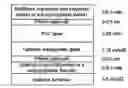
In one embodiment of the present invention, as schematically illustrated in FIG. 2, the laminate comprises a top layer of clear flame retarded multiblock copolymer film bonded to a clear poly(vinyl halide) or a poly(vinylidene halide) film, optionally containing fire retardants. This laminate is then bonded to a flame retarded PVC layer containing pigments and flame retardants. It may be necessary to use a primer in order to attain good adhesion between the laminate and the PVC layer. These layers are bonded with a suitable glass fabric that has been impregnated with a fused organosol material. Optionally there may be a fluoropolymer layer bonded to the other side of the impregnated glass in which case an optional primer layer would be required. Commercially available examples of suitable materials for this embodiment are set forth below:
| FAA | ||
| speci- | ||
| fica- | Soft Touch Film |
| tion | 1 | 2 | 3 | 4 | 5 | 6 | 7 | 8 | |
| OSU | Peak | 65 | 62 | 76 | 53 | 59 | 71 | 43 | 49 | 53 |
| Heat | kw/m2 | |||||||||
| Release | Total | 65 | 51 | 50 | 49 | 44 | 37 | 44 | 37 | 42 |
| kw × | ||||||||||
| min/m2 | ||||||||||
| Smoke | Ds | 200 | 99 | 126 | 94 | 97 | 86 | 104 | 121 | 100 |
| 4 min | ||||||||||
The soft touch film is a grade of Aerofine available from Akzo Nobel, preferably the 8901 that is 2.5-2.7 mils thick and is composed of a polyurethane over a PVC base. The glass fiber is sold as 7628 Greige glass from BGF. The middle PVC layer was S1670 sold by Spectrum. The prepreg was S1687 sold by Spectrum. The acrylic primer is 68080 a flexible product adhesive sold by Dupont.
In another embodiment of the present invention the laminate comprises a top layer of clear urethane/polycarbonate film bonded to a clear PVDF/acrylic film containing fire retardants which is then bonded to a PVC layer containing pigments and flame retardants. These layers are bonded with a suitable adhesive to a fire resistant silicone foam/glass fabric. Optionally there may be a fluoropolymer layer between the PVC layer and the silicone foam.
Referring to FIG. 1, in this embodiment the laminate comprises a top ply of a clear layer that is about from 0.5 mil to about 3 mil of a flame retarded multiblock copolymer on a poly(vinyl halide) or a poly(vinylidene halide) layer. Suitable films are, for example sold as Aerofine 8900 by Akzo Nobel. Optionally bound to the top ply using a suitable primer up to 0.5 mil in thickness. The prior materials are then bonded to a PVC layer that is 1 to 25 mil in thickness which can be foamed or unfoamed. An organosol impregnated glass fabric is optionally bound to the PVC layer, wherein the glass fabric weighs from about 1 to about 10 oz/yd2, and the organosol is fused . A fluoropolymer layer (PVF or PVDF) such as Tedlar® offered by Dupont or Fluorex® products offered by Akzo Nobel is optionally indirectly bonded to PVC, indirectly as a primer layer is required to be used in conjunction with the optional fluoropolymer layer. The fluoropolymer layer is preferably from about 0.5-3.0 mils thick. An adhesive layer is then bonded as the final layer; the adhesive layer is preferably 1 to 5 oz/yd2.
Referring to FIG. 3, in this embodiment the laminate comprises a top ply of clear 1.0-3 mil urethane/polycarbonate film. Suitable films are manufactured by Akzo Nobel. Bound to the top ply using a suitable adhesive, such as Dupont 68080 adhesive primer, is a 0.8-1.5 mil clear PVDF/acrylic film containing fire retardants such as Airfilm LHR (Low Heat Release) offered by Schneller. The prior materials are then bonded to a fluoropolymer layer (PVF or PVDF) such as Tedlar® offered by Dupont of Soliant products offered by Akzo Nobel. The fluoropolymer layer is preferably from about 0.5-2.0 mils thick. A silicone foam with glass backing is bound to the fluoropolymer layer using a suitable adhesive such as HA 211 from Schneller. In one embodiment the silicone foam is 63 mils thick. Suitable silicone foams can be purchased from Rogers Corporation under the brand Bisco®.
Referring to FIG. 4, in this embodiment the laminate comprises a fluoropolymer backing such as PVDF or PVF onto which a PVC material from 2-10 mils in thickness is applied. The PVC can be calendared, extruded or coated; it may contain pigments for coloration and fire retardants. In some instances it may be comprised of a couple of different layers of PVC and some or all of it may be foamed. A top ply of 0.1-0.5 mils polyurethane/silicone is applied to the PVC.
Table 1 below sets forth the desired characteristics for the laminates of the present invention including relevant regulations where applicable.
Laminates of the present invention can be applied by any suitable means. In certain instances they may be vacuum formed into place using means known in the art or applied using rollers or other means of exterior pressure.
One of skill in the art will appreciate that a substantial degree of deviation from the processes and materials described herein is possible and still be within the spirit of the invention.
| TABLE 1 | |||
| Targets plus | |||
| team inputs | Test method | Characteristics | |
| 1 | With Pressure | Adhesion (ISO 4578) | |
| sensitive adhesive | and burn (FAA), | ||
| 2 | With Heat active | 65/65/200 and FAA | |
| adhesives | and OEM toxicity | ||
| 3 | Resistance to | AIMS 04-09-000, | |
| cleaning agent | AIMS 04-09-001 | ||
| Durability | and typical house | ||
| cleaning agents | |||
| 4 | Tensile and elonga- | min. 70N. 60 to 80% | |
| tion ISO 527 | |||
| 5 | Tear ISO 4674 | min. 0.8N | |
| 6 | Dimensional changes | less than 1.5% change | |
| AIMS 04-09-000 | after 75° C. for 24 h. | ||
| 7 | Taber weight loss. | 10 to 20 mg loss | |
| ISO 9352 | |||
| 8 | Five fingers scratch | visually as good as | |
| or ASTM 7027 | our laminates | ||
| 9 | 60 sec Vertical | FAR 25.853 | 150, 10, 0 |
| Burn | |||
| 10 | NBS smoke | <200 | |
| density | |||
| 11 | OSU | Peak/total: 65/65, | |
| all substrate and all | |||
| adhesives | |||
| 12 | Toxicity | ABD 0031, vs Boeing | Hydrogen Fluoride < |
| D6-51377 | 100/200 ppm | ||
| Hydrogen chloride < | |||
| 150/500 ppm | |||
| Hydrogen cyanide < | |||
| 150/150 ppm | |||
| Sulfur dioxide < | |||
| 100/100 ppm | |||
| Nitrous gases < | |||
| 100/100 ppm | |||
| Carbon monoxide < | |||
| 1000 ppm | |||
Claims
We claim:1. A laminate material comprising:
a) a base layer comprising a silicone foam;
b) a fluoropolymer layer;
c) a PVC middle layer, foamed or unfoamed; and
d) a multiblock copolymer top layer.
2. The laminate material of claim 1 further comprising a fluoropolymer layer between the base layer and the PVC middle layer.
3. The laminate material of claim 1 in which the PVC middle layer further comprises pigments.
4. The laminate material of claim 1 in which the PVC middle layer further comprises flame retardants to meet FAA regulations.
5. The laminate material of claim 1 in which the base layer further comprises a reinforcing fabric.
6. The laminate material of claim 5 in which the reinforcing fabric is comprised of glass fibers.
7. The laminate material of claim 1 further comprising an adhesive layer that is comprised of acrylic, polyester, polyurethane or phenolic resins.
8. The laminate material of claim 1 further comprising an adhesive layer that further comprises flame retardants.
9. The laminate material of claim 1 wherein the silicone foam layer is between 10-100 mils thick.
10. The laminate material of claim 1 wherein the a fluoropolymer layer is between 0.5-3.0 mils thick.
11. The laminate material of claim 1 wherein the a PVC layer is between 2-25 mils thick.
12. The laminate material of claim 1 wherein the laminate is flame retardant in accordance with FAA regulations.
13. The laminate material of claim 1 wherein the laminate complies with the 60 sec vertical burn requirements, NBS some density and OSU of FAR 25.83.
Images & Drawings included:
Sources:
- United States Patent and Trademark Office - verify current appl. status at the USPTO↗
Similar patent applications:
- » 20140315010
Soft touch laminates constructed with improved fire retardant properties for transportation - » 20170057210
Soft touch laminates constructed with improved fire retardant properties for transportation - » 20170087805
Soft touch laminates constructed with improved fire retardant properties for transportation
Recent applications in this class:
- » 20250206001 2025-06-26
SYSTEM AND METHOD FOR CLOSING OPENINGS - » 20250178320 2025-06-05
BEARING LAMINATE COMPRISING A FOAM LAYER - » 20250135755 2025-05-01
HYBRID ACOUSTIC FLOOR PANEL - » 20250042139 2025-02-06
LAMINATE BARRIER WITH CERAMIC OR AEROGEL LAYER DEFINING VOIDS CONTAINING ENDOTHERMIC MATERIAL - » 20250042138 2025-02-06
MULTI-LAYER POLYMER FOAM FILM FOR PACKAGING APPLICATIONS AND THE METHOD OF MAKING THE SAME - » 20250026113 2025-01-23
LAMINATE BARRIER WITH SILICONE FOAM LAYER DEFINING VOIDS CONTAINING ENDOTHERMIC MATERIAL - » 20250026112 2025-01-23
Structural Reinforcement of Reusable Plastic Foam Laminates and Kits - » 20250018692 2025-01-16
CO-EXTRUDED SHEET - » 20250010589 2025-01-09
CO-EXTRUDED SHEET - » 20250001738 2025-01-02
FLOORING PANEL
Recent applications for this Assignee:
- » 20170087805 2017-03-30
Soft touch laminates constructed with improved fire retardant properties for transportation - » 20170057210 2017-03-02
Soft touch laminates constructed with improved fire retardant properties for transportation - » 20170001414 2017-01-05
Polyurethane based rigid flooring laminate - » 20140315010 2014-10-23
Soft touch laminates constructed with improved fire retardant properties for transportation - » 20100272976 2010-10-28
Decorative laminates incorporating flame retardant engineering thermoplastic films - » 20100227132 2010-09-09
Polyurethane based rigid flooring laminate - » 20080233365 2008-09-25
Decorative laminate with graffiti resistance and improved combustion reaction properties