Bicycle pedaling frequency sensor
US20170097375A1
2017-04-06
15/127,791
2015-04-24
✅ Patent granted
US 10,156,582 B2
2018-12-18
WO; PCT/CN2015/077363; 20150424
WO; WO2016/004780; 20160114
Clayton E Laballe | Dennis Hancock
Jeanette Meng Nakagawa
2035-05-25
Abstract:
The invention discloses a bicycle pedaling frequency sensor, comprising a signal acquisition unit arranged on a circuit board and used for acquiring motion acceleration changes and/or angular velocity changes in different rotation directions of a middle axle in real time, a data transmission unit for transmitting the acquired data to a terminal, and a power supply for supplying power to each unit to work. When in use, the pedaling frequency sensor is fixed on the hollow middle axle of a bicycle, and the middle axle, a crank and pedals of the bicycle rotate synchronously; during riding motion, acceleration change and/or angular velocity change data is acquired in real time and transmitted to the corresponding processing terminal via the data transmission unit for processing, real-time rotating frequency of the middle axle of the bicycle is obtained, and then pedaling frequency data during riding is acquired. Because the pedaling frequency sensor skillfully implements counting through periodical changes of acceleration or/and angular velocity data and other data when the bicycle moves and does not need to carry out counting in a sensing mode through periodical relative motion between two separated components, the pedaling frequency sensor is simple in structure, small in size and works stably and reliably.
Assignee:
- SHENZHEN QIANHAI LIVALL IOT TECHNOLOGY CO., LTD. 6 🇨🇳 Shenzhen, Guangdong Province, China
Applicant:
Interested in similar patents?
Get notified when new applications in this technology area are published.
Classification:
G01P15/0802 » CPC main
Measuring acceleration; Measuring deceleration; Measuring shock, i.e. sudden change of acceleration by making use of inertia forces using solid seismic masses with conversion into electric or magnetic values Details
G01P15/08 IPC
Measuring acceleration; Measuring deceleration; Measuring shock, i.e. sudden change of acceleration by making use of inertia forces using solid seismic masses with conversion into electric or magnetic values
G01P1/02 » CPC further
Details of instruments Housings
G01P3/44 » CPC further
Measuring linear or angular speed; Measuring differences of linear or angular speeds; Devices characterised by the use of electric or magnetic means for measuring angular speed
G01C22/002 » CPC further
Measuring distance traversed on the ground by vehicles, persons, animals or other moving solid bodies, e.g. using odometers, using pedometers for cycles
G01C22/00 IPC
Measuring distance traversed on the ground by vehicles, persons, animals or other moving solid bodies, e.g. using odometers, using pedometers
B62J99/00 IPC
Subject matter not provided for in other groups of this subclass
Description
FIELD OF THE INVENTION
The present invention relates to a motion data acquisition sensor, and particularly relates to a sensor for acquiring pedaling frequency when a bicycle moves.
BACKGROUND OF THE INVENTION
During motion like running and riding a bicycle, the motion performance is recorded and analyzed by acquiring important motion data such as pedaling frequency, so that an appropriate motion plan can be formulated.
The existing sensor (also referred to as a pedaling frequency sensor) for acquiring bicycle pedaling frequency mainly acquires pedaling frequency data by adopting the induction principle in a way that a magnet is matched with a Hall element counter or an induction coil counter. The pedaling frequency sensor can acquire corresponding data by mutual motion coordination between two separated components, wherein at least one component needs to be fixed on a frame, the other component needs to be fixed on a crank linked with a middle axle, and the two components need to rotate synchronously. The existing bicycle does not provide a position for firmly fixing the pedaling frequency sensor, so corresponding components are generally fixed at corresponding positions of the bicycle via bandage, and the two components in matching induction shift after long-time motion to influence the stability.
SUMMARY OF THE INVENTION
The technical problem mainly solved by the present invention is to provide a bicycle pedaling frequency sensor. The bicycle pedaling frequency sensor can accurately acquire the pedaling frequency in real time when a bicycle moves, and is compact in structure, stable and reliable. A bicycle adopting the pedaling frequency sensor is convenient to install and unlikely to loosen, and the acquired data is reliable.
In order to solve the above technical problems, the present invention provides a bicycle pedaling frequency sensor, including a signal acquisition unit arranged on a circuit board and used for acquiring motion acceleration changes or/and angular velocity changes in different rotation directions of a middle axle in real time, a data transmission unit for transmitting the acquired data to a terminal, and a power supply for supplying power to the signal acquisition unit and the data transmission unit to work.
Further, a data conversion unit for converting the change data of acceleration or/and angular velocity into a rotation number is also arranged on the circuit board, and the input end and the output end of the data conversion unit are connected with the signal acquisition unit and the data transmission unit respectively.
Further, the signal acquisition unit includes a two-axis or three-axis acceleration sensor for acquiring motion acceleration.
Further, the signal acquisition unit also includes a three-axis gyroscope sensor for acquiring angular velocity.
Further, the data transmission unit includes a WIFI unit or a Bluetooth unit.
Further, the pedaling frequency sensor further includes a shell with a hollow end and an expansion component in threaded fit with the shell, a circuit board integrating circuits and components and a battery are arranged in the hollow shell, and a cover enabling the circuit board and the battery to form an electrical circuit is arranged at the end of the shell.
Further, the expansion component is provided with a trapezoidal through hole along the central axis thereof, threads matched with the shell are formed on the wall of the through hole, and at least one expansion port for communicating the interior with the exterior of the through hole is formed in the wall of the through hole.
Further, 2-4 expansion ports are formed, and are uniformly distributed in the wall of the through hole.
The bicycle pedaling frequency sensor of the present invention includes a signal acquisition unit arranged on a circuit board and used for acquiring motion acceleration changes or/and angular velocity changes in different rotation directions of a middle axle in real time, a data transmission unit for transmitting the acquired data to a terminal, and a power supply for supplying power to the signal acquisition unit and the data transmission unit to work. When in use, the pedaling frequency sensor is fixed on the hollow middle axle of a bicycle, and the middle axle, a crank and pedals of the bicycle rotate synchronously; during riding motion, acceleration change or/and angular velocity change data is acquired in real time and transmitted to the corresponding processing terminal via the data transmission unit for processing, real-time rotating frequency of the middle axle of the bicycle is obtained, then pedaling frequency data during riding can be determined, and pedaling frequency data is acquired when the bicycle moves. Because the pedaling frequency sensor skillfully implements counting through periodical changes of acceleration or/and angular velocity data and other data when the bicycle moves and does not need to carry out counting in a sensing mode through periodical relative motion between two separated components, the pedaling frequency sensor is simple in structure, small in size and works stably and reliably. After the middle axle with a hollow structure for reducing the weight is installed in the existing bicycle, no obvious components are exposed, and a loosening phenomenon does not appear. The pedaling frequency sensor can be applied to all bicycles with hollow middle axles, and thus has better generality.
DESCRIPTION OF THE DRAWINGS
To illustrate the technical solutions in the embodiments of the present invention or in the prior art more clearly, a brief introduction on the accompanying drawings which are needed in the description of the embodiments or the prior art is given below. Apparently, the accompanying drawings in the description below are merely some of the embodiments of the present invention, based on which other drawings can be obtained by the persons of ordinary skill in the art without any creative effort.
FIG. 1 is a principle block diagram of an embodiment of a pedaling frequency sensor of the present invention.
FIG. 2 is a principle block diagram of an embodiment of another pedaling frequency sensor of the present invention.
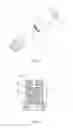
FIG. 3 is a structural schematic diagram of an embodiment of a pedaling frequency device of the present invention.
FIG. 4 is a sectional structural schematic diagram of the pedaling frequency device of the present invention in the axial direction.
FIG. 5 is a schematic diagram of a matching fixed structure of the pedaling frequency sensor of the present invention and a bicycle.
FIG. 6 is another schematic diagram of a matching fixed structure of the pedaling frequency sensor of the present invention and a bicycle.
FIG. 7 is a structural enlarged schematic diagram of the matching position in FIG. 6.
DETAILED DESCRIPTION OF PREFERRED EMBODIMENTS
To make the objectives, technical solutions and advantages of the present invention clearer, the technical solutions in the embodiments of the present invention will be clearly and completely described below in combination with the accompanying drawings in the embodiments of the present invention. Apparently, the embodiments described below are a part, but not all, of the embodiments of the present invention. All of other embodiments, obtained by those of ordinary skill in the art based on the embodiments of the present invention without any inventive efforts, fall into the protection scope of the present invention.
As shown in FIG. 1, the present invention provides an embodiment of a bicycle pedaling frequency sensor.
The bicycle pedaling frequency sensor includes: a signal acquisition unit 1 arranged on a circuit board and used for acquiring motion acceleration changes or/and angular velocity changes in different rotation directions of a middle axle in real time, a data transmission unit 3 for transmitting the acquired data to a terminal, and a power supply 4 for supplying power to the signal acquisition unit 1 and the data transmission unit 3 to work.
Specifically, the circuit board provided with circuits is arranged in a shell, the signal acquisition unit 1 for acquiring acceleration changes or/and angular velocity changes in different motion directions is arranged on the circuit board, the data transmission unit 3 transmits the data of acceleration changes or/and angular velocity changes acquired by the signal acquisition unit 1 to the terminal for processing in real time, and the pedaling frequency during riding is output or recorded to facilitate acquisition and utilization.
The data transmission unit 3 includes a wireless transmission unit or a wired transmission unit. Since the bicycle pedaling frequency sensor rotates along with the middle axle during riding, it had better adopt a WIFI unit, a Bluetooth unit or other short-distance wireless transmission unit to transmit data.
When the signal acquisition unit 1 acquires acceleration data in different directions during bicycle motion, the signal acquisition unit 1 includes a two-axis or three-axis acceleration sensor, wherein when the two-axis sensor is installed, the rotating plane must be consistent with a plane formed by the two axes of the sensor, whereas the three-axis sensor is not limited thereto.
When in use, the pedaling frequency sensor is fixed with the middle axle of the bicycle and rotates synchronously; when the middle axle rotates, the position of the pedaling frequency sensor is changed, and the gravitational acceleration value of the corresponding acceleration sensor in different directions of the rotating plane is also changed; when a user rides the bicycle, the middle axle rotates periodically; thus, the rotating frequency of the middle axle can be obtained via periodical changes of the gravitational acceleration acquired by the acceleration sensor in different directions of the rotating plane according to the time required for rotating one cycle, that is, acquisition of pedaling frequency data is realized.
When the signal acquisition unit 1 acquires angular velocity change data in different directions when the bicycle moves, the signal acquisition unit 1 includes a three-axis gyroscope sensor. When in use, the pedaling frequency sensor rotates synchronously with the middle axle, the three-axis gyroscope sensor can output the angular velocity of the rotating pedaling frequency sensor during the rotation of the rotating pedaling frequency sensor, the rotating angle change data can be calculated according to the angular velocity, and when the middle axle rotates one cycle, the three-axis gyroscope sensor also synchronously rotates one cycle, that is, 360 degrees, the time required for rotating 360 degrees can be converted into pedaling frequency to realize acquisition of pedaling frequency data when the bicycle moves.
When in use, the pedaling frequency sensor is fixed on the hollow middle axle of the bicycle, and the middle axle rotates synchronously with pedals; and when the bicycle moves, gravitational acceleration or/and angular velocity change data is detected and transmitted to the corresponding terminal via the data transmission unit for processing to obtain corresponding pedaling frequency data, and the pedaling frequency data is acquired when the bicycle moves. Because the pedaling frequency sensor skillfully implements counting through periodical changes of acceleration or/and angular velocity data and other data and does not need to carry out counting in a sensing mode through periodical relative motion between two separated components, the pedaling frequency sensor is simple in structure, dustproof, waterproof and works stably and reliably. Since the middle axle of the existing bicycle is provided with a hollow structure in order to reduce the weight during installation, no obvious components are exposed, and a loosening phenomenon does not appear. Meanwhile, the pedaling frequency sensor can be applied to all bicycles with hollow middle axles, and thus has better generality.
In this embodiment, the power supply 4 is a button cell. Since the pedaling frequency sensor carrying the power supply periodically rotates during working, on the one hand, it is inconvenient to supply power via an external power supply; and on the other hand, a power output line does not need to be reserved, so the pedaling frequency sensor is convenient to install.
As shown in FIG. 2, the present invention further puts forward another embodiment based on the above embodiment.
The pedaling frequency sensor further includes a data conversion unit 2 arranged between the signal acquisition unit 1 and the data transmission unit 3, the data conversion unit 2 converts the signals acquired by the signal acquisition unit 1 into data corresponding to the bicycle pedaling frequency and outputs the data, the data is transmitted to the corresponding processing terminal such as a smart phone with processing software or the like via the data transmission unit 3, bicycle pedaling frequency data can be obtained via necessary processing, and other units and the data processing mode are not changed. In this embodiment, real-time bicycle pedaling frequency can be directly obtained by the mobile terminal equipped with necessary processing software, and the mobile terminal should not be a special device or a dedicated computer application program.
As shown in FIG. 3 and FIG. 4, the pedaling frequency sensor further includes a shell 2′ with a hollow end and an expansion component 1′ in threaded fit with the shell 2′, a circuit board 4′ integrating circuits and components and a battery 5′ are arranged in the hollow shell 2′, and a cover 3′ enabling the circuit board 4′ and the battery 5′ to form an electrical circuit is arranged at the end of the shell 2′. Specifically, circuits and components of the pedaling frequency sensor are integrated on the circuit board 4′, the circuit board 4′ and the battery 5′ are arranged in the shell 2′ with the hollow end, the cover 3′ enabling the circuit board 4′ and the battery 5′ to form an electrical circuit is arranged at the end of the shell 2′, and the shell 2′ is in threaded fit with the expansion component 1′.
The expansion component 1′ is provided with a trapezoidal through hole 10′ along the central axis thereof, threads 12′ matched with the shell 2′ are formed on the wall of the through hole, and at least one expansion port 11′ for communicating the interior with the exterior of the through hole 10′ is formed in the wall of the through hole. That is, the expansion component 1′ is provided with a trapezoidal internal thread structure along the central axis thereof, and the internal threads are matched with external threads 22′ on the shell 2. The expansion component 1′ is provided with at least one expansion port 11′; when the number of the expansion ports 11′ is two or more, the expansion ports 11′ are uniformly distributed in the wall of the through hole; and 2-5 expansion ports 11′ are appropriate according to the cost and the production process.
As shown in FIG. 5, when in use, the expansion component 1′ in the pedaling frequency sensor D is placed in the hollow middle axle B of a bicycle, the shell 2′ is rotated to move towards the interior of the expansion component 1′, the shell 2′ is extruded outwards by the expansion component 1′ in the inward moving process because the axial section of the shell 2′ is of a trapezoidal structure having a big end and a small end, the outer wall of the expansion component 1′ is extruded and fastened with the middle axle under the coordination of the expansion ports 11′, and then the pedaling frequency sensor is well fixed without loosening; and the shell 2′ is nearly concealed in the middle axle after fixing, so the pedaling frequency sensor can be conveniently fixed without reconstruction of the structure of the bicycle.
As shown in FIG. 6 and FIG. 7, because the pedaling frequency sensor D obtains pedaling data during riding via a two-axis or three-axis acceleration sensor or a three-axis gyroscope sensor for acquiring angular velocity without interaction between two separated components, it can have a thickness of 5-10 MM and a diameter within 3 CM. When the middle axle to be installed of the bicycle is of a solid structure, that is, when the bicycle is a common bicycle, the pedaling frequency sensor D is fixed on a bicycle crank C via a bandage E. The pedaling frequency can be determined by detecting the rotating frequency of the crank during working. The pedaling frequency sensor with small size does not influence the use of the bicycle. The above embodiments are merely used for illustrating the technical solutions of the present invention, rather than limiting the present invention; though the present invention is illustrated in detail with reference to the aforementioned embodiments, it should be understood by those of ordinary skill in the art that modifications may still be made on the technical solutions recorded in the aforementioned respective embodiments, or equivalent alterations may be made to a part of technical features thereof; and these modifications or alterations do not make the essence of the corresponding technical schemes depart from the spirit and scope of the technical schemes of the respective embodiments of the present invention.
Claims
What is claimed is:1. A bicycle pedaling frequency sensor, comprising:
a signal acquisition unit configured onto a circuit board for real-time acquisition of motion acceleration variations and/or angular velocity variations during rotation of a middle axle in different directions,
a data transmission unit for transmitting acquired data to a terminal, and
a power supply for supplying power to the signal acquisition unit and the data transmission unit.
2. The bicycle pedaling frequency sensor of claim 1, wherein,
a data conversion unit for converting the change data of acceleration and/or angular velocity into a rotation number is also configured onto the circuit board, and an input end and an output end of the data conversion unit are connected with the signal acquisition unit and the data transmission unit respectively.
3. The bicycle pedaling frequency sensor of claim 1, wherein,
the signal acquisition unit comprises a two-axis or a three-axis acceleration sensor for acquiring motion acceleration.
4. The bicycle pedaling frequency sensor of claim 3, wherein,
the signal acquisition unit also comprises a three-axis gyroscope sensor for acquiring angular velocity.
5. The bicycle pedaling frequency sensor of claim 1, wherein,
the data transmission unit comprises a WIFI unit or a Bluetooth unit.
6. The bicycle pedaling frequency sensor of claim 1, wherein,
the pedaling frequency sensor further comprises a shell with a hollow end and an expansion component in threaded fit with the shell, a circuit board integrating circuits and components and a battery are arranged in the hollow shell, and a cover enabling the circuit board and the battery to form an electrical circuit is arranged at the end of the shell.
7. The bicycle pedaling frequency sensor of claim 6, wherein,
the expansion component is provided with a trapezoidal through hole along the central axis thereof, threads matched with the shell are formed on the wall of the through hole, and at least one expansion port for communicating the interior with the exterior of the through hole is formed in the wall of the through hole.
8. The bicycle pedaling frequency sensor of claim 7, wherein,
2-4 expansion ports are formed, and are uniformly distributed in the wall of the through hole.
Images & Drawings included:



Sources:
- United States Patent and Trademark Office - verify current appl. status at the USPTO↗
Recent applications in this class:
- » 20250199029 2025-06-19
METHOD FOR PRODUCING AN INERTIAL SENSOR SYSTEM AND INERTIAL SENSOR SYSTEM PRODUCED USING THE METHOD - » 20250164520 2025-05-22
Anchoring Structure for MEMS Accelerometers with Bend Offset Shift Rejection - » 20250138044 2025-05-01
COMB STRUCTURE FOR MEMS ACCELEROMETER - » 20250052779 2025-02-13
Physical Quantity Sensor, Inertial Measurement Unit, And Method For Manufacturing Physical Quantity Sensor - » 20240426866 2024-12-26
MULTI-SENSOR FIELD UNIT - » 20240230705 2024-07-11
MICROMECHANICAL SENSOR HAVING INCREASED SENSITIVITY AND A MEMS COMPONENT HAVING SUCH A SENSOR - » 20240133913 2024-04-25
MICROMECHANICAL SENSOR HAVING INCREASED SENSITIVITY AND A MEMS COMPONENT HAVING SUCH A SENSOR - » 20240103034 2024-03-28
Method of manufacturing low heat-resistant sensor - » 20240077512 2024-03-07
SENSOR ASSEMBLY - » 20240027488 2024-01-25
INERTIAL SENSOR AND FORMATION METHOD THEREFOR
Recent applications for this Assignee:
- » 20180206578 2018-07-26
Luminous helmet and manufacturing method thereof - » 20180180262 2018-06-28
Helmet with hidden light sources and method for manufacturing same - » 20180177258 2018-06-28
Helmet with hidden light source and method for manufacturing same - » 20170196289 2017-07-13
Light-emitting helmet and manufacturing method thereof - » 15371200 2018-01-09
Wireless communication system of smart cycling equipment and method using same