Process of manufacturing an electron transport material
US20170098772A1
2017-04-06
15/245,939
2016-08-24
✅ Patent granted
US 9,905,769 B2
2018-02-27
-
-
Yevgeny Valenrod | Blaine G Doletski
Phillips 66 Company
2036-08-24
Abstract:
A process of dissolving [6,6]-phenyl-C60-butyric-N-2-dimethylaminoethyl ester in a solvent to produce a first mixture. A reagent is added to the first mixture to produce a second mixture. The second mixture is then refluxed to produce [6,6]-phenyl-C60-butyric-N-2-trimethylammonium ethyl ester iodide.
Inventors:
- Brian Worfolk 14 🇺🇸 Bartlesville, OK, United States
- Joseph Bullock 5 🇺🇸 Bartlesville, OK, United States
Assignee:
- PHILLIPS 66 COMPANY 465 🇺🇸 Houston, TX, United States
Applicant:
Interested in similar patents?
Get notified when new applications in this technology area are published.
Classification:
H01L51/0047 » CPC main
Solid state devices using organic materials as the active part, or using a combination of organic materials with other materials as the active part; Processes or apparatus specially adapted for the manufacture or treatment of such devices, or of parts thereof; Selection of organic semiconducting materials, e.g. organic light sensitive or organic light emitting materials; Carbon containing materials, e.g. carbon nanotubes, fullerenes; Fullerenes, e.g. C, C comprising substituents, e.g. PCBM
C07C213/08 » CPC further
Preparation of compounds containing amino and hydroxy, amino and etherified hydroxy or amino and esterified hydroxy groups bound to the same carbon skeleton by reactions not involving the formation of amino groups, hydroxy groups or etherified or esterified hydroxy groups
C07C219/10 » CPC further
Compounds containing amino and esterified hydroxy groups bound to the same carbon skeleton having esterified hydroxy groups and amino groups bound to acyclic carbon atoms of the same carbon skeleton the carbon skeleton being acyclic and saturated having at least one of the hydroxy groups esterified by a carboxylic acid having the esterifying carboxyl group bound to an acyclic carbon atom of a carbon skeleton containing rings
H01L51/00 IPC
Solid state devices using organic materials as the active part, or using a combination of organic materials with other materials as the active part; Processes or apparatus specially adapted for the manufacture or treatment of such devices, or of parts thereof
C07C213/02 » CPC further
Preparation of compounds containing amino and hydroxy, amino and etherified hydroxy or amino and esterified hydroxy groups bound to the same carbon skeleton by reactions involving the formation of amino groups from compounds containing hydroxy groups or etherified or esterified hydroxy groups
H01L51/0003 » CPC further
Solid state devices using organic materials as the active part, or using a combination of organic materials with other materials as the active part; Processes or apparatus specially adapted for the manufacture or treatment of such devices, or of parts thereof; Processes specially adapted for the manufacture or treatment of devices or of parts thereof; Deposition of organic semiconductor materials on a substrate using liquid deposition, e.g. spin coating
C07C2604/00 » CPC further
Fullerenes, e.g. C buckminsterfullerene or C
H01L51/4253 » CPC further
Solid state devices using organic materials as the active part, or using a combination of organic materials with other materials as the active part; Processes or apparatus specially adapted for the manufacture or treatment of such devices, or of parts thereof specially adapted for sensing infra-red radiation, light, electro-magnetic radiation of shorter wavelength or corpuscular radiation and adapted for the conversion of the energy of such radiation into electrical energy or for the control of electrical energy by such radiation using organic materials as the active part, or using a combination of organic materials with other material as the active part; Multistep processes for their manufacture comprising bulk hetero-junctions, e.g. interpenetrating networks
C07C69/76 IPC
Esters of carboxylic acids; Esters of carbonic or haloformic acids Esters of carboxylic acids having a carboxyl group bound to a carbon atom of a six-membered aromatic ring
H01L51/42 IPC
Solid state devices using organic materials as the active part, or using a combination of organic materials with other materials as the active part; Processes or apparatus specially adapted for the manufacture or treatment of such devices, or of parts thereof specially adapted for sensing infra-red radiation, light, electro-magnetic radiation of shorter wavelength or corpuscular radiation and adapted for the conversion of the energy of such radiation into electrical energy or for the control of electrical energy by such radiation using organic materials as the active part, or using a combination of organic materials with other material as the active part; Multistep processes for their manufacture
Description
CROSS-REFERENCE TO RELATED APPLICATIONS
This application is a Non-Provisional application which claims the benefit of and priority to U.S. Provisional Application Ser. No. 62/235,875 filed Oct. 1, 2015, entitled “Process of Manufacturing an Electron Transport Material,” which is hereby incorporated by reference.
STATEMENT REGARDING FEDERALLY SPONSORED RESEARCH OR DEVELOPMENT
None.
FIELD OF THE INVENTION
This invention relates to a method of manufacturing an interfacial material used in organic bulk heterojunction devices.
BACKGROUND OF THE INVENTION
Solar energy using photovoltaic effect requires active semiconducting materials to convert light into electricity. Currently, solar cells based on silicon are the dominating technology due to their high conversion efficiency. Recently, solar cells based on organic materials showed interesting features, especially on the potential of low cost in materials and processing. Judging from the recent success in organic light emitting diodes based on a reverse effect of photovoltaic effect, organic solar cells are very promising.
Polymeric solar cells are promising approach to photovoltaic applications as they are cost-effective, flexible, lightweight and potentially disposable. [6,6]-phenyl-C60-butyric acid-2-hydroxyethyl ester has been found to be capable of being used in organic photovoltaics, however it lacks in exhibiting high short-circuit current density and fill factor. There exists a need to produce a polar fullerene derivative yielding high photovoltaic performances by exhibiting higher short-circuit current density and fill factor.
BRIEF SUMMARY OF THE DISCLOSURE
A process of dissolving [6,6]-phenyl-C60-butyric-N-2-dimethylaminoethyl ester in a solvent to produce a first mixture. A reagent is added to the first mixture to produce a second mixture. The second mixture is then refluxed to produce [6,6]-phenyl-C60-butyric-N-2-trimethylammonium ethyl ester iodide.
An electron transport material is also taught comprising [6,6]-phenyl-C60-butyric-N-2-trimethylammonium ethyl ester iodide.
BRIEF DESCRIPTION OF THE DRAWINGS
A more complete understanding of the present invention and benefits thereof may be acquired by referring to the follow description taken in conjunction with the accompanying drawings in which:
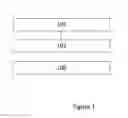
FIG. 1 depicts the process to produce [6,6]-phenyl-C60-butyric-N-2-trimethylammonium ethyl ester iodide.
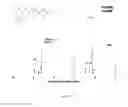
FIG. 2 depicts [6,6]-phenyl-C60-butyric-N-2-dimethylaminoethyl ester at 1H NMR.
FIG. 3 depicts [6,6]-phenyl-C60-butyric-N-2-dimethylaminoethyl ester at 13C NMR.
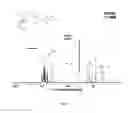
FIG. 4 depicts [6,6]-phenyl-C60-butyric-N-2-trimethylammonium ethyl ester iodide at 1H NMR.
FIG. 5 depicts [6,6]-phenyl-C60-butyric-N-2-trimethylammonium ethyl ester iodide at 13C NMR.
DETAILED DESCRIPTION
Turning now to the detailed description of the preferred arrangement or arrangements of the present invention, it should be understood that the inventive features and concepts may be manifested in other arrangements and that the scope of the invention is not limited to the embodiments described or illustrated. The scope of the invention is intended only to be limited by the scope of the claims that follow.
The present embodiment describes a process to produce [6,6]-phenyl-C60-butyric-N-2-trimethylammonium ethyl ester iodide. As shown in FIG. 1, the process begins by dissolving [6,6]-phenyl-C60-butyric-N-2-dimethylaminoethyl ester in a solvent to produce a first mixture, step 101. To the first mixture a reagent is added to produce a second mixture, step 103. The second mixture is then refluxed to produce [6,6]-phenyl-C60-butyric-N-2-trimethylammonium ethyl ester iodide, step 105.
As described above step 101 begins by dissolving [6,6]-phenyl-C60-butyric-N-2-dimethylaminoethyl in a solvent to produce a first mixture. Any conventionally known solvent capable of dissolving [6,6]-phenyl-C60-butyric-N-2-dimethylaminoethyl can be used. In one example the solvent used can be any conventionally known solvent organic solvent. Examples of organic solvents can include dichlorobenzene, chlorobenzene, xylene, toluene, chloroform, tetrahydronaphthalene, carbon disulfide, dichloromethane, ethyl acetate, chloroform, ethanol, hexane, tetrahydrofuran, cyclohexane, and isopropanol. Any conventionally known method of dissolving
in the solvent can be used. These methods include mixing, stirring, heating and sonicating. The addition of the solvent is ideally done in an oxygen-free environment but not required.
In step 103, a reagent can be added to the first mixture to produce a second mixture. In one embodiment the reagent is iodomethane. In another embodiment, the use of any aliphatic iodide could be used. In another embodiment, dimethyl sulfate, methyl triflate, or dimethyl carbonate could be used.
In step 105, the second mixture is heated to a temperature of at least 50° C. to produce [6,6]-phenyl-C60-butyric-N-2-trimethylammonium ethyl ester iodide. In an alternate embodiment the second mixture is heated to a temperature between 50° C. and 100° C. In one embodiment the second mixture is kept at this elevated temperature for at least 5 hours. In another embodiment the second mixture is kept at this elevated temperature for at least 18 hours.
In one embodiment the process of producing [6,6]-phenyl-C60-butyric-N-2-dimethylaminoethyl ester for this process is produced from a process of dissolving [6,6]-phenyl-C60-butyric acid methyl ester in 1,2-dichlorobenzene, under an oxygen free environment, to produce a first mixture. Dibutyltin(IV) oxide can then be added to the first mixture to produce a second mixture. To the second mixture 2-(dimethylamino)ethan-1-ol can be added to produce a third mixture. The third mixture can then be refluxed to produce a [6,6]-phenyl-C60-butyric-N-2-dimethylaminoethyl ester.
The molar ratios of the chemical used can be.
| Chemical | Molar Ratio |
| [6,6]-phenyl-C60-butyric-N-2-dimethylaminoethyl ester | 1 ± 0.9 |
| iodomethane | 200 ± 199 |
The following examples of certain embodiments of the invention are given. Each example is provided by way of explanation of the invention, one of many embodiments of the invention, and the following examples should not be read to limit, or define, the scope of the invention.
EXAMPLE 1
[6,6]-Phenyl-C60-butyric acid methyl ester (0.25 g, 0.274 mmol) was dissolved in 1,2-dichlorobenzene (12 mL) in a dry schlenk flask under argon. Dibutyltin(IV) oxide (0.014 g, 0.055 mmol) was added in one portion. 2-(Dimethylamino)ethan-1-ol (2 mL) was added in one portion and the solution heated to 150° C. for two hours. The solution was cooled and poured directly onto silica gel and eluted with toluene until all the 1,2-dichlorobenzene had flushed through. Then 6:1 toluene/triethylamine was eluted through to obtain pure product that was further purified by dissolving in chloroform (˜4 mL) and allowing methanol to slowly diffuse into the solution to form brown crystals of [6,6]-phenyl-C60-butyric-N-2-dimethylaminoethyl ester (0.293 g, 55% yield).
EXAMPLE 2
[6,6]-phenyl-C60-butyric-N-2-dimethylaminoethyl ester (0.05 g, 0.052 mmol) was dissolved in dry tetrahydofuran (2 mL) in a dry sealable vessel under argon. Iodomethane (1.5 mL) was added in one portion and the vessel was sealed. The solution was heated to 60° C. for 18 hours. The solution was cooled and opened to allow all liquids to evaporate. The solid residue was suspended in methanol, diluted with acetone, and centrifuged. This process was repeated two more times to produce pure [6,6]-phenyl-C60-butyric-N-2-trimethylammonium ethyl ester iodide as a metallic green powder.
NMR Spectroscopy
Nuclear magnetic resonance spectroscopy was performed on a 400 NMR spectrometer, operating at 400.16 MHz for 1H, and 100.04 MHz for 13C.
FIG. 2 depicts [6,6]-phenyl-C60-butyric-N-2-dimethylaminoethyl ester at 1H NMR.
FIG. 3 depicts [6,6]-phenyl-C60-butyric-N-2-dimethylaminoethyl ester at 13C NMR.
FIG. 4 depicts [6,6]-phenyl-C60-butyric-N-2-trimethylammonium ethyl ester iodide at 1H NMR.
FIG. 5 depicts [6,6]-phenyl-C60-butyric-N-2-trimethylammonium ethyl ester iodide at 13C NMR.
Performance Data
Average performance data of different organic photovoltaic devices using different electron transport layers were done.
| Open- | ||||
| circuit | Short-circuit | Fill | Power | |
| Electronic | voltage | current density | Factor | Conversion |
| Transport layer | Voc (V) | Jsc in mA/cm2 | % | Efficiency % |
| ZnO | 0.785 | 15.9 | 65.9 | 8.24 |
| ZnO:[6,6]-phenyl- | 0.765 | 16.2 | 59.9 | 7.47 |
| C60-butyric-N- | ||||
| 2-dimethylamino- | ||||
| ethyl ester | ||||
| ZnO: [6,6]-phenyl- | 0.752 | 16.2 | 57.8 | 7.1 |
| C60-butyric-N- | ||||
| 2-trimethylammonium | ||||
| ethyl ester iodide | ||||
Work Function Data
Work function data of different electron transport layers were done.
| Material | Work Function (eV) | |
| Indium Tin Oxide | 4.70 | |
| ZnO | 3.75 | |
| ZnO: [6,6]-phenyl-C60-butyric-N-2- | 3.60 | |
| trimethylammonium ethyl ester iodide | ||
In closing, it should be noted that the discussion of any reference is not an admission that it is prior art to the present invention, especially any reference that may have a publication date after the priority date of this application. At the same time, each and every claim below is hereby incorporated into this detailed description or specification as an additional embodiment of the present invention.
Although the systems and processes described herein have been described in detail, it should be understood that various changes, substitutions, and alterations can be made without departing from the spirit and scope of the invention as defined by the following claims. Those skilled in the art may be able to study the preferred embodiments and identify other ways to practice the invention that are not exactly as described herein. It is the intent of the inventors that variations and equivalents of the invention are within the scope of the claims while the description, abstract and drawings are not to be used to limit the scope of the invention. The invention is specifically intended to be as broad as the claims below and their equivalents.
Claims
1. A process comprising:
a) dissolving [6,6]-phenyl-C60-butyric-N-2-dimethylaminoethyl ester in a solvent to produce a first mixture;
b) adding a reagent to the first mixture to produce a second mixture;
c) heating the second mixture to produce [6,6]-phenyl-C60-butyric-N-2-trimethylammonium ethyl ester iodide.
2. The process of claim 1, wherein [6,6]-phenyl-C60-butyric-N-2-dimethylaminoethyl ester is produced from:
a) dissolving [6,6]-phenyl-C60-butyric acid methyl ester in 1,2-dichlorobenzene, under an oxygen free environment, to produce a first mixture;
b) adding dibutyltin(IV) oxide to the first mixture to produce a second mixture;
c) adding 2-(dimethylamino)ethan-1-ol to the second mixture to produce a third mixture; and
d) refluxing the third mixture to produce [6,6]-phenyl-C60-butyric-N-2-dimethylaminoethyl ester.
3. The process of claim 1, wherein the solvent is an organic solvent.
4. The process of claim 1, wherein the solvent is selected from the group consisting of: dichlorobenzene, chlorobenzene, xylene, toluene, chloroform, tetrahydronaphthalene, carbon disulfide, dichloromethane, ethyl acetate, chloroform, ethanol, hexane, cyclohexane, tetrahydrofuran and isopropanol.
5. The process of claim 1, wherein the reagent is halomethanes, iodomethane, any aliphatic iodide, dimethyl sulfate, methyl triflate, or dimethyl carbonate.
6. The process of claim 1, wherein the second mixture is heated to a temperature of at least 50° C.
7. The process of claim 1, wherein the second mixture is heated to a temperature between 50° C. and 100° C.
8. An electron transport material comprising [6,6]-phenyl-C60-butyric-N-2-trimethylammonium ethyl ester iodide.
9. The electron transport material of claim 8, wherein the thickness is less than 100 nm.
Images & Drawings included:


Sources:
- United States Patent and Trademark Office - verify current appl. status at the USPTO↗
Similar patent applications:
Recent applications in this class:
- » 20220310929 2022-09-29
OPTOELECTRONIC DEVICE - » 20220293860 2022-09-15
Fullerene derivative blends, methods of making and uses thereof - » 20210159417 2021-05-27
Fullerene derivative blends, methods of making and uses thereof - » 20210013417 2021-01-14
Organic photodetector with reduced dark current - » 20200365807 2020-11-19
N-type semiconductor composition, and thin film, organic photoelectric device, image sensor, and electronic device including the same - » 20200194677 2020-06-18
Fullerene derivative blends, methods of making and uses thereof - » 20200161557 2020-05-21
Fullerene derivatives, and organic photoelectric device, image sensor, and electronic device including the same - » 20190229269 2019-07-25
TERNARY BLEND ORGANIC SOLAR CELLS BASED ON ONE DONOR POLYMER AND TWO ACCEPTORS - » 20190173015 2019-06-06
Fullerene derivatives and photoelectric device and image sensor - » 20190088881 2019-03-21
PHOTOELECTRIC CONVERSION ELEMENT AND RADIATION DETECTOR
Recent applications for this Assignee:
- » 20250154421 2025-05-15
DECREASING EXCESS OCTANE DURING GASOLINE BLENDING - » 20240325999 2024-10-03
AUTOMATED TANK MIXING FOR CUSTODY TRANSFER - » 20240191147 2024-06-13
DECREASING HEAVY GASOIL FOULING - » 20240079590 2024-03-07
NOVEL GRAPHITE PASSIVATION METHOD - » 20240059552 2024-02-22
METHODS FOR DISTRIBUTING BLENDED FUELS - » 20240059550 2024-02-22
SYSTEMS FOR DISTRIBUTING BLENDED FUELS - » 20240036025 2024-02-01
QUANTITATING CORROSIVE NAPHTHENIC ACIDS IN CRUDE OIL - » 20240034949 2024-02-01
Isobutane to transportation fuel - » 20240034944 2024-02-01
Systems for isobutane to transportation fuel - » 20230382826 2023-11-30
Light alkanes to transportation fuel