Expandable trials
US20170100256A1
2017-04-13
15/287,188
2016-10-06
✅ Patent granted
US 10,729,554 B2
2020-08-04
-
-
Jessica Weiss
2037-10-23
Abstract:
An expandable implant is made via a central strut having a pivotable arm on each end. The implant can be inserted into a disc space either horizontally or vertically with the arms in a closed position and then (if inserted horizontally) optionally rotated up into place. The arms are then pivoted out, thereby increasing the foot print of a horizontally inserted implant. The expanded implant can be locked in place through the use of an additional insert or ratchet that fits between the arms and locks the arms in place.
Inventors:
- William Frasier 35 🇺🇸 New Bedford, MA, United States
- Thomas Martin 17 🇺🇸 Riverside, RI, United States
- Zoher Bootwala 24 🇺🇸 Foxboro, MA, United States
- Sean Saidha 20 🇺🇸 Franklin, MA, United States
- Shreedhar Kale 2 🇺🇸 Barrington, RI, United States
- Laura Wilson 4 🇨🇭 Basel, Switzerland
- Patrick Fatyol 5 🇺🇸 Whitman, MA, United States
- John Olkowski 2 🇺🇸 Boston, MA, United States
Assignee:
- DePuy Synthes Products, Inc. 2,197 🇺🇸 Raynham, MA, United States
Applicant:
Interested in similar patents?
Get notified when new applications in this technology area are published.
Classification:
A61F2/442 » CPC further
Filters implantable into blood vessels; Prostheses, i.e. artificial substitutes or replacements for parts of the body; Appliances for connecting them with the body; Devices providing patency to, or preventing collapsing of, tubular structures of the body, e.g. stents; Prostheses implantable into the body; Joints for the spine, e.g. vertebrae, spinal discs Intervertebral or spinal discs, e.g. resilient
A61F2002/30579 » CPC further
Filters implantable into blood vessels; Prostheses, i.e. artificial substitutes or replacements for parts of the body; Appliances for connecting them with the body; Devices providing patency to, or preventing collapsing of, tubular structures of the body, e.g. stents; Prostheses implantable into the body; Joints; Additional features of subject-matter classified in , and subgroups thereof; The prosthesis having different structural features at different locations within the same prosthesis; Connections between prosthetic parts; Special structural features of bone or joint prostheses not otherwise provided for; Special structural features of bone or joint prostheses not otherwise provided for with mechanically expandable devices, e.g. fixation devices
A61F2002/30593 » CPC further
Filters implantable into blood vessels; Prostheses, i.e. artificial substitutes or replacements for parts of the body; Appliances for connecting them with the body; Devices providing patency to, or preventing collapsing of, tubular structures of the body, e.g. stents; Prostheses implantable into the body; Joints; Additional features of subject-matter classified in , and subgroups thereof; The prosthesis having different structural features at different locations within the same prosthesis; Connections between prosthetic parts; Special structural features of bone or joint prostheses not otherwise provided for; Special structural features of bone or joint prostheses not otherwise provided for hollow
A61F2002/30621 » CPC further
Filters implantable into blood vessels; Prostheses, i.e. artificial substitutes or replacements for parts of the body; Appliances for connecting them with the body; Devices providing patency to, or preventing collapsing of, tubular structures of the body, e.g. stents; Prostheses implantable into the body; Joints; Additional features of subject-matter classified in , and subgroups thereof Features concerning the anatomical functioning or articulation of the prosthetic joint
A61F2002/30934 » CPC further
Filters implantable into blood vessels; Prostheses, i.e. artificial substitutes or replacements for parts of the body; Appliances for connecting them with the body; Devices providing patency to, or preventing collapsing of, tubular structures of the body, e.g. stents; Prostheses implantable into the body; Joints; Special external or bone-contacting surface, e.g. coating for improving bone ingrowth Special articulating surfaces
A61F2220/0016 » CPC further
Fixations or connections for prostheses classified in groups - or or or or subgroups thereof; Fixation appliances for connecting prostheses to the body with sharp anchoring protrusions, e.g. barbs, pins, spikes
A61F2/30 IPC
Filters implantable into blood vessels; Prostheses, i.e. artificial substitutes or replacements for parts of the body; Appliances for connecting them with the body; Devices providing patency to, or preventing collapsing of, tubular structures of the body, e.g. stents; Prostheses implantable into the body Joints
A61F2002/30622 » CPC further
Filters implantable into blood vessels; Prostheses, i.e. artificial substitutes or replacements for parts of the body; Appliances for connecting them with the body; Devices providing patency to, or preventing collapsing of, tubular structures of the body, e.g. stents; Prostheses implantable into the body; Joints; Additional features of subject-matter classified in , and subgroups thereof; Features concerning the anatomical functioning or articulation of the prosthetic joint Implant for fusing a joint or bone material
A61F2/44 IPC
Filters implantable into blood vessels; Prostheses, i.e. artificial substitutes or replacements for parts of the body; Appliances for connecting them with the body; Devices providing patency to, or preventing collapsing of, tubular structures of the body, e.g. stents; Prostheses implantable into the body; Joints for the spine, e.g. vertebrae, spinal discs
A61F2/4455 » CPC main
Filters implantable into blood vessels; Prostheses, i.e. artificial substitutes or replacements for parts of the body; Appliances for connecting them with the body; Devices providing patency to, or preventing collapsing of, tubular structures of the body, e.g. stents; Prostheses implantable into the body; Joints for the spine, e.g. vertebrae, spinal discs for the fusion of spinal bodies, e.g. intervertebral fusion of adjacent spinal bodies, e.g. fusion cages
Description
CONTINUING DATA
This patent application claims priority from US provisional application U.S. Ser. No. 62/329,589, filed Apr. 29, 2016 entitled “Expandable Trials” (Bootwala et al.) (DSP5202USPSP1), and from US provisional application U.S. Ser. No. 62/239,336, filed Oct. 9, 2015 entitled “Expandable Trials” (Bootwala et al.) (DSP5202USPSP), the specifications of which are incorporated by reference in their entireties.
BACKGROUND OF THE INVENTION
The leading cause of lower back pain arises from rupture or degeneration of lumbar intervertebral discs. Pain in the lower extremities is caused by the compression of spinal nerve roots by a bulging disc, while lower back pain is caused by collapse of the disc and by the adverse effects of articulation weight through a damaged, unstable vertebral joint. One proposed method of managing these problems is to remove the problematic disc and replace it with a prosthetic disc that allows for the natural motion between the adjacent vertebrae (“a motion disc”).
Prior to inserting the disc, however, the surgeon typically desires to insure that the properly sized implant has been identified for the particular patient. To this end, trial implants are commonly included within the instrument sets that allow the surgeon to temporarily insert the trial into the intervertebral disc space and assess whether the height and footprint of the trial would be appropriate for the actual implant to be inserted. Typically, a large number of trials are supplied in an instrument set, with each having a distinct height, lordotic angle and footprint.
More recently, fusion cages have been redesigned to provide a small profile during insertion into the disc space and then to expand to distract the disc space. The small profile of the initial configuration allows the surgeon to operate through a smaller opening, thereby minimizing surgical trauma. With the advent of these expandable cages, there is now also a need for an expandable trial as well.
SUMMARY OF THE INVENTION
In one embodiment, an expandable implant is made via a central strut having a pivotable arm on each end. The implant can be inserted into a disc space either horizontally or vertically with the arms in a closed position and then (if inserted horizontally) optionally rotated up into place. The arms are then pivoted out, thereby increasing the foot print of a horizontally inserted implant. The expanded implant can be locked in place through the use of an additional insert or ratchet that fits between the arms and locks the arms in place.
DESCRIPTION OF THE DRAWINGS
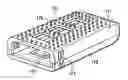
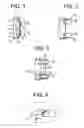
FIGS. 1-4 disclose a multi-plate expandable device.
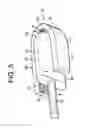
FIG. 5 discloses a spreader-based expandable device.
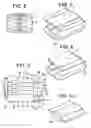
FIGS. 6-14 disclose expandable devices based upon stackable blocks.
FIGS. 15-20 disclose spring-based expandable designs.
FIGS. 21-22 disclose an ellipse-based expandable design.
FIGS. 23-28 disclose an expandable device based upon floating blades.
FIGS. 29-31 disclose an expandable device based upon gears.
FIGS. 32-38 disclose an expandable design based upon a box chisel.
DETAILED DESCRIPTION OF THE INVENTION
In accordance with FIGS. 1-4, there is provided an intervertebral device, comprising:
-
- a) a first strut 1 comprising i) an upper portion 3 forming an upper surface 5 having teeth 7 adapted for gripping an upper natural endplate and ii) a lower portion 9 forming a lower surface 11 comprising teeth 13 adapted for gripping a lower natural endplate,
- b) an upper arm 15 pivotally connected to the upper portion of the first strut and having an upper surface 17 having teeth 18 adapted for gripping an upper natural endplate, and
- c) a lower arm 19 pivotally connected to the lower portion of the first strut and having a lower surface 21 having teeth 23 adapted for gripping a lower natural endplate,
- wherein the upper surface of the first strut and the upper surface of the upper arm are substantially co-planar in an expanded condition,
- wherein the lower surface of the first strut and the lower surface of the lower arm are substantially co-planar in an expanded condition.
- Preferably, the pivotal connections between first strut and each arm each form a ratchet connection 25 adapted to lock the device in the expanded condition.
In some embodiments, the device further comprises:
-
- d) a second strut 27 extending between a lower surface of the upper arm and an upper surface of the lower arm to lock the device in the expanded condition.
- Preferably, each of the lower surface of the upper arm and the upper surface of the lower arm comprises a recess 29 adapted for reception of a respective end of the second strut.
- Preferably, each arm has a first endface 31 opposite its pivotal connection, and the first endfaces are substantially opposed in an unexpanded condition.
- d) a second strut 27 extending between a lower surface of the upper arm and an upper surface of the lower arm to lock the device in the expanded condition.
Also in accordance with FIGS. 1-4, there is provided: a method of using an intervertebral device, comprising the steps of:
-
- a) inserting the intervertebral device of claim 1 into a disc space in its unexpanded condition,
- b) moving each arm so that the device adopts its expanded condition,
- c) locking the device in its expanded condition.
Footprint/Spreader
In a FIG. 5 embodiment, there is provided a spreader trial in which a U-shaped element houses a spreader having a substantially rectangular axial cross-section, wherein the height of the cross-section is less than its width. The spreader is rotatably coupled to the apex of the U-shaped element. These two elements are inserted into the disc space as one piece, with a rotatable shaft carrying the spreader and coupled to the apex of the U-shaped element. The U-shaped element is inserted so that each leg of the U-shaped is substantially parallel to the adjacent vertebral endplates (i.e., the U-shaped spreader cross-section provides a minimum height), while the spreader is inserted so that its height is extending between the endplates and a minimum height is established. Once inserted, the shaft is rotated about 90 degrees so that the spreader width is now extending between the endplates so that the spreader displays its maximum height. This condition preferably produces distraction of the disc space. Bone filler can then be added around the spreader within the U-shaped element.
In accordance with FIG. 5, there is provided an intervertebral device comprising:
-
- a) a substantially U-shaped element 33 comprising a substantially C-shaped portion 35 and a pair of arms 37 extending therefrom, an upper surface 39 adapted for gripping a natural endplate, a lower surface 41 adapted for gripping a natural endplate, and an inner surface 43 including a concave surface 45, the concave surface having a first threaded coupling extending therein, wherein the inner surface defines a cavity, wherein a first distance between the upper and lower surfaces defines a first height, and wherein a second distance between the inner surfaces of the arms defines a width of the cavity,
- b) a spreader element 51 having i) a block 53 having a first end 55 having a second threaded coupling 57 that mates with the first threaded coupling, a second end 59, a second height and a width, wherein the height is less than the width, ii) a shaft 61 extending from the second end of the block and iii) a handle (not shown) connected to the shaft,
wherein the first and second threaded couplings threadably mate,
wherein the width of the block is less than the width of the cavity so that the block of the spreader element is received in the cavity of the U-shaped element.
Also in accordance with FIG. 5, there is provided a method of preparing a disc space between opposed vertebral endplates, comprising the steps of:
a) inserting the intervertebral device of FIG. 5 into a disc space wherein the block is oriented so that the height of the block spans the opposed vertebral endplates
b) rotating the block by about 90 degrees so that the width of the block spans the opposed vertebral endplates, thereby distracting the disc space.
Preferably, this method further comprises the steps of:
-
- c) disengaging the spreader from the U-shaped element, and
- d) removing the block from the disc space.
Also preferably, this method further comprises the steps of:
-
- e) contacting the U-shaped element with an implant material.
Stackable Blocks
In a FIGS. 6-9 embodiment, a plurality of stackable spacers are inserted in sequence to build an implant of a desired height and preferably width. Preferably, the spacers are designed so that the subsequent spacers can be added both in the vertical and lateral directions. Preferably, endcap spaced are also utilized that cap off the vertical dimension and provide lordosis. In one embodiments, the endcaps have vertical throughholes and legs extending towards each other that are designed to mate, so that once the endcaps are placed and mated, the intermediate spacers can be removed and a hollow fusion cage results.
In accordance with FIGS. 6-9, there is provided an intervertebral device comprising:
-
- a) a base block 65 having an upper surface 67 having a first mating feature 69, a lower surface 71 and a first side surface 73 having a second mating feature 75 therebetween,
- b) a first upper spacer 77 having a lower surface 79 having a third mating feature 81, and an upper surface 83 having a fourth mating feature 85, and a side surface 87 therebetween
- c) a first lateral spacer 89 having an inner side surface 91 having a fifth mating feature 93, an outer side surface 95 having a sixth mating surface 97 therebetween, and an upper surface 99 therebetween,
wherein the first mating feature of the base block slidably mates with the third mating feature of the first upper spacer, and
wherein the second mating feature of the base block slidably mates with the fifth mating feature of the first lateral spacer.
In some embodiments, each mating feature is a dovetail feature.
Preferably, the device further comprises:
-
- d) a second upper spacer 101 having a lower surface 103 having a seventh mating feature 105, and an upper surface 107 having a eighth mating feature 109, and a side surface 111 therebetween
- e) a second lateral spacer 113 having an inner side surface 115 having a ninth mating feature 117, an outer side surface 119 having a tenth mating surface 121 therebetween, and an upper surface 123 therebetween,
wherein the fourth mating feature of the first upper spacer slidably mates with the seventh mating feature of the second upper spacer, and
wherein the sixth mating feature of the first lateral spacer slidably mates with the ninth mating feature of the second lateral spacer.
Preferably, the device further comprises:
-
- f) a third upper spacer having a lower surface having an eleventh mating feature, an upper surface disposed at an angle to its lower surface, and a side surface therebetween,
- wherein the third upper spacer is disposed above the second vertical spacer.
Preferably, the eleventh mating feature of the third vertical spacer is located substantially directly above the eighth mating surface of the second vertical spacer.
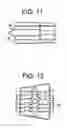
FIG. 10 discloses a central insert 65 within the stackable blocks.
Also in accordance with FIGS. 11-12, there is provided other stackable designs with various inserts 65.
In a FIG. 13a-14 embodiment, there is an intervertebral device comprising:
-
- a) an upper shell 171 having an upper surface 173 having a throughhole 175 therethrough and opposed sidewalls,
- b) a lower shell 177 having a lower surface 179 having a throughhole 181 therethrough and opposed sidewalls,
- c) a plurality of stacked spacers disposed between the upper shell and the lower shell, wherein each spacer shares with its adjacent spacer a mating interface comprising a pair of mating features,
- wherein the opposed sidewalls of the upper shell mate with the opposed sidewalls of the lower shell.
In some embodiments, there is a method of building a fusion cage comprising:
-
- inserting into a disc space a plurality of stacked spacers, wherein each spacer shares with its adjacent spacer a mating interface comprising a pair of mating features, the plurality having an uppermost spacer having an upper mating feature and a lowermost spacer having a lower mating feature,
- attaching to the uppermost spacer an upper shell having an upper surface having a throughhole therethrough, a lower surface having a lower mating feature and opposed sidewalls, wherein the upper mating feature of the uppermost spacer mates with the lower mating feature of the upper shell,
- attaching to the lowermost spacer a lower shell having an lower surface having a throughhole therethrough, an upper surface having an upper mating feature and opposed sidewalls, wherein the lower mating feature of the lowermost spacer mates with the upper mating feature of the lower shell,
- attaching the sidewalls of the upper shell to the sidewalls of the lower shell,
- removing the plurality of stacked spacers from the disc space to create a void between the upper and lower shells, and
- filling the void with a bone filler.
FIG. 14 discloses trial heights sections with the links section 178. As the clinician pushes the trial sections forward, they will ride up the ramps of each other with the aid of link sections holding them all together. As the trail sections are stacked, this will determine the disc height for the appropriate implant.
Spring
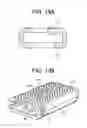
In the FIG. 15 embodiment, a torsion spring is provided between implant endplates in a collapsed configuration having a height H1. Once the tension in the spring is released, the spring expands, thereby increasing the height between the endplates to an expanded height H2. The torsion spring could also be made from one or more nitinol leaf springs that expand through temperature change or mechanical means. Once the implant is expanded, the spaced between the endplates can be filled with bone graft or a monolithic insert.
In accordance with FIG. 15, there is provided:
-
- an intervertebral device comprising;
- a) a first endplate 201 having an outer surface 203 adapted for gripping a first natural endplate and an inner surface 205,
- b) a second endplate 207 having an outer surface 209 adapted for gripping a second opposed natural endplate and an inner surface 211,
- c) a torsion spring 213 having a first portion 215 contacting the inner surface of the first endplate and a second portion 217 contacting the inner surface of the second endplate,
the device having an unexpanded state and an expanded state,
wherein the torsion spring is tensioned in the unexpanded state and released in the expanded state.
Also in accordance with FIG. 16, there is provided an intervertebral device comprising;
-
- a) a first endplate 219 having an outer surface 221 adapted for gripping a first natural endplate and an inner surface 223,
- b) a second endplate 225 having an outer surface 227 adapted for gripping a second opposed natural endplate and an inner surface 229,
- c) a memory metal leaf spring 231 having end portions contacting the inner surface of the first endplate and an intermediate portion 233 contacting the inner surface of the second endplate,
the device having an unexpanded state and an expanded state,
wherein the leaf spring is under force in the unexpanded state and released in the expanded state.
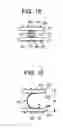
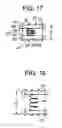
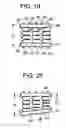
In a FIG. 17-18 embodiment, tethers are used to hold a coil spring in a collapsed state so that an implant has a collapsed height H1. The tethers can be cut or removed after insertion, thereby allowing the implant to expand under spring tension to a height H2. The space between the endplates can be filled with bone graft or a monolithic insert. The tension of the spring can be adjusted by using different springs.
In one embodiment, three springs increasing force are provided sequentially between endplates. The release of the varying tensions in the springs produces lordosis. Additionally, the expanded endplates can be held open in all of these spring embodiments through a mechanical means such as a cam locking mechanism.
In accordance with FIGS. 17-18, there is provided an intervertebral device comprising;
-
- a) an upper endplate 235 having an upper surface 237 adapted for gripping an upper natural endplate and a lower surface 238,
- b) a lower endplate 239 having a lower surface 241 adapted for gripping a lower natural endplate and an upper surface 243,
- c) a coil spring 245 having a first endportion 247 contacting the lower surface of the upper endplate and a second endportion 249 contacting the upper surface of the lower endplate,
- d) a tether 251 having a first endportion 253 contacting the lower surface of the upper endplate and a second endportion 255 contacting the upper surface of the lower endplate,
the device having an unexpanded state and an expanded state,
wherein the coil spring is tensioned in the unexpanded state and released in the expanded state,
wherein the tether is tensioned in the unexpanded state and severed in the expanded state.
In accordance with FIGS. 19-20, there is provided an intervertebral device comprising;
-
- a) A first endplate 261 having an outer surface 263 adapted for gripping a first natural endplate, an inner surface 265, an anterior end 267 and a posterior end 269,
- b) a second endplate 271 having an outer surface 273 adapted for gripping a second opposed natural endplate, a lower surface 275, an anterior end 277 and a posterior end 279,
- c) a first coil spring 281 having a first endportion 283 contacting the inner surface of the first endplate and a second endportion 285 contacting the inner surface of the second endplate,
- d) a second coil spring 287 having a first endportion 289 contacting the inner surface of the first endplate and a second endportion 291 contacting the inner surface of the second endplate,
wherein a first distance between the outer surfaces at the anterior ends of each endplate constitutes an anterior height, and wherein a second distance between the outer surfaces at the posterior ends of each endplate constitutes a posterior height, and
the device having an unexpanded state and an expanded state,
wherein each coil spring is tensioned in the unexpanded state and released in the expanded state,
wherein the first and second coil spring provide varying tensions so that, in the released state, the anterior height is smaller than the posterior height.
Ellipse
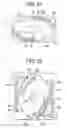
This FIGS. 21-22 embodiment has an elliptical body housed between two endplates. The ellipse has two opposed arcuate slots on its face that mate with a pair of pins placed substantially in the center of each endplate. A pair of springs are also provided between the two endplates on either side of the ellipse. These springs are compressed in the collapsed state of the implant. When the springs are release, they push the endplates apart and the ellipse rotates in accordance with the travel of the pins in the slots, thereby producing an expanded state for the implant.
In accordance with FIGS. 21-22, there is provided an intervertebral device comprising:
-
- a) an upper endplate 301 having an upper surface 303 and an upper pin 305 extending therefrom in a direction substantially parallel to the upper surface,
- b) a lower endplate 307 having a lower surface 309 and a lower pin 311 extending therefrom in a direction substantially parallel to the lower surface,
- c) first and second compression springs 313, each spring having an upper endportion 315 attached to the upper endplate and a lower endportion 317 attached to the lower endplate,
- d) a substantially elliptical body 319 disposed between the upper and lower endplates and between the first and second springs, the body having:
- i) a first dimension defining a height, a second dimension perpendicular thereto defining a width, wherein the height is greater than the width, a center, and a perimeter,
- ii) an upper arcuate slot 321 therethrough and a lower arcuate slot 323 therethrough, and
- iii) an actuation element 327 for rotating the body,
- wherein the upper pin is slidingly received in the upper arcuate slot and the upper pin is slidingly received in the upper arcuate slot,
- wherein the device has a collapsed state and an expanded state,
- wherein, when the device is the collapsed state, the body extends between the endplates substantially in the second dimension and the springs are in compressed states, and
- wherein, when the device is the expanded state, the body extends between the endplates substantially in the first dimension and the springs are in expanded states.
- Preferably, the actuation element is a projection disposed substantially in the center of the substantially elliptical body.
- Preferably, the actuation element is a recess disposed substantially in the center of the substantially elliptical body.
- Preferably, the actuation element has a hexagonal shape and is disposed substantially in the center of the substantially elliptical body.
- Preferably, the upper endplate has an upper pawl 329 and the body has an upper ratchet 331 upon its perimeter, wherein the upper pawl is engaged with the upper ratchet. preferably, the lower endplate has a lower pawl 333 and the body has a lower ratchet 335 upon its perimeter, wherein the lower pawl is engaged with the lower ratchet,
- Preferably, the upper and lower pins extend substantially in the same direction.
- Preferably, the upper and lower pins each extend substantially in the same direction.
- Preferably, each endplate has first 336 and second 337 ends and each pin is located approximately halfway between the first and second ends.
Squid
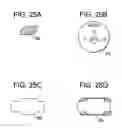
In this FIG. 23-25d embodiment, an inserter having upper and lower flexible blades is provided. A shaft with a pusher at its end is advanced between the blades. The pusher has an acicular cross-section so that its height is less than its width. Rotation of the pusher causes the larger width of the pusher to extend between the endplates thereby distracting the disc space. An indicator is built in to the inserter that measures the amount of distraction and thus the height.
In some embodiments, the shaft can be retracted and an implant loaded in front of the pusher. The shaft can then be advanced to act as an inserter.
-
- In accordance with FIGS. 23-25d, there is provided an intervertebral implant inserter, comprising:
- a) a elongated central body 341 having a distal end 343, a proximal end, an outer surface, and a longitudinal throughbore 349 therethrough,
- b) upper 351 and lower 353 blades, each blade having a distal end portion 355 and a base portion 357, the base portion of each blade pivotally coupled to the elongated central body,
- c) a shaft 359 having a longitudinal axis, wherein the shaft is advanceable within the throughbore and rotatable about the longitudinal axis, the shaft having a distal end 361 forming a pusher 363 having an acicular transverse cross-section,
- d) upper 365 and lower 367 endplates respectively detachably connected to the distal end portion of a respective blade.
Preferably, each endplate has an upper surface 369, a lower surface 371, and a central throughhole 373 extending from the upper surface to the lower surface.
Preferably, the inserter further comprises:
e) a height indicator 375 attached to the elongated central body.
In some embodiments, there is an intervertebral assembly comprising:
a) the inserter of FIG. 23, and
b) a spacer disposed between the endplates and having an upper surface, a lower surface, and vertical throughhole extending between its upper and lower surfaces.
Preferably, the upper surface of the spacer is substantially uniplanar with the upper surface of the upper endplate, and the lower surface of the spacer is substantially uniplanar with the lower surface of the lower endplate.
-
- Preferably, the vertical throughhole of the spacer substantially aligns with the central throughhole of each endplate.
In some embodiments, there is provided an intervertebral assembly comprising:
-
- a) the inserter of FIG. 23, and
- b) a spacer disposed distal of and in contact with the pusher, the spacer having an upper surface, a lower surface, and vertical throughhole extending between its upper and lower surfaces.
Reverse Squid
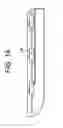
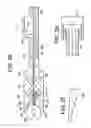
In the FIG. 26-28 embodiment, a core is provided between two ramped surfaces and caused to move between them, thereby increasing the distance between the two ramped surfaces. As the knob of the device is turned, the knob pulls the cable proximally, thereby pulling wedged core proximally as well. An indicator on the cable indicates the height achieved by the activity. In some embodiments, a second core is provided that indicates the angle of lordosis. In some embodiments, the ramped surfaces have indents or other such markings that provide height increments. In some embodiments, a spring is wrapped around the distal end portion of the cable, thereby allowing retraction of the core and bring the device back to its collapsed state.
-
- In other embodiments, a wedged core is advanced forward instead of being retracted to allow for indications of height and lordotic angle.
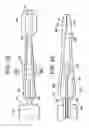
In accordance with FIGS. 26-28, there is provided, an intervertebral trial, comprising;
-
- a) an upper endplate 381 having a proximal end portion 383, a distal end portion 385, an upper surface 387 and a lower surface 389 disposed at an acute angle from the upper surface,
- b) a lower endplate 391 having a proximal end portion 393, a distal end portion 395, a lower surface 397 and an upper surface 399 disposed at an acute angle from the lower surface,
- c) a tube 401 having a throughbore 403, a proximal end portion 405, and a distal end portion 407 pivotally attached to the proximal end of each endplate
- d) a spacer 409 disposed between a the distal end portions of the endplates and biased against the lower surface of the upper endplate and the upper surface of the lower endplate,
- e) a cable 411 having a distal end portion 412 attached to the spacer, an intermediate portion 413 disposed within the throughbore of the tube, and a proximal end portion 415,
- f) a knob 417 threadably attached to the proximal end portion of the tube and connected to the proximal end portion of the cable,
- g) an indicator 419 extending from the cable, and
- h) a first indicia of distance 421 attached to the tube and adapted to measure changes of position of the indicator.
wherein proximal movement of the cable causes the spacer to move proximally, thereby causing the upper surface of the upper endplate and lower surface of the lower endplate to move apart a distance that is conveyed by the viewing the indicator against the first indicia of distance.
Preferably, the trial further comprises:
-
- i) a spring 423 disposed about the distal end portion of the cable.
- Preferably, at least one of the lower surface of the upper endplate and the upper surface of the lower endplate comprises a second indicia of distance.
- Preferably, the upper surface of the upper endplate and the lower surface of the lower endplate are substantially parallel.
Now referring to FIG. 27, as the ball 409 is pulled back, the ball will rest in the indents 400 within the trail arms. The small indents are spaced apart for different trail heights. The ball position will indicate the heights on the disk space.
Gears
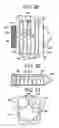
Now referring to FIGS. 29-31, there is provided an expandable intervertebral device in which two sets of parallel flanges are pivoted from a collapsed configuration in opposite directions about 90 degrees to produce an expanded configuration capable of distracting a disc space. In some embodiments, the sets of flanges are attached on opposite sides of a fixed carriage. The opposite pivoting of the flanges (i.e., clockwise and counterclockwise) is accomplished by rotating a pair of interlocked gears respectively connected to the first and second flanges. The rotation can be accomplished by inserting a driver into a driving connection on one of the gears and rotating the driver to cause opposed rotation of the gears and thereby opposed pivoting of the sets of flanges. The pivoting can be stopped and locked after the desired amount of distraction is achieved.
In some embodiments, the device is used as a trial to measure the amount of distraction, preferably as a prelude to inserting an expandable cage. The amount of distraction can be measured by measuring the amount of gear rotation. If the expandable cage has a lordotic feature, then the ratio of the gear diameters can be less than one to provide the required lordosis. Accordingly, the amount of angle produced can also be measured by measuring the extent of rotation in these different diameter gears.
In some embodiments, both gears can operate independently of each other by the use of a toggle switch in order to obtain precise angulation of the spacer.
In accordance with FIGS. 29-31, there is provided: an intervertebral device comprising:
-
- a) a first elongate flange 431 having a first end portion 433, a second end portion 435 and a pair of lateral sidewalls 437,
- b) a second elongate flange 439 having a first end portion 441, a second end portion 443 and a pair of lateral sidewalls 445,
- c) a first gear 447 connected to the first flange by a first pin 449, the first gear having a plurality of teeth 451 and a driving connection 453,
- d) a second gear 455 connected to the second flange by a second pin 457, the second gear having a plurality of teeth 459,
- e) a carriage 461 comprising a proximal wall 463 having first and second throughholes extending in the proximal-distal direction, a distal wall 469 and a bottom wall 471 connecting the proximal and distal walls, wherein the bottom wall has a bottom surface 473,
- wherein the teeth of the first and second gears are interlocked,
- wherein the first and second pins respectively pass through the first and second throughholes and respectively connect to the first end portions of the first and second flanges,
- wherein the device has a collapsed configuration in which the sidewalls of the elongate flanges are substantially parallel to the bottom surface,
- wherein rotation of the gears in the collapsed configuration produces in the device an expanded configuration in which the sidewalls of the elongate flanges are substantially perpendicular to the bottom surface.
- Preferably, the device further comprises:
- f) a third elongate flange 475 having a first end portion 477, a second end portion 479 and a pair of lateral sidewalls 481,
- g) a fourth elongate flange 483 having a first end portion 485, a second end portion 487 and a pair of lateral sidewalls 489,
wherein the first and second pins respectively pass through the first and second flanges and respectively connect to the first end portions of the third and fourth flanges, thereby respectively connecting the first and second pins to the third and fourth flanges,
wherein the first and third elongate flanges are substantially parallel in the collapsed and expanded configurations,
wherein the second and fourth elongate flanges are substantially parallel in the collapsed and expanded configurations, - Preferably, each flange has a second end and wherein, in an expanded configuration, a distance between the bottom surface of the bottom wall of the carriage and the second end of each flange corresponds substantially to the height of a disc space.
- Preferably, each flange comprises a narrowed intermediate section 493 between the first and second end portions.
Box Chisel
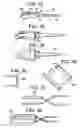
In the FIG. 32-38 embodiment, a four-sided osteotome is modified to house a pair of endplates connected by an expansion mechanism. In use, the osteotome is used as a box chisel to shape the disc space, and then the expansion mechanism is actuated to eject the endplates away from the rest of the osteotome, thereby providing a basis for an implant.
-
- In accordance with FIGS. 32-38, there is providedan expandable intervertebral box chisel, comprising;
- a) a four-sided osteotome 501 comprising i) an upper wall 503 having a vertical throughhole 505 and a sharpened distal edge 507 and ii) a lower wall 509 having a vertical throughhole and a sharpened distal edge 513, and iii) opposed sidewalls 515 connected the upper and lower walls,
- b) a shaft 517 having a proximal end portion 519 and a distal end portion 521 connected to the osteotome,
- c) a handle 523 connected to the proximal end portion of the shaft, and
- d) upper 525 and lower endplates disposed in the respective vertical throughholes and connected by an expansion mechanism 529,
wherein the chisel has a collapsed configuration in which the endplates are disposed in the throughholes and separated by a first distance and an expanded configuration in which the endplates are moved further apart and out of the throughholes, and are separated by a second distance greater than the first distance. - Preferably, the expansion mechanism comprises a spring.
- Preferably, the expansion mechanism comprises a ratchet.
- Preferably, the upper and lower walls are pivotally attached at a first pivot junction proximal to the osteotome.
Claims
We claim:1. An intervertebral device, comprising:
a) a first strut comprising i) an upper portion forming an upper surface having teeth adapted for gripping an upper natural endplate and ii) a lower portion forming a lower surface comprising teeth adapted for gripping a lower natural endplate,
b) an upper arm pivotally connected to the upper portion of the first strut and having an upper surface having teeth adapted for gripping an upper natural endplate, and
c) a lower arm pivotally connected to the lower portion of the first strut and having a lower surface having teeth adapted for gripping a lower natural endplate,
wherein the upper surface of the first strut and the upper surface of the upper arm are substantially co-planar in an expanded condition,
wherein the lower surface of the first strut and the lower surface of the lower arm are substantially co-planar in an expanded condition.
2. The device of claim 1 wherein the pivotal connections between first strut and each arm each form a ratchet connection adapted to lock the device in the expanded condition.
3. The device of claim 1 further comprising:
d) a second strut extending between a lower surface of the upper arm and an upper surface of the lower arm to lock the device in the expanded condition.
4. The device of claim 3 wherein each of the lower surface of the upper arm and the upper surface of the lower arm comprises a recess adapted for reception of a respective end of the second strut.
5. The device of claim 1 wherein each arm has a first endface opposite its pivotal connection, and the first endfaces are substantially opposed in an unexpanded condition.
6. A method of using an intervertebral device, comprising the steps of:
a) inserting the intervertebral device of claim 1 into a disc space in its unexpanded condition,
b) moving each arm so that the device adopts its expanded condition,
c) locking the device in its expanded condition.
7. An intervertebral device comprising:
a) a substantially U-shaped element comprising a substantially C-shaped portion and a pair of arms extending therefrom, an upper surface adapted for gripping a natural endplate, a lower surface adapted for gripping a natural endplate, and an inner surface including a concave surface, the concave surface having a first threaded coupling extending therein, wherein the inner surface defines a cavity, wherein a first distance between the upper and lower surfaces defines a first height, and wherein a second distance between the inner surfaces of the arms defines a width of the cavity,
b) a spreader element having i) a block having a first end having a second threaded coupling that mates with the first threaded coupling, a second end, a second height and a width, wherein the height is less than the width, ii) a shaft extending from the second end of the block and iii) a handle connected to the shaft,
wherein the first and second threaded couplings threadably mate,
wherein the width of the block is less than the width of the cavity so that the block of the spreader element is received in the cavity of the U-shaped element.
8. A method of preparing a disc space between Opposed vertebral endplates, comprising the steps of:
a) inserting the intervertebral device of claim 1 into a disc space wherein the block is oriented so that the height of the block spans the opposed vertebral endplates
b) rotating the block by about 90 degrees so that the width of the block spans the opposed vertebral endplates, thereby distracting the disc space.
9. The method of claim 8 further comprising the steps of:
c) disengaging the spreader from the U-shaped element, and
d) removing the block from the disc space.
10. The method of claim 9 further comprising the steps of:
e) contacting the U-shaped element with an implant material.
11. An intervertebral device comprising:
a) a base block having an upper surface having a first mating feature, a lower surface and a first side surface having a second mating feature therebetween,
b) a first upper spacer having a lower surface having a third mating feature, and an upper surface having a fourth mating feature, and a side surface therebetween
c) a first lateral spacer having an inner side surface having a fifth mating feature, an outer side surface having a sixth mating surface therebetween, and an upper surface therebetween,
wherein the first mating feature of the base block slidably mates with the third mating feature of the first upper spacer, and
wherein the second mating feature of the base block slidably mates with the fifth mating feature of the first lateral spacer.
12. The device of claim 11 wherein each mating feature is a dovetail feature.
13. The device of claim 11 further comprising:
d) a second upper spacer having a lower surface having a seventh mating feature, and an upper surface having a eighth mating feature, and a side surface therebetween
e) a second lateral spacer having an inner side surface having a ninth mating feature, an outer side surface having a tenth mating surface therebetween, and an upper surface therebetween,
wherein the fourth mating feature of the first upper spacer slidably mates with the seventh mating feature of the second upper spacer, and
wherein the sixth mating feature of the first lateral spacer slidably mates with the ninth mating feature of the second lateral spacer.
14. The device of claim 13 further comprising:
f) a third upper spacer having a lower surface having an eleventh mating feature, an upper surface disposed at an angle to its lower surface, and a side surface therebetween,
wherein the third upper spacer is disposed above the second vertical spacer.
15. The device of claim 14 wherein the eleventh mating feature of the third vertical spacer is located substantially directly above the eighth mating surface of the second vertical spacer.
16. The device of claim 11 wherein the lower surface of the base block has a seventh mating feature, and further comprising:
d) a first lower spacer having an upper surface having an eighth mating feature, a lower surface having a ninth mating feature, and a side surface therebetween.
17. The device of claim 11 wherein the base block has a second side surface having a seventh mating surface, and further comprising:
d) a second lateral side spacer having an inner side surface having a eighth mating feature, an outer side surface having a ninth mating feature, and an upper surface therebetween.
Images & Drawings included:
Sources:
- United States Patent and Trademark Office - verify current appl. status at the USPTO↗
Similar patent applications:
- » 20120232660
Expandable trial assembly for expandable vertebral implant - » 20080039950
Expanding trial stem for orthopaedic surgery - » 20250064603
EXPANDABLE TRIAL FEMORAL NECK AND ASSOCIATED METHOD OF USE - » 20150073555
Expandable trials - » 20160015530
EXPANDABLE TRIAL WITH TELESCOPIC STABILIZERS - » 20180221175
Expandable trial with telescopic stabilizers - » 20200323647
Expandable trials - » 20250064592
EXPANDABLE TRIAL FEMORAL NECK AND ASSOCIATED METHOD OF USE - » 20120259334
Expanding trial stem for orthopaedic surgery - » 20150073552
Staged, bilaterally expandable trial
Recent applications in this class:
- » 20250281304 2025-09-11
INTERVERTEBRAL SPINAL IMPLANT - » 20250281303 2025-09-11
ARTICULATING EXPANDABLE INTERBODY FUSIONS DEVICES - » 20250275856 2025-09-04
IMPLANTS HAVING BONE GROWTH PROMOTING AGENTS AND METHODS OF USING SUCH IMPLANTS TO REPAIR BONE STRUCTURES - » 20250262061 2025-08-21
DUAL EXPANDABLE INTER-BODY DEVICE - » 20250248824 2025-08-07
INTERVERTEBRAL IMPLANT HAVING VARIABLE HEIGHT SERRATIONS - » 20250241764 2025-07-31
SYSTEMS AND METHODS FOR PROVIDING AND DEPLOYING INTERBODY IMPLANTS - » 20250235324 2025-07-24
SYSTEMS AND METHODS FOR ORTHOPEDIC IMPLANT FIXATION - » 20250221829 2025-07-10
MULTI-PORTAL SURGICAL SYSTEMS - » 20250213372 2025-07-03
EXPANDABLE INTERVERTEBRAL IMPLANTS - » 20250213371 2025-07-03
Expandable Implant with Worm Gear
Recent applications for this Assignee:
- » 20250213276 2025-07-03
CABLE BONE TRANSPORT DEVICE - » 20250195084 2025-06-19
SURGICAL INSTRUMENT HAVING A SELF-CENTERED QUICK CONNECT INTERFACE - » 20250186094 2025-06-12
BONE PLATE AND GUIDE BLOCK COUPLING MECHANISM - » 20250169825 2025-05-29
PULL WIRE DETACHMENT FOR INTRAVASCULAR DEVICES - » 20250169744 2025-05-29
BONE FIXATION MONITORING SYSTEM - » 20250134615 2025-05-01
SET FOR TREATING THE VASCULATURE TO REDUCE OR BLOCK BLOOD FLOW - » 20250127405 2025-04-24
METHOD AND APPARATUS FOR MANAGING ACUTE ISCHEMIC EVENTS - » 20250082335 2025-03-13
HOOK WIRE FOR PREVENTING PREMATURE EMBOLIC IMPLANT DETACHMENT - » 20250065079 2025-02-27
ANNEALING OF DISCRETE SECTIONS OF A REINFORCEMENT LAYER TO MODULATE STIFFNESS OF A CATHETER - » 20250064496 2025-02-27
METHODS AND DEVICES FOR SYNDESMOSIS TENSIONING