Durable and scalable superhydrophobic paint
US20170121530A1
2017-05-04
15/343,292
2016-11-04
✅ Patent granted
US 10,160,870 B2
2018-12-25
-
-
Robert C Boyle
Timothy H. Van Dyke | Beusse, Wolter, Sanks & Maire PLLC
2036-11-04
Abstract:
A paint that imparts a superhydrophobic surface on an object is a suspension of hydrophobic particles in a polymeric binder and a plasticizer in a solvent or mixed solvent. The particles are a metal oxide that is surface functionalized with a fluorinated alkyl silane or an alkyl silane. The binder is a mixture of PDVF and PMMA in a ratio of 3:1 to 10:1. The plasticizer is a mixture of triethylphosphate and perfluoro(butyltetrahydrofuran) or other perfluorinated hydrocarbon. Surfaces coated using this paint display contact angles in excess of 150° and resist abrasion.
Inventors:
- Wolfgang M. Sigmund 27 🇺🇸 Gainesville, FL, United States
- Yung-Chieh Hung 5 🇺🇸 Gainesville, FL, United States
Assignee:
- UNIVERSITY OF FLORIDA RESEARCH FOUNDATION, INC. 1,575 🇺🇸 Gainesville, FL, United States
Applicant:
Interested in similar patents?
Get notified when new applications in this technology area are published.
Classification:
C09D5/00 » CPC main
Coating compositions, e.g. paints, varnishes or lacquers, characterised by their physical nature or the effects produced ; Filling pastes
C09D7/00 IPC
Features of coating compositions, not provided for in group ; Processes for incorporating ingredients in coating compositions
C09D5/1681 » CPC further
Coating compositions, e.g. paints, varnishes or lacquers, characterised by their physical nature or the effects produced ; Filling pastes; Antifouling paints; Underwater paints Antifouling coatings characterised by surface structure, e.g. for roughness effect giving superhydrophobic coatings or Lotus effect
C09D7/61 » CPC further
Features of coating compositions, not provided for in group ; Processes for incorporating ingredients in coating compositions; Additives non-macromolecular inorganic
C09D7/62 » CPC further
Features of coating compositions, not provided for in group ; Processes for incorporating ingredients in coating compositions; Additives non-macromolecular inorganic modified by treatment with other compounds
C09D127/16 » CPC further
Coating compositions based on homopolymers or copolymers of compounds having one or more unsaturated aliphatic radicals, each having only one carbon-to-carbon double bond, and at least one being terminated by a halogen; Coating compositions based on derivatives of such polymers not modified by chemical after-treatment containing fluorine atoms Homopolymers or copolymers of vinylidene fluoride
C08K3/36 » CPC further
Use of inorganic substances as compounding ingredients; Silicon-containing compounds Silica
C08K9/06 » CPC further
Use of pretreated ingredients; Ingredients treated with organic substances with silicon-containing compounds
C08K2003/2227 » CPC further
Use of inorganic substances as compounding ingredients; Oxygen-containing compounds, e.g. metal carbonyls; Oxides; Hydroxides of metals of aluminium
C08K2003/2241 » CPC further
Use of inorganic substances as compounding ingredients; Oxygen-containing compounds, e.g. metal carbonyls; Oxides; Hydroxides of metals of titanium Titanium dioxide
C09D7/67 » CPC further
Features of coating compositions, not provided for in group ; Processes for incorporating ingredients in coating compositions; Additives characterised by particle size Particle size smaller than 100 nm
C09D7/68 » CPC further
Features of coating compositions, not provided for in group ; Processes for incorporating ingredients in coating compositions; Additives characterised by particle size Particle size between 100-1000 nm
C09D7/69 » CPC further
Features of coating compositions, not provided for in group ; Processes for incorporating ingredients in coating compositions; Additives characterised by particle size Particle size larger than 1000 nm
C09D5/16 IPC
Coating compositions, e.g. paints, varnishes or lacquers, characterised by their physical nature or the effects produced ; Filling pastes Antifouling paints; Underwater paints
C08K3/22 IPC
Use of inorganic substances as compounding ingredients; Oxygen-containing compounds, e.g. metal carbonyls; Oxides; Hydroxides of metals
C09D7/40 IPC
Features of coating compositions, not provided for in group ; Processes for incorporating ingredients in coating compositions Additives
Description
CROSS-REFERENCE TO RELATED APPLICATIONS
This application claims the benefit of U.S. Provisional Application Ser. No. 62/270,265, filed Dec. 21, 2015 and U.S. Provisional Application Ser. No. 62/250,776, filed Nov. 4, 2015, the disclosures of which are hereby incorporated by reference in their entireties, including all figures, tables and drawings.
BACKGROUND OF INVENTION
Superhydrophobicity is defined as a material or surface with a water contact angle greater than 150° and the roll off angle or contact angle hysteresis less than 10°. The coating is hard to wet by water which imparts some compelling properties like self-cleaning and antibio-fouling. Textbooks describe superhydrophobicity as depending the surface roughness or so-called topography. The best published phenomenon is the lotus-effect which means affluent tiny protrusions on the lotus or taro leaf yield a contact angle >150° accompanied by a few degrees of roll-off angle. The second factor important for superhydrophobicity depends on the surface chemistry and typically fluorinated compounds are employed to reduce surface energy to levels for superhydrophobicity. The most crucial criterion for superhydrophobicity is retaining the water droplet in the Cassie-Baxter state where air pockets are trapped under the droplet to reduce the solid-liquid interface. State of the art coatings or micro-scale surfaces possess the drawbacks of poor durability and/or poor optical properties. Therefore, a durable superhydrophobic surface that is scalable for covering a large surface remains a goal.
BRIEF SUMMARY OF THE INVENTION
An embodiment of the invention is directed to a superhydrophobic paint where hydrophobic particles, a polymer binder, and at least one plasticizer are suspended in a solvent. The superhydrophobic paint can be dispersed on a substrate by spraying, rolling, brushing, or spin coating to result in a superhydrophobic coated substrate. The hydrophobic particles can be metal oxide particles, including SiO2 TiO2, or Al2O3 that are coated with a bound fluorinated alkyl silane or an alkyl silane, such as a covalently bound fluorinated alkyl silane. The metal oxide particles can be 40 nm to 100 μm in diameter. The polymer binder can be a mixture of PDVF and PMMA, which can be used in a ratio of 3:1 to 10:1. The plasticizer can be a mixture of triethyl phosphate and perfluoro(butyltetrahydrofuran). The solvent can be DMF (dimethylformamide), MEK (methyl ethyl ketone), or isophorone. The superhydrophobic paints can be applied to the surface of an object to form a glass, plastic, wood, or metal object with a coating that renders the object's surface superhydrophobic.
BRIEF DESCRIPTION OF DRAWINGS
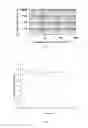
FIG. 1 shows a plot of particle size for the specific surface area of silica particles used to prepare exemplary paints according to an embodiment of the invention.
FIG. 2 shows a plot of the water contact angle (CA) of coatings, according to an embodiment of the invention, over time of irradiation with UV light.
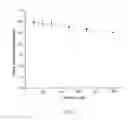
FIG. 3 shows a plot of CA vs abrasion wipes for an abrasion test of a coating according to an embodiment of the invention.
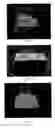
FIG. 4 shows a superhydrophobic coating, according to an embodiment of the invention, on a glass substrate.
FIG. 5 shows a superhydrophobic coating, according to an embodiment of the invention, on a wood substrate.
FIG. 6 shows a superhydrophobic coating, according to an embodiment of the invention, on a metal substrate.
DETAILED DISCLOSURE
Embodiments of the invention are directed to a paint comprising: pigments that are functionalized silica particles; binders that are a polymer blend of polymethyl methacrylate (PMMA) and polyvinylidene fluoride (PVDF); and plasticizers that are triethylphosphate and/or perfluorinated compounds. In embodiments of the invention, silica particles of specific surface area of, for example, 35-65 m2/g are employed as the pigment. As indicated in FIG. 1, the diameters of silica particles are 50 to 110 nm. The silica particles are functionalized by a silane coupling agent, for example, heptadecafluoro-1,1,2,2-tetrahydrodecyltrichlorosilcane, to provide a fluorination alkane bound to the particles. In embodiments of the invention, the binders are a blend of, for example, PMMA and PVDF of molecular weights, for example, 75,000 and 900,000 to 1,300,000, respectively, that are comprised in a solution in a mixed solvent of dimethylformamide and acetone. In embodiments of the invention, the plasticizer is, for example, a mixture of triethylphosphate and perfluoro(butyltetrahydrofuran) or other phosphates and prefluorocarbons. A homogeneous paint is formed by combination of these components.
Other particulate fillers and pigments, in addition or alternative to SiO2, that can be included in the paint are any white metal oxide, including, but not limited to, TiO2, Al2O3, or other related ceramic powders having particle diameters of 40nm to 100 μm. The particles can be functionalized with one or more compounds to form a self-assembled monolayer or a surface specific attachment that is fluorinated hydrocarbon or other hydrocarbon that allows the particles to exhibit a low surface energy. In addition to heptadecafluoro-1,1,2,2-tetrahydrodecyltrichlorosilcane, the functionalizing agent can be heptadecafluorodecyl trichlorosilane, heptadecafluoro-1,1,2,2,-tetrahydrodecyltrimethoxysilane, 1H,1H,2H,2H-perfluorodecyltriethoxysilane, other perfluoroalkyl silanes, or a long-chain alkyl silane, such as octadecyltricholosilane. The volume percent pigment particulates in the paint can be 35 to 75%. The binder can be, for example, PDVF and PMMA mixture, and has a PVDF to PMMA ratio of about 5 to 1, about 10 to 1, about 9 to 1, about 8 to 1, about 7 to 1, about 6 to 1, about 4 to 1, about 3 to 1, or any ratio between about 3:1 and 10:1
According to an embodiment of the invention, the paint can be applied and dried to form a coating on a substrate. The paint can be applied by spraying, rolling, brushing or any other method. The substrate can be any surface, including a glass, plastic, metal, or wood. The superhydrophobic paint can be applied as a top coating on another coating. Different substrates with superhydrophobic coatings are shown in FIGS. 4-6. Superhydrophobicity is displayed for all coatings with these paint formulations, according to an embodiment of the invention. By changing the proportion of particles in the paint, as indicated in Table 1, below, and provided in the Methods and Materials section, below, paint formulations upon drying to a coating form durable superhydrophobic surfaces.
| TABLE 1 |
| Coating properties for various paint compositions. |
| Contact | ||
| Formulation | Angle | Observations |
| Formulation I, 74% particles | >165° | Particles removed by rubbing |
| Formulation I, 61% particles | >160° | Particles retained after rubbing |
| Formulation I, 39% particles | ≈120° | Particles firmly embedded |
| Formulation II, 64% particles | >165° | |
The paint can be prepared with any solvent that permits the blending of PVDF and PMMA. Solvents that can be employed include, but are not limited to, DMF (dimethylformamide), MEK (methyl ethyl ketone), and isophorone. Additionally, other acrylates and methacrylates can be combined in the paint. The acrylates and methacrylates can be homopolymers or copolymers. For example, a copolymer of methyl methacrylate and ethyl acrylate can be used to form the binder. PMMA can be atactic, syndiotactic, or isotactic.
Methods and Materials
Silica particles, Aerosil Ox 50, were purchased from Evonik Industries. The specific surface area of the particles is 35-65 m2/g. The diameter of silica particles is between 50 to 110 nm. Heptadecafluoro-1,1,2,2-tetrahydrodecyltrichlorosilane was purchased from Gelest Inc. PVDF was obtained from Kynar Hsv 900 with Mn 900,000 to 1,300,000 g/mol and PMMA was obtained from Polyscience Inc. with Mn 75,000. Perfluoro(butyltetrahydrofuran) FC75™, was purchased from ACROS.
Silica particles were dehydrated in an oven at 120° C., cooled and dispersed in chloroform. Subsequently, heptadecafluoro-1,1,2,2-tetrahydrodecyltrichlorosilcane was added to the silica-chloroform dispersion and stirred for one hour. The dispersion was centrifuged and the chloroform decanted. The fluorinated particles were dried at 120° C. on a heating plate.
PVDF was dissolved in DMF at 5 wt % and PMMA was dissolved in acetone at 5 wt %. The 5 wt % PVDF solution and 5 wt % PMMA solutions were mixed at a 5:1 ratio and stirred vigorously for 30 minutes to form a binder solution.
In a first formulation, Formulation I of Table 1, above, a 5 g aliquot of the binder solution, 5 g of 99.8% DMF, 1 g triethylphosphate, and 100 μl of perfluoro(butyltetrahydrofuran) were combined and homogenized using a vortex mixture to form the liquid portion of paint. To equivalent 11.1 g liquid portions of the paint were added 0.88 g, 0.5 g, and 0.2 g of the particles to yield 74, 61, and 39% particle loadings by volume, respectively.
In a second formulation, Formulation II of Table 1, above, a 5 g aliquot of the binder solution, 5 g of MEK, 1 g triethylphosphate, and 100 μl of perfluoro(butyltetrahydrofuran) were combined and homogenized using a vortex mixture to form the liquid portion of paint. To 11.1 g liquid was added 0.6 g of the fluorinated particles to yield 64% particle loading by volume.
UV Resistance Test
UV resistance was tested by observation of the contact angle with time of exposure to UV light. The UV light source was a T8 black light bulb with a wavelength range of about 350 nm to 450 nm.
As can be seen in FIG. 2, for the first formulation, the water contact angle remained 162°±2° over 12 days of UV-exposure. For the second formulation, the water contact angle was in excess of 165°. Additionally, the sliding angle remained smaller than 5° over that period of time.
Abrasion Test
Abrasion testing was carried out with a Taber 5700 Linear Abraser using a windshield wiper purchased from BOSCH GMBH with a loaded mass of 50 g/inch as the abrading surface. The pained substrate was soda-lime glass with the paint applied by spin coating at a rotation speed of 200 rpm. The coating and glass adhere well and the sample displayed superhydrophobicity after 1,000 wipes, as shown in FIG. 3.
It should be understood that the examples and embodiments described herein are for illustrative purposes only and that various modifications or changes in light thereof will be suggested to persons skilled in the art and are to be included within the spirit and purview of this application.
Claims
We claim:1. A superhydrophobic paint, comprising hydrophobic particles, a polymer binder, and at least one plasticizer that are suspended in a solvent, wherein the paint is dispersible on a substrate by spraying, rolling, brushing, or spin coating.
2. The superhydrophobic paint according to claim 1, wherein the hydrophobic particles comprise metal oxide particles.
3. The superhydrophobic paint according to claim 2, wherein the hydrophobic particles are metal oxide particles SiO2 TiO2, or Al2O3 coated with a fluorinated alkyl silane or an alkyl silane.
4. The superhydrophobic paint according to claim 2, wherein the metal oxide particles are 40 nm to 100 μm in diameter.
5. The superhydrophobic paint according to claim 1, wherein the polymer binder is a mixture of PDVF and PMMA.
6. The superhydrophobic paint according to claim 4, wherein the PDVF and PMMA mixture is 3:1 to 10:1.
7. The superhydrophobic paint according to claim 1, wherein the plasticizer is a mixture of triethylphosphate and perfluoro(butyltetrahydrofuran).
8. The superhydrophobic paint according to claim 1, wherein the solvent is DMF (dimethylformamide), MEK (methyl ethyl ketone), or isophorone.
9. A superhydrophobic object, comprising a coating formed by deposition of the paint according to claim 1 on an object having a surface comprising glass, plastic, wood, or metal.
Images & Drawings included:
Sources:
- United States Patent and Trademark Office - verify current appl. status at the USPTO↗
Recent applications in this class:
- » 20250109298 2025-04-03
ELECTROMAGNETIC RADIATION MITIGATION IN COATINGS WITH SPHERICAL PARTICLES - » 20250059379 2025-02-20
PAINTS CONTAINING DRIERS BASED ON VANADIUM COMPOUNDS BEARING VARIOUS ACID ANIONS - » 20240343913 2024-10-17
METHOD FOR PREPARATION OF SELF-ADHESIVE SUPER-HYDROPHOBIC COATINGS FROM PLASTIC WASTE - » 20240343912 2024-10-17
PLASTIC WASTE VALORIZATION TO SELF-ADHESIVE SUPER-HYDROPHOBIC FILMS - » 20240294770 2024-09-05
SYSTEMS AND METHODS FOR CREATING DURABLE LUBRICIOUS SURFACES VIA INTERFACIAL MODIFICATION - » 20240279481 2024-08-22
ANTI-MIGRATION COATING AGENT - » 20240263017 2024-08-08
ANTI DRIPPING COATINGS FOR HOODS - » 20240166883 2024-05-23
METHOD FOR MANUFACTURING SPECTACLE LENS AND SPECTACLE LENS - » 20240043697 2024-02-08
Anti-fingerprint film for automobile interior parts containing fluorine-based compound and method of manufacturing same - » 20230399522 2023-12-14
Self-Cleaning, Dirt Pick-Up Resistant Compositions for Roof Coatings
Recent applications for this Assignee:
- » 20250050487 2025-02-13
COMPACT MECHANICAL WAVEGUIDES FOR IMPACT DEVICES - » 20250002542 2025-01-02
Insect Toxin Delivery Mediated by a Begomovirus Coat Protein - » 20240287652 2024-08-29
HIGH TEMPERATURE LIGHTWEIGHT AL-FE-SI BASED ALLOYS - » 20240237951 2024-07-18
HEART RATE MEASUREMENT USING ADAPTIVE HARMONICS FILTERING - » 20240187735 2024-06-06
Acoustic Eavesdropping Using A Smartphone Camera - » 20240184001 2024-06-06
Systems and methods for detecting sources of particle emissions - » 20240162859 2024-05-16
SELF-AMPLIFIED RESONATORS WITH EMBEDDED PIEZORESISTIVE ELEMENTS FOR HIGH PERFORMANCE, ULTRA-LOW SW AP MICROWAVE AND MILLIMETER-WAVE APPLICATIONS - » 20240104364 2024-03-28
MEMRISTIVE NANOFIBER NEURAL NETWORKS - » 20240092738 2024-03-21
N,N diethyl-N'phenylpiperazine alpha 7 and alpha 9 nicotinic acetylcholine receptor agonists and antagonists - » 20240084521 2024-03-14
Waste to energy ash and engineered aggregate in road construction