Imaging lens assembly
US20170123184A1
2017-05-04
15/230,581
2016-08-08
✅ Patent granted
US 9,772,474 B2
2017-09-26
-
-
James Jones
Na Xu | IPro, PLLC
2036-08-08
Abstract:
An imaging lens assembly is provided in the present disclosure. The imaging lens assembly includes a first lens with positive refractive power, a second lens with negative refractive power, a third lens with positive refractive power, a forth lens with positive refractive power and a fifth lens with negative refractive power, the first lens, the second lens, the third lens, the forth lens and the fifth lens are arranged in sequence from the object side to the image side, and satisfy the conditions provided in the present disclosure.
Assignee:
- AAC TECHNOLOGIES PTE. LTD 958 🇸🇬 Singapore, Singapore
- AAC Technologies Pte. Ltd. 343 🇸🇬 Singapore city, Singapore
Applicant:
Interested in similar patents?
Get notified when new applications in this technology area are published.
Classification:
G02B13/0045 » CPC main
Optical objectives specially designed for the purposes specified below; Miniaturised objectives for electronic devices, e.g. portable telephones, webcams, PDAs, small digital cameras characterised by the lens design having at least one aspherical surface having five or more lenses
G02B27/00 IPC
Optical systems or apparatus not provided for by any of the groups -
G02B27/0025 » CPC further
Optical systems or apparatus not provided for by any of the groups - for optical correction, e.g. distorsion, aberration
G02B13/00 IPC
Optical objectives specially designed for the purposes specified below
G02B9/60 » CPC further
Optical objectives characterised both by the number of the components and their arrangements according to their sign, i.e. + or - having five components only
G02B3/02 IPC
Simple or compound lenses with non-spherical faces
Description
FIELD OF THE DISCLOSURE
The present disclosure relates to optical technologies, and more particular, to an imaging lens assembly applicable to a digital camera of a mobile phone or a WEB camera, which uses CCD imaging components or CMOS imaging components with high resolution.
BACKGROUND
CCD imaging components and CMOS imaging components are used widely in camera device, to meet the requirements of miniaturization and good performance of the imaging components, a wide-angle lens assembly with good optical characteristic, less thickness, and high luminous flux (namely, F Number) is needed.
Japanese patent No. 5513641 discloses an imaging lens assembly including five lenses. However, as the shapes of the first lens, the second lens and the fifth lens are inadequate, the proportion of the total track length (TTL) and the image height (IH) of the imaging lens assembly is greater than 1.58; this is, TTL/IH≧1.58. Accordingly, the imaging lens assembly is too thick to meet the miniaturization requirement.
In addition, Japanese patent No. 5775983 discloses an imaging lens assembly including five lenses. However, as the shapes of the first lens and the second lens are inadequate, the proportion value TTL/IH of the imaging lens assembly is greater than 1.34; this is, TTL/IH≧1.34. Accordingly, the imaging lens assembly is too thick to meet the miniaturization requirement.
Accordingly, an improved imaging lens assembly which can overcome the disadvantages described above is desired.
BRIEF DESCRIPTION OF THE DRAWINGS
Many aspects of the embodiment can be better understood with reference to the following drawings. The components in the drawing are not necessarily drawn to scale, the emphasis instead being placed upon clearly illustrating the principles of the present disclosure. Moreover, in the drawings, like reference numerals designate corresponding parts throughout the several views.
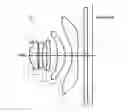
FIG. 1 is a structural diagram of an imaging lens assembly related to an embodiment of the present disclosure;
FIG. 2 is a structural diagram of the imaging lens assembly in accordance with the first embodiment of the present disclosure;
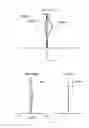
FIG. 3 is the longitudinal aberration of the imaging lens assembly of FIG. 2;
FIG. 4 is the lateral color of the imaging lens assembly of FIG. 2;
FIG. 5 is the field curvature and distortion of the imaging lens assembly of FIG. 2;
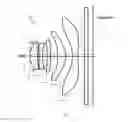
FIG. 6 is a structural diagram of the imaging lens assembly in accordance with the second embodiment of the present disclosure;
FIG. 7 is the longitudinal aberration of the imaging lens assembly of FIG. 6;
FIG. 8 is the lateral color of the imaging lens assembly of FIG. 6;
FIG. 9 is the field curvature and distortion of the imaging lens assembly of FIG. 6.
DETAILED DESCRIPTION
The present invention will hereinafter be described in detail with reference to several embodiments.
Referring to FIG. 1, an imaging lens assembly LA according to an embodiment of the present disclosure is shown. The imaging lens assembly LA includes a lens set with five lenses, that is, a first lens L1, a second lens L2, a third lens L3, a forth lens L4 and a fifth lens L5, which are arranged in order from the object side to the image side. A glass filter GF is arranged between the fifth lens L5 and an image plane, the glass filter GF may be a cover glass or an IR filter plate. Alternatively, the glass filter GF may be arranged in other locations or even removed from the imaging lens assembly LA.
The first lens L1 has a positive refractive power, the second lens L2 has a negative refractive power, the third lens L3 has a positive refractive power, the forth lens L4 has a positive refractive power, and the fifth lens L5 has a negative refractive power. In practice, the fifth lens L5 is designed to have aspheric surfaces, so as to compensate aberration in the imaging lens assembly LA.
The imaging lens assembly LA as provided in the present embodiment satisfies the following conditions (1) to (3):
0.08≦R1/R2≦0.25 (1)
−5.00≦R3/R4≦−0.30 (2)
−1.50≦R9/R10≦−0.30 (3)
In the above conditions (1) to (3),
R1 is the curvature radius of the object side of the first lens L1;
R2 is the curvature radius of the image side of the first lens L1;
R3 is the curvature radius of the object side of the second lens L2;
R4 is the curvature radius of the image side of the second lens L2;
R9 is the curvature radius of the object side of the fifth lens L5; and
R10 is the curvature radius of the image side of the fifth lens L5.
The condition (1) defines the shape of the first lens L1. If the proportion value R1/R2 is beyond the value range defined in condition (1), it is difficult to compensate the high order aberrations such as the spherical aberration when the imaging lens assembly LA has a less thickness and a wider view angle with an F number (Fno) less than 2.2.
In addition, the proportion value R1/R2 in condition (1) is preferred to be set in the value range as defined in the following condition (1-A):
0.10≦R1/R2≦0.18 (1-A)
The condition (2) defines the shape of the second lens L2. If the proportion value R3/R4 is beyond the value range defined in condition (2), it is difficult to compensate on-axis aberration and off-axis aberration when the imaging lens assembly LA has a less thickness and a wider view angle with an F number (Fno) less than 2.2.
In addition, the proportion value R3/R4 in condition (2) is preferred to be set in the value range as defined in the following condition (2-A):
−2.00≦R3/R4≦−1.00 (2-A)
The condition (3) defines the shape of the fifth lens L5. If the proportion value R9/R10 is beyond the value range defined in condition (3), an axial distance between the image side of the fifth lens L5 and the image plane may not be assured in the imaging lens assembly LA when the imaging lens assembly LA has a less thickness and a wider view angle with an F number (Fno) less than 2.2.
In addition, the proportion value R9/R10 in condition (3) is preferred to be set in the value range as defined in the following condition (3-A):
−0.70≦R9/R10≦−0.50 (3-A)
The third lens L3 has a positive refractive power, and satisfies the following conditions (4) and (5):
10.00≦f3/f≦70.00 (4)
0.65≦R5/R6≦1.05 (5)
In the above conditions (4) and (5),
f is the focal length of the imaging lens assembly LA;
f3 is the focal length of the third lens L3;
R5 is the curvature radius of the object side of the third lens L3; and
R6 is the curvature radius of the image side of the third lens L3.
The condition (4) defines the positive refractive power of the third lens L3. If the proportion value f3/f is beyond the value range defined in condition (4), it is difficult to compensate the off-axis chromatic aberration when the imaging lens assembly LA has a less thickness.
The condition (5) defines the shape of the third lens L3. If the proportion value R5/R6 is beyond the value range defined in condition (5), it is difficult to compensate the off-axis chromatic aberration when the imaging lens assembly LA has a less thickness and a wider view angle with an F number (Fno) less than 2.2.
In addition, the proportion value R5/R6 in condition (5) is preferred to be set in the value range as defined in the following condition (5-A):
0.70≦R5/R6≦0.95 (5-A)
Upon the condition that the first lens L1, the second lens L2, the third lens L3, the forth lens L4 and the fifth lens L5 satisfy the aforesaid conditions, the imaging lens assembly LA is possible to have good optical characteristic as well as an ultra-thin profile, and moreover, the imaging lens assembly LA may also satisfy the following parameter requirements: TTL/IH≦1.30, view angle 2ω≧80°, and Fno≦2.2.
The following description describes the imaging lens assembly LA according to the present disclosure in detail with reference to several embodiments; parameters of the imaging lens assembly are defined as follows, in which the unit of each of distance, radius, and central thickness is millimeter (mm):
f: the focal length of the imaging lens assembly LA;
f1: the focal length of the first lens L1;
f2: the focal length of the second lens L2;
f3: the focal length of the third lens L3;
f4: the focal length of the forth lens L4;
f5: the focal length of the fifth lens L5;
Fno: F-number;
2ω: full view angle;
S1: aperture stop;
R: a curvature radius of an optical surface, and may also be a central curvature radius of a lens;
R1: the curvature radius of the object side of the first lens L1;
R2: the curvature radius of the image side of the first lens L1;
R3: the curvature radius of the object side of the second lens L2;
R4: the curvature radius of the image side of the second lens L2;
R5: the curvature radius of the object side of the third lens L3;
R6: the curvature radius of the image side of the third lens L3;
R7: the curvature radius of the object side of the forth lens L4;
R8: the curvature radius of the image side of the forth lens L4;
R9: the curvature radius of the object side of the fifth lens L5;
R10: the curvature radius of the image side of the fifth lens L5;
R11: the curvature radius of the object side of the glass filter GF;
R12: the curvature radius of the object side of the glass filter GF;
d: an central thickness of the lens or an axial distance between lenses;
d0: the axial distance between the aperture stop S1 and the object side of the first lens L1;
d1: the central thickness of the first lens L1;
d2: the axial distance between the image side of the first lens L1 and the object side of the second lens L2;
d3: the central thickness of the second lens L2;
d4: the axial distance between the image side of the second lens L2 and the object side of the third lens L3;
d5: the central thickness of the third lens L3;
d6: the axial distance between the image side of the third lens L3 and the object side of the forth lens L4;
d7: the central thickness of the forth lens L4;
d8: the axial distance between the image side of the forth lens L4 and the object side of the fifth lens L5;
d9: the central thickness of the fifth lens L5;
d10: the axial distance between the image side of the fifth lens L5 and the object side of the glass filter GF;
d11: the central thickness of the glass filter GF;
d12: the axial distance between the image side of the glass filter GF and the image plane;
nd: d line refraction index;
n1: d line refraction index of the first lens L1;
n2: d line refraction index of the second lens L2;
n3: d line refraction index of the third lens L3;
n4: d line refraction index of the forth lens L4;
n5: d line refraction index of the fifth lens L5;
n6: d line refraction index of the glass filter GF;
νd: abbe number (i.e., dispersion coefficient)
ν1: abbe number of the first lens L1;
ν2: abbe number of the second lens L2;
ν3: abbe number of the third lens L3;
ν4: abbe number of the forth lens L4;
ν5: abbe number of the fifth lens L5;
ν6: abbe number of the glass plate GF;
TTL: the total track length (i.e., an axial distance between the object side of the first lens L1 and the image plane);
LB: the axial distance between the image side of the fifth lens L5 and the image plane (including the thickness of the glass plate GF); and
IH: the image height.
y=(x2/R)/[1+{1−(k+1)(x2/R2)}1/2]+A4x4+A6x6+A8x8+A10x10+A12x12+A14x14+A16x16 (6)
In the above condition (6), R is the axial curvature radius, k is the conic coefficient, and A4, A6, A8, A10, A12, A14 and A16 are aspherical coefficients.
Optionally, aspherical surfaces of the lenses L1-L5 may be obtained according to condition (6); alternatively, the aspherical surfaces may also be obtained according to other conditions.
Embodiment 1
FIG. 2 illustrated an imaging lens assembly LA in accordance with the first embodiment of the present disclosure. TABLE 1 and TABLE 2 show the detailed optical data of the imaging lens assembly LA.
The optical data in TABLE 1 includes the curvature radius R, the central thickness d, the axial distance d between lenses, refraction index nd and abbe number νd of the lenses L1-L5 in the imaging lens assembly LA.
The optical data in TABLE 2 includes conic coefficient (C-coefficient) k and aspherical coefficient of the lenses L1-L5 in the imaging lens assembly LA.
| TABLE 1 | ||||
| R | d | nd | νd | |
| S1 | ∞ | d0 = | −0.210 | ||||
| R1 | 1.12491 | d1 = | 0.483 | nd1 | 1.5441 | ν1 | 56.12 |
| R2 | 7.61015 | d2 = | 0.079 | ||||
| R3 | −7.69938 | d3 = | 0.199 | nd2 | 1.6422 | ν2 | 22.41 |
| R4 | 5.35662 | d4 = | 0.253 | ||||
| R5 | 8.22718 | d5 = | 0.202 | nd3 | 1.6422 | ν3 | 22.41 |
| R6 | 11.11744 | d6 = | 0.432 | ||||
| R7 | −3.56285 | d7 = | 0.470 | nd4 | 1.5441 | ν4 | 56.12 |
| R8 | −1.10357 | d8 = | 0.409 | ||||
| R9 | −1.72267 | d9 = | 0.310 | nd5 | 1.5352 | ν5 | 56.12 |
| R10 | 3.03581 | d10 = | 0.400 | ||||
| R11 | ∞ | d11 = | 0.210 | nd6 | 1.5168 | ν6 | 64.17 |
| R12 | ∞ | d12 = | 0.288 | ||||
| TABLE 2 | ||
| C-coefficient | aspherical coefficient |
| k | A4 | A6 | A8 | A10 | A12 | A14 | A16 | |
| R1 | 0.0000E+00 | −8.2623E−03 | 1.2189E−01 | −2.4013E−01 | −1.5752E−01 | 4.3467E−01 | 9.4646E−01 | −1.9429E+00 |
| R2 | 0.0000E+00 | −4.9581E−02 | −3.5808E−02 | 3.3460E−01 | −1.5252E−01 | −1.5352E+00 | −2.4879E−00 | −1.7228E+00 |
| R3 | 0.0000E+00 | 7.1731E−02 | 1.6497E−01 | 6.1642E−02 | −1.0402E−02 | −6.0268E−01 | −4.1321E−00 | 6.6338E+00 |
| R4 | 4.6998E+01 | 1.4771E−01 | 1.8550E−01 | 2.8288E−01 | 6.3614E−02 | −1.2325E+00 | −2.3171E−01 | 6.3813E+00 |
| R5 | −1.0748E+01 | −2.6723E−01 | 9.1523E−02 | 1.0734E−01 | −1.6313E−02 | 2.9287E−01 | 4.8790E−01 | −1.5905E+00 |
| R6 | 1.4608E+02 | −2.0219E−01 | −3.2654E−02 | 9.0312E−02 | 1.2098E−01 | 9.1563E−02 | 3.3334E−03 | −2.6678E+01 |
| R7 | 7.3348E+00 | −5.2239E−03 | 1.5559E−02 | −3.6949E−01 | 1.5112E−03 | 4.3701E−03 | 4.6458E−03 | 4.2487E+03 |
| R8 | −3.5756E+00 | −5.7233E−02 | 7.7914E−02 | −3.8471E−02 | 3.5527E−03 | −3.8246E−04 | 7.5333E−04 | −2.1348E+04 |
| R9 | −4.1573E+00 | −3.4951E−02 | 1.2774E−02 | 5.1979E−04 | −2.8607E−04 | −1.6272E−05 | −2.1661E−06 | 1.4985E+06 |
| R10 | −5.3959E+01 | −5.7688E−02 | 1.4071E−02 | −4.0478E−03 | 4.0001E−04 | −3.3152E−05 | 2.6534E−07 | −1.3450E+06 |
The relevant optical data of the imaging lens assembly LA in the first embodiment and the values defined in the aforesaid conditions (1) to (5) are shown in TABLE 5 as provided in the subsequent paragraphs.
As can be seen in TABLE 5, the imaging lens assembly LA in the first embodiment satisfies the aforesaid conditions (1) to (5).
FIGS. 3-5 schematically illustrate the longitudinal aberration, the lateral color, the field curvature and distortion of the imaging lens assembly LA as provided in the first embodiment respectively. In FIG. 5, curve S represents the field curvature related to the sagittal plane, and curve T represents the field curvature related to the tangential plane.
As can be seen, in the first embodiment, the view angle 2ω of the imaging lens assembly LA is 80.8°, the proportion value TTL/IH of the imaging lens assembly LA is 1.270, and the F-number (Fno) is 2.2. In other words, the imaging lens assembly LA as provided in the first embodiment has a wide view angle and is small-size with high luminous flux, and accordingly has good optical characteristics.
Embodiment 2
FIG. 6 illustrated an imaging lens assembly LA in accordance with the second embodiment of the present disclosure. TABLE 3 and TABLE 4 show the detailed optical data of the imaging lens assembly LA in the second embodiment.
The optical data in TABLE 3 includes the curvature radius R, the central thickness d, the axial distance d between lenses, refraction index nd and abbe number νd of the lenses L1-L5 in the imaging lens assembly LA according to the second embodiment. The optical data in TABLE 4 includes conic coefficient (C-coefficient) k and aspherical coefficient of the lenses L1-L5 in the imaging lens assembly LA according to the second embodiment.
| TABLE 3 | ||||
| R | d | nd | νd | |
| S1 | ∞ | d0 = | −0.210 | ||||
| R1 | 1.12175 | d1 = | 0.484 | nd1 | 1.5441 | ν1 | 56.12 |
| R2 | 7.43158 | d2 = | 0.079 | ||||
| R3 | −7.63249 | d3 = | 0.193 | nd2 | 1.6422 | ν2 | 22.41 |
| R4 | 5.36073 | d4 = | 0.251 | ||||
| R5 | 8.14371 | d5 = | 0.204 | nd3 | 1.6422 | ν3 | 22.41 |
| R6 | 11.14678 | d6 = | 0.432 | ||||
| R7 | −3.56812 | d7 = | 0.472 | nd4 | 1.5441 | ν4 | 56.12 |
| R8 | −1.10326 | d8 = | 0.403 | ||||
| R9 | −1.73340 | d9 = | 0.323 | nd5 | 1.5352 | ν5 | 56.12 |
| R10 | 3.03477 | d10 = | 0.400 | ||||
| R11 | ∞ | d11 = | 0.210 | nd6 | 1.5168 | ν6 | 64.17 |
| R12 | ∞ | d12 = | 0.288 | ||||
| TABLE 4 | ||
| C-coefficient | aspherical coefficient |
| k | A4 | A6 | A8 | A10 | A12 | A14 | A16 | |
| R1 | 0.0000E+00 | −8.3374E−03 | 1.2094E−01 | −2.3883E−01 | −1.5524E−01 | 4.3237E−01 | 9.4076E−01 | −1.9466E+00 |
| R2 | 0.0000E+00 | −5.2183E−02 | −3.7054E−02 | 3.3655E−01 | −1.4435E−01 | −1.5245E+00 | −3.6221E−03 | 1.6714E+00 |
| R3 | 0.0000E+00 | 7.2805E−02 | 1.6906E−01 | 6.7909E−02 | −1.4710E−02 | −6.0243E−01 | −4.1429E+00 | 6.5975E+00 |
| R4 | 4.4781E+01 | 1.5098E−01 | 2.0329E−01 | 2.9304E−01 | 5.3889E−02 | −1.2410E+00 | 2.2445E−00 | 6.5725E+00 |
| R5 | −1.5763E+01 | −2.6823E−01 | 8.9499E−02 | 1.0225E−01 | −1.8381E−02 | 3.0129E−01 | 5.1326E−01 | −1.6185E+00 |
| R6 | 1.4518E+02 | −2.0269E−01 | −3.3390E−02 | 8.8538E−02 | 1.1717E−01 | 8.7698E−02 | 6.2494E−03 | −2.5246E+01 |
| R7 | 7.3579E+00 | −5.1427E−03 | −1.5478E−02 | −3.6843E−02 | 1.6135E−03 | 4.4371E−03 | 4.6569E−03 | 4.2118E+03 |
| R8 | −3.5640E+00 | −5.7346E−02 | 7.8024E−02 | −3.8420E−02 | 3.5752E−03 | −3.7450E−04 | 7.5311E−04 | −2.1761E+04 |
| R9 | −4.1525E+00 | −3.4993E−02 | 1.2760E−02 | 5.1727E−04 | −2.8643E−04 | −1.6268E−05 | −2.1377E−06 | 1.5092E+06 |
| R10 | −5.1228E+01 | −5.7909E−02 | 1.4065E−02 | −4.0475E−03 | 4.0005E−04 | −3.3160E−05 | 2.6077E−07 | −1.3428E+06 |
The relevant optical data of the imaging lens assembly LA in the second embodiment and the values defined in the aforesaid conditions (1) to (5) are also shown in TABLE 5 as provided in the subsequent paragraphs. As can be seen in TABLE 5, the imaging lens assembly LA in the second embodiment satisfies the aforesaid conditions (1) to (5).
FIGS. 7-9 schematically illustrate the longitudinal aberration, the lateral color, the field curvature and distortion of the imaging lens assembly LA as provided in the second embodiment respectively. In FIG. 9, curve S represents the field curvature related to the sagittal plane, and curve T represents the field curvature related to the tangential plane.
As can be seen, in the second embodiment, the view angle 2ω of the imaging lens assembly LA is 80.8°, the proportion value TTL/IH of the imaging lens assembly LA is 1.272, and the F-number (Fno) is 2.2. In other words, the imaging lens assembly LA as provided in the second embodiment has a wide view angle and is small-size with high luminous flux, and accordingly has good optical characteristics.
TABLE 5 shows the values of the imaging lens assembly LA in relevant to the conditions (1) to (5) according to both the first embodiment and the second embodiment. Moreover, in TABLE 5, the unit of the value 2ω is degree (°), and the units of the values f, f1, f2, f3, f4, f5, TTL, LB and IH are millimeter (mm).
| TABLE 5 | |||
| Embodiment 1 | Embodiment 2 | Formulae | |
| R1/R2 | 0.148 | 0.151 | Formula (1) | |
| R3/R4 | −1.437 | −1.424 | Formula (2) | |
| R9/R10 | −0.567 | −0.571 | Formula (3) | |
| f3/f | 14.263 | 12.694 | Formula (4) | |
| R5/R6 | 0.740 | 0.731 | Formula (5) | |
| Fno | 2.20 | 2.20 | ||
| 2ω | 80.8 | 80.8 | ||
| TTL/IH | 1.270 | 1.272 | ||
| f | 3.363 | 3.612 | ||
| f1 | 2.364 | 2.364 | ||
| f2 | −4.890 | −4.875 | ||
| f3 | 47.967 | 45.851 | ||
| f4 | 2.753 | 2.750 | ||
| f5 | −2.008 | −2.014 | ||
| TTL | 3.735 | 3.739 | ||
| LB | 0.898 | 0.898 | ||
| IH | 2.940 | 2.940 | ||
In summary, the imaging lens assembly LA as provided in the present disclosure has good optical characteristic, high luminous flux as well as an ultra-thin profile, and moreover, the imaging lens assembly LA satisfies the following parameter requirements: TTL/IH≦1.30, view angle 2ω≧80°, and Fno≦2.2. Therefore, the imaging lens assembly LA is applicable to a digital camera of a mobile phone or a WEB camera, which uses CCD imaging components or CMOS imaging components with high resolution.
It is to be understood, however, that even though numerous characteristics and advantages of the present embodiment have been set forth in the foregoing description, together with details of the structures and functions of the embodiment, the disclosure is illustrative only, and changes may be made in detail, especially in matters of shape, size, and arrangement of parts within the principles of the invention to the full extent indicated by the broad general meaning of the terms in which the appended claims are expressed.
Claims
What is claimed is:1. A imaging lens assembly comprising:
a first lens with positive refractive power;
a second lens with negative refractive power;
a third lens with positive refractive power;
a forth lens with positive refractive power; and
a fifth lens with negative refractive power;
wherein the first lens, the second lens, the third lens, the forth lens and the fifth lens are arranged in sequence from the object side to the image side, and satisfy following conditions (1) to (3):
0.08≦R1/R2≦0.25 (1)
−5.00≦R3/R4≦−0.30 (2)
−1.50≦R9/R10≦−0.30 (3)
wherein R1 is the curvature radius of the object side of the first lens; R2 is the curvature radius of the image side of the first lens; R3 is the curvature radius of the object side of the second lens; R4 is the curvature radius of the image side of the second lens; R9 is the curvature radius of the object side of the fifth lens; and R10 is the curvature radius of the image side of the fifth lens.
2. The imaging lens assembly of claim 1, further satisfying the following condition (4):
10.00≦f3/f≦70.00 (4)
wherein f is the focal length of the imaging lens assembly; and f3 is the focal length of the third lens.
3. The imaging lens assembly of claim 1, further satisfying the following condition (5):
0.65≦R5/R6≦1.05 (5)
wherein R5 is the curvature radius of the object side of the third lens; and R6 is the curvature radius of the image side of the third lens.
Images & Drawings included:


Sources:
- United States Patent and Trademark Office - verify current appl. status at the USPTO↗
Similar patent applications:
- » 20230135916
IMAGING LENS ASSEMBLY, IMAGING LENS ASSEMBLY MODULE, CAMERA MODULE AND ELECTRONIC DEVICE - » 20250052933
IMAGING LENS ASSEMBLY, IMAGING LENS ASSEMBLY MODULE AND ELECTRONIC DEVICE - » 20230353852
Imaging lens assembly module, imaging lens assembly driving module and electronic device - » 20220334343
IMAGING LENS ASSEMBLY MODULE, IMAGING LENS ASSEMBLY DRIVING MODULE, CAMERA MODULE AND ELECTRONIC DEVICE - » 20220060611
Imaging lens assembly module, imaging lens assembly driving module and electronic device - » 20170276903
IMAGING LENS ASSEMBLY, IMAGING LENS MODULE AND ELECTRONIC DEVICE - » 20210333518
Imaging lens element assembly and imaging lens assembly module - » 20190196132
Imaging lens assembly, camera module, electronic device and external adjusting jig for manufacturing same imaging lens assembly - » 20200348482
Imaging lens assembly, camera module, electronic device and external adjusting jig for manufacturing same imaging lens assembly - » 20160004040
Optical imaging lens assembly, image capturing unit and electronic device
Recent applications in this class:
- » 20250291158 2025-09-18
IMAGING OPTICAL LENS ASSEMBLY, IMAGING APPARATUS AND ELECTRONIC DEVICE - » 20250291157 2025-09-18
OPTICAL IMAGING LENS ASSEMBLY - » 20250284101 2025-09-11
OPTICAL SYSTEM AND IMAGE PICKUP APPARATUS - » 20250284100 2025-09-11
OPTICAL SYSTEM, IMAGING DEVICE, IN-VEHICLE SYSTEM, AND MOVABLE APPARATUS - » 20250284099 2025-09-11
OPTICAL IMAGING SYSTEM - » 20250284098 2025-09-11
LENS MODULE - » 20250284097 2025-09-11
OPTICAL SYSTEM, CAMERA MODULE, AND ELECTRONIC DEVICE - » 20250284096 2025-09-11
CAMERA OPTICAL LENS - » 20250284095 2025-09-11
CAMERA OPTICAL LENS - » 20250277961 2025-09-04
IMAGING LENS SYSTEM AND CAMERA MODULE
Recent applications for this Assignee:
- » 20250106561 2025-03-27
MICROELECTROMECHANICAL SYSTEM MEMBRANE - » 20250042724 2025-02-06
CAPACITIVE SENSING CIRCUIT AND CAPACITIVE SENSING METHOD - » 20240284120 2024-08-22
Acoustic transducer and method for manufacturing acoustic transducer - » 20240284119 2024-08-22
Acoustic transducer and method for manufacturing acoustic transducer - » 20240236551 2024-07-11
LOUDSPEAKER ASSEMBLY AND HAND-HELD DEVICE - » 20240236550 2024-07-11
Sound reproducing apparatus and method - » 20240223942 2024-07-04
Speaker module - » 20240223941 2024-07-04
Speaker module - » 20240223937 2024-07-04
Speaker module - » 20240214749 2024-06-27
MEMS OPTICAL MICROPHONE