TF card connector which is capable of installing Nano-SIM card and mobile phone thereof
US20170125932A1
2017-05-04
14/890,504
2015-02-09
✅ Patent granted
US 9,728,921 B2
2017-08-08
WO; PCT/CN2015/072532; 20150209
WO; WO2016/011807; 20160128
James Harvey
Kirton McConkie | Evan R. Witt
2035-02-09
Abstract:
The invention discloses a TF card connector which is capable of installing a Nano-SIM card and a mobile phone thereof. The TF card connector is improved by arranging a Nano-SIM card connector in the TF card connector so that the functions are increased for the TF card connector. The mobile phone have the function of installing an SIM card by arranging the TF card connector capable of installing the Nano-SIM card in the mobile phone to increase the novel functions for the mobile phone such that the Nano-SIM card is used simply and conveniently after the Nano-SIM card is installed.
Assignee:
- HUIZHOU TCL MOBILE COMMUNICATION CO., LTD. 153 🇨🇳 Huizhou, China
Applicant:
Interested in similar patents?
Get notified when new applications in this technology area are published.
Classification:
H01R12/716 » CPC further
Structural associations of a plurality of mutually-insulated electrical connecting elements, specially adapted for printed circuits, e.g. printed circuit boards [PCBs], flat or ribbon cables, or like generally planar structures, e.g. terminal strips, terminal blocks; Coupling devices specially adapted for printed circuits, flat or ribbon cables, or like generally planar structures; Terminals specially adapted for contact with, or insertion into, printed circuits, flat or ribbon cables, or like generally planar structures; Coupling devices for rigid printing circuits or like structures co-operating with the surface of the printed circuit or with a coupling device exclusively provided on the surface of the printed circuit Coupling device provided on the PCB
H01R12/71 IPC
Structural associations of a plurality of mutually-insulated electrical connecting elements, specially adapted for printed circuits, e.g. printed circuit boards [PCBs], flat or ribbon cables, or like generally planar structures, e.g. terminal strips, terminal blocks; Coupling devices specially adapted for printed circuits, flat or ribbon cables, or like generally planar structures; Terminals specially adapted for contact with, or insertion into, printed circuits, flat or ribbon cables, or like generally planar structures; Coupling devices for rigid printing circuits or like structures
H01R13/514 » CPC further
Details of coupling devices of the kinds covered by groups or -; Bases; Cases composed as a modular blocks or assembly, i.e. composed of co-operating parts provided with contact members or holding contact members between them
G06K13/0812 » CPC further
Conveying record carriers from one station to another, e.g. from stack to punching mechanism the record carrier having longitudinal dimension comparable with transverse dimension, e.g. punched card; Feeding or discharging cards using an arrangement for ejection of an inserted card the ejection arrangement utilizing a push bar for manipulation by hand in order to eject the inserted card
G06K13/08 » CPC further
Conveying record carriers from one station to another, e.g. from stack to punching mechanism the record carrier having longitudinal dimension comparable with transverse dimension, e.g. punched card Feeding or discharging cards
G06K13/0862 » CPC further
Conveying record carriers from one station to another, e.g. from stack to punching mechanism the record carrier having longitudinal dimension comparable with transverse dimension, e.g. punched card; Feeding or discharging cards using an arrangement for locking the inserted card the locking arrangement being of the rotate-slide and lock type, such as, e.g. common in mobile phones
H01R27/00 » CPC main
Coupling parts adapted for co-operation with two or more dissimilar counterparts
H01R12/73 » CPC main
Structural associations of a plurality of mutually-insulated electrical connecting elements, specially adapted for printed circuits, e.g. printed circuit boards [PCBs], flat or ribbon cables, or like generally planar structures, e.g. terminal strips, terminal blocks; Coupling devices specially adapted for printed circuits, flat or ribbon cables, or like generally planar structures; Terminals specially adapted for contact with, or insertion into, printed circuits, flat or ribbon cables, or like generally planar structures; Coupling devices for rigid printing circuits or like structures coupling with the edge of the rigid printed circuits or like structures connecting to other rigid printed circuits or like structures
Description
BACKGROUND OF THE INVENTION
Field of Invention
The present invention relates to a connector installed in the mobile phone, and more particularly to a TF card connector which is capable of installing a Nano-SIM card and a mobile phone thereof.
Description of Prior Art
Currently, almost all mobile phones can be installed with memory cards and a widely-used memory card is the TF card. However, conventionally, the TF card connector within the mobile phone is only for inserting TF card therein, which is too simple.
Consequently, there is a need to solve the above problem and develop a new technique.
SUMMARY OF THE INVENTION
Based on the aforementioned problems, one objective of the present invention is to provide a TF card and the Nano-SIM card in the TF card connector which is capable of installing a Nano-SIM card and a mobile phone thereof for increasing the functions of the TF card connector to allow the TF card connector to be installed by TF card and Nano-SIM card.
For the above-mentioned objective, the present invention employs the following technical scheme.
A TF card connector which is capable of installing a Nano-SIM card, comprises a terminal retaining base, a first card slot disposed on the terminal retaining base and adapted to a TF card, and a plurality of first conducting terminals disposed on the terminal retaining base wherein a plurality of first ends of the first conducting terminals are disposed in the first card slot for connecting to the TF card and a plurality of second ends of the first conducting terminals are disposed in one side of the terminal retaining base for connecting to a main board of the mobile phone, wherein the TF card connector further comprises:
a second card slot disposed on the terminal retaining base and adapted to a Nano-SIM card, and a plurality of second conducting terminals disposed on the terminal retaining base wherein a plurality of first ends of the second conducting terminals are disposed in the second card slot for connecting to the Nano-SIM card and a plurality of second ends of the second conducting terminals are disposed in one side of the terminal retaining base for connecting to the main board of the mobile phone;
a pushing structure disposed on the terminal retaining base; and
a plurality of embossment structures disposed on the terminal retaining base.
The TF card connector which is capable of installing the Nano-SIM card further comprises the Nano-SIM card identification switch disposed on the terminal retaining base for closing the Nano-SIM card identification switch when the Nano-SIM card is inserted.
The TF card connector which is capable of installing the Nano-SIM card further comprises a TF card identification switch disposed on the terminal retaining base for closing the TF card identification switch when the TF card is inserted.
In the TF card connector which is capable of installing the Nano-SIM card, the second ends of the first conducting terminals and the second ends of the second conducting terminals are disposed respectively in the same side of the terminal retaining base.
In the TF card connector which is capable of installing the Nano-SIM card, the second ends of the first conducting terminals and the second ends of the second conducting terminals are disposed respectively in the different sides of the terminal retaining base.
In the TF card connector which is capable of installing the Nano-SIM card, the second card slot is opened and disposed on a bottom surface of the first card slot.
In the TF card connector which is capable of installing the Nano-SIM card, two sides of the second card slot and the first card slot are overlapped and eight second conducting terminals are disposed on the TF card connector which is capable of installing the Nano-SIM card.
For the above-mentioned objective, the present invention employs the following technical scheme.
A TF card connector which is capable of installing a Nano-SIM card, comprises a terminal retaining base, a first card slot disposed on the terminal retaining base and adapted to a TF card, and a plurality of first conducting terminals disposed on the terminal retaining base wherein a plurality of first ends of the first conducting terminals are disposed in the first card slot for connecting to the TF card and a plurality of second ends of the first conducting terminals are disposed in one side of the terminal retaining base for connecting to a main board of the mobile phone, wherein the TF card connector further comprises:
a second card slot disposed on the terminal retaining base and adapted to a Nano-SIM card, and a plurality of second conducting terminals disposed on the terminal retaining base wherein a plurality of first ends of the second conducting terminals are disposed in the second card slot for connecting to the Nano-SIM card and a plurality of second ends of the second conducting terminals are disposed in one side of the terminal retaining base for connecting to the main board of the mobile phone.
The TF card connector which is capable of installing the Nano-SIM card further comprises the Nano-SIM card identification switch disposed on the terminal retaining base for closing the Nano-SIM card identification switch when the Nano-SIM card is inserted.
The TF card connector which is capable of installing the Nano-SIM card further comprises a TF card identification switch disposed on the terminal retaining base for closing the TF card identification switch when the TF card is inserted.
The TF card connector which is capable of installing the Nano-SIM card further comprises a pushing structure disposed on the terminal retaining base.
In the TF card connector which is capable of installing the Nano-SIM card, the second ends of the first conducting terminals and the second ends of the second conducting terminals are disposed respectively in the same side of the terminal retaining base.
In the TF card connector which is capable of installing the Nano-SIM card, the second ends of the first conducting terminals and the second ends of the second conducting terminals are disposed respectively in the different sides of the terminal retaining base.
In the TF card connector which is capable of installing the Nano-SIM card, the second card slot is opened and disposed on a bottom surface of the first card slot.
In the TF card connector which is capable of installing the Nano-SIM card, two sides of the second card slot and the first card slot are overlapped and eight second conducting terminals are disposed on the TF card connector which is capable of installing the Nano-SIM card.
The TF card connector which is capable of installing the Nano-SIM card further comprises a plurality of embossment structures disposed on the terminal retaining base.
A mobile phone comprises the TF card connector which is capable of installing the Nano-SIM card described in the above-mentioned descriptions.
The invention discloses a TF card connector which is capable of installing a Nano-SIM card and a mobile phone thereof. The TF card connector is improved by arranging a Nano-SIM card connector in the TF card connector so that the functions are increased for the TF card connector. The mobile phone have the function of installing an SIM card by arranging the TF card connector capable of installing the Nano-SIM card in the mobile phone to increase the novel functions for the mobile phone such that the Nano-SIM card is used simply and conveniently after the Nano-SIM card is installed.
BRIEF DESCRIPTION OF THE DRAWINGS
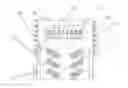
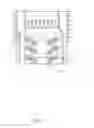
FIG. 1 is a schematic structural view of a TF card connector which is capable of installing a Nano-SIM card according to one embodiment of the present invention;
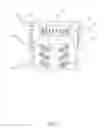
FIG. 2 is a schematic assembly view of assembling a TF card in the TF card connector which is capable of installing a Nano-SIM card according to one embodiment of the present invention;
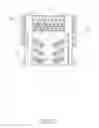
FIG. 3 is a schematic assembly view of assembling a Nano-SIM card in the TF card connector which is capable of installing a Nano-SIM card according to one embodiment of the present invention; and
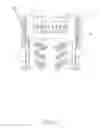
FIG. 4 is a schematic assembly view of assembling the TF card and the Nano-SIM card in the TF card connector which is capable of installing a Nano-SIM card according to one embodiment of the present invention.
DETAILED DESCRIPTION OF THE PREFERRED EMBODIMENTS
The present invention provides a TF card connector which is capable of installing a Nano-SIM card and a mobile phone thereof. The foregoing aspects and many of the attendant advantages of this invention will become more readily appreciated as the same becomes better understood by reference to the following detailed description, when taken in conjunction with the accompanying drawings. It should be noted that the described embodiments are merely used to explain the present invention rather than limiting of the present invention.
Refer to FIG. 1, which is a schematic structural view of a TF card connector which is capable of installing a Nano-SIM card according to one embodiment of the present invention. As shown in FIG. 1, the TF card connector which is capable of installing a Nano-SIM card comprises a terminal retaining base 107, a first card slot (shown in FIG. 2) disposed on the terminal retaining base 107 and adapted to a TF card, and a plurality of first conducting terminals 108 disposed on the terminal retaining base 107 wherein a plurality of first ends 102 of the first conducting terminals 108 are disposed in the first card slot for connecting to the TF card and a plurality of second ends 105 of the first conducting terminals 108 are disposed in one side of the terminal retaining base 107 for connecting to a main board of the mobile phone.
A second card slot (shown in FIG. 3) is disposed on the terminal retaining base 107 and adapted to a Nano-SIM card, and a plurality of second conducting terminals 109 disposed on the terminal retaining base 107 wherein a plurality of first ends 106 of the second conducting terminals 109 are disposed in the second card slot for connecting to the Nano-SIM card and a plurality of second ends 104 of the second conducting terminals 109 are disposed in one side of the terminal retaining base 107 for connecting to a main board of the mobile phone.
As the aforementioned TF card connector which is capable of installing a Nano-SIM card, the TF card connector is improved by arranging a Nano-SIM card connector in the TF card connector so that the functions are increased for the TF card connector.
Refer to FIG. 2, which is a schematic assembly view of assembling a TF card in the TF card connector which is capable of installing a Nano-SIM card according to one embodiment of the present invention. As shown in FIG. 2, the TF card connector which is capable of installing a Nano-SIM card is disposed on the main board of the mobile phone. A plurality of embossment structures 101 (as shown in FIG. 1) are disposed on the terminal retaining base 107 of the TF card connector which is capable of installing a Nano-SIM card. The embossment structures 101, the second ends of the first conducting terminals 108 and second ends of the second conducting terminals 109 are connected to the main board of the mobile phone by way of the plastic body 201. After the TF card 202 is arranged in the TF card connector which is capable of installing a Nano-SIM card, the TF card triggers the TF card identification switch 203 disposed on the terminal retaining base 107 for closing the TF card identification switch 203. After the TF card identification switch 203 is in the closed status, a circuit disposed in the mobile phone is switched on for generating an interrupted signal to allow the mobile phone to identify the TF card while the mobile phone receives the interrupted signal.
Continuously refer to FIG. 1. In order to conveniently extract the TF card from the TF card connector, a pushing structure is disposed on the TF card connector which is capable of installing a Nano-SIM card wherein the pushing structure is an empty slot arranged in the TF card connector which is capable of installing a Nano-SIM card such that the user is capable of contacting the TF card by way of the empty slot to eject the TF card.
Refer to FIG. 3, which is a schematic assembly view of assembling a Nano-SIM card in the TF card connector which is capable of installing a Nano-SIM card according to one embodiment of the present invention. As shown in FIG. 3, after the Nano-SIM card 302 is arranged in the TF card connector which is capable of installing a Nano-SIM card, the Nano-SIM card triggers the Nano-SIM card identification switch 301 disposed on the terminal retaining base 107 for closing the Nano-SIM card identification switch 301. After the Nano-SIM card identification switch 301 is in the closed status, a circuit disposed in the mobile phone is switched on for generating an interrupted signal to allow the mobile phone to identify the Nano-SIM card while the mobile phone receives the interrupted signal. Similar to the above-mentioned pushing structure, an extracting structure 303 is disposed in the TF card connector to conveniently insert the Nano-SIM card into the TF card connector or extract the Nano-SIM card from the TF card connector.
Refer to FIG. 4, which is a schematic assembly view of assembling the TF card and the Nano-SIM card in the TF card connector which is capable of installing a Nano-SIM card according to one embodiment of the present invention. As shown in FIG. 4, the TF card and the Nano-SIM card are arranged in the TF card connector which is capable of installing a Nano-SIM card. The second card slot is opened and disposed on the bottom surface of the first card slot. The two sides 402, 401 of the second card slot and the first card slot are overlapped. This maintains the structure of TF card connector so that the Nano-SIM card connector is arranged in the TF card connector to save the space for the mobile phone.
In one preferred embodiment of the TF card connector which is capable of installing a Nano-SIM card, the second ends of the first conducting terminals and the second ends of the second conducting terminals are disposed respectively in the same side of the terminal retaining base. By arranging the second ends of the first conducting terminals and the second ends of the second conducting terminals in the same side of the terminal retaining base, the installation position of the TF card connector which is capable of installing a Nano-SIM card is configured without restriction in order to arrange the TF card connector which is capable of installing a Nano-SIM card in the main board's edge of the mobile phone.
In one preferred embodiment of the TF card connector which is capable of installing a Nano-SIM card, the second ends of the first conducting terminals and the second ends of the second conducting terminals are disposed respectively in the different sides of the terminal retaining base. By arranging the second ends of the first conducting terminals and the second ends of the second conducting terminals in the different sides of the terminal retaining base, the connection strength between TF card connector which is capable of installing a Nano-SIM card and the mobile phone's main board is stronger for simplifying the difficulty of the circuit design of the main board in the mobile phone.
In one preferred embodiment of the TF card connector which is capable of installing a Nano-SIM card, there are eight second conducting terminals. Nano-SIM card is a new generation of SIM card in the mobile phone, which is smaller and thinner than the micro-SIM card. Based on the ETSI standard, the Nano-SIM card has to support eight kinds of circuits but not to require how to arrange the eight contact electrical pads. According to the ETSI standard, the eight second conducting terminals to allow the TF card connector which is capable of installing a Nano-SIM card to make them much more integrated with the world in order to enter the international market.
According to the above-mentioned descriptions, the invention discloses a TF card connector which is capable of installing a Nano-SIM card and a mobile phone thereof. The TF card connector is improved by arranging a Nano-SIM card connector in the TF card connector so that the functions are increased for the TF card connector. The mobile phone have the function of installing an SIM card by arranging the TF card connector capable of installing the Nano-SIM card in the mobile phone to increase the novel functions for the mobile phone such that the Nano-SIM card is used simply and conveniently after the Nano-SIM card is installed.
As is understood by a person skilled in the art, the foregoing preferred embodiments of the present invention are illustrative rather than limiting of the present invention. It is intended that they cover various modifications and similar arrangements be included within the spirit and scope of the present invention, the scope of which should be accorded the broadest interpretation so as to encompass all such modifications and similar structures.
Claims
1. A TF card connector which is capable of installing a Nano-SIM card, comprising a terminal retaining base, a first card slot disposed on the terminal retaining base and adapted to a TF card, and a plurality of first conducting terminals disposed on the terminal retaining base wherein a plurality of first ends of the first conducting terminals are disposed in the first card slot for connecting to the TF card and a plurality of second ends of the first conducting terminals are disposed in one side of the terminal retaining base for connecting to a main board of the mobile phone, wherein the TF card connector further comprises:
a second card slot disposed on the terminal retaining base and adapted to a Nano-SIM card, and a plurality of second conducting terminals disposed on the terminal retaining base wherein a plurality of first ends of the second conducting terminals are disposed in the second card slot for connecting to the Nano-SIM card and a plurality of second ends of the second conducting terminals are disposed in one side of the terminal retaining base for connecting to the main board of the mobile phone wherein two sides of the second card slot and the first card slot are overlapped;
a pushing structure disposed on the terminal retaining base; and
a plurality of embossment structures disposed on the terminal retaining base.
2. The TF card connector which is capable of installing the Nano-SIM card of claim 1, further comprising the Nano-SIM card identification switch disposed on the terminal retaining base for closing the Nano-SIM card identification switch when the Nano-SIM card is inserted.
3. The TF card connector which is capable of installing the Nano-SIM card of claim 1, further comprising a TF card identification switch disposed on the terminal retaining base for closing the TF card identification switch when the TF card is inserted.
4. The TF card connector which is capable of installing the Nano-SIM card of claim 1, wherein the second ends of the first conducting terminals and the second ends of the second conducting terminals are disposed respectively in the same side of the terminal retaining base.
5. The TF card connector which is capable of installing the Nano-SIM card of claim 1, wherein the second ends of the first conducting terminals and the second ends of the second conducting terminals are disposed respectively in the different sides of the terminal retaining base.
6. The TF card connector which is capable of installing the Nano-SIM card of claim 1, wherein the second card slot is opened and disposed on a bottom surface of the first card slot.
7. The TF card connector which is capable of installing the Nano-SIM card of claim 1, wherein eight second conducting terminals are disposed on the TF card connector which is capable of installing the Nano-SIM card.
8. A TF card connector which is capable of installing a Nano-SIM card, comprising a terminal retaining base, a first card slot disposed on the terminal retaining base and adapted to a TF card, and a plurality of first conducting terminals disposed on the terminal retaining base wherein a plurality of first ends of the first conducting terminals are disposed in the first card slot for connecting to the TF card and a plurality of second ends of the first conducting terminals are disposed in one side of the terminal retaining base for connecting to a main board of the mobile phone, wherein the TF card connector further comprises:
a second card slot disposed on the terminal retaining base and adapted to a Nano-SIM card, and a plurality of second conducting terminals disposed on the terminal retaining base wherein a plurality of first ends of the second conducting terminals are disposed in the second card slot for connecting to the Nano-SIM card and a plurality of second ends of the second conducting terminals are disposed in one side of the terminal retaining base for connecting to the main board of the mobile phone wherein two sides of the second card slot and the first card slot are overlapped.
9. The TF card connector which is capable of installing the Nano-SIM card of claim 8, further comprising the Nano-SIM card identification switch disposed on the terminal retaining base for closing the Nano-SIM card identification switch when the Nano-SIM card is inserted.
10. The TF card connector which is capable of installing the Nano-SIM card of claim 8, further comprising a TF card identification switch disposed on the terminal retaining base for closing the TF card identification switch when the TF card is inserted.
11. The TF card connector which is capable of installing the Nano-SIM card of claim 8, further comprising a pushing structure disposed on the terminal retaining base.
12. The TF card connector which is capable of installing the Nano-SIM card of claim 8, wherein the second ends of the first conducting terminals and the second ends of the second conducting terminals are disposed respectively in the same side of the terminal retaining base.
13. The TF card connector which is capable of installing the Nano-SIM card of claim 8, wherein the second ends of the first conducting terminals and the second ends of the second conducting terminals are disposed respectively in the different sides of the terminal retaining base.
14. The TF card connector which is capable of installing the Nano-SIM card of claim 8, wherein the second card slot is opened and disposed on a bottom surface of the first card slot.
15. The TF card connector which is capable of installing the Nano-SIM card of claim 8, wherein eight second conducting terminals are disposed on the TF card connector which is capable of installing the Nano-SIM card.
16. The TF card connector which is capable of installing the Nano-SIM card of claim 8, further comprising a plurality of embossment structures disposed on the terminal retaining base.
17. A mobile phone, comprising the TF card connector which is capable of installing the Nano-SIM card described in claim 8.
Images & Drawings included:
Sources:
- United States Patent and Trademark Office - verify current appl. status at the USPTO↗
Recent applications in this class:
- » 20250174923 2025-05-29
ELECTRICAL CONNECTOR FOR MONITORING CAMERA AND ASSOCIATED MONITORING CAMERA - » 20250158304 2025-05-15
CONTACT ASSEMBLY HAVING CABLE CONTACTS AND CONNECTOR CONTACTS - » 20250141136 2025-05-01
Female Connector, Male Connector and Connector Assembly - » 20250070493 2025-02-27
BONDING MODULE PINS TO AN ELECTRONIC SUBSTRATE - » 20240421520 2024-12-19
CONNECTOR - » 20240305026 2024-09-12
CONNECTOR ASSEMBLY WITH INTEGRATED DATA AND BACKUP ENERGY CONNECTIONS - » 20240275092 2024-08-15
CONNECTION DEVICE - » 20240266766 2024-08-08
BOARD CONNECTOR AND BOARD-TO-BOARD CONNECTION ASSEMBLY - » 20240243502 2024-07-18
ELECTRONIC DEVICE WITH FORCE FEEDBACK AND INTERLOCKING SYSTEM FOR COUPLING TWO ELECTRONIC BOARDS - » 20240145960 2024-05-02
Circuit board wafer with contacts mounted on castellated edges
Recent applications for this Assignee:
- » 20240211281 2024-06-27
LOCK SCREEN INTERFACE MESSAGE PROCESSING METHOD, INTELLIGENT TERMINAL, AND STORAGE MEDIUM - » 20230421883 2023-12-28
REDUCING IMAGING STRAY LIGHT CROSSTALK OF CAMERA UNDER LCD SCREENE - » 20230351950 2023-11-02
Recognition apparatuses, recognition methods, and electronic devices capable of not reducing screen-to-body - » 20230325187 2023-10-12
PROCESSING EXCEPTION IN ANDROID THREAD - » 20230119085 2023-04-20
Random access method, base station, user equipment and device with storage function - » 20220385091 2022-12-01
Charge method for battery, storage medium, and terminal - » 20220368018 2022-11-17
Antenna structure for sub-6G, PCB board, and mobile terminal - » 20220336960 2022-10-20
Antenna impedance matching circuit, antenna system and mobile terminal - » 20220322158 2022-10-06
CALL NETWORK SWITCHING METHOD AND DEVICE, AND MEMORY - » 20220319378 2022-10-06
Screen color temperature control method, apparatus, storage medium, and mobile terminal