Dry mortar mixture with grains of expanded glass
US20170152182A1
2017-06-01
15/319,955
2015-06-19
✅ Patent granted
US 10,221,099 B2
2019-03-05
WO; PCT/NL2015/050451; 20150619
WO; WO2015/194958; 20151223
Sing P Chan
Young & Thompson
2035-10-09
Abstract:
Dry mortar mixture characterized by a glass mixture of expanded glass beads with a grain size d/D 0/8, mixed in a ratio of between 1:1 and 1:3, for example 1:2 with a dust poor or dust free binding mixture of hydraulic binders and stone granules in the weight ratio of 1:2 to 1:4. The glass has a discontinuous grain distribution. For the glass mixture the fractions 0.5/1.0 and 2.0/4.0 are present while the fractions 0.25/0.5 and 1.0/2.0 are absent. For the glass mixture preferably all grain sizes between 1.0 and 2.0 mm are absent and the grain size distribution is around an average, so that an open structure is obtained.
Assignee:
- CEVES-VERGEER BV 2 🇳🇱 Deventer, Netherlands
Applicant:
Interested in similar patents?
Get notified when new applications in this technology area are published.
Classification:
C04B24/24 » CPC further
Use of organic materials as active ingredients for mortars, concrete or artificial stone, e.g. plasticisers Macromolecular compounds
C04B14/24 » CPC further
Use of inorganic materials as fillers, e.g. pigments, for mortars, concrete or artificial stone; Treatment of inorganic materials specially adapted to enhance their filling properties in mortars, concrete or artificial stone; Granular materials, e.g. microballoons; Silica-rich materials; Silicates; Glass ; Devitrified glass porous, e.g. foamed glass
E04F15/02155 » CPC further
Flooring; Flooring or floor layers composed of a number of similar elements specially adapted for being adhesively fixed to an underlayer; Fastening means therefor; Fixing by means of plastics materials hardening after application Adhesive means specially adapted therefor, e.g. adhesive foils or strips
E04F15/02 IPC
Flooring Flooring or floor layers composed of a number of similar elements
C04B28/14 » CPC main
Compositions of mortars, concrete or artificial stone, containing inorganic binders or the reaction product of an inorganic and an organic binder, e.g. polycarboxylate cements containing calcium sulfate cements
C04B24/26 IPC
Use of organic materials as active ingredients for mortars, concrete or artificial stone, e.g. plasticisers; Macromolecular compounds obtained by reactions only involving carbon-to-carbon unsaturated bonds
C04B28/04 » CPC further
Compositions of mortars, concrete or artificial stone, containing inorganic binders or the reaction product of an inorganic and an organic binder, e.g. polycarboxylate cements containing hydraulic cements other than calcium sulfates Portland cements
C04B40/0608 » CPC further
Processes, in general, for influencing or modifying the properties of mortars, concrete or artificial stone compositions, e.g. their setting or hardening ability; Inhibiting the setting, e.g. mortars of the deferred action type containing water in breakable containers ; Inhibiting the action of active ingredients Dry ready-made mixtures, e.g. mortars at which only water or a water solution has to be added before use
C04B14/06 » CPC further
Use of inorganic materials as fillers, e.g. pigments, for mortars, concrete or artificial stone; Treatment of inorganic materials specially adapted to enhance their filling properties in mortars, concrete or artificial stone; Granular materials, e.g. microballoons; Silica-rich materials; Silicates Quartz; Sand
C04B2111/60 » CPC further
Mortars, concrete or artificial stone or mixtures to prepare them, characterised by specific function, property or use Flooring materials
C04B40/06 IPC
Processes, in general, for influencing or modifying the properties of mortars, concrete or artificial stone compositions, e.g. their setting or hardening ability Inhibiting the setting, e.g. mortars of the deferred action type containing water in breakable containers ; Inhibiting the action of active ingredients
C04B24/2623 » CPC further
Use of organic materials as active ingredients for mortars, concrete or artificial stone, e.g. plasticisers; Macromolecular compounds obtained by reactions only involving carbon-to-carbon unsaturated bonds Polyvinylalcohols; Polyvinylacetates
C04B2111/00612 » CPC further
Mortars, concrete or artificial stone or mixtures to prepare them, characterised by specific function, property or use; Uses not provided for elsewhere in as one or more layers of a layered structure
C04B2111/29 » CPC further
Mortars, concrete or artificial stone or mixtures to prepare them, characterised by specific function, property or use; Resistance against chemical, physical or biological attack Frost-thaw resistance
C04B2111/27 » CPC further
Mortars, concrete or artificial stone or mixtures to prepare them, characterised by specific function, property or use; Resistance against chemical, physical or biological attack Water resistance, i.e. waterproof or water-repellent materials
E04F13/02 » CPC further
Coverings or linings, e.g. for walls or ceilings of plastic materials hardening after applying, e.g. plaster
C04B20/00 IPC
Use of materials as fillers for mortars, concrete or artificial stone according to more than one of groups - and characterised by shape or grain distribution; Treatment of materials according to more than one of the groups - specially adapted to enhance their filling properties in mortars, concrete or artificial stone; Expanding or defibrillating materials
C04B28/06 » CPC further
Compositions of mortars, concrete or artificial stone, containing inorganic binders or the reaction product of an inorganic and an organic binder, e.g. polycarboxylate cements containing hydraulic cements other than calcium sulfates Aluminous cements
E04F15/12 » CPC further
Flooring Flooring or floor layers made of masses , e.g. seamless magnesite floors, terrazzo gypsum floors
C04B2103/0057 » CPC further
Function or property of ingredients for mortars, concrete or artificial stone; Polymers chosen for their physico-chemical characteristics added as redispersable powders
C04B24/06 IPC
Use of organic materials as active ingredients for mortars, concrete or artificial stone, e.g. plasticisers; Carboxylic acids; Salts, anhydrides or esters thereof containing hydroxy groups
Description
This invention relates to a dry mortar mixture, which after mixing with water provides a water and preferably frost-resistant mortar of thin layer thickness with which one can make a leveling, elastic layer on arbitrary substrates, which meets one or more of DIN18353, DIN19353 and DIN18156 and onto which a covering floor covering can be applied, such as carpet, floor tiles or parquet. This mortar mixture comprises grains of expanded glass.
The dry mortar mixture of the invention is characterized by a glass mixture of expanded glass beads (glass granulate) with a grain size (preferably with a discontinuous grain distribution) d/D 0/8 (present are grains of at least 0 and at most 8.0 millimeter diameter), mixed in a ratio of between 1:1 and 1:3, for example 1:2 (for example, 6 kg glass mixture and 12 kg of binder mixture) with a dust poor or dust free binding mixture of hydraulic binders and sand (stone granules) in the weight ratio of 1:2 to 1:4, wherein to the binder mixture preferably one or more of the following additives (preferably a minimum of 0.1 or 1.0, or 10% by weight per additive) is added: elastomers in powder form (for example, ground rubber); in water re-dispersible resin powder (e.g., alkali resistant copolymer, for example, ethylene vinyl acetate copolymer); alkali metal salt, anti-foaming agent; aniogeen or non-aniogeen surfactant (alkali-resistant); hydroxyl carboxylic acid (e.g., tartaric acid, citric acid, gluconic acid, glycolic acid) or salt (e.g., lithium salt) thereof; typical additives (e.g., one or more of preservatives, thickeners, liquefaction agents).
The mortar mixture is mixed at the construction site with water, for example, 3.5 liters of water to 18 kg of dry mortar mixture, to a plastic mortar and in a thickness of approximately between 5 and 25 mm, spread on the substrate with a smooth string, a blade or a leveling strip. Onto the cured layer, for example with the aid of a dispersion adhesive, the floor or wall covering (top layer) can be applied.
The mortar can be used for a wooden or concrete floor or wall (a wall to be tiled in particular) in the bathroom, toilet, living room, kitchen, bedroom, hallway or landing of a permanent home on shore. Other applications are also conceivable.
With the invention a smoothing layer can be realized of 800 kg, which traditionally weighs 4000 kg. The specific weight of the completed, ready to be spread, mixed mortar is 0.8 (of a traditional mortar at least 1.9). The dry time of this mortar is very short compared to a traditional mortar.
For the glass mixture preferably one or more of the following applies: for the d/D, the d is a minimum of 0.2 or 0.4 or 0.5 and/or D a maximum of 6.0 or 5.0 or 4.5 or 4.0 or 3.5; for the d/D one or more grain sizes are missing, for example, grain sizes that are between 25% and 50% smaller than D and/or between 200% and 400% greater than d; present are a fraction 0.5/1.0 and/or 2.0/4.0 (the d and/or D may differ 10 or 20% from these values); the fraction 0.25/0.5 and/or 1.0/2.0 is absent (the d and/or D may differ 10 or 20% from these values); one or more grain sizes between 1.0 and 2.0 millimeters (or a 10 or 20% of one or both deviating value) is absent (preferably all grain sizes); the percentage by mass of the present granule sizes is substantially the same; the grain size distribution is around an average, so that an open structure is obtained; the average grain size distribution of the glass granulate is at least substantially a factor of 1.25 larger in comparison with the average grain size distribution of the sand or the sand including the remaining mineral granulate; the amount of glass granulate of the smallest sieve size is less than 65% of total glass mixture; the d50 value (grain size associated with the median of the summed mass percentage of the grains) of the glass is preferably between 1.0 and 3.0 mm; the voids content of the unbound glass mixture is preferably between 25 and 45 vol %; instead of absent can a grain size which is declared as missing be present in a significantly lower percentage by mass, for example at least 75% less; the specific weight of the glass granulate is between about 0.3 and 0.6 (specific gravity of water=1.0); contains at least two fractions, and optionally lacks a fraction between two fractions (fraction=undivided group grain sizes, for example, all grain sizes between 0.5 and 1.0 or between 2.0 and 4.0, for example, as commercially available).
The hydraulic binder contains a content by weight of mineral binder, for example a content of Portland cement, trass Portland cement, trass cement, iron portland cement, white cement, gypsum, plaster and/or aluminum melt cement. The binder is preferably present in an excess.
The sand, preferably quartz sand, preferably has a grain size between 0 and 8 mm, more preferably at least 0.05 mm and/or not more than 3 mm.
EXAMPLE I
The dry binding mixture contains: 200 parts by weight portland cement (hydraulic binder), 400 parts by weight sand from 0.12 to 2 mm, 25 parts by weight elastomers, 15 parts by weight again in water dispersible synthetic material powder, 5 parts by weight of a mixture of 1 mole of lithium carbonate and 1 mole of tartaric acid, 5 parts by weight alkali metal salt (on sodium basis), 10 parts by weight anti-foaming agent and 10 parts by weight surfactant. The dry glass mixture contains: in equal parts only fractions 0.5-1.0 mm and 2.0-4.0 mm. The dry mortar mixture contains 6 kg dry glass mixture to 12 kg of dry binder mixture, at the building site 3.5 liters of water is added thereto.
EXAMPLE II
As Example I, the hydraulic binder comprises portland quick-cement, gypsum hemihydrate, and clay-earth-quick cement in the weight ratio 1:1:1.
EXAMPLE III
The dry binder mixture contains: 200 parts by weight hydraulic binder, 500 parts by weight sand from 0.12 to 2 mm, 35 parts by weight of rubber powder, 10 parts by weight alkali-resistant re-dispersible vinyl acetate-ethene copolymer, 5 parts by weight calcium salt of diisopropyl nafthalene sulfonacid as an anti-foaming agent, 5 parts by weight of the sodium salt of a with sulfonic groups modified melamine-formaldehyde condensation product to provide flowability, 5 parts by weight alkylaryl sulphonate. The dry glass mixture contains: in equal parts only the sieve fractions 0.5-1.0 mm and 2.0-4.0 mm. The dry mortar mixture contains 6 kg dry glass mixture to 12 kg of dry binder mixture, at the building site 3.5 liters of water is added thereto.
EXAMPLE IV
The dry binding mixture contains: 1000 parts by weight of portland cement and tras cement in the ratio 30:70, 2000 parts by weight quartz sand from 0.12 to 2 mm, 180 parts by weight of rubber powder, 60 parts by weight redispersible resin powder, 15 parts by weight of the calcium salt of diisobutyl nafthalene sulfonacid (anti-foaming), 15 parts by weight anti-foaming agent, 15 parts by weight flow agent, 15 parts by weight alkylarylsulphonate. The dry glass mixture contains: in equal parts only the sieve fractions 0.5-1.0 mm and 2.0-4.0 mm.
The dry mortar mixture contains 6 kg dry glass mixture to 12 kg of dry binder mixture, at the building site 3.5 liters of water is added thereto.
EXAMPLE V
The same as any of examples I-IV, with the exception that the dry glass mixture contains in equal parts the sieve fractions 0.25-0.5 and 0.5-1.0 and 2.0-4.0 mm.
After curing the mortars of the above examples satisfy the following conditions (DIN18156): compressive strength 25 MPa, flexural strength 8 MPa, adhesion-tensile strength 1.5 MPa (dry and 0.8 MPa (wet), shear strength 9 N/mm (dry) and 6 N/mm (wet).
Commercially available fractions expanded glass granulate are for example: 0.1-0.3; 0.25-0.5; 0.5-1.0; 1.0-2.0; 2.0-4.0; 4.0-8.0.
The values indicated in the Examples I-V may differ 10 or 20%.
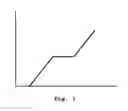
The attached single Fig. shows the discontinuous grain size distribution of the glass according to an example according to which the glass mixture consists of the two fractions 0.5/1.0 and 2.0/4.0 (d/D=0.5/4.0 for the total glass mixture), and all other groups are missing, while the two fractions are present in equal mass percentage (50/50). Vertically, the summed mass percentage and horizontally the grain size of the granulate are indicated.
Claims
1-25. (canceled)
26. Dry mortar mixture comprising a glass mixture of expanded glass beads as glass granulate with a grain size with a discontinuous grain distribution d/D 0/4, meaning that present are grains of at least 0 and at most 4.0 millimeter diameter, mixed in a ratio of between 1:1 and 1:3 with a dust free binding mixture of hydraulic binders and sand as stone granules in the weight ratio of between 1:2 and 1:4; wherein for the glass mixture the d/D fractions 0.5/1.0 and 2.0/4.0 are present while the fractions 0.25/0.5 and 1.0/2.0 are absent, such that for the glass mixture all grain sizes between 1.0 and 2.0 mm are absent; and the grain size distribution is around an average, so that an open structure is obtained; and wherein a fraction relates to an undivided group of grain sizes.
27. Mixture according to claim 26, wherein to the binder mixture the following additives at a minimum of 0.1% by weight per additive are added: elastomers in powder form; in water re-dispersible resin powder; alkali metal salt, anti-foaming agent; aniogeen and non-aniogeen surfactant; hydroxyl carboxylic acid; one of preservatives, thickeners, liquefaction agents.
28. Mixture according to claim 26, wherein for the glass mixture the average grain size distribution of the glass granulate is at least substantially a factor of 1.25 larger in comparison with the average grain size distribution of the sand; and for the glass mixture the d50 value, meaning the grain size associated with the median of the summed mass percentage of the grains, of the glass is between 1.0 and 3.0 mm; and mixed in a ratio of 1:2, being 6 kg of glass mixture and 12 kg of binder mixture.
29. Mixture according to claim 26, wherein the hydraulic binder contains a content by weight of mineral binder, being Portland cement; the binder is present in an excess; the sand has a grain size of at least 0.05 mm and not more than 3 mm.
30. Method wherein the mixture according to claim 26 is mixed at the construction site with water, to a plastic mortar and is in a thickness of approximately between 5 and 25 mm, spread on the substrate with a blade, wherein the mortar is applied onto a concrete floor in the bathroom of a permanent home on shore and onto the cured mortar layer, with the aid of a dispersion adhesive, the floor covering, providing the top layer, is applied.
31. Dry mortar mixture comprising a glass mixture of expanded glass beads as glass granulate with a grain size with a discontinuous grain distribution d/D 0/4, meaning that present are grains of at least 0 and at most 4.0 millimeter diameter, mixed in a ratio of between 1:1 and 1:3 with a dust free binding mixture of hydraulic binders and sand as stone granules in the weight ratio of between 1:2 and 1:4; wherein for the glass mixture the d/D fractions 0.5/1.0 and 2.0/4.0 are present while the fractions 0.25/0.5 and 1.0/2.0 are absent, such that for the glass mixture all grain sizes between 1.0 and 2.0 mm are absent and the two fractions are present in equal mass percentage and the grain size distribution is around an average, so that an open structure is obtained, and wherein a fraction relates to an undivided group of grain sizes; and also wherein to the binder mixture the following additives at a minimum of 0.1% by weight per additive are added: elastomers in powder form; in water re-dispersible resin powder; alkali metal salt, anti-foaming agent; aniogeen surfactant; hydroxyl carboxylic acid; one of preservatives, thickeners, liquefaction agents; and also wherein for the glass mixture the d50 value, meaning the grain size associated with the median of the summed mass percentage of the grains, of the glass is between 1.0 and 3.0 mm, and the hydraulic binder contains Portland cement; the binder is present in an excess; the sand has a grain size of at least 0.05 mm and not more than 3 mm.
Images & Drawings included:
Sources:
- United States Patent and Trademark Office - verify current appl. status at the USPTO↗
Similar patent applications:
- » 20190194073
Dry mortar mixture with grains of expanded glass
Recent applications in this class:
- » 20250289760 2025-09-18
CEMENT ADDITIVES FOR RAPID STRENGTH DEVELOPMENT - » 20250263342 2025-08-21
Gypsum Panel Containing an Intercalated Additive - » 20250236558 2025-07-24
CEMENT-BASED TILE - » 20250214899 2025-07-03
Reclaim Composition Having Enhanced Properties - » 20250197289 2025-06-19
REACTIVE BINDER MIXTURE FOR CEMENTITIOUS ARTICLE - » 20250197288 2025-06-19
REACTIVE BINDER MIXTURE FOR CEMENTITIOUS ARTICLE - » 20250197287 2025-06-19
COMPOSITIONS AND METHODS FOR PLASTER-BASED THERMAL GROUT - » 20250187982 2025-06-12
USE OF CALCIUM SULFATE IN AN INORGANIC MORTAR SYSTEM BASED ON ALUMINOUS CEMENT AND GROUND-GRANULATED BLAST-FURNACE SLAG TO INCREASE LOAD VALUES - » 20250178964 2025-06-05
ENVIRONMENTALLY FRIENDLY MORTAR COMPOSITIONS - » 20250162946 2025-05-22
SYNERGISTIC MECHANISM FOR ENHANCED FIRE PROTECTION
Recent applications for this Assignee:
- » 20190194073 2019-06-27
Dry mortar mixture with grains of expanded glass