Computerized and electronic platform for driving urban equipment
US20170153612A1
2017-06-01
15/113,532
2015-01-23
✅ Patent granted
US 10,551,808 B2
2020-02-04
WO; PCT/FR2015/050167; 20150123
WO; WO2015/110766; 20150730
Tuan C Dao
TraskBritt
2037-01-23
Abstract:
The invention disclosure relates to a computerized and electronic platform for driving urban of various categories, wherein it comprises an information base in which are recorded: category-based digital representations of each of the categories, each consisting of a plurality of attributes specific to the category considered; functional scripts controlling processing operations applied periodically for each of the items of equipment a digital object whose structure is determined by the digital representation associated with the category and whose attribute values are determined as a function of the physical state of the associated item of equipment; a dialogue and interfacing layer common to the digital representations and ensuring the exchanges of digital information between the items of equipment of each of the categories and the associated digital object and communication drivers associated with each of the items of equipment, ensuring the conversion of physical data into digital data.
Inventors:
- Stephane Michaud 1 🇫🇷 Le Plessis Robinson, France
- David Montoya 1 🇫🇷 Issy les Moulineaux, France
- Franck Signorile 1 🇫🇷 Athis-Mons, France
Applicant:
Interested in similar patents?
Get notified when new applications in this technology area are published.
Classification:
G05B2219/23154 » CPC further
Program-control systems; Pc systems; Pc programming Line of light diodes LED
G05B2219/2637 » CPC further
Program-control systems; Pc systems; Pc applications Vehicle, car, auto, wheelchair
H04L67/12 » CPC further
Network arrangements or protocols for supporting network services or applications; Protocols specially adapted for proprietary or special-purpose networking environments, e.g. medical networks, sensor networks, networks in vehicles or remote metering networks
G05B19/042 » CPC main
Programme-control systems electric; Programme control other than numerical control, i.e. in sequence controllers or logic controllers using digital processors
Description
CROSS-REFERENCE TO RELATED APPLICATIONS
This application is a national phase entry under 35 U.S.C. §371 of International Patent Application PCT/FR2015/050167, filed Jan. 23, 2015, designating the United States of America and published as International Patent Publication WO 2015/110766 A1 on Jul. 30, 2015, which claims the benefit under Article 8 of the Patent Cooperation Treaty to French Patent Application Serial No. 1450596, filed Jan. 24, 2014.
TECHNICAL FIELD
The invention relates to urban platforms for driving equipment hardware and subsystems.
This equipment, for example, includes public lighting lamp posts, closed circuit television surveillance cameras, collective electric vehicle charging stations, sound sensors, pollution sensors, etc.
The subsystems are, for example, another equipment supervisor, for example, for the acquisition of waiting times in a public service.
For the purposes of this disclosure, “urban” refers to collectively used locations, such as territorial subdivisions (cities, towns, villages), but also districts, commercial or residential areas.
BACKGROUND
Known in the state of the art is international patent application WO 2013/001227 concerning a technique to configure a physical entity in a supervision and control system built into a communications network, the system comprising a plurality of sensors. The technique comprises the following steps:
-
- detection of the presence of a physical entity to configure into the system by the analysis of data received from at least a part of the sensors, without the physical entity itself using means of communication;
- selection of a representative model of the physical entity using a comparison of at least a part of the data received from the sensors and the parameters of pre-recorded models of representations of physical entities;
- creation of a software entity representing the detected physical entity using the selected model.
The disclosure also relates to a configuration system using such a technique and to a supervision and control system comprising such a system.
Patent application WO 2006/136985 describes a method of controlling a lighting control network. Position information comprising the coordinates of each device in the network is received via a gateway in a data processing device that stores the identified functional requirements. The coordinates of each device in the network are used to derive the required functionality of the device, based on the recorded functional requirements, the instructions to implement the functionality are produced, and the instructions are sent to the network through the gateway.
Patent application WO 2009/121619 relates to a computer-assisted system for the administration and/or control of a building management system with multiple devices, particularly lighting, sensors and/or transmitters of commands located in different rooms, which comprises a database that stores information about the devices, sensors and/or transmitters of commands from the building management system, as well as data on the axes and cell structure of the building. The system is designed to provide a graphical user interface on a display screen on which is shown a graphical representation of the building as well as the location of the devices, sensors and/or transmitters of commands.
International patent application WO 2002/082400 relates to an event detection and storage system comprising: a vehicle detection device connected to an input connection point to detect the passage of a vehicle, a red light detector for a traffic light, a registered vehicle control system, a control module that takes an image of an offense, combined with the registered vehicle control system, a video imaging device providing images to the control module, a radar, a data transmission and reception device connected to the radar, a speeding alert device, and a signaling control connected to an output connection point, the system being configured so that when it operates, a film is generated so that when an event occurs, a film is obtained of the moments preceding the event, during the event and after the event. The disclosure also relates to an event detection system that uses the disclosed system.
Also known is the United States patent application US 2013/013544 describing an exclusive ubiquitous city middleware device to provide services to a ubiquitous city. The middleware device performs a role equivalent to the human brain by collecting ubiquitous city data via converging cabled and wireless networks, analyzing the collected data, and finding an optimum service based on a given command and inferred data concerning a current context, and performs the service. The exclusive ubiquitous city middleware operates using a three tier method using a ubiquitous city infrastructure and a ubiquitous city portal and performs various functions that are built into it, the operating technique and the performance of the functions using general computer operating systems.
DRAWBACKS OF THE PRIOR ART
The prior art urban control platforms require heavy programming each time the equipment assets are modified, in particular, when adding new categories of equipment to be controlled.
Modifications to the programming may lead to a loss of coherency in the global platform operations and incorrectly controlled interactions between the various processed data.
Finally, prior art solutions dissociate the processing of data for the technical control of equipment by the local subdivision technical services, from data processing usually carried out on another technical platform for elected representatives and the public administration services in order to make strategic choices requiring more aggregated data.
Prior art solutions also imply redundant technical resources and have a low level of evolutivity and extension to new categories of equipment or new processing.
The solved technical problem is the problem of the modularity of the controlling system, making it possible to reconfigure the control of a plurality of types of equipment, of a heterogeneous type, using simple interventions and avoiding the modification of the control program.
SOLUTION PROVIDED BY THE DISCLOSURE
In order to remedy the disadvantages of the prior art, this disclosure concerns a computer and electronic platform in the widest meaning of the term, used to control different categories of urban equipment characterized by the fact that it comprises a data base in which are recorded:
-
- category-related digital representations of each category, the category-related digital representation comprising:
- a plurality of attributes specific to the category in question; and
- functional scripts controlling processes applied regularly;
- to each item of equipment, a digital object of which the structure is determined by the digital representation associated to the category, and of which the attribute values are determined by the physical state of the associated equipment;
- of a dialogue and interfacing layer, common to the digital representations, and providing the exchanges of digital data between the equipment in each category and the associated digital object,
- communications drivers associated to each equipment, providing the conversion of physical data into digital data used to refresh the attribute values of the digital objects associated with the equipment.
- category-related digital representations of each category, the category-related digital representation comprising:
Advantageously, the database includes global digital representations composed of:
-
- a plurality of attributes specific to a grouping of category-related representations linked to
- functional scripts controlling processes applied regularly
- for a heterogeneous subset of equipment, a globalized digital object of which the structure is determined by the digital representation associated with the subset, and of which the attribute values are calculated depending on the attribute values of the category-related digital objects of the subset.
In a specific embodiment, at least one of the attribute values of an attribute of a globalized digital object is calculated depending on digital data coming from a source other than a connected category-related representation.
In one alternative, at least one of the attribute values of a globalized digital object is calculated according to the attribute values of the linked category-related digital objects related to the subset, the calculation processing being chosen from a processing family comprising:
-
- a summation of the attribute values of the linked digital objects;
- the calculation of the maximum, minimum, median or mean attribute values for the linked digital objects;
- a logical operator or a logical function applied to the linked digital objects; and
- a conditional operation applied to the linked digital objects.
Preferably, the frequency of the exchanges of digital data between the equipment in each category and the associated digital object controlled by the dialogue and interfacing layer is constant:
-
- the platform has a variable frequency control circuit for the calculation processing of the attribute values of globalized digital objects depending on the attribute values of the category-related digital objects linked to the subset, the calculation frequency of the globalized digital objects being less than the calculation frequency of the attributes of the linked digital objects.
In another alternative, some of the equipment is statistical, some of the equipment is mobile and comprises geo-location resources of which the state is transmitted to the communications driver by a radio-frequency link.
In another embodiment, the platform also comprises at least one viewing terminal controlled by a calculator depending on the attribute values of at least part of the globalized digital objects or the category-related digital objects.
Advantageously, the viewing terminal also includes resources to send control data processed by the functions of at least part of the category-related digital objects, to control the change in state of the associated equipment.
In another alternative, the platform also comprises automated resources to send control data processed by the functions of at least part of the category-related digital objects, to control the change in state of the associated equipment.
In another specific embodiment, the database also comprises reference value records, and regular comparison resources of the attribute values and the reference values to conditionally trigger an action.
Preferably, at least some of the attribute values are recorded with a history of the variations in the values.
BRIEF DESCRIPTION OF THE DRAWING
This disclosure can be better understood on reading the following description of a non-limiting embodiment, in which:
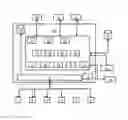
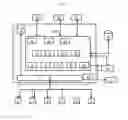
FIG. 1 is a principle diagram of a system of the disclosure.
DETAILED DESCRIPTION
FIG. 1 is a schematic view of a system of the disclosure.
FIG. 1 comprises a plurality of urban equipment exchanging digital data with a computerized system to control equipment hardware and subsystems.
This equipment comprises:
-
- closed circuit surveillance cameras 1. Cameras 1 can be static, continuously or regularly capturing an image with a determined angle of view, sending a video stream. They can also be controllable cameras, comprising motorized elements used to alter the angle of vision and the zoom using control information from the platform that will be described hereinafter;
- urban lighting 2 comprising lighting level control resources (dimming) controllable by the platform, and comprising sensors to detect faults or surrounding light levels, and power data sensors delivering digital signals available via the platform;
- electric vehicle charging stations 3 comprising user identification resources, delivering digital identification data processed by the server to calculate the authorization to activate the power supply, platform charge control resources depending on the data sent by the station via the user identification, and from endogenous data such as “peak hours/cheap hours”;
- digital data sources 4, 5 coming from an http or ftp server, for example, web sites, hosting free access data, for example, weather data, traffic-related data, and, more generally, all public data supplied especially by a civil service department or a public service. Some sources 5 are comprised of supervisors that aggregate data from other equipment, and supply digital data calculated according to this external data;
- mobile equipment 6, for example, smartphones allowing a person to deliver geo-located data, for example, data relating to an accident or notifying of an event.
Each item of equipment (1 to 6) comprises a communications driver allowing:
-
- the conversion of digital or analogue signals supplied by one or more sensors to format them in accordance with a protocol and a unified data structure specific to the platform;
- and/or to supply digital or analogue control signals for an electromechanical resource of one or more items of equipment (1 to 6), depending on the information from the platform, according to a protocol and a unified data structure.
Usually, a single driver is interfaced with several items of equipment of the same type.
The platform 100 comprises an open program interface allowing integrators to directly develop equipment drivers that are not available on the platform as a standard.
The platform also comprises a library of downloadable drivers 23 for the purpose of installing them on a computer system designed to dialogue with the platform.
The platform comprises a central server 7 hosting the control application meta model, and storing the digital data in a relational database (SQL, for example). This database is organized into a set of tables, each corresponding to an object type (or object model).
The table structures are defined dynamically, depending on project constraints and the types of object to supervise.
The objects are described in a hierarchical structure using a modelling application 8 to create maps, object models, etc.
The modelling defines a hierarchy of levels connected by 1 to N relationships between the higher and lower level.
For example, the upper level corresponds to the “CITY,” the next level down is the “DISTRICT,” and the lowest level, the item of “EQUIPMENT.”
The relationships are of the “is part of” type, defining a “parent/child” relationship. They are configured using an object and relationship management tool 16.
These relationships define the tree structuring of the objects using a modelling tool 15. This structuring defines the aggregating processes of unit data from the equipment, to calculate significant aggregated data at a higher level. This aggregated data is, for example:
-
- the number of defective sensors or sensors in a specific state, within the level in question; and
- the average, sum or total power in the level in question.
The data is processed by an aggregation engine 9 in cascade, i.e., with a first level of aggregation processing at the level directly higher than the equipment (1 to 6) level, then by a second processing using this aggregated data to calculate a new level of aggregation at the directly higher level.
These processes are fully modular, and a modification of the composition or number of items of equipment (1 to 6) does not require the modification of the central server 7.
All of the unit and aggregated data can be archived with a timestamp on an archival server 10, depending on the attributes assigned to each property of the object models. These attributes define:
-
- the archival frequency;
- the archival conditions (for example, only when the value changes); and
- the expiry date, controlling the deletion of data after a predetermined length of time.
This solution makes it possible to optimize the resources assigned to archival.
The central server 7 is interfaced with a messaging server 11 to automate functions such as:
-
- the sending of alarm messages; and
- the regular distribution of an operations report.
Central server 7 is also interfaced with a geographical information system 12, supplying map backgrounds and the coordinate reference and graphic representation (geographical projections).
Each object can be represented on a map projection using an icon that represents its location, its type, and its status.
The central server 7 is also interfaced with an automatic report system 13 that directly uses the data recorded in the relational database 8.
The server comprises the resources to manage and configure the interactions between the objects, in addition to aggregation, especially:
-
- a script manager allowing an administrator to create functions to analyze values of the attributes of an object and controlling an action;
- alarm management 17 calculating the activation of alarms depending on the types of alarm, the triggering categories, and depending on unit or aggregated data; and
- user rights management 18.
The central server 7 also comprises a scheduler 19 controlling the activation of scripts or functions in a defined order and at a pre-defined frequency.
The central server 7 also optionally comprises a planning manager 20, for example, to manage on-call duties, and an event manager 21, making it possible to manage an event for each object model and the action control at the level of an associated object.
The workflow engine 22 is used to control the sequence of tasks.
The central server 7 finally comprises tools to represent objects in graphic forms 24, 25, 26 controlling the generation of the graphic representations of each object, and the graphic effects depending on the status of each object.
These tools are used to operate the graphic representations on web access hardware, such as a computer 27, a tablet 28, or a “smartphone”-type digital telephone 29.
Some applications are pre-configured in the form of a configuration file and/or a pre-configured database 30, 31, 32, for example, for urban lighting control applications or closed circuit surveillance.
Claims
1. A computer and electronic platform to control different categories of urban equipment, the computer and electronic platform comprising a database in which are recorded:
category-related digital representations of each category, the category-related digital representation comprising:
a plurality of attributes specific to the category in question; and
functional scripts controlling processes applied regularly;
to each item of equipment, a digital object of which the structure is determined by the digital representation associated to the category, and of which the attribute values are determined by the physical state of the associated equipment;
a dialogue and interfacing layer common to the digital representations, and providing the exchanges of digital data between the equipment in each category and the associated digital object;
communications drivers associated to each equipment, providing the conversion of physical data into digital data used to refresh the attribute values of the digital objects associated with the equipment.
2. An urban equipment control platform according to claim 1, wherein the database comprises globalized digital representations, composed:
of a plurality of attributes specific to a grouping of linked category-related representations;
functional scripts controlling processes applied regularly;
for a heterogeneous subset of equipment, a globalized digital object of which the structure is determined by the digital representation associated with the subset, and of which the attribute values are calculated depending on the attribute values of the linked category-related digital objects of the subset.
3. The urban equipment control platform according to claim 2, wherein at least one of the attribute values of an attribute of a globalized digital object is calculated depending on digital data coming from a source other than a linked category-related representation.
4. The urban equipment control platform according to claim 3, wherein at least one of the attribute values of an attribute of a globalized digital object is calculated depending on attribute values of the linked category-related digital objects related to the said-subset, the calculation processing being chosen from a processing family comprising:
a summation of the attribute values of the linked digital objects;
the calculation of the maximum, minimum, median or mean attribute values for the linked digital objects;
a logical operator or a logical function applied to the linked digital objects; and
a conditional operation applied to the linked digital objects.
5. The urban equipment control platform according to claim 4, wherein:
the frequency of the exchanges of digital data between the equipment in each category and the associated digital object controlled by the dialogue and interfacing layer is constant; and
the platform has a variable frequency control circuit for the calculation processing of the attribute values of globalized digital objects depending on the attribute values of the category-related digital objects linked to the subset, the calculation frequency of the globalized digital objects being lower than the calculation of the attributes of the linked digital objects.
6. The urban equipment control platform according to claim 5, wherein:
some of the equipment is statistical; and
some of the equipment is mobile and comprises geo-location resources of which the state is transmitted to the communications driver by a radio-frequency link.
7. The urban equipment control platform according to claim 6, wherein the urban equipment control platform comprises at least one viewing terminal controlled by a calculator depending on the attribute values of at least part of the globalized digital objects or the category-related digital objects.
8. The urban equipment control platform according to claim 7, wherein the viewing terminal also includes resources to send control data processed by the functions of at least part of the-said category-related digital objects to control the change in state of the associated equipment.
9. The urban equipment control platform according to claim 8, further comprising automated resources to send control data processed by the functions of at least part of the category-related digital objects to control the automatic change in state of the associated equipment.
10. The urban equipment control platform according to claim 9, wherein the database also comprises reference value records, and regular comparison resources of the attribute values and the reference values to conditionally trigger an action.
11. The urban equipment control platform according to claim 10, wherein at least some of the attribute values are recorded with a history of the variations in the values.
12. The urban equipment control platform according to claim 2, wherein:
the frequency of the exchanges of digital data between the equipment in each category and the associated digital object controlled by the dialogue and interfacing layer is constant; and
the platform has a variable frequency control circuit for the calculation processing of the attribute values of globalized digital objects depending on the attribute values of the category-related digital objects linked to the subset, the calculation frequency of the globalized digital objects being lower than the calculation of the attributes of the linked digital objects.
13. The urban equipment control platform according to claim 1, wherein:
some of the equipment is statistical; and
some of the equipment is mobile and comprises geo-location resources of which the state is transmitted to the communications driver by a radio-frequency link.
14. The urban equipment control platform according to claim 1, wherein the urban equipment control platform comprises at least one viewing terminal controlled by a calculator depending on the attribute values of at least part of the globalized digital objects or the category-related digital objects.
15. The urban equipment control platform according to claim 1, wherein the viewing terminal also includes resources to send control data processed by the functions of at least part of the category-related digital objects to control the change in state of the associated equipment.
16. The urban equipment control platform according to claim 1, further comprising automated resources to send control data processed by the functions of at least part of the category-related digital objects to control the automatic change in state of the associated equipment.
17. The urban equipment control platform according to claim 1, wherein the database also comprises reference value records, and regular comparison resources of the attribute values and the reference values to conditionally trigger an action.
18. The urban equipment control platform according to claim 1, wherein at least some of the attribute values are recorded with a history of the variations in the values.
Images & Drawings included:
Sources:
- United States Patent and Trademark Office - verify current appl. status at the USPTO↗
Recent applications in this class:
- » 20250291326 2025-09-18
LIFECYCLE MANAGEMENT FOR PROCESSING ANATOMICAL MODELS - » 20250284260 2025-09-11
BUILDING CONTROL DEVICE WITH HEALTH MONITOR - » 20250278067 2025-09-04
SYSTEM AND METHOD OF ENERGY SUPPLY CHAIN MANAGEMENT AND OPTIMIZATION THROUGH AN ENERGY VIRTUAL TWIN - » 20250278066 2025-09-04
Artificial Intelligence-Based Energy Edge Platform, Systems, and Methods for Energy Orchestration and Management - » 20250271826 2025-08-28
SYSTEMS AND METHODS TO REDUCE VOLTAGE GUARDBAND - » 20250271825 2025-08-28
APPARATUS FOR ESTIMATING THE VALUE OF A SOLAR POWER PLANT - » 20250258470 2025-08-14
SYSTEMS AND METHODS FOR ENERGY DISTRIBUTION CONTROL USING A DISTRIBUTED ENERGY RESOURCE MANAGEMENT SYSTEM - » 20250258469 2025-08-14
STANDBY ENTITY FOR HARDWARE FUNCTIONS - » 20250244734 2025-07-31
STATE ESTIMATION FOR A POWER SYSTEM USING PARAMETERIZED POTENTIAL FUNCTIONS FOR EQUALITY CONSTRAINTS - » 20250231542 2025-07-17
MODULE FOR A PROCESS ENGINEERING SYSTEM AND METHOD FOR CONTROLLING A PROCESS ENGINEERING SYSTEM