Establishing a wireless connection to a vehicle
US20170156062A1
2017-06-01
15/327,515
2015-05-22
✅ Patent granted
US 10,735,955 B2
2020-08-04
WO; PCT/EP2015/001047; 20150522
WO; WO2016/012064; 20160128
Jeffrey C Pwu | Ali H. Cheema
Warner Norcross + Judd, LLP
2035-09-14
Abstract:
A method for establishing a wireless connection between a mobile communication device and a communication module (14) of a vehicle (10) with an identifier (17) is disclosed. According to the method, access rights, namely links between vehicle identifiers (17) and user identifiers, as well as data required for establishing the wireless connection, are stored in a database server (16) outside of the mobile communication device. A control unit (11, 12) for carrying out the method is also disclosed.
Inventors:
- Thomas Dieckmann 64 🇩🇪 Pattensen, Germany
- Thomas WOLF 25 🇩🇪 Barsinghausen, Germany
- Heiner MERTEN 2 🇩🇪 Holle, Germany
Assignee:
- WABCO GMBH 291 🇩🇪 Hannover, Germany
Applicant:
Interested in similar patents?
Get notified when new applications in this technology area are published.
Classification:
H04L67/125 » CPC further
Network arrangements or protocols for supporting network services or applications; Protocols specially adapted for proprietary or special-purpose networking environments, e.g. medical networks, sensor networks, networks in vehicles or remote metering networks involving control of end-device applications over a network
H04W4/00 IPC
Services specially adapted for wireless communication networks; Facilities therefor
G06F21/6227 » CPC further
Security arrangements for protecting computers, components thereof, programs or data against unauthorised activity; Protecting data; Protecting access to data via a platform, e.g. using keys or access control rules to a system of files or objects, e.g. local or distributed file system or database where protection concerns the structure of data, e.g. records, types, queries
H04L63/0876 » CPC further
Network architectures or network communication protocols for network security for supporting authentication of entities communicating through a packet data network based on the identity of the terminal or configuration, e.g. MAC address, hardware or software configuration or device fingerprint
H04L63/18 » CPC further
Network architectures or network communication protocols for network security using different networks or paths for security, e.g. using out of band channels
H04W4/40 » CPC further
Services specially adapted for wireless communication networks; Facilities therefor; Services specially adapted for particular environments, situations or purposes for vehicles, e.g. vehicle-to-pedestrians [V2P]
H04W4/80 » CPC further
Services specially adapted for wireless communication networks; Facilities therefor Services using short range communication, e.g. near-field communication [NFC], radio-frequency identification [RFID] or low energy communication
H04W8/183 » CPC further
Network data management; Processing of user or subscriber data, e.g. subscribed services, user preferences or user profiles; Transfer of user or subscriber data Processing at user equipment or user record carrier
H04W12/08 » CPC further
Security arrangements; Authentication; Protecting privacy or anonymity Access security
H04W76/14 » CPC further
Connection management; Connection setup Direct-mode setup
G06F2221/2141 » CPC further
Indexing scheme relating to security arrangements for protecting computers, components thereof, programs or data against unauthorised activity; Indexing scheme relating to and subgroups addressing additional information or applications relating to security arrangements for protecting computers, components thereof, programs or data against unauthorised activity Access rights, e.g. capability lists, access control lists, access tables, access matrices
G08C17/02 » CPC further
Arrangements for transmitting signals characterised by the use of a wireless electrical link using a radio link
H04L63/101 » CPC further
Network architectures or network communication protocols for network security for controlling access to network resources Access control lists [ACL]
H04L67/12 » CPC further
Network arrangements or protocols for supporting network services or applications; Protocols specially adapted for proprietary or special-purpose networking environments, e.g. medical networks, sensor networks, networks in vehicles or remote metering networks
H04L67/34 » CPC further
Network arrangements or protocols for supporting network services or applications involving the movement of software or configuration parameters
H04W76/10 » CPC further
Connection management Connection setup
H04W84/12 » CPC further
Network topologies; Hierarchically pre-organised networks, e.g. paging networks, cellular networks, WLAN [Wireless Local Area Network] or WLL [Wireless Local Loop]; Small scale networks; Flat hierarchical networks WLAN [Wireless Local Area Networks]
H04W12/06 » CPC main
Security arrangements; Authentication; Protecting privacy or anonymity Authentication
H04W12/00 IPC
Security arrangements; Authentication; Protecting privacy or anonymity
G06F21/62 IPC
Security arrangements for protecting computers, components thereof, programs or data against unauthorised activity; Protecting data Protecting access to data via a platform, e.g. using keys or access control rules
H04W8/18 IPC
Network data management Processing of user or subscriber data, e.g. subscribed services, user preferences or user profiles; Transfer of user or subscriber data
Description
CROSS-REFERENCE TO RELATED APPLICATIONS
This application is the National Stage of International Application No. PCT/EP2015/001047, filed on 22 May 2015, which claims priority to and all advantages of German Patent Application No. 10 2014 010 752.3, filed on 21 Jul. 2014, the content of which is hereby incorporated by reference.
FIELD OF THE INVENTION
The invention generally relates to a method for establishing a wireless connection and, more specifically, to a method for establishing a wireless connection between a mobile communication device and a communication module of a vehicle with an identifier, and to a control unit for a vehicle.
BACKGROUND OF THE INVENTION
Data present in a vehicle are intended to be retrievable by a user outside the vehicle. A remote control of vehicle functions by a user outside the vehicle is preferably also intended to be possible. The user has a mobile communication device available for this purpose, for example a Smartphone or a different mobile telephone. The mobile communication device communicates wirelessly with a communication module in the vehicle. The latter serves as an interface to control units in the vehicle and is part of a control unit or is connected to a control unit. The control unit is, in particular, a braking control unit which is connected to the vehicle's own data bus system (CAN bus or other) and with which functions in the vehicle are controllable. The control unit receives data from allocated sensors or via the vehicle's own data bus.
Only selected and uniquely identifiable users are intended to be able to connect via the mobile communication device to the communication module of the vehicle. An authentication is required. This is possible, for example, in that the communication module of the vehicle operates as an access point (server) for a local radio network (WLAN, IEEE-802.11 standard). The user can dial in to the local radio network with a WLAN-enabled mobile telephone provided that the user knows the data required for establishing the connection or has even already stored the data in his mobile telephone.
At a depot with a plurality of vehicles, vehicles are used progressively by different users so that the data required for establishing the radio connection remain in different mobile telephones. A user can progressively connect with his mobile telephone to the communication modules of different vehicles. Mistakes can easily occur in relation to the currently existing connection to a specific vehicle. Substantial damage can thus occur in connection with the remote control of functions of the vehicle.
Access to the communication module of a specific vehicle is intended to be configurable as easily as possible. It may thus be appropriate to allow specific connections only at specific times of the day or on specific weekdays. A unique allocation between the vehicle on the one hand and the mobile communication device on the other hand which is transparent to the user is also intended to be provided. Finally, the establishment of the connection must be as simple as possible for the user.
SUMMARY OF THE INVENTION
The method according to the invention comprises:
-
- a) access rights, i.e. links between vehicle identifiers and user identifiers, and also data for establishing the wireless connection are stored on a (data) server outside the mobile communication device,
- b) the identifier of the vehicle is recorded with the mobile communication device,
- c) the user identifier is present in the mobile communication device,
- d) the mobile communication device transmits the recorded vehicle identifier and the user identifier to the server,
- e) the server checks whether access rights exist for the forwarded combination of identifiers,
- f) if access rights exist, the server transmits the data required for establishing the wireless connection to the mobile communication unit, and
- g) the mobile communication device establishes a wireless connection to the communication module of the vehicle with the data forwarded from the server.
The mobile communication device has the characteristics required to carry out the method, i.e. hardware and software for recording the vehicle identifier, hardware and software for establishing a connection to the server and hardware and software for establishing a wireless connection to the communication module of the vehicle.
Combinations of vehicle identifiers with user identifiers and the access data for the communication with the vehicle are stored in the server as datasets. If the requested combination is not stored, no connection is established between the mobile communication device and the communication module of the vehicle. In addition to the aforementioned data, further details, such as restrictions relating to the vehicle identifier and/or the user identifier, can be stored in the server. It may thus be appropriate to allow connections for specific users and/or specific vehicles only at specific times, such as specific users only during normal working hours and specific vehicles not on Sundays and public holidays.
The server can be configured by an operator of a vehicle fleet. Vehicle identifiers, user identifiers, connection data and restrictions can thus be centrally managed, adapted and updated.
In certain embodiments, a number plate, a chassis number, an optical pattern, data transmittable via RFID (Radio Frequency Identification) or data transmittable via NFC (Near Field Communication) are used as the vehicle identifier. The number plate is preferably read by the mobile communication device. The inscription on the number plate is also referred to colloquially as the vehicle registration number. Here, the vehicle identifier may actually contain different data or may be of a different type. What is important is that the identifier enables a unique allocation to the vehicle. A QR code as an optical pattern or a radio tag with data transmittable via RFID can also be used for this purpose. A vehicle identifier can also be stored in the communication model and can be readable via NFC.
In these or other embodiments, the mobile communication device reads the data representing the vehicle identifier as an optical pattern or via a radio link. The optical pattern is, for example, recordable by a camera allocated to the mobile communication device and is convertible into suitable data by software provided for this purpose.
Typically, the user identifier comprises data which are stored in the mobile communication device or are input by the user into the mobile communication device. This may involve a device ID, a SIM card number or a number stored in a file of the communication device. The user can also type an identifier into the mobile communication device in an emergency.
In certain embodiments, the mobile communication device forwards the two identifiers (vehicle identifier and user identifier) via a mobile radio link or via a WLAN to an interface connected to the server. The server is preferably addressable via the Internet or via a different network. The interface connected to the server enables wireless access to the server via a mobile radio link or via a WLAN. The server and interface may be located spatially far apart from one another.
In these or other embodiments, the wireless connection from the mobile communication device to the communication module of the vehicle is a connection via a WLAN or Bluetooth. A different digital radio technology with the facility for an encrypted connection can also be used. The communication module is intended, in particular, to be addressable by the mobile communication device as an access point or in a similar function.
Generally, a mobile telephone with a WLAN function and/or Bluetooth function is used as the mobile communication device. The mobile telephone is preferably a Smartphone with an app as software for recording the vehicle identifier, establishing the connections, displaying vehicle information and/or for the remote control of vehicle functions. The mobile telephone preferably has a camera with which the vehicle identifier is readable. The software reads the vehicle identifier from the recorded camera image and from it generates the data that are to be forwarded to the server, the data furthermore containing information relating to the user identifier.
According to certain embodiments, the vehicle emits a visually or audibly perceptible signal, e.g. a light-flashing code or a horn signal, after establishing the wireless connection between the mobile communication device and the communication module. A signal confirming the existing connection can also be displayed on a screen of the mobile communication device, additionally or alternatively to a sound signal.
The invention also provides a control unit for a vehicle, in particular for an electronic braking system, with a communication module and for use in a method according to the invention. The communication module forms part of the control unit or is connected to the control unit at least via a data line. The control unit is preferably connected to the vehicle's own data bus system (CAN bus) and can thus communicate with other control units in the vehicle.
BRIEF DESCRIPTION OF THE DRAWINGS
The invention is described in greater detail below with reference to the accompanying FIGURE, in which:
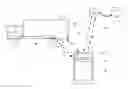
FIG. 1 shows various aspects associated with implementing a method in accordance with the present invention.
DETAILED DESCRIPTION
As shown in FIG. 1, a vehicle 10 is equipped with an electronic braking system and has a braking control unit 11 and an engine control unit 12 which is connected to a CAN bus 13. Further control units may also be provided. Sensors are allocated to the control units, the data from the sensors being processed by the control units. A communication module 14 with which a communication is possible via a radio link, e.g. via a WLAN, is allocated here to the braking control unit 11. A wireless contact to the braking control unit 11 and/or to the CAN bus 13 is possible by means of the communication module 14. The technology for the linking of CAN networks to WLAN networks is known. Interfaces are available for this purpose.
In the present example embodiment, the vehicle 10 is a motor vehicle. However, it may also be a trailer vehicle, in the simple case also only with one control unit and no CAN bus.
A user of the vehicle 10 would like to retrieve information from the vehicle and/or control functions of the vehicle 10 via his Smartphone 15. A connection with a unique allocation between the vehicle 10 and the Smartphone 15 is required, taking account of possible access right restrictions.
Datasets containing permissible combinations of vehicles 10 with Smartphones 15 are stored on a database server 16, here using a vehicle identifier 17 (number plate) on the one hand and a device number of the Smartphone 15 on the other hand. Alternatively or additionally, a SIM card number of the Smartphone 15 may form part of the dataset, and, if necessary, further identifying details. Finally, the datasets may also contain restrictions that are additionally to be taken into account, e.g. relating to the permissibly retrievable information or permissibly executable control commands and/or restrictions relating to the times of day and weekdays.
Datasets may also be provided in which, on the one hand, the vehicle identifier 17 and, on the other hand, a device-independent key (a number or password) are stored. In addition, the connection data which are valid for each communication module 14 and which are required for establishing a connection are stored on the database server.
The Smartphone 15 may be equipped with a camera (not shown) and have a WLAN function. If the user wishes to retrieve information from the vehicle 10 and/or remotely control functions with his Smartphone 15, the following authentication procedure must be performed:
Software in the form of an app is installed on the Smartphone 15 to guide the user through the authentication procedure and carry out the steps automatically, insofar as this is possible. First, the software prompts the user to record the vehicle identifier 17 with the camera of the Smartphone 15 (step I.). The read identifier is converted by the software into a character string and is forwarded together with the device number of the Smartphone 15 via a mobile radio link (step II.) to a transceiver station 18 and from there via the Internet (number 19) to the server 16. The forwarded dataset is matched with the existing data in the server 16. If the connection is permitted, the server 16 transmits its response (step III.) back to the Smartphone 15. The response of the server 16 contains all data necessary for establishing a WLAN connection, the WLAN network name (SSID), encryption type and password. With the data, the software of the Smartphone 15 automatically establishes the WLAN connection (step IV.) to the communication module 14. The latter performs the function of an access point (server) in the WLAN network. The WLAN connection is then set up, the retrieval of information from the vehicle 10 and, if necessary, the remote control of functions are possible.
To confirm the successfully established WLAN connection to the vehicle, the latter can emit visually or audibly perceptible signals. In the present case, flashing lights 20, 21 are briefly activated. Furthermore, a textual confirmation, for example a reproduction 23 of the vehicle identifier 17, appears on a screen 22 of the Smartphone 15.
Instead of a WLAN connection, a different radio technology can also be used, such as Bluetooth, or a different technology which enables an, in particular, encrypted connection.
With the method according to the invention, the user can establish a secure and unique connection to the control unit of his vehicle in a simple manner with his Smartphone. Only an additional connection to a database server on the Internet is required for authentication and for forwarding the connection data. This additional connection is established here via a mobile radio link (GSM, UMTS, LTE, etc.). However, a different connection type, e.g. via a WLAN to a WLAN router in the vicinity, is also possible.
Claims
What is claimed is:1. A method for establishing a wireless connection between a mobile communication device and a communication module of a vehicle with an identifier, comprising:
a) providing a server outside the mobile communication device, the server including access rights between vehicle identifiers and user identifiers, and data required for establishing the wireless connection,
b) recording with the mobile communication device the identifier of the vehicle,
c) wherein the user identifier is present in the mobile communication device,
d) transmitting by the mobile communication device to the server the vehicle identifier and the user identifier,
e) checking by the server whether access rights exist for the transmitted combination of identifiers,
f) if access rights exist, transmitting by the server the data required for establishing the wireless connection to the mobile communication unit, and
g) establishing a wireless connection to the communication module from the mobile communications device.
2. The method as claimed in claim 1, wherein the vehicle identifier comprises a number plate, a chassis number, a different optical pattern, data transmittable via RFID or data transmittable via NFC.
3. The method as claimed in claim 1, wherein the mobile communication device reads the data representing the vehicle identifier as an optical pattern or via a radio link.
4. The method as claimed in claim 1, wherein the user identifier comprises data which are stored in the mobile communication device.
5. The method as claimed in claim 1, wherein the mobile communication device forwards the two identifiers via a mobile radio link or via a WLAN to an interface connected to the server.
6. The method as claimed in claim 1, wherein the wireless connection from the mobile communication device to the communication module is a connection via a WLAN or Bluetooth.
7. The method as claimed in claim 1, wherein the mobile communication device comprises a mobile telephone with a WLAN function and/or Bluetooth function.
8. The method as claimed in claim 1, further comprising emitting by the vehicle a visually or audibly perceptible signal after establishing the wireless connection between the mobile communication device and the communication module.
9. A control unit for a vehicle with a communication module for carrying out the method as claimed in claim 1.
10. The method as claimed in claim 1 further comprising inputting by the user in the mobile communication device data associated with the user identifier.
11. The method as claimed in claim 3, wherein the radio link is a short-range radio link.
Images & Drawings included:
Sources:
- United States Patent and Trademark Office - verify current appl. status at the USPTO↗
Similar patent applications:
- » 20220361257
METHOD FOR ESTABLISHING A WIRELESS DATA CONNECTION BETWEEN A VEHICLE AND AN EXTERNAL UNIT, CONNECTION ESTABLISHMENT UNIT AND VEHICLE - » 20200389927
Method, apparatuses and arrangement for establishing a wireless connection between a vehicle and a vehicle accessory - » 20200396607
ESTABLISHING A WIRELESS CONNECTION TO A VEHICLE - » 20070238491
System and method for establishing wireless connections between user devices and vehicles - » 20190166635
Establishing a secure short-range wireless communications connection at a vehicle
Recent applications in this class:
- » 20250294350 2025-09-18
Security and Public Safety Application for a Mobile Device with Audio/Video Analytics and Access Control Authentication - » 20250294349 2025-09-18
DEVICES, SYSTEMS, AND METHODS FOR CONNECTING TO AN EXERCISE DEVICE - » 20250294348 2025-09-18
METHOD AND SYSTEM FOR AUTHENTICATING A DEVICE - » 20250294347 2025-09-18
AUTHENTICATION SYSTEM FOR A VEHICLE FOR AUTHENTICATING PORTABLE AUTHENTICATION DEVICES AND ASSOCIATED METHOD - » 20250287203 2025-09-11
WIRELESS CONNECTION SYSTEM, INFORMATION TERMINAL, DISPLAY DEVICE, AND WIRELESS CONNECTION METHOD - » 20250287202 2025-09-11
SYSTEM AND METHOD FOR IMPLICIT AUTHENTICATION - » 20250280290 2025-09-04
BLOCKCHAIN SECURED POLYPHONIC RADIO (PR) WIRELESS MESH NETWORKS USING PULSE-BASED COMMUNICATIONS (PBC) METHODS AND APPARATUS - » 20250280289 2025-09-04
SYSTEMS AND METHODS FOR VERIFYING CANDIDATE COMMUNICATIONS - » 20250274754 2025-08-28
AUTHENTICATION METHOD, TERMINAL, AND NETWORK DEVICE - » 20250274753 2025-08-28
PROTOCOL DATA UNIT (PDU) SESSION ESTABLISHMENT
Recent applications for this Assignee:
- » 20210188235 2021-06-24
Axle valve module and relay valve module of a compressed-air brake system - » 20210108656 2021-04-15
Actuator for an automated or automatic transmission, and method for controlling the actuator - » 20210070272 2021-03-11
Electropneumatic brake control module for utility vehicles with redundancy pressure connector - » 20210054855 2021-02-25
Relay valve for a compressed-air system - » 20210001679 2021-01-07
Compressed air supply installation for operating a pneumatic installation, method and vehicle - » 20200318734 2020-10-08
Piston-cylinder assembly - » 20200307537 2020-10-01
Electropneumatic parking brake module for utility vehicles with spring-type parking brakes - » 20200300309 2020-09-24
Clutch actuator for actuating a vehicle clutch - » 20200282416 2020-09-10
Cleaning device, compressed air system, cleaning method - » 20200248794 2020-08-06
Device and method for sensing the position of a shift fork of a transmission