Hands-free binocular device
US20170168319A1
2017-06-15
15/373,539
2016-12-09
✅ Patent granted
US 10,895,760 B2
2021-01-19
-
-
Jae N Noh
Hudak, Shunk & Farine Co. LPA
2037-01-18
Abstract:
A hands-free binocular device. A pair of eyeglasses has two temples. A telescopic section is mounted to each eyeglass temple. The hands-free binocular device includes lenses for magnifying images and light path redirecting devices for controlling the light path to the eyeglass lenses. Light from an image being observed flows through the magnifying lenses and is redirected by the light path redirecting device. The image is magnified and viewable by a user. The user can shift his gaze upward to view the magnified image or look down from the magnified image to view a non-magnified image. In one preferred embodiment the light path redirecting devices are prisms. In another preferred embodiment the light path redirecting devices are mirrors.
Applicant:
Interested in similar patents?
Get notified when new applications in this technology area are published.
Classification:
G02B23/02 » CPC further
Telescopes, e.g. binoculars; Periscopes; Instruments for viewing the inside of hollow bodies; Viewfinders; Optical aiming or sighting devices involving prisms or mirrors
H04N2213/008 » CPC further
Details of stereoscopic systems Aspects relating to glasses for viewing stereoscopic images
G02C11/10 » CPC further
Non-optical adjuncts; Attachment thereof Electronic devices other than hearing aids
G02C7/14 » CPC further
Optical parts Mirrors; Prisms
H04N2213/001 » CPC further
Details of stereoscopic systems Constructional or mechanical details
G02C7/08 IPC
Optical parts; Lenses; Lens systems ; Methods of designing lenses Auxiliary lenses; Arrangements for varying focal length
G02C7/088 » CPC main
Optical parts; Lenses; Lens systems ; Methods of designing lenses; Auxiliary lenses; Arrangements for varying focal length Lens systems mounted to spectacles
G02B2027/0134 » CPC further
Optical systems or apparatus not provided for by any of the groups -; Head-up displays characterised by optical features comprising binocular systems of stereoscopic type
H04N13/344 » CPC further
Stereoscopic video systems; Multi-view video systems; Details thereof; Image reproducers; Displays for viewing with the aid of special glasses or head-mounted displays [HMD] with head-mounted left-right displays
G02B2027/0138 » CPC further
Optical systems or apparatus not provided for by any of the groups -; Head-up displays characterised by optical features comprising image capture systems, e.g. camera
G02B2027/0161 » CPC further
Optical systems or apparatus not provided for by any of the groups -; Head-up displays characterised by mechanical features characterised by the relative positioning of the constitutive elements
G02B27/01 IPC
Optical systems or apparatus not provided for by any of the groups - Head-up displays
G02B23/125 » CPC further
Telescopes, e.g. binoculars; Periscopes; Instruments for viewing the inside of hollow bodies; Viewfinders; Optical aiming or sighting devices with means for image conversion or intensification head-mounted
G02B23/18 » CPC further
Telescopes, e.g. binoculars; Periscopes; Instruments for viewing the inside of hollow bodies; Viewfinders; Optical aiming or sighting devices; Housings; Caps; Mountings; Supports, e.g. with counterweight for binocular arrangements
H04N13/239 » CPC further
Stereoscopic video systems; Multi-view video systems; Details thereof; Image signal generators using stereoscopic image cameras using two 2D image sensors having a relative position equal to or related to the interocular distance
G02C11/00 IPC
Non-optical adjuncts; Attachment thereof
G02B23/12 IPC
Telescopes, e.g. binoculars; Periscopes; Instruments for viewing the inside of hollow bodies; Viewfinders; Optical aiming or sighting devices with means for image conversion or intensification
H04N13/296 » CPC further
Stereoscopic video systems; Multi-view video systems; Details thereof; Image signal generators Synchronisation thereof; Control thereof
Description
The present invention relates to binoculars, and in particular, to hands-free binoculars. The present invention claims the benefit of U.S. Ser. No. 62/265,062, filed Dec. 9, 2015, all of which is incorporated by reference herein.
BACKGROUND OF THE INVENTION
Binoculars
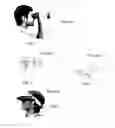
Binoculars are well known in the prior art and are also commonly referred to as a pair of binoculars. Binoculars are an optical device that allows the user to see things more clearly that are far away. They are for use with both eyes and included two small telescopes fitted together side by side and a focusing device and usually have magnifying lenses and prisms to increase magnifying ability. However, there are significant problems with prior art binoculars. Namely, binoculars are heavy, cumbersome and difficult to hold steady. Also, binoculars require both hands to operate (FIG. 1).
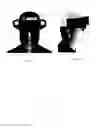
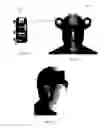
There have been efforts in the prior art to make a hands-free pair of binoculars. However, prior art attempts at hands-free binoculars attach, or mount a small pair of binoculars in front of the user, making them heavy and uncomfortable to wear (FIGS. 2-4).
What is needed is a hands-free pair of binoculars that are comfortable for a user to wear.
BRIEF DESCRIPTION OF THE DRAWINGS
FIGS. 1-4 show prior art binoculars and hands-free binoculars.
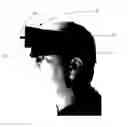
FIGS. 5-6 show a preferred embodiment of the present invention.
FIGS. 7-8 show a preferred light flow path.
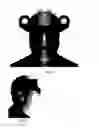
FIGS. 9-10 show the utilization of a preferred hands-free binocular device with a ball cap.
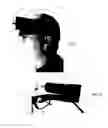
FIGS. 11-13 show a preferred hands-free binocular device with electronic control.
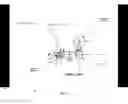
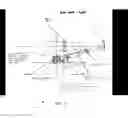
FIGS. 14-16 shows detailed views of the internal components and optics of a preferred hands-free binocular device.
SUMMARY OF THE INVENTION
The present invention provides a hands-free binocular device. A pair of eyeglasses has two temples. A telescopic section is mounted to each eyeglass temple. The hands-free binocular device includes lenses for magnifying images and light path redirecting devices for controlling the light path to the eyeglass lenses. Light from an image being observed flows through the magnifying lenses and is redirected by the light path redirecting device. The image is magnified and viewable by a user. The user can shift his gaze upward to view the magnified image or look down from the magnified image to view a non-magnified image. In one preferred embodiment the light path redirecting devices are prisms. In another preferred embodiment the light path redirecting devices are mirrors.
DETAILED DESCRIPTION OF THE PREFERRED EMBODIMENTS
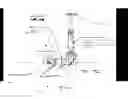
Preferred hands-free binoculars 10 are shown in FIG. 5. A majority of the weight of the binoculars is positioned so that it is comfortably placed on the side of the user's head, as shown (FIGS. 5 and 6). Hands-free binoculars 10 are balanced, lightweight and comfortable. The user may look through eyeglasses 11 directly for non-magnified viewing or he may shift his gaze slightly upward and view the magnified image.
FIGS. 7 and 8 show light flow path 20 through the lenses of the binoculars to the user's eyes. Binoculars 10 include two telescopic sections 50. Each telescopic section 50 is mounted to a temple 31 of eyeglasses 11. Light travels through each telescopic section 50 and is redirected by prisms 21 as shown. The user may then look at the magnified image 70 if he wishes. Or he can look through the normal lenses 71 of eyeglasses 11 if he wishes to view a non-magnified image. In another preferred embodiment, prisms 21 may be replaced with another light path redirecting device. For example in another preferred embodiment, prisms 21 are replaced with mirrors to redirect the light flow path.
In another preferred embodiment, hands-free binoculars 10 combined with a ball cap, hat or visor. For example, FIGS. 9 and 10 show hands-free binoculars 10 combined with ball cap 100. Also it is possible to include an event or corporate logo, as shown in FIG. 9.
In another preferred embodiment hands-free binoculars 10 includes electronic circuitry and a digital camera (FIGS. 11-13). The electronic circuitry allows for focusing and magnification of hands-free binoculars 10 to be adjusted by utilization of hand held remote 150 and/or a smartphone app. Additionally, hand held remote 150 includes programming to allow for the user to record images he views by manipulating the record button on the remote as shown. The images are recorded and stored onto the database of a digital camera.
Internal Components and Optics
FIGS. 14-16 show a detailed view of the internal components and optics of one preferred embodiment of hands-free binoculars 10. The telescopic sections 50 are mounted onto temples 31 of eyeglasses 11. Lenses and prisms (and/or mirrors) operate in conjunction with each to magnify observed images so that the user can view them by shifting his gaze upward to view magnified image 70. Or optionally the user can shift his gaze downward to look through the normal lenses 71 of eyeglasses 11 if he wishes to view a non-magnified image.
Other Modifications and Embodiments
The above discussion focuses primarily on the utilization of the present invention for hands-free binoculars 10. However, it should be recognized the features of the present invention can be modified and adapted to create other types of hands-free devices. For example, the present invention can be modified to create a hands-free virtual reality display device. Also, the present invention can be modified to create a hands-free magnifier for medical or dental uses, for utilization by a qualified medical or dental practitioner during a medical or dental procedure. Likewise, a hands-free magnifier can be utilized by a chemist or laboratory technician or even it can be utilized for common home use activities such as reading or threading a needle. Also, it should be recognized that the present invention can be modified for video recording so that the images viewed by the user are video recorded, as desired.
Although the above-preferred embodiments have been described with specificity, persons skilled in this art will recognize that many changes to the specific embodiments disclosed above could be made without departing from the spirit of the invention. For example, even though FIG. 12 shows telescopic sections 50 mounted above the eyes of the user, it should be recognized that telescopic sections 50 could be also mounted on temples 31 at the same level as the user's eyes or mounted onto temples 31 below the level of the user's eyes. Also, it should be noted that eyeglasses 11 can include lenses 71 as described above, or eyeglasses 11 can include eyeglass frames without any lenses at all. Or in another preferred embodiment the user can attach his personal eyeglasses to hands-free binoculars 10 for personalized usage. This is desirable for users who have a specific eyeglass prescription and/or a favorite pair of sunglasses. Also, the above preferred embodiments discussed utilization of hand held remote 150. It should be recognized that hand held remote 150 can be replaced with a smartphone having an application that allows the user to easily control the zoom, focus and recording functions in a manner similar to that described above. Therefore, the attached claims and their legal equivalents should determine the scope of the invention.
Claims
What is claimed is:1) A hands-free binocular device, comprising a pair of eyeglasses having two temples
A) at least one magnifying lens connected to said hands-free binocular device,
B) at least one light path redirecting device connected to said hands-free binocular device,
C) two telescopic sections, each one mounted onto one of said two temples, wherein light from and image follows a light path that flows through said at least one magnifying lens, and is redirected by said at least one light path redirecting device, and is magnified and viewable by a user who can view said redirected and magnified image as he wishes or shift his gaze and view a non-magnified image.
2) The hands-free binocular device as in claim 1, wherein said at least one light path redirecting device is at least one prism.
3) The hands-free binocular device as in claim 1, wherein said at least one light path redirecting device is at least one mirror.
4) The hands-free binocular device as in claim 1, the weight of said hands-free binocular device is placed on the side of a user's head.
5) The hands-free binocular device as in claim 1, wherein the user may look through said eyeglasses directly for a non-magnified image or may look slightly upward for a magnified image.
6) The hands-free binocular device as in claim 1, wherein said hands-free binocular is combined with a ball cap.
7) The hands-free binocular device as in claim 1, wherein said hands-free binocular is combined with a visor.
8) The hands-free binocular device as in claim 1, wherein said hands-free binocular is combined with a hat.
9) The hands-free binocular device as in claim 1, wherein said hands-free binocular includes a corporate logo.
10) The hands-free binocular device as in claim 1, wherein said hands-free binocular further comprises:
A) electronic circuitry,
B) a digital camera,
C) a hand held remote or a smartphone, and
D) programming,
wherein said programming allows the user to record images the user views and
wherein said images are recorded and stored on the database of said digital camera.
11) The hands-free binocular device as in claim 1, wherein said hands-free binocular device is a virtual reality display device.
12) The hands-free binocular device as in claim 1, wherein said hands-free binocular device is a hands free magnifier for medical or dental usage.
13) The hands-free binocular device as in claim 1, wherein said hands-free binocular device is a hands-free magnifier for chemist or laboratory technician usage.
14) The hands-free binocular device as in claim 1, wherein said hands-free binocular device is a hands-free magnifier for home usage.
15) The hands-free binocular device as in claim 1, wherein said hands-free binocular device is a video recording device.
Images & Drawings included:
Sources:
- United States Patent and Trademark Office - verify current appl. status at the USPTO↗
Similar patent applications:
- » 20220197006
Wearable, adjustable, hands-free binocular device
Recent applications in this class:
- » 20240345420 2024-10-17
EYEWEAR WAVEGUIDE WITH REFLECTOR - » 20230333412 2023-10-19
ADJUSTABLE LOUPE APPARATUS - » 20230204981 2023-06-29
Eyewear waveguide with reflector - » 20230107254 2023-04-06
ERGONOMIC LOUPES WITH BEAM-REDIRECTING PRISMS - » 20220121041 2022-04-21
Visual loupes with point of view modification - » 20210080752 2021-03-18
Compact positionable clip on magnifiers - » 20200117025 2020-04-16
Optical attachment for surgical loupe glasses - » 20200110287 2020-04-09
EYEGLASSES HAVING DETACHABLE LENS UNIT - » 20190250430 2019-08-15
Spectacle lens and method, in particular 3D printing method, for the production thereof - » 20190219843 2019-07-18
Spectacle lens and spectacles